Midea Group(000333)

Search documents
穿越周期的力量:2025中国企业家年度榜单
Sou Hu Cai Jing· 2026-01-26 15:59
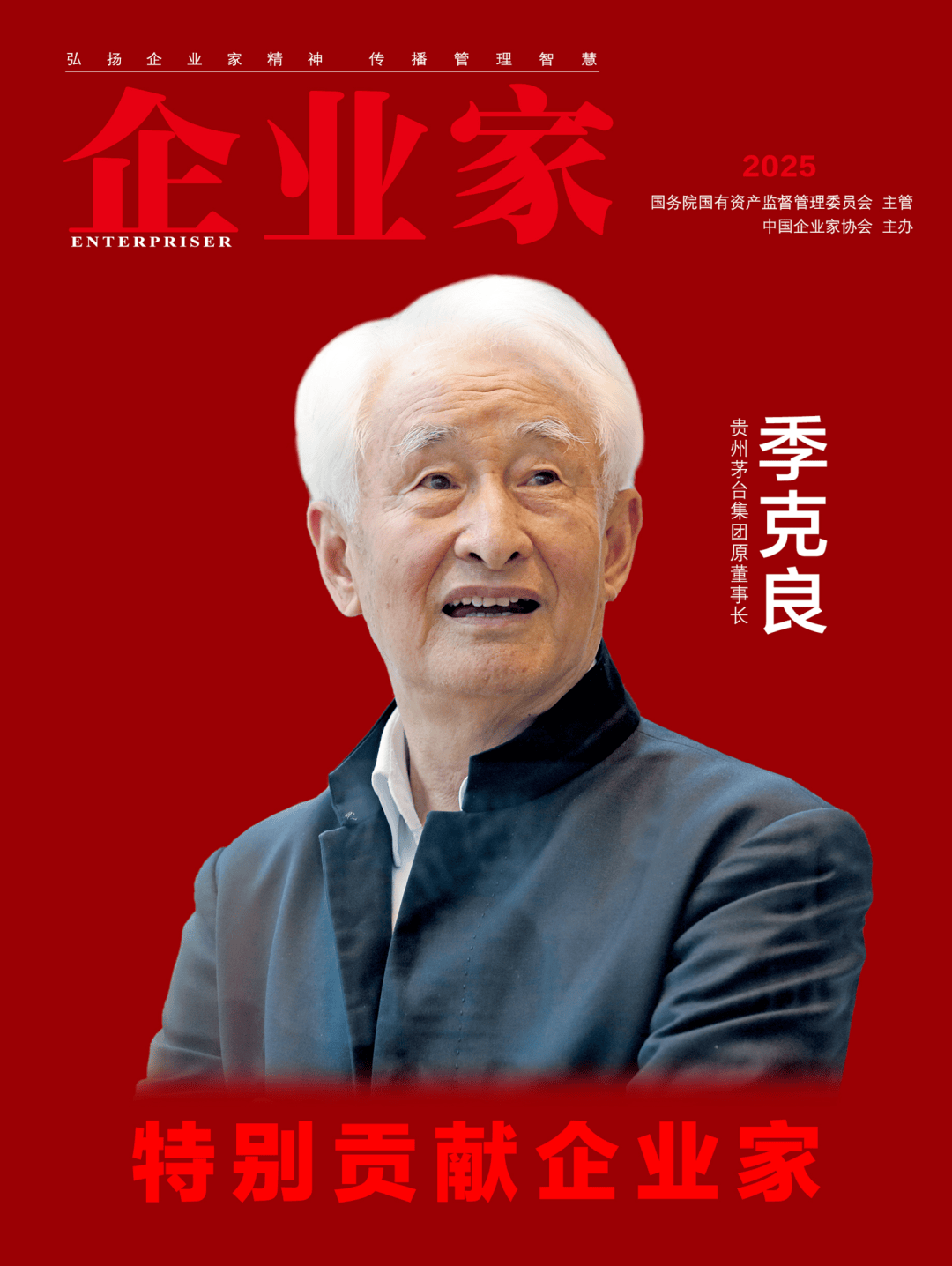
Core Insights - The article highlights the recognition of 3 "Special Contribution Entrepreneurs" and 20 "2025 Entrepreneurs" who exemplify long-termism and innovation across various industries in China, including liquor, manufacturing, energy, agriculture, internet, AI, and new consumption [1][2]. Group 1: Special Contribution Entrepreneurs - Ji Keliang, former chairman of Kweichow Moutai Group, transformed traditional brewing techniques into scientific data over 60 years, emphasizing quality over speed, which laid the foundation for Moutai's billion-dollar brand value [4][10][12]. - Zhang Ruimin, founder of Haier Group, is known for his continuous self-disruption and innovation, leading Haier from a struggling factory to a global leader in home appliances with over 400 billion yuan in revenue [18][20][21]. - Jiang Baoquan, founder of Nanjing Gold Foil Holdings, turned a failing workshop into the world's largest gold foil producer, emphasizing resilience and innovative management theories [25][27][29]. Group 2: 2025 Entrepreneurs - Ma Huateng, chairman of Tencent, focuses on "technology for good," committing to social responsibility and innovation in digital technology to drive high-quality economic development [31][34][41]. - Wang Ning, founder of Pop Mart, capitalizes on emotional value and consumer psychology, creating a successful business model around collectible toys that resonate with young consumers [43][45][46]. - Wang Xingxing, founder of Yushutech, leads advancements in humanoid robotics, achieving significant market presence and profitability while promoting technological innovation [48][49][51]. - Fang Hongbo, chairman of Midea Group, has successfully transformed Midea into a global technology group through strategic restructuring and a focus on efficiency and innovation [54][56]. - Liu Yonghao, chairman of New Hope Group, maintains a long-term vision in agriculture, achieving growth even during economic downturns by embracing new technologies [67][69][70]. - Liu Qiangdong, founder of JD.com, integrates the concept of "common prosperity" into business practices, ensuring fair profit distribution among stakeholders while enhancing supply chain efficiency [73][75][78]. - Li Dongsheng, founder of TCL, exemplifies global leadership in semiconductor display and photovoltaic sectors, driving innovation and sustainable growth through strategic partnerships [110][111].




美的集团20260126
2026-01-26 15:54
Summary of Midea Group's Conference Call Industry Overview - **Smart Building Technology Market**: Midea's smart building technology business is experiencing rapid growth, with a projected compound annual growth rate (CAGR) of 13.1% from 2021 to 2024, maintaining a gross margin of 28%-30% [2][5] - **Central Air Conditioning Market**: The Chinese central air conditioning market is valued at over 100 billion RMB, with a CAGR of approximately 10% from 2020 to 2024. The domestic market has slightly declined due to real estate impacts, while the export market is strong, expected to grow by 23.4% in 2024 [2][7] - **Domestic Brand Market Share**: Domestic brands are increasing their market share in the central air conditioning sector from 48% in 2020 to 53% in 2024, driven by technological advancements and local marketing strategies [2][10] Key Business Insights - **To B Business Growth**: Midea's To B business now accounts for over 25% of total revenue, with a target to increase this to 50%. The building technology segment is expected to generate approximately 35 billion RMB in revenue by 2025, with a net profit exceeding 10% [3] - **Maglev Chiller Market**: The maglev chiller market is projected to reach 2.57 billion RMB in 2024, growing by 14.7%. Midea's market share in this segment has increased to 19.7% due to its self-developed maglev compressor technology [2][11][13] Market Dynamics - **Data Center Cooling Demand**: The global liquid cooling management system market is expected to grow at a CAGR of 21.6%, reaching 17.8 billion USD by 2030. Midea is collaborating with Alibaba to provide cooling solutions for data centers [2][17][18] - **Old Equipment Replacement**: The market for replacing outdated central air conditioning systems is over 400 billion RMB, with significant energy savings potential. Midea's maglev chillers have shown to double energy efficiency in replacements [2][19] Competitive Advantages - **Technological Leadership**: Midea has broken foreign monopolies in the maglev compressor market, becoming the only manufacturer capable of self-supplying this technology. This positions Midea as a leader in the maglev chiller market [13][14] - **Comprehensive Solutions**: Midea offers complete liquid cooling system solutions, including CDU and outdoor cooling sources, enhancing its competitive edge [14] Regional Insights - **Middle East Market**: Midea has launched products tailored to the Middle East, such as the V8 multi-split unit, designed to operate in extreme temperatures [21] - **North American Market Entry**: Midea is entering the North American data center market through OEM partnerships with major HVAC companies, allowing access to this lucrative segment despite geopolitical challenges [22] Future Outlook - **Industrial Heat Pump Market**: The industrial heat pump market is expected to grow significantly, with a projected size of 1.23 billion RMB in 2024, increasing by 18%. Midea is actively developing high-temperature steam compressors for industrial applications [27][30] - **Policy Support**: National policies are promoting the adoption of industrial heat pumps, emphasizing their economic benefits and energy savings [29] This summary encapsulates the key points from Midea Group's conference call, highlighting the company's strategic positioning, market dynamics, and future growth prospects in the smart building and HVAC sectors.
新能源+AI周报(第40期20260118-20260124):储能量价齐升,太空、AI主题延续-20260126
Tai Ping Yang Zheng Quan· 2026-01-26 15:01
Investment Rating - The report does not provide specific investment ratings for the industry sectors mentioned [2]. Core Insights - The overall industry strategy focuses on the simultaneous rise in energy storage volume and price, with ongoing themes in space and AI [3]. - The new energy vehicle supply chain is entering an upward cycle, benefiting companies like CATL and EVE Energy due to the electrification upgrade and optimization of energy storage patterns [3]. - By the end of December 2025, China's electric vehicle charging infrastructure is expected to reach 20.092 million units, a year-on-year increase of 49.7% [3]. - Global energy storage battery shipments are projected to reach 640 GWh in 2025, a year-on-year increase of 82.9%, with CATL maintaining a leading position [3][25]. - The solid-state battery sector is entering a critical phase of engineering and industrialization, with companies like Xiamen Tungsten and Peking University Technology benefiting [4]. Summary by Sections Energy Storage and New Energy - The energy storage trend continues to improve, with companies like Sungrow Power and Huaneng Power benefiting from a significant increase in domestic procurement, which exceeded 100 GWh for the first time [5]. - The average price of lithium battery storage systems has rebounded by 6.39% to 0.5226 yuan/Wh [5]. - AI expansion and global grid upgrades are driving demand for power equipment, benefiting companies like TBEA and Sanyuan Electric [5]. Lithium Carbonate and Battery Materials - The supply and demand for lithium carbonate are exceeding expectations, with companies like Salt Lake Potash and Hunan Youneng benefiting from favorable market conditions [4]. - The cost of phosphoric iron lithium cathode materials has increased, with processing fees rising by 318.7 yuan/ton compared to November averages [4][27]. AI and Robotics in New Energy - The integration of AI and humanoid robots in the new energy sector is gaining traction, with companies like Zhejiang Rongtai and Keda Li benefiting from advancements in robotics [7]. - Tesla's shift towards becoming a robotics company is expected to create new growth cycles, with significant implications for the automotive industry [7][26]. Market Trends and Projections - The report highlights that the global energy storage battery shipment is expected to reach 1,090 GWh in 2026, a year-on-year increase of 70% [25]. - The market for commercial energy storage products is evolving, with larger capacity batteries becoming mainstream and driving innovation in the sector [29].




公募基金2025四季报调仓图谱:科技制造主线强化 传统蓝筹获回流布局 新能源内部分化(附加减仓TOP50榜单)
Xin Lang Cai Jing· 2026-01-26 12:17
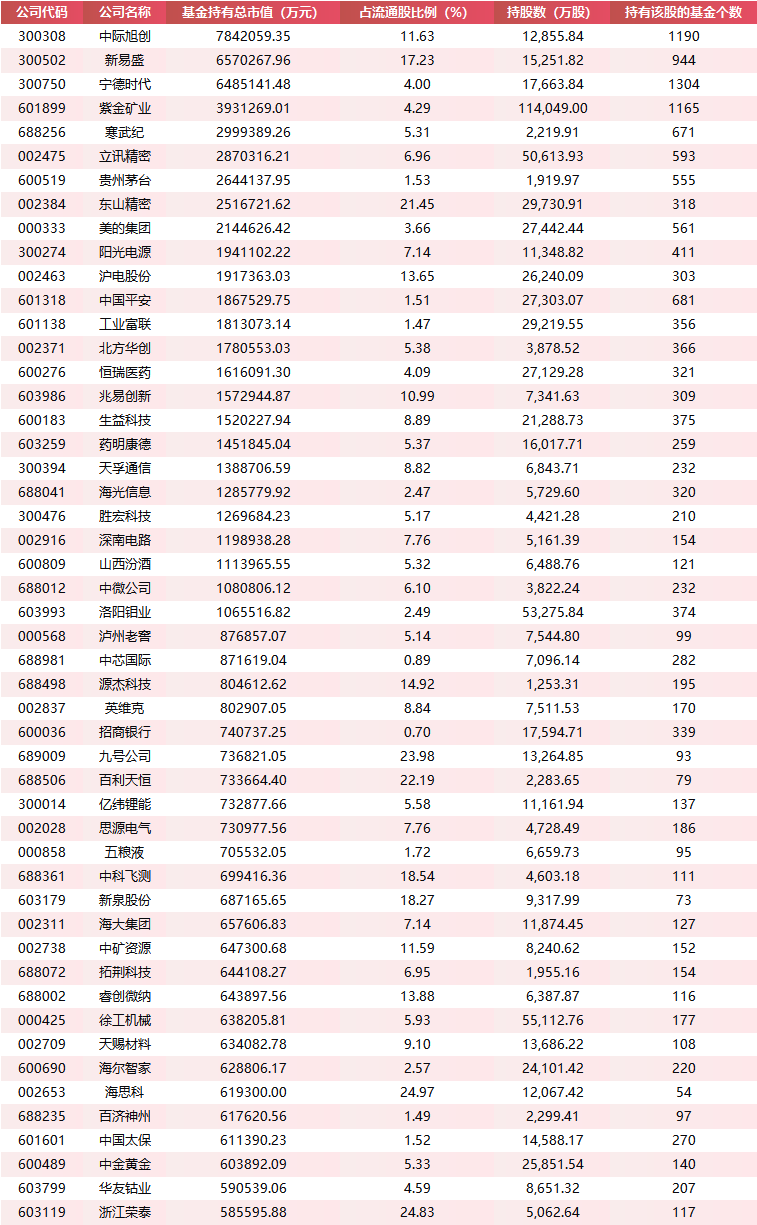
Core Insights - Public funds continue to focus on technology growth and high-end manufacturing, while also reallocating to consumer and financial leaders with returning valuations [1][14] - The structure of holdings indicates a significant increase in positions in AI computing, semiconductor equipment, and resource sectors, while reducing exposure to batteries, consumer electronics, and pharmaceuticals [14] Group 1: Fund Holdings Overview - As of Q4 2025, public fund holdings data shows that technology growth and high-end manufacturing remain core investment directions, with traditional industry leaders and some cyclical stocks also maintaining high allocation levels [1] - The top 50 heavy stocks include major players in technology sectors such as communication, AI, and electronics, reflecting institutional confidence in technological innovation and industrial upgrades [2][3] - Notable stocks like Ningde Times, Zhongji Xuchuang, and Zijin Mining are held by over a thousand funds, indicating strong consensus among institutions on these targets [4] Group 2: Increases in Holdings - The increase in holdings is prominently seen in technology stocks, with Zhongji Xuchuang receiving over 22.6 billion yuan in fund increases, ranking first, followed by Xinyi Sheng with approximately 9.6 billion yuan [5][6] - Traditional sectors also saw significant increases, with China Ping An gaining over 10.5 billion yuan, and other blue-chip stocks like Midea Group and Haier Smart Home returning to substantial increase lists [5] - Resource stocks such as Zijin Mining and Luoyang Molybdenum also experienced collective increases, reflecting high enthusiasm for non-ferrous and energy metal sectors amid global manufacturing recovery expectations [5] Group 3: Decreases in Holdings - Certain stocks in the consumer electronics and OEM sectors, including Industrial Fulian and Lixun Precision, faced collective reductions, indicating a cautious stance on their growth prospects [8] - The internal structure of the new energy vehicle supply chain showed differentiation, with battery leaders like Ningde Times and Yiwei Lithium Energy being reduced [8] - Pharmaceutical stocks like Heng Rui Medicine and WuXi AppTec also saw significant reductions due to industry policy uncertainties and valuation pressures [8] Group 4: New Entrants in Holdings - A number of new stocks have entered the fund's heavy holdings, characterized by small to mid-cap sizes and high growth expectations, covering advanced manufacturing and industrial upgrade sectors [11][12] - Notable new entrants include Chaojie Co. and Guocheng Mining, which have garnered attention from multiple funds, indicating potential focus areas for institutional investment [11][12]



美的集团(00300)1月26日斥资1099.89万元回购14.4万股A股
Zhi Tong Cai Jing· 2026-01-26 10:42
Group 1 - The core point of the article is that Midea Group announced a share buyback of 144,000 A-shares for a total expenditure of RMB 10.9989 million on January 26, 2026, with a buyback price range of RMB 76.06 to 76.8 per share [1] - On the same day, the company issued a total of 103,100 A-shares based on the exercise of options from the eighth and ninth stock option incentive plans [1]

美的集团(00300.HK)1月26日耗资1100万元回购14.4万股A股
Ge Long Hui· 2026-01-26 10:13
Core Viewpoint - Midea Group announced a share buyback plan, indicating confidence in its stock value and commitment to returning capital to shareholders [1] Group 1: Buyback Details - The company will spend RMB 11 million to repurchase 144,000 A-shares [1] - The buyback price ranges from RMB 76.06 to RMB 76.8 per share [1]
美的集团1月26日斥资1099.89万元回购14.4万股
Zhi Tong Cai Jing· 2026-01-26 10:12
Group 1 - The company Midea Group (000333) announced a share buyback plan, investing RMB 10.9989 million to repurchase 144,000 A-shares at a price range of RMB 76.06 to 76.8 per share [1] - On the same day, the company issued a total of 103,100 A-shares through the exercise of options under the eighth and ninth stock option incentive plans [1]
美的集团(00300) - 翌日披露报表
2026-01-26 10:04
FF305 翌日披露報表 (股份發行人 ── 已發行股份或庫存股份變動、股份購回及/或在場内出售庫存股份) 公司名稱: 美的集團股份有限公司(於中華人民共和國註冊成立的股份有限公司) 呈交日期: 2026年1月26日 如上市發行人的已發行股份或庫存股份出現變動而須根據《香港聯合交易所有限公司(「香港聯交所」)證券上市規則》(「《主板上市規則》」)第13.25A條 / 《香港聯合交易所有限公司GEM證券 上市規則》(「《GEM上市規則》」)第17.27A條作出披露,必須填妥第一章節 。 | 第一章節 | | | | | | | | | --- | --- | --- | --- | --- | --- | --- | --- | | 1. 股份分類 | 普通股 | 股份類別 A | | | 於香港聯交所上市 | 否 | | | 證券代號 (如上市) | 000333 | 說明 | A股 (於深圳證券交易所上市) | | | | | | A. 已發行股份或庫存股份變動 | | | | | | | | | 事件 | | 已發行股份(不包括庫存股份)變動 | | | 庫存股份變動 | 每股發行/出售價 (註4) | ...
看世界 | 中国降温神器热销东南亚
Jing Ji Ri Bao· 2026-01-26 09:13
Core Insights - The extreme heat in Southeast Asia, exacerbated by the El Niño phenomenon, has led to a surge in demand for cooling products, particularly air conditioners, cooling mats, and fans produced in China [1][2]. Air Conditioning Market - The Southeast Asian air conditioning market is projected to exceed $5.5 billion by 2025, with an expected annual growth rate of over 10% from 2025 to 2030 [1]. - The International Institute of Refrigeration (IIF) forecasts a 13.9% increase in room air conditioner sales in Southeast Asia in 2024, with Indonesia being a key market attracting international brands, especially Chinese ones [1]. Cooling Mats and Fans Market - The demand for cooling mats and fans in Southeast Asia has significantly increased, with sales in the Philippines reportedly growing several times compared to previous years [2]. - Chinese cooling mats, including ice silk and linen varieties, are gaining popularity in markets like Vietnam, Indonesia, and Thailand, thanks to advancements in materials and manufacturing techniques [3]. - Chinese fans are recognized for their variety, reliability, and affordability, catering to diverse consumer needs across the region [3]. Marketing and Distribution Strategies - Chinese companies are investing heavily in marketing channels, collaborating with major retail chains and e-commerce platforms like Lazada and Shopee to enhance product availability and consumer access [4]. - Partnerships with local retailers, such as Gree's collaboration with Thailand's Central Group, have facilitated better product placement and promotional activities [4]. Economic Impact - The influx of Chinese cooling products is stimulating trade in Southeast Asia, benefiting logistics, warehousing, and transportation sectors, and creating more job opportunities [5]. - Retail sectors are experiencing increased foot traffic and sales, with reports of Malaysian logistics companies expanding their operations due to high demand for Chinese air conditioning and fan products [5]. Social Impact - The widespread availability of Chinese cooling products is improving the quality of life for Southeast Asian residents, with no significant increase in heat-related hospital visits despite record temperatures [6]. - The popularity of these products is enhancing consumer awareness of Chinese brands and fostering cultural exchange [6]. - There is a growing demand for energy-efficient and environmentally friendly cooling products, which presents an opportunity for Chinese companies to innovate and contribute to sustainable development in the region [6].

2025年度并购市场数据报告
Sou Hu Cai Jing· 2026-01-26 06:10
Core Findings - The 2025 Chinese M&A market shows significant structural differentiation, characterized by a "volume decrease and price increase" trend, with multiple dynamics including market stabilization, private equity fund exit recovery, and notable regional and industry concentration [1][16]. M&A Market Overview - In 2025, the number of announced M&A transactions decreased by 20.27% year-on-year to 5,086, marking a seven-year low, indicating a cooling market activity. However, the total disclosed amount for 3,499 transactions reached 23,735.15 billion yuan, a year-on-year increase of 29.08%, highlighting a significant expansion in single transaction sizes [13][16]. - The total number of completed transactions for the year was 3,342, a slight increase of 0.45% year-on-year, with the total disclosed amount for 2,026 transactions reaching 14,851.31 billion yuan, a substantial year-on-year growth of 54.41%, reversing the downward trend since 2019 [17][16]. Private Equity Fund Exit Trends - In 2025, private equity funds exited through M&A reached 469, a year-on-year increase of 22.77%, recovering to the highest level since 2022. The total capital returned was 642.15 billion yuan, up 8.54% year-on-year, indicating improved exit efficiency and capital circulation capabilities [2][26]. Major M&A Cases - In 2025, there were 20 transactions exceeding 10 billion yuan, with the largest being China Shipbuilding's merger with China Shipbuilding Industry Corporation at 1,151.50 billion yuan, marking a significant milestone in China's shipbuilding industry [30][31]. Cross-Border M&A Trends - The cross-border M&A market completed 144 transactions in 2025, a year-on-year decrease of 13.77%. The total disclosed amount for 105 transactions was 1,181.46 billion yuan, down 5.73% year-on-year, indicating a continued low activity level in the cross-border M&A sector [33][36]. Industry and Regional Distribution - Guangdong province led the M&A market in China, benefiting from the advantages of the Guangdong-Hong Kong-Macao Greater Bay Area. The electronic information, traditional manufacturing, healthcare, and energy mining sectors emerged as hot spots for M&A activity [3][38]. - In terms of transaction volume, electronic information accounted for 17.32% of the total, while the financial sector led in transaction scale with 2,035.96 billion yuan, representing 13.71% of the total disclosed amount [43][39].