YUNNAN BAIYAO(000538)

Search documents
中药牙膏竟有西药止血成分?云南白药自证清白,但这个关键问题仍是谜
Xin Lang Cai Jing· 2026-01-08 05:23
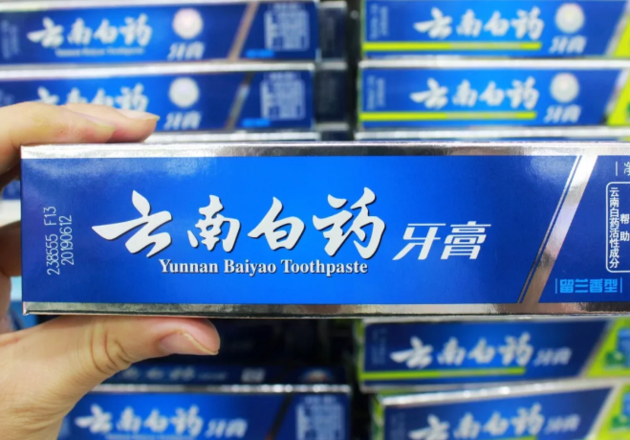
Core Viewpoint - The controversy surrounding Yunnan Baiyao toothpaste centers on the inclusion of tranexamic acid, a prescription drug commonly used for its hemostatic properties, raising questions about the product's marketing claims and safety [2][4][7]. Group 1: Product Composition and Claims - Yunnan Baiyao toothpaste claims to have a market share ranking second nationally and first among domestic brands, with its hemostatic properties being a key selling point [2][15]. - The toothpaste contains tranexamic acid, which is a prescription medication used in clinical settings for excessive bleeding and has specific side effects [4][7]. - The company asserts that tranexamic acid is a common ingredient in many functional toothpastes and that its formulation is safe [7][8]. Group 2: Regulatory and Consumer Concerns - Tranexamic acid is not listed among prohibited ingredients in the regulations for toothpaste, allowing its use in cosmetic products [5][8]. - There are concerns regarding the dosage of tranexamic acid in the toothpaste and its potential effects on human health, which remain unclear [8][10]. - The company has faced previous legal challenges regarding the efficacy claims of its toothpaste, indicating a history of consumer skepticism [10][14]. Group 3: Financial Performance and Market Position - Yunnan Baiyao's toothpaste significantly contributes to the company's profits, with the health products segment accounting for nearly 59% of the net profit in the first half of 2018 [17]. - The toothpaste has rapidly gained market share, achieving an 18.1% share by May 2018, reflecting a year-on-year growth of 11% [15][17].


中国牙膏第一品牌:击败好来、佳洁士、高露洁,市场份额达到23%
Xin Lang Cai Jing· 2026-01-07 08:23
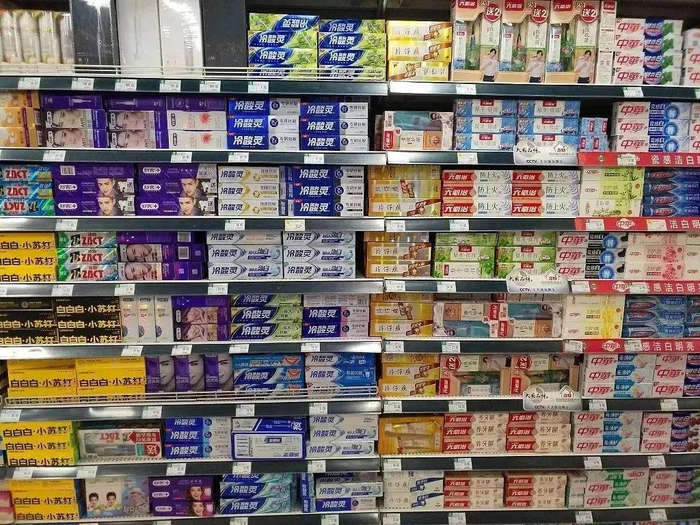
Industry Overview - China is the world's largest producer, consumer, and exporter of toothpaste, with a total market sales of 33.98 billion yuan in the previous year, reflecting a year-on-year growth of 0.86% [1] - The sales channel structure remains predominantly offline, accounting for 75.96% of total sales [1] Competitive Landscape - The top five brands collectively hold over 65% of the market share, indicating a high market concentration, with two local companies among them [5] - Yunnan Baiyao is the leading brand with a market share of 23.86%, having disrupted the market since its launch in 2005 with a focus on high quality and premium pricing [8] - The second largest brand is Haolai (formerly known as Black Toothpaste) with a market share of 20.10%, established in the 1930s [7] - Procter & Gamble's Crest ranks third with an 8.84% market share, having entered the Chinese market in the late 1980s [7] - The fourth position is held by DenCare (Ling Ling) with a market share of 6.83%, known for its long-standing presence in the market [5] - Colgate ranks fifth with a market share of 5.64%, having entered China in 1992 [5] Brand Strategies - The brand "中华" (Zhonghua) is currently ranked seventh with a market share of 4.06%, having once dominated the market with a share of nearly 40% [3] - The brand "薇美姿" (Suhk) holds a 4.88% market share and has initiated a Hong Kong listing plan, leveraging celebrity endorsements to enhance brand visibility [3] - The competitive strategies of local brands focus on continuous product upgrades and channel optimization to regain market dominance against foreign brands [8] Market Trends - The oral care industry has expanded beyond toothpaste and toothbrushes to include mouthwash and dental irrigators, with brands innovating in functionality and design to meet diverse consumer demands [8]
中药行业全景图:短期承压分化,长期求变提质
Lian He Zi Xin· 2026-01-06 11:07
Investment Rating - The report indicates a cautious investment outlook for the Chinese traditional Chinese medicine (TCM) industry, highlighting short-term pressures and long-term quality improvement opportunities [2]. Core Insights - The TCM industry is experiencing stable demand due to an aging population, with the market size expected to exceed 700 billion yuan by 2024, reflecting a year-on-year growth of approximately 6.6% [4][11]. - The financial performance of TCM listed companies is under pressure, with high sales expenses eroding profits and increasing internal differentiation among companies [11][25]. - The competitive landscape is characterized by a high concentration of revenue and profits among the top tier of companies, which hold over half of the industry's income and profits due to proprietary formulas and brand advantages [20][22]. Industry Overview - The TCM industry has a well-established supply chain, with stable demand driven by an increasing elderly population, projected to reach 220 million by the end of 2024, a 1.36% increase from 2023 [4]. - The industry is facing significant price fluctuations due to inventory destocking, upstream capacity changes, and downstream procurement policies [4][5]. - The TCM manufacturing sector consists of approximately 5,000 companies, primarily located in regions such as Jilin, Guangdong, Anhui, and Henan [4]. Financial Performance of TCM Companies - As of 2024, there are 70 listed TCM manufacturing companies, with an average annual revenue of about 340 billion yuan and an average profit of around 34 billion yuan [11][13]. - The overall profit margin for TCM companies is below 20%, indicating a challenging financial environment [11]. - The sales gross margin for sample companies remains stable at around 55%, while the sales expense ratio is approximately 24% [14][18]. Competitive Landscape - The first tier of TCM companies, including Yunnan Baiyao and Tongrentang, dominate the market, accounting for over 52% of total revenue and profits [22][25]. - The second tier includes regional leaders with a more diverse product range, while the third tier consists of smaller companies with concentrated product lines [23][24]. - The financial data shows that the first tier companies have significantly higher equity scales, providing a solid foundation for market expansion and R&D [26]. Industry Policies - Recent policies emphasize innovation and quality improvement in the TCM sector, with initiatives aimed at enhancing regulatory frameworks and promoting high-quality development [27][28]. - The government has outlined plans to establish national laboratories and improve the quality of TCM products through stricter regulations [28][29]. TCM Procurement Situation - The gradual implementation of TCM procurement policies has led to significant price reductions, with the average price drop reaching 68% in recent rounds of procurement [31][34]. - The procurement process is designed to promote standardization and quality control, which may lead to increased market concentration among leading companies [31][40]. - The report notes that the procurement policies have created challenges for TCM companies, particularly regarding profitability due to cost pressures [40]. TCM Innovation Drug Development - The TCM sector has seen a surge in innovation, with a notable increase in clinical trial applications and new drug approvals, particularly in areas such as digestion and respiratory health [41][42]. - The number of IND applications for TCM has grown significantly, indicating a robust pipeline for future product development [42][43].


21健讯Daily|去年我国创新药对外授权破千亿美元;益方生物递表港交所
2 1 Shi Ji Jing Ji Bao Dao· 2026-01-04 00:13
Group 1: Innovation in Pharmaceuticals - In 2025, China approved a record 76 innovative drugs, significantly surpassing the 48 approved in 2024, marking a historical high [1] - The total amount of foreign licensing transactions for innovative drugs in China exceeded $130 billion in 2025, with over 150 transactions, also a historical high [1] - Among the 76 approved innovative drugs, 47 are chemical drugs, 23 are biological products, and 6 are traditional Chinese medicines, with a high proportion of domestic innovations [1] Group 2: Drug Approval and Clinical Trials - China Medical's subsidiary Tianfang Pharmaceutical received approval for clarithromycin tablets, which passed the consistency evaluation for generic drugs [2] - Microchip Biotech announced that its CS08399 tablets for treating tumors with MTAP deficiency have had their clinical trial application accepted [3] - Frontier Biotech's FB7013 injection, targeting MASP-2 for IgA nephropathy, received acceptance for its clinical trial application, marking it as a first-in-class drug [4] Group 3: Capital Market Activities - Yifang Biotechnology submitted a listing application to the Hong Kong Stock Exchange, with CITIC Securities as the exclusive sponsor [5] - Wanyi Medical also submitted a listing application to the Hong Kong Stock Exchange, with Guotai Junan International as the exclusive sponsor [6] Group 4: Corporate Investments and Acquisitions - Yunnan Baiyao plans to invest up to 45% of its net assets in financial products in 2026 [7] - Haili Biological's subsidiary intends to acquire 51% stakes in seven dental chain companies for 61.2 million yuan, expecting to increase revenue by approximately 100 million yuan [9] Group 5: Corporate Restructuring and Legal Matters - *ST Chang Pharmaceutical announced that its restructuring investors intend to terminate the restructuring investment agreement [10] - Zai Lab entered a global strategic cooperation and licensing agreement with AbbVie for the development and commercialization of ZG006, with potential milestone payments totaling up to $10.75 billion [11] - Tianyu Biotech's actual controller received a notice from the China Securities Regulatory Commission regarding an investigation into alleged illegal stock reduction [13]


A股医药板块的“火热”与“寒意”
Xin Lang Cai Jing· 2025-12-31 16:01
Core Viewpoint - The A-share pharmaceutical sector in 2025 exhibits structural differentiation, with innovative drugs and CXO sectors thriving due to overseas demand and business development, while traditional Chinese medicine, medical devices, and pharmaceutical commerce face performance pressures [3][20]. Summary by Category Overall Market Performance - The A-share pharmaceutical and biotechnology sector saw an overall increase of 25.64% from January 1 to December 30, 2025, despite a slight decline in revenue and a stabilization in profits, with total revenue of 18,544.52 billion yuan, down 1.42% year-on-year, and net profit of 1,407.32 billion yuan, down 1.65% year-on-year [4][21]. Innovative Drug Sector - The innovative drug sector was a standout performer in 2025, with the chemical pharmaceutical segment rising by 32.58% and the medical services segment by 32.91% [4][21]. - Companies like BeiGene (百济神州) reported significant growth, achieving revenue of 27.595 billion yuan, a 44.2% increase year-on-year, surpassing the total revenue of 27.21 billion yuan for 2024 [4][22]. Business Development (BD) Trends - The business development landscape for innovative drug companies is evolving, with significant partnerships such as the 11.4 billion USD deal between Innovent Biologics and Takeda, and a 12.5 billion USD collaboration between Hengrui Medicine and GlaxoSmithKline [5][22][24]. - The total value of business development transactions reached approximately 94.158 billion USD in the first three quarters of 2025, significantly exceeding the total for 2024 [25]. CXO Sector Performance - The CXO sector, driven by the demand for innovative drug research, achieved a 32.91% increase in 2025, with total revenue of 1,365.72 billion yuan, up 3.63% year-on-year, and net profit of 209.12 billion yuan, up 36.47% year-on-year [10][27]. - Leading companies like WuXi AppTec (药明康德) and Kanglong Chemical (康龙化成) returned to growth, with WuXi AppTec reporting a revenue increase of 18.61% and net profit growth of 84.84% [28][31]. Traditional Chinese Medicine and Medical Devices - The traditional Chinese medicine sector experienced a modest increase of 6.75% in 2025, with total revenue of 2,590.69 billion yuan, down 4.33% year-on-year, and net profit of 294.99 billion yuan, down 1.53% year-on-year [36]. - The medical device sector reported a revenue of 1,792.10 billion yuan, down 2.24% year-on-year, with notable performance differences among sub-sectors, where companies like Mindray Medical (迈瑞医疗) showed strong overseas revenue growth [33][34].
中微公司拟购杭州众硅64.69%股权;天赐材料2025年净利同比预增超127%丨公告精选
2 1 Shi Ji Jing Ji Bao Dao· 2025-12-31 14:12
Group 1: Company Announcements - Zhongwei Company plans to acquire 64.69% equity of Hangzhou Zhonggui through a combination of share issuance and cash payment, aiming to enhance its capabilities in CMP equipment and solutions [1] - Lixun Precision intends to repurchase shares worth between 1 billion to 2 billion RMB for employee stock ownership plans or equity incentives, with a maximum repurchase price of 86.96 RMB per share [2] - ZaiJing Pharmaceutical has reached a global strategic cooperation and licensing agreement with AbbVie for the development and commercialization of ZG006, receiving an upfront payment of 100 million USD [3] - Tianci Materials expects a net profit increase of 127% to 231% for 2025, driven by significant growth in lithium-ion battery material sales [4] - Meike Home plans to acquire 100% equity of Shenzhen Wande Technology through share issuance and cash payment, with stock resuming trading on January 5, 2026 [6][7] - ST KeliDa is planning a change in control, with stock suspension starting January 5, 2026, due to the transfer of 100% equity of its controlling shareholder [8] - Xinzhou Bang intends to invest approximately 260 million USD in a lithium-ion battery materials project in Saudi Arabia, enhancing its global capacity and supply chain [9] Group 2: Financial Performance - Kid's King anticipates a net profit increase of 51.72% to 82.06% for 2025 [9] - Guangku Technology expects a net profit growth of 152% to 172% for 2025 [9] Group 3: Mergers and Acquisitions - Xidi Micro plans to acquire 100% equity of Chengxin Micro for 310 million RMB [9] - Haili Biological's subsidiary intends to acquire 51% equity of seven dental chain companies for 61.2 million RMB [9]




云南白药(000538) - 关于2026年度预计日常关联交易的公告
2025-12-31 10:54
股票代码:000538 股票简称:云南白药 公告编号:2025-52 云南白药集团股份有限公司 关于 2026 年度预计日常关联交易的公告 本公司及董事会全体成员保证信息披露内容的真实、准确、完整,没 有虚假记载、误导性陈述或重大遗漏。 一、日常关联交易基本情况 (一)日常关联交易概述 1、云南白药集团股份有限公司(以下简称"公司")根据 2026 年 度日常经营需要,对包括采购、销售商品等与日常经营相关的其他各项 关联交易进行了合理预计,预计公司 2026 年与上海医药集团股份有限公 司 ( 以 下 简 称 " 上 海 医 药 " ) 发 生 的 日 常 关 联 交 易 合 计 总 额 为 190,000.00 万元,占公司最近一期经审计净资产 3,883,194.64 万元的 4.89%,无需报股东会审议。截至目前,公司 2025 年与上海医药实际发 生日常关联交易总额为 109,929.20 万元,未超过 2025 年经董事会、股东 会审议通过的额度。 2、本事项已经于 2025 年 12 月 26 日召开的公司第十一届董事会独 立董事专门会议 2025 年第二次会议审议通过,公司全体独立董事一致同 意 ...
云南白药(000538) - 第十一届董事会2025年第二次会议决议公告
2025-12-31 10:54
股票代码:000538 股票简称:云南白药 公告编号:2025-51 云南白药集团股份有限公司 第十一届董事会 2025 年第二次会议决议公告 本公司及董事会全体成员保证信息披露内容的真实、准确、完整,没有虚 假记载、误导性陈述或重大遗漏。 云南白药集团股份有限公司(以下简称"公司")第十一届董事会 2025 年第二次会议(以下简称"会议")于 2025 年 12 月 31 日以通讯表决的方 式召开,本次会议通知于 2025 年 12 月 24 日以书面、邮件方式发出,应出 席董事 12 名,实际出席董事 12 名。本次会议的召集、召开程序符合《中 华人民共和国公司法》《公司章程》的相关规定,会议合法有效。会议审 议通过如下议案: 一、审议通过《关于 2026 年度预计日常关联交易的议案》 公司根据 2026 年度日常经营需要,对包括采购、销售商品等与日常经 营相关的其他各项关联交易进行了合理预计,预计公司 2026 年与上海医药 集团股份有限公司(以下简称"上海医药")发生的日常关联交易合计总 额为 190,000.00 万元,占公司最近一期经审计净资产 3,883,194.64 万元的 4.89%,无需报 ...
云南白药(000538) - 关于2026年利用闲置自有资金开展投资理财的公告
2025-12-31 10:54
股票代码:000538 股票简称:云南白药 公告编号:2025-53 (二)投资范围: 1、银行的存款类产品,包括大额存单、通知存款、协定存款等。 2、各大金融机构的理财产品,包括银行及其理财子公司、券商、基金 公司等。 3、结构性存款、保本收益凭证、货币市场基金、国债逆回购及债券、 债券型基金/资管计划。 云南白药集团股份有限公司 关于 2026 年利用闲置自有资金开展投资理财的公告 本公司及董事会全体成员保证信息披露内容的真实、准确、完整,没有虚 假记载、误导性陈述或重大遗漏。 云南白药集团股份有限公司(以下简称"公司")第十一届董事会 2025 年第二次会议(以下简称"会议")于 2025 年 12 月 31 日以通讯表决方式召 开,会议审议通过了《关于 2026 年利用闲置自有资金开展投资理财的议案》。 具体情况如下: 一、投资情况概述 为确保资金安全及保持合理的流动性,并充分满足公司日常经营和战略 投资的资金需求,同时兼顾公司自有闲置资金收益水平,为公司和股东争取 投资回报,公司拟对2026年理财投资范围、额度等进行合理预计,具体如下: (一)资金来源:公司闲置自有资金。 4、其它经董事会批准的理财 ...
中药板块12月30日跌0.32%,*ST长药领跌,主力资金净流出2.31亿元
Zheng Xing Xing Ye Ri Bao· 2025-12-30 09:00
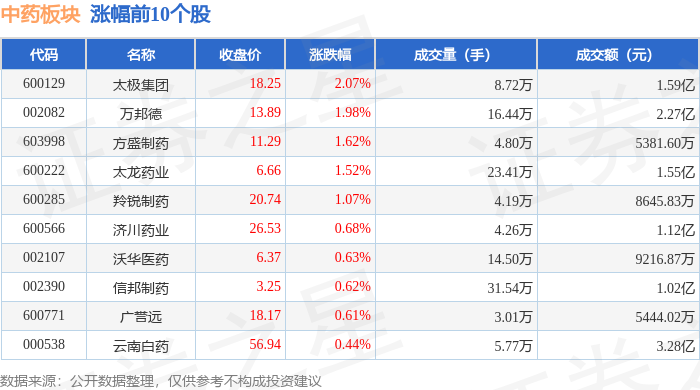
Market Overview - The Chinese medicine sector experienced a decline of 0.32% on December 30, with *ST Changyao leading the drop [1] - The Shanghai Composite Index closed at 3965.12, down 0.0%, while the Shenzhen Component Index closed at 13604.07, up 0.49% [1] Stock Performance - Notable gainers in the Chinese medicine sector included: - Taiji Group (600129) with a closing price of 18.25, up 2.07% [1] - Wanbangde (002082) at 13.89, up 1.98% [1] - Fangsheng Pharmaceutical (603998) at 11.29, up 1.62% [1] - Conversely, *ST Changyao (300391) saw a significant drop of 19.49%, closing at 0.95 [2] Trading Volume and Value - The trading volume and value for key stocks were as follows: - Taiji Group: 87,200 shares traded, with a transaction value of 159 million [1] - Wanbangde: 164,400 shares traded, with a transaction value of 227 million [1] - Fangsheng Pharmaceutical: 48,000 shares traded, with a transaction value of 53.82 million [1] Capital Flow - The Chinese medicine sector experienced a net outflow of 231 million from institutional investors, while retail investors saw a net inflow of 280 million [2] - The capital flow for specific stocks included: - Wanbangde with a net inflow of 48.79 million from institutional investors [3] - Taiji Group with a net inflow of 18.53 million from institutional investors [3] - *ST Changyao had a net outflow of 19.49% [2]