
JGJC(000799)

Search documents
酒类股强势上扬,舍得酒业、酒鬼酒涨停,泸州老窖等走高
Zheng Quan Shi Bao Wang· 2025-11-10 06:49
Group 1 - The core viewpoint is that the liquor sector has seen a strong rise in stock prices recently, despite ongoing challenges in the industry due to slow domestic consumption recovery and tightening policies [1] - Major liquor companies such as Shede Liquor, Jiu Gui Jiu, and Kweichow Moutai have experienced significant stock price increases, with some reaching their daily limit [1] - The white liquor industry has faced weak demand, with both sales volume and retail prices showing a year-on-year decline, leading to a significant underperformance compared to the market [1] Group 2 - CITIC Securities predicts that while the white liquor industry will continue to face pressure in the short term, the second half of 2025 will mark the bottom of the industry's fundamentals, with the weakest sales and lowest market expectations [1] - The report suggests that the beer industry will see stable revenue and profits in 2026, with a focus on companies that have strong channel management and product potential [1] - Xiangcai Securities highlights that the current valuation of the sector is relatively low, presenting opportunities for bottoming out and recovery, emphasizing the importance of innovation in categories, channels, and consumption scenarios [2]


大消费板块,午后大涨
Di Yi Cai Jing Zi Xun· 2025-11-10 05:58
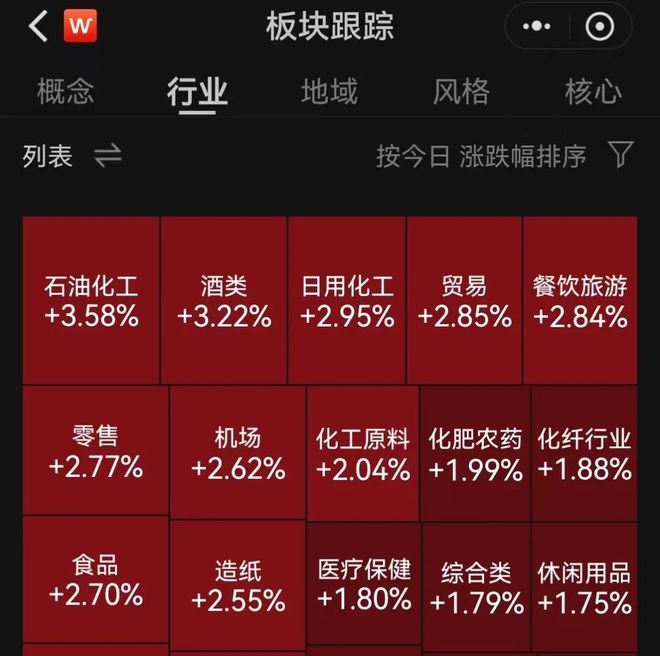
Core Viewpoint - The consumer sector is experiencing a significant rise, particularly in the liquor, restaurant, tourism, and food industries, as evidenced by the performance of various stocks and indices [1][2]. Group 1: Sector Performance - The oil and chemical sector increased by 3.58%, while the liquor sector rose by 3.22% and the restaurant and tourism sector by 2.84% [2]. - Other notable sectors include retail (+2.77%), food (+2.70%), and healthcare (+1.80%) [2]. Group 2: Stock Highlights - Several stocks reached their daily limit, including Shede Liquor, Kweichow Moutai, and Jinjiang Hotels, indicating strong investor interest [2]. - Specific stock performances include: - Shede Liquor at 65.63, up 10.01% - Kweichow Moutai at 23.57, up 9.99% - Luzhou Laojiao at 142.25, up 8.05% [3]. Group 3: Food Sector Insights - The food index increased by 2.80%, with stocks like Gais Food and Sanyuan Holdings showing significant gains of 10.07% and 10.06%, respectively [4]. - The Ministry of Finance announced plans to continue implementing policies to boost consumption, particularly in key areas such as personal consumption loans [4].




A股白酒股涨幅扩大,舍得酒业涨停,酒鬼酒逼近涨停
Ge Long Hui· 2025-11-10 05:19
Core Viewpoint - The A-share market has seen a significant increase in the prices of liquor stocks, with several companies reaching their daily price limits or experiencing substantial gains [1] Group 1: Stock Performance - Shede Liquor has reached its daily limit up [1] - Jiu Gui Jiu is close to reaching its daily limit up [1] - Luzhou Laojiao has increased by over 7% [1] - Shanxi Fenjiu and Gujing Gongjiu have both risen by over 6% [1] - Yingjia Gongjiu has increased by over 5% [1] - Jinhui Liquor has risen by over 4% [1] - Shuijingfang, Jinzizijiu, Jianshiyuan, Wuliangye, and Laobai Ganjiu have all increased by over 3% [1] - Kweichow Moutai has risen by nearly 2% [1]


酒鬼酒股价涨5.06%,广发基金旗下1只基金重仓,持有58.66万股浮盈赚取177.74万元
Xin Lang Cai Jing· 2025-11-10 03:43
Group 1 - The stock price of Jiu Gui Jiu increased by 5.06%, reaching 62.96 CNY per share, with a trading volume of 821 million CNY and a turnover rate of 4.10%, resulting in a total market capitalization of 20.458 billion CNY [1] - Jiu Gui Jiu Co., Ltd. is located in Jishou City, Hunan Province, and was established on July 14, 1997, with its listing date on July 18, 1997. The company primarily engages in the production and sales of fragrant liquor series products [1] - The main business revenue composition includes: Jiu Gui series 51.60%, other series 22.38%, Nei Can series 19.77%, Xiang Quan series 5.61%, and others 0.64% [1] Group 2 - According to data from the top ten heavy stocks of funds, one fund under GF Fund has a significant holding in Jiu Gui Jiu. The GF Consumption Leading Mixed A Fund (012690) held 586,600 shares in the third quarter, accounting for 5.19% of the fund's net value, making it the third-largest heavy stock [2] - The GF Consumption Leading Mixed A Fund was established on August 24, 2021, with a latest scale of 459 million CNY. Year-to-date return is 11.46%, ranking 5711 out of 8219 in its category; the one-year return is 5.54%, ranking 6369 out of 8125; and since inception, it has a loss of 23.84% [2] - The fund manager of GF Consumption Leading Mixed A is Wang Peng, who has been in the position for 6 years and 58 days, with a total asset scale of 1.503 billion CNY. The best fund return during his tenure is 74.86%, while the worst return is -22.56% [2]
A股白酒股拉升,舍得酒业涨近7%,山西汾酒涨超4%
Ge Long Hui· 2025-11-10 03:11
Core Viewpoint - The A-share market has seen a significant rise in liquor stocks, indicating positive investor sentiment in this sector [1] Group 1: Stock Performance - Zhongrui Co. and Kuaijishan both reached the daily limit increase, showcasing strong market interest [1] - Shede Liquor increased nearly 7%, while Luzhou Laojiao and Gujing Gongjiu rose over 5% [1] - Yinjia Gongjiu, Shanxi Fenjiu, and Jiu Gui Jiu saw increases of over 4% [1] - Jinhuijiu, Laiyifen, and Guyue Longshan rose over 3%, while Jinzhongzi Jiu, Wushang Group, Wuliangye, and Shui Jing Fang increased over 2% [1] - Kweichow Moutai experienced a rise of over 1% [1]



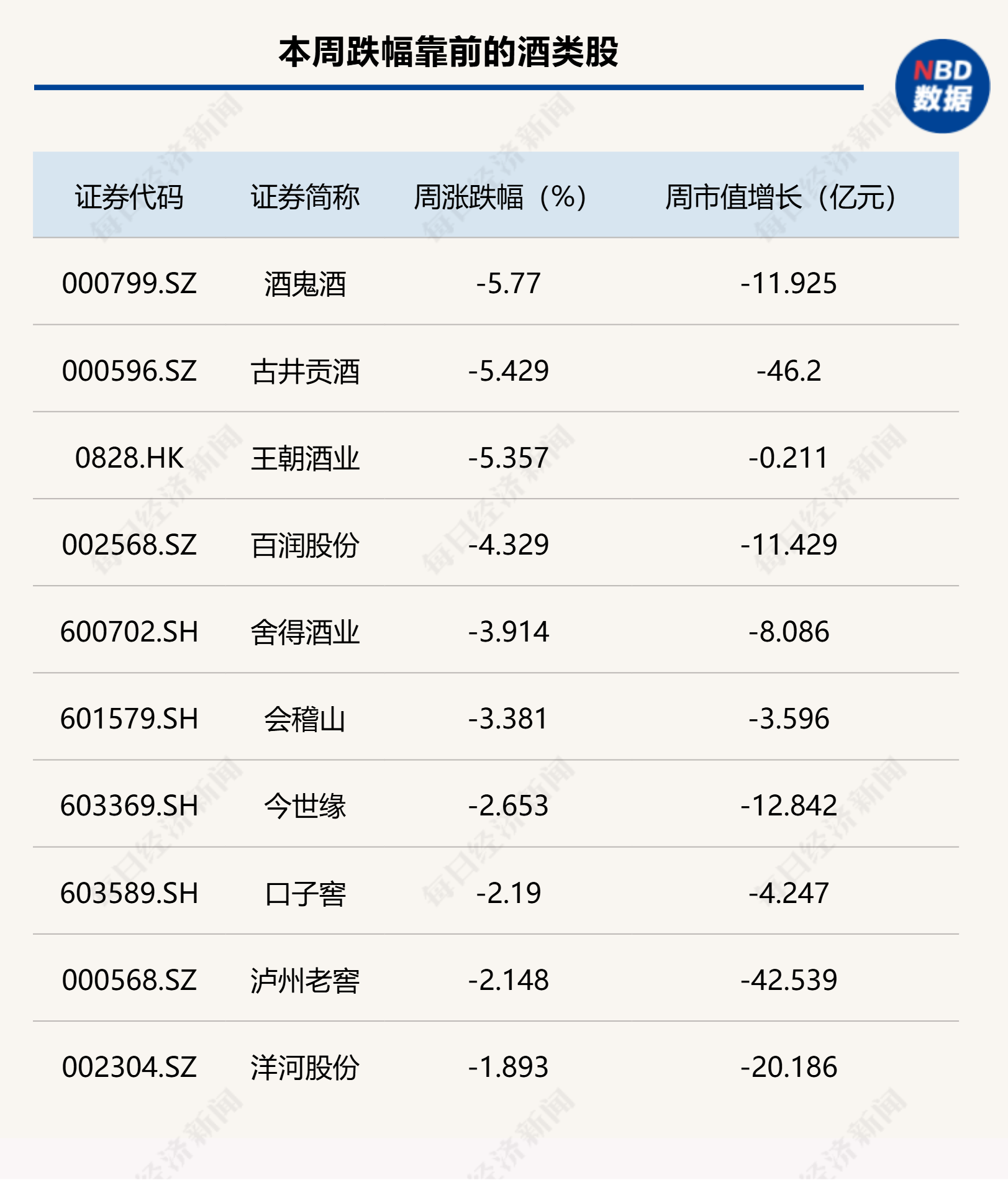
白酒指数周跌1.85%!酒鬼酒跌5.77%,这一因素让市场放不下心丨酒市周报
Mei Ri Jing Ji Xin Wen· 2025-11-09 07:23
Core Viewpoint - The white liquor industry is experiencing a downturn, with the Wind White Liquor Index dropping by 1.85% this week, indicating a widespread decline in the sector [1][3]. Industry Summary - The Wind White Liquor Index closed at 59015.65 points, with only a few companies, including Guizhou Moutai and Shunxin Agriculture, showing positive performance, while over ten stocks, including Yilite and Jinhui Liquor, saw declines [1][3]. - The overall market sentiment remains weak, with the main products of companies like Jiu Gui Jiu showing no signs of sales improvement, leading to a lack of investor confidence [1][4]. Company-Specific Summary - Jiu Gui Jiu reported a revenue of 198 million yuan in Q3, a year-on-year increase of 0.78%, but still incurred a net loss of 18.76 million yuan, although this loss was reduced by 70.93% compared to the previous year [4]. - The company's contract liabilities significantly decreased to 117 million yuan by the end of Q3, down 52% from the beginning of the year, indicating weakened prepayment willingness from distributors [4]. - Despite the launch of a new collaborative product with Pang Donglai, the main product lines of Jiu Gui Jiu have seen substantial declines, raising concerns about the sustainability of its recovery [4].
手握4700亿家底,白酒抗跌能力变强
21世纪经济报道· 2025-11-07 04:00
Core Viewpoint - The 2025 Q3 report for the liquor industry indicates it is the worst quarter in the past decade, with most companies experiencing significant declines in performance, while only a few, like Guizhou Moutai and Shanxi Fenjiu, managed to maintain positive growth [1][4]. Group 1: Performance Comparison - Among the 21 A-share liquor companies, only 15 have fully experienced the previous adjustment period, showing improved resilience against downturns [2]. - In 2025 Q3, the revenue and net profit of these 15 companies fell by 4.5% and 5.5%, respectively, compared to more severe declines in 2013 and 2014 [4]. - The number of leading liquor companies maintaining positive growth has increased, with Guizhou Moutai and Shanxi Fenjiu being the only ones to achieve this in 2025 Q3 [5]. Group 2: Profitability and Financial Resilience - The total net profit of the 15 liquor companies in 2025 Q3 exceeded 110 billion, significantly higher than the less than 28 billion in 2013 [10]. - The accumulated undistributed profits of these companies reached 468.8 billion, five times that of 2013, indicating a stronger financial cushion [10][12]. - The profitability of leading companies has improved, with Moutai maintaining a gross margin above 90% and Wuliangye's gross margin rising to over 80% [13][14]. Group 3: Sales and Marketing Strategies - Unlike the previous cycle, companies have been more restrained in their sales expenditures, with many reducing their sales expense ratios compared to 2013 and 2014 [17][19]. - Guizhou Moutai's sales expense ratio remains low at around 3-4%, reflecting strong brand recognition and market confidence [20]. Group 4: Channel Confidence and Cash Flow - The confidence of distributors has improved, with contract liabilities for the 15 companies increasing by 3.6% in 2025 Q3, contrasting sharply with the declines seen in the previous cycle [22][24]. - However, some non-leading companies have reported negative cash flow from operating activities, indicating potential financial strain [28].

白酒黄金时代终结?十年最差三季报来了
3 6 Ke· 2025-11-06 12:25
Core Viewpoint - The Chinese liquor industry, particularly the baijiu sector, is experiencing a significant downturn, with major companies reporting their worst third-quarter financial results in a decade, indicating a shift into a new cycle of challenges and market dynamics [1][6]. Industry Performance - In the first three quarters of the year, 20 A-share baijiu companies reported a total revenue of approximately 317.8 billion yuan, a year-on-year decline of 5.90%, and a net profit of about 12.26 billion yuan, down 6.93% [1]. - The overall revenue for the third quarter was around 77.98 billion yuan, reflecting an 18.47% year-on-year decrease, while net profit fell to approximately 28.01 billion yuan, a decline of 22.22% [1]. Market Dynamics - The baijiu industry is entering a phase of differentiation, with top brands like Moutai and Wuliangye showing weak growth, and regional brands experiencing severe declines in performance [3][4]. - The traditional strategies of price increases and inventory control are losing effectiveness as consumer preferences shift towards value and taste rather than brand prestige [4][5]. Consumer Behavior Changes - There is a notable decline in high-end gifting demand and a shift in consumer confidence, leading to reduced sales in high-end dining and business banquet scenarios [2][8]. - Younger consumers are increasingly favoring lower-alcohol beverages and are less inclined to participate in traditional drinking culture, with over 60% preferring non-alcoholic options in social settings [8][9]. Inventory and Pricing Issues - The industry is facing significant inventory challenges, with many companies reporting extended inventory turnover periods, leading to increased pressure on cash flow and necessitating promotional discounts [11][14]. - The reliance on price increases for profit has backfired as demand slows, resulting in a rapid erosion of previously established profit margins [12][13]. Future Outlook - The baijiu sector is transitioning from a period of guaranteed growth to a more competitive landscape where companies must adapt to changing consumer preferences and market conditions [6][10]. - The traditional high-margin structure of the industry is under threat, with many smaller brands struggling to survive amid rising costs and declining sales [14][15].


白酒2025年三季报总结:加速纾压,底部渐明
Soochow Securities· 2025-11-06 11:05
Investment Rating - The report maintains an "Accumulate" rating for the liquor industry [1] Core Viewpoints - The liquor industry is currently in a phase of pressure relief and clearing, with expectations for performance recovery in the future. The focus should be on companies that show early signs of a turning point and have leading growth elasticity [3] - The overall revenue of the liquor sector has declined, with a 5.5% year-on-year drop in total revenue for the first three quarters of 2025, and an 18.3% decline in Q3 alone. Net profit also saw a significant decrease of 21.9% in Q3 [12][24] - The high-end liquor segment is under pressure, with a need for macroeconomic recovery to achieve a balance in volume and price. Companies with strong brand positioning and national expansion potential are recommended for investment [3][12] Summary by Sections 1. Q3 Performance and Market Conditions - The Q3 performance of the liquor sector shows a slow recovery in consumption scenarios, with overall sales continuing to face pressure. The high-end and next-high-end liquor demand remains under pressure, particularly in business and personal dining scenarios [12][13] - The overall revenue for the liquor sector in Q3 dropped by 18.3% year-on-year, with net profit down by 21.9%, indicating a significant acceleration in the decline compared to previous quarters [12][24] 2. Revenue Trends - The liquor sector's revenue has been on a downward trend, with a 5.5% year-on-year decline in the first three quarters of 2025. The Q3 revenue decline is particularly sharp at 18.3% [12][24] - High-end liquor companies are experiencing a shift in their financial reports, with revenue declines driven by pressure on major brands like Moutai and Wuliangye [30][41] 3. Profitability Analysis - The gross profit margin for the liquor sector has decreased, with Q3 margins at 81.7%, down 0.7 percentage points year-on-year. The decline in profitability is attributed to structural issues and increased costs [2][3] - The report highlights that the majority of liquor companies have seen an increase in sales expenses, while management expenses have also risen slightly due to weaker revenue realization [2][3] 4. Investment Recommendations - The report suggests prioritizing investments in companies that are likely to recover first, such as Luzhou Laojiao and Shanxi Fenjiu, which have strong governance and dividend yields. Other companies to watch include Zhenjiu Lidu and Shede Liquor [3][12] - The focus should be on companies that can maintain channel stability and show early signs of marginal recovery, as the market is expected to support valuations for these firms [12][13]


食品饮料2025年三季报总结:白酒主动释放压力,速冻迎来行业拐点,软饮、零食量贩高景气维持
China Post Securities· 2025-11-06 05:06
Industry Investment Rating - The investment rating for the food and beverage industry is "Outperform" [1] Core Insights - The report highlights that the liquor sector is actively releasing pressure on financial statements, with the industry gradually bottoming out. The frozen food sector is witnessing a turning point, while the soft drink and snack sectors maintain high levels of prosperity [3][4][30] Summary by Sections 1. Liquor - The liquor sector's total revenue for the first three quarters of 2025 was CNY 319.23 billion, a year-on-year decrease of 5.76%, with net profit down 6.85% to CNY 122.67 billion. In Q3 alone, revenue fell 18.38% to CNY 78.48 billion, and net profit dropped 22.00% to CNY 28.09 billion [14][28] - High-end liquor brands like Moutai showed stable growth, while others like Wuliangye and Luzhou Laojiao faced significant declines. Moutai's revenue grew by 9.28% year-on-year, while Wuliangye's fell by 10.26% [17][19] - The second-tier liquor brands, such as Fenjiu, showed resilience with a revenue increase of 5.00%, while others like Shui Jing Fang and Shede experienced declines [26][22] 2. Soft Drinks - The soft drink sector saw significant growth, with companies like Dongpeng Beverage reporting a 34.13% increase in revenue year-on-year. The energy drink segment, particularly, showed robust growth [30][31] - The introduction of new flavors and products, such as Dongpeng's summer limited edition, contributed to the sustained high growth rates in this sector [30] 3. Dairy Products - The dairy sector, led by Yili, maintained stable performance despite high base effects, with significant growth in milk powder and cold drink products. New Dairy's low-temperature products continued to show double-digit growth [4][31] 4. Frozen Foods - The frozen food industry is experiencing a turning point, with companies noting that the price war has peaked. The focus is shifting towards rational competition and value [7][30] 5. Snacks - The snack sector is undergoing strategic adjustments, with member stores and instant retail becoming key growth channels. The overall consumption environment remains weak, but the snack sector is adapting with targeted strategies [7][30]