ZGXT(000831)

Search documents
中国稀土收盘上涨6.13%,滚动市盈率606.91倍,总市值451.97亿元
Jin Rong Jie· 2025-07-24 08:35
Company Overview - China Rare Earth's closing price on July 24 was 42.59 yuan, an increase of 6.13%, with a rolling PE ratio of 606.91, marking a new low in 597 days, and a total market capitalization of 45.197 billion yuan [1] - The company's main business includes rare earth mining, processing, production of rare earth oxides, and technology research and consulting services [1] Financial Performance - For Q1 2025, the company reported revenue of 728 million yuan, a year-on-year increase of 141.32%, and a net profit of 72.618 million yuan, up 125.15% year-on-year, with a gross profit margin of 9.77% [1] Industry Comparison - In the small metals industry, the average PE ratio is 68.72, and the median is 64.03, placing China Rare Earth at 39th in the industry ranking [2] - The company has applied for 26 new patents, with 7 invention patents granted and 4 utility model patents [1] Capital Flow - On July 24, the net inflow of main funds into China Rare Earth was 47.423 million yuan, with a total inflow of 10.249 million yuan over the past five days [1]

中国稀土保卫战!间谍走私黑幕曝光,惊心手段远超想象
Sou Hu Cai Jing· 2025-07-24 04:02
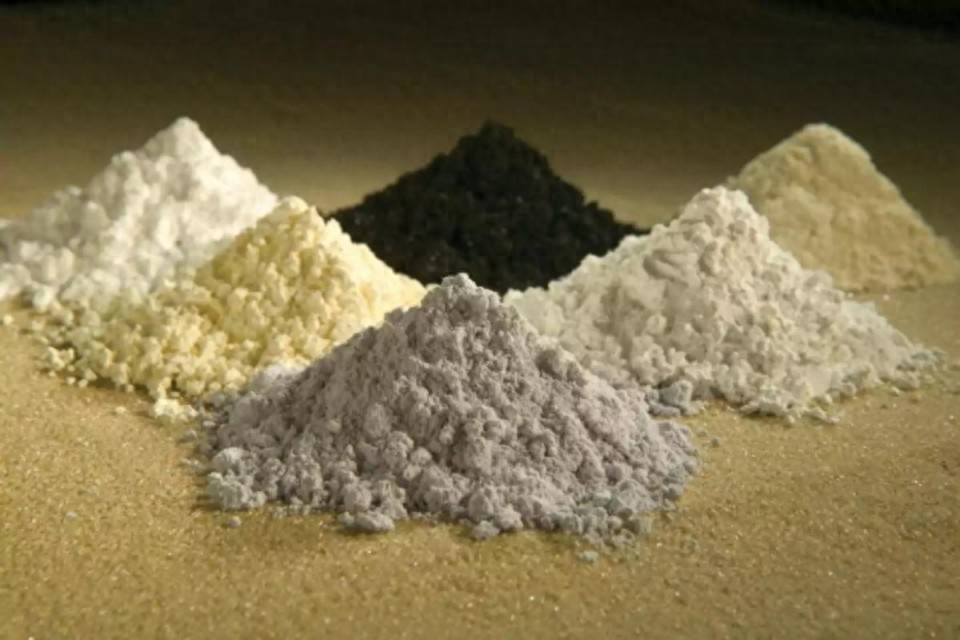
Core Viewpoint - The article highlights the urgent need for national security measures to combat the smuggling of rare earth elements, which are critical for military applications, as illicit activities have surged following tightened export regulations [1][3][5]. Group 1: Smuggling Activities - Smugglers are increasingly sophisticated, using advanced techniques to disguise rare earth elements as other materials, such as "high-purity iron oxide" that turned out to be rare earth dysprosium [3][5]. - Significant quantities of rare earth elements are being hidden in containers labeled as "mineral waste," with customs officials discovering over a billion worth of rare earth elements like neodymium [3][5][7]. - The black market for rare earth elements has seen prices surge by nearly 80% due to a 21% drop in official export volumes in the first half of 2024 compared to the previous year [5][7]. Group 2: Government Response - The Chinese government has rapidly implemented measures to detect and prevent smuggling, including deploying "rare earth component detection devices" at major ports [7][9]. - A coordinated crackdown by the National Security Department led to the dismantling of multiple smuggling rings, with estimated case values exceeding 3 billion [7][9]. - The government is also focusing on technological advancements and alternative materials to reduce reliance on rare earth elements, with significant investments in deep-sea exploration for rare earth resources [9]. Group 3: Strategic Importance - Rare earth elements are vital for military technology, including components in advanced weaponry like the J-20 fighter jet and intercontinental missile guidance systems [5][9]. - The article emphasizes that controlling rare earth resources is not just about export restrictions but also about maintaining technological superiority and national security [9].

中国稀土出口暴增660%,特朗普苦求多次后直接懵了
Sou Hu Cai Jing· 2025-07-24 01:16
Group 1 - China's export of rare earth magnets to the U.S. surged to 353 tons in June, a 660% increase from May [1][3] - The U.S. has been in a state of anxiety regarding its dependence on Chinese rare earth materials, prompting efforts to boost domestic production [8][10] - The increase in exports is not a gesture of goodwill from China but a strategic move to undermine U.S. efforts to build its own supply chain [10][12] Group 2 - Rare earth materials are critical for modern industries, including electronics and military applications, with China dominating the processing and supply chain [6][8] - The U.S. government has invested heavily in domestic rare earth production, but these efforts have not yet yielded significant results [8][10] - China's strategy involves providing limited quantities of rare earths to the U.S. while maintaining control over more critical materials, thereby stifling U.S. ambitions [12][14] Group 3 - China is establishing new rules for the rare earth market, including export restrictions on key technologies and standards for carbon footprint assessments [18][19] - The lack of transparency in China's production quotas creates uncertainty in the global market, allowing China to maintain pricing power [21] - The simultaneous increase in rare earth exports and the U.S. easing restrictions on AI chip sales to China suggests a strategic exchange between the two nations [23][25]
中国稀土对美出口暴涨660%,一个月353吨背后有何玄机
Sou Hu Cai Jing· 2025-07-23 20:27
Core Viewpoint - The significant increase of 660% in rare earth magnet exports to the U.S. from China, rising from 46 tons to 353 tons, indicates a strategic shift in the ongoing U.S.-China trade dynamics regarding rare earth materials [1][3][32]. Group 1: Export Dynamics - The 660% growth is based on a very small initial export volume, making the absolute increase less impactful for the U.S. industrial sector [3]. - In May, the export volume to the U.S. was only 46 tons, which was insufficient for the needs of the U.S. automotive industry and military applications [5][10]. - The increase in exports in June was facilitated by a phase agreement between China and the U.S., where China agreed to address key bottlenecks in rare earth mineral exports in exchange for the U.S. restoring exports of H20 chips to China [7][8]. Group 2: Strategic Implications - The export surge is a result of "precise control" by China, maintaining export quotas at 60% to ensure that the supply does not fully meet U.S. demand, reflecting a strategic posture [10][24]. - The exchange of rare earths for technology highlights a resource-for-technology negotiation, with both countries holding critical strategic resources [12][18]. - The U.S. has invested heavily in domestic rare earth production, but the current output from U.S. companies like MP Materials is insufficient to meet demand, leading to a reliance on Chinese exports [20][22]. Group 3: Long-term Outlook - The ongoing rare earth competition is indicative of a broader restructuring of global supply chains, with China controlling over 85% of the global rare earth processing capabilities [26][28]. - The demand for rare earth materials is expected to grow exponentially due to the global push for renewable energy technologies, making control over these resources crucial for future manufacturing [28][30]. - The strategic balance between the U.S. and China is evolving from a trade dispute to a long-term strategic competition, with both sides seeking to maintain leverage without provoking a full-scale conflict [30][32].
澳企挖走中国稀土团队墙脚,王牌技术被复制?西方的欢呼太早了!
Sou Hu Cai Jing· 2025-07-23 15:21
Core Viewpoint - Lynas, an Australian company, has made significant advancements in the purification of dysprosium oxide, a challenging aspect of heavy rare earth processing, primarily used in high-performance magnets for various applications such as smartphones, electric vehicles, and wind turbines [1][3]. Group 1: Technology and Talent Acquisition - Lynas has successfully attracted a complete research team from China for a fixed price of 2.83 million RMB, highlighting a strategic move to acquire critical expertise rather than just technology [1]. - The company is not only focused on technology but also on the entire monetization pathway, recognizing that while Australia has substantial resource reserves, the extraction and purification processes are complex and heavily reliant on Chinese capabilities [3][5]. - The high salaries, visa support, and research freedom offered by Lynas are appealing to many Chinese technical professionals, particularly those frustrated by bureaucratic hurdles in their current positions [7]. Group 2: Industry Dynamics and Challenges - Despite the talent acquisition, the overall ecosystem and supply chain in China remain robust, with the country maintaining a competitive edge in the processing of rare earth materials due to its integrated industry structure [7][9]. - Other countries, including the United States, have attempted to establish their rare earth processing capabilities but have faced significant challenges, particularly in balancing environmental concerns, efficiency, and cost [8]. - The loss of talent is a concern for China, but the country has a strong influx of new graduates in relevant fields, which helps maintain a dynamic and resilient research environment [9][11]. Group 3: Strategic Implications - The recent talent migration serves as a reminder for China to protect not just its technology but the entire ecosystem that supports it, emphasizing the need for improved retention strategies for high-skilled professionals [11]. - The focus should be on creating a conducive environment for innovation and collaboration, rather than merely restricting talent movement [11].

中国稀土对美出口暴增660%,管制失效了?这是一场精准“放水”
Sou Hu Cai Jing· 2025-07-23 05:53
Core Viewpoint - The recent surge in China's rare earth exports to the U.S. is not a sign of a policy shift but rather a strategic maneuver in the ongoing U.S.-China trade conflict, reflecting a complex negotiation process between the two nations [1][5][16]. Export Data - In May, China's rare earth exports to the U.S. were only 46 tons, but in June, this figure skyrocketed to 353 tons, marking an increase of 307 tons and a year-on-year growth of 660% [2]. Strategic Context - The increase in exports is attributed to pre-existing orders made before the escalation of the trade conflict, as well as a significant accumulation of rare earth materials by Chinese companies, which now exceeds 2000 tons [3][5]. - Recent breakthroughs in U.S.-China tariff negotiations, including the easing of restrictions on EDA software and H20 chips, have prompted China to expedite the approval process for rare earth exports to the U.S. [5][16]. Export Control Policies - China maintains a firm stance on export controls, allowing only civilian rare earths to be exported while military-grade materials remain strictly off-limits [7][16]. - The U.S. is reportedly attempting to circumvent these restrictions by re-labeling civilian rare earths for military use through third-party countries [11]. Technology and Market Dynamics - Both countries are engaged in a technological arms race, with China seeking to reduce its dependency on high-performance chips through domestic innovation, as evidenced by the success of companies like Huawei and SMIC [13][18]. - The ongoing trade conflict is characterized by a mutual dependency, where neither side can fully disengage from the other in the short term, but the long-term winner will be determined by who achieves breakthroughs in critical technologies first [20].

特朗普投资几百亿开发稀土,中国稀土出口暴增660%的致命逻辑
Sou Hu Cai Jing· 2025-07-23 05:10
Core Viewpoint - The U.S. is facing a significant crisis in rare earth elements (REE), heavily reliant on China for military applications, which exposes strategic vulnerabilities and may lead to costly failures in its "decoupling" strategy from Chinese supply chains [1][3][10] Group 1: U.S. Military and Supply Chain Issues - The U.S. military's dependence on China for REE is critical, with 90% of military-grade REE sourced from China, leading to production halts in key defense projects like the Raytheon Tomahawk missile and Pratt & Whitney engine upgrades [1][3] - The Pentagon's strategic reserves are only sufficient for 9 months, highlighting the urgency of the situation [1] Group 2: Legislative and Corporate Responses - The U.S. Senate is attempting to advance the Critical Minerals Act, but major companies like General Motors and Tesla oppose it due to potential cost increases of $500 for electric vehicles if they sever ties with Chinese supply chains [1][3] - The U.S. government has invested hundreds of billions to reduce reliance on China, including a $4 billion acquisition of MP Materials shares and a $110 per kilogram long-term procurement contract [3] Group 3: China's Strategic Position - China has increased its REE exports to the U.S. significantly in June, but this was primarily due to the release of previously backlogged orders rather than a genuine increase in supply [5] - China's export strategy is selective, prioritizing long-term contracts and controlling high-purity REE exports critical for military applications [5][9] Group 4: Technological and Market Control - China is advancing its technological edge in REE extraction and processing, with estimates suggesting that the U.S. may need 10 to 20 years and trillions in investment to catch up [3][7] - China has also implemented stricter export controls on REE technologies, which could hinder U.S. capabilities in critical sectors [7][9] Group 5: Long-term Implications - The U.S. is at a crossroads, facing the dilemma of either paying high prices for Chinese REE or risking paralysis in its military and renewable energy sectors [9][10] - The competition for REE has evolved beyond a trade war, with China potentially monopolizing the secondary supply of REE by 2030, further complicating U.S. efforts to establish independence [10]
别慌!中国稀土出口暴增6倍,这才是真正的杀招
Sou Hu Cai Jing· 2025-07-22 21:26
Group 1 - The core argument highlights the significant increase in China's rare earth magnet exports to the U.S., which surged by 660% in June, contradicting the narrative of U.S. success in reducing reliance on Chinese supplies [1][7][11] - The U.S. has invested hundreds of billions to establish its own rare earth industry, including a $400 million investment in MP Materials, but this has not resolved the underlying technological challenges [4][6][9] - The U.S. is attempting to form alliances with countries like Ukraine, Australia, and India to secure rare earth supplies, but these efforts are largely ineffective due to the low quality of resources and ongoing conflicts [6][8] Group 2 - China's export strategy is characterized by selective release, focusing on non-military rare earth products while maintaining strict controls on high-value military applications [8][10] - The increase in exports is partly due to a base effect, as the previous month's exports were significantly lower, making the June figures appear more dramatic than they are [7][9] - China's technological superiority in rare earth processing, with a purity level of 99.999%, presents a significant barrier for U.S. companies attempting to achieve self-sufficiency [9][10] Group 3 - The competition over rare earth resources is fundamentally about pricing power and technological standards, with China maintaining control over the market dynamics [10][12] - U.S. companies express frustration over the quality and cost of domestic rare earth products, indicating a continued reliance on Chinese supplies despite political rhetoric [11][12] - The strategic approach of China involves a long-term plan to maintain dependency, making it difficult for U.S. firms to fully disengage from Chinese resources and technology [12]
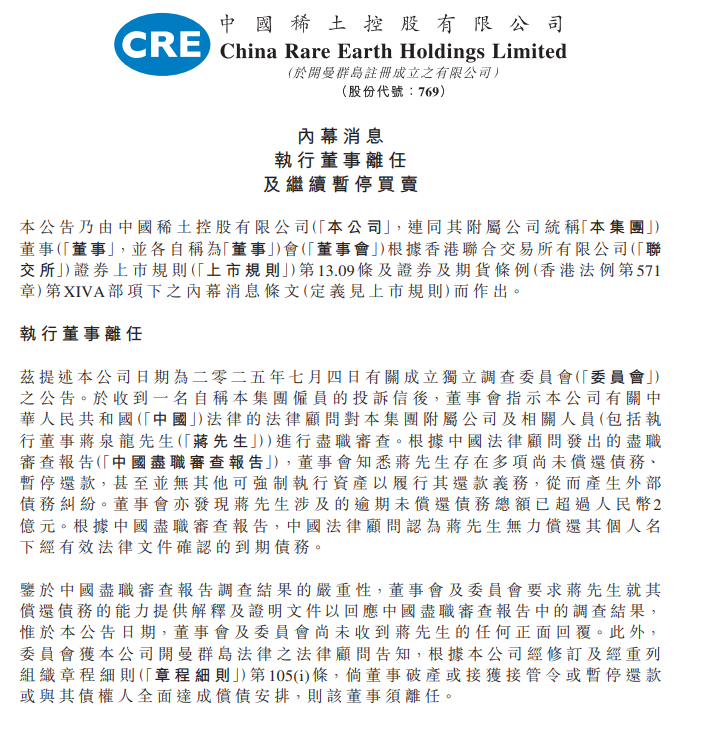
中国稀土港交所公告,董事会指示对执行董事蒋泉龙进行尽职调查。董事会发现蒋泉龙涉及的逾期未偿还债务总额超2亿元人民币。
news flash· 2025-07-22 15:03
中国稀土港交所公告,董事会指示对执行董事蒋泉龙进行尽职调查。 董事会发现蒋泉龙涉及的逾期未偿还债务总额超2亿元人民币。 ...
中国稀土被盗,国安部公布重大发现,抓获一批内鬼,美国毫无下限
Sou Hu Cai Jing· 2025-07-22 06:07
Core Viewpoint - The recent announcement by the National Security Department reveals that China's rare earth resources have been secretly stolen, involving internal traitors, which has sparked widespread discussion [1] Group 1: Rare Earth Resources and National Security - Rare earth elements are crucial strategic resources for China, and their theft is unacceptable [1] - The announcement indicates that a foreign country, likely the United States, is attempting to illegally acquire China's rare earth resources due to its insufficient refining technology [3] - The U.S. is heavily dependent on China's rare earths, and as its own stockpiles dwindle, it has resorted to desperate measures to secure these resources [3] Group 2: Methods of Theft - The U.S. has employed various illegal methods to steal rare earths, including misreporting controlled rare earths as non-controlled goods [3] - High-purity rare earths are being disguised as low-value products to evade scrutiny [3] - Rare earth powders have been mixed into everyday items like tiles and bottled water to avoid detection [3] - Rare earths are also being processed into alloy parts and exported among normal goods [3] Group 3: Internal Betrayal and Response - The involvement of internal traitors in aiding the U.S. in rare earth smuggling is a significant concern [5] - The National Security Department has taken measures to cut off identified smuggling channels and encourages public vigilance [5] - The seriousness of the situation is underscored by the involvement of national security agencies, indicating that this is not just an economic crime but a matter of national security [5] Group 4: International Relations and Reactions - Recent transactions from Thailand and Mexico to the U.S. involving approximately 3,834 tons of antimony oxide have raised concerns, as this volume exceeds the total of the past three years [9] - The U.S. actions reflect its inability to resolve its rare earth issues independently, leading to reliance on underhanded tactics [9] - The international community is gaining a clearer understanding of the U.S.'s true nature, contrasting its self-proclaimed image of justice and rule-following [9] Group 5: Collective Responsibility - Protecting rare earth resources is deemed a collective responsibility of all Chinese citizens [11] - Unity is emphasized as essential to safeguarding national strategic resources against external threats [11] - There is an expectation for legal consequences for those involved in smuggling and harming national interests [11]