ZGXT(000831)

Search documents
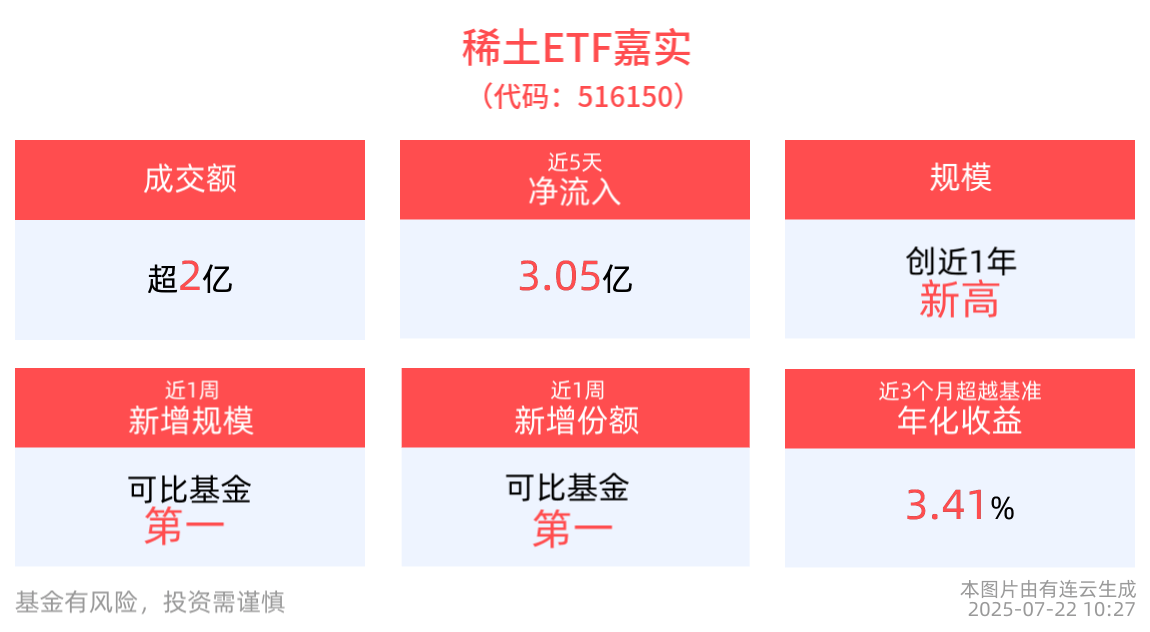
稀土战略重要性不断提升,稀土ETF嘉实(516150)近5日“吸金”超3亿元,成分股中钢天源涨停
Sou Hu Cai Jing· 2025-07-22 02:59
Group 1: Liquidity and Fund Performance - The liquidity of the rare earth ETF managed by Jiashi has a turnover rate of 6.85% with a transaction volume of 216 million yuan [3] - As of July 21, the Jiashi rare earth ETF has reached a scale of 3.145 billion yuan, marking a one-year high and ranking first among comparable funds [3] - In the past week, the Jiashi rare earth ETF has seen a significant increase in shares by 12 million, leading in new share growth among comparable funds [3] - The latest net inflow of funds into the Jiashi rare earth ETF is 78.4154 million yuan, with a total of 305 million yuan net inflow over four out of the last five trading days [3] - The Jiashi rare earth ETF has achieved a net value increase of 63.74% over the past year, ranking 131 out of 2929 in the index stock fund category, placing it in the top 4.47% [3] - Since its inception, the Jiashi rare earth ETF has recorded a highest monthly return of 41.25% and an average monthly return of 9.69% [3] Group 2: Market Trends and Price Movements - Since July, domestic rare earth product prices have shown signs of recovery, with the average market price of praseodymium and neodymium oxide reaching 477,000 yuan per ton, reflecting a week-on-week increase of 5.3% and a month-on-month increase of 8.2% [4] - The upcoming consumption peak season in September and October is expected to drive raw material procurement, leading to a positive outlook for rare earth prices [4] - Historical trends indicate that high overseas prices often lead to domestic price increases, potentially enhancing corporate profits and creating a dual opportunity for valuation and profit expansion in the sector [4] Group 3: Key Stocks in the Rare Earth Sector - The top ten weighted stocks in the rare earth industry index as of June 30, 2025, include Northern Rare Earth, China Rare Earth, and China Aluminum, collectively accounting for 55.58% of the index [4] - The performance of key stocks shows varied changes, with Northern Rare Earth down by 2.40% and Xiamen Aluminum up by 3.50% [6]




澳洲花重金挖走中国稀土团队,结果发现中国早留了三张底牌
Sou Hu Cai Jing· 2025-07-21 18:06
Group 1 - Australia is attempting to attract Chinese rare earth experts by offering significantly higher salaries, aiming to break China's control over the rare earth supply chain [1][3] - Lynas, an Australian rare earth giant, announced the successful extraction of high-purity dysprosium oxide (99.9%) at its Malaysian facility, crediting Chinese experts for their contributions [3][5] - The Australian strategy relies on the assumption that if they can lure away personnel, they can replicate the technology and establish a self-sufficient rare earth industry [5][10] Group 2 - Despite the initial success, Lynas faces significant challenges in scaling up production due to incomplete supply chain capabilities and reliance on external processing [10][11] - China's first advantage lies in its comprehensive technology and over 50 core patents developed since the 1970s, which cannot be easily transferred [13][14] - The second advantage for China is the integrated supply chain, which allows for efficient production from mining to final product, while Australia struggles with high costs and inefficiencies [16][18] Group 3 - Australia's production costs exceed $12 per unit, making it difficult to compete with China's established supply chain, which can produce significantly more at lower costs [20][18] - Lynas's recent financial reports indicate a 27% decline in net profit due to high production costs and slow ramp-up of capacity, highlighting the challenges of breaking free from reliance on China [20][29] - The Australian government is providing subsidies to support Lynas, but the fundamental issues of capability and efficiency remain unresolved [29][30] Group 4 - China's control over the rare earth supply chain is not just about resources but also about the ability to manage the entire production process, which includes proprietary formulas and industrial parameters [33][35] - The market remains skeptical of Australia's ability to replace China's supply due to the latter's established reputation for high purity and reliable delivery [36][39] - Following China's implementation of export licensing for rare earths, prices for dysprosium oxide increased by 12%, while Australian samples struggled to find buyers, indicating the market's preference for Chinese products [39][40]

锂、稀土行业观点汇报
2025-07-21 14:26
Summary of Key Points from Conference Call Records Industry Overview - **Lithium and Rare Earth Industry**: The conference call primarily discusses the lithium and rare earth sectors, focusing on supply dynamics, pricing trends, and government regulations affecting these industries [1][3][6]. Core Insights and Arguments - **Supply Tightening in Lithium**: The verification report for lithium reserves in Yichun, Jiangxi Province, may lead to some companies being unable to renew mining licenses on time, potentially affecting lithium carbonate production by approximately 20,000 tons per month, which could drive prices up [1][4]. - **Impact of Qinghai Salt Lake Production**: Companies in Qinghai are less affected by the recent regulatory changes, but there are concerns about overproduction and illegal mining practices that could pose risks to lithium supply [1][5]. - **Government Regulation Intent**: The government aims to optimize the lithium industry by eliminating loss-making capacities and better understanding national strategic metal reserves, which has contributed to a rebound in lithium prices from low levels [1][6]. - **Rare Earth Supply-Demand Shift**: Initially, there was an oversupply of rare earths in May, but a shift to a supply deficit is expected in Q3, which is likely to significantly boost prices, with prices for products like gadolinium oxide nearing 500,000 yuan per ton [1][9]. - **Geopolitical Factors Enhancing Rare Earth Value**: The U.S.-China trade tensions have led to a reassessment of the strategic value of rare earths, with China limiting exports and the U.S. supporting local industries, thus enhancing the valuation of the rare earth sector [1][10]. - **Market Sentiment in Rare Earths**: The auction of gadolinium and niobium metals on the Baotou exchange has led to a price increase, reflecting heightened market activity and confidence, with bullish sentiment prevailing [1][12]. Additional Important Content - **Current Lithium Companies to Watch**: Companies such as Zhongmin Resources, Shengxing Lithium Energy, Tianqi Lithium, Ganfeng Lithium, and Yongxing Materials are highlighted for their stable stock performance and future growth potential [1][7]. - **Rare Earth Market Trends**: The rare earth market has shown significant improvement, with a tightening supply situation compared to the previous year, leading to a positive price outlook [1][9][13]. - **Investment Opportunities in Rare Earths**: The rare earth magnetic materials sector is recommended for investment, with companies like Northern Rare Earth and China Rare Earth being noted for their potential [1][15][17]. - **Precious Metals Market Outlook**: The precious metals market, particularly silver and gold, is viewed optimistically due to expectations of Federal Reserve interest rate cuts, with silver showing strong performance due to its dual financial and industrial attributes [2][16][18]. This summary encapsulates the key points discussed in the conference call, providing insights into the lithium and rare earth industries, market dynamics, and investment opportunities.




海外利好催化推动稀土板块大涨,钨价受供给扰动持续新高
Hua Yuan Zheng Quan· 2025-07-21 12:55
Investment Rating - Investment rating: Positive (maintained) [5] Core Views - The rare earth sector is experiencing price increases driven by overseas catalysts, with neodymium oxide rising 7.29% to 478,500 CNY/ton, dysprosium oxide up 2.44% to 1,680,000 CNY/ton, and terbium oxide increasing 0.84% to 7,180,000 CNY/ton [5][12] - Molybdenum prices are fluctuating at high levels due to increased steel demand, with molybdenum concentrate prices rising 4.46% to 3,985 CNY/ton [5][24] - Tungsten prices are at new highs due to supply contraction expectations, with black tungsten concentrate prices increasing 4.07% to 179,000 CNY/ton [5][29] - Tin prices are under pressure with SHFE tin down 1.01% to 264,500 CNY/ton, influenced by raw material shortages from Myanmar [5][37] - Antimony prices are adjusting downwards, with antimony ingot prices falling 1.30% to 190,000 CNY/ton due to reduced smelting output [5][48] - The controllable nuclear fusion materials sector is in a high-growth phase, with significant opportunities for upstream materials [6] Summary by Category Rare Earths - Recent price increases: neodymium oxide up 7.29% to 478,500 CNY/ton, dysprosium oxide up 2.44% to 1,680,000 CNY/ton, terbium oxide up 0.84% to 7,180,000 CNY/ton [5][12] Molybdenum - Molybdenum concentrate price increased 4.46% to 3,985 CNY/ton, while molybdenum iron (Mo60) rose 3.49% to 252,000 CNY/ton [5][24] Tungsten - Black tungsten concentrate price increased 4.07% to 179,000 CNY/ton, and ammonium paratungstate rose 4.35% to 264,000 CNY/ton [5][29] Tin - SHFE tin price decreased 1.01% to 264,500 CNY/ton, and LME tin fell 1.82% to 33,160 USD/ton [5][37] Antimony - Antimony ingot price decreased 1.30% to 190,000 CNY/ton, and antimony concentrate price fell 1.49% to 16,500 CNY/ton [5][48] Nuclear Fusion Materials - The controllable nuclear fusion industry is accelerating commercialization, with significant benefits expected for upstream materials [6]




中国科研团队发现新稀土矿物,我国稀土稀缺性战略价值升级!稀土ETF(516780)全天成交额超2亿元
Xin Lang Ji Jin· 2025-07-21 09:16
Core Viewpoint - The A-share rare earth sector has shown renewed strength, driven by the discovery of a new rare earth mineral, "Neodymium Huanghe," which is expected to enhance China's strategic value in rare earth resources [1][2]. Group 1: Market Performance - Since early July, the rare earth sector has entered a new phase of oscillating upward momentum, with the rare earth ETF (516780) becoming a popular product for investors looking to capitalize on industry trends [1]. - The trading volume of the rare earth ETF reached 235 million yuan on the day of reporting, reflecting active market participation [1]. - From July onwards, the rare earth ETF has seen a cumulative inflow of 217 million yuan, resulting in a net increase of 17.8 million shares and 34.9 million yuan in scale, marking increases of 18.22% and 31.10% respectively compared to the end of June [1]. Group 2: Industry Insights - The rare earth ETF (516780) closely tracks the CSI Rare Earth Industry Index, which includes companies involved in rare earth mining, processing, trading, and applications, providing a comprehensive view of the sector's performance [1]. - The top five constituent stocks of the index include Northern Rare Earth, China Rare Earth, China Aluminum, Grinm Advanced Materials, and Lingyi iTech, all of which are competitive leaders in the industry [1]. - The fund manager of the rare earth ETF indicated that the sustainability of the recent price increases will depend on the supply-demand fundamentals, including the issuance of mining and smelting quotas and the economic conditions of downstream industries such as new energy vehicles and robotics [2].



中证沪港深互联互通中小综合原材料指数报4406.56点,前十大权重包含赤峰黄金等
Jin Rong Jie· 2025-07-21 08:44
Group 1 - The CSI Hong Kong-Shanghai-Shenzhen Interconnection Small Comprehensive Materials Index reported a value of 4406.56 points, showing a monthly increase of 7.39%, a three-month increase of 14.25%, and a year-to-date increase of 15.75% [1] - The index is categorized into 11 industries based on the classification standards of the CSI Hong Kong-Shanghai-Shenzhen Index Series, which includes the CSI 500, CSI Hong Kong-Shanghai-Shenzhen Interconnection Small Comprehensive Index, and the CSI Hong Kong-Shanghai-Shenzhen Comprehensive Index [1] - The top ten weighted stocks in the index include Chifeng Jilong Gold Mining (1.53%), Zhaojin Mining Industry (1.28%), China Rare Earth (1.16%), and others, indicating a diverse representation of companies in the materials sector [1] Group 2 - The market share of the index's holdings shows that Shenzhen Stock Exchange accounts for 49.61%, Shanghai Stock Exchange for 38.62%, and Hong Kong Stock Exchange for 11.76% [2] - In terms of industry composition, non-ferrous metals represent 40.64%, chemicals 37.39%, non-metallic materials 9.51%, steel 8.03%, and paper and packaging 4.43% [2] - The index samples are adjusted biannually, with adjustments occurring on the next trading day after the second Friday of June and December, ensuring that the weight factors are updated accordingly [2]



中报窗口期投资聚焦基本面 中证A500 ETF龙头(563800)盈利优势凸显
Sou Hu Cai Jing· 2025-07-21 06:08
Group 1 - The core viewpoint of the articles emphasizes that as the A-share market enters the mid-year performance reporting period, the focus is shifting back to fundamentals, with sectors showing stable profits likely to see valuation increases [1][2] - The CSI A500 ETF (563800) has shown strong performance, with a net asset value increase of 7.60% over the past six months, and its latest scale exceeding 17 billion yuan as of July 20 [1] - Among the CSI A500 index constituents, 129 companies have issued earnings forecasts, with 94 expected to be profitable and 85 anticipating year-on-year net profit growth, indicating a significantly better outlook than the overall market [1][2] Group 2 - The strong performance of the CSI A500 index constituents is attributed to its innovative compilation scheme, which selects leading companies across three industry segments while maintaining industry balance and over-allocating to new productivity sectors [2] - Analysts predict that from 2025 to 2027, the average annual growth rate of net profit attributable to the parent company for the CSI A500 index will reach 10.6%, significantly higher than other broad-based indices [2] - The current phase of the A-share market is characterized by a "profit bottom + policy bottom" resonance, with the CSI A500 index expected to build long-term support above 3,500 points [2]


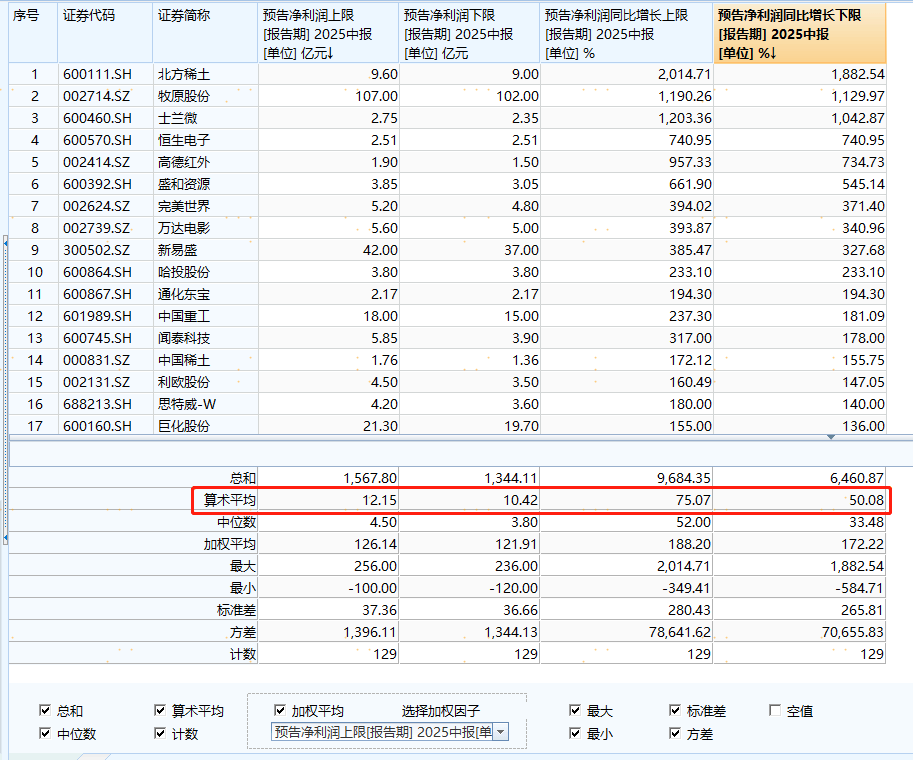
稀土ETF嘉实(516150)冲高上涨3.48%, 成分股卧龙电驱、盛和资源10cm涨停
Xin Lang Cai Jing· 2025-07-21 03:28
Core Viewpoint - The rare earth industry is experiencing significant growth, with the China Rare Earth Industry Index rising by 3.36% and key stocks reaching their daily limit up, indicating strong market interest and potential investment opportunities [1][3]. Market Performance - The rare earth ETF, Jiashi (516150), has seen a 3.48% increase, marking its third consecutive rise [1]. - The ETF recorded a turnover rate of 7.84% and a transaction volume of 238 million yuan, with an average daily transaction of 297 million yuan over the past week, ranking first among comparable funds [3]. - The Jiashi rare earth ETF's scale increased by 336 million yuan in the past week, also leading among comparable funds [3]. - The ETF's shares grew by 18.4 million, achieving significant growth and ranking first in new share issuance among comparable funds [3]. - Over the past five trading days, the ETF experienced net inflows on three days, totaling 216 million yuan [3]. Historical Performance - The Jiashi rare earth ETF has seen a net value increase of 58.80% over the past year, ranking 168 out of 2917 in the index stock fund category, placing it in the top 5.76% [3]. - Since its inception, the ETF's highest monthly return was 41.25%, with the longest consecutive monthly gains being four months and a maximum cumulative increase of 83.89% [3]. Industry Outlook - The investment opportunities in the non-ferrous metals sector are viewed positively for the second half of 2025, with expectations of rising rare earth prices due to increasing demand and limited supply [3]. - The rare earth sector is recognized as a strategically important industry in China, with potential for increased attention and value reassessment driven by policy changes and its global leadership position [4]. - The permanent magnet sector is expected to benefit from the growth in humanoid robotics and the low-altitude economy [4]. Key Stocks - The top ten weighted stocks in the China Rare Earth Industry Index include Northern Rare Earth, China Rare Earth, China Aluminum, and others, collectively accounting for a significant portion of the index [4][6]. - Notable stock performances include Northern Rare Earth rising by 6.64%, China Rare Earth by 4.19%, and Wolong Electric Drive by 10% [6].

A 股半年度业绩预告进行时,业绩分化明显
Huan Qiu Wang· 2025-07-21 02:04
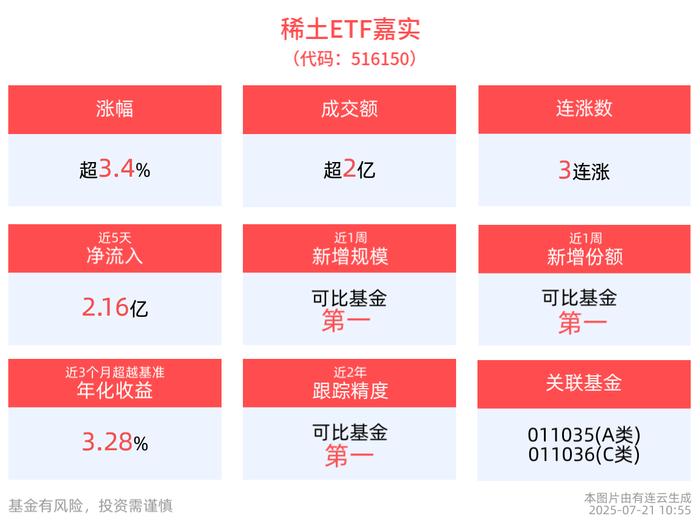
Group 1 - A total of 1540 A-share listed companies disclosed their performance forecasts for the first half of 2025, with 674 companies expecting positive results, indicating a clear performance divergence [1] - The rise in prices of non-ferrous metals and chemical products has significantly boosted the performance of certain industry-listed companies [1] - In the rare earth sector, it is expected that the net profit attributable to shareholders for the first half of 2025 will be between 136 million yuan and 176 million yuan, marking a turnaround from losses [1] Group 2 - Northern Rare Earth anticipates a net profit attributable to shareholders of 900 million to 960 million yuan for the first half of 2025, representing a year-on-year increase of 1882.54% to 2014.71% [1] - Guangsheng Nonferrous Metals expects a net profit of 70 million to 85 million yuan, also indicating a turnaround from losses [1] - In the gold industry, companies are experiencing strong performance due to rising gold prices, with Shandong Gold forecasting a net profit of 2.55 billion to 3.05 billion yuan, an increase of 84.3% to 120.5% year-on-year [3] Group 3 - The semiconductor industry is benefiting from strong demand for chips and hardware, with companies like Lanke Technology projecting revenue of approximately 2.633 billion yuan, a year-on-year increase of about 58.17% [3] - Lanke Technology also expects a net profit of 1.1 billion to 1.2 billion yuan, reflecting a year-on-year growth of 85.50% to 102.36% [3] - In contrast, around 200 companies are expected to report significant declines in performance, particularly in the chemical sector, which is affected by market price fluctuations [3]




大量中国稀土流入美国,中方查明有"内鬼",这次坚决不能再手软
Sou Hu Cai Jing· 2025-07-20 23:01
Core Viewpoint - The article discusses the ongoing issues surrounding rare earth exports from China to the United States, highlighting the illegal smuggling activities and the measures taken by the Chinese government to combat these actions. Group 1: Smuggling Activities - Since December last year, nearly 4,000 tons of rare earths have been secretly transported to the U.S., despite a ban on exports for national security reasons [1] - U.S. media reported in July that American companies continued to thrive and utilize rare earths without significant impact from China's export controls [5] - Data from the U.S. Department of Commerce revealed a 270% increase in imports of antimony oxide from Thailand, raising suspicions about the legitimacy of these imports [7] - Chinese customs records indicated that shipments labeled as "zinc alloy" were actually disguised rare earths, with one ton containing 300 kg of high-purity antimony [9] - In Mexico, a loophole allowed the mixing of Chinese rare earths with local iron ore, facilitating exports to the U.S. under the guise of mixed metal ores [11][12] Group 2: Government Response - China has implemented advanced detection methods at border checkpoints, including 32,000 sensors capable of identifying rare earth elements with high precision [16] - The efficiency of detecting smuggling cases has increased to 98% with the use of these sensors [18] - A new Mineral Resources Law was enacted in July, imposing severe penalties for smuggling strategic resources, including potential life sentences for significant offenses [20][22] - The article emphasizes that despite trade agreements with the U.S., the rare earth conflict remains unresolved, as these resources are crucial for China's military and high-tech sectors [24][25]