AHTHGC(000901)

Search documents
A股异动!“牛市旗手”,直线拉升
Zhong Guo Ji Jin Bao· 2025-12-08 02:54
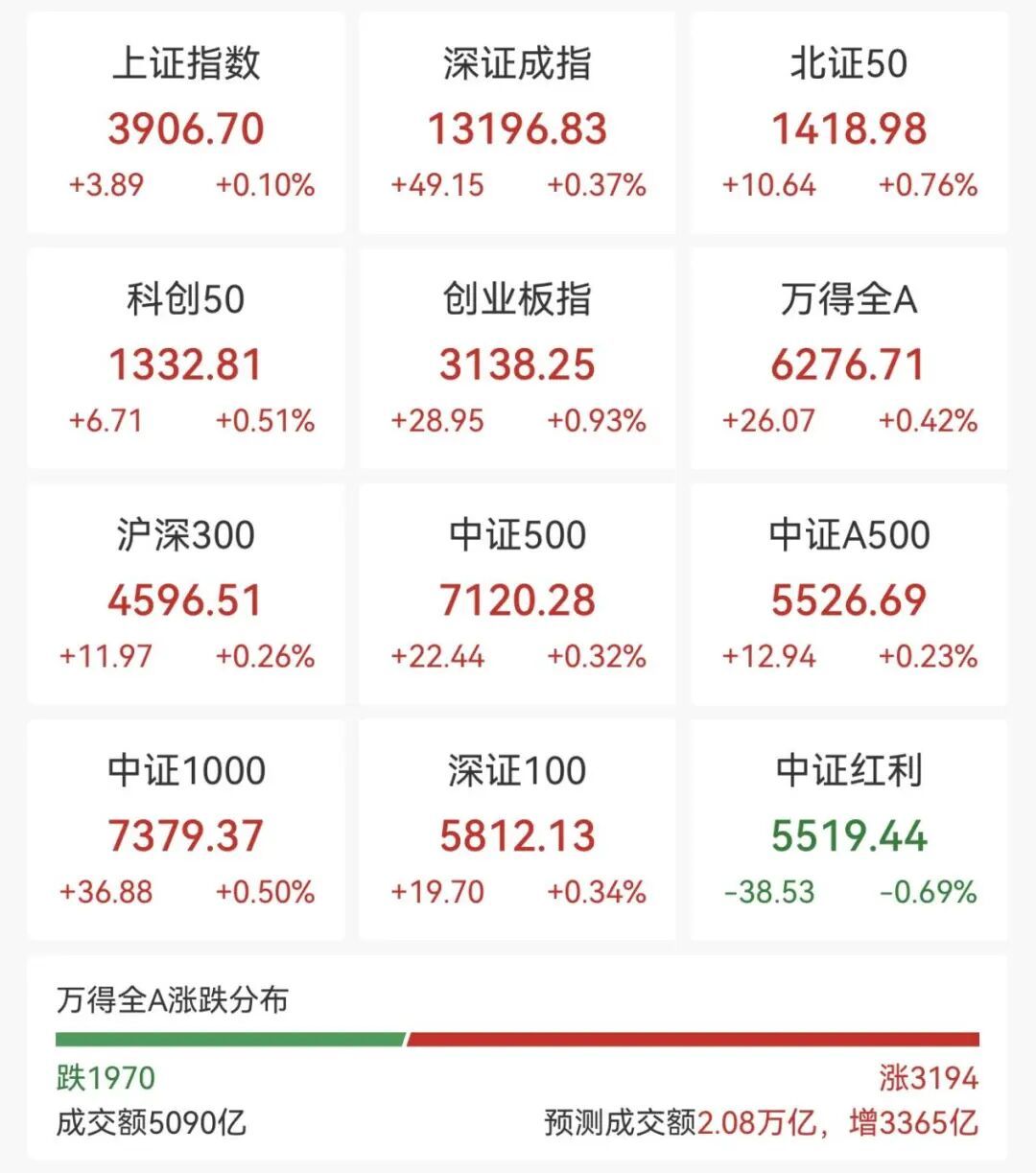
Market Overview - On December 8, the A-share market showed a strong upward trend, with the ChiNext Index rising over 1% at one point [1] - Major indices such as the Shanghai Composite Index and Shenzhen Component Index experienced slight increases of 0.10% and 0.37% respectively [2] Sector Performance - The brokerage sector saw significant gains, with stocks like Industrial Securities hitting the daily limit, and others like Ruida Futures and Northeast Securities also performing well [5] - The commercial aerospace sector continued its strong performance, with companies like Tianjian Technology and Aerospace Science and Technology reaching their daily limits [7] Index and Stock Data - The Shanghai Composite Index closed at 3906.70, up 3.89 points; the Shenzhen Component Index closed at 13196.83, up 49.15 points; and the ChiNext Index closed at 3138.25, up 28.95 points [2] - Notable stock performances included: - Industrial Securities: 7.92, +10.00%, market cap 68.4 billion, YTD +28.39% [6] - Ruida Futures: 29.38, +10.00%, market cap 13.1 billion, YTD +108.53% [6] - Northeast Securities: 10.04, +8.78%, market cap 23.5 billion, YTD +29.75% [6] Policy and Regulatory Developments - The China Securities Regulatory Commission (CSRC) emphasized strengthening classified regulation and optimizing evaluation indicators for quality institutions, which may enhance capital utilization efficiency [6] - The National Space Administration issued a plan to support commercial entities in participating in national research projects, aiming to create a dual-driven development model of "market + government" for the commercial aerospace industry [9]





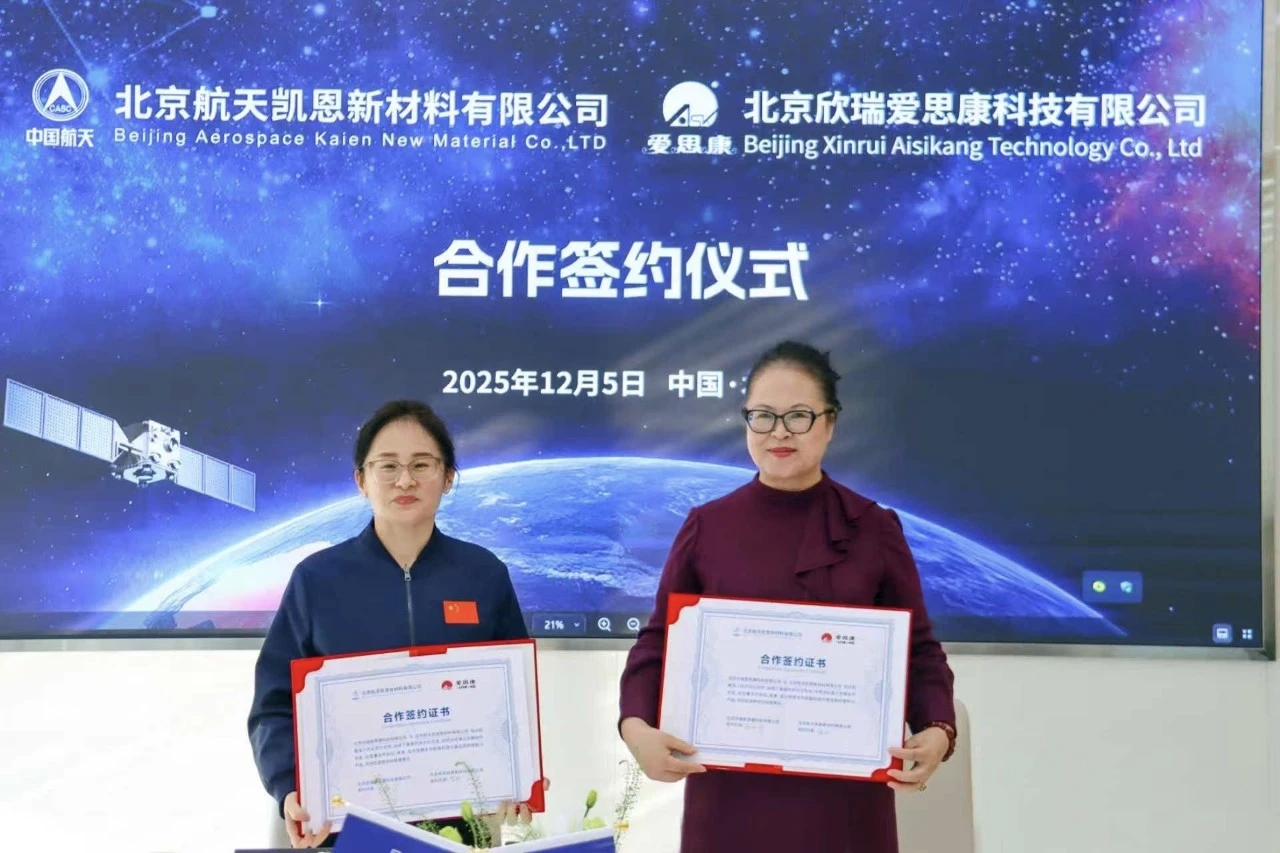
航天科技赋能健康生活爱思康携手航天凯恩开启创新合作新征程
Zhong Guo Jing Ji Wang· 2025-12-08 02:48
Core Insights - The collaboration between Beijing Xinrui Aisikan Technology Co., Ltd. and Beijing Aerospace Kaien New Material Co., Ltd. marks a significant integration of aerospace technology with the health industry, aiming to promote technological innovation for public welfare [1][6] - The partnership focuses on the application of aerospace-grade high-performance materials in health protection and daily health care products, establishing a comprehensive cooperation system from technology research and development to market implementation [3][6] Company Overview - Beijing Aerospace Kaien New Material Co., Ltd. has a strong foundation in high-performance material research and development, with aerospace-grade materials that excel in lightweight, stability, functionality, and safety, widely used in critical fields like aerospace [3] - Beijing Xinrui Aisikan Technology Co., Ltd. has been dedicated to the health technology sector, focusing on functional bedding and daily protective products, leveraging a mature R&D system and market capabilities to address health challenges through technological innovation [3] Product Development - The first product resulting from this collaboration is the "Aerospace Warm Core Vest," which utilizes aerospace technology Aerostex material, achieving breakthroughs in being ultra-light, ultra-soft, and highly warm, with a 15% increase in lightweight feel and a 3°C rise in far-infrared heating [5] - The vest also boasts a washing antibacterial rate exceeding 95%, addressing the challenge of balancing warmth and lightness in winter clothing [5] Future Directions - The partnership aligns with national goals of integrating technological innovation with industrial innovation and promoting the civilian use of aerospace technology, providing a valuable practical example for the health industry [6] - Both companies aim to continue exploring further applications of aerospace new materials in health, driving the health technology sector towards higher quality and greater alignment with public needs [6]
A股异动!“牛市旗手”,直线拉升!
Zhong Guo Ji Jin Bao· 2025-12-08 02:48
Market Overview - On December 8, the A-share market showed a strong upward trend, with the ChiNext Index rising over 1% at one point [2] - The brokerage sector experienced a significant surge, with notable performances from commercial aerospace stocks, while energy equipment, coal, and precious metals sectors faced declines [2][4] Brokerage Sector Performance - The brokerage sector saw substantial gains, with stocks like Industrial Securities hitting the daily limit, and Ruida Futures achieving consecutive gains [4] - Key brokerage stocks and their performance include: - Zhengzhou Securities: Current price 7.92, up 10.00%, market cap 68.417 billion, YTD change 28.39% [5] - Ruida Futures: Current price 29.38, up 10.00%, market cap 13.1 billion, YTD change 108.53% [5] - Northeast Securities: Current price 10.04, up 8.78%, market cap 23.5 billion, YTD change 29.75% [5] - Huatai Securities: Current price 23.08, up 5.87%, market cap 202.7 billion, YTD change 33.47% [5] Commercial Aerospace Sector - The commercial aerospace sector continued its strong performance, with stocks like Tianjian Technology and Aerospace Science and Technology hitting the daily limit [7] - Key commercial aerospace stocks and their performance include: - Tianjian Technology: Current price 44.41, up 10.01%, market cap 5.3 billion, YTD change 63.96% [8] - Aerospace Science and Technology: Current price 23.35, up 9.99%, market cap 18.6 billion, YTD change 112.85% [8] - Aerospace Power: Current price 31.04, up 9.99%, market cap 19.8 billion, YTD change 195.62% [8] Regulatory Developments - The Chairman of the China Securities Regulatory Commission, Wu Qing, announced on December 6 that the regulatory body will enhance classified supervision, optimize evaluation indicators for quality institutions, and expand capital space and leverage limits [6] - This regulatory approach aims to improve capital utilization efficiency within the brokerage sector [6] Policy Support for Commercial Aerospace - The China National Space Administration has issued a plan to promote high-quality and safe development in commercial aerospace from 2025 to 2027, encouraging private sector participation in national research projects [9] - This policy is expected to enhance launch approval efficiency and strengthen resource coordination, creating systemic development opportunities in rocket launches, satellite manufacturing, and application services [9]

A股异动!“牛市旗手”,直线拉升!
中国基金报· 2025-12-08 02:43
Market Overview - The A-share market showed a strong upward trend on December 8, with the ChiNext Index rising over 1% at one point [3] - Major indices such as the Shanghai Composite Index and Shenzhen Component Index experienced slight increases, with the Shanghai Composite Index at 3906.70 (+0.10%) and the Shenzhen Component Index at 13196.83 (+0.37%) [4] Sector Performance - The brokerage sector saw a significant surge, with notable stocks like Industrial Securities hitting the daily limit, and others like Northeast Securities and Huatai Securities also performing well [8] - The commercial aerospace sector continued its strong performance, with stocks such as Tianjian Technology and Aerospace Science and Technology reaching their daily limits [11] Brokerage Sector Details - Key stocks in the brokerage sector included: - Zhengzhou Yaqian: 7.92 (+10.00%) - Ruida Futures: 29.38 (+10.00%) - Northeast Securities: 10.04 (+8.78%) - Huatai Securities: 23.08 (+5.87%) [9] - The total trading volume for the brokerage sector was significant, with a total market capitalization for Huatai Securities reaching 202.7 billion, reflecting a year-to-date increase of 33.47% [9] Commercial Aerospace Sector Insights - The commercial aerospace sector is benefiting from government support, with the National Space Administration issuing a plan to promote high-quality development in commercial aerospace from 2025 to 2027 [13] - Stocks such as Tianyin Electromechanical and Aerospace Power saw substantial gains, with Tianyin Electromechanical increasing by 13.89% [12] - The sector is expected to experience systematic development opportunities in rocket launches, satellite manufacturing, and application services due to improved efficiency in launch approvals and resource coordination [13]

商业航天板块高开,龙洲股份4连板
Mei Ri Jing Ji Xin Wen· 2025-12-08 01:43
Group 1 - The commercial aerospace sector opened high on December 8, with Longzhou Co. achieving a four-day consecutive rise [2] - Shunhao Co. and Western Materials both recorded a two-day consecutive rise, while Zengsheng Technology hit the daily limit [2] - Hongxiang Co. increased by over 10%, with Aerospace Science and Technology, Guanglian Aviation, Tianjian Technology, Tefa Information, and Xunwei Communication also experiencing gains [2]

商业航天板块高开


Xin Lang Cai Jing· 2025-12-08 01:34
商业航天板块高开,龙洲股份4连板,顺灏股份、西部材料2连板,再升科技涨停,红相股份涨超10%, 航天科技、广联航空、天箭科技、特发信息、信维通信跟涨。 ...
汽车行业周报:鸿蒙智行尊界S800轿车11月交付破2000台,宇树科技完成IPO辅导-20251207
KAIYUAN SECURITIES· 2025-12-07 10:13
Investment Rating - The industry investment rating is "Positive" (maintained) [1] Core Views - The automotive sector is experiencing significant growth, with a focus on high-end luxury vehicles and electric vehicles, indicating strong future performance potential [7] - The report highlights the rapid delivery milestones achieved by new energy vehicle brands, particularly Hongmeng Zhixing, which reached over one million deliveries in just 43 months [5][13] - The report emphasizes the increasing competition in the automotive market, particularly in the electric vehicle segment, and the need for companies to innovate and adapt to changing consumer demands [7][25] Industry News - Hongmeng Zhixing's "Five Realms and Ten Cars" has achieved over one million deliveries, setting a record for the fastest delivery by a new energy vehicle brand in China [5][13] - Zeekr has announced its entry into the South Korean market, signing agreements with four local dealers to establish a sales and service network [14] - The new Wuling Blue Mountain smart version has begun pre-orders, featuring advanced driving assistance technology [15] - Cao Cao Mobility has upgraded its Robotaxi strategy, planning to cover 100 cities over the next decade [16] - A new national standard for automotive steering systems has been released, supporting steer-by-wire technology and removing mandatory mechanical connections [17][18] Market Performance - The automotive sector's performance this week saw the CSI 300 index increase by 1.28%, with the automotive sector rising by 1.27%, ranking 10th among A-share industries [6][26] - The passenger vehicle index increased by 0.20%, with Xiaomi Group and SAIC Motor leading the gains [6][31] - The commercial vehicle index rose by 2.24%, with Yutong Bus and China National Heavy Duty Truck leading the sector [6][32] - The automotive parts index increased by 1.56%, with Fosa Technology and Aerospace Science and Industry leading the gains [6][33] Investment Recommendations - For passenger vehicles, the report recommends investing in Jianghuai Automobile, Seres, and Xpeng Motors, with Geely Automobile identified as a beneficiary [7] - In the automotive parts sector, companies like Desay SV, Zhejiang Xiantong, and Meili Technology are recommended, with additional beneficiaries including Weichai Power and Baojun Technology [7]



11月中国乘用车批发销量达299.2万辆,前11个月汽车以旧换新超1120万辆
Xinda Securities· 2025-12-07 08:11
11 月中国乘用车批发销量达 299.2 万辆,前 11 个月汽车以旧 换新超 1120 万辆 [Table_Industry] 汽车周报 [Table_ReportDate] 2025 年 12 月 7 日 2 证券研究报告 行业研究 [Tabl 行业周报e_ReportType] | [Table_StockAndRank] 汽车 | | | --- | --- | | 投资评级 | 看好 | | 上次评级 | 看好 | 赵启政 汽车行业分析师 执业编号:S1500525030004 邮箱:zhaoqizheng@cindasc.com [Table_Title] 11 月中国乘用车批发销量达 299.2 万辆,前 11 个月汽车以旧换新超 1120 万辆 [Table_ReportDate] 2025 年 12 月 7 日 投资要点: | 图 1:本周汽车板块涨 1.38%,涨跌幅位居 A 股申万一级行业第 10 位 4 | | --- | | 图 2:A 股汽车板块本年度涨跌幅申万一级行业排名第 11 位 4 | | 图 3:乘用车板块表现 4 | | 图 4:商用车板块表现 5 | | 图 5:汽车 ...

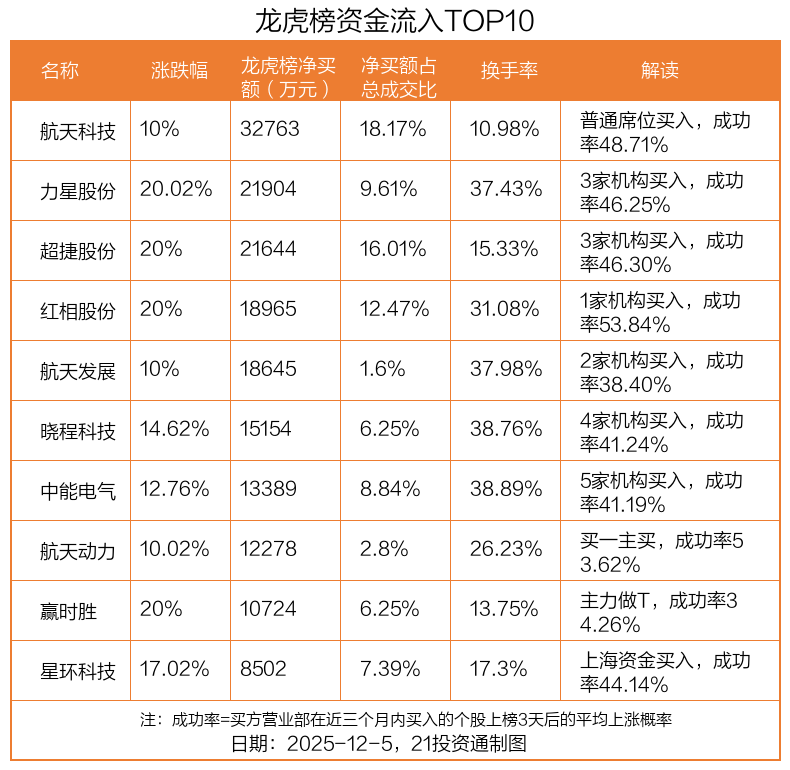
3.28亿资金抢筹航天科技,2.64亿资金出逃和而泰(名单)丨龙虎榜

2 1 Shi Ji Jing Ji Bao Dao· 2025-12-05 14:37
Market Performance - On December 5, the Shanghai Composite Index rose by 0.7%, the Shenzhen Component Index increased by 1.08%, and the ChiNext Index gained 1.36% [2] - A total of 49 stocks appeared on the daily trading list, with the highest net inflow of funds being 328 million yuan into Aerospace Science and Technology (000901.SZ) [2][4] Stock Highlights - Aerospace Science and Technology saw a net purchase of 328 million yuan, accounting for 18.17% of the total trading volume, and closed up by 10% with a turnover rate of 10.98% [4][6] - The stock with the highest net outflow was Heertai (002402.SZ), which experienced a net sell of 264 million yuan, representing 3.28% of the total trading volume, and closed down by 10% with a turnover rate of 20.37% [6][9] Institutional Activity - On the same day, 34 stocks on the trading list had institutional participation, with a total net purchase of 783 million yuan, where 17 stocks were net bought and 17 were net sold [6][15] - The stock with the highest institutional net purchase was Aerospace Development (000547.SZ), which closed up by 10% and had a turnover rate of 37.98% [7] Northbound Capital - Northbound capital participated in 22 stocks on the trading list, with a total net purchase of approximately 96.41 million yuan [10] - The stock with the highest net purchase from northbound capital was International Composite Materials (301526.SZ), with a net inflow of 113 million yuan, accounting for 4.01% of the total trading volume [10] Divergence in Institutional and Northbound Activity - Both institutions and northbound capital jointly net bought International Composite Materials and Aerospace Development, while they jointly net sold Tongyu Communications, Heertai, and Haiwang Biological [13] - There were discrepancies in stocks like Star Ring Technology and Ruimaotong, where institutions sold while northbound capital bought [13]

3.28亿资金抢筹航天科技 2.64亿资金出逃和而泰(名单)丨龙虎榜
2 1 Shi Ji Jing Ji Bao Dao· 2025-12-05 14:29
3.28亿资金抢筹航天科技,2.64亿资金出逃和而泰 12月5日,上证指数上涨0.7%,深证成指上涨1.08%,创业板指上涨1.36%。盘后龙虎榜数据显示,共有49只个股 因当日异动登上龙虎榜,资金净流入最多的是航天科技(000901.SZ),达3.28亿元。 据21投资通智能监测,34只个股龙虎榜出现了机构的身影,北向资金参与龙虎榜中的个股共涉及22只。 49只上榜的龙虎榜个股中,25只个股被净买入,24只个股被净卖出。其中,资金净买入最多的是航天科技,达 3.28亿元,占总成交金额的18.17%。航天科技当日收盘上涨10%,换手率为10.98%。 | 名称 | 涨跌幅 | 龙虎榜净买 | 净买额占 | 换手率 | 解读 | | --- | --- | --- | --- | --- | --- | | | | 额(万元) | 总成交比 | | | | 航天科技 | 10% | 32763 | 18.17% | 10.98% | 普通席位买入,成功 | | | | | | | 率48.71% | | 力星股份 | 20.02% | 21904 | 9.61% | 37.43% | 3家机构买入,成功 | | ...