SF Holding(002352)

Search documents
顺丰控股(06936) - 截至2026年2月28日止月份之股份发行人的证券变动月报表
2026-03-02 08:10
FF301 | | | | 2. 股份分類 | 普通股 | 股份類別 | A | | 於香港聯交所上市 (註1) | 否 | | | | --- | --- | --- | --- | --- | --- | --- | --- | --- | | 證券代號 (如上市) | 002352 | 說明 | | A股 (於深圳證券交易所上市) | | | | | | | | 法定/註冊股份數目 | | | 面值 | | 法定/註冊股本 | | | 上月底結存 | | | 4,799,430,409 | RMB | | 1 RMB | | 4,799,430,409 | | 增加 / 減少 (-) | | | 0 | | | RMB | | 0 | | 本月底結存 | | | 4,799,430,409 | RMB | | 1 RMB | | 4,799,430,409 | | 1. 股份分類 | 普通股 | 股份類別 | H | | 於香港聯交所上市 (註1) | | 是 | | | --- | --- | --- | --- | --- | --- | --- | --- | --- | | 證券代號 (如上市) ...
交通运输行业周报:以美对伊朗发动军事打击,霍尔木兹海峡关闭对全球油运市场造成深远影响-20260301
Bank of China Securities· 2026-03-01 10:52
Investment Rating - The report rates the transportation industry as "Outperform" [2] Core Insights - The military strike by the US against Iran and the closure of the Strait of Hormuz have profound impacts on the global oil transportation market, potentially leading to supply chain disruptions and increased oil transportation costs [3][15] - Tesla's Cybercab, designed for fully autonomous driving, has been launched, marking a significant step towards the original dedicated era of Robotaxi services [3][17] - A strategic partnership between Youjia Innovation, Didi, and Wall Street Technology aims to advance the large-scale deployment of driverless logistics vehicles, filling a market gap for vehicle-grade autonomous logistics [3][32] - The pre-sale ticket prices for economy class flights during the 2026 Spring Festival have shown a year-on-year increase, indicating stable industry performance as demand is released [3][34] - Uber has launched the Uber Air service supported by Joby, integrating ground and air travel booking, which validates the commercial viability of eVTOL [3][41] Industry Dynamics - The Baltic Air Freight Price Index has decreased month-on-month and year-on-year, while domestic air freight flights have seen a decline [4][44] - The shipping and port sector has experienced an increase in domestic shipping rates, while dry bulk freight rates have also risen [4][52] - The express logistics sector reported a 2.30% year-on-year increase in business volume and a 0.70% increase in revenue as of December 2025 [4] - The average number of international flights operated daily in the last week of February 2026 was 1992.86, reflecting a month-on-month increase of 3.73% and a year-on-year increase of 19.22% [4] - The number of trucks passing through national highways decreased by 40.04% from February 9 to February 15 [4] Investment Recommendations - Focus on opportunities in the shipping sector, particularly oil transportation, dry bulk, and container shipping due to geopolitical tensions, with recommendations for China Merchants Energy Shipping and COSCO Shipping [5] - Consider investments in low-altitude economy and autonomous driving sectors, recommending CITIC Offshore Helicopter and monitoring Cao Cao Mobility [5] - Explore investment opportunities in the travel sector driven by increased demand during the Spring Festival, recommending Air China, China Southern Airlines, and China Eastern Airlines [5] - Look into international market expansion opportunities in express logistics, recommending SF Express and Jitu Express [5] - Pay attention to investment opportunities in the highway sector, recommending Sichuan Chengyu Expressway and other major expressway companies [5]






申万宏源交运一周天地汇(20260222-20260227):伊朗局势油运行情空中加油,集运造船联动关注 ST 松发、招商轮船
Shenwan Hongyuan Securities· 2026-03-01 07:29
Investment Rating - The report indicates a positive investment outlook for the shipping sector, particularly highlighting the strong performance of oil tankers and dry bulk carriers, with specific recommendations for companies like China Shipping and China Power [4][5]. Core Insights - The shipping industry is experiencing an upward cycle driven by the entire energy chain, with oil tanker rates significantly increasing due to geopolitical tensions and supply constraints. The VLCC (Very Large Crude Carrier) rates have surged to $206,763 per day, marking a 38% increase week-on-week [4]. - The report emphasizes the potential for further increases in shipping rates, particularly in the context of ongoing geopolitical conflicts and the tightening of shipping capacity controlled by major players like Sinokor [4][5]. - Recommendations include focusing on long-cycle shipping logic with lower volatility, while also considering mid-cycle shipping stocks that are expected to outperform [4]. Summary by Sections Shipping Sector - VLCC rates have reached $206,763 per day, with a 38% week-on-week increase, driven by tight supply and geopolitical tensions [4]. - The report notes that the market is entering a strong pricing phase for shipowners, with Sinokor controlling over 37% of the market capacity [4]. - Suezmax rates have also increased significantly, reflecting the overall bullish sentiment in the oil shipping market [4]. Dry Bulk Sector - The Capesize index remains high, with a slight increase in rates, while smaller vessels are showing resilience due to recovering coal demand [4]. - The BDI (Baltic Dry Index) recorded a 1.09% increase, indicating stable demand in the dry bulk market [5]. Container Shipping - The SCFI (Shanghai Containerized Freight Index) rose by 6.5%, with significant increases in rates for routes to the Mediterranean and South America [4]. - The report highlights potential risks associated with geopolitical tensions affecting shipping routes, particularly in the Red Sea [4]. Air Transport - The report discusses the ongoing challenges in the aircraft manufacturing supply chain and the aging fleet, which is expected to constrain supply and enhance profitability for airlines [4]. - Airlines are anticipated to experience a significant improvement in performance as demand for international travel increases [4]. Logistics and Express Delivery - The express delivery sector is expected to see a recovery in pricing due to policy changes aimed at stabilizing end-user costs, with a focus on leading companies like ZTO Express and YTO Express [4]. - The report notes that the logistics sector is showing resilience, with steady performance in rail and highway freight volumes [4].
申万宏源交运一周天地汇:伊朗局势油运行情空中加油,集运造船联动关注ST松发、招商轮船
Shenwan Hongyuan Securities· 2026-03-01 05:06
Investment Rating - The report maintains a positive outlook on the shipping sector, indicating a bullish trend in the energy chain and shipping stocks overall [5]. Core Insights - The report highlights that the current uptrend in the shipping market is not limited to tankers but encompasses the entire energy chain, with VLCC TCE rates rising to $200,000 per day. The supply tightness in long-cycle tankers and geopolitical tensions, particularly in Iran, are driving freight rates higher [5]. - The report recommends specific stocks based on their performance in the shipping sector, including China Shipbuilding, China Power, ST Songfa, and others, while also noting the strong performance of companies like COSCO Shipping Energy and China Merchants Energy [5]. Summary by Sections Shipping Market Overview - The shipping index increased by 3.64%, outperforming the CSI 300 index by 2.56 percentage points. The shipping sub-sector saw the largest gain of 11.81%, while the airline sector experienced a decline of 1.41% [6]. - The VLCC average freight rate surged by 38% week-on-week, reaching $206,763 per day, indicating a strong market for oil tankers [5]. Geopolitical Impact - The report emphasizes the potential impact of the Iranian situation on oil supply and shipping rates, with a possible increase in compliant demand by 4-5% if conflicts cease. Conversely, ongoing tensions could lead to increased freight rates due to widening price differentials [5]. Stock Recommendations - Recommended stocks include: - Long-cycle logic: China Shipbuilding, China Power, ST Songfa - Mid-cycle shipping stocks: COSCO Shipping Energy, China Merchants Energy, and others [5]. - The report notes that the shipping market is entering a strong pricing phase, with owners gaining significant pricing power due to tight capacity [5]. Freight Rate Trends - The report details significant increases in freight rates across various categories, including a 41% rise in Middle East to Far East rates, reaching $231,399 per day, and a 42% increase in Suezmax rates [5]. - The report also highlights the resilience of dry bulk rates, with the BDI index recording a 1.09% increase, indicating a stable market for bulk carriers [6]. Airline Sector Insights - The report suggests that the airline industry is at a turning point, with potential for significant profit growth due to rising passenger volumes and constrained supply. Key airlines to watch include China Eastern Airlines, China Southern Airlines, and Spring Airlines [5]. Logistics and Express Delivery - The report indicates that policies aimed at protecting end-user rights in the express delivery sector may stabilize delivery fees, with a focus on leading companies like ZTO Express and YTO Express [5].




航空淡季不淡把握加仓机会,油运大周期加速持续看好
ZHONGTAI SECURITIES· 2026-03-01 02:20
Investment Rating - The report maintains an "Overweight" rating for the transportation industry [2] Core Insights - The aviation sector is expected to perform well despite the off-peak season, driven by strong travel demand and favorable oil prices. The report highlights a potential for increased passenger volume and ticket prices, indicating a positive outlook for airline investments [4][5] - The logistics and express delivery sectors are also showing signs of recovery, with companies like YTO Express and SF Express leading in business volume growth. The report emphasizes the importance of quality improvement in the express delivery industry, driven by policies aimed at reducing competition and enhancing profitability [5][6] - The shipping industry is experiencing upward pressure on oil shipping prices due to geopolitical factors and supply constraints, suggesting a favorable investment environment for oil shipping companies [6] Summary by Sections Aviation - The report notes that during the Spring Festival travel period, passenger volume increased by 6.5% year-on-year, with an average seat occupancy rate of 86.9% [4] - Airlines such as China Southern Airlines and Spring Airlines are highlighted for their strong performance and growth potential, with recommendations for investment based on their operational efficiency and market positioning [12] Logistics - The express delivery sector saw significant growth in January, with YTO Express reporting a year-on-year increase of 29.75% in business volume [5] - The report suggests that the express delivery industry is poised for quality improvements, driven by "anti-involution" policies and advancements in automation [5] Shipping - The report indicates that the BDTI index for oil shipping has risen by 11.42% month-on-month and 126.25% year-on-year, reflecting strong demand and supply constraints [6] - Investment opportunities are identified in companies like COSCO Shipping Energy and China Merchants Energy, which are expected to benefit from the favorable market conditions [6]



【前瞻分析】2025年全球冷链物流行业市场规模及发展趋势分析
Sou Hu Cai Jing· 2026-02-28 01:45
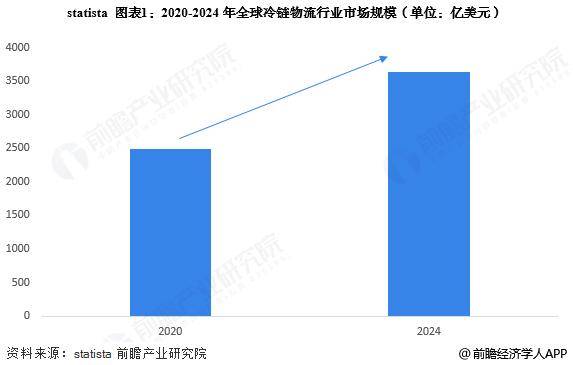
Group 1 - The global cold chain market size is projected to grow from $248.4 billion in 2020 to $363.8 billion by 2024, with a CAGR of approximately 6% over five years [1] - By 2030, the global cold chain logistics market is expected to exceed $820 billion, driven by consumer upgrades, increased e-commerce penetration, and the ongoing development of the biopharmaceutical industry [4] Group 2 - China's national-level policies for cold chain logistics were introduced relatively late, with significant guidance emerging during the "12th Five-Year Plan" period as the government began to plan for the industry's development [7] - Various provinces in China have set specific development goals for the cold chain logistics industry, such as Tianjin aiming for 30 large-scale cold chain product processing enterprises by 2027, with a target output value of 10 billion yuan, and Zhejiang planning to build 100 cold chain distribution centers by 2027 [11]


申万宏源:单票价格进入修复通道 看好快递量价表现
Zhi Tong Cai Jing· 2026-02-27 06:20
Core Viewpoint - The acceleration of AI replacement processes is reshaping the express delivery industry, which serves as a significant "reservoir" for flexible employment. The end-of-line rights protection policies are expected to stabilize and increase delivery fees, leading to a recovery in single-ticket prices and gradually releasing corporate profit elasticity. The industry is anticipated to experience high-quality development, concentrating profits and market shares among leading companies [1][3]. Group 1: Industry Demand and Recovery - The express delivery industry shows strong demand resilience, with companies accelerating their resumption of operations. From December 29, 2025, to February 22, 2026, the cumulative express delivery volume reached 28.642 billion pieces, a year-on-year increase of 5.4%, while the delivery volume was 29.369 billion pieces, up 6.8% year-on-year. The overall volume maintained a steady growth trend in January and February [1][2]. Group 2: End-of-Line Rights Protection Policies - The national postal work conference in 2026 emphasized "penetrating" regulation to address issues like "punishment upon complaint" and promote the implementation of new social security policies, effectively safeguarding the rights of delivery personnel. The new social security regulations are expected to convert previously unregulated hidden costs into a unified rigid cost for all players, while minimum delivery fee guidelines will create a rigid price transmission point [2]. Group 3: Investment Analysis - The express delivery industry is viewed positively, with recommendations for companies like YTO Express and ZTO Express, which are expected to enhance their competitive advantages. Attention is also drawn to Shentong Express for its performance elasticity. Jitu Express is noted for its accelerated growth in Southeast Asia and new markets, while SF Express is recognized for its management structure and business line adjustments, presenting potential bottom-fishing opportunities [3].

王卫现身中德高规格座谈,顺丰全球化落子再提速
Sou Hu Cai Jing· 2026-02-27 02:29
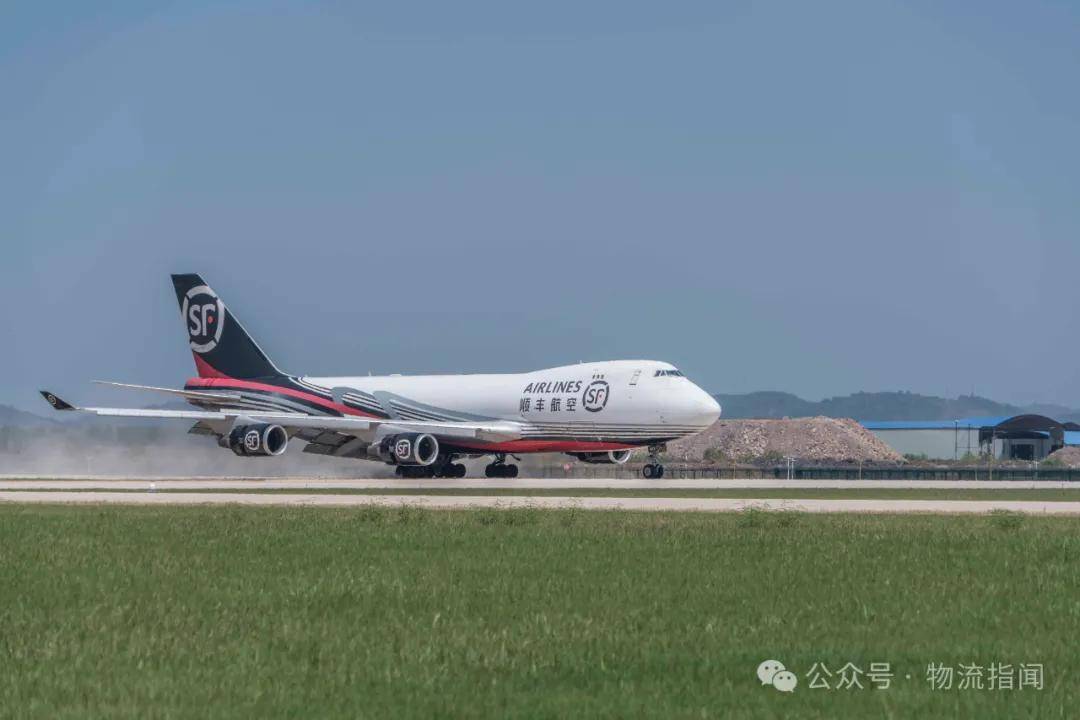
Core Viewpoint - SF Express has established itself as a key player in the global logistics landscape, representing China in international supply chain discussions and showcasing its strategic internationalization efforts through participation in high-profile forums like the Sino-German Economic Advisory Committee meeting [4][5][6]. Group 1: International Engagement - SF Express's Chairman, Wang Wei, was the only representative from the Chinese logistics sector at the Sino-German Economic Advisory Committee meeting, highlighting the company's significance in bilateral trade discussions [4][6]. - The meeting included around 30 executives from leading German companies in sectors such as automotive, chemicals, and high-end manufacturing, emphasizing the deepening economic ties between China and Germany [6]. - The trade volume between China and Germany has consistently exceeded $200 billion in recent years, with bilateral investment stock surpassing $65 billion, accounting for nearly a quarter of China's total trade with the EU [6]. Group 2: Strategic Developments - SF Express has made significant investments in Germany, establishing a self-operated customs clearance port in Frankfurt and overseas warehouses in key logistics regions, thereby creating a comprehensive logistics network in Europe [8]. - The company is set to launch a smart logistics warehouse in Mönchengladbach, Germany, in the first half of 2025, further enhancing its operational capabilities in Europe [8]. - SF Express's international strategy has entered a "harvest period," with a notable increase in overseas operational data and customer structure, reflecting the successful execution of its internationalization strategy [8][9]. Group 3: Operational Performance - As of mid-2025, SF Express's international flights are projected to exceed 6,800, marking an 84% year-on-year increase, with a peak of 192 flights per week in the Asia-Pacific region [9]. - The company has reported a net profit of 430 million yuan for its supply chain and international divisions in the first half of 2025, representing a 178% year-on-year growth [11]. - SF Express's cross-border e-commerce logistics revenue has doubled, indicating a successful transition from "cross-border transportation" to "localized operations" [11]. Group 4: Global Supply Chain Impact - SF Express has established nearly 80 cargo routes from Ezhou Huahu International Airport, enhancing the efficiency of Chinese goods reaching global markets [13]. - The company has facilitated over 11,000 international transshipment operations, with transshipment cargo exceeding 60,000 tons, significantly improving logistics efficiency for Chinese exports [13]. - SF Express's extensive overseas warehouse network, covering 2.5 million square meters, serves as a global supply station for Chinese enterprises, reducing barriers for companies expanding internationally [14]. Group 5: Future Outlook - The network effect created by the combination of Ezhou hub, global air network, overseas warehouses, and localized fulfillment positions SF Express as a vital logistics bridge connecting China and the world [15]. - The company's role in supporting Chinese enterprises in their international expansion aligns with national strategies to enhance supply chain resilience and global competitiveness [14][15].
国海证券:头部快递量价各有分化 业绩估值有望双重修复
智通财经网· 2026-02-26 03:04
Industry Overview - The total express delivery volume for the first eight weeks of 2026 reached 32.734 billion pieces, representing a year-on-year increase of 5.40% [1][2] - The competition landscape in the express delivery industry is accelerating differentiation, shifting from quantity competition to quality competition as the industry pursues high-quality development [1][4] Company Performance - In January, the express delivery volumes were as follows: YTO Express at 2.943 billion pieces, Shentong Express at 2.540 billion pieces, Yunda at 2.231 billion pieces, and SF Express at 1.386 billion pieces [3] - The growth rates for January were led by YTO Express at 29.75%, followed by Shentong Express at 25.57%, and Yunda at 10.83% [3] - SF Express saw an increase in average single ticket price to 14.72 yuan, up by 0.91 yuan month-on-month, indicating a shift from scale-driven to value-driven growth [3] Investment Recommendations - SF Express is recommended as a leading comprehensive express logistics company, expected to enter a new development phase with improved cash flow and operational strategies [4] - The company is anticipated to benefit from the rapid growth of the instant retail sector, with its same-city delivery business poised for strategic opportunities [4] - The express delivery industry is expected to see continued recovery in profitability due to price adjustments initiated since August 2025, with a focus on leading companies like ZTO Express and YTO Express [4]


预见2025:《2025年中国冷链物流行业全景图谱》(附市场现状、竞争格局和发展趋势等)
Qian Zhan Wang· 2026-02-26 02:09
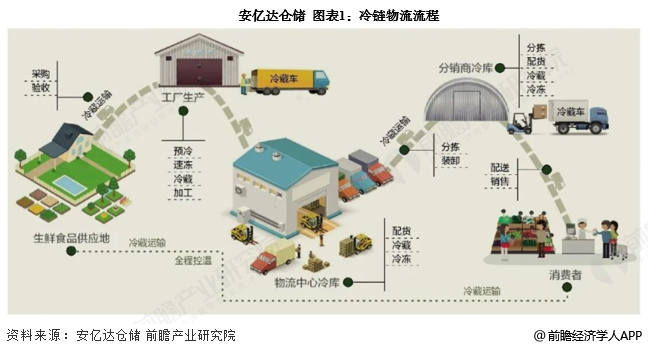
Industry Overview - Cold chain logistics is defined as a specialized logistics process that utilizes temperature control and preservation technologies to ensure that cold chain products remain within specified temperature environments throughout their entire lifecycle, including processing, storage, transportation, and distribution [1] - The products involved in cold chain logistics include agricultural products, poultry, seafood, flowers, processed foods, frozen foods, ice cream, dairy products, fast food ingredients, and beverages, as well as special items like pharmaceuticals and chemicals [1] Industry Chain Analysis - The cold chain logistics industry chain consists of upstream segments such as refrigerated vehicle manufacturing, cold storage construction, and equipment manufacturing; midstream segments include transportation (both trunk and distribution), warehousing, and value-added services; and downstream applications span food, pharmaceuticals, chemicals, and floriculture [3][4] Industry Development History - The cold chain logistics industry in China has evolved through three stages since 1998: 1. The initial stage (1998-2007) was characterized by a lack of resources and outdated facilities, with many companies relying on second-hand refrigerated vehicles [6][9] 2. The rapid expansion stage (2008-2017) saw the emergence of organized operations and the establishment of national distribution networks, driven by the growth of the frozen food industry and the entry of major players [9] 3. The current stage (2018-present) marks the transition to cold chain logistics 3.0, characterized by upgrades in industry environment, awareness, technology, management, and business philosophy [9] Industry Policy Background - Cold chain logistics is recognized as a crucial component of modern agricultural development, significantly impacting food quality, safety, and public health [10] - Recent policies emphasize enhancing cold chain infrastructure, particularly in rural areas, to improve agricultural product distribution and consumption [11] Current Industry Status - The total demand for food cold chain logistics in China is projected to reach 365 million tons in 2024, reflecting a year-on-year growth of 4.3% [12] - The cold chain logistics market size is expected to exceed 530 billion yuan in 2024, driven by rising demand for agricultural product refrigeration [13] - The total capacity of cold storage facilities in China is estimated at 25.3 million cubic meters, with a year-on-year increase of 10.96% [14] - The number of refrigerated vehicles in China is projected to reach 495,000 by 2024, marking a year-on-year growth of 14.58% [17] Industry Competition Landscape - The competitive landscape of the cold chain logistics industry is categorized into three tiers: leading companies like SF Express, JD Logistics, and Rongqing Logistics dominate the national market; regional players such as Hongxing Cold Chain and Daxiang Logistics have established strong local networks; while smaller enterprises face challenges in scaling [18][20] - The provinces with the highest number of star-rated cold chain logistics companies are Anhui and Shandong, each with 32 companies, followed by Henan with 28 [22] Industry Development Outlook and Trends - The cold chain logistics market in China is expected to exceed 670 billion yuan by 2030, with a compound annual growth rate (CAGR) of approximately 4% over the next five years [24][25] - Key trends include the expansion of infrastructure, the evolution of business models, and the enhancement of industry standards, driven by economic growth, urbanization, and increasing consumer demand for food safety [27][29]