
Zhujiang Brewery(002461)

Search documents
内外贸一体化新平台聚势起航:广东优品展9月12日启幕
Sou Hu Cai Jing· 2025-09-06 05:35
Group 1 - The Guangdong Quality Products Exhibition aims to establish a new platform for integrated domestic and foreign trade, focusing on connecting production and sales for exhibitors [3][6] - The exhibition will adopt a "showcase-sales integration" model to create precise matching scenarios for domestic and foreign buyers, promoting Guangdong's quality manufacturing [3][6] - The event will take place from September 12 to 14 at the Guangzhou Import and Export Fair Complex, featuring five major exhibition areas and over 1,000 exhibitors [9][4] Group 2 - A total of 2,175 professional buyers have been invited, including 1,682 from within the province, 336 from outside, and 157 from overseas, with notable companies like Walmart and Amazon participating [6][9] - The exhibition will feature a "Star Carnival Concert" with six popular artists, enhancing brand exposure through a combination of live performances and product displays [6][7] - Attendees will benefit from special dining vouchers and exclusive discounts during the exhibition, aimed at boosting consumer engagement [10][12] Group 3 - The event is positioned as a practical platform for the "dual circulation" strategy, facilitating the transition of foreign trade products to domestic sales channels [14] - The exhibition is expected to attract over 100,000 professional visitors and consumers, highlighting its significance in promoting Guangdong's manufacturing capabilities [7][9] - The press conference served as both an information release and a confidence-building event, emphasizing the importance of quality and brand in domestic sales [12][14]



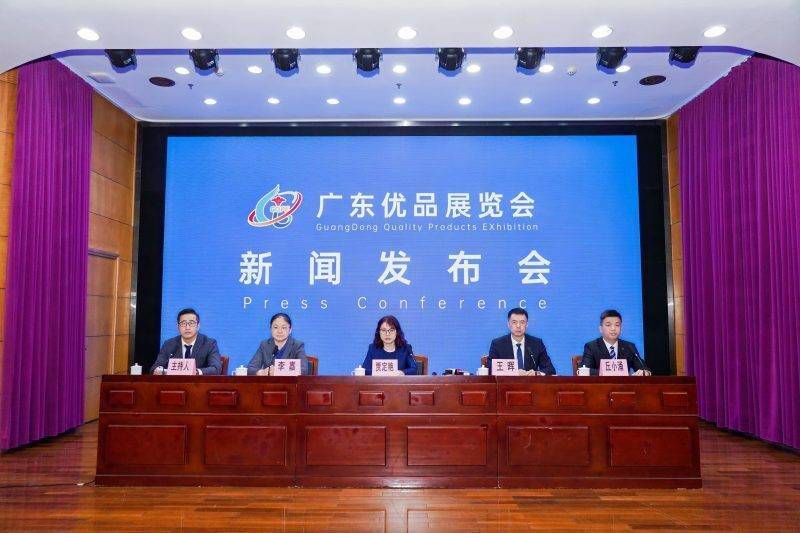
全球2200家采购商组团来广州扫货!广东优品展下周开幕
Nan Fang Du Shi Bao· 2025-09-05 12:04
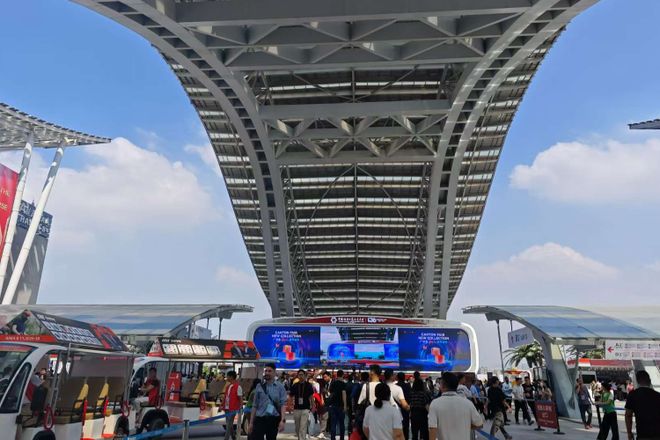
Core Insights - The first Guangdong Quality Products Exhibition will take place from September 12 to 14 at the Canton Fair Complex, showcasing nearly 10,000 consumer products from over 1,000 well-known Guangdong enterprises [2] - The exhibition aims to promote the upgrade of "Made in Guangdong" from a world factory to a global brand [2] - Approximately 2,200 global buyers and over 100,000 visitors are expected to attend the event [2] Group 1: Exhibition Details - The exhibition will feature five major sectors: home appliances and electronics, fashion and beauty, toys and cultural products, health food, and furniture [2] - Notable participating companies include Midea, TCL, DJI, Aofei, Wan Jia Le, Zhujiang Beer, Wang Laoji, and Chen Li Ji [2] - A total of 2,175 professional buyers, including major retailers like Walmart, Decathlon China, and Amazon, have confirmed their attendance [2] Group 2: Special Activities - The exhibition will host two special events, including a star-studded concert featuring six Chinese pop singers [3] - There will be sub-venues and interactive experience zones in popular shopping districts, allowing for immediate consumer engagement [3] - A representative from a major duty-free company expressed hopes to connect more quality Guangdong products with their stores through the exhibition [3]

135股今日获机构买入评级
Zheng Quan Shi Bao Wang· 2025-09-05 10:02
Summary of Key Points Core Viewpoint - A total of 135 stocks received buy ratings from institutions today, with 17 stocks receiving initial attention from institutions, indicating a strong interest in the market and potential investment opportunities [1]. Institutional Ratings - 140 buy rating records were published today, with 29 of these providing future target prices. 13 stocks have an upside potential exceeding 20%, with AVIC Optoelectronics showing the highest potential at 61.62% [1]. - Notable stocks with high upside potential include Noli Shares at 48.46% and United Imaging Healthcare at 37.22% [1]. - 17 stocks received initial buy ratings from institutions, including Haimeixing and Hengli Hydraulic [1]. Market Performance - Stocks rated with buy ratings saw an average increase of 3.27%, outperforming the Shanghai Composite Index. 119 stocks experienced price increases, with several hitting the daily limit up [1]. - Stocks with significant declines included Noli Shares, Agricultural Bank, and Shoufang Environmental Protection, with declines of 3.23%, 2.93%, and 1.26% respectively [1]. Industry Focus - The most favored industries include power equipment and machinery, each with 17 stocks listed in the buy rating category. The pharmaceutical and communication sectors also attracted attention, with 15 and 6 stocks respectively [2]. - Specific stocks receiving multiple buy ratings include Betaini, Kebo Da, AVIC Optoelectronics, and Yunnan Baiyao, each with two buy ratings [2][3]. Detailed Stock Information - A selection of stocks with buy ratings includes: - Betaini (2 ratings, +2.22% today, PE 40.30) in beauty care - Kebo Da (2 ratings, +10.00% today, PE 27.44) in automotive - AVIC Optoelectronics (2 ratings, +0.57% today, PE 28.83) in defense and military [2][3]. - Other notable stocks include: - Yunnan Baiyao (2 ratings, +1.06% today, PE 14.56) in pharmaceuticals - Zhonglian Heavy Industry (2 ratings, +0.41% today, PE 11.39) in machinery [2][3]. Additional Stock Ratings - Additional stocks with single buy ratings include: - Xuji Electric (1 rating, +2.09% today, PE 18.44) in power equipment - Xugong Machinery (1 rating, -0.20% today, PE 13.29) in machinery - China Rare Earth (1 rating, +2.33% today, PE 174.07) in non-ferrous metals [3][4].


2025年1-7月中国啤酒产量为2327万千升 累计增长0.6%
Chan Ye Xin Xi Wang· 2025-09-03 05:11
Core Viewpoint - The Chinese beer industry is experiencing a slight growth in production, with a reported increase in output for the first half of 2025 compared to the previous year [1]. Industry Summary - According to the National Bureau of Statistics, the beer production in China reached 3.74 million kiloliters in July 2025, marking a year-on-year growth of 1.9% [1]. - The cumulative beer production from January to July 2025 was 23.27 million kiloliters, reflecting a cumulative growth of 0.6% [1]. - The report by Zhiyan Consulting provides insights into the market dynamics and competitive strategies of the non-alcoholic beer industry in China from 2025 to 2031 [1]. Company Summary - Listed companies in the beer sector include Zhujiang Beer (002461), Chongqing Beer (600132), Yanjing Beer (000729), Lanzhou Yellow River (000929), and Huichuan Beer (600573) [1].


珠江啤酒(002461):2025年半年报点评:量价表现亮眼,看好97纯生持续性
Minsheng Securities· 2025-09-01 07:14
Investment Rating - The report maintains a "Buy" rating for the company, with a target price of 10.77 CNY [7]. Core Views - The company reported strong performance in H1 2025, with revenue, net profit, and net profit excluding non-recurring items reaching 3.198 billion, 612 million, and 587 million CNY respectively, representing year-on-year growth of 7.09%, 22.51%, and 23.31% [1]. - The company is expected to continue its growth trajectory, driven by the strong performance of its flagship product, 97 Pure Draft, and an increasing focus on high-end beer sales [4]. - The report highlights the company's ability to outperform industry trends, with a projected revenue growth of 6.2%, 5.0%, and 4.1% for 2025, 2026, and 2027 respectively [4]. Summary by Sections Financial Performance - In Q2 2025, the company achieved revenue of 1.971 billion CNY, with net profit and net profit excluding non-recurring items at 455 million and 441 million CNY, reflecting year-on-year growth of 4.96%, 20.18%, and 18.80% respectively [1][2]. - The company’s beer revenue in H1 2025 grew by 7.8%, with volume and price increasing by 5% and 3% respectively [2][3]. Cost and Profitability - The company experienced a decrease in cost per ton by 2.8% in Q2 2025, primarily due to lower raw material prices, leading to an increase in gross margin by 3.0 percentage points [3]. - The net profit margin for H1 2025 improved by 2.4 percentage points, supported by stable expense ratios [3]. Market Outlook - The report expresses optimism about the growth potential of 97 Pure Draft, particularly in the South China market, where consumer demand and product structure are favorable [4]. - The company plans to enhance its marketing strategies and expand its high-end product offerings to sustain growth [4]. Financial Projections - Revenue projections for 2025, 2026, and 2027 are 6.087 billion, 6.388 billion, and 6.648 billion CNY, with corresponding net profits of 973 million, 1.106 billion, and 1.214 billion CNY [6][11].
珠江啤酒8月29日获融资买入928.20万元,融资余额1.97亿元
Xin Lang Cai Jing· 2025-09-01 02:16
Group 1 - On August 29, Zhujiang Beer saw a 1.70% increase in stock price with a trading volume of 129 million yuan, while the net financing buy was -4.49 million yuan [1] - As of August 29, the total margin balance for Zhujiang Beer was 197 million yuan, accounting for 0.83% of its market capitalization, indicating a high level compared to the past year [1] - The company primarily generates revenue from beer sales, which constitutes 96.94% of its total revenue, with other segments contributing minimally [1] Group 2 - As of June 30, Zhujiang Beer had 24,500 shareholders, a decrease of 4.67%, while the average circulating shares per person increased by 4.90% to 90,336 shares [2] - For the first half of 2025, Zhujiang Beer reported a revenue of 3.198 billion yuan, representing a year-on-year growth of 7.09%, and a net profit of 612 million yuan, up 22.51% year-on-year [2] - Since its A-share listing, Zhujiang Beer has distributed a total of 2.164 billion yuan in dividends, with 919 million yuan distributed in the last three years [3] Group 3 - As of June 30, 2025, the top ten circulating shareholders of Zhujiang Beer included Hong Kong Central Clearing Limited, which reduced its holdings by 17.7649 million shares, while several new institutional shareholders entered the top ten list [3]
珠江啤酒2025年中报简析:营收净利润同比双双增长,盈利能力上升
Zheng Quan Zhi Xing· 2025-08-29 22:42
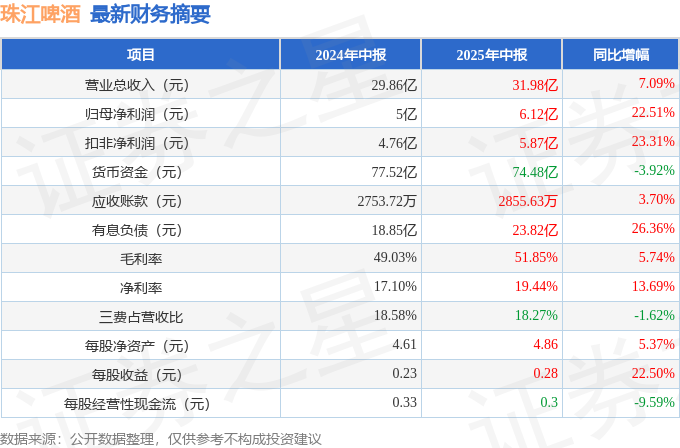
Financial Performance - The company reported a total revenue of 3.198 billion yuan for the first half of 2025, representing a year-on-year increase of 7.09% [1] - The net profit attributable to shareholders reached 612 million yuan, up 22.51% year-on-year [1] - In Q2 2025, total revenue was 1.971 billion yuan, with a year-on-year growth of 4.96%, and net profit was 455 million yuan, increasing by 20.17% [1] Profitability Metrics - The gross margin improved to 51.85%, reflecting a year-on-year increase of 5.74% [1] - The net margin rose to 19.44%, showing a year-on-year increase of 13.69% [1] - Total selling, administrative, and financial expenses amounted to 584 million yuan, accounting for 18.27% of revenue, a decrease of 1.62% year-on-year [1] Earnings and Cash Flow - Earnings per share (EPS) increased to 0.28 yuan, a rise of 22.5% compared to the previous year [1] - The operating cash flow per share was 0.3 yuan, down 9.59% year-on-year [1] - The company's net asset value per share was 4.86 yuan, reflecting a year-on-year increase of 5.37% [1] Investment Returns - The company's return on invested capital (ROIC) was 5.38% last year, indicating average capital returns [3] - The historical median ROIC over the past decade was 3.29%, suggesting weak investment returns [3] Fund Holdings - The largest fund holding in the company is the Yin Hua Sheng Shi Selected Flexible Allocation Mixed Fund, with 6.4802 million shares newly entering the top ten holdings [4] - Other funds that have newly entered the top ten holdings include Xin Ao Zhi Cheng Selected Mixed A and Peng Hua Consumption Leading Mixed Fund [4]
珠江啤酒: 2025年半年度报告
Zheng Quan Zhi Xing· 2025-08-29 16:18
Core Viewpoint - Guangzhou Zhujiang Brewery Co., Ltd. reported a revenue increase of 7.09% year-on-year for the first half of 2025, reaching approximately CNY 3.20 billion, with a net profit attributable to shareholders of CNY 612 million, reflecting a growth of 22.51% [6][10]. Company Overview and Financial Indicators - The company operates primarily in beer production and sales, holding a leading technological advantage and strong brand recognition in South China [6][7]. - The total assets at the end of the reporting period were approximately CNY 15.92 billion, showing a slight increase of 0.10% compared to the previous year [10][12]. - The basic earnings per share increased by 22.50% to CNY 0.2766 [10]. Business Performance - The beer production volume for the first half of 2025 was 74.92 million hectoliters, a year-on-year increase of 6.71% [10]. - The company’s high-end beer product sales grew by 14.16%, indicating a shift towards premium offerings [7][9]. - The company’s sales revenue from e-commerce channels reached approximately CNY 32.63 million, with a significant year-on-year growth of 47.72% [9]. Market Trends and Strategies - The Chinese beer industry is experiencing a trend towards high-end products, with overall beer production among large enterprises declining by 0.3% year-on-year [6][7]. - The company is focusing on innovation and brand expansion, participating in various industry exhibitions and cultural events to enhance brand visibility [7][8]. - The company is also investing in green and intelligent manufacturing processes, with new production lines being established to meet market demands [7][8]. Financial Performance Analysis - The operating costs increased by 1.18% to approximately CNY 1.54 billion, while sales expenses rose by 6.37% [10][12]. - The net cash flow from operating activities showed a significant increase, reflecting improved operational efficiency [10]. - The company reported a decrease in financial expenses by 30.14%, contributing positively to the overall profit margin [10].
珠江啤酒: 2025年半年度报告摘要
Zheng Quan Zhi Xing· 2025-08-29 16:18
Summary of Key Points Core Viewpoint - Guangzhou Zhujiang Brewery Co., Ltd. reported a significant increase in revenue and net profit for the first half of 2025, indicating strong operational performance despite a decline in cash flow from operating activities. Financial Performance - Operating revenue for the reporting period reached CNY 3,197,530,069.72, an increase of 7.09% compared to CNY 2,985,948,792.93 in the same period last year [1] - Net profit attributable to shareholders was CNY 612,315,200.35, reflecting a growth of 22.51% from CNY 499,805,087.85 year-on-year [1] - Net profit after deducting non-recurring gains and losses was CNY 586,579,641.65, up 23.31% from CNY 475,677,010.75 [1] - Basic and diluted earnings per share increased to CNY 0.2766, a rise of 22.50% from CNY 0.2258 [1] - The weighted average return on equity was reported at 5.73% [1] Cash Flow and Assets - Net cash flow from operating activities decreased to CNY 669,715,423.33, down 9.59% from CNY 740,755,588.97 [1] - Total assets at the end of the reporting period were CNY 15,923,789,813.94, a slight increase of 0.10% from CNY 15,907,993,645.32 at the end of the previous year [2] - Net assets attributable to shareholders rose to CNY 10,746,014,077.63, marking a 2.25% increase from CNY 10,509,964,718.88 [2] Shareholder Information - The largest shareholder, Guangzhou Industrial Investment Holding Group Co., Ltd., holds 54.15% of the shares [2] - The second-largest shareholder, Interbrew Investments Limited, holds 29.99% [3] Important Matters - The company did not propose any cash dividends, stock bonuses, or capital reserve transfers during the reporting period [1][4]
珠江啤酒: 半年报董事会决议公告
Zheng Quan Zhi Xing· 2025-08-29 16:18
Core Points - The company held its 86th meeting of the fourth board of directors on August 27, 2025, chaired by Chairman Huang Wensheng [1][2][3] - All resolutions passed with unanimous support from the board members, indicating strong consensus [1][2][3] Summary by Sections Half-Year Report - The board approved the 2025 half-year report and its summary, which will be published on August 29, 2025, on various platforms [1] Fund Usage Report - The board also approved the special report on the storage and usage of raised funds for the first half of 2025, to be published on August 29, 2025 [2] Related Party Transactions - The board approved the proposal for new estimated amounts for daily related party transactions, with independent directors unanimously agreeing to the resolution [2] Election of Vice Chairman - Zhang Yong was elected as the vice chairman of the board, with his term lasting until the next board election [2] Committee Member Election - Zhang Yong was also elected as a member of the board's strategic committee, reflecting recent changes in board membership [3]