
Zhujiang Brewery(002461)

Search documents
换帅后的珠江啤酒发半年业绩预告:净利或超6亿元,增速放慢
Nan Fang Du Shi Bao· 2025-07-14 09:12
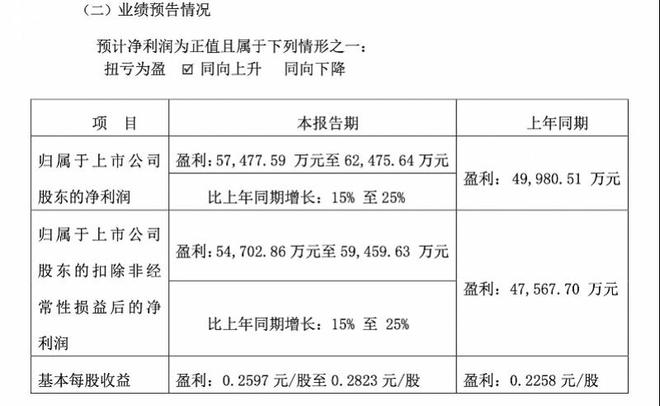
Core Viewpoint - Zhujiang Beer has released its half-year performance forecast for 2025, expecting a net profit attributable to shareholders of approximately 574.8 million to 624.8 million yuan, representing a year-on-year growth of 15% to 25% [1][2]. Financial Performance - The forecasted net profit for the first half of 2025 is between 574.8 million and 624.8 million yuan, compared to 499.8 million yuan in the same period last year, indicating a growth rate of 15% to 25% [2]. - The basic earnings per share are projected to be between 0.2597 yuan and 0.2823 yuan, up from 0.2258 yuan in the previous year [2]. - The net profit for the second quarter of 2025 is expected to be between 417 million and 467 million yuan, showing a year-on-year increase of 10.2% to 23.21% [3]. Market Position and Strategy - Zhujiang Beer is one of the few companies in the capital market to release performance forecasts, alongside Yanjing Beer, both focusing on the 8 yuan price segment [3]. - The flagship product, 97 Pure Draft, has been a significant contributor to growth, benefiting from its popularity in certain regions of Guangdong and the overall downward trend in beer prices last year [3]. - The company is recognized for its strong market presence in Guangdong, with a revenue of approximately 5.49 billion yuan in the South China region, accounting for 95.81% of total revenue, which has increased from the previous year [6]. Management Changes - A significant management change occurred on June 16, when the former chairman Wang Zhibin retired, and General Manager Huang Wensheng was appointed as the new chairman [6][7]. - The performance results for the first half of 2025 largely reflect the achievements during Wang Zhibin's tenure, while Huang Wensheng's leadership will be evaluated based on the third quarter performance [7].


首批酒业股半年业绩出炉;山城啤酒推出精酿|观酒周报
2 1 Shi Ji Jing Ji Bao Dao· 2025-07-14 01:51
Group 1: Industry Performance - Yanjing Beer and Zhujiang Beer continue to maintain high growth rates significantly above industry levels in the first half of 2025 [1] - Zhujiang Beer expects a net profit of 575 million to 625 million yuan for the first half of 2025, representing a year-on-year increase of 15% to 25% [2] - Yanjing Beer anticipates a net profit between 1.061 billion and 1.137 billion yuan, reflecting a year-on-year growth of 40% to 50% [3] Group 2: Company Updates - Moutai Group reported that both Moutai liquor and sauce-flavored liquor have completed their operational tasks for the first half of 2025 [4] - Jin Feng Wine Industry expects a net loss of 4.8 million to 7.2 million yuan for the first half of 2025, although this represents a reduction in losses compared to the previous year [6] - ST Lanzhou Huanghe anticipates a loss of 10 million to 13 million yuan, with revenue declining due to intensified market competition [7] Group 3: New Product Launches and Strategies - Mountain City Beer launched its first craft beer, "Mountain City Secret Brew," at the 2025 Chongqing International Beer Culture Festival [9] - 1919 announced a new strategy to integrate wine and dining experiences through store upgrades and partnerships with local restaurants [11] - Water Well Square announced a halt on the sales of its "Zhen Niang Eight" product to address market circulation issues [12]


食品饮料周观点:中报窗口期,预期回归、分化加剧-20250713
GOLDEN SUN SECURITIES· 2025-07-13 14:28
Investment Rating - The report maintains an "Increase" rating for the food and beverage industry, indicating a positive outlook for selected companies within the sector [4]. Core Insights - The report highlights a significant differentiation within the industry, particularly in the liquor segment, where companies are actively seeking transformation amid market pressures. It emphasizes three main investment themes: leading brands, high-certainty regional brands, and flexible companies benefiting from recovery [1][2]. - In the beer and beverage sector, companies like Yanjing and Zhujiang are expected to show strong profit growth, with Yanjing projected to achieve a net profit of 1.06 to 1.14 billion yuan, reflecting a year-on-year increase of 40% to 50% [3]. Summary by Sections Liquor Industry - The liquor industry is experiencing a challenging half-year, with demand and policy impacts leading to a slowdown in sales. The report anticipates that the performance expectations for the mid-year and the entire year of 2025 have been largely adjusted [2]. - Key players like Kweichow Moutai and Wuliangye are focusing on service enhancement and transformation strategies to navigate the current market conditions. The report suggests that the upcoming month of September will be critical for assessing the impact of policies and consumer demand [2]. Beer and Beverage Sector - Yanjing Beer is expected to achieve a net profit of 1.06 to 1.14 billion yuan for the first half of 2025, marking a year-on-year increase of 40% to 50%. Zhujiang Beer is also projected to see a profit increase of 15% to 25% [3]. - Eastroc Beverage is forecasted to generate revenue of 10.63 to 10.84 billion yuan, with a net profit of 2.31 to 2.45 billion yuan, reflecting a growth of 33% to 42% year-on-year [3]. Consumer Goods - The report notes that companies like Youyou Foods and Miaokelando are expected to report significant profit increases, with Youyou Foods projecting a revenue growth of 40.91% to 50.77% [7]. - The overall consumer goods sector is highlighted as a space to watch for growth, particularly for companies that are innovating and expanding their market reach [7].



珠江啤酒(002461):Q2利润维持较快增长,97纯生势能强劲
Southwest Securities· 2025-07-11 14:14
Investment Rating - The report maintains a "Buy" rating for Zhujiang Beer (002461) with a target price of —— yuan over the next six months [1]. Core Views - The company reported a strong profit growth in Q2, with the flagship product 97 Pure Draft showing robust momentum. The overall beer industry demand has been recovering well since Q2, with a 2.9% year-on-year increase in domestic beer production from April to May 2025. Zhujiang Beer, as a leading player in Guangdong, is expected to outperform the industry [7]. - The company has solidified its leading position in the Guangdong market, with a market share that has been steadily increasing despite competition. The non-draft channel accounts for over 70% of sales, significantly above the industry average, indicating a successful adaptation to the trend of high-end upgrades in the beer market [7]. - There is substantial room for product structure upgrades, with a clear "3+N" brand strategy aimed at enhancing high-end offerings. The company is expected to capture market share in higher price segments while maintaining its position in the 8 yuan and above price range [7]. Financial Summary - For the fiscal years 2024A to 2027E, the projected revenue growth rates are 6.56%, 8.88%, 9.34%, and 9.09%, respectively. The net profit attributable to the parent company is expected to grow from 8.10 billion yuan in 2024 to 14.22 billion yuan in 2027, with growth rates of 29.95%, 25.42%, 20.15%, and 16.48% [2][8]. - The earnings per share (EPS) are projected to increase from 0.37 yuan in 2024 to 0.64 yuan in 2027, with corresponding price-to-earnings (PE) ratios decreasing from 31 to 18 over the same period [2][8]. - The return on equity (ROE) is expected to rise from 7.85% in 2024 to 11.24% in 2027, indicating improving profitability and efficiency [2][8].
食饮吾见 | 一周消费大事件(7.7-7.11)
Cai Jing Wang· 2025-07-11 08:58
Group 1: Company Performance Forecasts - Zhujiang Beer expects a net profit of 575 million to 625 million yuan for the first half of 2025, representing a growth of 15% to 25% [1] - Yanjing Beer anticipates a net profit growth of 40% to 50%, estimating between 1.062 billion to 1.137 billion yuan [2] - Lianhua Holdings projects a net profit increase of 58.67% to 68.59%, estimating between 160 million to 170 million yuan [5] - Tianbang Foods expects a net profit of 350 million to 370 million yuan, a decline of 56.01% to 58.39% [7] - Muyuan Foods forecasts a net profit of 10.5 billion to 11 billion yuan, a significant increase of 924.60% to 973.39% [8] - Bubu Gao anticipates a net profit of 180 million to 220 million yuan, indicating a turnaround to profitability [10] Group 2: Strategic Developments - Ferrero has agreed to acquire WK Kellogg Co for $23 per share, totaling an enterprise value of $3.1 billion [3] - Zhongju Gaoxin elected Li Ruxiong as chairman and Yu Jianhua as vice chairman during its board meeting [4] - Tea Yan Yue Se is expanding into North America through e-commerce, launching nearly 40 products [9][10] - Yonghui Supermarket has issued a public letter to suppliers, emphasizing a commitment to fair competition and quality standards [12]


抢筹燕京啤酒,甩卖珠江啤酒!业绩同喜,境外资金为何“双标”操作?
Mei Ri Jing Ji Xin Wen· 2025-07-11 07:10
Core Viewpoint - Both Yanjing Beer and Zhujiang Beer reported positive growth in their performance for the first half of 2025, but foreign capital's attitudes towards them differ significantly, indicating varied investment signals [2][3]. Group 1: Performance Overview - Yanjing Beer is expected to see a net profit increase for the first half of 2025, with foreign capital increasing its holdings by 1,794.37 million shares in 2025 [3]. - Zhujiang Beer also reported growth, but foreign capital reduced its holdings by 1,776.49 million shares in the second quarter, a decrease of over 50% [3][4]. - Zhujiang Beer's stock price rose by 13.7% in the second quarter, outperforming Yanjing Beer, raising questions about the significant sell-off by foreign capital [4]. Group 2: Investment Behavior - Foreign capital's operations regarding Zhujiang Beer have been highly flexible, primarily engaging in wave trading, while maintaining stable holdings in Yanjing Beer [6]. - In the second quarter of 2023, after a year of declining stock prices, Zhujiang Beer experienced a rebound, prompting foreign capital to reduce holdings by 534 million shares [6]. - In the first quarter of 2024, foreign capital purchased 2,134 million shares of Zhujiang Beer, but chose to significantly reduce holdings in the second quarter as the stock price increased [8]. Group 3: Market Dynamics - Yanjing Beer's strong performance is driven by a more than 30% year-on-year increase in sales of its core product, U8, while Zhujiang Beer's growth is heavily reliant on the South China market, which accounts for over 90% of its sales [8]. - The overall beer industry has shown a recovery in demand, with domestic beer production increasing by 2.9% year-on-year from April to May 2025 [8]. - The smaller market capitalization of Zhujiang Beer leads to greater stock price volatility, resulting in a more agile investment approach from institutional funds [9]. Group 4: Institutional Interest - Following the release of Yanjing Beer's performance forecast for the first half of 2025, several securities firms and private equity funds showed strong interest, conducting consecutive days of research on the company [10][12]. - Notable institutions involved in the research include Shenwan Hongyuan, Northeast Securities, and various funds such as Huaxia Fund and E Fund [12][14]. Group 5: Strategic Initiatives - Yanjing Beer is implementing a large product strategy centered around U8, focusing on product innovation and brand influence to enhance market share [14]. - The company is also pursuing a "beer + beverage" marketing strategy to cater to younger consumers, leveraging synergies in production and supply chains [14]. - Analysts expect Yanjing Beer to maintain strong profit growth, driven by the expansion of U8 and operational efficiency improvements [15][16].
茅台酱香酒公司完成半年既定经营目标;珠江啤酒:预计2025年上半年净利润同比增长15%~25%丨酒业早参
Mei Ri Jing Ji Xin Wen· 2025-07-11 00:32
Group 1 - Moutai Sauce Wine Company achieved its operational goals for the first half of 2025, emphasizing a shift from a production-driven market to a consumer-driven one [1] - The company aims to enhance its brand, channel, and product capabilities, positioning its sauce series as a key growth driver [1] - This strategic focus may strengthen market perception of the growth potential of its sauce series and could set a benchmark for competition in the liquor sector [1] Group 2 - Zhujiang Beer expects a net profit of approximately 575 million to 625 million yuan for the first half of 2025, representing a year-on-year growth of 15% to 25% [2] - The company attributes this growth to steady high-quality development and continuous optimization of its product structure, leading to increased beer sales and revenue [2] - However, compared to Yanjing Beer, Zhujiang's revenue scale and growth rate are lower, raising concerns about its regional dependency and long-term growth potential [2] Group 3 - Xifeng Liquor's marketing strategy for the second half of 2025 focuses on deepening channel penetration and addressing market pain points [3] - The company plans to implement a "Golden Network Project" to enhance quality and efficiency, alongside fostering collaboration between manufacturers and distributors [3] - This strategy aligns with the overall trend in the liquor industry, emphasizing the importance of penetrating second and third-tier cities and county markets to maintain competitive positioning [3]
珠江啤酒: 2025年半年度业绩预告
Zheng Quan Zhi Xing· 2025-07-10 16:04
Group 1 - The company expects a net profit for the period from January 1, 2025, to June 30, 2025, to be between 574.78 million yuan and 624.76 million yuan, representing a growth of 15% to 25% compared to the same period last year [1][2] - The estimated basic earnings per share are projected to be between 0.2597 yuan and 0.2823 yuan, compared to 0.2258 yuan in the previous year [1][2] - The increase in net profit is attributed to the company's steady high-quality development, continuous optimization of product structure, and growth in beer sales and revenue [2] Group 2 - The preliminary financial data provided in the earnings forecast has not been audited by the accounting firm [1][2] - The specific financial data will be confirmed in the company's subsequent disclosure of the 2025 semi-annual report [2]
珠江啤酒:预计2025年上半年净利润同比增长15%至25%
news flash· 2025-07-10 08:06
Core Viewpoint - Zhujiang Brewery (002461) expects a net profit attributable to shareholders of the listed company to be between 575 million yuan and 625 million yuan for the period from January 1, 2025, to June 30, 2025, representing a growth of 15% to 25% compared to the same period last year, which was 500 million yuan [1] Financial Performance - The net profit attributable to shareholders after deducting non-recurring gains and losses is expected to be between 547 million yuan and 595 million yuan, an increase of 15% to 25% from the previous year's 476 million yuan [1] - The basic earnings per share are projected to be between 0.2597 yuan and 0.2823 yuan [1]
珠江啤酒(002461) - 2025 Q2 - 季度业绩预告
2025-07-10 08:05
| 项 目 | 本报告期 | | | | 上年同期 | | --- | --- | --- | --- | --- | --- | | 归属于上市公司 | 盈利:57,477.59 万元至 | | 62,475.64 | 万元 | 盈利:49,980.51 万元 | | 股东的净利润 | 比上年同期增长:15% | | 至 | 25% | | | 归属于上市公司 股东的扣除非经 | 盈利:54,702.86 | 万元至 | | 59,459.63 万元 | 盈利:47,567.70 万元 | | 常性损益后的净 | | | | | | | | 比上年同期增长:15% 至 | | | 25% | | | 利润 | | | | | | | 基本每股收益 | 盈利:0.2597 | 元/股至 | 0.2823 | 元/股 | 盈利:0.2258 元/股 | 二、与会计师事务所沟通情况 本次业绩预告数据是公司财务部初步核算的数据,本次业绩预告未经会计师事 务所预审计。 证券代码:002461 证券简称:珠江啤酒 公告编号:2025-019 2025 年半年度业绩预告 本公司及董事会全体成员保证公告内容真实、准确和完整 ...