LUXSHARE-ICT(002475)

Search documents
研判2026!中国新能源汽车高压部件行业进入壁垒、政策汇总、产业链图谱、市场规模、竞争格局及发展趋势分析:市场格局较为分散[图]
Chan Ye Xin Xi Wang· 2026-01-27 01:29
Core Viewpoint - The Chinese electric vehicle (EV) high-voltage component industry has transitioned from policy-driven to market-driven growth, with increasing consumer acceptance of pure electric and hybrid models, leading to a significant expansion in production and sales, and a surge in demand for high-voltage components [1][10]. Industry Overview - The high-voltage system in EVs is crucial for energy storage, conversion, transmission, and usage, operating at hundreds of volts, which distinguishes EVs from traditional fuel vehicles [2]. - High-voltage components are essential for the efficient operation of EVs, enabling energy management and enhancing overall performance [4]. Market Size and Growth - By 2025, the market size of China's high-voltage component industry is projected to reach 311.66 billion yuan, representing a year-on-year growth of 26.5%, capturing 49.32% of the global market share [1][10]. - In the first nine months of 2025, China's production and sales of new energy vehicles reached 11.24 million and 11.23 million units, respectively, with a year-on-year growth of 35.2% and 34.9% [8]. Industry Barriers - The high-voltage component industry faces significant technical barriers, requiring precise design, programming skills, and a deep understanding of system logic to ensure performance, reliability, and safety [5][6]. Market Policies - The Chinese government has implemented various policies to support the development of the automotive parts industry, including high-voltage components, creating a favorable environment for growth [6]. Industry Chain - The upstream of the high-voltage component industry includes suppliers of raw materials like copper, aluminum, and rare earths, while the downstream consists of EV manufacturers and the aftermarket, which is seeing increased demand as early EVs enter replacement cycles [7][8]. Competitive Landscape - The industry is characterized by a fragmented market with numerous players focusing on specific segments. Key companies include Xinrui Technology, Zhonghang Optoelectronics, BYD Semiconductor, and Futec Technology [10][11]. Development Trends - The industry is expected to see a shift towards higher voltage and efficiency, with wide bandgap semiconductor materials playing a crucial role in enhancing energy conversion efficiency [14]. - There will be a trend towards system integration and modularization, aiming for lightweight designs and cost control [14]. - Collaboration within the supply chain will deepen, with a focus on localizing key materials and components to build a self-sufficient supply chain [15].





通信ETF华夏(515050)连续5日吸金2.43亿元,中信证券:AI产业趋势明确,持续看好光通信板块
Mei Ri Jing Ji Xin Wen· 2026-01-27 01:20
Core Insights - The AI computing sector, represented by optical modules CPO, optical communication, and PCB, is experiencing fluctuations while capital is accelerating its investment [1] - The largest communication ETF, Huaxia (515050), has seen a continuous net inflow of 243 million yuan over the past five days, with a total scale exceeding 8 billion yuan [1] - The ETF focuses on electronic (chips, PCBs, consumer electronics) and communication (optical modules, servers) hardware, with CPO and CPB concept stocks accounting for over 76% of its weight, the highest in the market [1] Industry Analysis - According to CITIC Securities, the explosive demand for AI computing is driving upgrades in the optical communication industry, with ongoing capital expansion from overseas cloud providers and TSMC, indicating strong demand for AI infrastructure [1] - There is a current short-term supply gap for high-speed optical chips and materials, but upstream manufacturers are actively expanding production, and the penetration rate of silicon photonics is expected to alleviate supply chain bottlenecks [1] - Technological advancements, particularly NPO with its low power consumption, high bandwidth, and maintainability advantages, are becoming a key transitional solution at the Scaleup level, with leading companies already positioning themselves to drive the industry towards more efficient optical interconnection architectures [1] - The development potential of domestic optical communication leading companies is viewed positively, maintaining a "stronger than the market" rating for the communication industry [1]




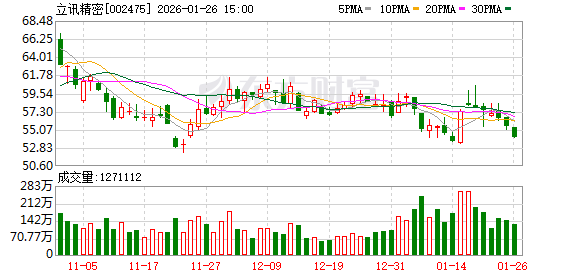
立讯精密:截至2026年1月20日股东户数482344户
Zheng Quan Ri Bao· 2026-01-26 14:17
Group 1 - The core point of the article is that Luxshare Precision has reported its shareholder count as of January 20, 2026, which stands at 482,344 households [2]
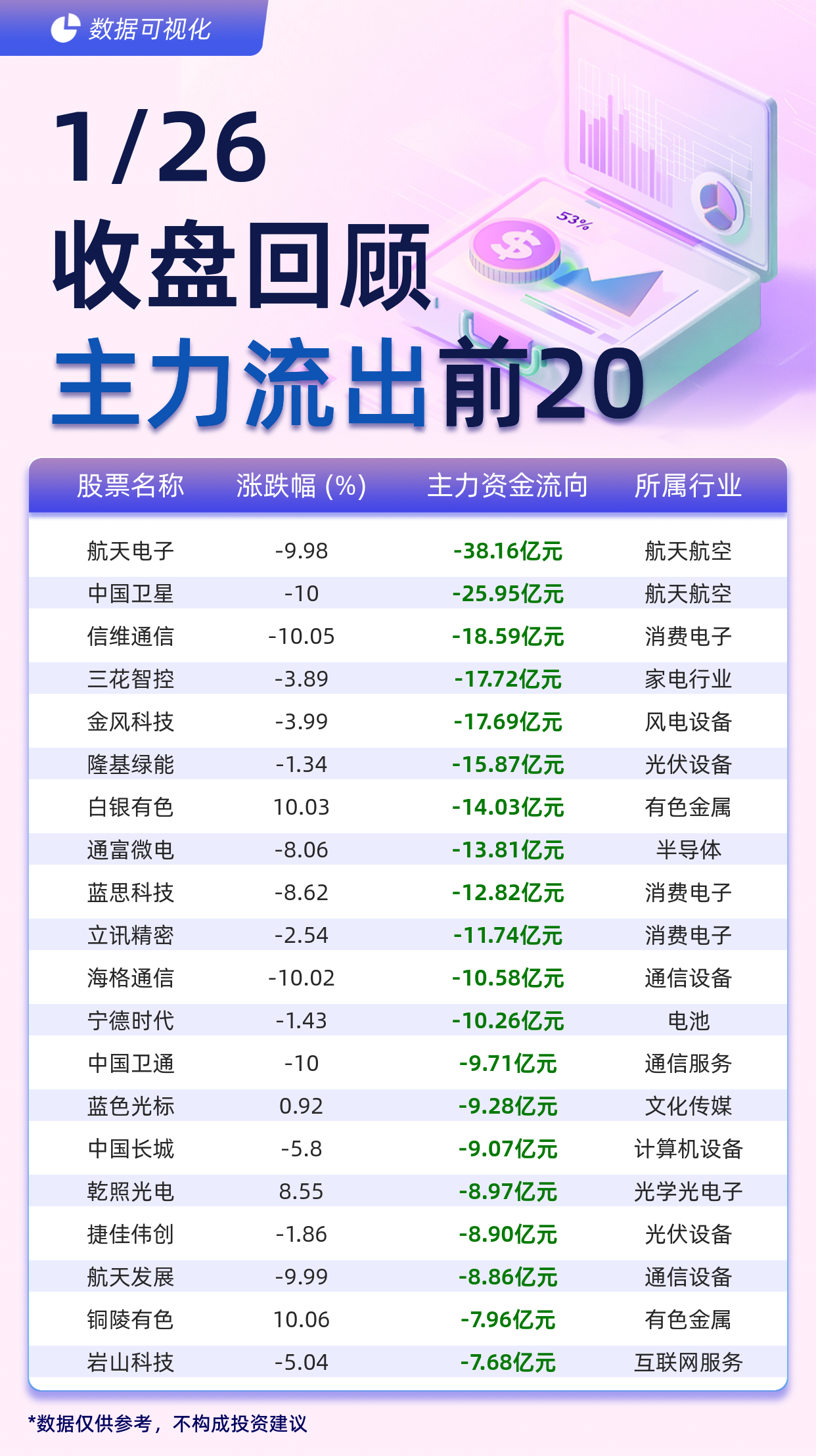
主力个股资金流出前20:航天电子流出38.16亿元、中国卫星流出25.95亿元
Jin Rong Jie· 2026-01-26 07:37
Core Viewpoint - The data indicates significant outflows of main funds from various stocks, particularly in the aerospace and consumer electronics sectors, reflecting a bearish sentiment among investors. Group 1: Stock Performance and Fund Flow - Aerospace stocks, such as Aerospace Electronics and China Satellite, experienced the largest fund outflows, with -38.16 billion and -25.95 billion respectively, and declines of -9.98% and -10% in their stock prices [1][2] - Other notable stocks with significant outflows include Xinwei Communication (-18.59 billion, -10.05%), Sanhua Intelligent Control (-17.72 billion, -3.89%), and Goldwind Technology (-17.69 billion, -3.99%) [1][2] - The outflow from Longi Green Energy was -15.87 billion with a stock price decrease of -1.34%, indicating a relatively smaller decline compared to others in the same sector [1][2] Group 2: Sector Analysis - The consumer electronics sector saw major outflows, particularly from companies like Xinwei Communication and Lens Technology, with outflows of -18.59 billion and -12.82 billion respectively [1][2] - The wind power equipment sector, represented by Goldwind Technology, also faced significant outflows, reflecting potential challenges in the renewable energy market [1][2] - The communication equipment sector, including companies like Haige Communication and China Satellite, showed substantial fund outflows, indicating investor caution in this area [1][3]






2026年中国通讯服务器构配件行业产业链、发展现状、竞争格局及发展趋势研判:服务器市场的快速发展,为通讯服务器构配件行业带来广阔的发展空间[图]
Chan Ye Xin Xi Wang· 2026-01-26 01:14
Core Insights - The development of the communication server components industry is closely linked to advancements in information technology, with significant market demand driven by cloud computing, big data, IoT, and 5G technologies [1][8] - The Chinese communication server components market is projected to reach 14.1 billion yuan by 2025, reflecting a year-on-year increase of 13.3% [8] - The global communication server components market is expected to grow to 9.12 billion USD by 2025, with an annual growth rate of 8.2% [7][8] Industry Overview - Communication servers are high-performance computers that provide computing or application services to client devices, featuring complex internal structures and various components such as CPUs, hard drives, and memory [4] - Communication server components include structural fasteners and assembly parts, which are crucial for the assembly of servers [4] Industry Chain - The upstream of the communication server components industry includes raw materials like stainless steel, copper, and aluminum, while the midstream consists of the components industry itself, and the downstream pertains to the application fields within communication servers [5] Market Size and Growth - The Chinese server industry market size was 165.2 billion yuan in 2022 and is expected to grow to 282.35 billion yuan by 2025, with a compound annual growth rate (CAGR) of 19.6% [7] - The growth of the server market is anticipated to drive demand for communication server components [7] Competitive Landscape - Key players in the communication server components industry include Inspur Information, ZTE Corporation, and Xiamen Meikang Security Technology, among others [9] - Server manufacturers often have in-house design capabilities for core structural components, ensuring supply chain stability [9] Development Trends 1. **Product Design Upgrades**: Focus on high-density integration and multi-scenario adaptability to meet the deployment needs of new data centers and communication networks [11] 2. **Smart and Precise Manufacturing**: Adoption of automated production lines and digital management systems to enhance product precision and consistency [12] 3. **Industry Chain Collaboration**: The competitive landscape is shifting towards deeper integration within the industry chain, with leading companies forming strategic partnerships with suppliers and manufacturers [13]






解码公募基金2025年四季报:主动权益基金重仓电子、医药生物等行业
Zheng Quan Ri Bao Zhi Sheng· 2026-01-25 17:07
Group 1 - The core focus of the news is on the performance and trends of actively managed equity funds, highlighting their significant stock positions and preference for value style investments [1][2][4] - As of the end of 2025, the total scale of actively managed equity funds reached 3.91 trillion yuan, with equity mixed funds dominating both in number (2,770 products) and scale (2.41 trillion yuan), accounting for over 61% of the total [1][2] - The number of new actively managed equity fund products launched in Q4 2025 was 112, with a total scale of 570.83 billion yuan, maintaining stability compared to Q3 2025 [2] Group 2 - The top three sectors favored by actively managed equity funds as of the end of 2025 were electronics, pharmaceuticals and biology, and power equipment, with the electronics sector having the highest holding ratio at 23.76% [4] - The top three individual stocks held by actively managed equity funds were Zhongji Xuchuang, Xinyi Sheng, and Ningde Times [4] - The overall performance of actively managed equity funds in Q4 2025 was weaker compared to Q3 2025, although flexible allocation mixed funds outperformed the CSI 300 index with a quarterly return of 0.26% [2][3] Group 3 - The stock positions of actively managed equity funds remained high in Q4 2025, with equity investment funds at 90.54%, equity mixed funds at 87.82%, and flexible allocation mixed funds at 74.20% [3] - The market outlook for 2026 is optimistic, with expectations of a shift from valuation-driven growth to fundamental-driven growth as corporate earnings stabilize [5][6] - The current low interest rate environment enhances the attractiveness of equity assets, with potential for significant capital inflow into A-shares and Hong Kong stocks [6]



外资巨头,深挖中国科技股
Shang Hai Zheng Quan Bao· 2026-01-25 05:34
Group 1 - The core viewpoint of the articles indicates that foreign public funds are optimistic about the Chinese stock market, particularly in the technology sector, which is expected to undergo a historical value reassessment by 2026, potentially generating excess returns [1][7][10] - Since 2025, the A-share market has shown resilience, with the Shanghai Composite Index stabilizing around 4100 points, and several foreign public fund products have reported significant performance, with net value increases exceeding 50% for multiple funds [3][8] - Foreign public funds have focused their investments on high-quality technology assets, with notable holdings in leading Chinese tech companies such as Tencent, Zhongji Xuchuang, and Han's Laser [3][4][5] Group 2 - Fund managers from various foreign public funds have expressed a commitment to maintaining a high equity position, focusing on growth-oriented investment opportunities in sectors like high-end manufacturing, electric vehicles, and AI technology [5][6] - The outlook for the A-share market in 2026 is positive, with fund managers highlighting the significant allocation value of Chinese stocks compared to RMB bonds, suggesting a continued overweight in equities [8][10] - There is a consensus among fund managers that high-quality technology assets are likely to continue yielding excess returns, with a focus on sectors benefiting from innovation and structural changes in the economy [9][10]


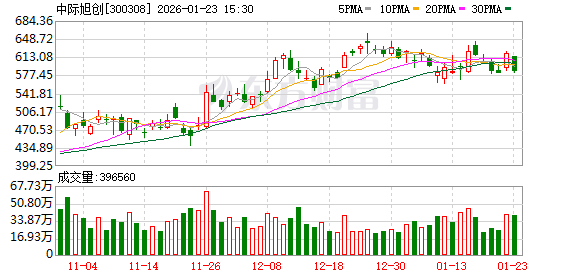
公募基金调仓路线图浮现 中际旭创成头号重仓股
2 1 Shi Ji Jing Ji Bao Dao· 2026-01-23 13:33
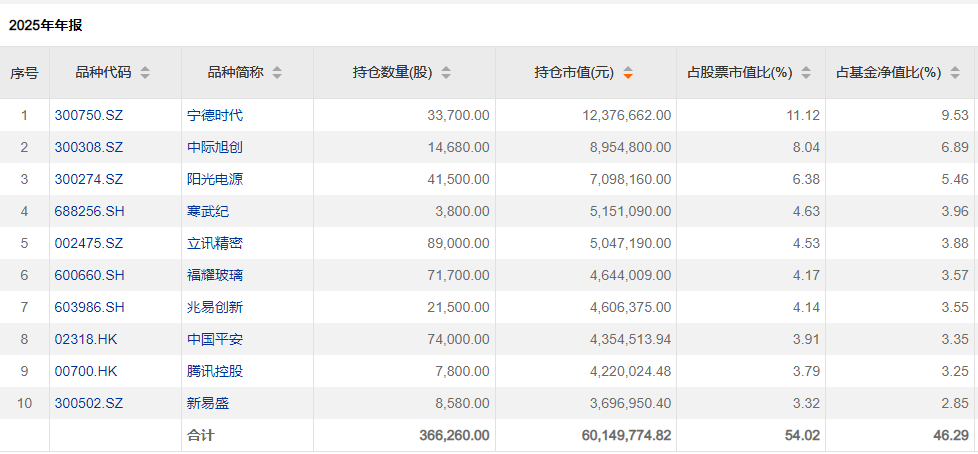
Core Viewpoint - The latest statistics indicate a significant shift in the top holdings of actively managed equity funds, with Zhongji Xuchuang replacing CATL as the largest holding, reflecting changing market dynamics and investment strategies [2][3]. Group 1: Changes in Top Holdings - As of the end of Q4 2025, the top ten holdings of actively managed equity funds are: Zhongji Xuchuang, Xinyi Semiconductor, CATL, Tencent Holdings, Zijin Mining, Alibaba-W, Cambrian Biologics-U, Luxshare Precision, Kweichow Moutai, and Dongshan Precision [3]. - The total market value of these top ten stocks held by actively managed equity funds is 76.8 billion, 63.8 billion, 63 billion, 57.4 billion, 36.8 billion, 31 billion, 29.1 billion, 28 billion, 25.8 billion, and 24.4 billion respectively [3]. - Notable changes from Q3 2025 include Zhongji Xuchuang rising from fourth to first, Xinyi Semiconductor from third to second, and Zijin Mining from eighth to fifth, while CATL and Tencent Holdings dropped to third and fourth respectively [3][6]. Group 2: Sector Allocation Adjustments - In Q4 2025, actively managed equity funds increased their allocations in sectors such as non-ferrous metals, communication, non-bank financials, chemicals, and machinery, while reducing exposure to electronics, pharmaceuticals, media, computers, and power equipment [2][8]. - The overall stock position of actively managed equity funds decreased to 84.4%, down 1.4 percentage points from the previous quarter, indicating a cautious approach amidst market volatility [7]. - The increase in allocation to sectors like non-ferrous metals and chemicals is attributed to supply constraints and recovering demand from new energy and AI applications, while the reduction in electronics and pharmaceuticals is linked to high valuations and weak short-term outlooks [8][9]. Group 3: Market Trends and Insights - The changes in top holdings and sector allocations reflect a shift in market focus towards technology, particularly in the communication sector, driven by the rapid development of the digital economy and AI [4][5]. - The strategic importance of communication infrastructure and chip manufacturing is highlighted, with ongoing policy support for industry upgrades creating new growth opportunities [5]. - The overall market sentiment is characterized by a balance between short-term gains and long-term strategic positioning, influenced by industry prospects and policy environments [9].
兴证策略:2025年四季度主动权益基金管理规模小幅下降 四季度存量基金的赎回压力仍然较大
Sou Hu Cai Jing· 2026-01-23 12:38
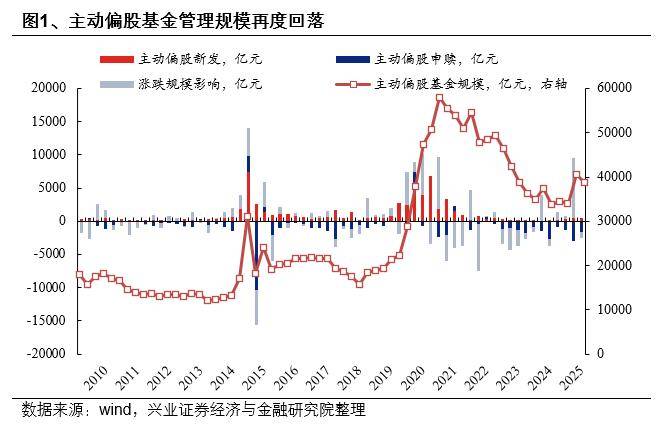
Group 1 - The active equity fund management scale decreased slightly in Q4 2025, primarily due to significant redemption pressure from existing funds, resulting in a net redemption of 165.6 billion yuan [1] - The total management scale of three types of active equity funds (ordinary stock, mixed equity, and flexible allocation) decreased by 189.8 billion yuan, with new active equity fund issuance at 56.2 billion yuan [1] - The active equity fund's position in Q4 2025 decreased by 0.83 percentage points to 86.62%, remaining at the second-highest level in history [2] Group 2 - In terms of sector allocation, the proportion of the ChiNext board increased by 1.24 percentage points to 24.98%, while the main board and Sci-Tech Innovation board saw declines [5][8] - The allocation to the main board decreased by 0.30 percentage points to 58.21%, indicating a further increase in underweight [8] - Active equity funds increased their positions in cyclical and financial real estate sectors while reducing exposure to technology growth and pharmaceuticals [11] Group 3 - The active equity funds increased their allocation in the non-ferrous metals, communication, and non-bank financial sectors, with increases of 2.26 percentage points, 1.85 percentage points, and 0.87 percentage points respectively [13] - The funds reduced their positions in electronics, pharmaceuticals, media, power equipment, and computers, with reductions of 1.72 percentage points, 1.54 percentage points, and 1.16 percentage points respectively [13] - Excluding thematic/sector funds, the active equity funds still increased their positions in non-ferrous metals, communication, and non-bank financial sectors [14] Group 4 - The allocation to the TMT sector slightly decreased in Q4 2025, with the configuration coefficient at 1.48, indicating room for further improvement [29] - Within the TMT sector, active equity funds increased their holdings in communication equipment and components while reducing positions in consumer electronics and semiconductors [32] - The dividend sector's allocation stabilized and increased, with the low-volatility dividend index rising by 1.7 percentage points to 4.3% [37] Group 5 - The top five stocks in active equity funds in Q4 2025 included Zhongji Xuchuang, Xinyi Sheng, Dongshan Precision, China Ping An, and Zijin Mining, with respective increases in holding ratios [43] - The top ten holdings accounted for 4.83%, 4.01%, and 3.97% of the total market value of the funds [46] - The concentration of individual stocks in active equity funds increased slightly, while the concentration of industries showed a mixed trend [49] Group 6 - The Hong Kong stock allocation of active equity funds decreased to 15.98%, down from 19.09%, with a total holding value of 302.9 billion yuan [51] - The funds increased their positions in the healthcare, materials, and energy sectors while reducing exposure to consumer discretionary and information technology sectors [54] - Tencent maintained its position as the largest holding in Hong Kong stocks, with a market value of 57.3 billion yuan [56]




数据复盘丨钙钛矿电池、商业航天等概念走强 191股获主力资金净流入超1亿元




Zheng Quan Shi Bao Wang· 2026-01-23 09:56
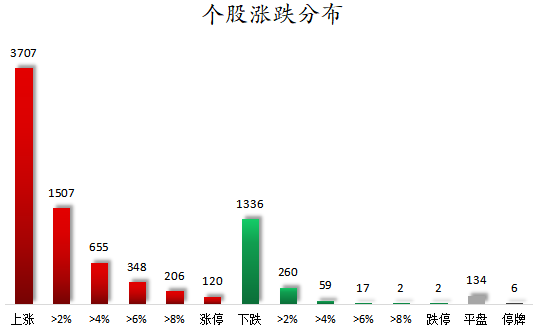
Market Overview - The Shanghai Composite Index closed at 4136.16 points, up 0.33%, with a trading volume of 1.3369 trillion yuan. The Shenzhen Component Index rose 0.79% to 14439.66 points, with a trading volume of 1.7484 trillion yuan. The ChiNext Index increased by 0.63% to 3349.50 points, with a trading volume of 822.63 billion yuan. The STAR Market 50 Index closed at 1553.71 points, up 0.78%, with a trading volume of 110.8 billion yuan. The total trading volume of both markets was 3.0853 trillion yuan, an increase of 393.5 billion yuan compared to the previous trading day [1]. Sector Performance - The market saw more sectors gaining than losing, with notable increases in power equipment, non-ferrous metals, precious metals, defense and military, steel, media, computer, environmental protection, and textile and apparel sectors. Concepts such as perovskite batteries, commercial aerospace, satellite internet, sapphire, lithium mining, cultivated diamonds, small metals, gold, and interactive short dramas were particularly active. In contrast, sectors like communication, insurance, banking, coal, and home appliances experienced declines [1]. Individual Stock Performance - A total of 3707 stocks rose, while 1336 stocks fell, with 134 stocks remaining flat and 6 stocks suspended. Excluding newly listed stocks, there were 120 stocks hitting the daily limit up and 2 stocks hitting the limit down [2]. - Among the stocks that hit the daily limit up, 23 stocks had consecutive limit-up days of 2 or more, with Fenglong Co., Ltd. leading with 18 consecutive limit-ups [3]. Capital Flow - The net capital outflow from the two markets was 4.167 billion yuan, with the ChiNext seeing a net inflow of 1.515 billion yuan. The CSI 300 index experienced a net outflow of 1.005 billion yuan, while the STAR Market saw a net outflow of 3.171 billion yuan. Out of 31 sectors, 13 sectors had net capital inflows, with the power equipment sector leading with a net inflow of 8.977 billion yuan [4][6]. - The top sectors with net inflows included non-ferrous metals (4.552 billion yuan), media (2.173 billion yuan), and defense and military (2.157 billion yuan). Conversely, the communication sector had the highest net outflow of 7.992 billion yuan, followed by electronics (6.350 billion yuan) and machinery (5.077 billion yuan) [4][6]. Notable Stocks - 191 stocks had net capital inflows exceeding 1 billion yuan, with Jin Feng Technology receiving the highest net inflow of 1.861 billion yuan. Other notable stocks included Lens Technology (1.594 billion yuan), Qian Zhao Optoelectronics (1.267 billion yuan), and Xian Dao Intelligent (1.217 billion yuan) [7][8]. - Conversely, 116 stocks experienced net capital outflows exceeding 1 billion yuan, with Xin Yi Sheng leading with a net outflow of 3.471 billion yuan, followed by Zhong Ji Xu Chuang (3.103 billion yuan) and Li Ou Shares (2.604 billion yuan) [10][11]. Institutional Activity - Institutional investors had a net selling of approximately 1.02 billion yuan, with 22 stocks seeing net purchases and 14 stocks net sales. Jin Feng Technology was the most purchased stock by institutions, with a net purchase amount of approximately 266 million yuan [13][14].