SUNWODA(300207)

Search documents
欣旺达1月22日获融资买入7614.12万元,融资余额18.09亿元
Xin Lang Zheng Quan· 2026-01-23 01:27
Core Viewpoint - XINWANDA's stock experienced a slight decline of 0.78% on January 22, with a trading volume of 933 million yuan, indicating a mixed sentiment among investors [1] Financing Summary - On January 22, XINWANDA had a financing buy amount of 76.14 million yuan and a financing repayment of 80.83 million yuan, resulting in a net financing outflow of 4.68 million yuan [1] - As of January 22, the total financing and securities lending balance for XINWANDA was 1.816 billion yuan, with the financing balance at 1.809 billion yuan, accounting for 4.03% of the circulating market value, which is above the 60th percentile of the past year [1] - In terms of securities lending, XINWANDA repaid 13,800 shares and sold 6,800 shares on January 22, with a selling amount of 165,000 yuan, while the securities lending balance was 6.93 million yuan, below the 20th percentile of the past year [1] Company Overview - XINWANDA ELECTRONICS CO., LTD. is located in Shenzhen, Guangdong Province, and was established on December 9, 1997, with its listing date on April 21, 2011 [1] - The company's main business involves the research, design, production, and sales of lithium-ion battery modules, with revenue composition as follows: consumer batteries 51.47%, electric vehicle batteries 28.18%, others 16.63%, and energy storage systems 3.72% [1] Financial Performance - As of September 30, 2025, XINWANDA reported a total of 135,300 shareholders, an increase of 18.08% from the previous period, while the average circulating shares per person decreased by 15.23% to 12,669 shares [2] - For the period from January to September 2025, XINWANDA achieved an operating income of 43.534 billion yuan, representing a year-on-year growth of 13.73%, and a net profit attributable to shareholders of 1.405 billion yuan, up 15.94% year-on-year [2] - Since its A-share listing, XINWANDA has distributed a total of 1.772 billion yuan in dividends, with 755.6 million yuan distributed over the past three years [2] Institutional Holdings - As of September 30, 2025, the second-largest circulating shareholder of XINWANDA was Hong Kong Central Clearing Limited, holding 69.279 million shares, a decrease of 21.416 million shares from the previous period [2] - The fourth-largest circulating shareholder was E Fund's ChiNext ETF, holding 29.075 million shares, down by 4.839 million shares, while the sixth-largest was Southern CSI 500 ETF, holding 21.499 million shares, with a decrease of 412,700 shares [2] - New institutional shareholders include GF National Index New Energy Vehicle Battery ETF, holding 14.901 million shares, and E Fund's Science and Technology Mixed Fund, holding 11.1296 million shares [2]

欧洲电动车销量月报(2025年12月):2025年欧洲9国BEV同比+31%,2026年多国补贴将延续或重启
Zhong Guo Neng Yuan Wang· 2026-01-23 00:53
Core Viewpoint - The report from Zhonghang Securities indicates a strong recovery in the sales of new energy vehicles (NEVs) in nine European countries, projecting sales of 2.885 million units in 2025, a year-on-year increase of 32.6%, with a penetration rate of 29.0%, up by 6.7 percentage points [1][2]. Summary by Sections Overall Market Outlook - In 2025, NEV sales in nine European countries are expected to reach 2.885 million units, representing a 32.6% increase year-on-year, with a penetration rate of 29.0%, up 6.7 percentage points [2]. - The sales of Battery Electric Vehicles (BEVs) are projected at 1.892 million units, a year-on-year increase of 30.6%, while Plug-in Hybrid Electric Vehicles (PHEVs) are expected to reach 992,000 units, up 36.6% year-on-year [2]. Country-Specific Insights - **Germany**: The BEV sales are projected at 545,000 units, a 43.2% increase year-on-year, and PHEV sales at 311,000 units, up 62.3%. Germany will restart EV subsidies in January 2026, including Chinese brands [2][3]. - **United Kingdom**: BEV sales are expected to be 473,000 units, a 23.9% increase, and PHEV sales at 225,000 units, up 34.7%. EV subsidies will resume from July 2025 [2][3]. - **France**: BEV sales are projected at 326,000 units, a 12.1% increase, with December sales reaching 42,000 units, up 37.7%. Subsidies will continue into 2026 with increased standards [3]. - **Italy**: BEV sales are expected to be 95,000 units, a 44.2% increase, and PHEV sales at 99,000 units, up 89.4%. EV subsidies will be effective from October 22, 2025 [3]. - **Spain**: BEV sales are projected at 102,000 units, a 77.2% increase, and PHEV sales at 124,000 units, up 111.7%. The MOVES III subsidy plan will drive sales [3]. Investment Recommendations - The report suggests that the EU's proposal to adjust the 2035 emission reduction targets will not hinder the long-term trend of electrification in Europe. Instead, it will promote sales of small electric vehicles [4]. - Investment recommendations include: - **Lithium Batteries**: Recommended companies include CATL, Yiwei Lithium Energy, and Xinwangda [4]. - **Lithium Materials**: Recommended companies include Hunan Youneng and Tianci Materials [4]. - **Lithium Battery Structural Components**: Recommended companies include Minglida and Minth Group [4]. - **Power/Drive Systems**: Recommended companies include Weimaisi and Fute Technology [4]. - **Automotive Safety Components**: Beneficiary companies include Zhongrong Electric and Zhejiang Rongtai [4]. - **Charging Stations and Modules**: Recommended companies include Youyou Green Energy and Tonghe Technology [4].






电力设备行业点评报告:欧洲电动车销量月报(2025年12月):2025年欧洲9国BEV同比+31%,2026年多国补贴将延续或重启
KAIYUAN SECURITIES· 2026-01-23 00:24
Investment Rating - Investment rating: Positive (maintained) [2] Core Views - The report indicates a strong recovery in the European electric vehicle (EV) market, with 2025 sales in nine European countries reaching 2.885 million units, a year-on-year increase of 32.6%. The penetration rate of new energy vehicles reached 29.0%, up 6.7 percentage points year-on-year [13][16] - The report highlights that various countries, including Spain, the UK, France, and Italy, have implemented or will continue to implement subsidies, which are expected to drive further growth in EV sales in 2026 [7][14][19] - The European Commission's proposal to adjust the 2035 emission reduction targets is not expected to hinder the long-term trend of electrification in Europe. Instead, it introduces incentives for small electric vehicles and imposes requirements on zero-emission vehicles in corporate fleets, which will further promote EV sales [49][51] Summary by Sections 1. European EV Sales - In 2025, Germany's BEV sales reached 545,000 units, up 43.2% year-on-year, while PHEV sales were 311,000 units, up 62.3% [18] - The UK saw BEV sales of 473,000 units, a 23.9% increase, and PHEV sales of 225,000 units, up 34.7% [24] - France's BEV sales reached 326,000 units, up 12.1%, with PHEV sales declining by 25.9% [30] - Italy's BEV sales were 95,000 units, up 44.2%, and PHEV sales were 99,000 units, up 89.4% [41] - Spain's BEV sales reached 102,000 units, up 77.2%, and PHEV sales were 124,000 units, up 111.7% [44] 2. EU Dynamics - The European Commission's adjustment of the 2035 emission reduction targets does not affect the long-term electrification trend in Europe. The proposal allows for greater flexibility for automakers while maintaining the goal of climate neutrality by 2050 [49][50] - The Commission plans to establish a social climate fund to support member states in achieving clean transitions, with a budget of €86.7 billion from 2026 to 2032 [52] 3. Investment Recommendations - Recommended companies in the lithium battery sector include CATL, Yiwei Lithium Energy, and Xinwangda, with beneficiaries including Zhongxin Innovation and Guoxuan High-Tech [55][57] - In lithium materials, recommended companies are Hunan Youneng and Tianci Materials, with beneficiaries including Fulian Precision and Wanrun New Energy [55][57] - For charging stations and modules, recommended companies include Youyou Green Energy and Tonghe Technology, with beneficiaries such as Shenghong Co. [55][57]

张坤等知名基金经理罕见发声!
天天基金网· 2026-01-22 05:20
Group 1 - The core viewpoint of the article highlights the strategic adjustments made by prominent fund managers at E Fund in their investment portfolios for Q4 2025, focusing on sectors like AI, healthcare, consumer goods, and technology [2][4][6][10] Group 2 - Zhang Kun adjusted the structure of investments in the healthcare, consumer, and technology sectors while maintaining a stable position in top holdings, which include Tencent Holdings, Kweichow Moutai, and Alibaba-W [4][5] - Zhang Kun expressed confidence in the improvement of living standards and social security in China over the next decade, suggesting a narrowing gap with developed countries [4] - The AI wave is seen as a significant driver for innovation, with strong domestic demand expected to attract global resources and talent [4][5] Group 3 - Chen Hao focused heavily on AI-related sectors, increasing allocations in power equipment, new energy, non-bank financials, and chemicals, which yielded positive returns [7][8] - Chen Hao anticipates a transition of the AI industry from an acceleration phase in 2025 to a stable growth phase in 2026, emphasizing the importance of structural opportunities and the integration of AI with local applications [7][8] Group 4 - Xiao Nan reduced allocations in high-end and sub-high-end liquor sectors while increasing investments in the livestock industry, anticipating inflation-driven cost increases over the next two years [10] - The top holdings in Xiao Nan's consumer sector fund remained unchanged, including Kweichow Moutai and Midea Group [10]






2025年12月国内电池产量和装车量同比高增,六氟磷酸锂价格下降
Zhong Guo Neng Yuan Wang· 2026-01-22 01:21
Core Viewpoint - The lithium battery industry is expected to see significant growth in production and demand in 2025, with domestic battery and lithium iron phosphate (LFP) cathode material output notably higher than in 2024 [1][2] Production - In December 2025, domestic battery production is projected to reach 201.7 GWh, representing a year-on-year increase of approximately 62% and a month-on-month increase of about 14% [1][2] - The output of domestic lithium iron phosphate cathode materials in December 2025 is expected to be 26.93 million tons, showing a year-on-year growth of 32.48% and a month-on-month increase of 0.16%, with a capacity utilization rate of 59.85% [1][2] Pricing - As of January 16, 2026, the price of industrial-grade lithium carbonate has risen to 153,000 yuan per ton, with a weekly increase of 10.87% [3] - The price of lithium iron phosphate (power type) was reported at 47,100 yuan per ton on January 9, 2026, up 4.43% from January 4 [3] - The average price of square lithium iron phosphate energy storage cells remained stable, with specific capacities showing slight increases in price [3] Demand - In December 2025, the monthly loading volume of lithium iron phosphate batteries reached 79.8 GWh, a year-on-year increase of 30.82% and a month-on-month increase of 5.98%, marking a new high for the year [4] - The monthly loading volume of ternary power batteries was 18.2 GWh, remaining stable compared to November and showing a year-on-year increase of 27.27% [4] - In November 2025, global sales of new energy vehicles reached 2 million units, reflecting a year-on-year growth of 8.53% and a month-on-month increase of 4.63% [4] Investment Recommendations - The report suggests focusing on companies involved in the production of lithium batteries and related materials, particularly those with strong positions in both domestic and overseas markets [5] - Recommended companies include CATL (300750.SZ), EVE Energy (300014.SZ), Xinwangda (300207.SZ), Hunan Youneng (301358.SZ), Tianci Materials (002709.SZ), and Dofluorid (002407.SZ) [5]



今日61只股长线走稳 站上年线
Zheng Quan Shi Bao Wang· 2026-01-21 05:18
Market Overview - The Shanghai Composite Index closed at 4120.10 points, above the annual line, with a change of 0.16% [1] - The total trading volume of A-shares reached 1,645.83 billion yuan [1] Stocks Above Annual Line - A total of 61 A-shares have surpassed the annual line today, with notable stocks showing significant deviation rates [1] - The stocks with the highest deviation rates include: - Huawi Design (华维设计) with a deviation rate of 24.42% - Hualing Co. (华岭股份) at 5.51% - Huilong Piston (汇隆活塞) at 4.81% [1] Detailed Stock Performance - The following table summarizes the performance of selected stocks that have crossed the annual line: - Huawi Design (华维设计): Today's change of 29.96%, turnover rate of 26.39%, annual line at 14.64 yuan, latest price at 18.22 yuan [1] - Hualing Co. (华岭股份): Today's change of 12.70%, turnover rate of 9.21%, annual line at 24.90 yuan, latest price at 26.27 yuan [1] - Huilong Piston (汇隆活塞): Today's change of 18.06%, turnover rate of 13.30%, annual line at 9.86 yuan, latest price at 10.33 yuan [1] - Other notable stocks include: - Wuhan Fangu (武汉凡谷) with a deviation rate of 4.17% - Meirui New Materials (美瑞新材) with a deviation rate of 3.81% [1] Additional Stocks with Minor Deviations - Stocks with smaller deviation rates that have just crossed the annual line include: - Gongdong Medical (拱东医疗) and Chongqing Gas (重庆燃气) [1] - The performance of these stocks indicates a cautious upward trend in the market [1]




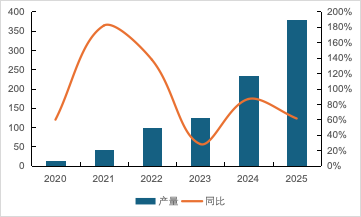
安泰科:2025年中国磷酸铁锂正极材料产量约379万吨 同比增加61.9%
智通财经网· 2026-01-20 22:45
2025-2026年磷酸铁锂新扩产落地的产能将超过200万吨,届时全球磷酸铁锂产能将逼近900万吨,磷酸 铁锂行业仍难摆脱供过于求格局,过剩主要集中在二、三代材料,而四代高端材料依旧短缺。在企业抢 出口、新能源汽车及储能政策利好的共同驱动下,乐观估计2026年中国磷酸铁锂正极材料总产量将达 580万吨,同比增长约53%。 2026年国内磷酸铁锂材料新扩产的产线大多做的是更高端的产品,而非低端产品的简单复制,行业竞争 格局正呈现"头部集中、中小出清"的态势。湖南裕能、德方纳米、龙蟠科技等龙头企业纷纷加码高压 实、长循环等高端产品布局。 当前,国内磷酸铁锂行业面临结构性过剩,但高性能产品需求旺盛。未来企业能否在磷酸铁锂行业立 足,关键取决于两大核心能力:一是高端差异化产品的研发与生产能力,二是大规模生产下的产品一致 性控制能力。 图2 2025年我国磷酸铁锂材料主要企业产量占比 图3 我国磷酸铁锂正极材料出口量(吨) 近一年来,国内磷酸铁锂行业出现了一轮总额超2400亿元的巨额订单锁定潮,涉及宁德时代、楚能新能 源、亿纬锂能、欣旺达、比亚迪等多个头部电池厂商,其中宁德时代是最大买家,其采购金额占总额的 绝大部分。 ...

中高端磷酸铁锂产品供不应求 近一年超2400亿元磷酸铁锂订单锁定
Xin Lang Cai Jing· 2026-01-20 14:19
Core Insights - The lithium iron phosphate (LFP) market is experiencing significant growth, with major battery manufacturers aggressively purchasing LFP materials [1] - The total procurement of LFP materials by companies such as CATL, BYD, EVE Energy, Sunwoda, and Chuangneng New Energy has reached 6 million tons, with an order value exceeding 240 billion yuan [1] - There is a high demand for mid-to-high-end LFP products, leading to full-capacity operations at various companies including Longpan Technology, Wanrun New Energy, Fulian Precision, Fengyuan Co., and Rongbai Technology [1]

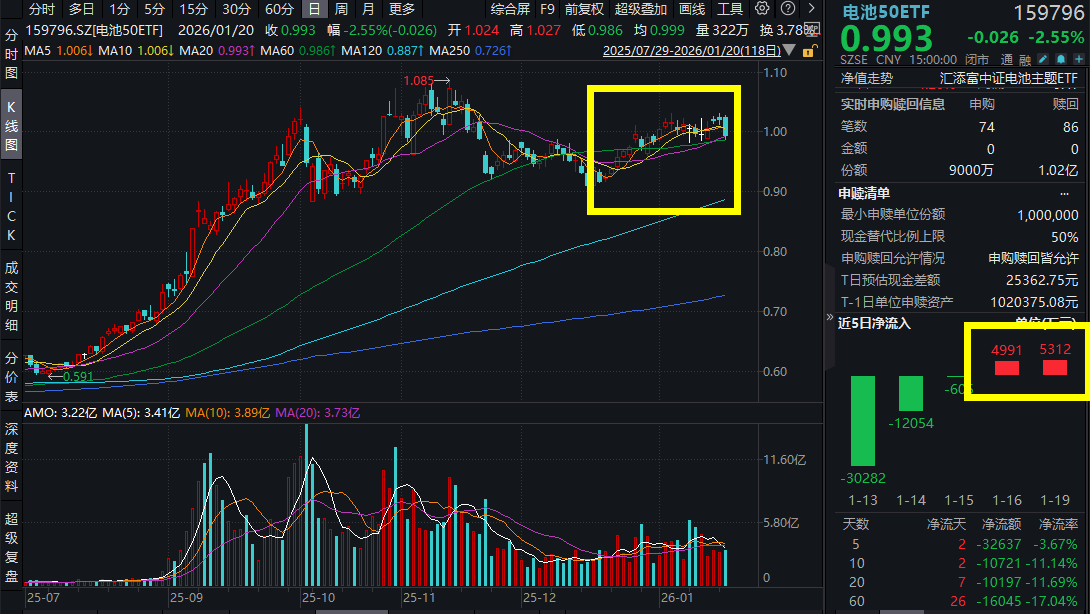
电池板块承压,阳光电源跌超5%,电池50ETF(159796)跌超2%,四连涨后首度回调,固态电池催化密集落地,产业化进程提速!
Xin Lang Cai Jing· 2026-01-20 11:44
Core Viewpoint - The A-share market experienced fluctuations with the battery sector under pressure, as evidenced by the decline of the Battery 50 ETF (159796) by 2.55% after four consecutive days of gains, with a trading volume of 322 million yuan [1]. Group 1: Market Performance - The Battery 50 ETF (159796) saw most of its constituent stocks decline, with significant drops including Sunshine Power down over 5%, and others like Xian Dao Intelligent and Multi-Fluorine down over 4% [3]. - The top ten constituent stocks of the Battery 50 ETF include major players such as Sunshine Power and Ningde Times, with varying declines in their stock prices [4]. Group 2: Project Announcements - On January 19, China Energy Construction announced the procurement results for a 153 MW battery storage project in South Africa, with Sunshine Power winning the bid for a total project capacity of 742.22 MWh and a contract value of 528 million yuan (approximately 0.86 yuan/Wh) [5]. Group 3: Industry Trends - The battery sector is expected to recover due to multiple catalysts, including a surge in demand for energy storage, rising material prices, and accelerated solid-state battery technology [6]. - Global demand for large-scale energy storage is projected to exceed expectations, with a forecasted growth of over 60% by 2026, driven by various market factors including the U.S. Inflation Reduction Act [7]. - Prices of upstream raw materials have generally increased, with battery-grade lithium carbonate rising by 64.4% to 157,000 yuan/ton, and lithium hydroxide up by 77.51% to 150,000 yuan/ton as of January 16, 2026 [8]. Group 4: Technological Developments - The solid-state battery sector is witnessing rapid advancements, with significant policy support and market catalysts enhancing industry prospects [9]. - Major automotive manufacturers are accelerating the integration of solid-state batteries, with companies like FAW Hongqi and GAC Group making substantial progress towards mass production by 2027 [9]. Group 5: Investment Opportunities - The Battery 50 ETF (159796) is positioned to benefit significantly from the energy storage sector, with a storage component of 18.7%, and a solid-state battery component of 45%, indicating strong growth potential [10]. - The ETF's focus on energy storage and power batteries, along with its low management fee of 0.15% per year, makes it an attractive investment option for capturing opportunities in the battery sector [16].


30+固态电池企业新进展
DT新材料· 2026-01-19 22:33
Core Viewpoint - The article discusses the advancements and production timelines of solid-state batteries from various companies, highlighting the competitive landscape and technological progress leading up to 2026 and beyond [4]. Group 1: Company Developments - CATL launched the world's first sulfide solid-state battery pilot line in Hefei in May 2025, achieving an energy density of 450Wh/kg, with plans to expand production capacity to 50GWh by 2026 [6]. - Guoxuan High-Tech introduced its "Guan" quasi-solid-state square aluminum shell cell with an energy density greater than 300Wh/kg and initiated a pilot line with a 90% yield rate in May 2025 [8]. - EVE Energy's solid-state battery, "Longquan No. 2," achieved an energy density of 300Wh/kg and is aimed at high-end applications like humanoid robots and low-altitude aircraft [8]. - Aoxin Technology plans to launch its polymer solid-state battery with an energy density of 400Wh/kg by the end of 2025, targeting high-end new energy vehicles [8]. - Ganfeng Lithium announced the mass production of lithium sulfide, completing the last link in the solid-state battery ecosystem, with plans to launch solid-state batteries by the end of 2025 [9]. Group 2: Industry Trends - The solid-state battery industry is expected to enter a critical year in 2026, with many companies racing to achieve mass production [4]. - The article outlines the competitive landscape, with over 30 companies making significant strides in solid-state battery technology, indicating a robust growth trajectory in the sector [4]. - The anticipated commercialization of solid-state batteries is projected for around 2030, as supply chains mature and production processes are refined [6].