CATL(300750)

Search documents
China’s Green Energy Stocks Surge as Middle East War Upends Oil Markets
Yahoo Finance· 2026-03-24 09:27
Core Viewpoint - The ongoing conflict in the Middle East has led to a surge in shares of Chinese battery makers and green energy manufacturers, driven by expectations of increased global demand for renewable energy and electric vehicles due to disruptions in oil and gas supply [1][2]. Group 1: Market Impact - Domestic energy sources have gained prominence globally, marking the largest supply disruption in oil market history, with Qatar's LNG supply being significantly affected [2]. - The CSI Green Electricity Index in China has increased by 6% this month, while the CSI New Energy Index has risen by 2%, contrasting with a 6% decline in the Shanghai Composite Index [3]. - Shares of GCL Energy Technology Co Ltd have surged by 57% in one month, with significant gains occurring after the conflict began on February 28 [4]. Group 2: Company Performance - Contemporary Amperex Technology Co Ltd (CATL) has seen a nearly 20% increase in March, while BYD's shares have jumped by 22% and Sungrow's stock has risen by about 19% [4]. - The war has prompted a reevaluation of reliance on gas-powered vehicles, positioning Chinese green energy companies to benefit from a global shift away from fossil fuel dependence [5].




【联合发布】2026年2月新能源汽车三电系统洞察报告
乘联分会· 2026-03-24 08:42
Key Insights - The article discusses the current state and trends in the Chinese electric vehicle (EV) market, highlighting a decline in production and sales due to policy and consumer sentiment impacts, while emphasizing the need for product innovation and policy support to stimulate demand [5][7]. Group 1: Market Performance - In January-February 2026, China's EV production reached 1.604 million units, a year-on-year decrease of 13.7%, with a cumulative penetration rate of 39.9% [5]. - The market is undergoing structural adjustments, with a notable shift towards high-end and intelligent vehicles, but overall sales are declining [7]. - In February 2026, the market shares for different vehicle types were: Cars at 34.0% (down 17.2 percentage points), SUVs at 54.9%, MPVs at 4.7%, trucks at 4.0%, and buses at 2.4% [11]. Group 2: Battery Market Dynamics - In February 2026, the installed capacity of EV batteries was 27.3 GWh, a year-on-year decrease of 19.2%, while the cumulative growth rate for the first two months was 37.4% [17]. - The average battery capacity per vehicle was 62.0 kWh, reflecting a year-on-year increase of 29.2%, with major contributors being Xiaomi, BYD, and Tesla [17]. - In terms of battery cell types, square cells accounted for 97.8%, cylindrical cells for 1.9%, and pouch cells for 0.2% [18]. Group 3: Leading Battery Manufacturers - In February 2026, the top three battery manufacturers held a market share of 76.5%, with the top ten accounting for 95.8%. CATL led with a 52.7% share, followed by BYD and LG [20]. - LG experienced a significant year-on-year growth of 293.7%, driven by increased Tesla sales [20]. Group 4: Drive Motor Supply Chain - In February 2026, the top ten drive motor suppliers accounted for 62.4% of the market, with a decline in supply volume observed across all major players [23]. - The leading supplier, Fudi Power, saw a 55.5% decrease in supply volume, while Tesla's supply remained stable [24]. Group 5: Solid-State Battery Development - Solid-state battery technology is categorized by electrolyte types, including sulfide, oxide, polymer, and composite electrolytes, each with distinct advantages and industrial progress [33][34]. - The core advantages of solid-state batteries include enhanced safety, performance breakthroughs, and adaptability across various applications [35]. - The development of solid-state batteries is expected to progress through three stages: semi-solid state leading from 2024-2026, full solid state breakthroughs from 2027-2030, and cost parity post-2030 [39][40].


【新能源周报】新能源汽车行业信息周报(2026年3月16日-3月22日)
乘联分会· 2026-03-24 08:42
Industry Information - The transportation volume during the Spring Festival in the Qiongzhou Strait reached a record high, with a 61.66% increase in the number of new energy vehicles transported from Haian to Haikou [9] - In January and February 2026, the electricity consumption growth rate for charging and swapping services reached 55.1% [10] - The National Development and Reform Commission launched a new batch of major foreign investment projects with a planned investment of $13.4 billion [11] - The export value of electric vehicles from Shanghai in the first two months of this year increased by 112.6% year-on-year [11] - Chongqing's automotive industry cluster layout and capacity planning revealed that by 2026, the total vehicle production capacity will exceed 4.31 million units [12] - A new 50GWh energy storage battery project with an investment of 10 billion yuan was signed in Suzhou [13] - The first national-level "road and air integrated" testing base in China has officially opened [19] - The first bolt-type battery swapping standard has been released, promoting standardization in the battery swapping industry [19] - The China Charging Alliance reported an increase of 918,000 charging infrastructure units in January and February, a year-on-year increase of 44.8% [20] Policy Information - The Ministry of Industry and Information Technology, the National Development and Reform Commission, and the State Administration for Market Regulation held a meeting to promote the implementation of a 60-day account period commitment and accelerate breakthroughs in autonomous driving technology [14] - The Hainan government released standards for lithium battery recycling, aiming to improve resource utilization efficiency [24][25] - The Jiangsu government plans to support the construction of over 2,500 new public charging guns by the end of 2026, with a focus on high-power charging [38] - The Shenzhen government is piloting a "vehicle-battery separation" insurance model to reduce the insurance burden on new energy vehicle owners [10] - The Chongqing government plans to build 88 supercharging stations along highways by 2025 [38] Company Information - BYD has established 4,597 fast charging stations covering 279 cities [6] - Ideal Auto plans to launch a dual-battery route for all models starting in 2026, utilizing both self-developed and CATL batteries [6] - NIO has delivered its 80,000th ES8 pure electric SUV [6] - Xiaomi's new generation SU7 has been officially launched, featuring 25 safety assistance functions [6] - A new generation of solid-state batteries from EVE Energy has successfully rolled off the production line, accelerating the industrialization process [19]


独家战投,宁德时代成莒纳科技最大外部股东
势银能链· 2026-03-24 08:16
Core Viewpoint - The hydrogen energy industry is transitioning towards engineering and commercialization, with material innovation becoming a critical factor for success in green hydrogen production [4][5]. Group 1: Financing and Investment - Juna Technology, a company specializing in electrolysis water hydrogen production electrodes, has completed a new round of financing exclusively from CATL, becoming its largest external institutional shareholder [2]. - The company has previously secured funding from Lenovo Star and Changjiang Innovation, accumulating a total of eight external institutional shareholders [2]. Group 2: Industry Trends and Challenges - National policies are increasingly recognizing the importance of hydrogen energy, leading to a shift in focus from feasibility to long-term efficient and stable operation of hydrogen production systems [4]. - Engineering challenges in electrolysis water hydrogen production systems are becoming more apparent, particularly regarding high current density operation, wide load adaptability, and long-term stability [4]. Group 3: Technological Development - The industry is currently dominated by three main hydrogen production technologies: Alkaline (ALK), Proton Exchange Membrane (PEM), and Anion Exchange Membrane (AEM), each with distinct material requirements affecting performance and reliability [6]. - Juna Technology is developing a product lineup across ALK, PEM, and AEM technologies, focusing on engineering validation in various hydrogen production applications [6][13]. Group 4: Product Performance and Innovations - In the ALK technology route, Juna Technology has developed the JA series anode, which has demonstrated stable operation for 4,300 hours at 6,000 A/m² with a direct current energy consumption of less than 4.3 kWh/Nm³ [6]. - The company is also advancing PEM technology with the JP series membrane electrode, which optimizes catalyst layer structures to maintain performance while controlling costs [8]. - For AEM technology, Juna has addressed issues related to catalyst layer stability and large-scale manufacturing, achieving efficient production of the JE series cathode electrode [11]. Group 5: Long-term Vision and Strategy - Juna Technology's core team combines expertise from the Chinese Academy of Sciences and management experience from Fortune 500 companies, providing a solid foundation for material research and industrial application [14]. - The company plans to enter the pilot testing phase in 2024 and aims to attract attention from leading electrolyzer manufacturers by 2025, fostering collaboration within the industry [16].

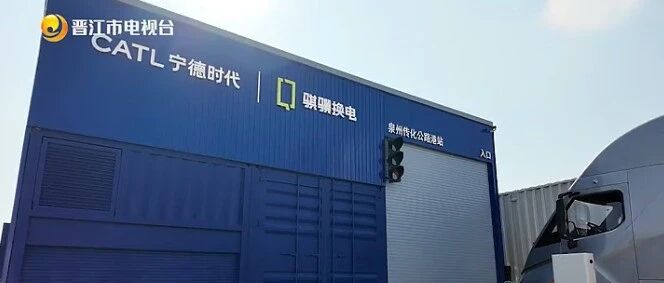
宁德时代泉州第二个项目落户晋江
鑫椤储能· 2026-03-24 01:42
Core Viewpoint - The article highlights the development of a battery swapping station by CATL in Jinjiang, which is expected to be operational by April 2026, enhancing the efficiency of electric heavy-duty trucks in the region [1][3]. Group 1: Project Overview - The CATL battery swapping station project utilizes existing parking space at the Quanzhou Transfar Highway Port and is set to begin construction by the end of 2025, with a projected completion date in April 2026 [3]. - Once operational, the station will support nearly 200 electric heavy-duty trucks daily, with a single battery swap taking only 5 minutes, allowing for a range of 400 kilometers post-swap [5]. Group 2: Infrastructure and Logistics - The Quanzhou Transfar Highway Port covers an area of 260 acres with a total building area of 86,500 square meters, hosting over 200 logistics companies and handling approximately 36,000 tons of goods daily, making it a crucial logistics hub in the region [7]. Group 3: Strategic Partnerships and Developments - On February 2, 2023, the Quanzhou municipal government signed a cooperation agreement with CATL to establish a new energy battery production base, focusing on R&D and manufacturing, which aims to enhance the local new energy industry ecosystem [9]. - The project will leverage advanced green manufacturing technologies to create a smart, zero-carbon modern factory, promoting high-quality development in the new energy sector [9]. Group 4: Future Projects and Investments - The Quanzhou Chip Valley New Energy Industrial Park is set to undergo significant development, with a total construction area of approximately 1,741,519 square meters and an estimated investment of 950 million yuan [11]. - The CATL project in Quanzhou is expected to drive the expansion of traditional industries into new sectors such as electronic information, low-altitude economy, and robotics, accelerating the signing and implementation of new projects [14].
无惧宏观波动-看多中国制造
2026-03-24 01:27
Summary of Conference Call Records Industry Overview - **Industry**: High-end manufacturing in China, particularly focusing on new energy sectors such as lithium batteries, electric vehicles, and renewable energy equipment [1][2][4] Key Insights and Arguments - **Technological Transition**: China's high-end manufacturing is shifting from technology importation to reverse technology output, exemplified by CATL's technology licensing to North America and partnerships between major automakers [1][2] - **Market Dynamics**: The lithium battery industry is experiencing strong export growth, with passenger vehicle exports increasing by 115% year-on-year in January-February 2026, offsetting domestic demand weakness [1][8] - **Price Trends**: The supply chain is seeing a second round of price increases for copper foil and separators, with expectations for lithium hexafluorophosphate prices to stabilize and rise in April 2026 [1][10] - **Global Energy Security**: The demand for energy security is creating growth opportunities for Chinese manufacturing in various sectors, including gas turbines and renewable energy technologies [4][5] - **Electric Vehicle Market**: The overseas demand for electric vehicles is increasing, with a notable rise in penetration rates, particularly in Southeast Asia due to fuel shortages [6][7] Additional Important Points - **Investment Opportunities**: The robot industry is entering a commercial phase, with significant investments and growth potential, particularly in manufacturing capabilities derived from the automotive sector [1][8] - **Battery Demand**: Despite a 26% year-on-year decline in domestic retail sales of new energy vehicles as of March 15, 2026, the demand for lithium batteries remains stable due to strong export performance [8][9] - **Potential Growth Factors**: The electric heavy truck market is showing unexpected growth, with a 56% increase in January-February 2026, necessitating an upward revision of demand forecasts [9] - **Geopolitical Impact**: Recent geopolitical tensions, such as the conflict in the Middle East, are influencing market dynamics, particularly in the energy and technology sectors [11][12] Specific Company Insights - **CATL**: Recognized for its stable performance and significant market share in the battery sector, with a focus on domestic and international growth [12] - **China Power**: Valued at approximately 68 billion yuan with a strong cash position, expected to benefit from increased orders in the Southeast Asian market [16] - **Micro Technology**: Positioned to benefit from the expansion in PCB production, with ambitious growth targets for orders and profits in the coming years [17] Conclusion - The high-end manufacturing sector in China, particularly in new energy and technology, is poised for significant growth driven by both domestic and international demand. The ongoing geopolitical shifts and the transition towards energy independence are creating new opportunities for investment and expansion in this sector.
宁德时代:能源变革时代的赢家
2026-03-24 01:27
Summary of CATL Conference Call Company Overview - **Company**: Contemporary Amperex Technology Co Ltd (CATL) - **Industry**: Global Energy Storage and Electric Vehicle (EV) Batteries Key Points Industry Dynamics - The long-term consequence of energy disruptions in the Middle East is an acceleration of the global electrification megatrend, pushing countries towards electrical energy and renewables, which benefits CATL as a leading battery manufacturer [13][30] - Higher oil prices are expected to drive consumers towards EVs over internal combustion engine (ICE) vehicles, extending electrification to various transport segments [30][31] Financial Performance and Projections - CATL's revenue is projected to grow by 40% to RMB 595 billion in 2026, supported by a 32% increase in battery sales volume [2][14] - Despite a slowdown in China's EV market, CATL has maintained a year-on-year EV battery installation growth of 25-30% recently [19] - The company expects EBIT per kWh to remain stable at US$14.5 for 2026, with operating profit reaching US$16.7/kWh in Q4 2025 [3][32] Market Share and Competitive Position - CATL's market share is expected to rise to 44% in January 2026, up from 37% in 2025, indicating strong competitive positioning [2][19] - The company maintains a leading market share of 37% in the battery industry, supported by technological advancements and a strong brand in premium EVs [4] Capacity Expansion and Investment - CATL has 321 GWh of capacity under construction, which is over 40% of its existing capacity, indicating significant growth potential [22][23] - The company plans to increase capital expenditures (capex) in 2026, following a 36% year-on-year increase to RMB 42 billion in 2025 due to capacity constraints [25][28] Valuation and Investment Implications - The target price for CATL's A-shares has been raised from CNY 530 to CNY 600 based on higher earnings expectations and long-term growth potential [5][15] - The projected EPS for 2026 is CNY 20.6, reflecting a 28% year-on-year growth [5][14] - CATL is rated as "Outperform" for A-shares and "Market-Perform" for H-shares [5] Long-term Growth Outlook - CATL is expected to grow at a 21% CAGR through 2030, with a long-term growth rate of 5.5% through 2050 [4][30] - The company is positioned to benefit from the rapid expansion of energy storage systems (ESS) and continued EV adoption [25][30] Technological Advancements - CATL has introduced advanced battery technologies, including sodium-ion batteries and high nickel + silicon anode cells, enhancing its competitive edge [36][37] Additional Insights - The company’s operational metrics show a stable market share in various segments, with a notable shift towards energy storage systems [18][20] - CATL's strong brand presence in the premium EV segment, where it holds a 60-70% market share, underscores its competitive advantage [19] This summary encapsulates the critical insights from the conference call regarding CATL's performance, market dynamics, and future outlook in the energy storage and EV battery industry.
继续全面看好新能车锂电赛道
2026-03-24 01:27
Summary of Key Points from Conference Call Records Industry Overview - **Industry Focus**: The records primarily discuss the electric vehicle (EV) and lithium battery sectors, with a particular emphasis on the growth of lithium battery demand and the energy storage market leading up to 2026 [1][5][4]. Key Insights and Arguments - **Lithium Battery Demand**: Global lithium battery demand is projected to exceed 2,800 GWh in 2026, representing a 25% increase from 2025. This includes approximately 2,000 GWh for power batteries (up 13.5%) and around 830 GWh for energy storage batteries [1][5]. - **Energy Storage Growth**: The global energy storage market is expected to grow to 450 GWh, a 45% increase, with significant contributions from the Middle East and Africa, where installations are expected to double [1][4]. - **Material Production Recovery**: The operating rates for lithium battery materials have significantly improved, with the average operating rate for wet separators rising from 60% to 90%. Prices and unit profitability for lithium iron phosphate and hexafluorophosphate are entering a recovery phase due to tight supply and demand [1][9]. - **Geely Auto's Export Strategy**: Geely is expected to export 900,000 to 1 million vehicles by 2026, with significant profits anticipated from its high-end models, contributing over 20 billion yuan in profit [1][13]. - **Solid-State Battery Development**: The solid-state battery sector is entering a critical phase, with several catalysts expected between March and May 2026, including the introduction of semi-solid and fully solid-state battery models [1][15][16]. Market Dynamics - **New Energy Vehicle Sales**: The global new energy vehicle market is projected to grow by over 10% in 2026, with China expected to reach 1.8 million units sold, a 10% increase from 2025. Commercial vehicles are anticipated to see a 40% increase in sales [3][7]. - **Regional Energy Storage Growth**: The energy storage market in China is expected to grow to 275 GWh, with the U.S. market facing uncertainties due to regulatory constraints. Europe is projected to grow by 42%, with potential for exceeding expectations [4][5]. - **Market Recovery Signals**: In March 2026, there are signs of recovery in the new energy vehicle market, with order urgency increasing by 20-30%. High oil prices and local incentives are expected to drive demand [2][7][12]. Additional Important Insights - **Material Price Drivers**: The price increases in the lithium battery materials sector are driven by capacity utilization rates and raw material costs, particularly in petrochemical-related materials [8][9]. - **Investment Logic for Lithium Materials**: The investment logic for lithium materials includes the dual benefits of inventory and energy storage revenues, with significant contributions expected from the energy storage sector in 2026 [10]. - **Sodium-Ion Battery Opportunities**: The sodium-ion battery sector is expected to see significant advancements in 2026, with costs potentially dropping to 0.4 yuan/Wh, making it competitive with lithium batteries [21][22][23]. Conclusion The records highlight a robust growth trajectory for the lithium battery and new energy vehicle sectors, driven by increasing demand, technological advancements, and strategic market positioning by key players like Geely. The anticipated recovery in sales and the introduction of innovative battery technologies are set to shape the industry's landscape in the coming years.

泛能源板块投资机会电话会议
2026-03-24 01:27
Summary of Key Points from Conference Call Records Industry Overview - **Energy Sector**: The focus has shifted from technology stocks to energy and resource sectors due to tightening liquidity and expectations of a single interest rate cut by the Federal Reserve in 2026 [1][2][3]. Coal Sector - **Investment Logic**: Companies with coal chemical assets are recommended due to their aggressive growth potential. The rise in oil prices is expected to increase chemical product prices, benefiting companies like Guanghui Energy and Yanzhou Coal Mining [1][4][5]. - **Market Dynamics**: Despite a year-on-year decline in coal prices in Q1 2026, the average price for the year is expected to remain stable or slightly increase compared to 2025. The presence of flexible supply from domestic and Indonesian mines will help stabilize prices [5]. Energy Storage and Lithium Battery - **Growth Projections**: The energy storage sector, particularly household and commercial storage, is expected to see a growth rate of 30%-50% in 2026. Companies like Deye Technology and Jinlang Technology are highlighted as key players [1][5][6]. - **Lithium Demand**: A projected increase of over 30% in lithium battery demand in 2026 is anticipated, driven by high oil prices and the growth of the energy storage market [6][7]. Offshore Wind Power - **Market Growth**: The domestic offshore wind power market is entering a high growth phase, with installed capacity expected to reach 8-10 GW in 2026 and 13-15 GW by 2027. European projects are also accelerating due to energy security concerns [1][8]. Oil and Gas Equipment - **Capital Expenditure**: High oil prices are driving capital expenditures in North America and the Middle East, benefiting companies like Jereh and Neway. These companies are positioned well for growth due to their exposure to international oil service markets [1][10][11]. Public Utilities - **Mature Sector**: The waste-to-energy sector is entering a mature phase with significant potential for dividend increases. Companies like China Everbright Environment are expected to see substantial growth in earnings and dividends [1][12][13]. Investment Strategies - **Neutral Hedging**: Given the geopolitical uncertainties, a neutral hedging strategy is recommended, increasing allocations to the energy sector to mitigate risks associated with holding technology stocks [2][3]. Key Recommendations - **Coal Sector**: Focus on companies with coal chemical assets such as Guanghui Energy and Yanzhou Coal Mining [1][5]. - **Energy Storage**: Companies like Deye Technology and Jinlang Technology are recommended due to their strong growth prospects in the energy storage market [5][6]. - **Lithium Battery**: Ningde Times is highlighted for its strong market position and expected growth in both battery and energy storage sectors [6][7]. - **Offshore Wind**: Recommended companies include Daikin Heavy Industries and Tianjun Wind Power, which are well-positioned in the growing offshore wind market [8]. - **Public Utilities**: China Everbright Environment and Green Power Environmental are recommended for their stable earnings and dividend growth potential [12][13]. Conclusion - The energy sector, particularly coal, energy storage, and offshore wind, presents significant investment opportunities amid current geopolitical tensions and market dynamics. Companies with strong fundamentals and growth potential are well-positioned to benefit from these trends [1][2][3][4][5][6][7][8][12][13].
中金:中东资金回来了吗?
中金点睛· 2026-03-23 23:37
Core Viewpoint - The ongoing geopolitical tensions in the Middle East, particularly in the Strait of Hormuz, have heightened oil prices and increased volatility in global financial markets, leading to a focus on the movement of Middle Eastern capital and its potential investment in the Chinese market as a diversification strategy [1][2]. Group 1: Geopolitical Tensions and Market Reactions - The continuous escalation of the Middle East situation has created significant risk exposure for funds in the region, prompting a search for new stable investment locations, with Hong Kong being a potential beneficiary due to its stability and financial infrastructure [2][3]. - The Dubai real estate index has dropped nearly 30%, while Hong Kong property prices have remained stable, indicating a shift in investment preferences [3][4]. - EPFR data shows a clear outflow of funds from the Middle East, suggesting a trend of capital seeking safer havens [6][8]. Group 2: Official Statements and Market Expectations - Hong Kong's Financial Secretary has indicated that the region may attract Middle Eastern funds seeking safety amid the conflict, which has heightened market expectations for capital inflows [11]. - The anticipated tightening of the capital market in Hong Kong by 2026, along with a potential decrease in southbound capital due to A-share activity, has led to increased reliance on foreign capital as a significant growth driver [11][13]. Group 3: Investment Preferences of Middle Eastern Funds - Middle Eastern sovereign and institutional funds may seek to diversify their portfolios by increasing allocations to Chinese assets, particularly in sectors with lower correlation to global energy and geopolitical volatility [8][29]. - The Abu Dhabi Investment Authority (ADIA) and other sovereign funds have shown a preference for stable, high-liquidity assets, with a significant portion of their investments still concentrated in the U.S. [29][31]. Group 4: Current Capital Flows and Market Signals - There are indirect signs of capital inflows into Hong Kong, such as the deepening of AH premium for certain stocks, but no substantial evidence of large-scale entry into the stock market has been observed [17][19]. - The overall market turnover has not increased significantly, indicating that any capital entering the market has not yet impacted the broader market dynamics [19][21]. - The decline in Hibor rates and the depreciation of the Hong Kong dollar reflect weak demand for the currency, suggesting limited immediate inflows from foreign capital [23][24]. Group 5: Long-term Investment Trends - Middle Eastern funds are likely to focus on long-term diversification and investment in core assets such as renewable energy, high-end manufacturing, and technology, aligning with their strategic goals [32][38]. - Recent participation of Middle Eastern sovereign funds in Hong Kong IPOs highlights their increasing engagement in the Chinese market, particularly in sectors that align with their investment strategies [32][34]. Group 6: Potential Risks and Market Implications - The ongoing geopolitical tensions may lead to fiscal pressures on Middle Eastern countries, potentially resulting in asset sales that could impact global markets, although current evidence of such actions is limited [39][40]. - Historical patterns suggest that geopolitical crises can lead to adjustments in asset holdings, particularly in U.S. Treasuries, but the immediate risk of significant sell-offs appears manageable [47][48].