Mindray(300760)

Search documents
中证医疗指数上涨1.73%,前十大权重包含新产业等
Sou Hu Cai Jing· 2025-04-10 10:11
Group 1 - The core viewpoint of the news is that the CSI Medical Index has shown fluctuations, with a recent increase of 1.73% despite a decline of 11.00% over the past month [1] - The CSI Medical Index reflects the overall performance of listed companies in the medical and healthcare sector, including medical devices, services, and information technology [1] - The index has a base date of December 31, 2004, with a base point of 1000.0 [1] Group 2 - The top ten weighted companies in the CSI Medical Index include WuXi AppTec (9.9%), Mindray Medical (9.27%), and Aier Eye Hospital (8.27%) [1] - The market share of the CSI Medical Index holdings is 57.98% from the Shenzhen Stock Exchange and 42.02% from the Shanghai Stock Exchange [1] - The industry composition of the CSI Medical Index holdings shows that 97.49% is in healthcare, 2.25% in information technology, and 0.26% in consumer goods [1] Group 3 - The index sample is adjusted every six months, with adjustments occurring on the next trading day after the second Friday of June and December [2] - Weight factors are generally fixed until the next scheduled adjustment, with special circumstances allowing for temporary adjustments [2] - Companies that are delisted or undergo mergers, acquisitions, or splits are handled according to specific calculation and maintenance guidelines [2]




中证产业竞争优势指数报1967.51点,前十大权重包含阳光电源等
Jin Rong Jie· 2025-04-10 09:14
Group 1 - The core index, the CSI Industry Competitive Advantage Index, has shown a decline of 14.34% over the past month, 8.57% over the past three months, and 9.19% year-to-date [1] - The index comprises 50 large-cap companies with strong profitability and competitive strength in overseas markets, reflecting the overall performance of companies with significant industry competitive advantages [1] - The top ten weighted companies in the index include Midea Group (9.91%), Zijin Mining (9.84%), CATL (8.67%), Luxshare Precision (5.44%), Mindray (4.86%), Sany Heavy Industry (4.26%), Will Semiconductor (3.82%), Fuyao Glass (3.22%), Sungrow Power (3.06%), and Weichai Power (3.03%) [1] Group 2 - The market capitalization distribution of the index shows that 51.67% of the companies are listed on the Shenzhen Stock Exchange, while 48.33% are on the Shanghai Stock Exchange [1] - The industry composition of the index includes 34.07% in industrials, 22.06% in information technology, 21.89% in consumer discretionary, 13.99% in materials, 7.04% in healthcare, and 0.95% in energy [2] - The index samples are adjusted biannually, with adjustments occurring on the next trading day after the second Friday of June and December [2]




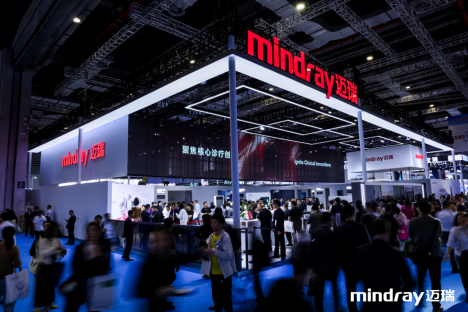
迈瑞医疗携40余款创新产品亮相CMEF,逐步构建数智医疗生态
Cai Jing Wang· 2025-04-09 10:43
Group 1 - The 91st China International Medical Equipment Fair (CMEF) opened in Shanghai, showcasing nearly 5,000 brand enterprises with a theme of "Innovative Technology Leading the Future" [1] - Mindray Medical presented over 40 innovative products, including the world's first clinical application of a critical care large model, the Qiyuan model, which enhances clinical capabilities [1][3] - Mindray's AI solutions, "Digital Laboratory" and "Ruiying Ecosystem," focus on integrating "Equipment + IT + AI" to empower medical services across various clinical scenarios [5] Group 2 - The Qiyuan critical care large model has been implemented in several top medical institutions in China, marking a significant step in the application of general models in specialized medical fields [5] - Mindray's "Digital Laboratory" achieves breakthroughs in "Digital Testing," "Digital Operations," and "Digital Development" through deep integration of technology [5] - The "Ruiying Ecosystem" provides comprehensive AI solutions across obstetrics, radiology, cardiovascular, and point-of-care testing, enhancing the medical imaging digital ecosystem [5] Group 3 - Mindray has emphasized global expansion, adapting to challenges in international markets, particularly in response to recent U.S. tariff policies [7] - Despite tariffs since 2018, Mindray's U.S. business has seen a compound annual growth rate of 10% from 2018 to 2023, with U.S. sales accounting for a significant portion of total revenue [8] - The company plans to strengthen its position in the North American high-end market with products like the Resona A20, while also focusing on growth in developing countries, which account for two-thirds of overseas revenue [8]

医药生物行业跨市场周报:中美关税冲突后外部不确定性上升,看好内循环避险资产-20250409
EBSCN· 2025-04-09 01:43
Investment Rating - The report maintains a rating of "Buy" for the pharmaceutical and biotechnology industry [5]. Core Viewpoints - The report highlights the increasing external uncertainties following the US-China tariff conflict and expresses optimism towards domestic circulation and safe-haven assets in the pharmaceutical sector [2][20]. - The demand for blood products is relatively inelastic, and the recent tariff increases may lead to a short-term rise in imported albumin prices, benefiting domestic companies. The blood products industry is characterized by rigid demand and strategic resource attributes, suggesting a favorable competitive landscape for domestic alternatives [21]. - The report emphasizes the shift from "efficiency-first" to "safety-first" in supply chains, driven by the need for supply chain security, which may catalyze domestic replacements in high-end medical devices and scientific instruments [22][24]. Summary by Sections Market Review - Last week, the A-share pharmaceutical and biotechnology index rose by 1.20%, outperforming the CSI 300 index by 2.57 percentage points and the ChiNext index by 3.55 percentage points, ranking third among 31 sub-industries [1][16]. - The Hong Kong Hang Seng Medical Health Index increased by 1.32%, surpassing the Hang Seng Index by 3.49 percentage points [1][16]. Company Updates - Recent developments include the new listing application for SHR2554 tablets by Heng Rui Medicine and clinical application advancements for several products from Heng Rui Medicine and Lepu Biopharma [27]. Investment Strategy - The report suggests focusing on three main directions: policy support for hospital payments (innovative drugs and devices), expansion of public demand (blood products, home medical devices, weight loss drug supply chains), and an upward cycle for overseas payments (heparin, respiratory joint inspections) [24]. Key Company Profit Forecasts and Valuations - Key companies such as Mindray Medical, United Imaging, and Yuyue Medical are highlighted with projected earnings per share (EPS) and price-to-earnings (PE) ratios indicating a "Buy" recommendation [4]. Important Database Updates - The cumulative total number of hospital diagnoses showed a year-on-year increase of 13.29%, with significant growth in tertiary hospitals [30]. - The pharmaceutical manufacturing industry reported a year-on-year revenue decline of 3.4% for the first two months of 2025, with total revenue of 369.43 billion yuan [60].


中证中华联合优质成长指数上涨0.92%,前十大权重包含汇川技术等
Jin Rong Jie· 2025-04-08 14:05
Group 1 - The core index, the China Securities Chuangxin Quality Growth Index, rose by 0.92% to 6368.71 points, with a trading volume of 370.183 billion yuan [1] - Over the past month, the index has decreased by 8.87%, by 3.80% over the last three months, and by 7.25% year-to-date [1] - The index selects listed companies with high return on equity across various industries, providing diverse investment options for investors [1] Group 2 - The top ten weighted stocks in the index include Kweichow Moutai (9.8%), BYD (2.99%), Wuliangye (2.56%), Dongfang Fortune (2.51%), and others [1] - The index's holdings are primarily from the Shanghai Stock Exchange (53.96%) and Shenzhen Stock Exchange (46.04%) [1] - The industry composition of the index shows that consumer staples account for 20.20%, industrials for 17.60%, and financials for 10.81%, among others [2] Group 3 - The index samples are adjusted four times a year, specifically in March, May, September, and November on the next trading day after the second Friday [2] - Weight factors are adjusted in accordance with the sample adjustments, which are generally fixed until the next scheduled adjustment [2] - Special circumstances may lead to temporary adjustments of the index, including the removal of samples that are delisted or undergo mergers and acquisitions [2]




北深两地发布医药创新支持政策点评:双城联动全链条支持药械创新发展



Shenwan Hongyuan Securities· 2025-04-08 09:30
Group 1 - The report highlights the recent policy initiatives from Beijing and Shenzhen aimed at supporting the high-quality development of innovative pharmaceuticals and medical devices, emphasizing a full-chain support approach from research and development to clinical application [4][5][6] - The policies include measures to enhance the efficiency of clinical trials, such as reducing the overall time for initiating clinical trial projects to under 20 weeks in Beijing and 25 weeks in Shenzhen, along with financial incentives for successful trials [6][10] - The report notes that these initiatives are a continuation of previous efforts, with significant improvements observed in clinical trial timelines and the establishment of green channels for urgent drug imports, contributing to an 8.7% growth in the pharmaceutical and health industry in Beijing [11][12] Group 2 - The report suggests focusing on key companies in the innovative drug, medical device, and AI sectors, including major players like 恒瑞医药 (Hengrui Medicine), 迈瑞医疗 (Mindray), and 润达医疗 (Runda Medical) [3][14][16] - It provides a valuation table for key companies in the pharmaceutical and medical device sectors, indicating their market capitalization and projected earnings per share (EPS) for 2024 to 2026, which reflects the expected growth and investment potential in these companies [14] - The report emphasizes the importance of artificial intelligence in enhancing pharmaceutical innovation, with both Beijing and Shenzhen promoting AI applications in drug development and clinical trial management [7][8]
“对等关税”下的中国高端制造产业链:冲击、韧性与战略突围
2 1 Shi Ji Jing Ji Bao Dao· 2025-04-07 11:27
整体来看,对于不同业务结构与生态位的制造企业,对"对等关税"的体感是不同的。 部分对美贸易较少的高端制造企业普遍表示影响有限。 美国所谓"对等关税"正在冲击全球制造产业链。 据新华社报道,美国当地时间4月2日,美国总统特朗普在白宫签署所谓"对等关税"的行政令,宣布美国 对贸易伙伴设立10%的"最低基准关税",并对某些贸易伙伴征收更高关税。 贸易摩擦的骤然升级引发全球市场震荡,国内高端制造产业公司将如何应对关税冲击、调整产业链布 局,成为市场关注焦点。 多家相关上市公司在互动平台及公开渠道表态,正采取一系列措施应对"对等关税"影响。也有部分企业 对记者指出,整体影响有限。 业内人士普遍认为,"对等关税"博弈短期将考验企业的供应链韧性,但从中长期来看,有望进一步推动 中国产业向高端化、自主化加速转型。未来,政策支持与市场机制的协同效应,或将成为制造企业破局 关键。 "一方面,我国政府有足够的政策工具来应对,可以通过提升国内内需来弥补外贸的下降;另一方面, 我国通过科技创新,特别是发展人形机器人等科技创新企业,提升了全球资本对中国经济的信心。中国 资产本身估值处于历史低位,因此具有估值修复的动力。"前海开源基金首席 ...
美国“关税”冲击,中国医药产业影响几何
2 1 Shi Ji Jing Ji Bao Dao· 2025-04-07 08:36
Group 1 - The U.S. government has implemented a 10% "minimum benchmark tariff" on trade partners, with certain exemptions for pharmaceuticals and other products [1][2] - The pharmaceutical sector has reacted negatively in the market, with significant declines in various related sectors, including medical services and biopharmaceuticals, with drops ranging from 9.55% to 14.69% [1] - The exemption of pharmaceuticals from the tariff is due to the high reliance of the U.S. on imported active pharmaceutical ingredients (APIs), with 80% of APIs sourced from abroad [2][3] Group 2 - Local pharmaceutical companies have reported minimal impact from the tariff changes, as the tariffs do not apply to innovative drug licensing and trade [5][6] - Companies like Mindray Medical and others have proactively prepared for potential tariff impacts by adjusting their supply chains and inventory strategies [6][5] - The focus on high-quality innovation is emphasized as a key strategy for the Chinese pharmaceutical industry to navigate the challenges posed by tariffs and global competition [8][7] Group 3 - The number of innovative drugs developed by Chinese companies is rapidly increasing, with projections indicating that by the end of 2024, there will be 3,575 active innovative drugs, surpassing the U.S. [7] - Chinese pharmaceutical companies are actively expanding into international markets, with significant license-out transactions and collaborations with multinational corporations [7][8] - The "NewCo" model is emerging as a viable path for Chinese biopharmaceutical companies to innovate and expand internationally, despite geopolitical challenges [8]
医药健康行业研究:关税波动下医药板块确定性突出,选择国产替代和避险资产
SINOLINK SECURITIES· 2025-04-07 02:10
Investment Rating - The report suggests a strong investment outlook for the pharmaceutical sector, emphasizing the resilience against tariff risks and highlighting opportunities in domestic substitution [13]. Core Insights - The pharmaceutical sector is expected to benefit from ongoing innovations, particularly in the areas of innovative drugs and certain generic drugs, with potential catalysts from policy changes and upcoming data releases from major conferences [15]. - The report identifies key areas of focus, including blood products, certain medical devices, and innovative patented drugs, while also emphasizing the importance of domestic demand-driven sectors such as chain pharmacies and traditional Chinese medicine [13][15]. Summary by Sections Tariff Environment and Pharmaceutical Sector - The report indicates that the pharmaceutical sector has a strong capacity to withstand tariff risks, with a focus on domestic substitution opportunities [13]. - In 2024, China's pharmaceutical import and export trade is projected to reach $199.376 billion, with exports growing by 5.9% and imports declining by 2% [12][13]. Drug Sector Developments - Significant advancements in IgA nephropathy treatments are noted, with major pharmaceutical companies like Otsuka and Novartis making progress in drug approvals [20][24]. - Otsuka's IgAN drug Sibeprenlimab has been submitted for FDA approval, while Novartis's drug Atrasentan has received accelerated approval for treating IgAN [20][24]. Biopharmaceuticals - Eli Lilly's siRNA therapy Lepodisiran has shown promising results in reducing lipoprotein(a) levels, a significant cardiovascular risk factor [27][32]. - The report highlights multiple innovative drugs targeting lipoprotein(a) that are currently in clinical trials, indicating a growing focus on this area [33]. Medical Devices - The report discusses the National Medical Products Administration's initiatives to support high-end medical device innovation, which is expected to drive growth in areas such as surgical robots and advanced imaging equipment [36]. - Key players in the medical device sector are anticipated to benefit from these supportive policies [36]. Medical Services - The report emphasizes the importance of leading companies in the medical services sector, with solid performance reported by companies like Gushengtang and Times Angel [42]. - Gushengtang reported a 30% increase in revenue, reflecting strong growth in its offline medical institutions [42]. Traditional Chinese Medicine and Pharmacies - Yunnan Baiyao and Tongrentang are highlighted for their stable growth and high dividend payouts, with Yunnan Baiyao achieving a revenue increase of 2.36% [46][48]. - The report suggests that the pharmacy sector is recovering from previous policy impacts, with expectations for steady growth in the coming year [50].
金融工程市场跟踪周报:短线震荡或有回落-2025-04-06
EBSCN· 2025-04-06 08:43
Quantitative Models and Construction Methods Model 1: Volume Timing Signal - **Model Name**: Volume Timing Signal - **Model Construction Idea**: The model uses volume data to generate timing signals for broad-based indices. - **Model Construction Process**: The model evaluates the volume timing signals for various broad-based indices and assigns a cautious view if the signals indicate a potential downturn. - **Model Evaluation**: The model provides a cautious outlook for all major broad-based indices as of April 3, 2025[23][24]. Model 2: Momentum Sentiment Indicator - **Model Name**: Momentum Sentiment Indicator - **Model Construction Idea**: The model uses the proportion of stocks with positive returns within an index to gauge market sentiment. - **Model Construction Process**: - Calculate the proportion of stocks in the CSI 300 index with positive returns over a specified period. - Apply smoothing with two different window periods to capture the trend. - Generate signals based on the relationship between the short-term and long-term smoothed lines. - Formula: $$ \text{Proportion of Rising Stocks in CSI 300} = \frac{\text{Number of Stocks with Positive Returns in N Days}}{\text{Total Number of Stocks in CSI 300}} $$ - When the short-term smoothed line is above the long-term smoothed line, it indicates a bullish market sentiment[24][25][27]. - **Model Evaluation**: The model can quickly capture upward opportunities but may miss out on gains during prolonged market exuberance. It also has limitations in predicting downturns[25]. Model 3: Moving Average Sentiment Indicator - **Model Name**: Moving Average Sentiment Indicator - **Model Construction Idea**: The model uses the eight moving average system to determine the trend state of the CSI 300 index. - **Model Construction Process**: - Calculate the eight moving averages for the CSI 300 index with parameters 8, 13, 21, 34, 55, 89, 144, and 233. - Assign values based on the number of moving averages the current price exceeds. - Generate signals based on the number of moving averages the current price exceeds. - Formula: $$ \text{Number of Moving Averages Exceeded} = \sum_{i=1}^{8} \mathbb{1}(\text{Price} > \text{MA}_i) $$ - If the number exceeds 5, it indicates a bullish sentiment[32][33]. - **Model Evaluation**: The model indicates that the CSI 300 index is currently in a non-optimistic sentiment zone[35]. Model Backtesting Results 1. **Volume Timing Signal**: All broad-based indices have a cautious view as of April 3, 2025[24]. 2. **Momentum Sentiment Indicator**: The proportion of rising stocks in the CSI 300 index is around 61%[25]. 3. **Moving Average Sentiment Indicator**: The CSI 300 index is in a non-optimistic sentiment zone[35]. Quantitative Factors and Construction Methods Factor 1: Cross-sectional Volatility - **Factor Name**: Cross-sectional Volatility - **Factor Construction Idea**: The factor measures the dispersion of returns among index constituents to gauge the alpha environment. - **Factor Construction Process**: - Calculate the cross-sectional volatility of the constituents of the CSI 300, CSI 500, and CSI 1000 indices. - Compare the recent values with historical averages to determine the alpha environment. - Formula: $$ \text{Cross-sectional Volatility} = \sqrt{\frac{1}{N-1} \sum_{i=1}^{N} (R_i - \bar{R})^2} $$ - Where \( R_i \) is the return of stock \( i \) and \( \bar{R} \) is the average return[41]. - **Factor Evaluation**: The recent cross-sectional volatility indicates a better short-term alpha environment for the CSI 300 and CSI 500 indices, while the CSI 1000 index shows a deteriorating alpha environment[40]. Factor 2: Time-series Volatility - **Factor Name**: Time-series Volatility - **Factor Construction Idea**: The factor measures the volatility of index constituents over time to gauge the alpha environment. - **Factor Construction Process**: - Calculate the time-series volatility of the constituents of the CSI 300, CSI 500, and CSI 1000 indices. - Compare the recent values with historical averages to determine the alpha environment. - Formula: $$ \text{Time-series Volatility} = \sqrt{\frac{1}{T-1} \sum_{t=1}^{T} (R_t - \bar{R})^2} $$ - Where \( R_t \) is the return at time \( t \) and \( \bar{R} \) is the average return[43]. - **Factor Evaluation**: The recent time-series volatility indicates a better short-term alpha environment for the CSI 300 index, while the CSI 500 and CSI 1000 indices show a mixed alpha environment[42]. Factor Backtesting Results 1. **Cross-sectional Volatility**: - CSI 300: Recent quarterly average 1.83%, 51.24% of the two-year range[41]. - CSI 500: Recent quarterly average 2.10%, 47.62% of the two-year range[41]. - CSI 1000: Recent quarterly average 2.48%, 51.79% of the two-year range[41]. 2. **Time-series Volatility**: - CSI 300: Recent quarterly average 0.57%, 49.38% of the two-year range[43]. - CSI 500: Recent quarterly average 0.43%, 40.48% of the two-year range[43]. - CSI 1000: Recent quarterly average 0.26%, 50.20% of the two-year range[43].