
AMD(AMD)

Search documents
NPU,大有可为
半导体芯闻· 2025-12-15 10:17
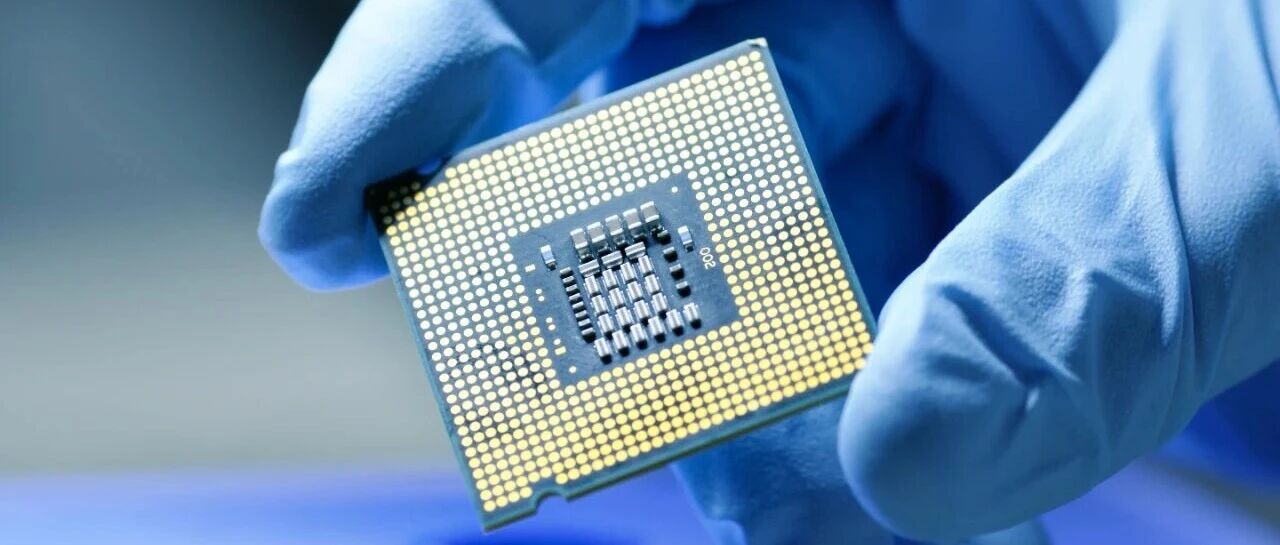
如果您希望可以时常见面,欢迎标星收藏哦~ PC OEM和芯片供应商正指望消费者对人工智能(AI)的兴趣来推动PC出货量增长,这种增长在几 年来从未见过。近年来,人工智能的兴起促使一种专门为加速人工智能任务而设计的新型专用计 算硬件的出现:神经处理单元 (NPU)。与其更成熟的前身GPU一样,NPU提供了一个专门优化的 专用硬件平台,可以高效执行某些类型的计算。 为了支持人工智能PC,处理器供应商一直在其异构PC处理器中添加集成的NPU。Intel、AMD 和高通都推出了符合微软要求的产品,即集成的NPU提供每秒至少40万亿次运算(TOPS),以支 持Copilot+ AI助手。人工智能PC和集成的NPU仍处于早期阶段;机器学习工作负载(如图像分 类和对象检测)以及深度学习活动(如计算机视觉和自然语言处理)正在以大致相等的比例利用 NPU、GPU和CPU。但这种相对平衡将迅速改变。随着进一步的创新,以及软件开发人员对它们 的熟悉程度越来越高,MPR预计NPU将在AI PC中承担大部分 AI 工作负载。 一条人人都走的路 当然,CPU早在20世纪50年代和60年代就已出现,当时正值计算机时代的黎明。它们从执行(相 ...



芯片行业,前所未见
半导体芯闻· 2025-12-15 10:17
如果您希望可以时常见面,欢迎标星收藏哦~ 来自 AMD、英伟达、博通和主要研究公司的越来越多的预测表明,在人工智能基础设施建设规模 比该行业历史上任何一次扩张都大数倍的推动下,半导体市场将在本十年结束前突破万亿美元大 关。 Creative Strategies 的最新分析将这种转变称为"千兆周期"(Gigacycle),并指出人工智能前所 未有的需求规模正在同时重塑计算、内存、网络和存储的经济格局。2024 年全球半导体收入约为 6500 亿美元,但目前多项预测显示,2028 年或 2029 年将突破万亿美元大关。人工智能是造成这 一预测上调的主要原因。 AMD首席执行官苏姿丰(Lisa Su)近期上调了公司长期预期,称到2030年人工智能硬件市场规模将 达到1万亿美元,并预测AMD整体复合年增长率将达到35%,数据中心业务的复合年增长率将达到 60%左右。她还公开反对近几个月来盛行的人工智能泡沫论调。 与此同时,英伟达给出了更为宏大的预期,在2026年第二季度财报电话会议上,该公司将未来五 年人工智能基础设施市场规模描述为3万亿至4万亿美元。这一数字基于超大规模数据中心、自主 人工智能项目和企业集群的系统 ...


暴跌超11%!全球科技巨头业绩暴雷,市值蒸发2200亿美元
Sou Hu Cai Jing· 2025-12-15 09:52
Group 1 - The core point of the article highlights a significant downturn in the U.S. stock market, particularly among tech giants, driven by a reassessment of AI commercialization prospects and various macroeconomic factors [1][10]. - Oracle's stock experienced a dramatic decline, losing nearly 11% on December 11 and an additional 4.5% on December 12, resulting in a market value loss of approximately $250 billion over two days [2][4]. - Broadcom, despite exceeding sales and profit expectations for Q4 and raising revenue forecasts, saw its stock plummet by 11.4% on December 12, leading to a market value drop of about $220 billion, fueled by concerns over AI business profitability [4][21]. Group 2 - The article discusses the low profit margins of AI businesses compared to non-AI operations, with significant returns from contracts with OpenAI not expected until after 2026 [6][8]. - The market's previous enthusiasm for AI investments overlooked the long-term nature of profitability in the tech sector, leading to a necessary valuation correction as optimistic expectations became more rational [8][23]. - The uncertainty surrounding U.S. Federal Reserve policies, including a recent interest rate cut, has contributed to market volatility, particularly affecting tech stocks sensitive to interest rates [12][14]. Group 3 - The signing of a federal executive order by Trump to unify AI regulations did not significantly impact market sentiment, as analysts believe state-level regulatory interests will persist, adding to the uncertainty in the AI sector [17][19]. - The Philadelphia Semiconductor Index fell by 5.1%, with major chip companies like AMD, NVIDIA, and Intel experiencing declines, reflecting a collective reassessment of the AI industry's profitability outlook [19][21]. - The downturn in tech stocks is viewed as a necessary phase in the maturation of the industry, where only companies capable of converting technology into stable profits will thrive amidst market fluctuations [26].

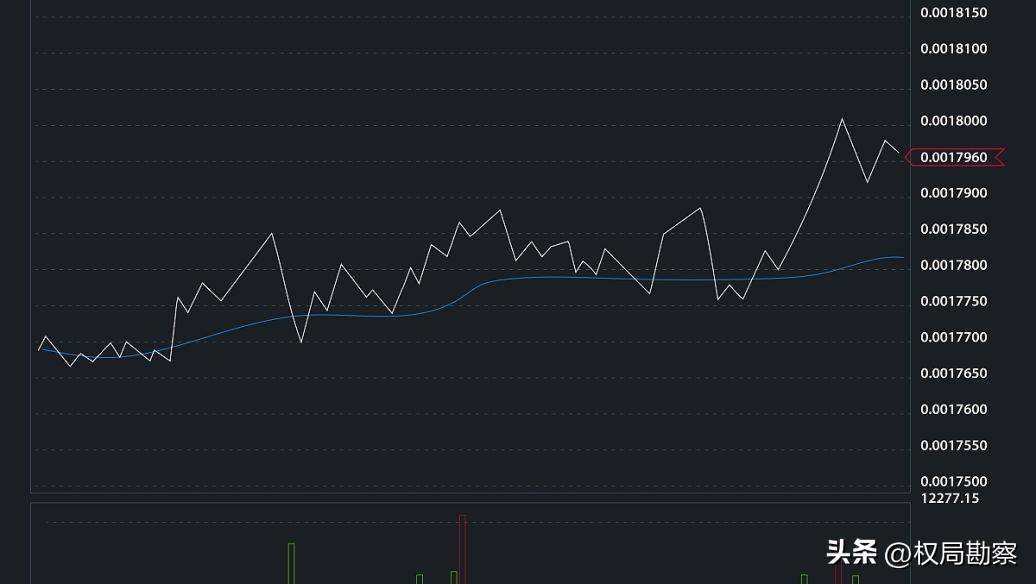
领益智造:已为AMD等国际客户批量出货液冷散热模组。
Xin Lang Cai Jing· 2025-12-15 08:49
Group 1 - The company Lingyi Zhizao has begun mass shipments of liquid cooling heat dissipation modules for international clients, including AMD [1] - This development indicates the company's capability to meet the demands of high-profile clients in the technology sector [1] - The partnership with AMD highlights Lingyi Zhizao's position in the competitive landscape of cooling solutions for advanced computing technologies [1]

半导体与半导体生产设备行业周报、月报:台积电将扩充CoWoS产能,三星受益ASIC需求提振HBM出货-20251215
Guoyuan Securities· 2025-12-15 08:09
Investment Rating - The report maintains a "Recommendation" rating for the semiconductor and semiconductor production equipment industry [7]. Core Insights - The semiconductor industry is experiencing fluctuations in various indices, with the overseas AI chip index dropping by 4.4% and the domestic AI chip index decreasing by 0.6% during the week of December 8-14, 2025. Notably, companies like Marvell and Broadcom saw significant declines in their stock prices [1][10]. - TSMC is projected to be the leading foundry for advanced process smartphone SoCs in 2025, with an expected shipment growth of 27%, capturing over 75% of the market share [2][27]. - The demand for ASICs is expected to surge, leading to a threefold increase in HBM shipments for Samsung in 2026, with an estimated total of 11.1 billion Gb, representing a 212% increase from 2025 [3][33]. Market Indices Summary - The overseas AI chip index fell by 4.4%, with significant declines in stocks of Marvell and Broadcom [1][10]. - The domestic AI chip index decreased by 0.6%, with notable gains from companies like Aojie Technology and Ruixin Micro [1][10]. - The server ODM index dropped by 3.5%, with Supermicro and Wiwynn experiencing the largest declines [1][10]. - The storage chip index increased by 6.3%, with Shannon Semiconductor and Jiangbo Long showing gains of over 11% [1][10]. - The power semiconductor index rose by 1.6%, indicating a relatively stable market [1][10]. Industry Data Summary - In Q3 2025, iPad shipments grew by 4% year-on-year, with high-end models playing a crucial role in this growth [2][24]. - TSMC is expected to dominate the advanced process smartphone SoC market in 2025, with a shipment increase of 27% [2][27]. Major Events Summary - Samsung is advancing its second-generation 2nm process for AMD, which could enhance its competitiveness against TSMC [3][31]. - TSMC's CoWoS advanced packaging capacity is projected to reach 125,000 units per month by the end of 2026, reflecting a year-on-year increase of over 70% [3][31]. - The HBM market is anticipated to grow significantly, with total market size expected to reach approximately $35 billion in 2025 [3][31]. - Apple is expected to launch its first foldable iPhone in 2026, potentially capturing over 22% of the global foldable phone market share in its first year [3][34].

AMD将采用三星2nm工艺!
国芯网· 2025-12-15 04:45
Sedaily称,继特斯拉和苹果之后,AMD正在与三星洽谈SF2工艺的合作,据称正在共同研发一款"下一代CPU"。业内普遍认为,这款"下一代CPU"极有可 能是AMD基于Zen 6架构的EPYC霄龙Venice服务器处理器。 AMD此前已确认Venice将采用台积电N2节点,但考虑到台积电产能的持续紧张,AMD采取双重代工策略,以确保供应也是合情合理。 消息指出,两家公司计划在明年1月左右敲定合同,前提是三星的SF2工艺能满足AMD的性能要求,不过业界对此合作前景普遍乐观。 至于消费级CPU产品线,代号为Olympic Ridge的桌面CPU也可能在2026年下半年采用2nm工艺。 如果三星代工的Venice能成功达到AMD的要求,那么未来的锐龙消费级CPU转向三星代工的可能性也将明显增加。 国芯网[原:中国半导体论坛] 振兴国产半导体产业! 不拘中国、 放眼世界 ! 关注 世界半导体论坛 ↓ ↓ ↓ 12月15日消息,据报道,三星代工目前正在与AMD进行谈判,为其下一代CPU供应2纳米(SF2)工艺。 ***************END*************** 半导体公众号推荐 投稿 或 商务合作 ...
英特尔、AMD,德州仪器遭集体诉讼!
国芯网· 2025-12-15 04:45
Core Viewpoint - A group of Ukrainian civilians has filed lawsuits against Intel, AMD, and Texas Instruments in a Texas court, accusing them of negligence in allowing restricted chips to be resold to Russia, which were used in attacks that killed civilians in Ukraine, violating U.S. sanctions [1][3]. Group 1: Lawsuit Details - The lawsuits allege that the companies failed to prevent their technology from being used in attacks involving the Kh-101 cruise missile and Iskander-M ballistic missile, resulting in multiple civilian casualties [3]. - The lawsuits are based on incidents that occurred between 2023 and 2025, with claims of dozens of deaths linked to these attacks [1]. Group 2: Company Responses - Intel stated that it does not conduct business in Russia and adheres strictly to U.S. export laws and sanctions, requiring compliance from its suppliers, customers, and distributors [4]. - Texas Instruments and AMD did not respond to requests for comments from Bloomberg [4]. Group 3: Legal Representation and Implications - The lawsuits are being led by attorney Watts, representing 15 Ukrainian families, with the aim to expand the case as more evidence is gathered [4]. - The legal advisor, Dmytro Afanasiev, explained that this is a civil lawsuit, meaning plaintiffs do not have to pay legal fees and will not incur losses if they lose; however, a victory could lead to compensation based on the extent of damages [4]. - The lawsuit aims not only for financial compensation but also to create a deterrent effect, pressuring companies to reconsider their supply chains if they face legal and reputational consequences [4].

交银国际_科技行业2026年展望:人工智能超级周期或继续,_十五五”科技国产替代或加速_
2025-12-15 02:13
Summary of Key Points from the Conference Call Industry Overview - **Industry**: Technology, specifically focusing on Artificial Intelligence (AI) and semiconductor sectors [1][5][8] - **Outlook for 2026**: The AI supercycle is expected to continue, with significant growth in AI infrastructure and domestic substitution in China [1][5] Core Insights and Arguments - **AI Infrastructure Growth**: AI infrastructure spending is projected to grow robustly, with major cloud providers expected to increase capital expenditures by over 30% in 2026, following a 60% increase in 2024/25 [5][10] - **Cloud Providers' Capital Expenditure**: Major cloud providers (META, Google, Microsoft, Amazon, Oracle) are expected to reach a combined capital expenditure of $467.9 billion in 2026, reflecting a 33% year-over-year increase [10][14] - **Domestic Substitution in China**: The "14th Five-Year Plan" is anticipated to accelerate domestic substitution in key industries, with Chinese cloud service providers expected to increase capital expenditures by 49% in 2025 [5][9] - **Demand for AI-Related Hardware**: There is a persistent supply-demand imbalance for critical hardware components such as computing, storage, and communication chips, driven by high demand from AI applications [10][34] - **Consumer Electronics Demand**: A cautious outlook for global consumer electronics demand is noted, with predictions of a slight decline in smartphone and PC sales in 2026 [5][9] Investment Recommendations - **Recommended Stocks**: - NVIDIA (NVDA US) - Buy, target price $245.00 - Broadcom (AVGO US) - Buy, target price $425.00 - TSMC (TSM US) - Buy, target price $360.00 - Domestic Chinese companies such as North Huachuang (002371 CH), OmniVision (603501 CH), and SMIC (981 HK) are also recommended [2][5] - **Risks**: Potential risks include underperformance in AI monetization, high valuations of core stocks, and geopolitical uncertainties [5][9] Additional Important Insights - **AI Model Development**: The development of AI models continues to progress, with increasing competition and the emergence of new models, including domestic AI models [10][16] - **Chip Supply Dynamics**: The supply of HBM (High Bandwidth Memory) chips is expected to ease in 2026 due to advancements in technology, although demand from AI applications remains high [51][52] - **Market Share Trends**: NVIDIA is projected to maintain a dominant market share in the accelerator chip market, although Broadcom's share is expected to increase significantly [47][46] - **Network Communication Growth**: The importance of network communication in enhancing the efficiency of accelerator chips is rising, with significant growth expected in the AI network communication market [48][54] This summary encapsulates the key points discussed in the conference call, providing insights into the technology industry's outlook, investment opportunities, and potential risks.

美国半导体版图,太强了
半导体行业观察· 2025-12-15 01:33
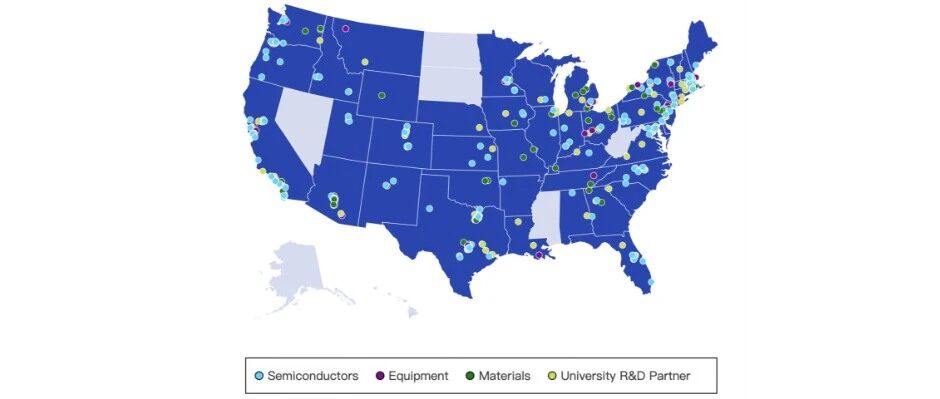
Core Insights - The article discusses the significant restructuring of the semiconductor industry in the United States over the past three years, driven by initiatives like the CHIPS Act and state-level competition to attract wafer fabs and R&D centers [2][11]. Group 1: California Semiconductor Ecosystem - California is home to the largest integrated cluster of design, software, IP, and equipment, primarily located in the San Jose-Santa Clara-San Diego corridor, which focuses on GPU, AI, mobile communications, and server SoCs [5][9]. - Major companies in California include NVIDIA, AMD, Broadcom, Qualcomm, and many others, making it a vital hub for chip innovation [9]. - California also leads in semiconductor equipment and materials, with companies like ASML, Lam Research, and Applied Materials contributing to a comprehensive advanced manufacturing ecosystem [10]. Group 2: Arizona as a New Wafer Manufacturing Center - Arizona has become a focal point for wafer manufacturing, with TSMC and Intel establishing significant operations, supported by favorable environmental policies and infrastructure [11][13]. - The state boasts a complete semiconductor ecosystem, including advanced processes, OSAT capabilities, and a robust materials supply chain [14]. - Arizona is positioned to become a major player in U.S. wafer manufacturing, akin to Taiwan's Hsinchu Science Park, aiming to mitigate geopolitical risks in global supply chains [14]. Group 3: Texas as a Center for IDM and Automotive Electronics - Texas is recognized as the largest center for Integrated Device Manufacturers (IDM), microcontroller units (MCU), and automotive electronics in the U.S. [15]. - Key players include Texas Instruments, Samsung, and NXP, with a strong focus on automotive and power semiconductor applications [17]. - The state is evolving into a new growth hub for semiconductors, driven by the convergence of automotive, power, and AI technologies [18]. Group 4: Northeast Research Corridor - The Northeast region, encompassing New York, Massachusetts, and New Jersey, is a leading area for semiconductor research, hosting prestigious institutions like MIT and Harvard [19][20]. - Companies such as IBM and GlobalFoundries are pivotal in advancing semiconductor technology and manufacturing capabilities in this corridor [20]. - The region's ecosystem is further strengthened by a network of universities and research institutions, fostering innovation in materials, EDA, and photonics [24][27].
需求远超供应!法巴银行:半导体业集体看多2026,电力与ASIC风险被高估
智通财经网· 2025-12-15 01:13
Core Viewpoint - The semiconductor industry remains optimistic about supply and demand dynamics leading into 2026, with demand expected to significantly outpace supply [1][2] Group 1: Industry Outlook - Numerous semiconductor companies, including AMD and NVIDIA, express a positive outlook for market performance and capacity ramp-up through 2026, despite concerns regarding power supply and ASIC competition [1] - The recent Silicon Valley bus tour organized by BNP Paribas involved meetings with executives from major companies such as Intel, Applied Materials, and Seagate Technology, highlighting a collective confidence in future demand [1] Group 2: Power Supply Concerns - Power supply is identified as a major bottleneck in the artificial intelligence arms race, with AMD and NVIDIA acknowledging tightening electricity availability across the U.S. [2] - Both companies believe that the U.S. government is taking steps to alleviate power constraints, viewing the issue as a short-term challenge rather than a long-term barrier [2] Group 3: ASIC Competition - The introduction of custom chips, particularly Google's Tensor Processing Units (TPUs), has raised concerns about ASIC competition in the market [2] - Analysts note that TPUs are optimized for specific cloud service providers and workloads, suggesting that their market share growth should not be extrapolated to other vendors outside of current TPU adopters [2]