BABA(BABA)

Search documents
上晚会、进演讲,AI竞争已经进入「大厂时间」
创业邦· 2026-01-05 03:10
Core Insights - The AI industry is increasingly dominated by large companies, with significant investments in infrastructure, model development, and application promotion, shifting the competitive landscape away from startups [5][7][12] - Major tech firms are leveraging high-profile events like New Year's Eve celebrations to promote their AI products, indicating a return to familiar competitive strategies from the internet product era [6][11] - The competition between large companies and AI startups is intensifying, with startups facing challenges in competing against the resources and ecosystem advantages of larger firms [7][15] Group 1: Industry Trends - The release of ChatGPT 3.5 in November 2022 marked the beginning of a new wave in AI, making year-end observations of AI trends increasingly significant [5] - By the end of 2025, major companies have established dominance in key areas such as AI entry points and computing power, altering the narrative of AI development [5][7] - The competitive dynamics have shifted, with large firms like OpenAI and Google intensifying their rivalry, impacting the prospects of AI startups [6][7] Group 2: Marketing Strategies - Major companies are utilizing high-visibility events for aggressive marketing of their AI products, with significant sponsorship roles in events like New Year's Eve celebrations [9][11] - Companies like Alibaba, Tencent, and ByteDance are actively engaging in content co-creation with popular influencers to maximize their reach and impact [11][12] - The strategy of leveraging major events for product promotion reflects a tactical shift back to familiar competitive practices, reminiscent of past internet product launches [11][12] Group 3: Startup Challenges - AI startups are finding it increasingly difficult to emerge as industry leaders due to the overwhelming advantages held by larger firms in terms of funding, resources, and market presence [7][15] - Notable AI startups are opting for public listings or significant funding rounds to sustain their operations, but their financial capabilities are dwarfed by the investments made by larger companies [15][17] - The sale of Manus to Meta exemplifies the challenges faced by startups in maintaining independence and competing against the scale of large tech firms [17] Group 4: Future Outlook - The year 2026 is anticipated to be pivotal for AI applications and innovation, with startups needing to recalibrate their strategies to find niche opportunities [7][12] - The concept of "greenfield" opportunities is highlighted, suggesting that smaller firms may find success in less obvious market segments overlooked by larger competitors [17][18] - Unique and differentiated projects may emerge as viable alternatives for startups, focusing on niche applications or innovative solutions that stand apart from mainstream offerings [18][19]



小米国际与阿里速卖通达成品牌出海战略合作
Xin Lang Cai Jing· 2026-01-05 02:56
Core Insights - Xiaomi International has formed a strategic partnership with AliExpress, a cross-border e-commerce platform under Alibaba, to join the "Super Brand Going Global Program" [1][2] - The collaboration will focus on localized user operations and brand awareness building in key overseas markets, particularly for core product categories like smartphones and televisions [1][2] - Xiaomi's Senior Vice President and President of International Business, Zeng Xuezhong, stated that AliExpress has become the primary platform for Xiaomi's international expansion, with plans to increase investment in 2026 [1][2] Sales Performance - During the recent Black Friday sales, Xiaomi's POCO F8 series achieved sales of $2 million, becoming the top new product on AliExpress [1][2] - Xiaomi televisions ranked first in the television category in the European market on AliExpress [1][2] Program Impact - The "Super Brand Going Global Program" was officially launched by AliExpress in September 2025 [1][2] - During the overseas Double 11 and Black Friday events in 2025, over 300 brands on AliExpress achieved daily sales that were more than double those on Amazon, with the number of million-dollar brands increasing by 80% year-on-year [1][2]

2026年科技股开门红领跑,港股通互联网ETF(159792)盘中涨幅达3.44%
Mei Ri Jing Ji Xin Wen· 2026-01-05 02:53
Group 1 - The core viewpoint of the article highlights a significant rise in technology stocks on the first trading day of the new year, particularly in sectors such as internet, cloud computing, big data, and consumer electronics [1] - The Hong Kong Stock Connect Internet ETF (159792) saw an intraday increase of 3.44%, with notable gains from individual stocks like Kuaishou, which rose over 11%, and Bilibili, which increased by more than 3% [1] - According to Wind data, the cumulative net inflow of southbound funds into Hong Kong stocks is projected to reach 1,404.844 billion HKD by 2025, marking a historical high [1] Group 2 - Since the launch of the Shanghai-Hong Kong Stock Connect, the total net inflow of southbound funds has exceeded 5.1 trillion HKD, indicating a strong and sustained investment trend [1] - Analysts suggest that the net inflow trend is likely to continue, supported by a synchronized easing in both China and the U.S., along with expectations of interest rate cuts by the Federal Reserve, which may enhance liquidity [1] - The Hong Kong Stock Connect Internet ETF (159792) closely tracks the Hong Kong Stock Connect Internet Index, with its top ten constituent stocks including major tech giants like Alibaba, Xiaomi, Tencent, and Meituan, which collectively account for nearly 60% of the ETF's weight [1]


消息称高德正式布局世界模型,即将发布相关新产品
Xin Lang Ke Ji· 2026-01-05 02:52
Core Insights - Alibaba's Gaode has entered the world model space and plans to launch a new product application based on this model [1] - The world model has achieved top scores in multiple metrics on the WorldScore benchmark, which is the first open-source benchmark for unified evaluation of multimodal world generation models [1] - Gaode has established an embodied business unit, actively recruiting for various positions including embodied intelligence product experts and data/algorithm engineers [1] Group 1 - The world model is supported by a team led by renowned AI scientist Fei-Fei Li from Stanford University [1] - Gaode's exploration includes product forms such as robots and robotic dogs within the embodied business unit [1] - In August 2025, Gaode announced a full transition to AI and spatial intelligence, launching the local lifestyle product Gaode Street Ranking in September of the same year [1] Group 2 - Alibaba's latest AI flagship application, "Qianwen," has integrated with Gaode and the Gaode Street Ranking as its first connected scenario [1]
海量财经丨天猫年货节今天开卖!国补继续,空调冰箱等“硬核”年货低至5折
Sou Hu Cai Jing· 2026-01-05 02:19
Group 1 - Tmall's New Year Festival offers simplified discounts, with official reductions starting at 8.8% off and additional consumer coupons available at 7.7% off, targeting various sectors including beauty, apparel, and electronics [1] - The first wave of 88VIP consumer coupons includes three tiers: 25 off for 200, 60 off for 480, and 200 off for 2000, catering to different consumer needs for purchasing New Year goods [1] - A new round of national subsidies has begun, with major appliances like air conditioners, TVs, washing machines, and refrigerators available at discounts as low as 50%, exemplified by the Siemens refrigerator priced at 5,999.5 after discount [3] Group 2 - AI glasses have been included in the national subsidy program for the first time, with sales on Tmall increasing over 15 times year-on-year, indicating a significant market growth [3] - Limited edition products for the Year of the Horse include luxury items from brands like Breitling and Chopard, showcasing a blend of modern craftsmanship and traditional design [3] - The trend of "Fat Horse" products has emerged, featuring rounded, cartoonish designs that appeal to younger consumers, with various brands releasing themed items that convey positive messages [4] Group 3 - The dining preferences of the younger generation emphasize a mix of traditional and modern cuisines, with high-end ingredients sourced globally, reflecting a desire for both quality and cultural connection [4] - Local specialties from various regions are highlighted, showcasing a trend where traditional foods are gaining popularity alongside international gourmet items [4]
高德正式布局世界模型,即将发布相关新产品
Xin Lang Ke Ji· 2026-01-05 01:53
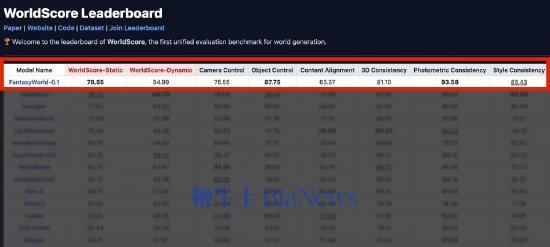
Core Viewpoint - Alibaba's Gaode has entered the world model space and plans to launch a new product application based on this model, achieving top scores in multiple metrics on the WorldScore benchmark [1] Group 1: World Model Development - Gaode has established a dedicated embodiment business unit, actively recruiting for positions such as embodiment intelligence product experts and data/algorithm engineers [1] - The world model has achieved first-place rankings in several metrics on the WorldScore, which is the first open-source benchmark for unified evaluation of multimodal world generation models [1] Group 2: Future Plans and AI Integration - By August 2025, Gaode announced a complete transition to AI, focusing on spatial intelligence, and launched the local lifestyle product "Gaode Street Ranking" in September of the same year [1] - The latest AI flagship application from Alibaba, "Qianwen," has integrated with Gaode and the Gaode Street Ranking as its first application scenario [1]
独家丨高德正式布局世界模型 即将发布相关新产品
Xin Lang Cai Jing· 2026-01-05 01:33
Core Insights - Alibaba's Gaode has entered the world model space and plans to launch a new product application based on this model [1][3] - The world model has achieved top rankings in multiple metrics on the WorldScore benchmark, which is the first open-source evaluation for multi-modal world generation models [1][3] - Gaode has established a new embodied business unit, focusing on hiring for roles such as embodied intelligence product experts and data/algorithm engineers [1][3] Company Developments - Gaode announced a full transition to AI and spatial intelligence by August 2025, with the launch of the local lifestyle product "Gaode Street Ranking" in September of the same year [1][3] - The latest AI flagship application from Alibaba, "Qianwen," has integrated with Gaode and the Gaode Street Ranking as its first application scenario [1][3] Benchmark Performance - The WorldScore benchmark, developed by a team led by Stanford professor Fei-Fei Li, evaluates world generation models and has recognized Gaode's model for its performance [1][3]
外卖大战升温 消息称阿里将引入视觉AI降低餐馆成本
Feng Huang Wang· 2026-01-05 00:59
阿里通义万相大模型 凤凰网科技讯北京时间1月5日,据彭博社报道,阿里巴巴集团将推出一项服务,帮助餐馆利用AI展示 店内环境。阿里正在外卖领域与美团竞争,此举属于该公司整体布局的一部分。 知情人士称,阿里旗下地图和本地服务部门高德即将推出新功能,允许餐馆仅通过上传视频或照片就能 生成3D图像。该技术基于阿里视觉生成大模型通义万相,旨在降低商家的营销和推广成本。阿里计划 将该技术免费开放给部分商家,让他们试用一段时间。 此前,阿里CEO吴泳铭已设定了AI战略,要将AI融入旗下所有业务,利用这项新技术推动增长。这与 谷歌、腾讯等大型科技公司的布局方向不谋而合。 眼下,中国企业正越来越多地尝试利用AI提升现有业务并开拓新市场。高德的最新举措表明,阿里正 试图在美团主导的领域进行扩张。美团在外卖、点评及餐馆预订等本地服务市场占据领先地位。过去几 年,阿里在外卖等领域输给了规模较小的竞争对手,如今正试图利用AI和更雄厚的资金储备夺回市场 份额。 2025年,阿里为旗下热门在线服务投入数百亿元激励与补贴,以应对美团和京东的竞争。这场"三强争 霸"挤压了行业利润空间,也引发了监管层面的警告。(作者/箫雨) ...

上晚会、进演讲,AI竞争已经进入「大厂时间」
Tai Mei Ti A P P· 2026-01-05 00:57
Core Insights - The AI industry is increasingly dominated by large companies, with significant competition emerging between established players and startups [1][2] - Major tech firms are leveraging high-profile events like New Year's Eve celebrations to promote their AI products, marking a shift in marketing strategies [3][4] - The competitive landscape for AI startups is becoming more challenging, as they struggle to compete with the resources and ecosystem advantages of larger companies [2][6] Group 1: Industry Trends - The release of ChatGPT 3.5 in November 2022 marked the beginning of a new AI wave, making year-end a critical observation point for AI industry trends [1] - By the end of 2025, large companies have taken the lead in AI infrastructure, model development, and application promotion, changing the competitive dynamics [1][2] - Major firms are not only investing in AI technology but are also engaging in aggressive marketing strategies to capture public attention during significant events [3][4] Group 2: Company Actions - Companies like Alibaba, Tencent, and ByteDance are heavily investing in AI products, with notable launches and marketing campaigns leading to significant user engagement [6][7] - Tencent has made structural adjustments to enhance its AI capabilities, indicating a more aggressive approach in the AI sector [7] - Alibaba's financial commitment includes a strategic investment plan of 380 billion yuan, while ByteDance is expected to increase its capital expenditure to 160 billion yuan in 2026 [7] Group 3: Startup Challenges - AI startups face increasing difficulties in becoming industry leaders due to the overwhelming advantages held by large companies in terms of resources and market presence [2][6] - Some startups, like Zhiyu and MiniMax, are opting for IPOs, while others like Manus have chosen to sell to larger firms, reflecting a trend of consolidation in the industry [2][8] - The potential for smaller companies to find niche opportunities exists, as larger firms focus on more prominent market segments, leaving gaps for innovation in specialized areas [8][10]
1月5日早餐 | 全球半导体公司大涨;蓝箭航天IPO获受理
Xuan Gu Bao· 2026-01-05 00:09
Market Overview - Major US stock indices showed mixed performance, with the S&P 500 rising by 0.19% and the Dow Jones increasing by 0.66%, while the Nasdaq fell by 0.03% [1] - Tesla shares dropped by 2.6%, influenced by software stocks offsetting gains in chip stocks, while Salesforce fell over 4% and Nvidia rose over 1% [1] - The White House's decision to delay tariffs on certain household goods led to an 8% increase in shares of RH [1] Semiconductor Sector - SanDisk surged nearly 16%, Micron Technology rose over 10%, ASML increased by over 8%, and TSMC hit a historical high with a rise of over 5% [2] - The semiconductor sector is expected to benefit from increased capital expenditure in 2026, with analysts projecting a tightening market for memory chips, leading to significant price increases [11] Chinese Tech Stocks - The China concept index rose over 4%, with Baidu increasing by 15% and Alibaba by over 6% [3] - Baidu announced plans to spin off Kunlun Chip for independent listing on the Hong Kong Stock Exchange, resulting in a 9% rise in its stock [10] Economic Policies and Initiatives - The State Council approved the draft of the Water Supply Regulations and the revised Drug Administration Law Implementation Regulations [4] - Shanghai's measures to accelerate the construction of low-altitude economic advanced manufacturing clusters include support for eVTOL and industrial-grade drones, with funding up to 50 million yuan [5] - The State Council issued a solid waste comprehensive governance action plan aiming for a 45 billion-ton annual comprehensive utilization of major solid waste by 2030 [5] IPO and Corporate Actions - Blue Arrow Aerospace's IPO application was accepted, aiming to raise 7.5 billion yuan for reusable rocket technology upgrades and capacity enhancement [12] - Multiple companies announced acquisitions, including Zhongwei Company planning to acquire a 64.69% stake in Hangzhou Zhonggui, and Meike Home proposing to buy 100% of Wande Technology [15][16] Lithium and Battery Materials - Tianqi Lithium forecasted a net profit of 1.1 to 1.6 billion yuan for 2025, driven by strong demand in the new energy vehicle and energy storage markets [29] - The lithium hexafluorophosphate market is expected to remain tight, with significant price increases anticipated due to strong demand and cautious supply expansion [13] Consumer Market Trends - Hainan's duty-free market saw a significant increase during the New Year holiday, with sales reaching 712 million yuan, a year-on-year growth of 128.9% [10][14]