
Bank of America(BAC)

Search documents
Bank of America Corporation (BAC): A Reliable Player in the World of Promising Dividend Stocks
Insider Monkey· 2025-10-10 03:51
Core Insights - Artificial intelligence (AI) is identified as the greatest investment opportunity of the current era, with a strong emphasis on the urgent need for energy to support its growth [1][2][3] - A specific company is highlighted as a key player in the AI energy sector, owning critical energy infrastructure assets that are essential for meeting the increasing energy demands of AI technologies [3][7] Investment Landscape - Wall Street is investing hundreds of billions into AI, but there is a looming question regarding the energy supply needed to sustain this growth [2] - AI data centers consume vast amounts of energy, comparable to that of small cities, leading to concerns about power grid strain and rising electricity prices [2][3] Company Profile - The company in focus is not a chipmaker or cloud platform but is positioned as a crucial player in the energy sector, particularly in nuclear energy infrastructure [7][8] - It is capable of executing large-scale engineering, procurement, and construction (EPC) projects across various energy sectors, including oil, gas, and renewables [7] Financial Position - The company is noted for being completely debt-free and holding a significant cash reserve, amounting to nearly one-third of its market capitalization [8] - It is trading at less than 7 times earnings, indicating a potentially undervalued position in the market [10] Market Trends - The company is poised to benefit from the onshoring trend driven by tariffs, as well as the surge in U.S. LNG exports under the current administration's energy policies [5][14] - There is a growing recognition on Wall Street of this company's potential, as it quietly capitalizes on multiple favorable market trends without the high valuations seen in other sectors [8][9] Future Outlook - The influx of talent into the AI sector is expected to drive continuous innovation and advancements, making investments in AI a strategic move for future growth [12] - The company is positioned to play a pivotal role in the upcoming AI infrastructure supercycle, which is anticipated to yield significant returns for investors [14][15]



全球系统重要性银行的机遇与挑战
Sou Hu Cai Jing· 2025-10-10 02:31
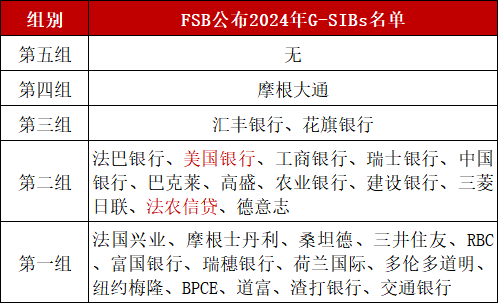
Core Insights - Global systemically important banks (G-SIBs) are undergoing a critical transformation, driven by industrialization and middle-class expansion in emerging markets, which present new opportunities in retail, corporate, and cross-border businesses. Financial technology is enhancing digital risk control and customer acquisition. However, challenges such as stagflation risks, geopolitical conflicts, and interest rate differentiation are intensifying pressure on interest margins and asset quality. The application of artificial intelligence also brings challenges related to model interpretability and compliance. Capturing the emerging market dividend and completing digital upgrades will be key to determining the future competitive advantage of G-SIBs [1]. Background - The 2008 global financial crisis highlighted the "too big to fail" issue of large international financial institutions. In 2011, the Financial Stability Board (FSB) released regulatory measures for G-SIBs, publishing the first list of G-SIBs, which included most global systemically important banks. According to the FSB's 2024 G-SIBs list, there are 29 banks globally [2][3]. Current Operations - In the current interest rate cut cycle, financial services have become the main revenue driver for banks. Since the Federal Reserve began lowering rates, traditional lending has faced pressure, leading to significant revenue growth in investment banking, financial markets, and wealth management. In Q1 2025, revenues from financial services for JPMorgan, Citigroup, and Bank of America grew by 12.0%, 10.0%, and 7.1%, respectively, with contributions exceeding 50% of total revenues, an increase of 3-6 percentage points from pre-rate cut levels [5]. - Investment banking has cooled down, with uncertainty in the market due to aggressive policy changes under the Trump administration. In Q1 2025, the growth rate of investment banking revenues for the four major U.S. banks dropped from an average of around 40% to less than 10%. Bank of America saw a year-on-year decline of -0.35% in investment banking revenue, while JPMorgan's growth slowed to 2.4% [5]. - Trading business has emerged as a new revenue driver, with significant increases in trading revenues for major U.S. banks in Q1 2025, attributed to heightened market volatility and geopolitical tensions. Trading revenues for JPMorgan, Citigroup, and Bank of America grew by 21%, 12%, and 11%, respectively, with stock trading revenues increasing by 48%, 23%, and 17% [6]. - Payment and settlement services have shown weak performance, with revenues for JPMorgan, Citigroup, Bank of America, and Wells Fargo growing by only 2.2%, 3.6%, 0.5%, and -10.9%, respectively, contrasting sharply with the growth in investment banking and trading revenues [6]. Opportunities - Expansion in emerging markets presents significant opportunities, particularly in retail banking, as the growing middle class demands diverse financial services. G-SIBs can meet these needs by offering various savings products and consumer loans. Additionally, the rising high-net-worth population increases demand for wealth management services [7]. - The demand for cross-border financial services is increasing, driven by globalization. G-SIBs can provide efficient cross-border payment solutions, financing, and risk management services to support businesses in their international activities [7]. - Regulatory changes may create potential opportunities, as the new U.S. administration's policies could support the cryptocurrency and digital asset markets, allowing G-SIBs to explore new business areas [8]. - Financial technology is enabling digital transformation, allowing G-SIBs to innovate in cross-border services and enhance customer experiences through personalized financial products [8]. Challenges - The uncertain macroeconomic environment in 2025 poses risks, with geopolitical tensions and trade protectionism affecting global economic activity. The U.S. government's tariff policies may lead to a new round of global trade disputes, increasing external risks for G-SIBs [9]. - The potential return of laissez-faire financial policies under the Trump administration could elevate systemic financial risks, as regulatory changes may reduce banks' liquidity requirements, impacting their ability to absorb potential losses [10]. - The application of AI in banking faces challenges, including the reliability and accuracy of AI outputs, which may conflict with the low tolerance for error in banking services [11]. Strategies and Recommendations - To address the challenges posed by low interest rates and regulatory costs, G-SIBs should build a multi-layered governance framework. This includes meeting total loss-absorbing capacity (TLAC) requirements and optimizing capital structures through asset securitization and diversifying capital tools [15][16]. - Business transformation and revenue diversification are crucial for balancing regulatory costs and profitability. G-SIBs should focus on expanding light-capital businesses and enhancing non-interest income through wealth management and advisory services [16]. - Governance and technology should work in tandem to improve risk management and operational resilience, including the implementation of real-time monitoring platforms for cross-border risks [16][17].


刚刚!大牛市,突遭警告!
券商中国· 2025-10-10 01:07
Core Viewpoint - The article discusses the recent surge in gold prices, highlighting potential risks of a correction despite a strong long-term bullish outlook for gold [1][2][6]. Price Movements - On October 9, spot gold and silver prices reached historical highs before declining, with spot gold dropping below $4000 per ounce, closing at $3990.24 per ounce [2][3]. - COMEX gold futures fell by 1.95% to $3991.1 per ounce, while COMEX silver futures decreased by 2.73% to $47.655 per ounce [2]. Market Analysis - Analysts attribute the recent price drop to a strengthening U.S. dollar and a temporary easing of tensions in the Middle East, leading some speculators to take profits [2][3]. - The surge in gold prices was linked to concerns over a potential U.S. government shutdown and rising political risks in countries like France and Japan, which heightened market risk aversion [2]. Future Price Predictions - Paul Ciana from Bank of America warns that gold prices may correct to $3525 per ounce by Q4 2025, as the current price levels appear slightly overbought [3][4]. - Historical analysis shows that significant bull markets in gold often precede substantial sell-offs, with the current rebound potentially signaling a major bull market [3][4]. Long-term Bullish Factors - Key factors supporting the long-term bullish outlook for gold include: 1. **Monetary Policy Easing**: Expectations of interest rate cuts by the Federal Reserve are prevalent, which typically benefits gold prices [7]. 2. **Safe-Haven Demand**: Ongoing geopolitical risks and global economic concerns reinforce gold's status as a preferred asset for risk hedging [8]. 3. **Strong Official and Investment Demand**: Increasing demand from central banks and ETFs is seen as a positive indicator for gold's long-term prospects [8]. Aggressive Price Forecasts - Some analysts predict that after a short-term consolidation, gold prices could exceed $4200 per ounce by 2026, driven by U.S. rate cuts and strong investment demand [8]. - In extreme scenarios, JPMorgan forecasts that gold could surpass $5000 per ounce if funds shift from U.S. Treasuries to gold [8].

X @Watcher.Guru
Watcher.Guru· 2025-10-09 15:47
Market Trends - Bank of America indicates investors are not penalized for buying stocks at all-time highs [1] - Returns have been stronger five years later [1]
Jim Cramer Believes Bank of America “Can Go Much Higher”
Yahoo Finance· 2025-10-09 14:58
Core Viewpoint - Bank of America Corporation (NYSE:BAC) is viewed positively by Jim Cramer, who suggests that investors should hold onto their shares due to the stock's potential for further gains and its current undervaluation [1]. Company Overview - Bank of America provides a range of banking, lending, and investment services to individuals, businesses, and institutions [1]. Financial Performance - Cramer highlighted the company's recent announcement of a $40 billion buyback program, interpreting it as a positive sign for the stock's future performance [1]. Market Sentiment - The overall sentiment towards Bank of America is that it is a stable investment, with Cramer advocating for a long-term hold strategy rather than taking immediate profits [1].
[Earnings]Upcoming Earnings: Financials and Tech Giants Take Center Stage
Stock Market News· 2025-10-09 13:13
Group 1 - Major financial institutions such as JPMorgan Chase & Co., Wells Fargo & Company, Goldman Sachs Group Inc., BlackRock Inc., and Citigroup Inc. are set to report earnings next Tuesday pre-market [1] - Following the major financials, Bank of America Corporation and Morgan Stanley will report earnings next Wednesday [1] - Taiwan Semiconductor Manufacturing Company Ltd., a key player in the tech sector, will report earnings next Thursday pre-market [1] Group 2 - Significant earnings reports earlier in the week include PepsiCo Inc. on Thursday before the market opens and Johnson & Johnson next Tuesday pre-market [1] - ASML Holding N.V. is also expected to release important technology earnings next Wednesday pre-market, alongside healthcare leader Abbott Laboratories [1]



中选前美国选择“逃逸速度策略”?美银称美联储将救楼市,建议交易“大型加杠杆”
Hua Er Jie Jian Wen· 2025-10-09 11:41
Core Viewpoint - Bank of America analysts suggest that aggressive interest rate cuts could trigger "massive re-leveraging," unlocking frozen cash and revitalizing the real estate market [1][2] Group 1: Current Market Conditions - U.S. households currently hold $19.6 trillion in cash and equivalents, the highest debt-to-cash ratio since 1991 [2] - Existing home sales are projected to average 4 million units in 2025, similar to levels seen after the 2008 financial crisis [2] - The current mortgage rate gap is at its widest since the Volcker era, providing room for significant rate cuts [2][4] Group 2: Potential Policy Actions - The government may adopt an "escape velocity strategy" to maximize economic growth ahead of the midterm elections, focusing on interest rate cuts and stimulus checks [3] - Treasury Secretary Becerra hinted at a potential "housing emergency" announcement, which could be significant in the election context [3] Group 3: Re-leveraging Opportunities - Small-cap value stocks (SVAL, AVUV) are expected to benefit from a declining interest rate environment, with over 45% of their debt being short-term and floating rate [5] - Homebuilders (ITB, XHB) have historically outperformed the S&P 500 during rate cuts, indicating potential for further gains despite recent increases [5] - Long-term government bonds (TLT, SPTL) are likely to see increased demand as interest rates fall, with a lack of duration exposure in global portfolios [5] Group 4: Additional Investment Opportunities - Emerging market bonds (XEMD, EMBD) have historically benefited from lower interest rates and a weaker dollar, with a 30-year annualized return of 6.4% [7] - Gold and gold mining stocks (GLD, GDX) are expected to rise in a high inflation and low interest rate environment, with a target price of $4,000 per ounce set by Bank of America [7]
下周财报季开锣,大摩预期北美银行“稳中有升”
Zhi Tong Cai Jing· 2025-10-09 11:02
Core Viewpoint - Morgan Stanley has adjusted its model for North American large banks' Q3 2025 performance forecasts, indicating a mild impact on EPS growth of 0-1% and a median EPS estimate 3% higher than market consensus [1][2] Group 1: Earnings Forecasts - The median EPS forecast for North American banks in Q3 2025 is 3% above market consensus, with the largest increases expected for money center banks and State Street Bank (STT.US) [1] - Citigroup (C.US) is projected to have an EPS of $1.99, exceeding the market consensus of $1.83 by 9% [1] - Bank of America (BAC.US) is expected to report an EPS of $1.01, which is 7% higher than the consensus of $0.94 [1] - State Street Bank's EPS is forecasted to be 6% above consensus, while Northern Trust (NTRS.US) is expected to be 3% higher [1] - Most super-regional banks are projected to be 1-3% above consensus, with Truist Financial (TFC.US) and Wells Fargo (WFC.US) both expected to be 3% higher [1] Group 2: Key Financial Metrics - The model incorporates a macro assumption of an additional 125 basis points rate cut by the end of 2026, with a focus on Citigroup, Bank of America, Goldman Sachs, and JPMorgan Chase (JPM.US) due to expected outperformance in investment banking fees and trading income [2] - Money center banks are expected to lead in asset growth, with JPMorgan Chase's average total assets projected to reach $4.43 trillion, an 8.4% year-over-year increase, and Bank of America expected to reach $3.47 trillion, a 5.5% increase [2] - The deposit structure shows a gradual decline in non-interest-bearing deposits, with Bank of America projected to have 26.0% in 2025, down from 26.7% in 2024 [2] - The net interest margin (NIM) is expected to remain stable, with a median estimate of 2.50% for 2025, while super-regional banks are projected to have higher NIMs [2] Group 3: Revenue Growth Drivers - Fee income is a core growth driver, with M&A fees expected to grow 30% year-over-year, significantly above the consensus growth of 11% [3] - Equity Capital Markets (ECM) fees are projected to increase by 41%, compared to a consensus of 30%, while Debt Capital Markets (DCM) fees are expected to grow by 4% against a consensus of 3% [3] - Money center banks like JPMorgan and Goldman Sachs are expected to see over 9% year-over-year growth in fee income for 2025 [3] Group 4: Capital Returns - The median dividend payout ratio for banks in 2025 is expected to be around 30%, with money center banks showing a slight decrease from 27% to 29% [3] - JPMorgan is projected to pay $5.80 per share in dividends, while Citigroup is expected to pay $2.32 per share [3] - Stock buybacks are anticipated to increase significantly, with JPMorgan expected to repurchase $38.01 billion in 2025, up from $18.84 billion in 2024, and Citigroup expected to repurchase $13.47 billion, a substantial increase from $2.5 billion in 2024 [3] Group 5: Overall Outlook - The report maintains a cautiously optimistic view on North American large banks, suggesting that money center banks will outperform due to investment banking and trading income, while super-regional banks show stable asset quality [4] - Trust banks are expected to face pressure on net interest margins but still demonstrate resilience supported by fee income [4]


US banks to reap bigger profits as deals rebound in third quarter
Reuters· 2025-10-09 10:34
The six largest U.S. banks are expected to report stronger third-quarter earnings next week, catapulted by a rebound in investment banking. ...

美银:The Flow Show-Krunchy Kredit
美银· 2025-10-09 02:00
Investment Rating - The report indicates a bullish sentiment with the BofA Bull & Bear Indicator rising to 6.5, reflecting strong inflows into stocks and a positive outlook for global equity markets [7][11]. Core Insights - There have been record inflows into global equity ETFs, totaling $152 billion over the past three weeks, marking the largest inflow on record [2][16]. - The report highlights a shift in investment themes from war to peace, and from US exceptionalism to global rebalancing, suggesting a favorable environment for gold and international equities in the second half of the 2020s [2][3]. - The report notes a significant outflow from Treasuries, amounting to $7.5 billion, which is the sixth-largest outflow ever recorded [10]. Summary by Sections Market Flows - Global equities saw inflows of $114 billion in the past three weeks, the third highest ever, with $26 billion inflows to stocks and $19.9 billion to bonds [16][41]. - Private clients have allocated 64.7% of their assets to stocks, the highest since March 2022, while bond allocations have decreased to 18.0%, the lowest since May 2022 [11][41]. Investment Themes - The report identifies entrenched trends favoring corporations over governments and passive over active management, with a notable shift towards national security and border control [2][3]. - The "Magnificent 7" companies are reallocating cash flow towards capital expenditures in the AI sector, indicating a significant trend in technology investment [17][38]. Sector Performance - The technology sector experienced the largest inflow of $9.3 billion, while healthcare saw a minor inflow of $33 million, contrasting with a record outflow of $17 billion for the sector [16][42]. - Financials and materials sectors also saw substantial inflows, with $3.3 billion and $5.9 billion respectively, indicating strong investor interest [16][42]. Economic Indicators - The report notes that 80% of global stock indices are trading above their 50-day and 200-day moving averages, suggesting a robust market breadth [11]. - The report emphasizes that no central bank has raised rates in the past two months, which may contribute to the current bullish sentiment in the markets [18].