BMW(BMWYY)

Search documents
德国经济面临的结构性挑战:从出口引擎到转型阵痛
Di Yi Cai Jing· 2025-11-23 12:14
Economic Overview - Germany's economy is at a crossroads, facing manufacturing recession, collapsing exports, expanding debt, and technological lag [1][16] - The GDP growth forecast for 2025 is only 0.2%, significantly lower than the Eurozone average of 0.8% [2][7] - Structural issues are deeply rooted, including a collapsing export model, declining manufacturing competitiveness, and a lack of digital transformation [2][8] Manufacturing Sector Challenges - The manufacturing sector, which accounts for about 20% of GDP, is in crisis, particularly the automotive industry, which contributes 5% of GDP and employs 800,000 directly [3][4] - Major automotive companies like Porsche and Volkswagen are experiencing severe profit declines and production halts due to supply chain disruptions and high costs associated with electric vehicle (EV) transitions [3][4] - The automotive industry's export has decreased by 8% in the first three quarters of 2025, with EV penetration at only 18%, far below the EU target of 25% [4][11] Small and Medium Enterprises (SMEs) Struggles - SMEs are facing a dire situation, with a 12.2% increase in bankruptcy rates in the first half of 2025 compared to 2024 [5] - The mechanical engineering sector's orders have plummeted by over 20%, with 33% of SMEs rating the current situation as "bad" or "very bad" [5][11] - The overall manufacturing output has declined by 10% in the first three quarters of 2025, indicating a broader manufacturing recession [5][11] Export Market Decline - Germany's export model, which heavily relies on high-end products, is collapsing, with total exports expected to shrink by 2% to 3% in 2025 [9][11] - The U.S. market has seen a significant drop in exports, with a 20% decline in August 2025 due to high tariffs [10] - The Chinese market is also becoming a challenge, with local brands capturing a significant market share, leading to a 13.5% decline in automotive exports to China [10][11] Fiscal Policy Adjustments - The German government has adjusted its strict fiscal discipline to allow for a special fund of €500 billion for defense and infrastructure, which is independent of the debt brake [12][13] - This fund aims to stimulate short-term growth, with infrastructure investments expected to rise by 15% in 2025 [13] - However, long-term risks remain, as additional debt could lead to increased interest burdens if growth does not exceed 1% [13][14] Technological Transition Issues - Germany is lagging in the digital revolution, with only 2% of global AI investment, despite being a leader in Industry 4.0 [15][16] - The manufacturing cost index has risen by 25% since 2022, leading to a 15% decline in export competitiveness [15] - The government is attempting to attract talent and investment in AI, with a €55 billion investment from Google expected to contribute significantly to GDP and job creation [16]
宝马新世代技术集群广州车展亮相
Liao Ning Ri Bao· 2025-11-22 23:49
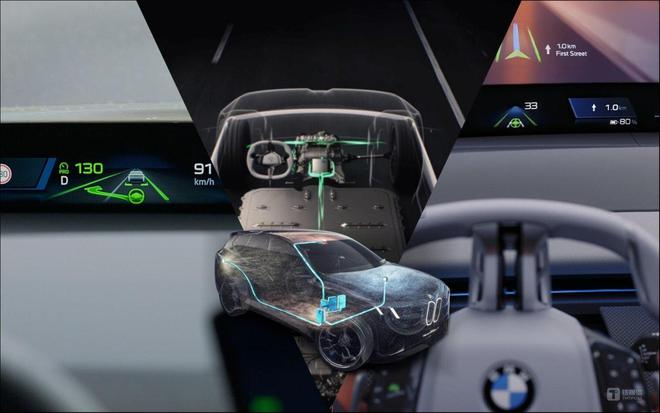
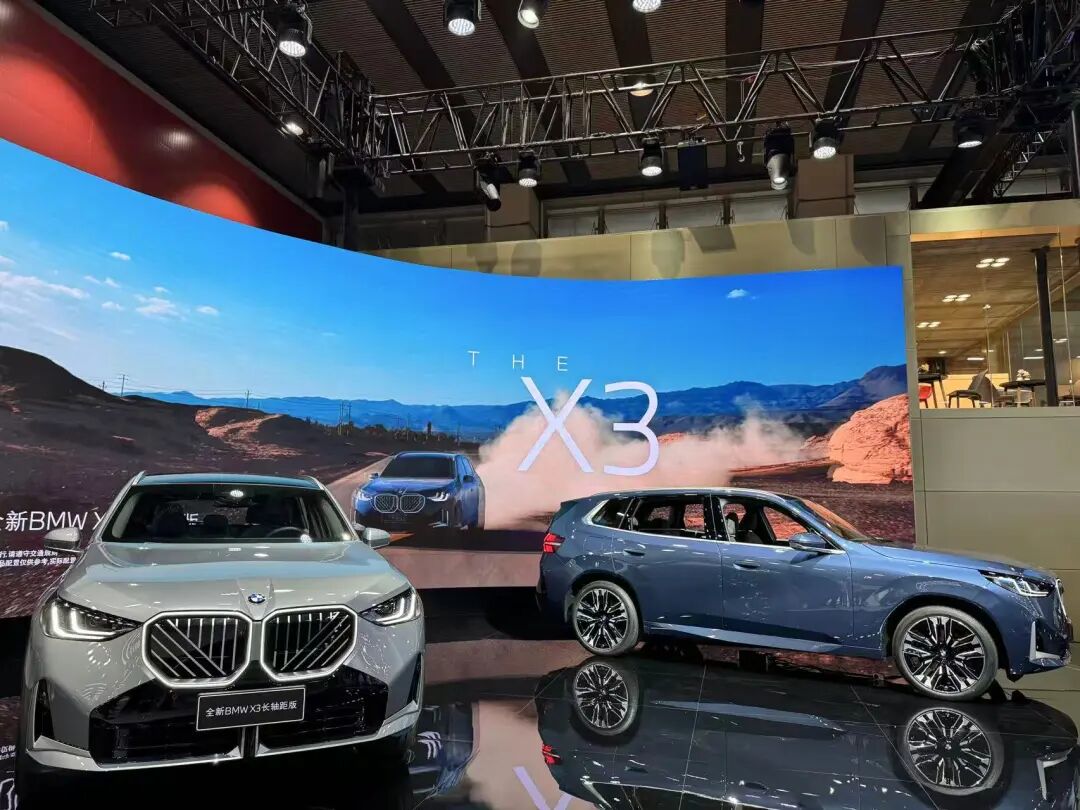
Core Insights - The new generation BMW iX3 will begin mass production at the Shenyang plant next year, with comprehensive vehicle testing currently underway globally [1] - The first model of the new generation, the long-wheelbase BMW iX3, is set to launch in the second half of 2026 [1] - The new generation represents not just a vehicle but the future of the BMW brand and its next-generation products [1] Technology and Innovation - The new generation BMW iX3 will feature the BMW Driving Control Super Brain, new generation electric drive, panoramic iDrive, and advanced intelligent driving assistance solutions [1] - The new generation electric drive system debuts at the Guangzhou Auto Show, utilizing BMW's unique 4695 large cylindrical battery cells, which increase energy density by 20% compared to previous models [1] - The electric drive system combines a unique excitation synchronous motor with an asynchronous motor, reducing energy loss by 40% and improving overall vehicle efficiency by 20% [1] Performance Metrics - The CLTC comprehensive range of the new generation BMW iX3 exceeds 900 kilometers [1] - The 800V high-voltage platform enhances charging efficiency, allowing for a 400-kilometer charge in just 10 minutes [1]
BMW新世代四大技术上车:电动化能否守住“宝马味”?
Tai Mei Ti A P P· 2025-11-22 10:11
Core Insights - BMW showcases its new generation technology cluster at the 2025 Guangzhou Auto Show, emphasizing its advancements in electric and intelligent driving technologies [2] - The new generation BMW iX3 will be the first model to feature these technologies, set to be produced in 2026 at BMW's Shenyang plant, representing a significant step in BMW's future direction [2] Electric Drive System - The sixth-generation eDrive system is highlighted as a "performance champion," featuring a 46mm standard diameter cylindrical battery that achieves a 20% increase in energy density [3] - The system supports an 800V high-voltage platform, allowing for a 400km range increase with just 10 minutes of charging, and a CLTC range exceeding 900km [3] Driving Control Technology - The BMW Driving Control Super Brain integrates AI algorithms and hardware to replicate the driving feel of traditional fuel vehicles, addressing common issues in electric vehicle handling [3][4] - It processes data from 23 sensing units to perform 1000 dynamic calculations per second, enabling real-time adjustments to torque distribution, suspension damping, and steering force [3] Intelligent Cockpit and User Experience - The new panoramic iDrive system focuses on user-centered, scenario-based simplification, utilizing AR technology to enhance information accessibility while maintaining driving safety [5] - BMW collaborates with Huawei to integrate HarmonyOS NEXT for features like the BMW digital key and HUAWEI HiCar, tailored for local user habits [5] AI and Smart Driving Solutions - BMW partners with Alibaba to develop an intelligent cockpit system based on AI technology, aiming to create a new BMW personal assistant with advanced communication capabilities [6] - The collaboration with Momenta focuses on developing a new generation of intelligent driving assistance solutions, designed specifically for the Chinese market [6][7] Integration and Synergy of Technologies - The four key technologies form a synergistic effect, enhancing the overall driving experience by integrating electric drive, driving control, and intelligent assistance [8] - The system's ability to adjust based on real-time conditions, such as wet road surfaces, exemplifies the interconnectedness of these technologies [8] Market Position and Future Outlook - BMW's new generation technology cluster indicates its commitment to maintaining driving pleasure while addressing the challenges of electric and intelligent vehicle markets [9] - The success of these innovations will depend on their real-world performance and the company's ability to adapt to the rapidly evolving competitive landscape in China [9]

演绎有趣的灵魂,MINI携7款个性化车型亮相2025广州车展
Zhong Guo Jing Ji Wang· 2025-11-22 07:38
Core Insights - The MINI brand emphasizes personalization and creativity, showcasing its vehicles as collectible art pieces at the 2025 Guangzhou Auto Show [1] - The collaboration with designer Paul Smith highlights a unique aesthetic expression, marking a 27-year creative dialogue between the two brands [1][2] - The new electric MINI COOPER PAUL SMITH edition features thoughtful design elements that convey optimism and a fresh start philosophy [2] - The limited edition electric MINI JCW Monte Carlo Night 60th Anniversary model pays tribute to the brand's racing heritage with exclusive design details [3] - MINI's digital evolution includes an OTA upgrade that introduces gaming features, enhancing user engagement and emotional connection [4] Group 1 - The MINI brand is presented as a symbol of fashion and creativity, with a focus on unique design elements that make each vehicle a work of art [1] - The electric MINI COOPER PAUL SMITH edition showcases a blend of humor and rebellion in its design, with hidden details that surprise and delight [2] - The limited edition model commemorates the 60th anniversary of a historic racing victory, incorporating nostalgic elements that connect the present with the past [3] Group 2 - The introduction of the "咪咕快游" feature allows users to enjoy gaming experiences in their vehicles, reflecting MINI's commitment to digital innovation [4] - The digital assistant Spike and customizable features enhance the emotional connection between the brand and its users, promoting a unique user experience [4]
宝马集团拳头产品阵容齐聚广州 满怀信心奔赴2026新世代
Zhong Guo Zhi Liang Xin Wen Wang· 2025-11-21 08:29
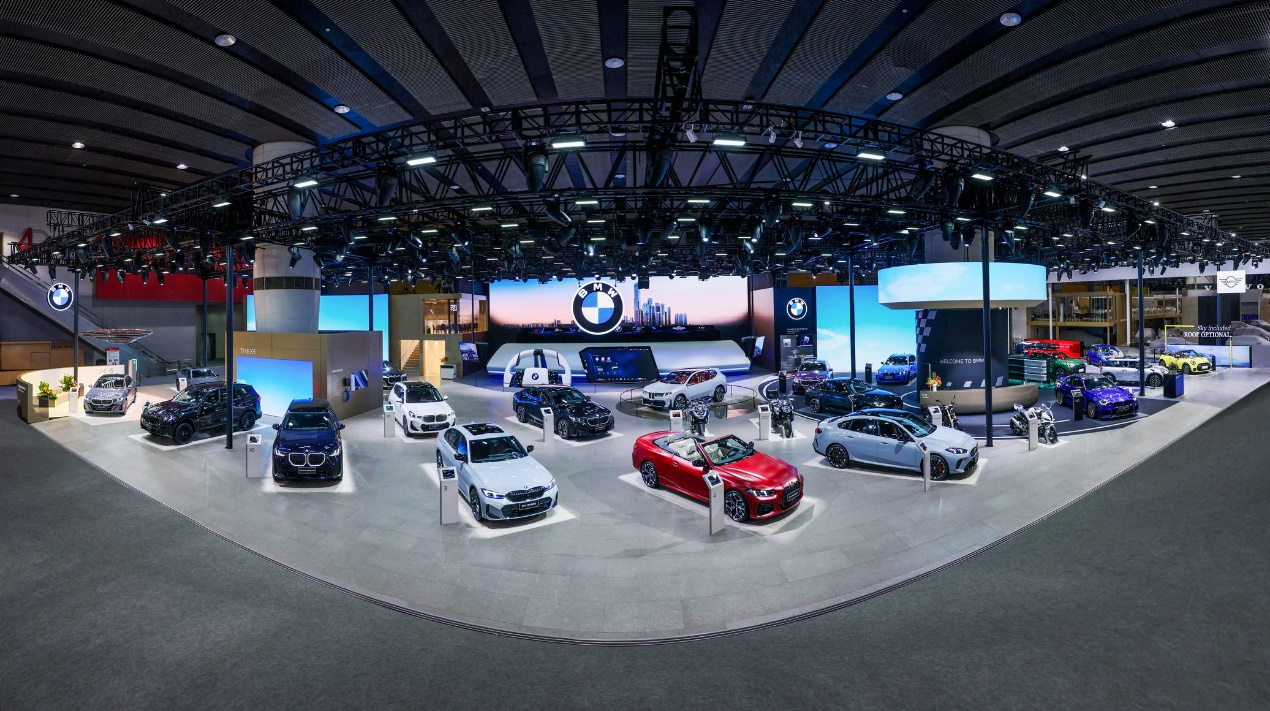
Group 1: Core Products and Innovations - BMW Group showcased over 20 models at the Guangzhou Auto Show, including the 2026 BMW X5, the new BMW M3 Touring, and the electric MINI COOPER PAUL SMITH designer edition, highlighting its commitment to innovation and product excellence for 2025 [1][3] - The 2026 BMW X5 has undergone significant upgrades focusing on intelligence, comfort, luxury, and design, with features like advanced driving assistance systems and enhanced seating comfort now standard across all models [6][9] - The new generation BMW iX3, set to launch in the second half of 2026, will be the first model to feature BMW's new generation technologies, including the BMW Driving Control Super Brain and new electric drive systems [15][17] Group 2: Market Strategy and Performance - BMW Group's CEO in Greater China emphasized the company's commitment to meeting local customer needs through innovative products and experiences, aiming to lead the future of luxury mobility [5] - The BMW M division has seen strong growth in China, with sales increasing over 25% year-on-year, and the introduction of the new BMW M3 Touring as the first high-performance touring car in the Chinese market [7][9] - The new generation electric drive system debuted at the show features a 20% increase in energy density and a 40% reduction in energy loss, enabling the new generation BMW iX3 to achieve a range of over 900 kilometers [22] Group 3: Technological Advancements - The BMW Driving Control Super Brain integrates core functions like power transmission and energy recovery into a single control unit, allowing for rapid response to driver intentions [17][18] - A new intelligent driving assistance solution developed in collaboration with Chinese tech company Momenta aims to enhance vehicle adaptability to complex driving environments [18][20] - The new generation BMW cockpit features advanced interaction interfaces and integrates local digital ecosystems, enhancing user experience and connectivity [24]
宝马在中国大规模部署自研人工智能体平台
Bei Ke Cai Jing· 2025-11-18 13:09
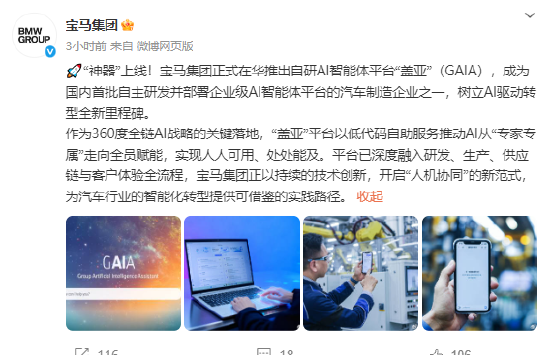
Core Insights - BMW Group announced the launch of its self-developed AI platform "GAIA" in China, marking a significant milestone in its transformation into an AI-driven enterprise [1] - The GAIA platform aims to empower every employee and reshape the intelligent manufacturing system, enhancing product quality, production efficiency, and user experience [1] - The platform lowers the application threshold for AI technology, enabling a shift from "expert-exclusive" to widespread empowerment among all employees [1] Summary by Categories AI Platform Launch - The GAIA platform is being deployed on a large scale in China [1] - It represents an important step in BMW's transition towards an AI-driven business model [1] Employee Empowerment - GAIA is designed to empower all employees, allowing them to create applications in a secure and compliant environment [1] - The platform offers self-service, low-code generative AI services, making it accessible even to users with no prior experience [1] Applications and Impact - BMW plans to explore cutting-edge applications of AI 2.0 technology across various domains, including R&D, production, supply chain, and customer service [1] - The initiative is expected to drive continuous improvements in product quality, production efficiency, and user experience [1]
存起火风险!超14万辆宝马被紧急召回,X系和3系是重灾区
Guo Ji Jin Rong Bao· 2025-11-18 10:03
Core Viewpoint - BMW is facing significant challenges in the Chinese market, highlighted by a large-scale recall of over 144,000 vehicles due to safety concerns, which may impact its sales performance in a competitive landscape [3][4][5]. Recall Details - BMW has initiated a recall involving 144,132 vehicles, including both imported and domestic models, due to a design flaw in the engine starter relay that could lead to overheating and fire [3][4]. - The recall is divided into two parts: S2025M0175V, affecting over 80,000 imported vehicles, and S2025M0176V, involving 58,533 domestic 3 Series cars [3][4]. - The affected models include various series such as the 4 Series, 5 Series, 7 Series, X4, X5, and the domestic 3 Series, with the X Series accounting for nearly 33% of the total recall [3][4]. Sales Performance - In the first three quarters of the year, BMW's global sales reached 1.7959 million units, a 2.4% increase year-on-year, but the company experienced an 11.2% decline in sales in the Chinese market [7]. - In the third quarter, BMW delivered 147,100 vehicles in China, a slight decrease of 0.4% year-on-year, contrasting with a global delivery increase of 8.8% [7]. - The domestic 3 Series is a key model for BMW in China, with sales accounting for 29.4% of total sales in the first ten months of the year, raising concerns about the impact of the recall on its sales [5]. Market Competition - The luxury car market in China is undergoing significant changes, with domestic electric vehicle brands like AITO, Li Auto, and NIO achieving record monthly sales, putting pressure on traditional luxury brands [7]. - Competitors such as Mercedes-Benz and Porsche are also experiencing declines in sales, with Mercedes-Benz's third-quarter sales down 27% [7]. - Price reductions are becoming common among traditional luxury brands, with significant discounts reported for models like the BMW 5 Series and Mercedes-Benz C-Class [7]. Strategic Initiatives - In response to market challenges, BMW is intensifying its local strategy, launching the "Neue Klasse" electric vehicle platform, with the iX3 model featuring local adaptations [8]. - Despite efforts in electrification, sales of BMW's electric models remain low, with the iX3 and iX1 averaging only a few thousand units sold monthly [8].
宝马自研AI平台“盖亚”在华上线
Xin Lang Ke Ji· 2025-11-18 09:26
Core Insights - BMW Group officially launched its self-developed AI platform "GAIA" in China, marking a significant milestone in AI-driven transformation within the automotive industry [1] - The "GAIA" platform aims to democratize AI capabilities from being exclusive to experts to empowering all employees, integrating both internal innovations and external AI technologies [1] - The platform ensures compliance with safety regulations and risk management while enhancing data consistency and integrity, facilitating deep analytical insights [1] Summary by Categories AI Platform Launch - BMW becomes one of the first automotive manufacturers in China to develop and deploy an enterprise-level AI platform [1] - The introduction of "GAIA" signifies a new era in AI-driven transformation for the company [1] Core Advantages - "GAIA" integrates BMW's innovative solutions with external AI technologies to create diverse value [1] - The platform promotes a balance between technological innovation and risk control [1] Applications and Impact - BMW is actively exploring cutting-edge applications of AI 2.0 technology across various domains, including research and development, production, supply chain, and customer service [1] - The implementation of "GAIA" is part of BMW's steady progress towards AI transformation [1]
加速构建AI生态体系,宝马在华推出自研AI智能体平台“盖亚”
Zhong Guo Jing Ji Wang· 2025-11-18 09:24
Core Insights - BMW Group has officially launched its self-developed AI platform "GAIA" in China, marking a significant step in redefining the value of AI across its business sectors [1][3] - The launch of the "GAIA" platform is a key implementation of BMW's 360-degree AI strategy announced in March, which aims to deeply integrate AI technology into the entire value chain [1] Group 1: Platform Features and Benefits - The "GAIA" platform significantly lowers the application threshold for AI technology, enabling widespread access and use among employees, regardless of their technical background [4] - It offers self-service, low-code generative AI services, allowing users to quickly create applications in a secure and compliant environment [4] - Employees can create self-service applications, efficiently utilize existing solutions, and manage departmental knowledge assets, enhancing both user and creator roles [4] Group 2: Integration and Compliance - The platform integrates BMW's innovative solutions with external AI technologies, ensuring a diverse value creation approach without reliance on a single large language model provider [4] - BMW emphasizes responsible AI usage, with an integrated management framework to ensure compliance with safety regulations and to maintain data consistency and integrity [4] Group 3: AI Implementation and Future Plans - The "GAIA" platform is being actively explored in R&D, production, supply chain, and customer service, advancing BMW's AI transformation [6] - At the Shenyang production base, AI solutions are fully applied in quality control and spare parts management, laying a solid foundation for high-quality production [6] - BMW has been a pioneer in AI application in the Chinese market since 2018, with the "BEACON" platform serving as a foundational technology for the new "GAIA" platform [6][7] Group 4: Industry Impact - BMW is building an AI ecosystem that spans R&D, production, operations, and services, initiating a new paradigm of "human-machine collaboration" [7] - The transition from AI 1.0 to AI 2.0 signifies a leap towards a comprehensive AI framework that can serve as a reference for the automotive industry's intelligent transformation [7]

“深耕”可持续,真正“接地气”——华晨宝马地热项目创造能源转型新范本
第一财经· 2025-11-18 09:11
Core Viewpoint - The Huachen BMW geothermal energy project represents a significant advancement in BMW Group's long-standing commitment to clean energy and sustainability, showcasing the collaborative vision of Chinese and German enterprises in sustainable development [2][17]. Group 1: Project Overview - The Huachen BMW geothermal energy project commenced operations on October 31, enabling the powertrain factory to achieve 100% non-fossil energy heating, with an expected annual carbon reduction of 18,000 tons, thereby lowering the carbon footprint of BMW's "New Generation" models from the source [4][8]. - This project is part of BMW's extensive sustainability efforts over the past 50 years, marking a breakthrough in their commitment to environmental protection and sustainable practices [5][17]. Group 2: Technological Innovation - The project involves drilling 28 deep geothermal wells to a depth of approximately 2,900 meters, utilizing a "heat extraction without water" method, which enhances environmental protection while ensuring stable and efficient geothermal energy collection [9][11]. - The innovative approach of using coaxial heat exchangers for thermal exchange with underground rock layers represents a significant advancement in geothermal energy utilization, particularly in the context of China's automotive industry [11][12]. Group 3: Collaborative Efforts - The project is a collaborative effort involving Huachen BMW, China Huaneng Group, Wanjing New Energy Co., Ltd., and Shenyang Sino-German Development Zone Construction Group, with the Shenyang municipal government providing crucial support [12][14]. - The project employs a contract energy management model, allowing for shared investment, construction, and operation among the partners, which enhances its commercial sustainability [12][14]. Group 4: Future Potential - BMW plans to expand geothermal energy applications in its factories and potentially throughout the Shenyang Iron West District, with expectations of further reducing costs while achieving 100% non-fossil energy heating [14][16]. - The project serves as a model for clean energy applications in industrial regions, providing valuable insights for broader adoption of geothermal energy in similar contexts [12][17].