
GM(GM)

Search documents
今日新闻丨长城汽车超跑即将发布!阿维塔新工厂设计图曝光!通用汽车公布二季度财报:整体业绩下滑,中国市场盈利!
电动车公社· 2025-07-23 15:46
Group 1 - The core viewpoint of the article highlights the significant developments in the automotive industry, particularly focusing on Great Wall Motors' new supercar and General Motors' second-quarter financial performance [1][4][8]. Group 2 - Great Wall Motors' new supercar features a monocoque body and a two-door design, likely utilizing a rear-engine layout with the latest 4.0T twin-turbo V8 engine, and is expected to compete with the Ferrari SF90 [3]. - The new supercar aims to deliver impressive lap times and emotional value, indicating a strategic move towards high-performance vehicles [3]. Group 3 - Avita's new factory design has been revealed, with a production capacity of 350,000 units, supporting its goal of achieving global sales of 400,000 units by 2027 and launching 17 new models by 2030 [6]. Group 4 - General Motors reported a second-quarter sales figure of 974,000 units, a year-on-year decline of 6.3%, with revenue of $47.12 billion, down 1.8% [8]. - The company faced over $1.1 billion in losses due to Trump's 25% tariffs on imported vehicles and parts, leading to a 31.6% drop in adjusted EBIT to $3 billion and a 35.4% decrease in net profit to $1.9 billion [8]. - Despite the overall decline, GM's Chevrolet became the second-best-selling electric vehicle brand in the U.S., and Cadillac led in luxury electric vehicle sales, indicating progress in its electrification strategy [8].




别克GL8、五菱神车卖爆!通用在华狂赚,北美却被关税“薅走”11亿美元
Hua Xia Shi Bao· 2025-07-23 13:57
Core Viewpoint - General Motors (GM) reported its Q2 2025 earnings, reflecting struggles and adaptations in a complex macroeconomic environment, as well as the pains and hopes of transitioning towards electrification and localization [1][2]. Financial Performance - GM's Q2 2025 revenue reached $47.122 billion, a slight year-over-year decline of 1.8%, but exceeded market expectations of $45.81 billion [2]. - Adjusted earnings per share were $2.53, and net profit was $1.895 billion, both showing a significant decline, with net profit down 35.4% year-over-year [1][2]. - The adjusted EBIT was $3 billion, a sharp decrease of 31.6% compared to the previous year [2]. Cost Pressures - The decline in profit was primarily attributed to the U.S. government's tariff policies, which directly reduced GM's adjusted earnings by $1.1 billion [2]. - Additional costs included $300 million from recalling 600,000 trucks due to engine defects, $600 million from increased electric vehicle inventory, and $200 million from declining fleet sales prices [2]. Regional Performance - North American adjusted EBIT fell from $4.4 billion to $2.4 billion, a drop of 45.5%, with profit margins shrinking from 10.9% to 6.1% [4]. - In contrast, international operations, including China, saw adjusted EBIT rise from $50 million to $204 million, highlighting the importance of the Chinese market [4]. Market Dynamics - GM's sales in China exceeded 447,000 units in Q2, a 20% year-over-year increase, marking the highest quarterly growth since 2021 [4]. - The company maintained its full-year adjusted EBIT forecast of $10 billion to $12.5 billion, though this is lower than the initial target of $15.7 billion [4]. Strategic Initiatives - GM announced a $4 billion investment in U.S. assembly plants to expand production capacity for high-profit light trucks, SUVs, and crossovers [7]. - The company is balancing traditional fuel vehicle production with electric vehicle manufacturing, aiming to leverage technological innovations for long-term profitability [7]. Transformation and Future Outlook - GM's strategy in China is shifting from volume contribution to being a dual engine of profit and technological innovation, with a 50% year-over-year increase in electric vehicle sales [6]. - The company is adapting to rapid technological changes and aims to convert challenges into long-term advantages through innovation and strategic adjustments [7][8].
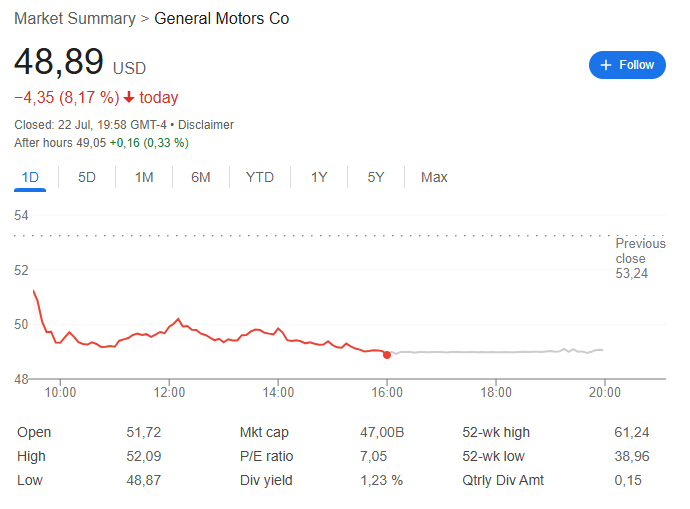
通用汽车(GM.N)涨近5%,前一交易日跌约8%。
news flash· 2025-07-23 13:55
Core Viewpoint - General Motors (GM) shares increased by nearly 5% after a previous decline of approximately 8% in the prior trading session [1] Group 1 - The stock performance of General Motors shows volatility, with a significant drop followed by a rebound [1]
Trump Just Hammered US Cars With Tariffs - Toyota Says Thanks
Benzinga· 2025-07-23 12:35
Core Insights - Toyota Motor Corp benefited from a new 15% tariff on imported vehicles, resulting in an 8% surge in its stock price [1] - American automakers like Ford, GM, and Tesla face higher costs due to additional tariffs on materials and parts, making their situation more challenging compared to Toyota [2][3] - The U.S. trade policy, intended to boost American manufacturing, may inadvertently disadvantage U.S. automakers while benefiting Toyota [3][4] Group 1 - The 15% tariff on imported vehicles has led to a significant stock increase for Toyota, highlighting a favorable market response [1] - American automakers are facing compounded costs from various tariffs, including a 50% increase for steel and copper, and 25% tariffs on parts from Canada and Mexico [2] - Tesla is also affected by rising material costs, despite its global supply chain [2][5] Group 2 - Toyota's diversified supply chain and greater U.S.-based manufacturing allow it to better navigate the new tariff environment compared to its American competitors [4] - The market reaction indicates a clear division, with Toyota's stock rising while Ford and GM's stocks remain relatively stable [5] - The current tariff policy serves as a stock catalyst, particularly benefiting Toyota in the short term [5]



无惧关税阴云!Q2财报季或成美股“强心剂”,科技股有望继续发力
智通财经网· 2025-07-23 11:50
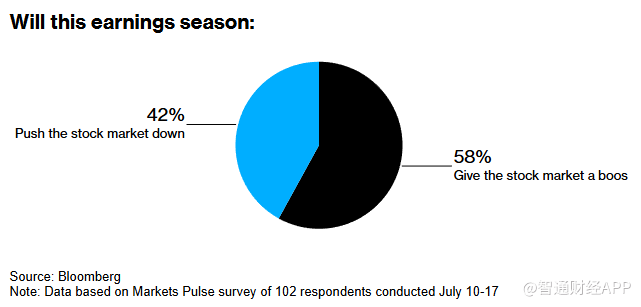
富兰克林邓普顿投资解决方案副首席投资官Max Gokhman表示:"当你设定如此低的门槛,如此多的公 司下调甚至撤回业绩指引,而最终的盈利却超出预期时,美国股市就会再次变得有吸引力。当科技股开 始公布业绩时,它们仍然是一股不容小觑的力量。" 智通财经APP获悉,最新的Markets Pulse调查显示,美国股市将摆脱关税风险,从第二季度财报季中获 得提振。这项于7月10日至17日进行的调查显示,在102名受访者中,近三分之二的人认为,随着未来几 周财报季进入高峰,美国股市的表现将优于美国国债,并带来更好的波动性调整后回报。受访者表示, 科技股有望在本财报季表现最强劲,并继续支撑股市的乐观前景。 多数受访者预计Q2财报季将提振美股 第二季度财报季刚刚开始,但标普500指数成分股的业绩指引已经好于分析师预期。财报发布前,华尔 街预测盈利增速仅为2.8%,为2023年年中以来的最低水平。受银行业绩稳健的影响,盈利增速预期已 略高于3%。 非必需消费品公司"压力山大" 尽管如此,七大科技巨头与标普500指数其他成分股之间仍然存在巨大差距。根据Bloomberg Intelligence 汇编的数据,科技巨头在人工智能 ...

合资车企稳、进口车急调,通用在中国市场连续三个季度盈利
Zhong Guo Jing Ji Wang· 2025-07-23 11:27
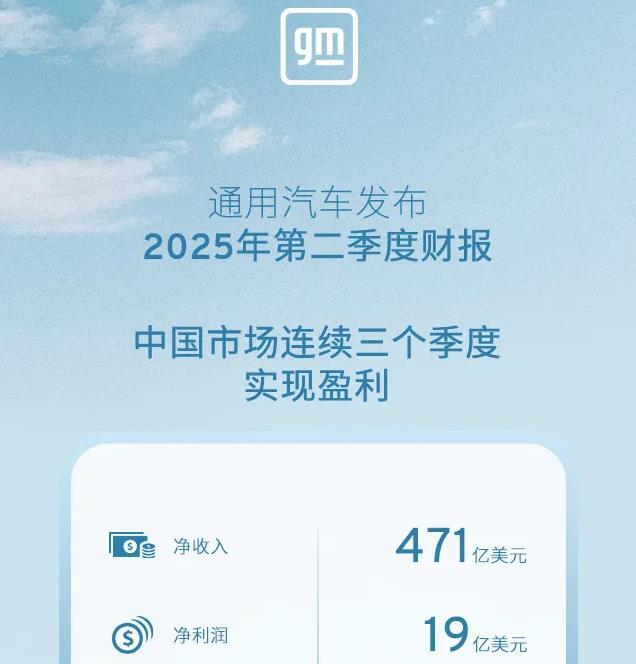
Core Insights - General Motors reported a net income of $47.1 billion and a net profit of $1.9 billion for Q2 2025, marking three consecutive quarters of profitability in the Chinese market since turning profitable in Q4 2024 [1] - The company experienced a retail sales rebound in China, with over 890,000 units sold in the first half of the year, representing a year-on-year increase of 9.4% [3] - The two main pillars driving profitability in China are the strong performance of new energy vehicles and the Buick GL8 family [4] Group 1: New Energy Vehicles - General Motors' new energy vehicle sales (including pure electric and plug-in hybrid) have been on the rise, with a 50% year-on-year increase in Q2 [4] - The company launched a new sub-brand "至境" (Zhijing), with its first luxury electric sedan named "至境L7" [5] - The new energy product matrix has been a key factor in increasing market share, positioning General Motors as the leading foreign automaker in China [4] Group 2: Buick GL8 Family - The Buick GL8 family has seen continuous improvement in its product lineup, with new models launched in Q2, leading to sales exceeding 10,000 units for three consecutive months [5] - Year-to-date sales for the GL8 family increased by 37.4% compared to the previous year [5] Group 3: Challenges with the Dorranger Brand - The Dorranger brand, launched in September 2022 to explore the high-end imported car market, faced challenges due to fluctuating import tariffs and has suspended new car imports as of May this year [6] - General Motors is restructuring the Dorranger import business in response to changing market conditions, indicating a need for practical engagement in the high-end market [6]
通用汽车二季度净利润19亿美元 中国市场连续三个季度盈利,本土研发“逍遥”架构已上车
Mei Ri Jing Ji Xin Wen· 2025-07-23 10:05
Group 1 - General Motors (GM) reported Q2 financial results with net revenue of approximately $47.1 billion and net profit of $1.9 billion, reflecting the company's resilience according to CEO Mary Barra [1] - The company updated its 2025 financial outlook earlier this year, anticipating an impact of $4 to $5 billion from new trade and tax policies, but expects to offset at least 30% of this impact [1] - In China, GM has made several adjustments, including restructuring its high-end imported vehicle platform, which has led to three consecutive quarters of profitability for GM and its joint ventures starting from Q4 2024 [1] Group 2 - SAIC-GM, GM's joint venture, has returned to positive growth with cumulative sales of approximately 245,000 units in the first half of the year, representing an 8.64% year-on-year increase [2] - The company has implemented various measures such as accelerating project development, reducing costs, and reorganizing its internal decision-making processes to achieve profitability since Q4 of the previous year [2] - GM has defined this year as a "counterattack" year, focusing on deepening "localization" cooperation in China, with new models primarily developed by SAIC-GM and Pan Asia Technical Automotive Center [3] Group 3 - SAIC-GM has introduced a new generation "Xiaoyao" super integration vehicle architecture, which will be the basis for all local new energy models starting in 2025 [3] - The Buick brand has launched its new high-end electric sub-brand "Zhijing," with its first sedan, Zhijing L7, featuring the locally developed "Xiaoyao" architecture [3] - GM plans to offer a diverse range of consumer choices through localized solutions, covering pure electric, plug-in hybrid, and range-extended new energy technologies for all new local models launched this year [3]
从日本进口车15%关税,墨西哥进口25%?美国三大车企对美日贸易协议"很不满"
Hua Er Jie Jian Wen· 2025-07-23 07:41
Group 1 - The trade agreement between the US and Japan has faced strong opposition from major automakers like General Motors, Ford, and Stellantis, as it imposes a 15% tariff on Japanese imports while maintaining a 25% tariff on vehicles from Canada and Mexico, which is seen as detrimental to the US automotive industry and workers [1][2] - The American Automotive Policy Council (AAPC) has criticized the agreement, stating that it unfairly benefits Japanese imports at the expense of North American-made vehicles, which typically have a higher US content [2][3] - The financial impact of the tariffs is already evident, with General Motors reporting an $1.1 billion loss due to tariff effects in Q2, and expecting further negative impacts in Q3, leading to a significant drop in its stock price [3][6] Group 2 - Stellantis has also indicated that the impact of US tariffs on automotive and parts imports will expand by the second half of 2025, having already incurred losses of €300 million (approximately $352 million) due to the tariffs, resulting in reduced shipments and production cuts [6][7] - The AAPC has previously expressed concerns regarding the US-UK trade agreement, which they believe will harm the US automotive industry by allowing UK automakers to export vehicles to the US under lower tariffs, further complicating the competitive landscape for American manufacturers [7]

综述|美国关税政策“回旋镖”伤及美企和消费者
Xin Hua She· 2025-07-23 05:38
Group 1 - The core viewpoint of the articles is that the U.S. government's tariff policies are negatively impacting American businesses and consumers, acting like a "boomerang" that ultimately harms the economy [1][2] - Major U.S. companies, including General Motors, reported significant financial losses due to tariff policies, with GM's second-quarter losses amounting to $1.1 billion and a 35.4% year-on-year drop in net profit to $1.9 billion [1] - Stellantis indicated that it could face a net loss of $2.7 billion in the first half of the year due to tariffs, highlighting the financial strain on the automotive sector [1] Group 2 - Retail giant Walmart has raised prices on essential goods due to tariff impacts and warned of potential price increases for back-to-school items starting this month [2] - Amazon has also increased prices on low-cost items such as deodorants and protein shakes, reflecting the broader trend of rising consumer prices [2] - A report from Yale University estimates that the tariffs will lead to a 2.1% increase in domestic price levels, costing each American household approximately $2,800, with low-income families facing three times the disposable income loss compared to wealthier households [2]
