HWORLD(HTHT)

Search documents
华住集团召开伙伴大会 发布酒店投资新范式
Zheng Quan Ri Bao· 2025-11-06 09:12
Core Insights - The hotel industry in China is experiencing a historic development opportunity, driven by the pursuit of a better life by 1.4 billion people and supported by a complete industrial system and world-class infrastructure [2][3] - The market shows distinct regional characteristics, with significant potential in county-level markets where the chain rate is below the national average [2][3] - The middle-income group, exceeding 400 million people, is driving high-quality development in the hotel industry through their demand for quality living [2][3] Market Dynamics - Current market pressures are prompting a return to the essence of investment, creating conditions for rational investment [3] - The supply side is undergoing deep transformation driven by franchising and branding [3] - AI technology is enhancing customer experience and operational efficiency [3] Investment Standards - A new investment standard system has been proposed, focusing on "good location, good rent, good product" on the investment side, and "good brand, good property, good quality" on the product side [3] Brand Development - The company launched a new brand "All Seasons Grand," which aims to elevate the hotel experience to a lifestyle concept, integrating Eastern aesthetics into travel scenarios [3] - The brand seeks to provide a unique Eastern aesthetic experience and aims to become a world-class Eastern brand [3] Company Achievements - Over the past 20 years, the company has welcomed more than 2 billion guests and driven nearly 300 billion yuan in industry chain investment [4] - The company has established a comprehensive brand matrix covering various consumer segments, with a repurchase rate of over 30% for All Seasons hotel franchisees [4] - The company expresses strong confidence in the future, aiming to let "Chinese service" resonate globally and transform hotels into significant "beautiful spaces" for humanity [4] Event Participation - Nearly 4,000 hotel investors, franchisees, industry partners, and employees attended the 2025 Huazhu Partners Conference [5]

不避竞争,只求向上:季琦的企业成长哲学
Xin Jing Bao· 2025-11-06 08:08
Core Insights - The hotel industry in China is experiencing intense competition, often referred to as "involution," which is seen as a sign of ongoing supply-side reforms rather than a lack of progress [1][7] - The founder of Huazhu Group, Ji Qi, emphasizes that competition should drive upward growth and innovation, transforming anxiety into a force for industry and personal development [1][3] Industry Overview - The hotel market in China is characterized by oversupply and a struggle for pricing power, leading to anxiety among investors and practitioners [1] - Despite the challenges, Ji Qi remains optimistic about the Chinese hotel industry, viewing competition as a signal for growth rather than a threat [5][7] Market Dynamics - The hotel occupancy rate in China is projected to recover to 67.8% in 2024, but structural issues persist, with only 25% of approximately 20 million hotel rooms being part of large-scale operations [8][9] - The market is transitioning from low-cost competition to high-quality, refined operations, pushing companies to improve products and services [8][9] Strategic Framework - Ji Qi introduces a framework of "three 'three markets'" that includes geographic, consumer tier, and age structure, identifying significant potential in county-level markets [9][10] - The focus is shifting from price competition to value and experience, driven by a growing middle-income group exceeding 400 million people [9][10] Investment Standards - Two "three good" investment standards are proposed: for investment, focus on "good location, good rent, good product"; for products, emphasize "good brand, good property, good quality" [10][12] - This methodology aims to create sustainable growth mechanisms rather than mere competition [10][12] Brand and Experience - Huazhu's growth reflects a shift from merely providing affordable accommodation to enhancing the overall experience and aesthetic of hotel stays [14][15] - The company aims to create a brand that resonates with consumers, emphasizing the importance of experience over price [14][15] Future Vision - Ji Qi articulates a vision for Huazhu's next 20 years, focusing on deepening its presence in China, leading with brand strategy, and pursuing quality-driven growth [20][21] - The mission has evolved from "beautiful life" to "beautiful journey," positioning hotels as emotional waypoints in travelers' lives [21][22]


中档酒店加盟的黄金时代,结束了?
3 6 Ke· 2025-11-06 02:21
Core Insights - The Chinese hotel franchise market is experiencing a significant turning point in 2024, with a decline in new hotel openings and a shift towards renovation and management models due to economic slowdown and rising operational costs [1][2][3] Group 1: Market Trends - The number of new hotels opening in China is projected to decrease by 7.8% year-on-year in 2024, with nearly a 10% reduction in new mid-range hotel contracts [1] - The average RevPAR for mid-range hotels in China is expected to grow only 5% compared to 2019, while labor and operational costs have increased by over 15% [2] - The total number of mid-range and mid-high-end hotels in China is set to exceed 150,000 by the end of 2024, with growth rates outpacing demand for three consecutive years [2] Group 2: Franchisee Concerns - Franchisees are increasingly skeptical about the promised returns from brand partners, with many reporting that the expected return on investment (ROI) has extended to over five years [2][4] - There is a growing sense of market saturation in certain regions, leading to price wars and a decline in occupancy rates, as seen in cities like Changsha [3][8] - Franchisees express concerns over the lack of support from brand headquarters, which has led to a breakdown in trust [4][5] Group 3: Brand Strategies - Major hotel brands are shifting focus from rapid expansion to operational efficiency and trust-building with franchisees, as highlighted by Huazhu Group's emphasis on returning to customer-centric strategies [6][9] - Brands are increasingly investing in digital systems to enhance operational efficiency and provide real-time data to franchisees [7][10] - The competitive landscape is evolving, with a need for brands to differentiate themselves and address internal competition among similar brands within the same group [7][10] Group 4: Future Outlook - The future of the hotel franchise market will hinge on rebuilding trust and establishing sustainable profit models, moving away from mere brand recognition to a focus on operational capabilities [11][12] - The next five years will see competition based on operational efficiency and trust rather than just the ability to attract franchisees [12][13] - The mid-range hotel market remains promising, but the era of easy growth is over, necessitating a focus on profitability and collaborative brand ecosystems [12][13]


H World Group Limited Schedules Third Quarter of 2025 Earnings Release on November 17, 2025
Globenewswire· 2025-11-05 11:15
Core Viewpoint - H World Group Limited, a significant player in the global hotel industry, is set to release its unaudited financial results for Q3 2025 on November 17, 2025, after Hong Kong trading hours and before the U.S. market opens [1]. Group 1: Financial Results Announcement - The unaudited financial results for Q3 2025 will be announced on November 17, 2025 [1]. - A conference call will be held at 7 a.m. (U.S. Eastern time) on the same day to discuss the results [2]. Group 2: Conference Call Details - Participants must pre-register for the conference call via a provided link to receive dial-in details and access codes [3]. - A live webcast of the conference call will be available on the company's website [4]. Group 3: Company Overview - H World Group Limited operates 12,137 hotels with a total of 1,184,915 hotel rooms across 19 countries as of June 30, 2025 [5]. - The company manages a diverse portfolio of brands, including HanTing Hotel, JI Hotel, and Steigenberger Hotels & Resorts, among others [5]. - H World employs various business models, with 8% of hotel rooms operated under lease and ownership, and 92% under manachise and franchise models as of June 30, 2025 [6].

华住集团-S(01179.HK)拟于11月17日举行董事会审核委员会会议以审批业绩
Ge Long Hui· 2025-11-05 11:06
格隆汇11月5日丨华住集团-S(01179.HK)宣布,公司董事会审核委员会会议将于2025年11月17日(星期一) (香港时间)举行,藉以(其中包括)审议及批准公司截至2025年9月30日止三个月的未经审核财务业绩及业 绩发布。 ...
华住集团(01179) - 审核委员会会议日期及2025年第三季度财务业绩公告日期
2025-11-05 11:00
香港交易及結算所有限公司及香港聯合交易所有限公司對本公告的內容概不負責,對其準確性 或完整性亦不發表任何聲明,並明確表示概不會就本公告全部或任何部分內容而產生或因倚賴 該等內容而引致的任何損失承擔任何責任。 (於開曼群島註冊成立的有限公司) 業績將於2025年11月17日(星期一)(香港時間)香港聯合交易所有限公司交易時 段後及美國市場開市前上傳至香港聯合交易所有限公司網站www.hkexnews.hk及 本公司網站https://ir.hworld.com。 於業績公告刊發後,本公司管理層將於2025 年 1 1 月 1 7 日(星期一)下午八 時正(香港時間)(或 2025 年 1 1 月 1 7 日(星期一)上午七時正(美國東部時 間))舉行電話會議。如通過電話參加,所有與會者須使用與會者登記鏈接 https://register-conf.media-server.com/register/BI4d94983722af49c7a74657040bebf449 提前登記該電話會議。登記後,各與會者將會收到電話會議詳情,包括撥號號 碼、電話會議密碼及獨有訪問個人身份識別碼。電話會議將會在互聯網作網上 直播 ...
便宜的酒店,正在批量消失
商业洞察· 2025-11-05 09:23
Core Viewpoint - The economic hotel sector in China is facing significant challenges, with many brands, including Pudong Hotel, being forced to exit the market due to financial difficulties and declining performance metrics like RevPAR (Revenue per Available Room) [3][4][5]. Group 1: Economic Hotel Sector Decline - The economic hotel segment is experiencing a collective retreat, with projections indicating that by the end of 2024, the share of economic rooms will drop to 54% [4]. - Major hotel chains like Jinjiang, Shoulv, and Huazhu have added over 3,400 hotels in the past year, with less than 600 being economic hotels, representing only 17.6% of new additions [4]. - The average room rates for these major chains have increased significantly, while occupancy rates for mid-to-high-end hotels have surpassed those of economic hotels [4][5]. Group 2: Vulnerabilities of Economic Hotels - Economic hotels have a fragile business model characterized by low pricing power and limited revenue elasticity, making them more susceptible to market fluctuations [7][8]. - The pricing structure of economic hotels is constrained, with limited ability to increase rates compared to mid-to-high-end hotels, which can offer additional services and amenities [9][10]. - Economic hotels often suffer from high competition and low differentiation, leading to a scenario where they are unable to capitalize on peak demand periods effectively [11][12]. Group 3: Market Dynamics and Trends - The hotel industry has seen a shift towards higher-end offerings, with mid-to-high-end hotels gaining market share and occupancy rates [31][33]. - The consolidation of the hotel market has led to increased chain hotel prevalence, with the top three hotel groups controlling 75% of room inventory by 2016 [20][22]. - The pandemic has accelerated the decline of weaker economic hotels, while stronger chains have expanded their market presence, increasing the overall chain hotel rate to over 40% [26][29]. Group 4: Future Outlook - The economic hotel sector is likely to continue facing challenges as consumer preferences shift towards mid-to-high-end accommodations, driven by both supply-side and demand-side factors [35][36]. - The ongoing trend of increasing chain hotel rates and occupancy for higher-end hotels suggests a potential long-term decline for the economic hotel segment [39].


服务产业迎政策利好,新消费景气持续
Haitong Securities International· 2025-11-04 10:31
Group 1 - The service industry is expected to benefit from favorable policies, with a significant increase in service consumption anticipated in 2026 due to continuous policy support and demand dividends [3][7][11] - The report highlights the structural growth in emotional value and symbolic consumption, particularly in the IP toy industry, which is rapidly realizing commercial value [3][7][9] - The retail industry is undergoing a transformation towards a decentralized model, with traditional retail facing intense competition and new channels like discount stores and community supermarkets emerging [3][7][9] Group 2 - The report emphasizes the importance of optimizing holiday arrangements and integrating cultural tourism to stimulate demand, particularly for families with children [12][15] - The service consumption structure in China shows significant room for growth, with the current per capita service consumption being much lower than that of developed countries [29][30][32] - The tea and coffee beverage market in China is experiencing rapid growth, with the market size expected to increase significantly, driven by consumer demand in lower-tier cities [56][58][59] Group 3 - The online travel agency (OTA) market is projected to maintain stable profit margins, with companies like Trip.com leading in growth despite slight slowdowns in overseas markets [48][54] - The hotel industry is seeing a gradual improvement in operating data, with a narrowing decline in revenue per available room (RevPAR) expected to continue [37][40][43] - The report indicates that the demand for travel and tourism services is stable, with business travel being a significant source of fluctuations in demand [40][41]




花海友的钱住“全季 ”,全自助酒店真能把价格打下来?
Guan Cha Zhe Wang· 2025-11-04 07:04
Core Viewpoint - Haiyou, a budget hotel brand under Huazhu Group, aims to achieve a "thousand-store scale" by enhancing its product offerings and operational efficiency, despite previous setbacks in expansion [1][6]. Group 1: Business Strategy and Expansion - Haiyou previously set a goal to expand from 464 stores in 2020 to 1,500 by the end of 2023, but has only added about 230 stores, reaching over 700 by August this year [1][6]. - The CEO of Huazhu Group acknowledged that Haiyou initially limited its target audience to younger demographics, neglecting a broader market that includes middle-aged and older customers [1]. - Haiyou has introduced a new product, the fully self-service hotel, moving away from previous iterations to better meet market demands [1][5]. Group 2: Product Offering and Customer Experience - The fully self-service model aims to drastically reduce labor costs while reallocating savings to enhance room quality, positioning itself against higher-end brands like All Seasons [2][5]. - Haiyou's new offerings include larger room sizes, ergonomic mattresses, and improved amenities, all while maintaining cost efficiency [5][10]. - The self-service model allows guests to check in quickly and access various facilities independently, promoting a balance between efficiency and customer service [8][10]. Group 3: Market Trends and Consumer Behavior - Consumer preferences are shifting towards value-driven accommodations, with a notable trend of travelers opting for budget-friendly options, even unconventional ones like camping [7][8]. - Traditional budget hotels face challenges due to outdated offerings and inflated pricing, creating a gap in the market that Haiyou aims to fill with its innovative model [8][10]. - Data indicates that the fully self-service hotel model is gaining traction, with several locations achieving high occupancy rates and revenue per available room (RevPAR) exceeding 230 yuan [10][11]. Group 4: Investment Potential - The fully self-service hotel model is characterized by low investment costs, with a new single room costing approximately 57,100 yuan, making it an attractive option for investors [10]. - The operational efficiency of the self-service model allows for a significantly reduced staff-to-room ratio, enhancing profitability [10][11]. - Haiyou's approach is positioned as a "king of investment efficiency" in the budget hotel sector, promising high returns with minimal investment [10][11].

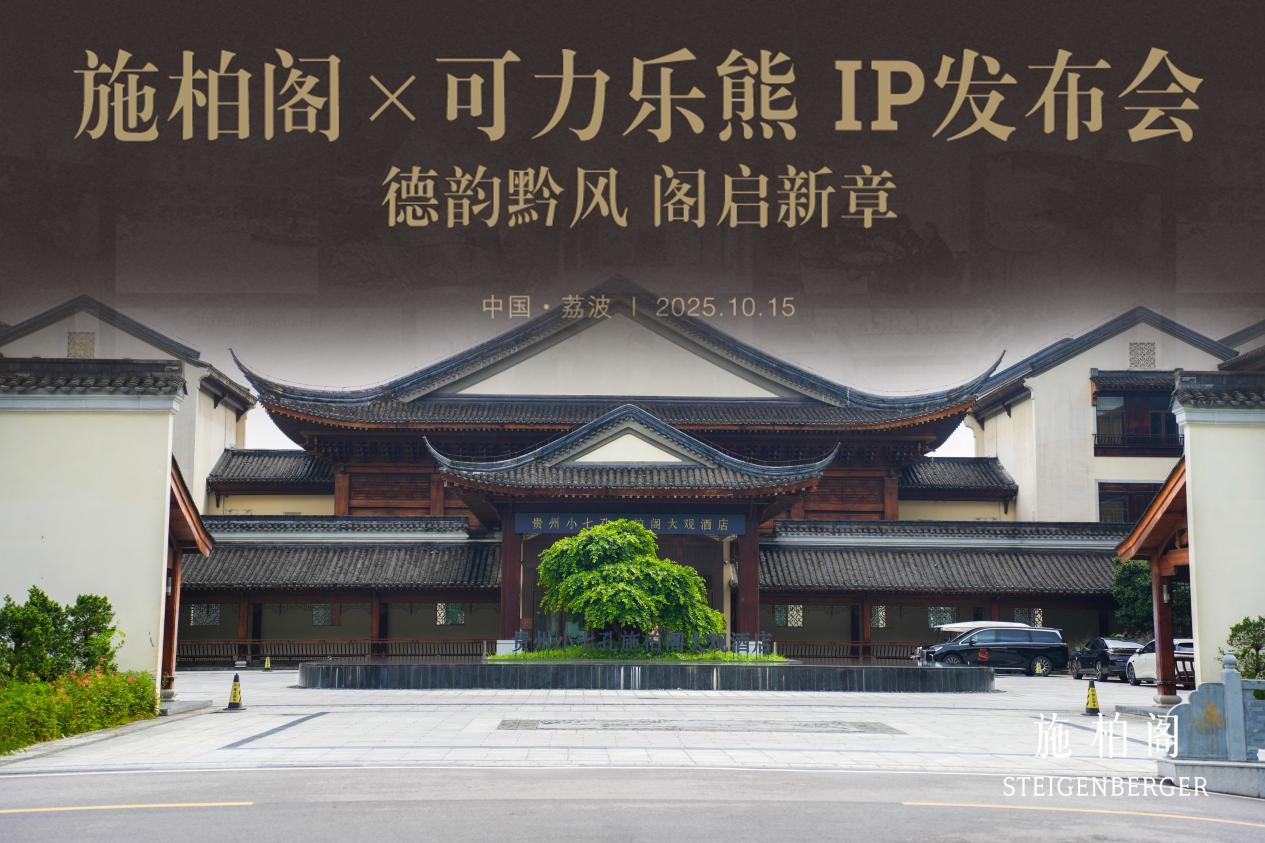
华住旗下高端酒店品牌施柏阁携手可力乐熊,开启全球艺术之旅
Xin Lang Cai Jing· 2025-11-04 05:34
Core Viewpoint - The launch of the new brand image partner, the "Kelele Bear," by the high-end hotel brand Shijia Ge under Huazhu Group, marks a significant step in connecting emotionally and artistically with Chinese consumers, leveraging nearly a century of German heritage [2][12]. Group 1: Brand Identity and Cultural Significance - The Kelele Bear is designed as an artistic bear figure that embodies deep German cultural roots while presenting a warm and soft exterior, challenging the stereotype of German rigidity [4]. - The bear symbolizes strength and friendliness, particularly in Berlin, where it is seen as a city emblem, thus enhancing the brand's cultural relevance [4]. Group 2: Collaboration with Artists - International young artist Ye Zile was invited to co-create the Kelele Bear, known for his works that blend pop colors with healing aesthetics, showcasing broad international influence [5]. - The design process took nearly two years, resulting in a unique visual expression that abstractly represents the flow of energy through time and space [8]. Group 3: Long-term Vision and IP Integration - A groundbreaking 40-year cooperation agreement was established between Shijia Ge and Ye Zile, highlighting the brand's long-term vision in cultural development [8]. - The Kelele Bear will be integrated into the guest experience across all Shijia Ge hotels, featuring installations, themed rooms, customized meals, and merchandise, creating an immersive IP experience [10]. Group 4: Art Installations and Exhibitions - The first silver mirror sculpture of the Kelele Bear was unveiled at the Guizhou Xiaoqikong Shijia Ge Hotel, with plans for global guests to encounter this artistic installation [11]. - The "Kelele Bear World Tour" interactive exhibition commenced in Chengdu, showcasing the brand's nearly century-long journey from Germany to China, emphasizing the connection to Chengdu as the "Panda Capital" [12][15].