
JP MORGAN CHASE(JPM)

Search documents
X @CoinMarketCap
CoinMarketCap· 2025-12-19 10:34
LATEST: ⚡ JPMorgan analysts are disputing the idea that stablecoins will become a multitrillion-dollar market in the near future, instead predicting they will reach just $500 billion to $600 billion by 2028. https://t.co/vTS0M1eIyb ...

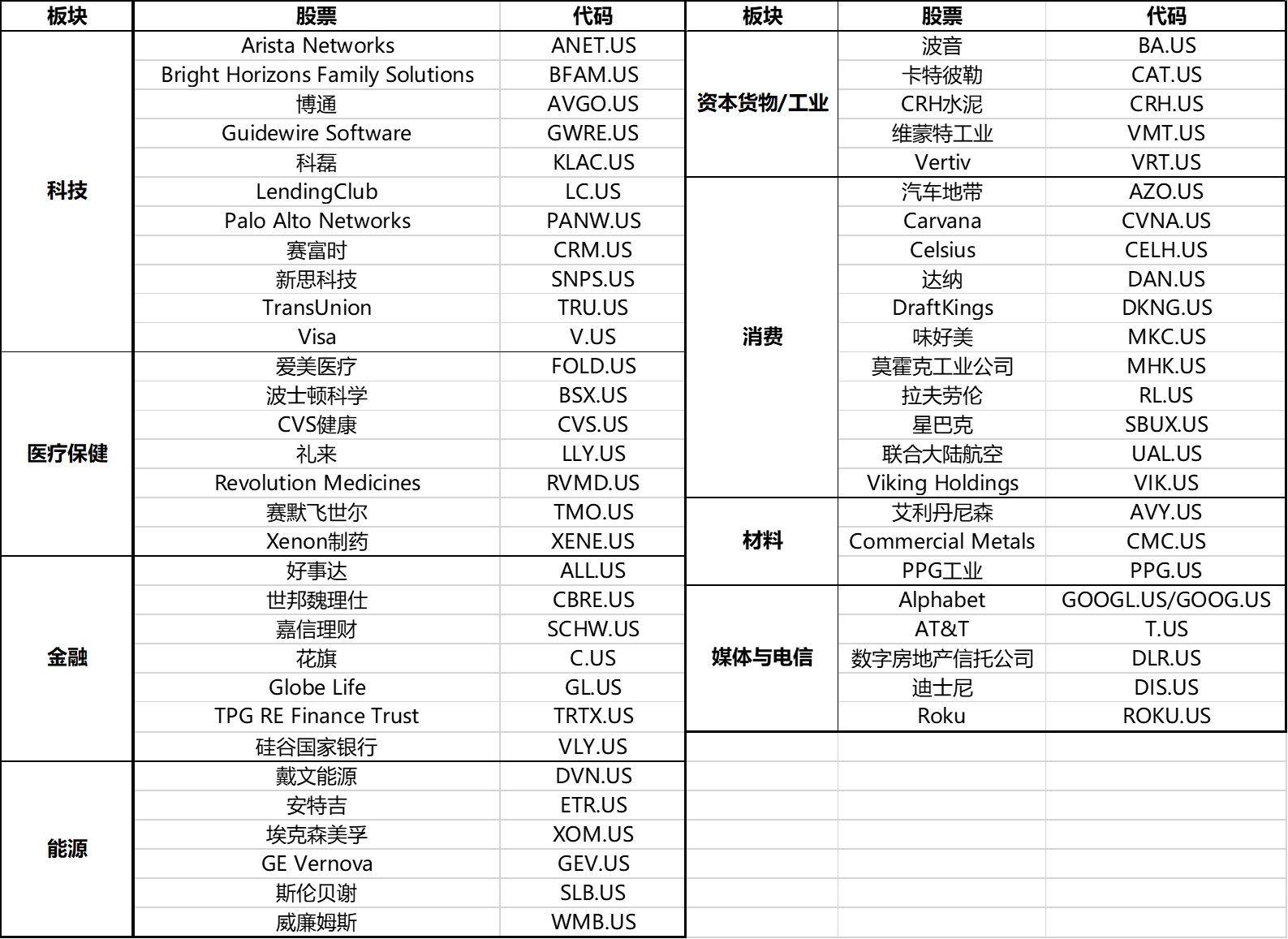
小摩2026年美股“作战图”:“选择性”牛市到来 板块轮动将惠及高质量增长及低波动性股票
智通财经网· 2025-12-19 09:23
Core Insights - Morgan Stanley's report emphasizes the opportunities and risks faced by various sectors in a K-shaped economy driven by AI, highlighting a constructive but selective investor sentiment [1][3] Group 1: Investment Themes - Key investment themes for 2026 include long-term growth driven by AI and data center expansion, infrastructure development, and a shift towards high-quality growth and operational resilience [1][4] - Companies with strong pricing power, long-term growth drivers, robust balance sheets, and those benefiting from transformative trends like data center expansion and infrastructure investment are recommended [1][4] Group 2: Sector Recommendations - Selected stocks for 2026 include Arista Networks, Broadcom, Guidewire Software, and Palo Alto Networks among others across various sectors [2] - The report anticipates that the U.S. will remain a global growth engine, fueled by a resilient economy and an AI-driven supercycle leading to record capital expenditures and rapid earnings expansion [2][6] Group 3: Economic Outlook - The K-shaped economy is creating distinct winners and losers, with market sentiment indicators likely to remain volatile [3][4] - Despite concerns over AI bubbles and valuation, current high multiples are seen as justified by expected above-trend earnings growth and capital expenditure [4][5] Group 4: Earnings Projections - Morgan Stanley projects S&P 500 earnings growth of 13%-15% over the next two years, with an expected EPS of $315 in 2026 [5][10] - The anticipated capital expenditure cycle may extend beyond AI, with significant investments expected to address infrastructure and computing power imbalances [7][10] Group 5: Market Dynamics - The concentration of high-quality growth stocks is at a historical peak, with AI narratives mitigating concerns over macroeconomic weakness [8] - The U.S. business cycle is slowing but not indicating an end to the expansion, with various factors expected to support economic activity in the near term [9] Group 6: Policy Environment - A dynamic policy environment is expected to drive differentiation among stock themes, with ongoing U.S.-China competition and support for AI and electrification benefiting strategic resources [11] - Regulatory easing is anticipated to gain momentum, particularly in finance and energy sectors, which could foster growth and reduce deficits [11]

安期货晨会纪要-20251219




Xin Yong An Guo Ji Zheng Quan· 2025-12-19 04:01
Core Insights - US core inflation unexpectedly eased to a four-year low, raising questions among economists about the reliability of the data due to a prior government shutdown [8][14] - ByteDance has signed an agreement to establish a joint venture in the US with majority ownership by American investors [8][14] Market Performance - The A-share market opened lower but closed higher, with the Shanghai Composite Index up 0.16% at 3876.37 points, while the Shenzhen Component fell 1.29% and the ChiNext Index dropped 2.17% [1] - The Hong Kong market also saw fluctuations, with the Hang Seng Index closing up 0.12% at 25498.13 points, while the Hang Seng Tech Index fell 0.73% [1][5] Economic Indicators - The US core Consumer Price Index (CPI) rose by 2.6% year-on-year in November, while the overall CPI increased by 2.7% [14] - The report indicated that core CPI only increased by 0.2% over the last two months, with declines in hotel, leisure, and clothing prices limiting the overall increase [14] Corporate Developments - TikTok announced the establishment of a joint venture with US investors, which will operate independently and manage US data protection and algorithm security [8][14] - China has reportedly ordered 7 million tons of US soybeans, achieving over half of the procurement target set during the Trump administration [8][14]
突发!2.4万亿资金突然“消失”!黑天鹅来袭?
天天基金网· 2025-12-19 01:06
Core Viewpoint - The article discusses the ongoing liquidity tightening in the global financial system, highlighting Morgan Stanley's significant cash withdrawal from the Federal Reserve to invest in U.S. government bonds as a strategy to lock in yields before potential interest rate cuts [2][3]. Group 1: Morgan Stanley's Actions - Since 2023, Morgan Stanley has withdrawn nearly $350 billion from its Federal Reserve account, primarily investing in U.S. government bonds to protect against profit erosion from potential interest rate cuts [3]. - Morgan Stanley's deposits at the Federal Reserve have decreased from $409 billion at the end of 2023 to approximately $63 billion by the third quarter of 2024, while its holdings of U.S. Treasury bonds have increased from $231 billion to $450 billion [3][5]. - The bank's actions reflect a preparation for the end of a profitable period, where it previously earned interest on cash held at the Federal Reserve while paying minimal interest to depositors [3][4]. Group 2: Shadow Banking System Risks - The shadow banking system, valued at $63 trillion, is becoming a potential source of instability in global financial markets, particularly in a high-interest rate environment [6]. - Private credit markets, currently around $1.8 trillion, pose another risk, as a significant portion of these funds is committed to illiquid long-term assets, which could lead to liquidity gaps under pressure [6]. - Recent trends in the credit market, including rising yields and falling prices for high-yield bonds, indicate investor concerns regarding non-traditional financing models and high-leverage capital structures [7]. Group 3: Federal Reserve's Response - The Federal Reserve has initiated a Reserve Management Purchase (RMP) program, purchasing $40 billion in short-term government bonds monthly to provide additional liquidity to the market [7]. - Historical patterns show that liquidity stress in the shadow banking sector often precedes broader financial market pressures, as seen during the 2008 financial crisis and the 2020 pandemic [7].

大摩2.4万亿转投美债引流动性担忧
Sou Hu Cai Jing· 2025-12-19 00:59
Group 1 - The core viewpoint of the article highlights that JPMorgan is reallocating $350 billion (over 2.4 trillion RMB) from its Federal Reserve account to U.S. Treasury bonds to lock in yields before potential interest rate cuts [1] - The article notes that the recent liquidity tightening in the financial system is showing signs of strengthening, despite the Federal Reserve's indication of quantitative easing (QE) [1] - The shadow banking system, valued at $63 trillion, is identified as a potential source of instability in the global financial market, with the private credit market, currently around $1.8 trillion, also seen as a risk factor [1] Group 2 - Analysts suggest that JPMorgan's large-scale operation could significantly impact the liquidity of the entire financial system [1]
突发!2.4万亿资金突然“消失”!黑天鹅来袭?
Zheng Quan Shi Bao Wang· 2025-12-19 00:37
Group 1 - The core viewpoint of the articles highlights the ongoing liquidity tightening in the global financial system, with JPMorgan Chase transferring $350 billion from its Federal Reserve account to U.S. Treasury bonds to lock in yields before potential interest rate cuts [1][2][3] - JPMorgan has significantly reduced its deposits at the Federal Reserve from $409 billion at the end of 2022 to $63 billion by the third quarter of 2023, while increasing its U.S. Treasury holdings from $231 billion to $450 billion during the same period [2][3] - The actions of JPMorgan are seen as a preparation for a potential end to a profitable period, as the bank aims to secure higher yields amidst a declining interest rate environment [2][3] Group 2 - The shadow banking system, valued at $63 trillion, is emerging as a potential source of instability in global financial markets, particularly in a high-interest rate environment [4][5] - The private credit market, currently around $1.8 trillion, poses risks due to liquidity mismatches and a concentration of funds in less liquid assets, which could lead to liquidity gaps during market stress [4][5] - Recent trends in the credit market indicate rising concerns, with high-yield bonds experiencing price declines and increasing yields, signaling a reassessment of non-traditional financing models and high-leverage capital structures [5]
突发!联合出兵,“美军发动致命打击”!特朗普:夺回石油权益
Xin Lang Cai Jing· 2025-12-18 23:37
Group 1: U.S. Military Actions and International Relations - U.S. President Trump threatened to reclaim oil rights from Venezuela, claiming they were illegally taken from American companies [14][15] - The U.S. military conducted a strike on a vessel identified as a terrorist organization in the Eastern Pacific, resulting in four deaths [16] - The U.S. and Ecuador are collaborating on a short-term operation to enhance Ecuador's capabilities against drug trafficking [18] Group 2: Economic Indicators and Federal Reserve Policy - The U.S. Consumer Price Index (CPI) for November rose by 2.7% year-on-year, lower than market expectations, indicating a cooling inflation trend [19] - The likelihood of the Federal Reserve lowering interest rates in January increased from 26.6% to 28.8%, with traders anticipating a reduction of 62 basis points [19] Group 3: Lithium Market Dynamics - JPMorgan raised its target price for lithium carbonate to $18,000 per ton, significantly above the current spot price of approximately $13,500 per ton [19] - The report highlights that while global lithium supply is increasing, it is not keeping pace with explosive demand growth [20] - Lithium carbonate futures prices have risen over 44% since October, indicating strong market activity [20] Group 4: Supply and Demand Factors in Lithium Market - The resumption of production at the Jiangxiawo lithium mine and the launch of the Jiangxi Qiangyu new materials project have raised concerns about supply growth [20] - The weekly inventory reduction of lithium carbonate has slowed, with a decrease of 1,044 tons reported, impacting market demand expectations [21] - Analysts express uncertainty regarding the lithium carbonate market, noting potential shifts in supply-demand dynamics and the impact of seasonal demand fluctuations [22][23]

突发!2.4万亿资金,突然“消失”!黑天鹅来袭?
券商中国· 2025-12-18 23:29
Core Viewpoint - The article discusses the ongoing liquidity tightening in the global financial system, highlighting the actions of JPMorgan Chase in reallocating significant reserves to U.S. government bonds in anticipation of interest rate cuts by the Federal Reserve [1][2]. Group 1: JPMorgan Chase's Actions - Since 2023, JPMorgan Chase has withdrawn nearly $350 billion from its Federal Reserve account, primarily investing in U.S. government bonds to secure higher yields before potential interest rate cuts [2][3]. - The bank's deposits at the Federal Reserve have decreased from $409 billion at the end of 2022 to approximately $63 billion by the third quarter of 2023, while its holdings of U.S. Treasury securities have increased from $231 billion to $450 billion during the same period [2][3]. - This significant withdrawal by JPMorgan Chase has offset the total cash withdrawals of over 4,000 other banks from the Federal Reserve, indicating a potential impact on overall financial system liquidity [3]. Group 2: Shadow Banking System Risks - The shadow banking system, valued at $63 trillion, is emerging as a potential source of instability in global financial markets, particularly under high interest rate conditions [4][5]. - Private credit markets, currently around $1.8 trillion, pose another risk, as a significant portion of this capital is committed to long-term or structured assets lacking active secondary markets, which could lead to liquidity gaps under pressure [5]. - Recent trends in the credit market, including rising yields and falling prices for high-yield bonds, reflect investor concerns regarding non-traditional financing models and high-leverage capital structures [5][6]. Group 3: Federal Reserve's Response - The Federal Reserve has initiated a Reserve Management Purchase (RMP) program, purchasing $40 billion in short-term government bonds monthly to provide additional liquidity to the market, indicating a balancing act between inflation control and financial stability [5][6]. - Historical precedents show that liquidity strains in the shadow banking sector often precede broader financial market pressures, as seen during the 2008 financial crisis and the 2020 pandemic [6].

摩根大通(JPM):沃勒暗示降息,强化渐进式宽松路径
Sou Hu Cai Jing· 2025-12-18 22:31
本文由 AI算法生成,仅作参考,不涉投资建议,使用风险自担 【12月18日摩根大通指出美联储降息预期强化】12月18日,摩根大通透露,美联储理事克里斯托弗·沃 勒暗示存在降息空间。他称当前利率比中性水平高出50–100个基点。 此外,沃勒在主席换届前夕强调 美联储独立性,进一步强化了渐进式宽松路径。 ...
X @Wu Blockchain
Wu Blockchain· 2025-12-18 21:29
JPMorgan reiterated in its latest report that it does not expect the stablecoin market to reach a trillion-dollar scale by 2028, projecting a total market capitalization of around $500 billion to $600 billion. The bank said stablecoin growth continues to be driven primarily by crypto trading activity, while the expansion of payment use cases does not necessarily translate into a significant increase in outstanding supply, as higher velocity reduces the amount of stablecoins required. https://t.co/WWbwwZzrdK ...