Kraft Heinz(KHC)

Search documents
巴菲特Q2持仓大换血:神秘仓位揭晓,地产、医疗入局,减持苹果、银行股释放何种信号?
Jin Rong Jie· 2025-08-18 07:33
Group 1 - Berkshire Hathaway's Q2 2025 13F filing reveals significant investment adjustments, indicating a strategic response to the U.S. economic structure and market risks [1] - The previously secretive position of nearly $5 billion is identified as a stake in Nucor (NUE), with 6.61 million shares valued at approximately $857 million, reflecting a bullish outlook on the steel industry due to infrastructure investments and manufacturing recovery [2] - New positions in real estate and healthcare stocks, including UnitedHealth (UNH) and Lennar (LEN), suggest a focus on long-term housing demand and stability in essential sectors [3] Group 2 - Increased holdings in energy and consumer sectors, such as Chevron (CVX) and Pool Corp (POOL), highlight a dual strategy of cash flow stability and consumer demand [4][5] - Core positions in companies like Coca-Cola (KO) and American Express (AXP) remain unchanged, indicating a commitment to brands with strong cash flow [6] - The exit from T-Mobile (TMUS) and reductions in positions in Bank of America (BAC) and Apple (AAPL) signal a cautious approach towards high-valuation sectors amid macroeconomic uncertainties [7] Group 3 - The overall investment strategy reflects a rotation away from financial and tech sectors towards industrial, healthcare, and real estate, emphasizing defensive and cash flow-oriented investments [8] - The focus on industrial stocks like NUE suggests a bet on manufacturing recovery and infrastructure cycles, while healthcare investments enhance defensive positioning [8]


Warren Buffett's Top 10 Berkshire Bets Span Apple, Coca-Cola, Finance And Oil
Benzinga· 2025-08-15 16:39
Core Viewpoint - Berkshire Hathaway, led by Warren Buffett, is currently underperforming the S&P 500, with its year-to-date performance lagging behind major stock market indexes [1][5]. Group 1: Top Holdings and Performance - As of August 15, the top 10 holdings of Berkshire Hathaway include significant investments in Apple, American Express, Bank of America, Coca-Cola, Chevron, Moody's, Occidental Petroleum, Kraft Heinz, Mitsubishi, and Chubb [2][6]. - The year-to-date performance of the top holdings shows that Apple is down 5.3%, while Coca-Cola and Mitsubishi are outperforming the S&P 500 with gains of 12.3% and 22.3%, respectively [5][8]. - Berkshire Hathaway sold 7% of its Apple position and 4% of its Bank of America position in the second quarter, while increasing its stake in Chevron by 3% [3][4]. Group 2: Comparison with Market Indexes - Year-to-date, Berkshire Hathaway Class A shares are up 6.2%, which is lower than the SPDR S&P 500 ETF Trust (+10.1%), Invesco QQQ Trust (+13.2%), and SPDR Dow Jones Industrial Average ETF (+6.0%) [5][7]. - Among the top 10 holdings, only Coca-Cola and Mitsubishi are outperforming the S&P 500, while five of the top 10 are outperforming the Dow Jones Industrial Average [8].



时隔半年,巴菲特再次减持苹果
Hu Xiu· 2025-08-15 00:45
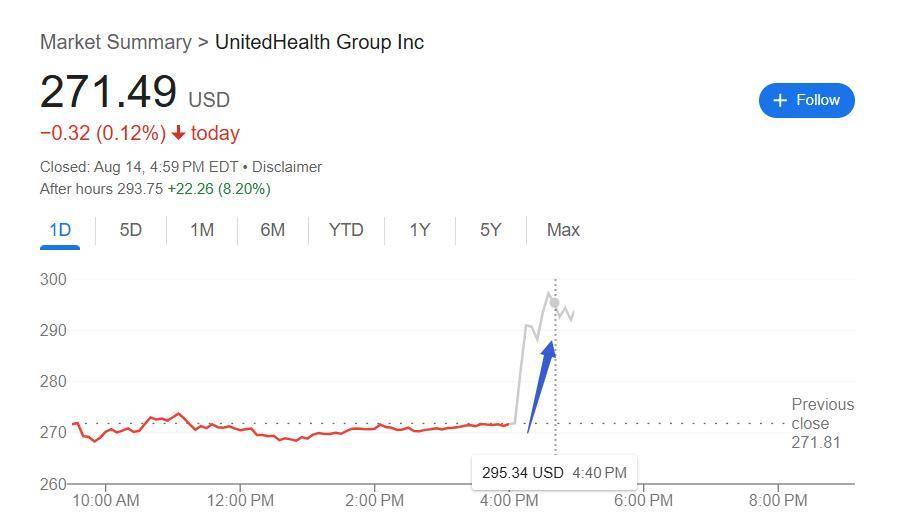
Core Insights - Berkshire Hathaway, led by Warren Buffett, has resumed selling its largest holding, Apple, and has further reduced its stake in Bank of America while making significant investments in UnitedHealth and revealing new positions in Nucor and two real estate stocks [1][8][12]. Investment Actions - In Q2, Berkshire purchased approximately 5.04 million shares of UnitedHealth, with a market value of about $1.57 billion, making it the 18th largest holding [2][15]. - The "mystery" holding Nucor Steel was revealed, with Berkshire acquiring 6.61 million shares valued at over $857 million, ranking as the 25th largest holding [3][5]. - Berkshire also bought around 7.05 million shares of Lennar, valued at approximately $780 million, and over 1.48 million shares of D.R. Horton, valued at about $191 million [6][7]. Reductions in Holdings - Berkshire reduced its Apple holdings by 20 million shares, a decrease of 6.67%, bringing its total to approximately 280 million shares, with a market value reduction of $4.1 billion [8][10]. - The stake in Bank of America was cut by about 26.31 million shares, a 4.71% decrease, with a market value reduction of $1.24 billion [11][12]. - Berkshire completely exited its position in T-Mobile, selling 3.88 million shares [13]. Portfolio Composition - By the end of Q2, Apple's holding represented 22.31% of Berkshire's portfolio, while Bank of America accounted for 11.12% [10][11]. - Chevron was the only stock among the top ten holdings to see an increase, with Berkshire adding 3.45 million shares, although its percentage of the portfolio decreased from 7.69% to 6.79% due to a decline in stock price [19]. Market Reactions - Following the disclosure of Berkshire's investment in UnitedHealth, the stock price surged over 9% in after-hours trading [16].
7 Sturdy Low-Beta Dividends With Yields Up To 8%
Forbes· 2025-08-09 14:25
Core Viewpoint - The article discusses seven low beta stocks with dividend yields up to 8%, which are considered more stable during market downturns, providing a cushion against volatility [2][3]. Group 1: Low-Beta Dividend Stocks - Getty Realty (GTY) offers a 6.6% yield with a 5-year beta of 0.86 and a 1-year beta of 0.12, indicating lower volatility compared to the market. The company has a stable cash-flowing tenant base, primarily from convenience stores and car washes [5][7]. - AES Corp. (AES) has a 5.5% yield and operates with a 1-year beta of 0.88 and a 5-year beta of 0.96. It combines traditional utility services with renewable energy sales, providing growth potential [9][10]. - Northwest Bancshares (NWBI) offers a 6.8% yield with a 5-year beta of 0.69 and a 1-year beta of 0.80. The company has a solid balance sheet but faces challenges in consistent growth despite a recent merger [11][12]. - Conagra Brands (CAG) has a yield of 7.4% but faces significant challenges, including supply chain issues and food inflation, with a 1-year beta of -0.05 and a 5-year beta of 0.08 [17][21]. - Cal-Maine Foods (CALM) boasts an 8.0% yield and has seen a 60% increase year-to-date, with a 1-year beta of 0.67 and a 5-year beta of 0.19. The company has benefited from rising egg prices but faces income variability [23][24]. Group 2: Market Performance and Trends - The article highlights that low beta stocks tend to attract buyers during market downturns, which can help stabilize their share prices [3]. - The performance of low beta stocks like Kraft Heinz (KHC) and General Mills (GIS) has been disappointing, with low betas reflecting counter-market movements rather than stability [14][15]. - The overall trend indicates that while some low beta stocks have maintained dividends, their growth has been limited, and challenges remain in the current market environment [16][22].





Warren Buffett Just Took a Multi-Billion-Dollar Writedown on One of Berkshire Hathaway's Longtime Holdings and Is Now Piling Into a Deep Value Opportunity With a 5% Yield
The Motley Fool· 2025-08-09 09:08
Core Insights - Berkshire Hathaway is preparing to exit its investment in Kraft Heinz while increasing its stake in Sirius XM, indicating a shift in investment strategy [1][10]. Group 1: Kraft Heinz Investment - Berkshire Hathaway's investment in Kraft Heinz has been problematic, marked by high debt and weak growth, leading to a nearly $5 billion writedown in Q2 [2][5][7]. - Berkshire owns 27.5% of Kraft Heinz's outstanding shares and has indicated a potential exit strategy, especially after its representatives left the board [6][9]. - The company is exploring strategic alternatives, including a possible breakup to focus on its faster-growing condiments division [6][9]. Group 2: Sirius XM Investment - Berkshire has recently invested over $100 million in Sirius XM, increasing its total position to $2.6 billion, which represents approximately 37% of outstanding shares [10]. - Despite a 65% decline in Sirius XM's stock over the past five years, the company is implementing strategies to rejuvenate subscriber growth, including exclusive podcast rights and technology updates [11][13]. - Sirius XM aims to grow its subscriber base to 50 million and increase free cash flow to $1.8 billion, with a current dividend yield exceeding 5% [13][14].


玛士撒拉获融资;鲟龙科技拟赴港上市;沃尔玛墨西哥CEO离职
Sou Hu Cai Jing· 2025-08-05 15:20
Investment Dynamics - Marsala Biotechnology has completed a B+ round financing exceeding 100 million yuan, led by Baillie Investment and Baillie Zhigao, with existing shareholders also participating [3] - The funds will be used to enhance R&D and clinical trials, solidifying the company's leading position in the "clinical + consumer" dual scenarios [3] Company Developments - Berkshire Hathaway has reported a $3.8 billion impairment loss on its stake in Kraft Heinz, reducing the book value of its shares to $8.4 billion [5] - Kaluga Queen's parent company is considering an IPO in Hong Kong, with discussions ongoing regarding the scale of the offering [7] - Mr. Ice Cream is hiring for an IPO audit position, indicating potential plans for a Hong Kong IPO [9] - Goldman Sachs is set to acquire Froneri for €15 billion, utilizing a unique "continuation fund model" to manage the investment [13] - Bogner's parent company is selling 60% of its shares to Katjes International, enhancing Bogner's capital base for international expansion [16] - Cargill is selling its animal feed production business in Malaysia for approximately 231 million ringgit as part of a global restructuring [18] - Haoxiangni has launched a new series of craft beers, aiming to diversify its product offerings amid market challenges [20] - Kering and Swire Properties have established a sustainable development partnership to enhance ESG performance in retail [23] Personnel Changes - Walmart announced the immediate resignation of Ignacio Caride, CEO of Walmart Mexico and Central America, appointing Cristian Barrientos as interim CEO [25]




巴菲特谢幕前的答卷:减值与现金策略引深思
Sou Hu Cai Jing· 2025-08-04 11:48
Core Viewpoint - Berkshire Hathaway's Q2 2025 results indicate significant challenges, including a 59.24% year-over-year decline in net profit attributable to shareholders, primarily due to a $3.76 billion impairment loss on its investment in Kraft Heinz and a 73.49% drop in investment income [2][6]. Group 1: Financial Performance - In Q2 2025, Berkshire's net profit attributable to shareholders fell to $12.37 billion, down from the previous year [2]. - The company's sustainable consolidated operating profit was $11.16 billion, a slight decrease of 3.78% year-over-year, indicating overall stability in its core operations [3]. - Investment income for Q2 2025 decreased to $4.97 billion, reflecting a significant decline of 73.49% compared to the previous year [6]. Group 2: Business Segments - The insurance underwriting business reported a post-tax profit of $1.99 billion, down 11.98% year-over-year, influenced by unexpected losses from wildfires in Southern California [3]. - Other segments, including railroads, utilities, manufacturing, services, and retail, showed net profit growth, contributing to the overall stability of Berkshire's consolidated operations [3]. Group 3: Investment Insights - Berkshire recognized a $5 billion pre-tax impairment loss on its investment in Kraft Heinz, reflecting a reassessment of the investment's long-term value [8]. - The investment in Occidental Petroleum also showed a significant unrealized loss, with a fair value of $11.13 billion against a book value of $16.46 billion, indicating a potential future impairment [9]. - Despite a substantial cash reserve increase to $174 billion by the end of June 2025, Berkshire continued to reduce its equity investments, indicating a cautious approach to market conditions [11][13]. Group 4: Market Environment and Strategy - The ongoing macroeconomic and geopolitical uncertainties have impacted Berkshire's energy and consumer goods businesses, leading to a more cautious investment strategy [4][16]. - The management's focus on increasing cash reserves while maintaining a stable operating performance suggests a strategic pivot in response to market volatility [16].
伯克希尔最新季报将卡夫亨氏减值38亿美元,为什么这笔浮盈70多亿美元的投资被巴菲特视为“失败的案例“?
聪明投资者· 2025-08-04 03:34
Core Viewpoint - Berkshire Hathaway, led by Warren Buffett, continues to hold a significant cash position of $344.1 billion and has reported a net sale of $4.5 billion in stocks during the first half of 2025, indicating a cautious investment strategy amidst market volatility [2][3]. Group 1: Financial Performance - Berkshire's operating income decreased by 4% year-on-year, primarily due to a decline in insurance business profits [3]. - The company has not engaged in any stock buybacks despite a more than 10% drop in its stock price from historical highs [3]. - A notable impairment of $3.8 billion was recorded on its investment in Kraft Heinz, reducing its book value to $8.4 billion, reflecting concerns over the intrinsic value of its holdings [3][5]. Group 2: Investment History - In 2013, Berkshire partnered with 3G Capital to privatize Heinz for approximately $23.2 billion, with Berkshire investing $8 billion in preferred shares [8]. - The merger with Kraft Foods in 2015 created Kraft Heinz, making it the fifth-largest food and beverage company globally, with annual revenues of $27 billion [15]. - Post-merger, Berkshire's stake was diluted, but it remained the largest single shareholder with approximately 26.8% of the company [13]. Group 3: Challenges and Reflections - Since 2017, Kraft Heinz has faced stagnation in revenue and profitability, leading to significant impairments, including a $15.4 billion write-down in 2018 [20][21]. - The stock price of Kraft Heinz has declined over 60% since the merger, contrasting sharply with the S&P 500's 200% increase during the same period [25]. - Buffett has acknowledged the overvaluation of Kraft Foods and the negative impact of aggressive cost-cutting strategies on brand vitality [28][29]. Group 4: Financial Analysis - The total investment cost in Heinz and Kraft Heinz is approximately $17.51 billion, with returns from preferred shares and dividends amounting to about $16.38 billion [32][33]. - The current book value of Berkshire's Kraft Heinz shares stands at approximately $8.4 billion, indicating a theoretical profit of around $7.27 billion [34][35]. - If the funds had been invested in the S&P 500 instead, the theoretical returns would exceed $40 billion, highlighting the opportunity cost of the investment [35].
Berkshire takes $3.8 billion Kraft Heinz writedown, profit falls
New York Post· 2025-08-03 19:50
Group 1: Financial Performance - Berkshire Hathaway reported a $3.76 billion writedown on its stake in Kraft Heinz during the second quarter, indicating that the investment has not performed well over the past decade [1][10] - The company experienced a 4% decline in quarterly operating profit, attributed to falling insurance underwriting premiums, leading to a 59% drop in overall net income [1][7] - Second-quarter operating income decreased to $11.16 billion, or approximately $7,760 per Class A share, down from $11.6 billion a year earlier [7] - Net income fell to $12.37 billion from $30.35 billion, while revenue decreased by 1% to $92.52 billion [8] Group 2: Market Outlook and Strategy - Berkshire Hathaway remains cautious about market valuations due to uncertainties surrounding tariffs and broader economic growth [2] - The company has maintained a near-record cash stake of $344.1 billion and has sold more stocks than it has bought for 11 consecutive quarters [4] - Analysts suggest that the lack of new investments and the perception of an overvalued market may hinder Berkshire's performance [5][14] Group 3: Investment and Business Segments - The company’s consumer businesses have faced revenue declines, with Jazwares reporting a 38.5% drop in revenue in the first half of the year [6] - Berkshire's insurance sector saw a 12% quarterly decline in underwriting profit, primarily due to reinsurance businesses [18] - Geico, Berkshire's prominent insurance unit, reported a 2% increase in pre-tax underwriting profit, driven by a 5% rise in premiums [20] Group 4: Leadership Transition - Warren Buffett, who has led Berkshire since 1965, plans to step down at the end of the year, with Vice Chairman Greg Abel set to succeed him [9][13] - Since Buffett's announcement of his departure, Berkshire shares have fallen more than 12%, underperforming the S&P 500 by about 22 percentage points [13][17]

巴菲特“最大失败之一”:账面没了50%!但股神仍是股神,已大赚近60%,发生了什么?
Sou Hu Cai Jing· 2025-08-03 12:51
Core Insights - Warren Buffett's Berkshire Hathaway reported a significant write-down of $3.8 billion on its investment in Kraft Heinz, reducing its book value to $8.4 billion from over $17 billion at the end of 2017, confirming perceptions of investment failure [1][4] - Despite the apparent loss, analysis indicates that Buffett has actually made a profit of nearly 60% on this investment when accounting for dividends received [2][7] Investment Performance - The write-down is attributed to the continuous decline in Kraft Heinz's fair value, with the company's stock price dropping 62% since the merger in 2015, while the S&P 500 has risen by 202% during the same period [4] - Berkshire's total investment in Kraft Heinz reached $9.8 billion, with the current market value of its 27.4% stake at approximately $8.8 billion, plus $6.3 billion in cash dividends received over the years [7][8] Comparison with Other Shareholders - Other shareholders who held Kraft Foods stock since the merger have seen a total return of only 8% over ten years, highlighting Buffett's superior investment terms [8] - If these shareholders had invested in Unilever instead, their capital could have nearly doubled, emphasizing the challenges faced by Kraft Heinz in adapting to consumer trends towards healthier foods [9] Strategic Moves - Berkshire Hathaway has distanced itself from Kraft Heinz, including relinquishing its board seat, which may provide more flexibility for a potential exit from the investment [5][6] - Buffett's ability to secure better terms in investments allows him to mitigate losses, even in what are perceived as significant failures [9]