
LI AUTO(LI)

Search documents
A股三大指数集体低开,这一板块多股高开
Di Yi Cai Jing Zi Xun· 2025-12-15 01:58
Group 1 - The retail sector experienced a significant surge, with Baida Group hitting the daily limit, and other companies like Maoye Commercial, Dongbai Group, and Yonghui Supermarket also seeing notable increases [2] - The A-share market opened lower, with the Shanghai Composite Index down 0.62%, the Shenzhen Component Index down 0.81%, and the ChiNext Index down 1.16% [5][6] - The coal futures contract saw a daily increase of 4.00%, currently priced at 1070.50 CNY per ton [4] Group 2 - The storage chip sector opened lower, with companies like Shannon Chip and Jiangbolong dropping over 8% and 6% respectively [3] - The Hong Kong stock market opened lower, with the Hang Seng Index down 1% and the Hang Seng Tech Index down 1.34%, affected by declines in major companies like JD Health and Baidu [10][11] - The controlled nuclear fusion sector saw multiple stocks open high, with companies like Xue Ren Group and Hualing Cable reaching their daily limit [4]





A股三大指数集体低开,这一板块多股高开
第一财经· 2025-12-15 01:50
Core Viewpoint - The retail sector has shown significant upward movement, with several companies experiencing notable stock price increases, indicating a positive trend in the market [3]. Retail Sector - The retail sector saw a sharp rise, with companies like Baida Group hitting the daily limit, and others such as Maoye Commercial, Dongbai Group, and Yonghui Supermarket also experiencing gains [3]. - The retail index recorded a 1.20% increase, reflecting overall positive sentiment in the sector [4]. Storage Chip Sector - The storage chip sector opened lower, with companies like Shannon Chip and Jiangbolong seeing declines of over 8% and 6% respectively, indicating potential challenges in this segment [5]. Coal and Nuclear Fusion Sectors - The main contract for coking coal surged by 4.00%, reaching 1070.50 CNY per ton, suggesting strong demand or supply constraints in the coal market [6]. - The nuclear fusion sector saw multiple stocks open high, with companies like Snowman Group and Huazhong Cable approaching their daily limits, indicating investor interest and optimism in this emerging technology [6]. Hong Kong Market - The Hong Kong stock market opened lower, with the Hang Seng Index down by 1% and the Hang Seng Tech Index down by 1.34%, reflecting broader market challenges [12]. - Notable declines were observed in major companies such as JD Health and Baidu, which fell by over 5% and 3% respectively, indicating a bearish sentiment in the tech sector [12].


港股汽车板块多股低开,理想汽车跌超2%
Mei Ri Jing Ji Xin Wen· 2025-12-15 01:41
每经AI快讯,12月15日,港股汽车板块多股低开,理想汽车跌超2%,小鹏汽车跌近2%,比亚迪股份、 零跑汽车、蔚来汽车等跟跌。 (文章来源:每日经济新闻) ...

恒指低开1% 恒生科技指数低开1.34%
Zheng Quan Shi Bao Wang· 2025-12-15 01:25
人民财讯12月15日电,恒指低开1%,恒生科技指数低开1.34%。京东健康跌近6%,百度跌超3%,理想 汽车、阿里巴巴跌超2%。 ...



理想通过AI产品经理与数据部门来让智驾模型自我迭代闭环
理想TOP2· 2025-12-14 13:04
本文标题没有任何标题党成分,准确基于理想2025年11月17日发布的 CorrectAD: A Self-Correcting Agentic System to Improve End-to-end Planning in Autonomous Driving 西湖大学的Enhui Ma与理想的Lijun Zhou为共同一作,Enhui Ma的工作完成于理想实习期间。 论文明确指出PM-Agent是在模拟产品经理的角色(simulate the role of product manager), 核心职责不是 简单的看见错误,而是深刻理解为什么错了并提出需要什么数据。 将 DriveSora比作数据部门(similar to the role of Data Department), 职能是根据PM-Agent的需求,基于 DiT架构生成高保真的训练数据 。不是普通的视频生成,DriveSora 解决了传统生成模型胡乱发挥的 问题,实现精准可控。 过去面对长尾问题,内核是基于检索,广义的历史数据库里有这个场景就能解决,没有就无法解决, 处理思路一般是要么自己派车去收集,要么尝试从用户的实车数据去收据,即内核 ...

12月首周国内乘用车销量承压,出海持续加速
SINOLINK SECURITIES· 2025-12-14 12:37
Investment Rating - The report suggests a focus on opportunities arising from the themes of international expansion and smart technology, particularly in the automotive sector [1]. Core Insights - Short-term domestic demand is low, with retail sales of passenger vehicles declining year-on-year. However, exports of passenger vehicles have shown strong growth, indicating that international markets will be a long-term focus for the industry [1][12]. - The smart technology and robotics sectors are accelerating, with significant advancements in intelligent driving and AI integration in vehicles [15][18]. - The report recommends investing in companies like BYD, Geely, and Li Auto for international expansion, and companies like Horizon Robotics and Top Group for smart technology and robotics [1][18]. Summary by Sections Weekly Perspective - Domestic demand is weak, with November retail sales of passenger vehicles down 15.8% year-on-year. The report notes that the expected policy incentives have not yet materialized, contributing to this decline [11]. - Passenger vehicle exports reached 594,000 units in November, a 50% increase year-on-year, indicating a robust international market [12]. Industry Data Tracking - The Shanghai Composite Index decreased by 0.08%, while the automotive index increased by 0.16% this week. Notable stock performances included Superjet Co. (+39.0%) and Huamao Technology (+28.5%) [2][19]. - In November, wholesale passenger vehicle sales were 2.991 million units, a 1.7% increase year-on-year, while new energy vehicle sales were 1.694 million units, up 17.6% [4][34]. Industry Dynamics - The report highlights the rapid development of smart technology in vehicles, with over 60% penetration of L2 and above driving assistance systems in the market. The trend towards AI-driven smart cockpits is also noted [15]. - Robotics technology is advancing, with new products being launched by domestic manufacturers, indicating a shift towards commercialization in this sector [16][18].




十大关键词回顾2025年中国汽车市场
Xin Lang Cai Jing· 2025-12-14 10:06
Core Insights - The Chinese automotive industry is undergoing a structural transformation in 2025, shifting from price competition to technology-driven growth, and from domestic focus to global expansion, marking a new development stage [1] Group 1: Price War Aftermath - The price war in the automotive industry has entered its third year, with profit margins dropping to 4.5% in the first three quarters of 2025, below the 6% average of downstream industrial enterprises [3] - There are signs of easing in the price war, indicating a shift from vicious competition to rational development, as companies recognize that quality, service, and technological innovation are essential for long-term success [3] Group 2: 60-Day Payment Terms - Major automotive companies have adopted a 60-day payment term, reflecting a significant change in the industry ecosystem and addressing long-standing payment issues that strained supply chains [6] - This shift enhances the credit system within the supply chain, allowing suppliers to invest more in innovation and quality improvement, thus fostering a healthier industry environment [6] Group 3: 5-Second Acceleration Standard - A new regulation proposes that new vehicles must achieve a 0-100 km/h acceleration time of no more than 5 seconds, marking a fundamental shift in competitive logic within the automotive industry [9] - This standard encourages companies to focus on safety, user experience, and practical technology rather than extreme performance metrics [9] Group 4: 50% Penetration Rate of New Energy Vehicles - By November 2025, new energy vehicles accounted for 53.6% of domestic passenger car sales, indicating a shift from policy-driven to market-driven growth in the sector [11] - This milestone signifies that new energy vehicles have become mainstream, reshaping the industry landscape and prompting traditional automakers to accelerate their electrification strategies [11] Group 5: Subsidy Phase-Out - The phase-out of subsidies for new energy vehicles is set to begin in 2026, transitioning the industry from reliance on government support to market-driven growth [14] - This change is expected to enhance market competition and compel companies to improve product quality and cost control [14] Group 6: New Normal in Exports - In 2025, China's automotive exports are projected to exceed 6.8 million units, maintaining the top position globally for the third consecutive year, with a significant increase in new energy vehicle exports [16] - The export model is evolving from product trade to a more integrated approach involving industry chain and technology exports [16] Group 7: Smart Driving Popularization - 2025 marks the year of smart driving technology's widespread adoption, with significant advancements in urban navigation assistance systems [19] - Regulatory measures are being implemented to ensure safety and compliance, balancing innovation with social responsibility [19] Group 8: Joint Venture Counterattack - Traditional joint venture brands are launching a "localization 2.0" strategy to regain market share in the new energy era, focusing on deep localization and embracing electrification [21] - This strategy enhances competition and provides consumers with more quality choices while integrating the supply chain into the local ecosystem [21] Group 9: Battery Safety Concerns - Battery safety issues have escalated to a regulatory priority, with new standards mandating thermal monitoring and warning systems for battery packs [24] - These regulations aim to enhance safety and accountability in the industry, pushing companies to prioritize safety investments [24] Group 10: Retreat of Hidden Door Handles - The decline of hidden door handles reflects a broader industry reconsideration of "over-design" in automotive engineering, emphasizing safety and practicality over aesthetics [27] - New regulations require mechanical release functions for door handles, signaling a shift towards user-centric design principles [27]




理想汽车段吉超:造车这件事,可以借鉴零售业的胖东来模式
Jing Ji Guan Cha Bao· 2025-12-14 09:39
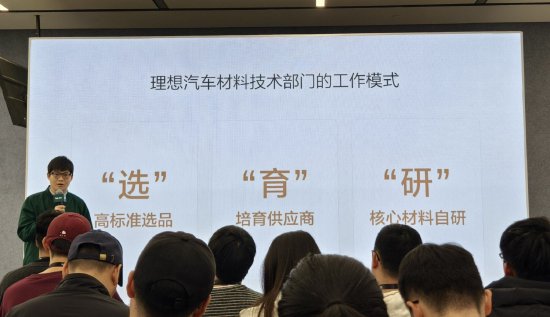
Group 1 - The core idea of the article is that Li Auto is adopting a retail-inspired model, similar to the "Fat Donglai" approach, to enhance material quality in automotive manufacturing through a strategy of selection, cultivation, and research [2] - Li Auto faces challenges in a highly competitive electric vehicle market, having launched the Li i8 and i6 models in the second half of the year [2] - The company aims to differentiate its electric vehicles by focusing on health aspects, particularly in the materials used for luxury leather seats, partnering with LWG-certified suppliers to ensure quality [2] Group 2 - Li Auto's collaboration with suppliers extends to joint research and development, exemplified by a partnership with Novelis to create the LeS6 Ultra aluminum product, which boasts three times the yield strength of traditional aluminum alloys [3] - The LeS6 Ultra product has been implemented in the Li i6, showing a 30% reduction in deformation compared to mainstream high-strength aluminum under equivalent impact conditions [3] - Li Auto has developed its own stainless steel fuel tank material, UFHS-X, which has a 100% increase in yield strength compared to traditional 304L stainless steel and a 52% improvement in puncture resistance [4][5] Group 3 - The company is recognized for having the most extensive range of self-developed materials in the industry, including capabilities in steel, aluminum, magnesium, engineering plastics, elastomers, and composite materials [5]
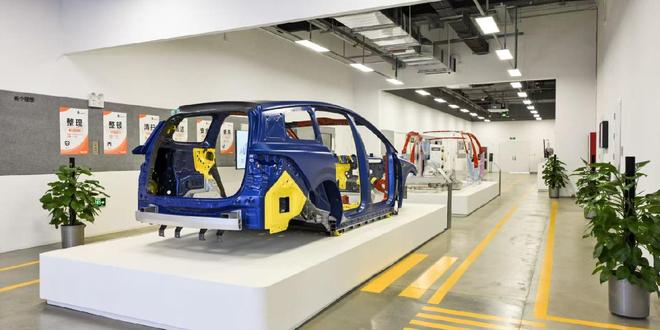
理想汽车公布材料研发成果:从选育到自研,投入超1000万研发超高强不锈钢油箱材料
Xin Lang Cai Jing· 2025-12-14 07:20
Core Insights - The core message of the article highlights Li Auto's advancements in material research, showcasing its position as the leading company in self-developed materials within the automotive industry, with capabilities across a full spectrum of materials including steel, aluminum alloys, magnesium alloys, engineering plastics, elastomers, and composite materials [1][6]. Group 1: Material Development Achievements - Li Auto has the most extensive range of self-developed materials in the industry and is the only company in China with comprehensive self-research capabilities across various material categories [1][6]. - The company showcased dozens of materials at its recent Material Technology Day, including industry-first products such as ultra-high-strength aluminum plates and low-formaldehyde PU surfaces [1][6]. Group 2: Material Selection Methodology - Li Auto employs a "select, cultivate, and research" methodology for material development, ensuring high standards in material selection based on user safety and environmental considerations [3][8]. - The company collaborates with certified suppliers, such as those recognized by the LWG, to ensure the materials meet stringent safety and environmental standards [3][8]. Group 3: Collaborative Development - When existing market solutions do not meet performance targets, Li Auto collaborates with suppliers to develop new materials, exemplified by the creation of the LeS6 Ultra aluminum alloy, which has three times the yield strength of traditional aluminum alloys [4][9]. - Li Auto took on 70% of the cost increase associated with developing the LeS6 Ultra, which is now in mass production in the Li Auto i6 [4][9]. Group 4: Independent Research and Development - In cases where suitable materials are unavailable, Li Auto initiates independent research, as demonstrated by the development of a high-pressure fuel tank made from ultra-high-strength stainless steel, which underwent extensive testing over nearly four years [5][10]. - The new UFHS-X stainless steel material developed by Li Auto has a yield strength 100% higher than traditional 304L stainless steel and a 52% improvement in puncture resistance, although its development cost exceeded 10 million, six times higher than conventional materials [5][10].
理想下一步的重点:从数据闭环到训练闭环
自动驾驶之心· 2025-12-14 02:03
Core Insights - The article discusses the evolution of autonomous driving technology, highlighting the transition from data closed-loop systems to training closed-loop systems, marking a new phase in autonomous driving development [18][21]. Group 1: Development of Autonomous Driving Technology - The development trajectory of Li Auto's intelligent driving has evolved from rule-based systems to AI-driven E2E+VLM dual systems and VLA, with a focus on navigation as a key module [6]. - Li Auto has accumulated 1.5 billion kilometers of driving data, utilizing over 200 triggers to produce 15-45 second clip data [11]. - The end-to-end mass production version MPI has increased to over 220, representing a 19-fold increase compared to the version from July 2024 [13]. Group 2: Data Closed-Loop and Its Limitations - The data closed-loop process includes shadow mode validation, data mining in the cloud, automatic labeling of effective samples, and model training, with data return achievable in one minute [9][10]. - Despite the effectiveness of the data closed-loop, it cannot address all issues, particularly long-tail scenarios such as traffic control and sudden lane changes [16]. Group 3: Transition to Training Closed-Loop - The core of the L4 training loop involves VLA, reinforcement learning (RL), and world models (WM), optimizing trajectories through diffusion and reinforcement learning [23]. - Key technologies for closed-loop autonomous driving training include regional simulation, synthetic data, and reinforcement learning [24]. Group 4: Advances in Reconstruction and Generation - Li Auto has made significant advancements in reconstruction and generation, with multiple top conference papers published in the past two years [28][34]. - The company has developed a feedforward 3D generation system that eliminates the need for point cloud initialization, directly producing results from visual inputs [29]. Group 5: Challenges and System Capabilities - The interactive agent is identified as a key challenge in the training closed-loop [40]. - System capabilities are enhanced by the world model providing simulation environments, diverse scene construction, and accurate feedback from reward models [41].
