
L'Oreal(LRLCY)

Search documents
Has Carriage Services (CSV) Outpaced Other Consumer Staples Stocks This Year?
ZACKS· 2025-08-13 14:41
Group 1 - Carriage Services (CSV) is currently outperforming its peers in the Consumer Staples sector with a year-to-date return of approximately 21.2%, compared to the sector average of 5.1% [4] - The Zacks Rank for Carriage Services is 2 (Buy), indicating a positive earnings outlook and strong analyst sentiment, with a 3.3% increase in the full-year earnings estimate over the past quarter [3][4] - Carriage Services is part of the Funeral Services industry, which ranks 36 in the Zacks Industry Rank, and has performed better than the industry average return of about 1% this year [6] Group 2 - Another strong performer in the Consumer Staples sector is L'Oreal SA (LRLCY), which has returned 26% year-to-date and also holds a Zacks Rank of 2 (Buy) [5] - The Consumer Products - Staples industry, which includes L'Oreal SA, is ranked 189 and has seen a decline of -3.7% since the beginning of the year [6] - Investors should monitor both Carriage Services and L'Oreal SA for potential continued strong performance in the Consumer Staples sector [7]



欧莱雅韩国任命Rodrigo Pizarro为新任CEO
Bei Jing Shang Bao· 2025-08-07 11:38
北京商报讯(记者 张君花)8月7日,北京商报记者获悉,欧莱雅韩国公司宣布任命Rodrigo Pizarro为新 任首席执行官(CEO),该任命立即生效。欧莱雅韩国对外表示,Pizarro是一位在欧莱雅集团拥有30余 年全球从业经验的资深高管,曾主导过多个数据驱动项目。此次上任后,他计划通过战略化、以人为本 的管理方式,结合数字创新,带领欧莱雅韩国迈入新的增长阶段。 ...
一个包装瓶,如何让欧莱雅和LVMH成“盟友”?
Xin Lang Cai Jing· 2025-08-04 06:23
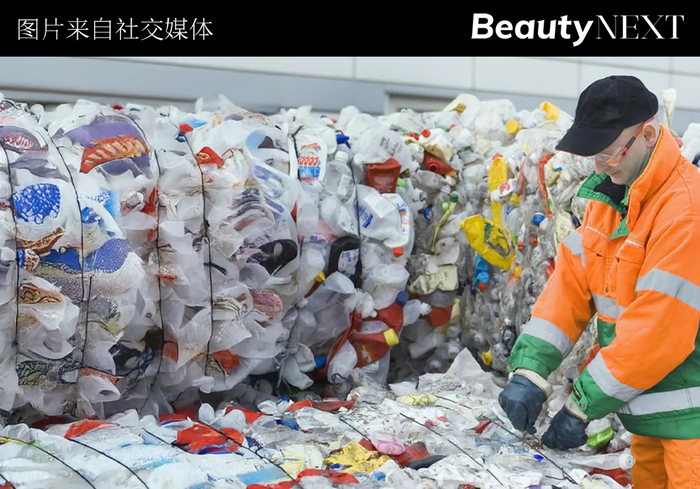
Core Insights - The beauty industry is undergoing a transformation where packaging, traditionally seen as disposable, is being redefined as a durable good within a circular economy framework [1][2][5] - France is leading the way with a pilot project involving six perfume brands aimed at reusing bottles, marking a significant shift towards sustainability in high-end beauty [2][5] - The French law on waste reduction and circular economy mandates increasing reuse rates, pushing the beauty industry to rethink its operational models [2][24] Group 1: Industry Initiatives - Six major brands have formed alliances to promote sustainability, including the establishment of organizations like TRASCE and The Value of Beauty Alliance [2][5] - The "La Boucle Beauté" project, involving brands like Lancôme and Chanel, aims to test a large-scale perfume bottle reuse system [5][8] - The initiative includes a logistics system for collecting and cleaning used bottles, utilizing innovative CO2 cleaning technology to minimize environmental impact [8][12] Group 2: Regulatory Environment - The French "Anti-Waste and Circular Economy Law" (AGEC) sets specific reuse targets for packaging, requiring 7% reuse by the end of 2025 and 10% by 2027 [2][24] - The law includes over a hundred obligations and prohibitions aimed at eliminating single-use plastics by 2040, with phased targets for reduction, reuse, and recycling [24][26] Group 3: Challenges and Opportunities - The beauty industry generates millions of tons of packaging waste annually, with 95% of containers discarded after a single use, highlighting the need for a shift towards reuse [11][12] - The transition from recycling to reuse presents challenges in product design, cleaning standards, and logistics, requiring a collaborative ecosystem [12][14] - In China, the lack of mandatory policies and infrastructure for reuse presents a significant barrier, with current practices largely focused on recycling rather than establishing a verified reuse system [26][30] Group 4: Consumer Perception - Consumer acceptance of reused products is a critical barrier, as perceptions of hygiene and value affect willingness to participate in reuse programs [32][33] - Education and trust-building measures are essential to shift consumer mindsets towards embracing reused beauty products [32][33]

明星代言井喷,美妆集体患上焦虑症?
Xin Lang Cai Jing· 2025-08-04 06:13
Core Insights - The beauty industry is experiencing an unprecedented surge in celebrity endorsements, with over a hundred announcements in the first half of 2025, indicating a shift towards a "short and quick" marketing strategy [1][4][34] - The reliance on celebrity endorsements has intensified, with brands struggling to define their identity while depending heavily on star power for sales [1][34] Group 1: Trends in Celebrity Endorsements - The endorsement landscape has become fragmented, with brands seeking to reach broader audiences by employing multiple types of endorsements such as "ambassadors" and "friends" [3][4] - A significant portion of endorsements (approximately 21%) are categorized as "ambassadors" and "friends," while 24% belong to niche endorsements [4] - The trend of celebrities endorsing multiple brands has become common, leading to frequent "overlap" where one celebrity represents various products across different categories [18][28] Group 2: Impact of Endorsements on Product Launches - Nearly 90% of celebrity endorsements are closely tied to new product launches, serving as a key promotional strategy for brands [15][34] - The beauty industry is witnessing a rise in endorsements for niche categories like fragrances, with brands like Jo Malone and Mugler actively engaging younger celebrities to enhance their market presence [22][28] Group 3: Market Dynamics and Brand Strategies - The beauty sector is under pressure to deliver quick results, leading to a focus on celebrity endorsements as a rapid solution for driving sales and traffic [35][37] - The internal pressure for performance metrics has resulted in brands increasingly relying on celebrity endorsements as a primary strategy for achieving sales targets [37][38] - The current market environment has made it more cost-effective for brands to secure endorsements in the first half of the year, as prices for celebrities have decreased due to oversupply and market fluctuations [43][44] Group 4: Evolution of Endorsement Strategies - The nature of endorsements has shifted from long-term brand-building partnerships to short-term sales-driven campaigns, with contracts often lasting only 3-6 months [47][50] - Brands are now prioritizing celebrities based on their ability to drive sales rather than their alignment with brand values, marking a significant change in endorsement criteria [47][50] - The rise of athlete endorsements is notable, as brands seek to leverage the authenticity and positive image associated with sports figures [28][31] Group 5: Future Directions for Brands - To build lasting consumer relationships, brands must move beyond reliance on celebrity endorsements and focus on creating emotional connections and community engagement [58][61] - Strategies such as IP collaborations, content production, and enhanced customer relationship management are essential for fostering long-term brand loyalty [58][59] - The shift from a "celebrity-centric" approach to a "community-centric" model may provide a more sustainable path for brands to connect with consumers [61]


爱马仕、普拉达业绩增长不佳;加拿大鹅喜获高增长
2 1 Shi Ji Jing Ji Bao Dao· 2025-08-04 01:29
Group 1: Financial Performance - Hermès reported a 9% sales growth in Q2, reaching €3.9 billion, with all regions showing growth [15] - Adidas achieved a 7.3% increase in net sales to €12.1 billion, with a significant 70% rise in operating profit to €1.2 billion [2] - Prada's net revenue for H1 reached €2.74 billion, reflecting a 9.1% growth at constant exchange rates [3] - Canada Goose experienced a robust start to the fiscal year with a 22.4% increase in global revenue to CAD 107.8 million [10] - L'Oréal's sales for H1 were €22.47 billion, with a 1.6% growth, and an operating profit margin of 21.1% [9] - SMCP reported a 2.7% increase in sales to €601.1 million, with growth in all regions except Asia [11] Group 2: Management Changes - Kering appointed Luca de Meo as CEO, offering a €20 million signing bonus, which positively impacted the stock price [4] - PUMA appointed Andreas Hubert as COO, aiming to streamline operations by integrating various functions [8] - Arena announced Mark Pinger as the new Chief Brand Officer, effective October 1, 2025 [8] - Jil Sander's CEO Serge Brunschwig resigned after six months in the position [14] Group 3: Brand and Market Insights - The performance of Prada's main brand declined by 1.9%, while Miu Miu surged by 49.2%, indicating a divergence in brand performance [3] - Hermès' leather goods sales grew by 14.8%, while the watch segment faced challenges with a 5.5% decline [15][16] - L'Oréal's digital transformation efforts are beginning to show results, with a growth acceleration from Q1 to Q2 [9] - The luxury market is showing resilience, with brands like Canada Goose capitalizing on strong demand [10]




化妆品医美行业周报:淡季国货抖音持续高增,国际美妆25Q2反攻-20250803
Shenwan Hongyuan Securities· 2025-08-03 12:41
Investment Rating - The report suggests a positive outlook for domestic brands and a recovery for international beauty brands in the Chinese market, indicating potential investment opportunities in the cosmetics and medical beauty sectors [2][3]. Core Insights - The cosmetics and medical beauty sector underperformed the market, with the Shenwan Beauty Care Index declining by 3.3% from July 25 to August 1, 2025, while the Shenwan Cosmetics Index fell by 2.6% [3][4]. - Domestic brands showed strong growth during the off-season, with notable increases such as Han Shu up 58%, Proya up 23%, Marubi up 72%, and Kefu Mei up 28%, indicating resilience in the market [7][17]. - International beauty brands, represented by L'Oréal, are recovering in the Chinese market, with a 3% growth in Q2 2025, supported by promotional events like the 618 shopping festival [7][24]. - The report highlights the success of Lin Qingxuan, a high-end domestic skincare brand, which saw revenue grow from 690 million yuan in 2022 to 1.21 billion yuan in 2024, showcasing the potential of domestic brands [13][14]. Summary by Sections Industry Performance - The beauty and medical aesthetics sector has shown weaker performance compared to the overall market, with specific indices declining [3][4]. - The report notes that the cosmetics market is transitioning from quantity to quality, with a significant increase in e-commerce sales, which accounted for 47% of cosmetics sales in 2024, up from 22% in 2016 [9][30]. Key Company Highlights - L'Oréal's sales in China for H1 2025 reached approximately 186.19 billion yuan, with a 3% year-on-year increase, indicating a recovery in the Chinese market [24]. - Procter & Gamble reported a record net sales of approximately 604.95 billion yuan for the 2025 fiscal year, with the beauty segment achieving a net sales of approximately 107.66 billion yuan, reflecting a 2% growth [25]. - Lin Qingxuan's product matrix includes 188 SKUs, with a focus on high-quality natural ingredients, and it has established a strong supply chain and distribution network [14][16]. Market Trends - The report emphasizes the growing market for high-end skincare products, with the market size expected to increase from 749 billion yuan in 2019 to 1,144 billion yuan by 2024, indicating a compound annual growth rate (CAGR) of 13.8% [14][15]. - The domestic brands are gaining market share, with the top ten brands in the skincare market now evenly split between domestic and international brands, reflecting a shift in consumer preferences [30][31].


国泰海通:国际美护品牌二季度增速回暖 中国区市场全面增长
智通财经网· 2025-08-03 05:59
Group 1: Market Overview - Recent financial reports from international beauty leaders like L'Oréal and Procter & Gamble indicate a sequential improvement in growth rates for overseas brands in the Chinese market, particularly in functional skincare and medical aesthetics [1] - The beauty sector is experiencing significant changes, with a notable rise in domestic brands, highlighting a clear growth trend and increasing brand differentiation [1] Group 2: L'Oréal Performance - L'Oréal reported a sales figure of €22.47 billion for 1H25, reflecting a year-on-year growth of 3.0%, with Q1 and Q2 growth rates of 2.6% and 3.7% respectively [2] - The net profit for L'Oréal reached €3.783 billion, showing a 1.0% year-on-year increase [2] - The professional hair division led growth with a 6.5% increase, while mass skincare, premium cosmetics, and skin science segments grew by 2.8%, 2.0%, and 3.1% respectively [2] - The Chinese market showed a 3% year-on-year growth in Q2, with skin science and professional hair products performing particularly well [2] Group 3: Procter & Gamble Performance - Procter & Gamble's Q2 sales amounted to $20.889 billion, a 2% year-on-year increase, with net profit rising by 15% to $3.626 billion [3] - The beauty segment saw a slight increase of 0.2% year-on-year, while net profit in this division grew by 4% [3] - The skincare business in China continued to grow, although this was offset by a decline in North America, resulting in flat overall sales for the skincare segment [3] Group 4: Galderma Performance - Galderma reported a net sales figure of $2.448 billion for 1H25, marking a 12.2% year-on-year increase, with Q2 growth at 15.8% [4] - The company raised its full-year sales guidance to 12-14%, up from the previous 10-12% [4] - The injection aesthetics, daily skincare, and skin treatment segments grew by 9.8%, 7.7%, and 26.9% respectively, with botulinum toxin sales increasing by 14.7% [4] - Strong performance was noted in key markets such as Brazil, Canada, and mainland China, particularly in the injection aesthetics business [4]

欧莱雅集团上半年业绩增速放缓,中国市场销售额恢复增长
Xin Jing Bao· 2025-08-03 04:41
Core Insights - L'Oréal Group recorded sales and operating profit growth in the first half of 2025, but the growth rate has significantly slowed compared to the previous year [2] - The CEO highlighted that the growth was driven by a gradual recovery in the global beauty market, with strong performance in emerging markets and a slight rebound in China [2] Financial Performance - The group achieved sales of €22.4733 billion, a year-on-year increase of 3%, and operating profit rose by 3.1% to €4.7401 billion [2] - In the first half of 2024, sales and operating profit growth rates were approximately 7.3% and 8%, respectively [2] Performance by Division - Consumer Products division remains the main revenue source with sales of €8.413 billion, up 2.8% year-on-year [4] - Professional Products division led with a sales growth of 6.5%, totaling €2.5466 billion [4] - Dermatological Beauty division saw a 3.1% increase in sales to €3.8559 billion, driven by product innovation and online sales [4] - Luxe division, which includes brands like Lancôme and Biotherm, reported a sales decline of 1.9% in Q2, totaling €7.6579 billion for the half-year [4] Regional Performance - Sales in Europe grew by 3.4% to €7.5344 billion, while North America saw a 2% increase to €5.8242 billion [5] - The North Asia market, which includes China, experienced a slight decline of 1.1% to €5.3927 billion, although China itself showed a 3% sales growth in Q2 [6] - Emerging markets, particularly in SAPMENA-SSA and Latin America, reported significant growth rates of 10.4% and 10.3%, respectively [5] Future Outlook - The CEO expressed optimism about the global beauty market's growth, citing the effectiveness of the "Beauty Stimulus Plan" and anticipating an increase in annual sales [6]
食饮吾见 | 一周消费大事件(7.28-8.1)
Cai Jing Wang· 2025-08-01 08:35
Group 1: Budweiser APAC - Budweiser APAC reported a 5.6% decrease in revenue to $3.136 billion for the first half of 2025, with normalized EBITDA down 8% to $983 million [1] - Sales volume declined by 6.1% to 4.363 billion liters, with a 7.4% drop in sales volume in the Chinese market during Q2 2025 [1] - The company focused on non-immediate consumption channels to drive premiumization, achieving growth in both sales and revenue from these channels [1] Group 2: Unilever - Unilever's revenue for the first half of 2025 was €30.1 billion, a 3.2% year-on-year decline, with ice cream business revenue growing by 0.2% [2] - The company plans to spin off its ice cream business by mid-November 2025, with operational separation already completed [2] Group 3: Daodaoquan - Daodaoquan reported a 563.15% increase in net profit to ¥181 million for the first half of 2025, with total revenue reaching ¥2.792 billion, a 1.16% increase [3] - Revenue from packaged oil increased by 20.53% to ¥1.751 billion [3] Group 4: Food Safety Issues - Taoli Bread issued an apology after a batch of its sliced bread failed quality checks, with 498 bags produced and 21 sold online [4] - The company has initiated a recall and implemented measures to enhance quality control and monitoring [4] Group 5: Regulatory Actions - The State Administration for Market Regulation reported 12,000 instances of non-compliance related to food additives in the first half of the year, with 4,727 companies penalized [5][6] - The agency emphasized the importance of strict monitoring and compliance regarding food additives to ensure food safety [5][6] Group 6: Luckin Coffee - Luckin Coffee's Q2 2025 net revenue reached ¥12.359 billion, a 47.1% year-on-year increase, with a gross merchandise volume of ¥14.179 billion [8] - The company opened 2,109 new stores, bringing the total to 26,206 globally, with significant growth in self-operated stores [8] Group 7: Starbucks China - Starbucks China reported an 8% revenue increase to $790 million for Q3 2025, marking three consecutive quarters of growth [9] - The company is evaluating partnerships with over 20 interested institutions to retain a significant equity stake in its Chinese operations [9] Group 8: L'Oréal - L'Oréal's sales for the first half of 2025 increased by 3.2% to €22.47 billion, with North Asia's skincare division maintaining double-digit growth [10][11] - The company noted strong performance from high-end brands, offsetting weaknesses in the skincare category [11] Group 9: Yonghui Supermarket - Yonghui Supermarket announced plans to raise up to ¥3.992 billion through a private placement of A-shares, with funds allocated for store upgrades and logistics improvements [13]





欧莱雅携手国博推“美之道”项目
Bei Jing Shang Bao· 2025-07-31 13:17
Core Viewpoint - The collaboration between L'Oréal Group and the National Museum of China aims to explore Chinese aesthetics through a cultural project featuring 32 artifacts, enhancing public appreciation of beauty and traditional culture [1] Group 1: Project Overview - The project titled "The Way of Beauty: A Journey to Aesthetic Perfection" marks the second collaboration between L'Oréal and the National Museum of China [1] - The initiative seeks to revive ancient artifacts, allowing them to inspire audiences to discover, appreciate, and create beauty [1] Group 2: Company Commitment - L'Oréal is dedicated to meeting diverse consumer demands for beauty, especially in the context of growing cultural consumption and aesthetic education [1] - The company aims to make beauty accessible and a shared experience for everyone, reinforcing its commitment to cultural engagement [1]