
Microsoft(MSFT)

Search documents
冬季达沃斯发布2026年全球品牌价值500强榜单:品牌总价值双位数跃升,中国品牌表现多维并进
Xin Lang Cai Jing· 2026-01-20 12:21
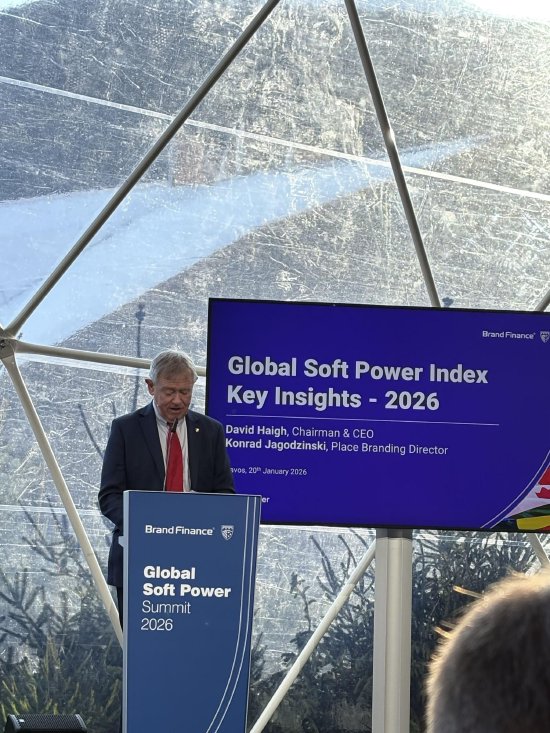
Group 1 - The Brand Finance 2026 Global Brand Value 500 report shows that Apple continues to lead the rankings, with the United States having 192 brands contributing 53.4% of the total brand value [34][36] - China ranks second with 68 brands, accounting for 15.1% of the total brand value, with TikTok having the highest brand value among them [34][40] - Germany follows with 26 brands contributing 5.6% of the total brand value, while Japan and France rank fourth and fifth, each with 33 brands contributing 4.7% and 4.1% respectively [3][36] Group 2 - The banking industry remains the highest contributing sector with 79 brands, accounting for 12.5% of the total brand value, followed by the media industry with 25 brands at 10.9% and the electronics industry with 17 brands at 8% [4][36] - In 2026, Apple's brand value increased by 5.8% to $607.6 billion, while Microsoft saw a 22.6% growth to $565.2 billion, solidifying its leadership in AI and cloud services [6][38] - TikTok's brand value surged by 45.1% to $153.5 billion, making it the sixth most valuable brand globally, reflecting its strong influence in the short video and social media sectors [8][40] Group 3 - The State Grid of China ranks first in the global utilities sector with a brand value of $102.4 billion, achieving a 19.6% increase [9][41] - China Southern Power Grid experienced a 33.2% growth in brand value, reaching $11.96 billion, becoming the fastest-growing brand in the global utilities sector [11][43] - The banking sector in China shows strong performance with 13 banks collectively valued at $417 billion, a 1.4% increase year-on-year, with the Industrial and Commercial Bank of China leading at $90.9 billion [13][45] Group 4 - The oil and gas sector also performed well, with China National Petroleum and Sinopec both achieving positive growth in brand value [17][49] - Moutai remains the top brand in the global spirits industry with a slight increase of 2.2% to $59.63 billion, while Wuliangye holds the second position with a brand value of $27.3 billion [21][53] - The insurance sector saw significant growth, with China People's Insurance increasing its brand value by 12% to $16.82 billion, moving up five places in the global rankings [25][57]


Energy costs will decide which countries win the AI race, Microsoft's Nadella says
CNBC· 2026-01-20 11:55
Core Insights - Energy costs will significantly influence which countries succeed in the AI race, as stated by Microsoft CEO Satya Nadella [2][4] - The growth of GDP in any region will be directly linked to the energy costs associated with AI usage [2] - Companies must convert AI processing tokens into economic growth, with lower energy costs being advantageous [3] Group 1: Energy Costs and Economic Growth - Nadella emphasized that the cost of energy is a critical factor for GDP growth in relation to AI [2] - The emergence of "tokens" as a new global commodity is essential for AI users to perform tasks efficiently [2] - High energy costs in Europe, exacerbated by geopolitical events, pose challenges for AI development [4] Group 2: Investment in AI Infrastructure - Microsoft plans to invest $80 billion in AI data centers, with 50% of this expenditure occurring outside the U.S. [3] - The total cost of ownership (TCO) for AI infrastructure includes considerations of energy production costs and data center construction [5] - The ability to produce energy cheaply and efficiently is crucial for the success of AI initiatives [5]
美股科技股盘前齐跌,黄金股大涨
Di Yi Cai Jing Zi Xun· 2026-01-20 11:28
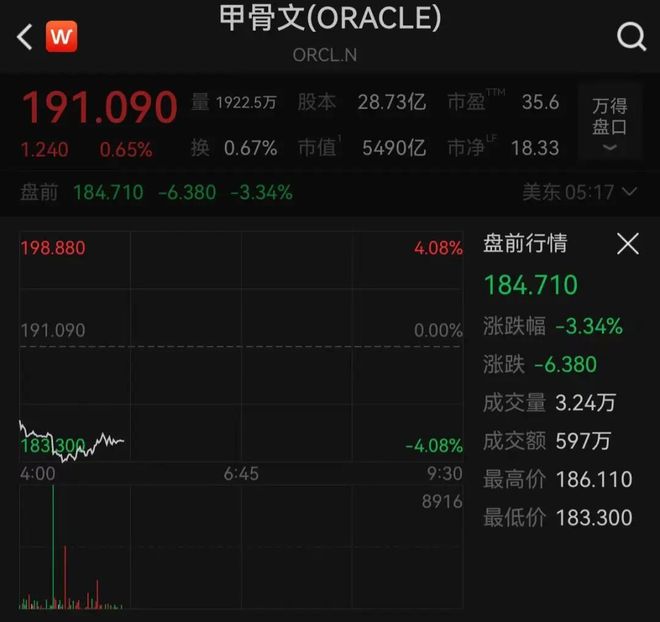
Market Overview - Major US tech stocks experienced a decline in pre-market trading, with Oracle falling over 4% to $184.71, representing a drop of 3.34% [3] - Other tech giants such as Amazon, Google, Tesla, AMD, Meta, and NVIDIA also saw declines, with drops exceeding 2% for most [4] Stock Performance - Oracle's stock price was reported at $191.09 with a market capitalization of $549 billion and a P/E ratio of 35.6 [1] - Amazon's pre-market price was $231.99, reflecting a decrease of 2.98% [2] - Google's stock was at $319.52, down 3.18% in pre-market trading [2] - Tesla's pre-market price was $426.44, showing a decline of 2.53% [4] - Meta's stock price fell to $603.92, down 2.63% [4] - AMD's pre-market price was $225.75, down 2.62% [4] - NVIDIA's stock was reported at $181.44, reflecting a decrease of 2.57% [4] Futures Market - US stock index futures continued to decline, with the Dow futures down 0.90%, S&P 500 futures down 0.91%, and Nasdaq futures down 1.09% [4][5] Commodity Market - Gold and silver prices reached new historical highs, with spot gold rising 1.21% to $4725.686 per ounce and silver up 0.76% to $95.074 per ounce [5]


美股科技股盘前齐跌,黄金股大涨
第一财经· 2026-01-20 10:46
Group 1 - Major US tech stocks experienced a pre-market decline, with Oracle falling over 4% to $184.71, a decrease of 3.34% [1] - Other tech giants such as Amazon, Google, Tesla, AMD, Meta, and Nvidia also saw declines, with Amazon and Google dropping over 3% and Tesla, AMD, Meta, and Nvidia falling over 2% [1][4] - The three major US stock index futures continued to decline, with Dow futures down 0.90%, S&P 500 futures down 0.91%, and Nasdaq futures down 1.09% [2][5] Group 2 - Gold and silver prices reached new historical highs, with spot gold rising 1.21% to $4725.686 per ounce and spot silver increasing by 0.76% to $95.074 per ounce [5] - Gold mining stocks saw a pre-market increase, with Harmony Gold rising nearly 6% and other mining companies like Coeur Mining and Pan American Silver increasing by nearly 5% [5]


Moon Invoice Earns Microsoft Store Standout App 2025 Recognition in Business Category
TMX Newsfile· 2026-01-20 10:26
Ahmedabad, India--(Newsfile Corp. - January 20, 2026) - Moon Invoice, a business invoicing and financial management platform developed by Moon Technolabs, has been recognized as Microsoft Store Standout App 2025 and selected as a winner in the Business Category.This recognition places Moon Invoice among a select group of global business applications acknowledged for product performance, usability, and measurable impact on business operations. The Microsoft Store Awards highlight applications that demonstra ...

Gold Surges Amid Geopolitical Tensions; Novartis Eyes China, US Tariff Shield
Stock Market News· 2026-01-20 09:38
Group 1: Gold Market - Gold prices have surged significantly, climbing 9% in the first three weeks of 2026 and a remarkable 75% over the past 12 months, signaling fiscal stress, currency debasement, and heightened geopolitical risk [2][11]. Group 2: Corporate Developments - Novartis (NVS) CEO Narasimhan revealed the pharmaceutical giant is pursuing more biotech deals with China than with Europe and has secured an agreement with the U.S. government that shields it from tariffs [3][11]. Group 3: Energy Sector - The International Energy Agency (IEA) forecasts years of downward pressure on oil and gas prices due to persistent supply, indicating a challenging outlook for energy markets [4][11]. Group 4: Cryptocurrency Market - Major cryptocurrency assets experienced a downturn, with Coinbase Global (COIN) falling 4.4%, Bitfarms (BITF) down 7.5%, and MicroStrategy (MSTR) declining 5.5% [5][11]. Group 5: Investor Confidence - Despite renewed Trump tariff threats, ZEW German Investor Morale is anticipated to improve for a second consecutive month, even as the EU-US trade war intensifies [6][11].


美股大型科技股盘前普跌 特斯拉跌超3%




Mei Ri Jing Ji Xin Wen· 2026-01-20 09:28
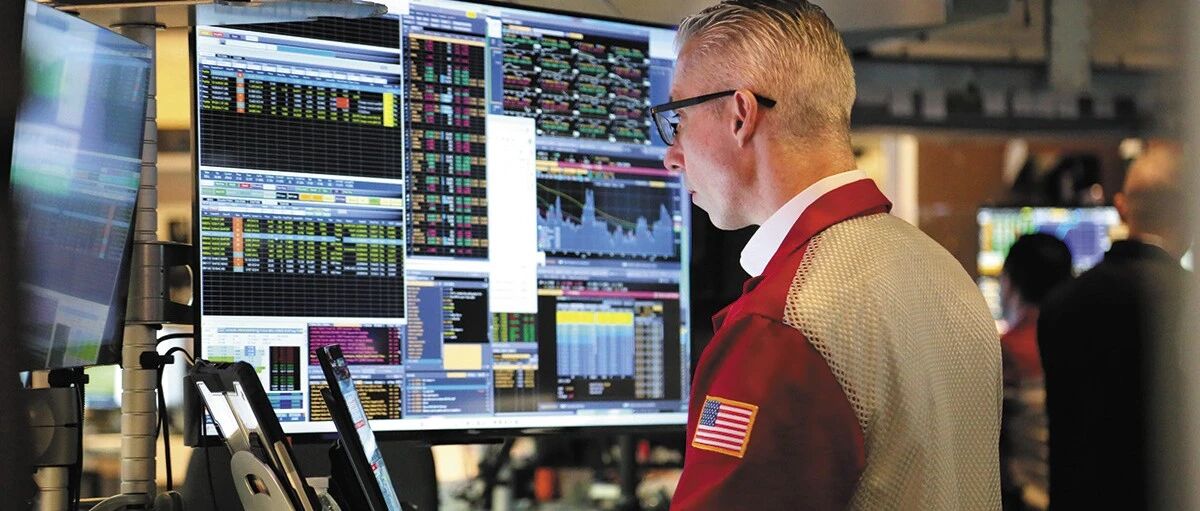
Group 1 - Major U.S. tech stocks experienced a decline in pre-market trading on January 20, with Microsoft and Apple dropping over 1% [1] - Meta, Nvidia, and Google saw declines close to 3% [1] - Amazon and Tesla fell by more than 3% [1]
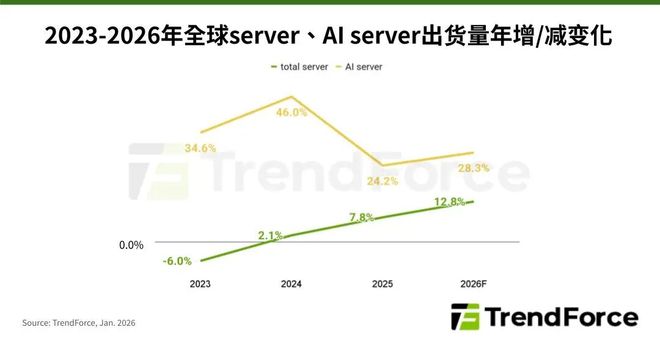
TrendForce集邦咨询:预估2026年全球AI服务器出货同比增逾28%
Zhi Tong Cai Jing· 2026-01-20 09:13
Core Insights - North American cloud service providers (CSPs) are significantly increasing investments in AI infrastructure, leading to a projected annual growth rate of over 28% in global AI server shipments by 2026 [1] - The demand for AI inference services is driving a replacement and expansion cycle for general servers, with an expected annual growth rate of 12.8% in global server shipments (including AI servers) by 2026 [1] Group 1: Market Trends - From 2024 to 2025, the server market will focus on training advanced large language models (LLMs) using AI servers equipped with GPUs and HBM for parallel computing [3] - Starting in the second half of 2025, the development of AI inference services such as AI Agents, LLaMA model applications, and Copilot upgrades will prompt CSPs to shift towards monetization and profit models [3] - The total capital expenditure growth rate for the five major North American CSPs (Google, AWS, Meta, Microsoft, Oracle) is projected to reach 40% in 2026, driven by large-scale infrastructure investments and the replacement of general servers purchased during the 2019-2021 cloud investment boom [3] Group 2: AI Server Market Dynamics - The 2026 AI server market will be primarily driven by North American CSPs, government sovereign cloud projects, and large CSPs accelerating their own ASIC development and edge AI inference solutions [4] - GPUs are expected to account for 69.7% of AI chip usage, with NVIDIA's GB300 models becoming the mainstream for shipments, while VR200 will gradually ramp up in the second half of the year [4] Group 3: ASIC Development - The share of ASIC AI servers in shipments is expected to rise to 27.8% by 2026, the highest since 2023, with growth rates surpassing those of GPU AI servers [6] - Google is leading the investment in self-developed ASICs, with its TPU not only serving Google Cloud Platform infrastructure but also being sold to external companies like Anthropic [6]
闪德资讯存储市场洞察报告 2025年5月
闪德资讯· 2026-01-20 08:45
Investment Rating - The report indicates a positive outlook for the storage industry, particularly in DRAM and NAND sectors, with expectations of price increases and demand recovery in the coming quarters [6][20][44]. Core Insights - The report highlights a significant transition in the memory market, with major manufacturers like Samsung, SK Hynix, and Micron phasing out DDR4 production in favor of DDR5 and HBM technologies, which is expected to tighten supply and drive prices up [6][23][24]. - DRAM prices have surged, leading to increased activity in the spot market, while NAND prices have stabilized after a period of volatility [6][47]. - The rise of AI PCs is anticipated to boost demand for high-performance memory solutions, with projections indicating a 37% penetration rate by 2025 [6][21][22]. - ODM manufacturers are cautious about demand in the second half of the year, anticipating a slowdown due to earlier stockpiling and market uncertainties [6][20]. - Ongoing geopolitical tensions and tariff adjustments are influencing supply chain dynamics and market stability, with potential long-term implications for pricing and availability [6][7][20]. Summary by Sections Macro Economy - In May, China's manufacturing PMI rose to 49.5%, indicating improved manufacturing activity, while the U.S. PMI remained below expansion levels at 48.5% [7][9]. - The report notes a 10.8% year-on-year growth in China's electronic information manufacturing sector from January to April [12][13]. Upstream Market - Global laptop shipments are expected to increase by 5.8% in Q2, driven by preemptive stockpiling and seasonal demand [20][21]. - Major manufacturers are transitioning away from DDR4, with supply constraints expected to impact pricing significantly [23][24]. Storage Market Dynamics - The report details a notable increase in DRAM prices, with DDR4 prices rising from $2.4 to $3.95, a 64% increase [23]. - NAND flash market dynamics are shifting, with Samsung's exit from the MLC market expected to create supply shortages and price increases [28][29]. Application Market - The PC market is experiencing fluctuations, with major manufacturers reporting mixed results in shipments and revenues due to seasonal effects and tariff uncertainties [71][72]. - AI server-related revenues are projected to grow significantly, while traditional PC demand remains uncertain [72][74].


闪德资讯存储市场洞察报告 2025年10月
闪德资讯· 2026-01-20 08:45
Investment Rating - The report indicates a positive outlook for the storage industry, driven by strong demand from AI and cloud computing sectors, leading to an overall bullish investment rating for the sector [6][7]. Core Insights - The global storage giants, including Samsung and SK Hynix, reported record earnings in Q3 2025, with significant growth in sales and profits attributed to increased demand for high-bandwidth memory (HBM) and server memory [7][29]. - The report highlights a structural shortage in the supply of DRAM and NAND flash memory, with prices expected to continue rising due to strong demand from AI servers and high-end mobile devices [7][30]. - The domestic storage industry in China is accelerating, with companies like Yangtze Memory Technologies and ChangXin Memory Technologies preparing for IPOs and ramping up production of HBM and LPDDR5X [7][42]. Summary by Sections Macroeconomic Overview - In October 2025, the global manufacturing PMI showed mixed signals, with the Eurozone returning to expansion while the US and Japan continued to contract, indicating a fragile recovery in manufacturing [7][8][20]. - China's manufacturing PMI fell to 49.0, reflecting a slowdown in production and demand, although the electronic information industry showed signs of recovery with strong export growth [7][20][26]. Supply Chain Dynamics - The storage and testing industry is experiencing a significant uptick, with companies like Powertech and Nanya increasing production capacity in response to rising orders for HBM and DDR5 products driven by AI server demand [7][29][46]. - The report notes that the supply of T-Glass, a critical material for advanced packaging, is expected to remain tight until 2027, impacting the PCB market [7][49]. Market Trends - The report indicates that the storage market is heating up, with DRAM and NAND prices rising across the board due to strong demand from AI servers and high-end mobile devices, leading to supply constraints [7][30][58]. - Companies are adopting aggressive pricing strategies, with Samsung and SK Hynix increasing prices by up to 30% for DRAM and NAND products in response to supply shortages [7][36][38]. Company Performance - Samsung Electronics reported a record Q3 2025 revenue of 86.1 trillion KRW, with a 15% quarter-over-quarter increase, driven by strong sales in HBM and server SSDs [7][29][30]. - SK Hynix also achieved record sales of 24.4489 trillion KRW in Q3 2025, with a significant increase in DRAM and NAND prices due to high demand [7][32][33]. Domestic Industry Developments - Yangtze Memory Technologies is planning an IPO with an estimated valuation of 200-300 billion RMB, aiming to enhance its production capabilities in HBM technology [7][42]. - ChangXin Memory Technologies is also preparing for an IPO, focusing on increasing its production of high-bandwidth memory chips [7][42].
