Microsoft(MSFT)

Search documents
AI and The Software Rout: Lessons From the Handset Industry and Why Indian IT is Still Not Cheap
BusinessLine· 2026-02-07 16:28
Core Insights - The recent volatility in global enterprise software stocks has been unprecedented, with significant underperformance over the past year, raising concerns about the impact of AI on the software industry [1][2] - The introduction of a new AI plug-in by Claude has sparked fears regarding AI's potential to disrupt the software sector, leading to a broader discussion among industry experts [2] Historical Context - The launch of the iPhone in January 2007 marked a significant turning point in the mobile industry, surprising competitors and leading to a shift in market dynamics [3][4] - Following the iPhone's unveiling, Google pivoted its strategy towards developing a sophisticated operating system, resulting in the creation of Android, which now holds a 70% market share [4] - The iPhone's introduction also contributed to the decline of major players like Nokia and BlackBerry, who failed to recognize the disruptive potential of the new technology [5][8] Market Performance - By the end of 2007, Nokia and BlackBerry had market capitalizations of $150 billion and $100 billion respectively, but these figures would drastically decline in the following years due to the iPhone's impact [7][9] - By 2012, Apple captured approximately 70% of global mobile handset industry profits, despite holding only a 10% unit share, illustrating the profound effect of the iPhone on competitors [9] Current Industry Dynamics - Recent concerns about AI disruption have led to a significant decline in the stock prices of SaaS companies, despite their strong business performance in recent years [15] - For instance, Adobe, which reported 11% revenue growth and 15% net profit growth, is currently trading at a trailing PE of 15.5 times, indicating a disconnect between performance and market valuation [15] Investment Considerations - Investors are advised to approach the current market with caution, considering multiple potential outcomes rather than adopting a "buy the dip" mentality [13][16] - The Indian IT services sector is currently not priced for disruption, trading at high PE multiples despite lower revenue and profit growth compared to SaaS companies [19][21] - Historical data shows that during previous disruptions, leading IT services companies traded at lower PE multiples, suggesting that current valuations may not reflect the risks posed by ongoing technological changes [21][22]






周末总结篇:AI叙事分化、AI Agent和Memory超级周期
傅里叶的猫· 2026-02-07 15:46
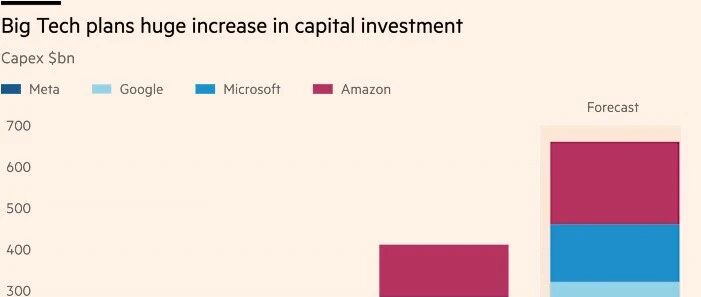
AI叙事分化 最近北美大厂的财报又陆续出来了,亚马逊、谷歌、Meta 和微软计划在 2026 年投入约 6600 亿美元 的资本支出。 但这次,市场对大厂们激进的资本开支和前段时间甲骨文的RPO的反应,跟去年完全不同了,只画 大饼已经不再被认可了。 现在市场对AI价值的评判标准已从技术先进性或用户规模转向对收入结构、盈利能力及现金流的实 际贡献。AI不再是统一估值加分项,市场开始区分"已兑现收益"与"投入期远景",定价差异更多反 映企业所处商业化阶段。能够率先证明AI投入转化为可持续盈利的公司更易获得市场认可,ROI与 自由现金流成为关键定价指标。随着AI需求扩张,市场对玩家的定价差异将聚焦于商业化阶段,而 非长期价值分歧。 SemiAnalysis又是连着两天出了两篇文章,内容都比较长,我们还是只讲里面的主要观点。 AI 智能体发展的核心转折点 1、Claude Code 是 AI 智能体发展的核心转折点 这并非单纯因其实现了 AI 写代码的功能升级,而是它完成了从 AI 模型被动响应 到 AI 智能体主动 执行的范式突破,彻底重构了人机交互的底层逻辑,同时成为 AI 从单一工具向通用协作体进化的标 志性产 ...

Microsoft (MSFT) Has a Lot of Firepower, Says Jim Cramer
Yahoo Finance· 2026-02-07 15:07
We recently published 12 Stocks Jim Cramer Talked About. Microsoft Corporation (NASDAQ:MSFT) is one of the stocks that Jim Cramer talked about. Software giant Microsoft Corporation (NASDAQ:MSFT)’s shares dipped by 7% in extended trading after it reported its fiscal third-quarter earnings report. The results saw the firm post $81 billion in revenue and $4.14 in adjusted earnings per share to beat analyst estimates of $80.27 billion and $3.97. Following the earnings, Stifel downgraded Microsoft Corporation ...
Big Tech Dominates Market Coverage as AI Narrative Intensifies
Yahoo Finance· 2026-02-07 13:50
Quick Read Nvidia (NVDA) delivered $57.01B in Q3 revenue with Blackwell sales off the charts. Nvidia trades down 0.58% year-to-date. Amazon shares dropped 12.11% in one week and Microsoft fell 17.03% in one month despite strong cloud AI growth at both companies. Meta reported $59.89B Q4 revenue and aggressive multi-year AI infrastructure CapEx guidance. Meta stock trades flat year-to-date. A recent study identified one single habit that doubled Americans’ retirement savings and moved retirement fro ...


Big Tech earnings: What do investors do now?
Youtube· 2026-02-07 13:08
Core Insights - Amazon's Q4 earnings report showed an EPS of $1.95, slightly below the expected $1.96, while net sales reached $213.39 billion, exceeding the estimate of $211.49 billion [1] - AWS net sales grew by 24%, surpassing the expected 21%, with total sales of $35.58 billion compared to the street's estimate of $34.88 billion [1] - The company guided for Q1 net sales between $173.5 billion and $178.5 billion, lower than the street's expectation of $175.54 billion [1] - Amazon's capex forecast for 2026 is set at $200 billion, significantly higher than the previous estimate of $146.1 billion, raising concerns among investors [1][2] - Despite the initial drop in stock price, 95% of analysts maintain a "buy" rating on Amazon, indicating strong long-term confidence in the company's growth potential [1] Amazon's Financial Performance - Q4 operating margins were reported at 11.7%, aligning with market expectations [1] - North American net sales for Q3 were $127.08 billion, matching consensus estimates [1] - AWS margins have been stable, hovering around the mid-30% range, with potential for growth above 40% in the future [2] Market Reactions and Analyst Insights - The significant increase in capex has led to a nearly 11% drop in Amazon's stock price in after-hours trading, reflecting investor concerns about the sustainability of such high spending [1][2] - Analysts suggest that the elevated capex is necessary to meet growing demand for AI and cloud services, with Amazon needing to invest aggressively to maintain its competitive edge [2] - The bullish sentiment among analysts is driven by Amazon's strong position in the cloud market and the potential for significant operating margin expansion in the coming years [2][3] Competitive Landscape - Amazon's capex forecast is compared to Alphabet's, which announced a capex range of $175 billion to $185 billion, indicating a broader trend of increased investment in technology infrastructure among major players [1][2] - The competition in the cloud space is intensifying, with AWS facing pressure from Azure and Google Cloud, both of which are also ramping up their investments [2][3] - Analysts believe that the demand for compute power will continue to drive spending across the tech sector, benefiting companies involved in semiconductor manufacturing and AI technologies [2][3]


Stay Long. Capex-geddon Is A Déjà Vu
Seeking Alpha· 2026-02-07 11:57
Group 1 - The article discusses the concept of "Geo-capex" investing, which is an evolution of the "Capex Nation" idea, highlighting the ongoing bull market driven by AI enthusiasm despite January's volatility [1] - The focus is on long-term investment strategies in U.S. and European equities, emphasizing undervalued growth stocks and high-quality dividend growers [1] - Sustained profitability, characterized by strong margins, stable and expanding free cash flow, and high returns on invested capital, is identified as a more reliable driver of returns than valuation alone [1] Group 2 - The author manages a portfolio publicly on eToro, qualifying as a Popular Investor, which allows others to replicate real-time investment decisions [1] - The interdisciplinary background of the author, including Economics, Classical Philology, Philosophy, and Theology, enhances both quantitative analysis and market narrative interpretation [1] - The investment philosophy aims to balance asset accumulation with the freedom to choose work that aligns with personal expression, rather than seeking to avoid work altogether [1]

2 Unstoppable Stocks That Can Be Great Options for Any Investor
The Motley Fool· 2026-02-07 10:35
Group 1: Microsoft - Microsoft is a leading tech company with a market cap of $3.1 trillion, experiencing a recent stock decline despite a 17% revenue growth in the last quarter of 2025 [4][6] - The Azure cloud business showed a growth rate of 39%, slightly below the expected 39.4%, which contributed to investor disappointment [4] - The company reported a profit of $38.5 billion, up from $24.1 billion a year ago, indicating strong financial health [7] - Microsoft has a dividend yield of 0.9% and recently announced a 10% increase in its dividend [8] Group 2: American Express - American Express generated $72.2 billion in revenue for 2025, reflecting a 10% year-over-year increase, driven by strong card member spending [9] - The company forecasts a revenue growth rate of 9% to 10% for 2026, despite concerns over potential caps on credit card interest rates [10] - American Express has a market cap of $247 billion and a dividend yield of approximately 0.9%, with plans to increase its payout by 16% this year [12]


Wall Street's Strategies to Play the Stock Market's Software Sell-Off
Business Insider· 2026-02-07 10:30
Core Viewpoint - The recent tech sell-off is seen as a rotation into "old economy" sectors, with strategies suggested by Wall Street experts to navigate the ongoing market changes [2][3][4]. Group 1: Market Trends - The tech-heavy Nasdaq Composite declined by 2% for the week, with the iShares Expanded Tech-Software Sector ETF down over 12% during the same period [1]. - Analysts indicate that the current market plunge is not the end of the bear market but an opportunity to reassess investment strategies [2]. Group 2: Investment Strategies - **Old Economy Sectors**: Analysts from Piper Sandler suggest focusing on cyclical and value sectors such as Energy, Industrials, Materials, Staples, and Banks, which are gaining momentum as the tech sector declines [3][4]. - **AI Bubble Hedge**: Bank of America strategists propose "transition" investing as a hedge against the AI bubble, recommending investments in Electrification, infrastructure & grid expansion, metals, and defense [5]. - **Identifying AI Winners**: Futurum Group's CEO emphasizes the importance of identifying companies that are generating returns from AI investments, highlighting firms like Amazon, Microsoft, Alphabet, ServiceNow, Palantir, and Tesla as potential winners [6][7]. - **Buying the Dip**: Dan Ives from Wedbush advocates for buying tech stocks at a discount, viewing the current weakness as an opportunity rather than a long-term issue, naming Microsoft, Palantir, Snowflake, Salesforce, and CrowdStrike as stocks to consider [8][9].


2 software stocks with at least 50% upside potential: Morningstar
Business Insider· 2026-02-07 10:15
Core Viewpoint - The software sector experienced a significant sell-off, with the iShares Expanded Tech-Software Sector ETF (IGV) dropping 19% from January 26 to February 5, but Morningstar believes the fears surrounding AI's impact on the industry are exaggerated and presents a buying opportunity [1][2]. Group 1: Market Performance and Analyst Insights - Morningstar's senior equity analyst, Dan Romanoff, stated that there is little evidence supporting the bear case for software stocks, as retention rates and other metrics remain solid [2]. - Despite the sell-off, software stocks showed signs of recovery, with IGV rising 3% and the Nasdaq increasing by over 2% on a recent Friday [3]. - Romanoff identified Microsoft (MSFT) and ServiceNow (NOW) as having substantial upside potential, with shares down 17% and 35% year to date, respectively [4]. Group 2: AI Impact and Revenue Generation - Concerns that AI will significantly disrupt the software industry may be overstated, as many firms still view AI with skepticism [5]. - AI products currently account for approximately 2% of revenue for software vendors, indicating that they are not generating substantial revenue [6]. - Historical instances of automation have not led to major disruptions in labor markets, suggesting that current fears may not materialize [6]. Group 3: Future Outlook and Employment Trends - While there may be future pressure on seat counts, there is no current evidence of this affecting sales representatives, as seen in the historical context of Salesforce's CRM approach [7]. - Headcount across functional areas continues to increase, indicating that fears of job losses due to automation are not currently reflected in the market [7].

做不到“绝对公正”与“全网比价”的AI购物助理,都不会成功
虎嗅APP· 2026-02-07 10:10
Core Viewpoint - The article discusses the impact of AI development on e-commerce platforms, particularly focusing on the competitive dynamics between companies like Amazon, Alibaba, and Pinduoduo, emphasizing the importance of consumer trust and value delivery in the retail sector [6][29]. Group 1: AI and E-commerce Dynamics - The daily token consumption in China is projected to increase from 100 billion at the beginning of 2024 to 40 trillion by September 2025, representing a growth of over 400 times [7]. - Major US tech companies are significantly increasing their capital expenditures for AI infrastructure, with Google estimating its 2026 CapEx to be between $175 billion and $185 billion, nearly double its 2025 spending [8]. - Amazon's projected capital expenditure for 2026 is $200 billion, primarily focused on AWS AI infrastructure, while Microsoft anticipates around $150 billion in spending [9]. Group 2: Competitive Analysis of E-commerce Platforms - Amazon's 2025 GMV is estimated at approximately $700 billion, with AI assistant Rufus contributing $12 billion in annual transaction volume, accounting for 1.67% of total GMV [11][12]. - The article critiques the effectiveness of AI assistants in enhancing user experience, suggesting that they often serve as high-level customer service rather than providing significant incremental value [17]. - Pinduoduo's business model emphasizes "lowest price" as a prerequisite for advertising, contrasting with Amazon and Alibaba, which rely on advertising revenue from brand merchants [20][21]. Group 3: Consumer Trust and Value Proposition - The article argues that platforms like Costco succeed because they prioritize consumer trust and value, contrasting with Amazon and Alibaba, which may not always align with consumer needs [22]. - The effectiveness of AI shopping assistants is questioned, particularly in their ability to deliver on consumer expectations for price and quality, with the assertion that they cannot change the underlying business models of platforms like Alibaba [22][23]. - The article concludes that the future of AI in e-commerce will likely favor companies that can maintain consumer trust and deliver genuine value, with Apple and WeChat identified as potential leaders in this space due to their business models [27][28].