Rio Tinto(RIO)

Search documents
惠誉拉响警报:锂价反弹只是“虚火” 供应过剩恐横贯整个2026年
智通财经网· 2025-12-19 13:41
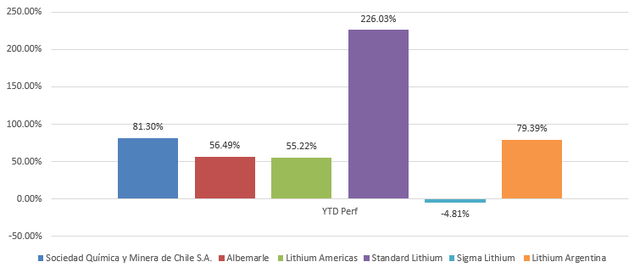
Core Viewpoint - Fitch predicts that despite lithium prices rebounding to over $11,500 per ton in late November (a 38% increase for the second half of 2025), a weak price trend will persist until 2026 due to multiple complex factors affecting production in a fragmented and maturing market [1] Supply and Demand Dynamics - Fitch expects the lithium market to remain oversupplied in 2026 unless there are significant and sustained capacity reductions. Wood Mackenzie forecasts that the surplus of battery-grade lithium chemicals will expand to 153,000 tons (in lithium carbonate equivalent) by 2026 and further to 207,000 tons in 2027 [2] - The short-term supply-demand balance is contingent on supply reductions, influenced by lagging electric vehicle demand and ongoing policy uncertainties [2] Stock Performance - Year-to-date, lithium-related stocks have shown mixed performance. Canadian lithium developer Standard Lithium (SLI.US) has seen its stock price increase by nearly 250%, while larger producers like Lithium Americas (LAC.US) and Sociedad Química y Minera (SQM.US) have also achieved significant gains. In contrast, industry giants like Albemarle (ALB.US) have underperformed amid weak lithium prices and increased sector volatility [2] - The Global X Lithium & Battery Tech ETF has risen 56% year-to-date, partly driven by tariff and trade war-related news [2] Supply Chain Dynamics - The rapidly changing battery technology market, including alternative materials to lithium, may erode expected stable demand. China remains the largest end market (accounting for 64% of total demand) and a dominant processing center, with new market entrants forming strategic partnerships with governments to secure key mineral resources [4] Capital Allocation Discipline - Lithium producers tracked by Fitch are prioritizing balance sheet resilience and rating buffer space before 2026. Albemarle (rated BBB- with a stable outlook) has issued convertible bonds to repay through stock issuance during market upcycles. Sociedad Química y Minera (rated AA(cl)) is responding to pressures by slowing growth capital expenditures and limiting free cash flow consumption [4] - Mineral Resources (MALRF.US) (rated BB- with a stable outlook) has sold a 15% stake in its lithium assets to raise cash for early debt repayment while cutting capital expenditures [4] M&A Opportunities - The challenging industry environment continues to create opportunities for capital-strong large mining companies seeking to diversify their businesses or secure key mineral resources. For instance, Rio Tinto (RIO.US) has been active in lithium project opportunities and is nearing entry into the top five global lithium producers, narrowing the gap with Albemarle and Sociedad Química y Minera [5]






蒙古国最大铜矿卖给澳洲,甚至提出无理要求!不准卖给中国矿石?
Sou Hu Cai Jing· 2025-12-19 03:49
Group 1 - The Oyu Tolgoi copper mine in Mongolia has significant economic potential, with copper reserves exceeding 30 million tons and an estimated total value of over $1 trillion, which could greatly benefit Mongolia's economy through job creation and tax revenue [2][4] - The mine was discovered in 2001 by Ivanhoe Mines, which conducted extensive drilling and became the largest exploration project globally, with the resource expected to last over 50 years [4] - In 2009, Mongolia signed an investment agreement with a joint venture, Oyu Tolgoi LLC, where Rio Tinto, through its subsidiary Turquoise Hill Resources, holds a 66% stake, while the Mongolian government retains 34% [6][11] Group 2 - Mongolia aims to promote local processing of minerals rather than direct export, which is part of a broader strategy to diversify its economy and avoid the "resource curse" by developing manufacturing capabilities [8][9] - The partnership with Rio Tinto is seen as a way for Mongolia to enhance its international standing, although the collaboration has faced challenges, including rising costs and delays in project timelines [11][13] - The project has experienced significant delays, with costs escalating from an initial estimate of $5 billion to over $10 billion, and the underground mine only starting operations in 2023 [13][19] Group 3 - Mongolia's mining laws restrict the export of raw minerals to encourage local refining, but most copper concentrate is still sold to China, the world's largest copper consumer [15][21] - The partnership has faced disputes, including tax issues and demands for changes to the agreement, but a resolution in 2022 led to debt forgiveness and commitments for local employment and technology transfer [17][19] - As of 2023, the mine is operational, producing 160,000 tons of copper, with a target to become the fourth-largest copper mine globally by 2030, contributing over 10% to national tax revenue [19][21]
铁矿石2026年度展望:供求皆有增长的空间
Nan Hua Qi Huo· 2025-12-18 08:10
Report Industry Investment Rating - Not provided in the content Core Viewpoints of the Report - In 2026, with increased supply but supported by exports, the fundamentals of iron ore may weaken marginally, yet there could be periods of structural shortages, and demand at the lower end is supported. Domestic demand remains stable overall, while overseas demand is strong. It is expected that the price trend will not be significant, maintaining a wide - ranging oscillatory pattern. The price range for the fourth quarter is Platts 62: [90, 115], and the iron ore index is [700, 900]. The recommended industrial risk management strategy is range - bound operation [4][5][117] Summary by Relevant Catalogs 1. Iron Ore Price Review in 2025 - **January 15 - February 21**: Pessimistic expectations were reversed, and supply disruptions supported price increases. The black market followed the stock market, with positive domestic and overseas macro - sentiments. Three hurricanes affected Western Australia ports, reducing global shipments, and the spot market was tight. After the Spring Festival, the rapid resumption of coking coal production and inventory accumulation also supported iron ore prices [6] - **February 22 - April 8**: Both expectations and fundamentals weakened. After the hurricane, shipping resumed, and the black market diverged from the stock market. Tariff policies and the expectation of crude steel reduction led to a downward trend in prices [7] - **April 9 - June 18**: A temporary balance was reached after risk release. After the tariff shock in early April, the iron ore valuation was low, but the actual demand remained strong, with increasing hot metal production and decreasing port inventory. The Geneva Agreement led to a price increase, but the subsequent weakening of export demand and the cooling of the US economy led to a period of low - volatility oscillation [8] - **June 19 - September 22**: Iron ore prices bottomed out in late June and then rose steadily. The anti - involution trading in the commodity market drove up the price of iron ore through the increase in steel prices and the improvement of steel mill profits. The falsification of the previous pessimistic expectations also contributed to the price rebound [9] - **September 23 - Present**: Overall demand weakened, but the supply of coking coal and the structural shortage of iron ore supported prices, resulting in a wide - ranging price oscillation. The continuous high hot metal production led to over - seasonal inventory accumulation of steel products, and the decline in steel mill profits increased the pressure of negative feedback production cuts. However, the decline in coking coal prices and the structural shortage of medium - grade ore supported the price of iron ore [11] 2. Supply - **2025 Supply Situation**: The global iron ore supply in 2025 was tight at first and then loose. As of early December 2025, the global shipment was about 1.46 billion tons, a year - on - year increase of 2.1%. The supply in China was generally balanced, with a 0.7% year - on - year increase in imports from January to October and a 1.35% year - on - year decrease in domestic iron concentrate production. The main suppliers, Australia and Brazil, faced production and shipping difficulties due to natural disasters [14][21] - **Key Suppliers' Situations**: - **Australia**: In early 2025, the Pilbara region in Western Australia was hit by severe hurricanes, causing production stoppages, port closures, and transportation disruptions. In February, Cyclone "Zelia" forced Port Hedland to close for 3 days, and Rio Tinto's first - quarter shipments decreased by 9.35% year - on - year [23] - **Brazil**: In early 2025, heavy rainfall and floods in the northern mining areas affected mining and transportation. The export revenue of iron ore to China in the first quarter decreased by 21.8% year - on - year, and the shipment volume decreased by 5% - 8% [23] - **India**: It is shifting from a net exporter to a net importer. In 2025, its imports increased significantly, and exports decreased sharply. The government's policy to support the domestic steel industry and the expansion of the steel industry led to an increase in demand for iron ore [26] - **Russia**: In 2025, China's imports from Russia increased by 42.23% year - on - year. The decline in Russia's domestic steel industry demand and the optimization of the Sino - Russian railway logistics system contributed to this increase [30] - **Mongolia**: In the first 10 months of 2024, its exports to China increased by 21.84% year - on - year, mainly due to the improvement of port clearance efficiency and the construction of cross - border railway networks [31] - **Four Major Mines**: In the first three quarters of 2025, the total production of the world's four major mines increased year - on - year, but there were internal differences. Vale and FMG had obvious production increases, while BHP and Rio Tinto had some production declines or challenges. The S11D project of Vale and the Western Range project of Rio Tinto are important production - increasing projects [38][39] - **Domestic Mines**: The cumulative production of domestic iron concentrate was about 215 million tons, a year - on - year decrease of 1.35%, mainly due to safety inspections and rainfall in the north. Currently, domestic mines are in the process of resuming production [64] - **2026 Supply Outlook**: It is expected that the iron ore supply in 2026 will increase steadily, with the increment mainly coming from Simandou and Brazil. With high prices supporting shipments and new capacity coming online, shipments are expected to increase by 2% year - on - year, equivalent to about 30 million tons of iron concentrate [68] 3. Demand - **Overall Demand Outlook in 2026**: The demand pattern of the black market has shifted from domestic - driven to external - driven. In 2026, the "weak domestic and strong overseas" structure is expected to continue. Domestic infrastructure and real estate demand will be weak, while the export chain will be the main support for black metal demand. The Fed's potential interest rate cuts may stimulate overseas manufacturing demand, which is beneficial for China's steel exports [69][70] - **Real Estate and Infrastructure**: The real estate industry is still in a bottom - grinding stage, and sales are expected to continue to decline in 2026. Infrastructure investment has also shown signs of weakening. However, the new construction area of real estate may improve marginally in 2026, which may reduce the drag on rebar demand [76][77] - **Hot Metal Production**: In 2025, the average daily hot metal production was 2.3748 million tons, a year - on - year increase of 3.43%. Currently, steel mill profits have declined, but with the concession of coking coal prices, there is still some production profit. The supply - demand contradiction in the steel industry has been alleviated, and hot metal production has decreased [83] - **Steel Mill Supply Structure and Downstream Demand**: In 2025, downstream steel mill demand was supported by exports. The demand for building materials decreased, while the demand for plate steel maintained positive growth, but the growth rate slowed down. Steel mills adjusted their supply structure through production transfer [86][87] - **Export Support**: Overseas exports are still an important support for steel demand. In October 2025, China's steel exports were 9.78 million tons, a month - on - month decrease of 6.6% and a year - on - year decrease of 12.3%. From January to October, the cumulative steel exports were 97.74 million tons, a year - on - year increase of 6.6%. It is expected that in 2026, the year - on - year growth rate of steel exports will remain positive, but the decline may narrow further [95] 4. Inventory - **Port Inventory**: Due to the impact of hurricanes and high hot metal production in the first three quarters of 2025, port inventory decreased marginally. Currently, shipments have recovered, and port inventory may start to accumulate again, which will suppress the upward space of iron ore prices. There is also a structural shortage of iron ore, especially for the medium - grade ore required by steel mills [98] - **Steel Mill Inventory**: Steel mills adhere to the low - inventory strategy for raw materials, with a relatively high proportion of trading ore. The global iron ore floating inventory is currently high, and the arrival rhythm of iron ore is expected to accelerate. The shipping cost of iron ore has increased, and its weight in the iron ore price has also increased [100][103] 5. Valuation - **Term Structure**: The term structure of iron ore remains in a back structure, but the contango of the far - month contracts has narrowed. In 2026, attention can be paid to the opportunities of structural shortages between ore powders and months for arbitrage trading [107] - **Iron - Scrap Price Difference**: The cost - effectiveness of scrap steel has significantly improved in the past six months. In 2026, attention should be paid to the strengthening of the substitution effect of scrap steel on iron ore [110] - **Coking Coal/Iron Ore Seesaw Effect**: In 2025, the price seesaw effect between coking coal and iron ore was significant. In 2026, this effect is expected to continue under the background of low - profit operation of steel mills [112][113] - **Volatility**: In 2025, the implied volatility of iron ore options was generally decreasing. It is expected that the volatility will remain at a low level, but attention should be paid to potential volatility increases due to sudden macro - events [115]


What the Options Market Tells Us About Rio Tinto - Rio Tinto (NYSE:RIO)
Benzinga· 2025-12-17 20:01
Group 1: Options Activity - Financial giants have shown a bearish sentiment towards Rio Tinto, with 61% of traders exhibiting bearish tendencies and only 23% being bullish [1] - A total of 13 unusual trades were identified, including 7 puts valued at $311,986 and 6 calls valued at $734,080 [1] - Recent options activity indicates that whales have targeted a price range for Rio Tinto between $52.5 and $85.0 over the last 3 months [2] Group 2: Volume and Open Interest - Analyzing volume and open interest provides insights into the liquidity and interest surrounding Rio Tinto's options [3] - The evolution of volume and open interest for calls and puts within the $52.5 to $85.0 strike price range has been tracked over the last 30 days [3] Group 3: Current Market Status - Rio Tinto's current trading volume is 1,905,790, with the stock price increasing by 1.87% to reach $77.41 [13] - An expert from Argus Research has maintained a Buy rating on Rio Tinto, with an average target price of $85.0 [10][11]

Rio2 Announces Closing of Brokered Private Placement for Gross Proceeds of C$14 Million
Globenewswire· 2025-12-17 13:49
Core Viewpoint - Rio2 Limited has successfully closed a brokered private placement, raising C$14 million (approximately US$10 million) through the sale of 6,306,300 common shares at a price of C$2.22 (approximately US$1.585) per share [1][2]. Group 1: Financial Details - The private placement involved the sale of 6,306,300 common shares [1]. - The total gross proceeds from the placement amounted to C$14 million (approximately US$10 million) [1]. - The shares were sold to investors in Peru and Chile [1]. Group 2: Use of Proceeds - The net proceeds from the private placement will be utilized for working capital and general corporate purposes [2]. Group 3: Company Overview - Rio2 Limited is a mining company focused on the development and mining operations, particularly the Fenix Gold Project in Chile [4]. - The company aims to achieve production in the shortest possible timeframe through a staged development strategy [4]. - Rio2 is committed to high environmental standards and sustainable development practices [4].

全球十五大铜矿企业三季报汇总:非中资海外12家矿企前三季度产量下滑,全球未来新增项目仍然较少
Huaxin Securities· 2025-12-17 07:12
Investment Rating - The report maintains a "Recommended" investment rating for the copper industry [10]. Core Insights - The production of major copper-producing countries, Chile and Peru, has shown mixed results, with Chile's production slightly increasing and Peru's production recovering after a decline in 2024 [4][18]. - The overall production from twelve overseas copper mining companies has decreased, with significant declines noted in Freeport and Glencore due to operational disruptions [5][66]. - Future new or expanded copper mining projects are limited, indicating a potential supply constraint in the coming years [8][10]. Summary by Sections 1. Copper Production from Major Producing Countries - Chile's copper production for January to September 2025 reached 3.972 million metric tons, a year-on-year increase of 0.1% [4][18]. - Peru's copper production during the same period was 2.048 million metric tons, reflecting a year-on-year increase of 2.58% [4][18]. - The increase in Chile's production is primarily attributed to the Escondida project, while Peru's growth is driven by Las Bambas and Toromocho projects [4][18]. 2. Overseas Copper Mining Companies' Production - The total copper production from fifteen major copper mining companies in the first three quarters of 2025 was 9.3231 million metric tons, a slight increase of 0.36% year-on-year [5][43]. - Excluding three Chinese companies, the twelve overseas companies reported a total production of 7.5641 million metric tons, a decrease of 2.42% year-on-year [5][43]. - Freeport and Glencore experienced significant production declines of 13.61% and 17.26%, respectively, due to operational issues [5][66]. 3. Future Project Developments - There are few new or expanded copper mining projects anticipated, with notable projects like Codelco's Rajo Inca and First Quantum's Kansanshi expansion expected to contribute limited additional supply [8][9]. - Long-term projects such as Rio Tinto's Oyu Tolgoi are in ramp-up phases, with expected production increases by 2028 [9].



Rio Tinto (NYSE:RIO) Maintains "Overweight" Rating by Morgan Stanley
Financial Modeling Prep· 2025-12-17 03:00
Core Viewpoint - Morgan Stanley maintains an "Overweight" rating for Rio Tinto, indicating confidence in the stock's potential and a positive outlook for the company's future performance [1][5]. Company Overview - Rio Tinto is a leading global mining group focused on finding, mining, and processing mineral resources, operating in segments such as iron ore, aluminum, copper, and diamonds [1]. - The company competes with other mining giants like BHP and Vale, highlighting its significant presence in the industry [1]. Stock Performance - At the time of the announcement, RIO's stock price was $76.02, with a slight increase to $75.99, reflecting a change of 0.17 or 0.22% [2]. - The stock has traded between $75.85 and $76.73 on the day, with a yearly high of $76.99 and a low of $51.67, indicating volatility and potential for growth [3][5]. - RIO's market capitalization is approximately $123.38 billion, underscoring its substantial presence in the mining sector [3]. Trading Activity - The trading volume for RIO is 1,930,571 shares, indicating active investor interest and reflecting the market's perception of the company's value [4].

2026 年全球金属与矿业展望:锂市情绪缓慢改善,但 2026 年难见起色-Global Metals & Mining 2026 Outlook_ Lithium's mood is very slowly improving...but not in 2026
2025-12-16 03:26
Summary of Global Metals & Mining: Lithium Outlook Industry Overview - The report focuses on the lithium market, particularly its outlook through 2026 and beyond, emphasizing demand from Energy Storage Systems (ESS) and medium- & heavy-duty vehicles [1][2][3]. Key Insights Demand Forecast - A market surplus is anticipated in 2026 and 2027, with demand for lithium from EV and ESS expected to surpass supply starting in 2028 [2][12]. - Lithium prices are projected to remain between $10-11/kg LCE for the next two years, increasing to $20/kg LCE from 2028 onward [2][12]. - Annual demand for ESS is expected to reach 767 GWh by 2030, growing at a compound annual growth rate (CAGR) of approximately 11% [4][45]. Supply Dynamics - Minimal changes to supply estimates have been noted, but higher demand from ESS and medium- & heavy-duty vehicle batteries has been factored in, moving the expected market deficit from 2030 to 2028 [3][18]. - The report highlights that lithium mines previously placed in care and maintenance (C&M) could be restarted quickly, potentially alleviating supply concerns [33][34]. Company-Specific Insights - Rio Tinto (RIO) has significant exposure to lithium and has capped its capacity at 200ktpa LCE by 2028, with cautious management preferring to invest further only when returns are assured [6][9]. - Other companies like ExxonMobil (XOM) and Chevron (CVX) have early-stage investments in lithium, indicating a growing interest in the sector [9]. Pricing and Market Balance - The lithium market is expected to remain well-supplied until 2027, with a deficit emerging in 2028 and 2029 due to rising demand from EVs and ESS [15][28]. - The industry's EBITDA margin is currently at 46%, above the long-term average of 40%, suggesting potential for price support [22][25]. Risks and Considerations - Short-term risks include the potential restart of lithium mines that were previously inactive due to low prices, which could lead to a less severe or resolved deficit in 2028 [33][34]. - Long-term risks may arise from brownfield expansions post-2030, with several projects in the pipeline that could impact supply dynamics [36][42]. Conclusion - The lithium market is poised for significant changes driven by increasing demand from ESS and electrification trends in transportation. While a surplus is expected in the near term, the outlook suggests a tightening market by 2028, necessitating close monitoring of supply developments and company strategies in the sector [1][12][18].
矿业股 2026 年展望:铜市看涨-Mining Equities_ 2026 Outlook_ Copper Bulls
2025-12-16 03:26
Summary of Mining Equities Conference Call Industry Overview - **Sector Performance**: In 2025, mining equities outperformed equity benchmarks, primarily driven by gold and copper, while ferrous metals and energy remained flat or declined [1][15] - **2026 Outlook**: Expectations for copper, aluminium, and lithium to outperform due to supply constraints and energy transition, with a cautious view on traditional end markets in developed economies [2][15] Key Commodities Insights Copper - **Market Dynamics**: The medium-term outlook for copper remains bullish, with expectations of market tightness in 2026 due to limited growth in global mine output and a deficit in refined output [3][4] - **Investment Opportunities**: Freeport is highlighted as a top pick due to its discounted valuation and expected production recovery at the Grasberg mine [4][23] Aluminium - **Demand vs Supply**: The outlook for aluminium is mixed; while demand holds up, supply constraints are expected, particularly from China and developed markets [5][24] - **Investment Recommendation**: A buy recommendation for Norsk Hydro is reiterated, with expectations of stable operations and potential cash returns [8][24] Gold - **Market Sentiment**: Gold remains a consensus macro trade, with equities delivering strong returns in 2025. However, valuations are less compelling than at the start of the year [9][22] - **Top Picks**: Barrick and Newmont are identified as top picks, with potential for further catalysts in 2026 [10][22] Iron Ore - **Price Forecast**: The medium-term outlook for iron ore is bearish, with prices expected to stabilize around $100/t in the short term and decline to $90/t by 2027 due to increased supply from Simandou [11][20] Coal - **Market Conditions**: Met coal prices have risen above $200/t due to demand and supply disruptions, while thermal coal remains stable at $110/t [12][20] Diversified Miners - **Performance Comparison**: Vale outperformed in the bulks sector, while RIO and BHP performed in line with benchmarks. A preference for RIO over Vale and BHP is noted due to better growth prospects [13][25] Earnings and Price Target Changes - **Adjustments**: Earnings estimates and price targets have been adjusted based on commodity price forecasts, with notable upgrades for copper miners like FCX and KGHM [28][29] Conclusion - **Investment Strategy**: The report emphasizes a selective investment approach in mining equities, focusing on commodities with strong fundamentals and potential for price gains, particularly copper, aluminium, and gold [2][15][22]




Rhodes Ridge Joint Venture partners begin $191 million feasibility study on up to 50Mtpa Pilbara iron ore mine
Businesswire· 2025-12-15 21:33
Core Viewpoint - The Rhodes Ridge Joint Venture has approved a feasibility study worth $191 million (A$294 million) to advance the development of the Rhodes Ridge project, which is recognized as one of the best undeveloped iron ore deposits globally [1] Group 1: Project Details - The feasibility study will evaluate the development of an operation with an initial annual production capacity of 40 to 50 million tonnes of iron ore [1] - Rio Tinto's share of the feasibility study costs is $96 million (A$147 million) [1] Group 2: Location and Significance - The Rhodes Ridge project is located in Western Australia's Pilbara region, a significant area for iron ore mining [1]