Rio Tinto(RIO)

Search documents
中金 • 全球研究 | 北美铝行业:当贸易壁垒遇上电力紧张
中金点睛· 2025-12-30 23:56
Core Viewpoint - The North American aluminum industry is facing opportunities from increased U.S. trade barriers on aluminum imports and challenges from data centers competing for limited power resources. The supply-demand gap for primary aluminum in North America is expected to widen over the next five years, with local U.S. aluminum maintaining a high premium [2]. Supply Overview - The supply of primary aluminum in North America is limited due to power constraints and uncertainties in trade policies. Since 2011, new primary aluminum capacity has stagnated, and cost pressures from aging power and equipment have led to many U.S. projects being idled or shut down. The U.S. local Mt Holly project has announced a restart of idle capacity, while new projects by Emirates Global Aluminum and Century Aluminum depend heavily on policy support. Canada currently has no expansion projects with net capacity increases planned. It is expected that North American primary aluminum production will slightly increase from 3.99 million tons in 2024 to 4.16 million tons by 2030, mainly from the restart of idle capacity [5][11][18]. Demand Overview - North American aluminum demand is expected to maintain rapid growth, with the regional supply-demand gap likely to widen further. The transportation sector is anticipated to see a recovery in automotive manufacturing capacity utilization under U.S. tariff protection, while strong orders in aerospace will support aircraft manufacturing demand. Residential construction aluminum demand may stabilize and rebound after new housing starts bottom out. The high investment in the power sector may continue to drive related aluminum demand [5][11][43]. Key Companies - The North American aluminum industry is dominated by three major companies: Alcoa, Century Aluminum, and Rio Tinto. Rio Tinto maintains a relatively stronger profitability due to its low-cost hydroelectric power and integrated bauxite resources. Century Aluminum benefits more from U.S. tariff protections due to its high domestic production ratio. Alcoa, with a higher proportion of alumina revenue, can better withstand cost pressures related to alumina prices, while its higher cash cost per ton of aluminum provides greater profit elasticity [6][45]. Trade and Policy Impact - U.S. aluminum net imports reached a historical high in 2017 but have since declined due to tariff policies. The U.S. aluminum dependency ratio rose from 3% in 2011 to 59% in 2017, then fell to 38% in 2020 due to tariff protections. However, the dependency ratio is expected to rise again to around 50% from 2021 to 2024. The recent increase in tariffs to 25% and 50% will significantly elevate trade barriers [25][26][30]. Price Dynamics - The Midwest premium for aluminum in the U.S. has been expanding due to tariff impacts. The premium has risen from below $0.10 per pound before 2012 to around $0.20 per pound after the introduction of tariffs in 2018, and further to $0.80-$0.90 per pound with the recent tariff increases, effectively covering additional costs imposed by tariffs [35][36]. Future Outlook - The supply of primary aluminum in North America is expected to remain limited due to power resource constraints and uncertainties in trade policies. The demand for aluminum is projected to grow rapidly, particularly in the transportation and packaging sectors. The supply-demand gap is likely to widen from 2025 to 2030, with the Midwest premium expected to remain at a high level sufficient to cover tariff costs [38][43].




Best Momentum Stock to Buy for December 30th
ZACKS· 2025-12-30 16:01
Group 1: Rio Tinto - Rio Tinto is an international mining company with interests in various minerals and has a Zacks Rank 1 (Strong Buy) [1] - The Zacks Consensus Estimate for Rio Tinto's current year earnings increased by 5.8% over the last 60 days [1] - Rio Tinto's shares gained 21.8% over the last three months, outperforming the S&P 500's gain of 3.3% [2] - The company possesses a Momentum Score of A [2] Group 2: Invesco Mortgage Capital - Invesco Mortgage Capital is a real estate investment trust focusing on financing and managing mortgage-backed securities and loans, with a Zacks Rank 1 [2] - The Zacks Consensus Estimate for Invesco Mortgage Capital's current year earnings increased by 4% over the last 60 days [2] - Invesco Mortgage Capital's shares gained 20.5% over the last three months, also outperforming the S&P 500's gain of 3.3% [3] - The company possesses a Momentum Score of A [3] Group 3: VALE - VALE is one of the world's largest producers of iron ore and has a Zacks Rank 1 [3][4] - The Zacks Consensus Estimate for VALE's current year earnings increased by 7.5% over the last 60 days [3] - VALE's shares gained 21.3% over the last three months, again outperforming the S&P 500's gain of 3.3% [4] - The company possesses a Momentum Score of B [4]



Australasia’s investment in mining technology – survey
Yahoo Finance· 2025-12-24 08:19
Core Insights - Drones are increasingly viewed as essential for productivity and safety in mining, particularly as operations expand into deeper and more remote areas [1] - The integration of advanced communication and management systems is crucial for optimizing mining operations and enhancing productivity [2][4] - The adoption of 5G IoT networks has significantly improved mine communication systems, allowing for better connectivity and management of mining operations from remote locations [3] Technology Adoption - Australasian miners are leading globally in the adoption of productivity and safety technologies, with 38.5% fully implementing mine communication systems, 33.3% mine management software, and 30.8% drones [5] - The Global Mine-Site Technology Adoption Survey indicates a strong trend towards embracing technologies that enhance productivity, safety, and cost-efficiency, especially in remote areas [6] - The Australian mining industry invested $30 billion in technology development and research from 2005 to 2022, focusing on various technologies including communication systems and autonomous vehicles [7] Drones and Safety Technologies - Drones are capable of conducting site surveys more cost-effectively than humans and can enhance safety by detecting gas and managing ventilation systems [8] - While investment in critical safety technologies like collision avoidance and fatigue detection is moderate, Australasian miners still lead globally in these areas [9] - Australia has been an early adopter of fatigue detection technology, with over 60 updated mining safety standards for 2025 reflecting a commitment to safety [11] Autonomous Vehicles and Future Investments - Despite limited current investment in autonomous vehicles, industry experts view them as essential for productivity, particularly for deeper extractions [12] - Australia has over 1,000 autonomous or autonomous-ready surface mining trucks, ranking second globally after China [13] - Future investments are expected to prioritize predictive maintenance, which can significantly reduce downtime costs in mining operations [14][16] AI and Digital Technologies - AI is projected to play a crucial role in the technological transformation of mining, with spending expected to grow from $2.7 billion in 2024 to $13.1 billion by 2029 [23] - Major companies like Rio Tinto are leveraging AI for various applications, including real-time monitoring and biodiversity efforts, leading to significant productivity gains [24][25][26] - Investment in digital twin technology is anticipated to increase, as it helps mining companies assess risks and test scenarios before implementation [19][20]


Tim Seymour: Copper markets have a deficit dynamic with really tight supply
CNBC Television· 2025-12-22 19:32
Metals Market Analysis - Gold is expected to potentially reach $6,000, driven by central bank buying and asset class narratives [4] - Metal trades are anticipated to catch up to historical ratios, with platinum being favored due to EU's relaxation on combustion engines [3] - All the gold ever mined could fit on a football field 2 to 3 feet high, highlighting limited new supply due to the 6 to 9 years needed for new mines [5] - Copper is experiencing a deficit dynamic, supported by reduced processing fees to zero from Latin American producers in sales to China, indicating tight supply [6] Company Specific Analysis - Rio Tinto's copper production is expected to increase from 1-15% to approximately 40% of the top line in a couple of years, showing the fastest copper growth among integrated miners [8][9] - Rio Tinto is considered intrinsically cheap relative to its underlying assets, including iron ore and other bulks [9] - Freeport-McMoRan (Freeport) is also favored, with exposure to gold and a positive chart outlook, and the COPX copper miners ETF is highlighted as a good-looking chart [10] - UPS is showing relative improvement in its core business, with US margins increasing even as year-over-year US volumes decline, indicating better company management [12] Investment Strategies - Consider the copper miners ETF (COPX) for exposure to the copper market [10] - Investment decisions should not solely rely on dividend payouts, but capital discipline is a positive factor [11][13]

Tim Seymour: Copper markets have a deficit dynamic with really tight supply
Youtube· 2025-12-22 19:32
分组1: 金属市场动态 - Gold is expected to have strong fundamentals due to central bank buying, with predictions of reaching $6,000 by 2028, supported by a narrative from Morgan Stanley suggesting a potential increase of up to 20% [4][11] - The total amount of gold ever mined could fit on a football field 2 to 3 feet high, indicating a limited supply as new mines take 6 to 9 years to develop [5] - Copper is experiencing a tight supply dynamic, with one of the largest Latin American copper producers cutting processing fees to zero, reflecting strong demand [6] 分组2: 公司表现与投资机会 - Rio Tinto has seen a 36% increase this year, with expectations for significant growth in copper production, projected to rise from 1.15% of the top line to closer to 40% in a couple of years [8][9] - Freeport is also highlighted as a strong investment, with exposure to both copper and gold, and a favorable chart for copper miners ETF COPX [10][11] - UPS is noted for its relative improvement in core business despite a 20% decline, with third-quarter results beating consensus and upgraded fourth-quarter expectations, indicating better operational management [12][13]


Rio Tinto (RIO) Is Up 3.52% in One Week: What You Should Know
ZACKS· 2025-12-22 18:01
Core Viewpoint - Momentum investing focuses on following a stock's recent price trends, with the aim of buying high and selling higher, capitalizing on established price movements [1]. Group 1: Company Overview - Rio Tinto (RIO) currently holds a Momentum Style Score of A, indicating strong momentum potential [3]. - The company has a Zacks Rank of 2 (Buy), suggesting a favorable outlook compared to the market [4]. Group 2: Performance Metrics - Over the past week, RIO shares increased by 3.52%, while the Zacks Mining - Miscellaneous industry remained flat [6]. - In the last month, RIO's price change was 11.9%, slightly below the industry's 13.77% performance [6]. - RIO shares have risen by 20.86% over the past quarter and 33.56% over the last year, significantly outperforming the S&P 500, which increased by 2.85% and 17.84% respectively [7]. Group 3: Trading Volume - RIO's average 20-day trading volume is 3,006,637 shares, which serves as a bullish indicator when combined with rising stock prices [8]. Group 4: Earnings Outlook - In the past two months, two earnings estimates for RIO have been revised upwards, increasing the consensus estimate from $6.11 to $6.41 [10]. - For the next fiscal year, two estimates have also moved higher, with no downward revisions noted [10]. Group 5: Conclusion - Given the strong performance metrics and positive earnings outlook, RIO is positioned as a solid momentum pick and is recommended for consideration in the near term [11].
铁矿石到货、发运周度数据-20251222
Bao Cheng Qi Huo· 2025-12-22 11:24
Group 1: Report Overview - The report is about the weekly data of iron ore arrivals and shipments in the 51st week of 2025 [1] Group 2: Industry Investment Rating - No information provided Group 3: Core Viewpoints - The domestic arrivals at 47 ports decreased to 27.902 million tons, with a week - on - week drop of 1.379 million tons, showing a decline from the high level. The arrivals of Australian and Brazilian ores decreased, while non - Australian and non - Brazilian ores reached a high for the year [2] - Overseas ore shipments decreased again, with the global total at 34.645 million tons, a week - on - week drop of 1.2805 million tons, also declining from the high. The decrease mainly came from major miners, and non - Australian and non - Brazilian ores were at a high for the year [2] - According to the shipping schedule, the arrivals of Australian and Brazilian ores at domestic ports are expected to be stable, and overseas ore supply is relatively active [2] Group 4: Summary by Directory 1. Brief Review - Domestic 47 - port arrivals decreased, with Australian and Brazilian ores dropping and non - Australian and non - Brazilian ores increasing. Overseas shipments decreased due to major miners, but non - Australian and non - Brazilian ores remained at a high [2] 2. Ore Arrival and Shipment Data - Arrival data: Northern six - port arrivals were 12.564 million tons, down 102,100 tons week - on - week (-7.52%); 45 - port arrivals were 26.467 million tons, down 76,700 tons (-2.82%); 47 - port arrivals were 27.902 million tons, down 137,900 tons (-4.71%). Among them, Australian ore at 47 ports decreased by 93,800 tons, Brazilian ore by 125,200 tons, and other ores increased by 81,100 tons [3] - Shipment data: Global shipments were 34.645 million tons, down 1.2805 million tons (-3.56%). Australian shipments decreased by 102,010 tons, Brazilian by 48,790 tons, and other regions increased by 22,760 tons. Among major miners, VALE's shipments decreased by 67,610 tons, RIO by 10,490 tons, BHP by 5,630 tons, and FMG by 66,940 tons [3] 3. Related Charts - The report includes charts on domestic port arrivals, global iron ore shipments, shipments of the four major miners, and estimated domestic arrivals of iron ore [4][6][8][10]
铁合金周报:故事重点或在供给端-20251222
Zi Jin Tian Feng Qi Huo· 2025-12-22 08:44
1. Report Industry Investment Rating - Not provided in the content 2. Core Viewpoints of the Report Supply - Static calculations show that from January to November 2025, China's iron ore imports first decreased and then increased, with a year-on-year increase of 8.76 million tons (1.5%) to 1.14 billion tons, and the annual total may exceed 1.249 billion tons. The new production capacities of mines in Australia and Brazil will be reflected in the fourth-quarter shipments, and imports are expected to continue a slight increase of 1.1% in 2026 [7][125]. - In 2025, China's cumulative iron ore output is expected to reach 295 million tons, a year-on-year decrease of 0.71%. The output rebounded in the fourth quarter as the pressure on safety and environmental protection eased. The output of domestic iron concentrate is expected to increase by 2% year-on-year in 2026 [7][125]. - The pricing benchmark of iron ore will decrease from 62% iron grade to 61%, and the pricing system may be adjusted [7][125]. - In 2026, the total supply will increase by 1.3% year-on-year to 1.544 billion tons [7][125]. Demand - Domestic: In 2025, the decline in the real estate sector slowed down, infrastructure investment showed positive year-on-year growth, and the manufacturing industry continued to improve. The annual iron ore demand was calculated to be 1.498 billion tons, a year-on-year increase of 59.97 million tons (+4.23%). The annual iron ore demand in 2026 is expected to remain stable with little change [7][125]. - Overseas: In 2026, the pig iron output in major overseas iron ore - importing countries is expected to decline slightly, while the steel demand in India and the United States will continue to be strong [7][125]. Inventory - As of early December 2025, the inventory at 45 ports was 154 million tons. The production capacity of mines increased slowly in the early stage of 2025 and started to expand in the fourth quarter. However, the demand showed strong resilience, and hot metal production was "not weak in the off - season". With the continued release of iron ore production capacity in 2026, static calculations suggest that the iron ore supply - demand situation will become looser, and there is a high possibility of continued inventory accumulation in 2026. However, short - term supply - demand tightness caused by meteorological and other factors may still occur [7][125]. 3. Summary According to the Relevant Catalogs Market Review - In January, affected by cyclones in Australia and rainfall in Brazil, shipments decreased sharply, and hot metal production stopped falling and rebounded earlier than expected. In early March, after the cyclone in Australia, shipments quickly recovered, but the upward momentum of hot metal was insufficient. With the seasonal recovery of shipments from Australia and Brazil, the resumption of domestic mines increasing supply, and the arrival of the downstream off - season, hot metal production reached its peak and gradually declined. Repeated adjustments of tariff policies caused disturbances that gradually weakened. The pre - festival restocking expectations of steel supported the rebound of iron ore prices. Hot metal production declined significantly, steel product profits continued to weaken, and port inventories increased. After a brief recovery, hot metal production stabilized, and the downstream winter restocking demand was released. After the quarterly shipment rush, the supply from international mines decreased rapidly, the output of domestic mines decreased significantly due to environmental protection, hot metal production continued to rise, and the output of the downstream five major steel products continued to increase. The shipments of international mines recovered, the output of domestic mines increased, but demand showed signs of decline, the off - season arrived, and hot metal production declined. Under the influence of major events, environmental protection restrictions were strict, downstream profits declined, demand weakened, and iron ore prices fluctuated. Vale's terminal maintenance unexpectedly affected shipments, and the US interest rate hikes boosted the macro - optimistic sentiment [5]. Supply - **Global Shipment Volume**: In 2025, the global mainstream iron ore shipment volume first decreased and then increased, with a slight year - on - year increase. As of December 12, 2025, the global average daily shipment volume was 4.47 million tons per day, a 2.76% increase compared to 4.35 million tons per day in the previous year. From January to September 2025, the global iron ore trade volume decreased by 2.38%, and China's iron ore imports from the world increased by 0.01% year - on - year. In the fourth quarter, the new iron ore production capacity was released, and from January to October 2025, China's imports of iron ore from the world increased by 0.75% year - on - year [12]. - **China's Imports from Australia and Brazil**: From January to October 2025, China's imports of iron ore from Australia and Brazil increased by 1.54%, showing a pattern of first decline and then increase, especially a significant improvement since September. China's imports of iron ore from non - Australia and Brazil regions decreased by 2.66%, also showing a pattern of first decline and then increase, especially since September [16]. - **Australia**: From January to September 2025, Australia's iron ore exports showed a pattern of low at first and then high, with a year - on - year decrease of 0.01%. From January to October 2025, China's imports of iron ore from Australia increased by 1.55% year - on - year. According to the capacity expansion plan, the main production capacity increments in Australia in 2025 come from the Xipo (officially put into production on June 6, 2025) and Onslow projects. If the weather remains normal, the iron ore shipments in the fourth quarter may maintain a certain increment [21]. - **Brazil**: From January to September 2025, Brazil's iron ore exports showed a pattern of low at first and then high, with a year - on - year increase of 4.48%. From January to October 2025, China's imports of iron ore from Brazil increased by 1.15% year - on - year. According to the capacity expansion plan, the main production capacity increment in Brazil in 2025 comes from Vale's S11D mining area expansion project (20 million tons). According to the capacity release plan, Brazil's iron ore exports may continue to grow in 2026 [26]. - **Major Mining Companies' Production and Shipment Targets**: - Rio Tinto: In fiscal year 2026, the shipment target will be increased by 20 - 28 million tons. From January to September 2025, the equity ore output was 210.1 million tons, a year - on - year decrease of 0.68%. The SP10 shipments remained at a high level throughout the year, squeezing part of the PB share. The Xipo mining area was fully put into production on June 6, 2025, to maintain the production of PB powder, which is the main source of production increment for Rio Tinto in 2025 [27][32]. - BHP: In fiscal year 2026, the shipment target range will be increased by 2 million tons. From January to September 2025, BHP's output was 196 million tons, a year - on - year increase of 0.63%. In fiscal year 2025 (July 2024 - June 2025), BHP's 100% equity output was 29 million tons, a year - on - year increase of 1.01%, reaching a record high. The South Slope mine was the main source of increment, with its capacity fully reaching 80 million tons per year in fiscal year 2025, and together with the C mining area, it forms the world's largest iron ore hub (total capacity of 145 million tons per year). Its high - grade ore (average iron grade of 62%) enhances BHP's product portfolio premium ability [33][38]. - FMG: In fiscal year 2026, the shipment target range will be increased by 5 million tons. From January to September 2025, FMG's output was 179.9 million tons, a year - on - year increase of 10.57%. In 2025, the shipments of Super Special Powder were at a high level, while the shipments of Mixed Powder were relatively weak. FMG has announced that the iron ore shipment target for fiscal year 2026 is set at 195 - 205 million tons, with both the upper and lower limits of the range increased by 5 million tons compared to the previous fiscal year. Among them, the shipment target for the Iron Bridge project is 10 - 12 million tons [40][44]. - Vale: In 2026, the target output will be increased by 10 million tons. From January to September 2025, Vale's iron ore output was 246 million tons, a year - on - year increase of 1.49%. The S11D production area is part of the Serra Sul mining complex in Vale's northern system. Vale proposed the Serra Sul 120Mtpy capacity growth project in August 2020, aiming to increase the annual production capacity of S11D by 20 million tons to 120 million tons, which is expected to be completed in the second half of 2026. The Serra Norte comprehensive mining area also belongs to the northern system, with an annual production capacity of 140 million tons. Vale is investing in the N3 mine maintenance project in this area, with a planned total investment of 84 million US dollars, and it is expected to be put into production in the first half of 2026. The Capanema Maximization project is a capacity growth plan proposed by Vale for its southeastern system, aiming to increase the combined output of the Fábrica Nova and Capanema mines, providing greater operational flexibility for the Mariana mining complex, with a planned investment of about 910 million US dollars. The Vargem Grande (VGR) complex is located in the southern system. Vale is carrying out the VGR 1 project in this area to maintain the operation of existing projects and promote the recovery of the mining area's production capacity. The VGR 1 project consists of three simultaneous sub - projects, with a total investment of 67 million US dollars. The increments from the S11D, Serra Norte, Vargem Grande, and Capanema mining areas may bring about 60 million tons of iron ore output increment for Vale in the next three years. It is expected that Vale's iron ore output will recover to the range of 340 - 360 million tons in 2026 [45][48]. - **Global Iron Ore Production Capacity Increment**: In 2026, the global iron ore production capacity is expected to increase by nearly 47 million tons, with the commissioning progress of Simandou attracting the most attention. There are expectations of increments in Australia, Brazil, and non - mainstream regions in 2026 [50]. - **China's Domestic Supply**: In 2025, the iron concentrate output of 332 domestic mining enterprises is expected to reach 294.82 million tons, a year - on - year decrease of 0.71%, mainly affected by environmental protection and safety inspections. In 2026, with the commissioning of new domestic production capacities and policy support, the output of finished ore (iron concentrate) is expected to increase slightly, with the increment mainly coming from the development of strategic resources in western regions such as Inner Mongolia and Xinjiang. From January to October 2025, China's total iron ore supply was about 1.276 billion tons, a year - on - year increase of 4.95 million tons (+0.39%). In 2026, with the successive commissioning of new production capacities in Simandou and Brazilian iron ore projects, the total supply may increase by 1.3% [74]. Demand - **Overseas Demand**: In 2025, the overseas pig iron output generally declined, with India continuing to maintain rapid growth. From January to October 2025, the overseas pig iron output was 335 million tons, a year - on - year decrease of 1.97%. Among the major overseas regions, India's pig iron output continued to maintain a high growth rate of +6.38%, while the pig iron output of other major steel - producing countries mainly declined. Among net - importing countries, the EU's pig iron output was 60.42 million tons, a year - on - year decrease of 3.327 million tons (-5.5%); the pig iron outputs of Japan and South Korea were 48.799 million tons and 36.168 million tons respectively, with year - on - year declines of -4.01% and -1.88% respectively. Japan's pig iron output has shown a continuous downward trend in recent years. Under the interest - rate hike cycle, its domestic economy is weak, orders from the automobile and machinery industries have decreased, and steel demand has decreased by 10%. Due to inflation pressure, Japan may raise interest rates again at the end of 2025, which will have a negative impact on steel demand. South Korea's construction industry is in a slump, and the exports of traditional manufacturing industries such as automobiles and shipbuilding are blocked. The steel industry demand in 2026 may continue to be weak. Europe's pig iron output continues to decline. High - interest - rate policies have restricted investment and consumption, and the demand for construction, durable consumer goods such as automobiles and home appliances is weak. The euro - zone economy has maintained a low - growth state for a long time, suppressing steel demand [80][81][87]. - **Domestic Demand**: In 2025, the pig iron output is expected to be high at first and then stable, with a year - on - year increase of more than 4.2%. From January to October 2025, the estimated pig iron output was 768 million tons, a cumulative year - on - year increase of 4.4%. Since June, hot metal production reached its peak and slowly declined, and steel mill profits gradually decreased. However, since the downstream inventory has always been maintained at a low level, the inventory - accumulation effect has not yet appeared. The estimated pig iron output in 2025 is 923 million tons, with an expected year - on - year increase of 4.2%. In 2026, it is expected that the real estate demand will still be sluggish, the growth rate of infrastructure investment will slow down, and the manufacturing industry will have a fair growth rate [94][99][100]. Inventory - **Overall Inventory Trend**: In 2025, iron ore shipments first decreased and then increased, while demand first increased and then decreased. In 2026, inventory may continue to increase. From January to August 2025, under the situation of a decline in overseas shipments and higher - than - expected demand, the iron ore port inventory maintained a de - stocking trend. Since September, especially after October, imports increased rapidly while downstream demand weakened, and the inventory increased rapidly. As of the latest data in early December 2025, the iron ore inventory across the entire industrial chain increased by about 11.85 million tons compared to the end of 2024 to 292 million tons. Looking forward to 2026, with the release of new production capacity and the difficulty of demand growth, the iron ore inventory may continue to accumulate [111]. - **Inventory Variety Differentiation**: The inventory of different varieties shows obvious differentiation. The inventory of Australian ore has recently declined from a high level. Against the background of the slow decline of the total inventory in 15 major ports, the inventory of different varieties shows obvious differentiation. The inventory of Brazilian ore is relatively stable, and the inventory of Australian ore has recently started to rise. The inventory of low - grade ore declined significantly from September to October and has slightly rebounded recently. The overall level of medium - grade ore has increased, and the inventory of PB powder has declined significantly from the high level in September [112][114]. Cost and Price - The current global cash cost of 90% of iron ore is at the level of about $90 per ton. Without obvious incremental expectations for pig iron demand in major overseas countries and China, the iron ore supply - demand balance may be achieved through price cuts and reduced shipments, and the cost support around $85 is relatively strong [117][118].
惠誉拉响警报:锂价反弹只是“虚火” 供应过剩恐横贯整个2026年
智通财经网· 2025-12-19 13:41
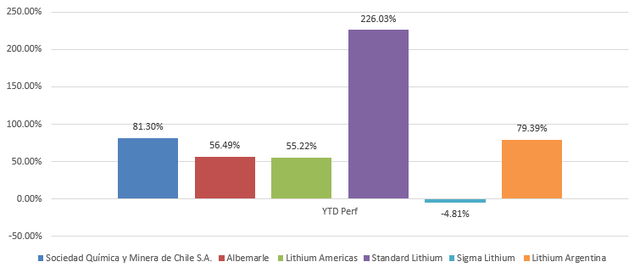
Core Viewpoint - Fitch predicts that despite lithium prices rebounding to over $11,500 per ton in late November (a 38% increase for the second half of 2025), a weak price trend will persist until 2026 due to multiple complex factors affecting production in a fragmented and maturing market [1] Supply and Demand Dynamics - Fitch expects the lithium market to remain oversupplied in 2026 unless there are significant and sustained capacity reductions. Wood Mackenzie forecasts that the surplus of battery-grade lithium chemicals will expand to 153,000 tons (in lithium carbonate equivalent) by 2026 and further to 207,000 tons in 2027 [2] - The short-term supply-demand balance is contingent on supply reductions, influenced by lagging electric vehicle demand and ongoing policy uncertainties [2] Stock Performance - Year-to-date, lithium-related stocks have shown mixed performance. Canadian lithium developer Standard Lithium (SLI.US) has seen its stock price increase by nearly 250%, while larger producers like Lithium Americas (LAC.US) and Sociedad Química y Minera (SQM.US) have also achieved significant gains. In contrast, industry giants like Albemarle (ALB.US) have underperformed amid weak lithium prices and increased sector volatility [2] - The Global X Lithium & Battery Tech ETF has risen 56% year-to-date, partly driven by tariff and trade war-related news [2] Supply Chain Dynamics - The rapidly changing battery technology market, including alternative materials to lithium, may erode expected stable demand. China remains the largest end market (accounting for 64% of total demand) and a dominant processing center, with new market entrants forming strategic partnerships with governments to secure key mineral resources [4] Capital Allocation Discipline - Lithium producers tracked by Fitch are prioritizing balance sheet resilience and rating buffer space before 2026. Albemarle (rated BBB- with a stable outlook) has issued convertible bonds to repay through stock issuance during market upcycles. Sociedad Química y Minera (rated AA(cl)) is responding to pressures by slowing growth capital expenditures and limiting free cash flow consumption [4] - Mineral Resources (MALRF.US) (rated BB- with a stable outlook) has sold a 15% stake in its lithium assets to raise cash for early debt repayment while cutting capital expenditures [4] M&A Opportunities - The challenging industry environment continues to create opportunities for capital-strong large mining companies seeking to diversify their businesses or secure key mineral resources. For instance, Rio Tinto (RIO.US) has been active in lithium project opportunities and is nearing entry into the top five global lithium producers, narrowing the gap with Albemarle and Sociedad Química y Minera [5]




蒙古国最大铜矿卖给澳洲,甚至提出无理要求!不准卖给中国矿石?
Sou Hu Cai Jing· 2025-12-19 03:49
Group 1 - The Oyu Tolgoi copper mine in Mongolia has significant economic potential, with copper reserves exceeding 30 million tons and an estimated total value of over $1 trillion, which could greatly benefit Mongolia's economy through job creation and tax revenue [2][4] - The mine was discovered in 2001 by Ivanhoe Mines, which conducted extensive drilling and became the largest exploration project globally, with the resource expected to last over 50 years [4] - In 2009, Mongolia signed an investment agreement with a joint venture, Oyu Tolgoi LLC, where Rio Tinto, through its subsidiary Turquoise Hill Resources, holds a 66% stake, while the Mongolian government retains 34% [6][11] Group 2 - Mongolia aims to promote local processing of minerals rather than direct export, which is part of a broader strategy to diversify its economy and avoid the "resource curse" by developing manufacturing capabilities [8][9] - The partnership with Rio Tinto is seen as a way for Mongolia to enhance its international standing, although the collaboration has faced challenges, including rising costs and delays in project timelines [11][13] - The project has experienced significant delays, with costs escalating from an initial estimate of $5 billion to over $10 billion, and the underground mine only starting operations in 2023 [13][19] Group 3 - Mongolia's mining laws restrict the export of raw minerals to encourage local refining, but most copper concentrate is still sold to China, the world's largest copper consumer [15][21] - The partnership has faced disputes, including tax issues and demands for changes to the agreement, but a resolution in 2022 led to debt forgiveness and commitments for local employment and technology transfer [17][19] - As of 2023, the mine is operational, producing 160,000 tons of copper, with a target to become the fourth-largest copper mine globally by 2030, contributing over 10% to national tax revenue [19][21]