Toyota(TM)

Search documents
脱碳压力逼迫卡车厂商重组,日野牵手三菱扶桑
日经中文网· 2025-06-13 06:20
Core Viewpoint - Toyota and Daimler Trucks have reached a final agreement on the operational integration of their subsidiaries, Hino Motors and Mitsubishi Fuso Truck and Bus, driven by the urgency to address decarbonization challenges in the face of stricter environmental regulations and rising competition from companies like BYD and Tesla [1][2]. Group 1 - The integration aims to respond to the crisis of decarbonization, with a strong sense of urgency due to increasing environmental regulations globally [1][2]. - Hino Motors has faced financial difficulties due to compliance issues, leading to the transfer of its Hamura plant to Toyota for approximately 150 billion yen [2]. - Daimler has set a target to reduce CO2 emissions from new large trucks and trailers by 45% by 2030 compared to 2019 levels, with a more stringent goal of 90% reduction by 2040 [2]. Group 2 - Despite a 17% growth in electric trucks and buses, Daimler's overall truck sales are projected to decrease by 12% in 2024 compared to 2023, indicating a challenging market environment [3]. - Toyota's support for Hino is limited, as the expected synergies between passenger and commercial vehicles have not materialized, leading to certification issues [4]. - Hino has recognized the need for partnerships to navigate the rapidly evolving market, especially in the context of geopolitical risks and competition from Chinese manufacturers [4][5]. Group 3 - The competitive landscape for commercial vehicles has intensified, with Chinese companies and Tesla emerging as significant players in the market [5]. - The replacement cycle for commercial vehicles is typically longer than for passenger vehicles, with large trucks often having a replacement cycle exceeding 15 years, adding pressure to meet environmental goals [6]. - The establishment of the new company has been delayed by about two years, raising concerns about the ability to concentrate investments and realize new technologies in a timely manner [6].


丰田与戴姆勒卡车业务合并,将带来些什么?
Zhong Guo Qi Che Bao Wang· 2025-06-13 02:25
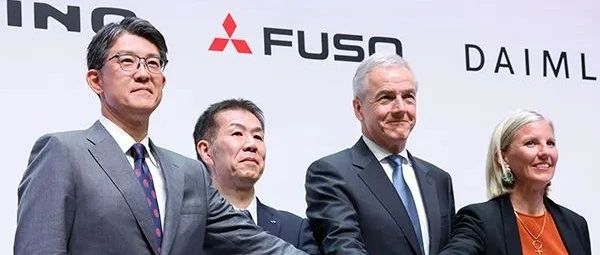
Core Viewpoint - Toyota and Daimler Trucks have reached a business merger agreement, aiming to complete the integration of their respective truck manufacturing subsidiaries by April 2026, which is seen as a strategic response to industry challenges such as electrification and stricter emissions regulations [2][3][6]. Group 1: Merger Details - The new holding company will be jointly owned by Toyota and Daimler Trucks, each holding 25% of the shares, consistent with a previous agreement [3]. - As part of the merger, Hino Motors will issue new shares and transfer its Hamura plant to Toyota for 150 billion yen (approximately 1 billion USD) [3]. - The merger is expected to create a new company with an annual sales volume exceeding 230,000 units, positioning it as a leader in the Asian truck market [5]. Group 2: Strategic Rationale - The merger is driven by external pressures including electrification, environmental regulations, and rising costs, making it difficult for single companies to bear the financial burden alone [6]. - Internally, the complementary strengths of Hino Motors in the Asian market and Mitsubishi Fuso's technological advantages in heavy trucks and electrification will enhance operational efficiency [6]. Group 3: Market Impact - The merger will shift the companies from regional competitors to global players, with over 60% market share in Japan and 35% in Southeast Asia [7]. - The combined entity plans to invest 20 billion USD in electric truck technology over the next five years, aiming for significant advancements in battery technology and autonomous driving [7]. Group 4: Future Plans - The new company plans to go public on the Tokyo Stock Exchange by April 2026, potentially raising 50-80 billion yen for smart factory upgrades and charging infrastructure [8]. - The merger signifies a broader trend in the commercial vehicle industry towards strategic alliances, reflecting the need for resource integration and collaboration in the face of market challenges [8][9].

汽车早餐 | 广汽丰田联合华为、Momenta、小米打造AI生态圈;长安2028年实现人形机器人下线应用;哪吒通知员工居家办公
Zhong Guo Qi Che Bao Wang· 2025-06-13 01:11
Domestic News - The Cyberspace Administration of China released the annual list of online rumors, including "China's new energy product overcapacity" as one of the top ten classic rumors [2] - Hangzhou government issued the "Implementation Measures for the Innovative Application Management of Intelligent Connected Vehicles," effective from July 7, 2025, to promote the development of the intelligent connected new energy vehicle industry [3] - Shenzhen's mayor emphasized accelerating the development of artificial intelligence and low-altitude economy industries, aiming to gather resources and enhance growth [4] - Guangxi government announced a plan to support the replacement of old vehicles and 3C digital products, targeting a sales increase of over 38 billion yuan by 2025 [5] International News - Toyota held a shareholders' meeting where the vice president expressed support for the merger between Hino Motors and Mitsubishi Fuso [6] - Elon Musk urged the EU to expedite the approval of Tesla's Full Self-Driving (FSD) technology, claiming delays are detrimental to European safety [7] - Polestar announced plans to restart market expansion in France, aiming to make it one of its top three European markets [7] Corporate News - GAC Toyota announced a collaboration with Huawei, Momenta, and Xiaomi to create an AI ecosystem, launching new models equipped with advanced technologies [8] - Changan Automobile plans to invest over 200 billion yuan in emerging fields over the next decade, with goals to complete flying car test flights by the end of 2025 and humanoid robot applications by 2028 [9] - XPeng Motors officially launched the G7 model, which features L2-level intelligent driving assistance across its entire lineup [9] - GAC's first mass-produced flying car, GOVY AirCab, was unveiled in Hong Kong with a price not exceeding 1.68 million yuan, set for demonstration operations in the Guangdong-Hong Kong-Macao Greater Bay Area [10] - Neta Auto announced that employees will work from home starting June 12, with office access suspended [11] - Tengshi's Z9 model is expected to begin deliveries of a new three-spoke sports steering wheel after June 20, responding to user feedback [12]





全球多家车企因稀土短缺拉响停产警报 专家:跨国车企或调整供应链布局
Mei Ri Jing Ji Xin Wen· 2025-06-12 15:23
Core Viewpoint - Multiple automotive companies are facing a "panic" due to a shortage of rare earth materials, which are critical for automotive production, particularly in electric vehicles [1][2][4]. Group 1: Impact on Automotive Production - Suzuki has temporarily halted operations on some production lines in Japan due to delays in receiving rare earth component shipments from China, affecting automotive electronic systems and engine parts [1]. - The Indian automotive industry is at risk, with major manufacturers like Tata, Maruti Suzuki, and Mahindra having only three days' worth of rare earth magnet inventory left, potentially leading to widespread production halts [2]. - Ford has also paused production of its Explorer SUV due to similar rare earth shortages [2]. Group 2: Export Control Measures - The Chinese Ministry of Commerce announced export control measures on seven types of rare earth materials, effective from April 4, which has led to significant delays in obtaining export licenses for these materials [1][3]. - Only 25% of the rare earth export license applications submitted by European component manufacturers have been approved since April, causing production delays and temporary shutdowns in some European automotive companies [2]. Group 3: Importance of Rare Earth Elements - Rare earth elements play a crucial role in automotive manufacturing, especially in electric vehicles, where materials like neodymium-iron-boron significantly enhance power density, acceleration, and range [4][5]. - Each pure electric vehicle consumes 5 to 10 kg of neodymium-iron-boron, while plug-in hybrid vehicles consume 2 to 3 kg [4]. Group 4: Supply Chain Adjustments - In response to the rare earth crisis, multinational automotive companies may consider adjusting their supply chains to produce rare earth-related components in China to leverage local supply chain advantages [6]. - Companies like Tesla, Ford, and Toyota are accelerating the development of technologies to reduce reliance on rare earth magnets, with Toyota working on "rare earth-free motors" [6]. Group 5: Strategic Cooperation and Inventory Management - Experts suggest that multinational companies should maintain strategic cooperation with China rather than rush to restructure supply chains, which could incur higher costs [7]. - Increasing inventory and optimizing supply chain management for raw materials are recommended strategies to mitigate the impact of such crises [7].


Toyota Indiana Celebrates 1-Millionth Hybrid
Prnewswire· 2025-06-12 15:00
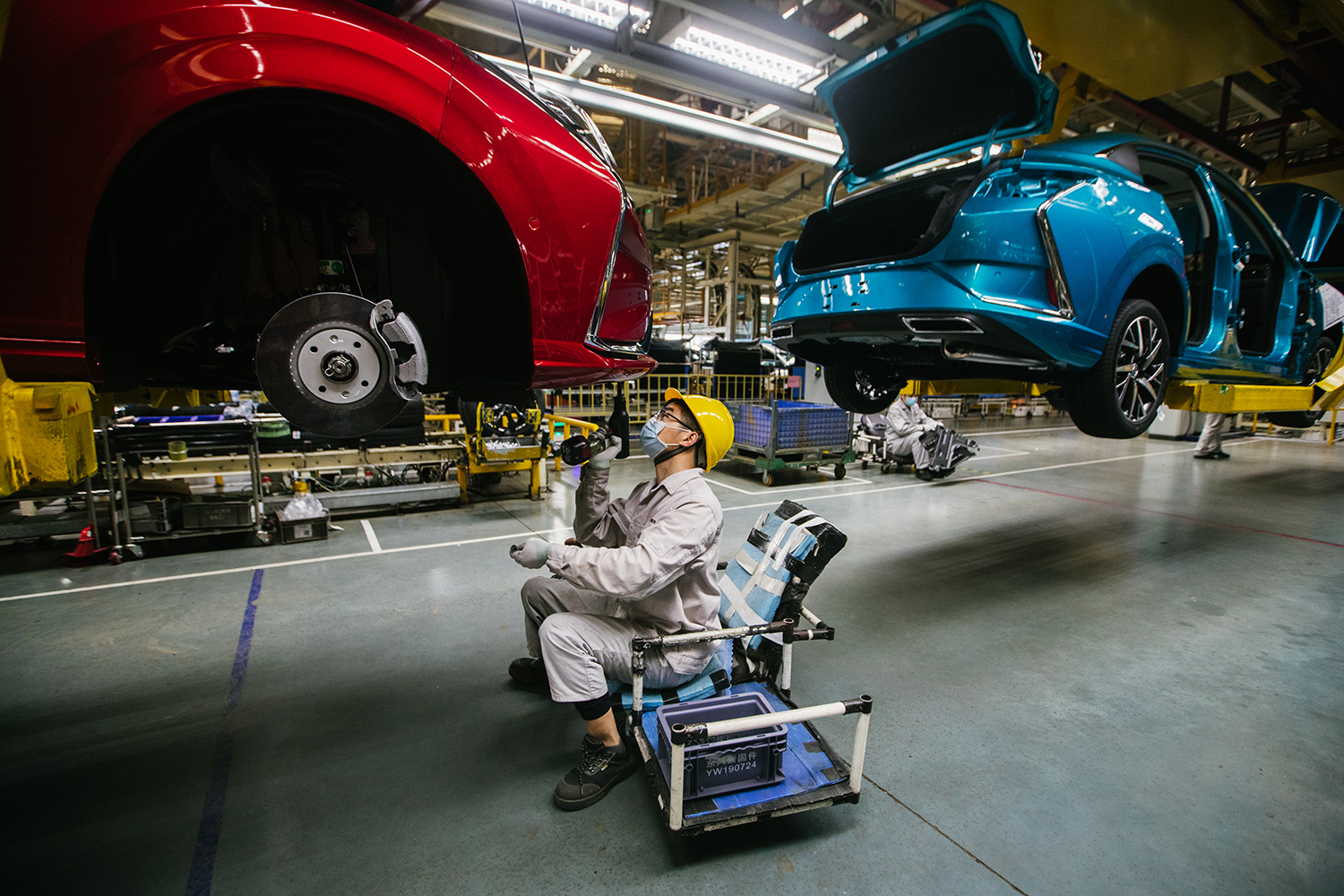
Core Insights - Toyota Indiana celebrates the production of its 1-millionth hybrid vehicle, a 2025 Toyota Sienna Platinum, marking a significant achievement for the plant and its workforce [1][3] - The Sienna has been produced at Toyota Indiana since 2003 and is recognized for its fuel efficiency, with an EPA-estimated 36 combined mpg rating [1] - The Sienna was recently awarded the top spot in the 2025 J.D. Power Vehicle Dependability Study in the minivan segment, highlighting its reliability and customer satisfaction [2] Company Performance - In May, Sienna sales increased by over 95% year-over-year, contributing to nearly half of Toyota's total sales volume for electrified vehicles [3] - Toyota Indiana represents an $8 billion investment and has contributed over $54 million to local organizations since its establishment in 1996 [4] Electrification Commitment - The all-hybrid Sienna reflects Toyota's commitment to electrification and is part of a broader strategy to achieve carbon neutrality by 2050 [3] - Toyota employs nearly 48,000 people in the U.S. and has produced over 35 million vehicles across its 11 manufacturing plants [6] - The company plans to begin manufacturing automotive batteries for electrified vehicles at its North Carolina plant in spring 2025 [6] Community Engagement - Toyota has launched a tour booking platform to inspire the next generation in advanced manufacturing, allowing virtual and in-person tours of its U.S. manufacturing facilities [7]

一汽丰田屡战电动化:中国团队主导的bZ5是否“救星”
Jing Ji Guan Cha Wang· 2025-06-12 11:55
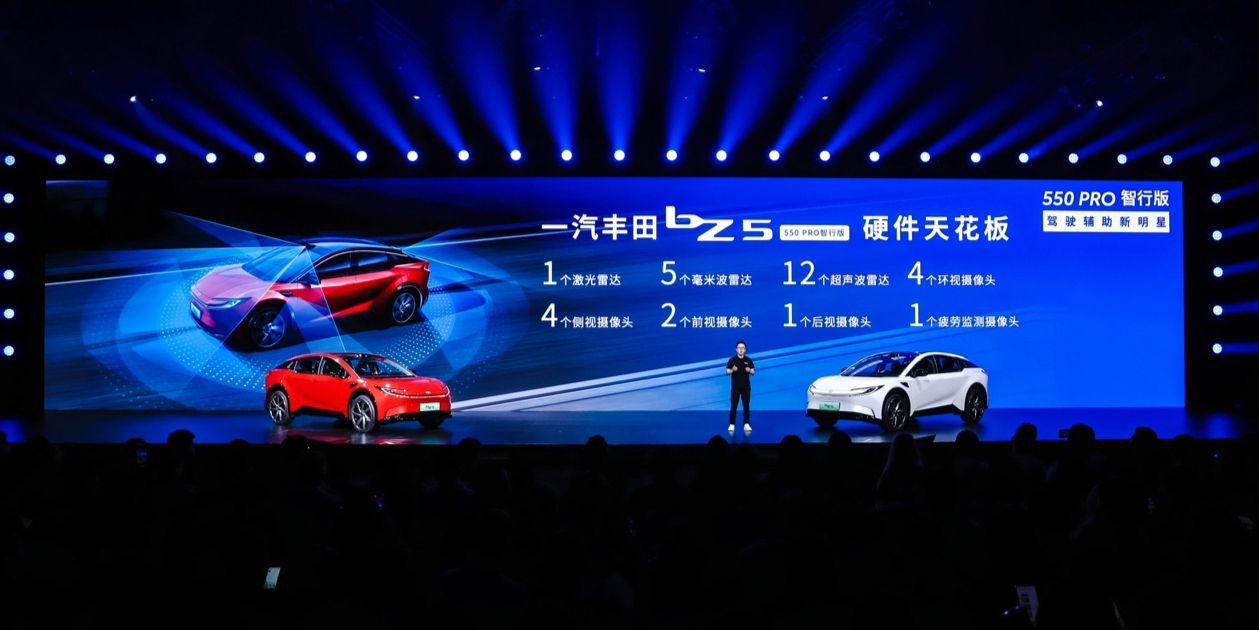
Core Insights - The launch of the bZ5 marks a significant step for Toyota in the electric vehicle market, with a focus on local development and consumer feedback in China [2][4] - The bZ5 is positioned as a mid-size pure electric SUV, featuring advanced battery technology and a comprehensive safety management system [2][3] Product Features - The bZ5 is available in four versions, priced between 129,800 and 159,800 yuan, with a range of 550 to 630 kilometers [2] - It utilizes BYD's blade battery technology, with two battery capacity options of 65.28 kWh and 73.98 kWh, and supports fast charging [2] - The vehicle is equipped with a sophisticated battery management system, including integrated cooling systems and multiple monitoring measures for safety [2] Intelligent and Connected Features - The bZ5 includes advanced intelligent features, such as a comprehensive array of sensors and cameras for enhanced driving assistance [3] - It features a 15.6-inch central control screen capable of running over 200 applications, enhancing its connectivity [4] Market Position and Strategy - The bZ5 faces competition from domestic electric models like the Xpeng G6 and Leapmotor C10, but benefits from Toyota's brand reputation [4] - Toyota aims to sell 1.5 million electric vehicles annually by 2026 and has adjusted its 2027 target to 1 million units, reflecting a cautious yet proactive approach to electric vehicle development [4] - The company plans to develop 15 pure electric models by 2027 and has introduced a new One R&D system to streamline resources and enhance efficiency in local development [4]
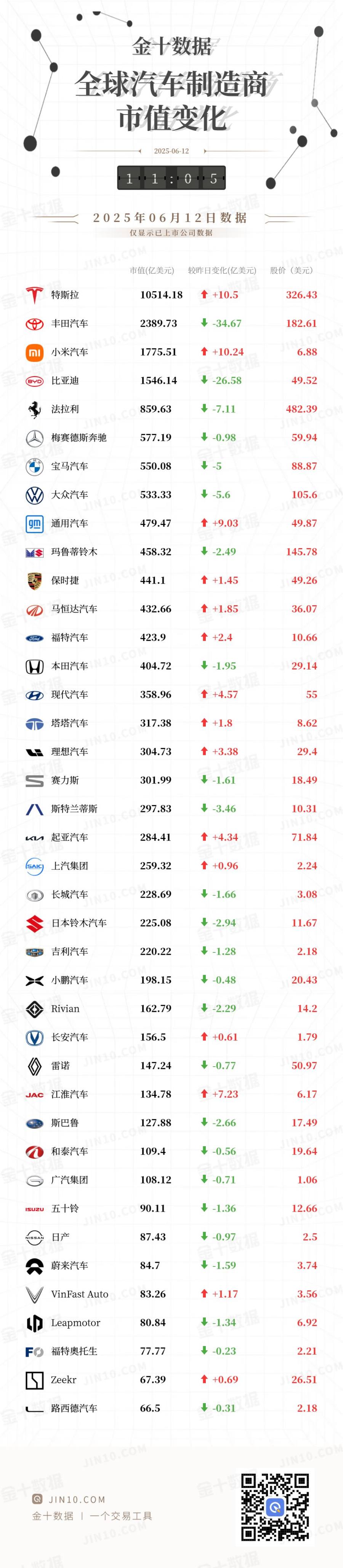
金十图示:2025年06月12日(周四)全球汽车制造商市值变化
news flash· 2025-06-12 03:11
Market Capitalization Changes - Tesla's market capitalization reached $105.14 billion, with an increase of $1 billion from the previous day, and its stock price is $326.43 [3] - Toyota's market capitalization is $238.97 billion, showing a decrease of $34.67 million, with a stock price of $182.61 [3] - Xiaomi Auto's market capitalization is $177.55 billion, increasing by $10.24 million, with a stock price of $6.88 [3] - BYD's market capitalization is $154.61 billion, decreasing by $26.58 million, with a stock price of $49.52 [3] - Ferrari's market capitalization is $85.96 billion, decreasing by $7.11 million, with a stock price of $482.39 [3] Other Notable Companies - General Motors has a market capitalization of $47.95 billion, increasing by $9.03 million, with a stock price of $49.87 [4] - Ford's market capitalization is $42.39 billion, increasing by $2.4 million, with a stock price of $10.66 [4] - Hyundai's market capitalization is $35.90 billion, increasing by $4.57 million, with a stock price of $22 [4] - Kia's market capitalization is $28.44 billion, increasing by $4.34 million, with a stock price of $71.84 [4] - Nissan's market capitalization is $8.74 billion, decreasing by $0.97 million, with a stock price of $2.50 [5]




德日巨头车企官宣合并!
鑫椤锂电· 2025-06-12 01:39
关注公众号,点击公众号主页右上角" ··· ",设置星标 "⭐" ,关注 鑫椤锂电 资讯~ 本文来源:摘自连线新能源 6月10日, 丰田汽车公司和德国戴姆勒卡车公司发布联合公告, 丰田汽车旗下日野汽车和德国戴姆勒 卡车旗下三菱扶桑卡客车已针对业务 整合达成 最终协议。 根据公告, 日野汽车 和 三菱扶桑卡客车 将成立一家控股公司, 戴姆勒卡车和丰田 汽车 将 分别持有 25% 股份 ,而 控股公司计划持有三菱扶桑 卡客车 和日野 汽车 100%的股份,但两家公司的品牌和 销售网络将在日本和海外保持不变 ,控股公司 力争在 2026年4月之前在日本东京上市。 丰田汽车和 戴姆勒卡车公司表示, 此次合作旨在整合资源,提升在全球商用车市场的竞争力 。 END 2025(第三届)中国固态电池 技 术 发 展 与 市 场 展 望 高 峰 论 坛 会议主办: 鑫椤资讯 会议时间: 2025年7月8-9日(8号报到) 会议地点: 中国·上海 论坛议题 I C C S I N O 会议报名 iccsin o ▼ 19921233064(微信同) /END/ ...
德日巨头车企官宣合并!
鑫椤锂电· 2025-06-12 01:39
Group 1 - Toyota Motor Corporation and Daimler Truck AG have announced a final agreement for business integration involving their subsidiaries, Hino Motors and Mitsubishi Fuso Truck and Bus Corporation [1][7] - A holding company will be established, with both Daimler Truck and Toyota holding 25% of the shares, aiming to own 100% of Hino Motors and Mitsubishi Fuso Truck and Bus [7] - The brands and sales networks of both companies will remain unchanged in Japan and overseas, with plans for the holding company to be listed in Tokyo by April 2026 [7] Group 2 - The collaboration aims to integrate resources and enhance competitiveness in the global commercial vehicle market [7]
“60天”的承诺:汽车供应链告别“无息融资”时代?
3 6 Ke· 2025-06-12 01:17
Core Viewpoint - The recent commitment by leading automotive companies to limit payment cycles to suppliers to within 60 days marks a significant shift in the industry, providing relief to suppliers who have long faced extended payment terms [1][4][9]. Group 1: Payment Cycle Issues - The automotive industry has historically imposed long payment cycles, often extending to 90 or 180 days, which has created a financial burden on suppliers [1][3]. - Companies have utilized commercial acceptance bills as a means to delay actual cash payments, effectively turning supplier payments into interest-free loans [1][3]. - This practice has led to a cascading effect of delayed payments throughout the supply chain, ultimately harming smaller suppliers who lack bargaining power [3][4]. Group 2: Financial Risks and Implications - Extended payment terms increase credit risk and complicate the assessment of suppliers' ongoing viability, as reliance on a single automaker can weaken their liquidity [4][9]. - The complexity of accounts receivable and bills requires additional resources for verification, which can further strain suppliers' already thin profit margins [4][9]. Group 3: Comparison with Global Players - Global leaders like Tesla, Toyota, and General Motors have established shorter payment cycles, viewing prompt payments as a strategic advantage to secure high-quality suppliers [6][8]. - Tesla's payment terms typically range from 30 to 45 days, allowing it to build strong relationships with suppliers and ensuring a competitive edge in technology and production [6][8]. - Toyota's "lean production" philosophy emphasizes the financial health of suppliers as essential for stable production, while GM maintains a rapid payment cycle of around 30 days [8]. Group 4: Future Outlook and Industry Transformation - The commitment to a 60-day payment cycle is seen as a step towards a healthier automotive industry, fostering fairer relationships between automakers and suppliers [8][11]. - The real challenge lies in the execution of this commitment, as it requires a cultural shift from viewing suppliers merely as cost centers to recognizing them as partners in risk and reward [11]. - A financially healthier supply chain will enable suppliers to invest more in innovation, which is crucial for the transition of the Chinese automotive industry from a manufacturing powerhouse to an innovation leader [11].