UBS(UBS)

Search documents
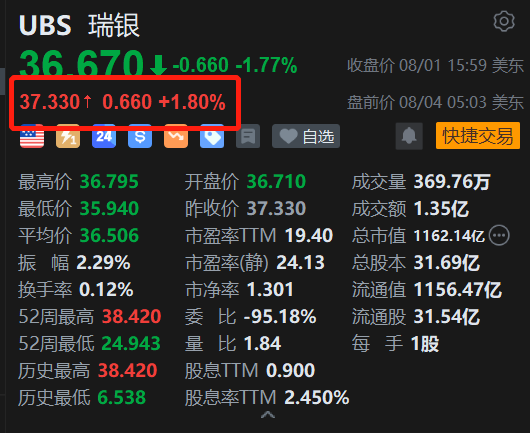
美股异动|瑞银盘前涨1.8% 3亿美元和解美司法部诉瑞信抵押债案
Ge Long Hui· 2025-08-04 09:13
Core Insights - UBS shares rose by 1.8% in pre-market trading following an agreement with the U.S. Department of Justice to resolve legacy issues related to Credit Suisse's sale of mortgage-backed securities in the U.S. [1] Group 1: Agreement Details - UBS Group announced that it has reached an agreement with the U.S. Department of Justice to address unresolved consumer relief obligations stemming from Credit Suisse's past activities [1] - Credit Suisse Securities (USA) LLC will pay $300 million to settle all outstanding consumer relief obligations under a 2017 settlement agreement [1] Group 2: Financial Implications - UBS expects to recognize credit income from non-core and legacy businesses, which will arise from the release of contingent liabilities established during the purchase price allocation process of acquiring Credit Suisse [1]


X @Bloomberg
Bloomberg· 2025-08-04 08:42
UBS is sounding out investors for a potential significant risk transfer as the banking giant explores ways to mitigate the impact of higher capital requirements proposed by the Swiss government https://t.co/rOCuS0VMMh ...
美国关税措施后,瑞士股市开盘补跌1.8%
news flash· 2025-08-04 07:40
美国关税措施后,瑞士股市开盘补跌1.8% 金十数据8月4日讯,由于美国对瑞士征收39%的关税,瑞士股市在早盘交易中大幅下跌。SMI指数下挫 1.8%,跌至4月以来的最低水平,这是瑞士市场在上周五因本地假期休市后首次对该关税消息作出反 应。苏黎世保险、瑞银(UBS)和罗氏(Roche)成为跌幅最大的几家公司。特朗普上周决定对瑞士实 施39%的关税,接近全球最高水平,甚至高于4月份曾讨论的31%税率,新关税税率将于本周四生效。 投行Vontobel分析师Mark Diethelm在一份报告中表示:"这使得瑞士出口商相比欧盟、日本或韩国的企 业处于明显劣势,因为这些地区的基准关税仅为15%。" ...

X @Bloomberg
Bloomberg· 2025-08-04 05:30
UBS says it has reached an agreement with the US Department of Justice to resolve a legacy Credit Suisse matter related to the former bank’s role in selling residential mortgage-backed securities in the US https://t.co/KFKsTTlhHS ...
瑞银:将支付3亿美元以解决未偿消费者救济责任
Jin Rong Jie· 2025-08-04 05:23
Core Points - UBS has reached an agreement with the U.S. Department of Justice to resolve outstanding debts related to a 2017 agreement involving Credit Suisse [1] - The agreement pertains to legacy residential mortgage-backed securities business of Credit Suisse [1] - On August 1, Credit Suisse Securities reached an agreement with the Department of Justice to pay $300 million to settle all consumer relief obligations under the 2017 agreement [1]
瑞银:预计第三季度将确认一项来自非核心及遗留业务的信贷收入
Xin Lang Cai Jing· 2025-08-04 04:59
格隆汇8月4日|瑞银集团:2025年第三季度,瑞银预计将确认一项来自非核心及遗留业务的信贷收入, 该收入源于在收购瑞士信贷的购买价格分配流程中所设立的或有负债的解除。 来源:格隆汇APP ...
瑞银:美联储理事库格勒意外辞职 鲍威尔继任战提前打响
贝塔投资智库· 2025-08-04 04:03
瑞银经济学家Amanda Wilcox在上周五的一份报告中写道:"库格勒理事席位的提前空缺,将使下任主 席的遴选工作进入加速阶段。"美联储此前宣布,库格勒将于8月8日正式离任。这位2023年9月就任、 原定任期至2026年1月的理事,上周因个人原因缺席了联邦公开市场委员会(FOMC)会议。 库格勒在任职未满两年之际提前离任,正值白宫酝酿鲍威尔最终继任方案的关键时刻。 点击蓝字,关注我们 据瑞银经济学家分析,美联储理事库格勒上周五的意外辞职,使得主席鲍威尔继任者的遴选工作被迫提 前启动 ,这一职位空缺可能导致美联储领导层重组远早于预期。 而关于鲍威尔的潜在继任者,媒体和政策界已有诸多猜测。Wilcox指出:"包括《华尔街日报》6月报 道在内的多家媒体已披露若干候选人名单,财政部长斯科特·贝森特、国家经济委员会主任凯文·哈西特 和前理事凯文·沃什均在列。我们认为本周两位支持降息25个基点的异议者之一沃勒理事也可能参与角 逐。" 尽管瑞银未对政府最终决策作出预测,但Wilcox强调:"我们期待关注这一进程,特别是在今天下午的 辞职事件使得时间表明显提前之后。" 库格勒理事的提前离任使美联储理事会出现七个空缺席位,白 ...
减少现金增持黄金,三成亚太区家族办公室拟增加对大中华区投资
Hua Xia Shi Bao· 2025-08-01 12:39
Core Insights - The report from UBS indicates a shift in asset management strategies among ultra-high-net-worth clients, with a notable decrease in cash holdings and an increased interest in gold and alternative investments [2][6] Group 1: Family Office Trends - The average net worth of surveyed family offices reached $2.7 billion, with total assets under management amounting to $651 billion [2] - Family offices plan to hold only 6% of their assets in cash by 2025, reflecting a desire to invest more in global assets [2] - 21% of family offices globally plan to increase their allocation to gold and precious metals, a significant rise from the 10%-16% range observed in the past five years [2] Group 2: Investment Allocation - In the U.S., alternative investments constitute 54% of family office portfolios, with private equity at 27% and real estate at 18% [5] - Swiss family offices allocate 56% to traditional assets, with 34% in stocks and 13% in fixed income, while 44% is directed towards alternative assets [5] - North America is the preferred region for family office investments, accounting for 55% of allocations, followed by Western Europe at 21% and the Middle East at 14% [5] Group 3: Motivations Behind Investment Shifts - The decline in cash holdings and the increase in gold investments are driven by low interest rates and geopolitical instability, making gold an attractive option for wealth preservation [6] - The current 4% interest rate on USD deposits is no longer appealing to ultra-high-net-worth clients, leading them to seek greater appreciation potential in gold and alternative investments [6] Group 4: Interest in Chinese Assets - 35% of family offices plan to increase investments in the Asia-Pacific region over the next five years, with 30% targeting Greater China [7] - 39% of family offices intend to boost their investments in China within the next 12 months, indicating a growing interest in the Chinese market [7] - There is a consensus among global family offices regarding investment opportunities in sectors like pharmaceuticals and generative AI, with a significant focus on healthcare technology and innovation [7] Group 5: Hong Kong Market Appeal - The Hong Kong stock market has become increasingly attractive to global family offices, particularly due to the strong performance of technology companies listed there [8] - The availability of high-growth A+H listed companies has drawn overseas investors to the Hong Kong capital market [8]

瑞银:料今年香港IPO发行能超过2000亿港元 新修订最低40%配售额
智通财经网· 2025-08-01 11:59
Core Viewpoint - UBS anticipates that the IPO issuance volume in Hong Kong will exceed HKD 200 billion this year, driven by recent regulatory enhancements [1] Group 1: IPO Market Enhancements - The Hong Kong Stock Exchange has published a consultation summary regarding the optimization of IPO pricing and public market regulations [1] - The revised pricing mechanism and public market requirements are expected to enhance Hong Kong's attractiveness and competitiveness as a primary listing location for issuers [1] - The new minimum allocation of 40% ensures a stable pricing mechanism and broad participation from institutional investors, contributing to long-term market stability [1] Group 2: Implementation Timeline - The new regulations from the Hong Kong Stock Exchange will take effect on August 4 [1]
关税阴云+淡季将至 华尔街“聪明钱”加速撤离美股
Zhi Tong Cai Jing· 2025-08-01 11:21
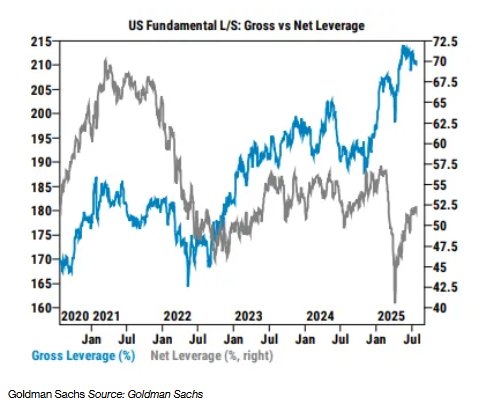
Group 1 - Despite the S&P 500 index nearing historical highs, Wall Street's "smart money" remains bearish, with hedge funds reducing their equity positions significantly over the past four weeks [1] - Hedge funds are cutting positions in the technology, media, and telecommunications sectors at the fastest pace in a year, ahead of the earnings season for these sectors [1] - The cautious stance of hedge funds has previously allowed them to avoid losses during market sell-offs, indicating a strategic approach to risk management [1][3] Group 2 - The Federal Reserve maintained interest rates, with Chairman Powell emphasizing the need for more time to assess the impact of tariffs on inflation before shifting to a more accommodative policy [2] - Hedge funds have successfully reduced stock exposure and increased short positions in anticipation of tariff announcements, demonstrating foresight in their investment strategies [3] - Retail investors have shown contrasting enthusiasm, with net buying of stocks for 23 consecutive trading days, while hedge funds remain indifferent to the market rally [3] Group 3 - Historical data suggests that August and September are typically the worst-performing months for the stock market, particularly in the first year of a presidential term, indicating potential challenges ahead for the S&P 500 [5] - UBS reports that if historical trends hold, the S&P 500 may face difficulties in the upcoming months, with a potential strong rally expected by year-end [5]