Yum!(YUM)

Search documents
肯德基回应冰豆浆贵1元,称因容量杯型不同
3 6 Ke· 2025-09-05 08:47
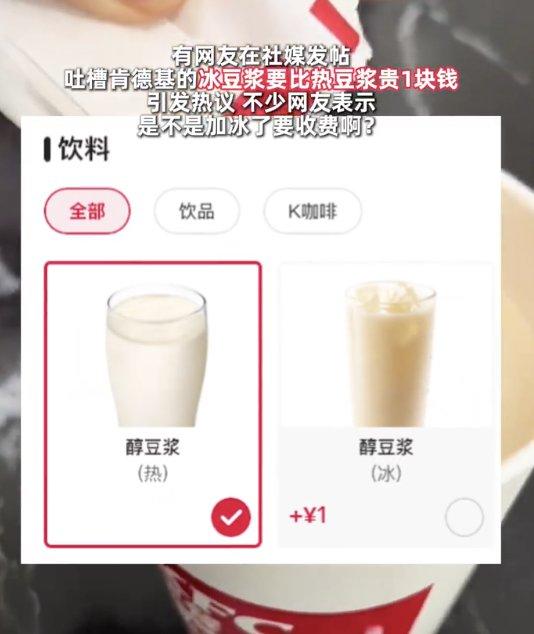
Group 1 - The core issue revolves around the price difference of 1 yuan between iced and hot soy milk at KFC, which has sparked discussions among consumers [1] - KFC staff confirmed that the price difference is due to variations in cup size and capacity, with iced soy milk being approximately 1/4 less in volume compared to hot soy milk [1] - The iced soy milk does not contain ice, and the price difference is not attributed to ice cubes affecting the volume [1] Group 2 - A specific KFC location has decided to discontinue selling iced soy milk due to the high volume of customer complaints regarding the price difference, which increases the cost of handling customer service issues [1]


肯德基 “殡葬风” 被嘲,市场部天塌了!
Xin Lang Cai Jing· 2025-09-01 19:23
Core Viewpoint - KFC's unconventional marketing strategy during the Ghost Festival has sparked significant online engagement and humor, contrasting with the traditional avoidance of ghost-related themes in Chinese culture [1][4][18]. Group 1: Marketing Strategy - KFC launched a "ghostly flavor" limited marketing campaign, which included a white cloth barrier resembling a funeral setting, leading to widespread social media reactions [1][2][4]. - The black-and-white barrier design, perceived as visually shocking, was quickly replaced with a more traditional red and white design after public backlash [16][18]. - This incident reflects KFC's long-standing approach of engaging consumers through dark humor and unconventional marketing tactics, which have previously included bizarre campaigns like the "finger" series and a mock funeral for soggy fries in Canada [19][21][30]. Group 2: Consumer Engagement - The humorous reactions from consumers included memes and jokes about the "death" of KFC chickens, showcasing the brand's ability to generate organic engagement through unexpected marketing [6][12][31]. - The incident has led to a broader discussion about how brands navigate cultural sensitivities, with some consumers questioning KFC's understanding of local customs [14][40]. - The spontaneous nature of the online discussions surrounding KFC's marketing highlights the effectiveness of creating controversy that encourages consumer participation, aligning with the current marketing trend of "black-red is still red" [39][40]. Group 3: Cultural Sensitivity - The juxtaposition of KFC's marketing with local cultural practices, especially during sensitive periods like the Ghost Festival, raises questions about brand awareness and cultural appropriateness [14][40]. - Similar to KFC, another brand, Heytea, faced unintended associations with ghostly themes due to its product packaging, demonstrating how brands can inadvertently tap into cultural narratives [32][39].

七夕相约享浪漫美味,肯德基湖南第500家餐厅落户长沙
Sou Hu Cai Jing· 2025-08-29 18:48
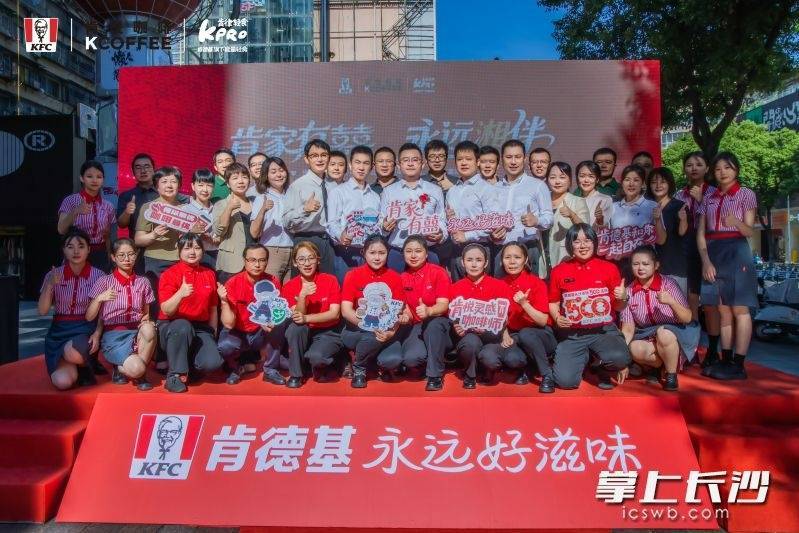
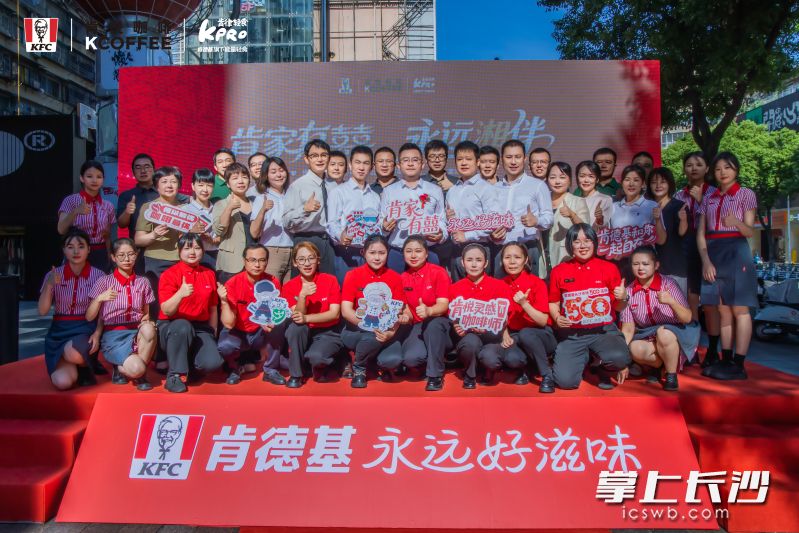
Core Insights - KFC has opened its 500th restaurant in Hunan, marking a significant milestone in its expansion within the region, alongside the launch of its 100th KFC Coffee outlet and the first KPRO restaurant in Hunan, reflecting a shift towards diversified consumption scenarios [1][3] Group 1: Business Expansion - The opening of the 500th KFC restaurant and the 100th KFC Coffee outlet in Changsha demonstrates KFC's agile response to evolving consumer demands, transitioning from traditional fast food to a more diversified offering that includes coffee and healthy light meals [1][3] - The KPRO restaurant, which focuses on healthy eating, aims to meet the growing consumer interest in nutritious food options, featuring a menu that includes energy bowls and healthy wraps, catering specifically to young urban consumers [3] Group 2: Market Trends - The coffee market in China is expanding rapidly, growing at over 15% annually, which KFC has capitalized on through its KFC Coffee brand, receiving positive market feedback [3] - The light meal market is also experiencing significant growth, prompting KFC to introduce its KPRO brand to provide balanced nutrition and cater to health-conscious consumers [3] Group 3: Community Engagement - KFC organized a "KFC Family Joy" event across 14 restaurants in Hunan to celebrate the Qixi Festival, promoting social interaction and engagement through themed activities [5] - The company has established 100 food stations in Hunan to combat food waste, providing surplus food to those in need, demonstrating its commitment to social responsibility [8] - KFC has initiated the "Angel Restaurant" model to support employment opportunities for people with disabilities, with six such restaurants operating in Hunan, fostering an inclusive work environment [8]
从炸鸡汉堡到多元化场景消费,肯德基湖南第500家餐厅落户长沙
Chang Sha Wan Bao· 2025-08-29 11:43
Core Insights - KFC is adapting to consumer demand by diversifying its offerings, including the launch of its 500th restaurant in Hunan and the 100th KFC Coffee location, alongside the first KPRO restaurant focused on healthy eating [1][3] Group 1: Business Expansion - KFC has opened its 500th restaurant in Hunan and the 100th KFC Coffee location, marking significant milestones in its expansion strategy [1] - The introduction of KPRO, a restaurant brand focusing on healthy light meals, reflects KFC's response to the growing demand for health-conscious dining options [3] Group 2: Market Trends - The coffee market in China is expanding rapidly, growing at over 15% annually, which KFC is capitalizing on through its KFC Coffee brand [3] - The light meal market is also experiencing rapid growth, with KFC's KPRO offering a range of nutritious options aimed at urban consumers seeking a balanced diet [3] Group 3: Community Engagement - KFC is actively engaging with the community through themed events, such as the "KFC Family Joy" event during the Qixi Festival, which promotes social interaction and consumer participation [5] - The company has established 100 food stations in Hunan to combat food waste by providing surplus food to those in need, demonstrating its commitment to social responsibility [8] - KFC has initiated the "Angel Restaurant" model to create job opportunities for people with disabilities, with six such restaurants operating in Hunan, promoting inclusivity in the workforce [8]
2025 上海慈善周启幕!“一杯咖啡的温暖”再出发,1300 + 门店邀您用咖啡传递爱心
Di Yi Cai Jing· 2025-08-29 06:05
Core Viewpoint - The "A Cup of Coffee's Warmth" charity event during the 2025 Shanghai Charity Week aims to integrate coffee culture with charitable activities, engaging over 80 coffee brands and more than 1,300 stores to support migrant and autistic children in the city [1][3]. Group 1: Event Overview - The event will take place from August 31 to September 6, 2025, and is organized by the Shanghai Civil Affairs Bureau [1]. - It aims to create a participatory environment for the public, allowing everyone to engage in charitable acts through coffee consumption [1][3]. Group 2: Participation and Engagement - Over 1,300 coffee shops will act as "charity stations," including both well-known chains like Starbucks and independent brands such as Bear Paw Coffee and Pocket Coffee [2][3]. - Consumers can easily locate participating coffee shops through the "Love Coffee Map" on Gaode Map or by scanning QR codes in stores [3]. Group 3: Corporate Social Responsibility - Companies like KFC and Burger King will implement a "sales-linked donation" model, where each coffee purchase contributes to charity [5]. - Starbucks will offer cultural experiences for special needs children, while Nespresso will provide exclusive coffee for donors [5]. Group 4: Donation Channels - The event features both offline and online donation options, allowing contributions through QR codes in stores or via platforms like Taobao and WeChat [7]. - Donors contributing over 5.20 yuan will receive electronic coffee vouchers and gifts from participating stores [7]. Group 5: Long-term Impact - The initiative aims to build a sustainable charity ecosystem, involving over 20 social organizations and integrating resources from the coffee industry [9][10]. - The funds raised will specifically support projects for migrant and autistic children, ensuring transparency in fund allocation [9]. Group 6: Community Engagement - Offline events such as coffee markets and public displays will be held to raise awareness and encourage participation [12]. - Promotional content will be displayed across major public transport and commercial areas to enhance visibility and engagement [12].


披萨界老钱,没有中年危机
东京烘焙职业人· 2025-08-26 08:39
Core Viewpoint - The article explores the evolution of Pizza Hut in China over 35 years, highlighting its expansion strategy, adaptation to consumer trends, and the importance of innovation and digital transformation in maintaining competitiveness in the restaurant industry [5][37]. Expansion and Market Strategy - Pizza Hut entered China in 1990, opening its first store in Beijing, and has since expanded to 3,864 stores by Q2 2023, with 95 new stores added in a single quarter [4][5]. - The brand initially targeted first and second-tier cities, aligning with urbanization trends where urban population increased from 26.41% in 1990 to nearly 50% in 2010 [9][11]. - In 2013, Pizza Hut opened its 1,000th store in a fourth-tier city, indicating a strategic shift towards expanding into lower-tier cities due to their rapid economic growth and saturation in first-tier cities [16][17]. Consumer Trends and Brand Adaptation - The article discusses the K-shaped recovery post-pandemic, where some consumers seek high-quality experiences while others prioritize cost-effectiveness, prompting Pizza Hut to adapt its store formats [24][25]. - Pizza Hut has developed three main store types: Standard Stores, WOW Stores, and PIZZERIA, each catering to different consumer needs and price points [25][27]. Digital Transformation and Supply Chain - The company has embraced digital transformation since 2015, implementing AI systems across all stores to enhance operational efficiency and food safety [31][32]. - Since 2018, Pizza Hut has focused on local sourcing for its supply chain, integrating high-quality local products into its offerings, which supports local agriculture and enhances product quality [33]. Financial Performance and Sustainability - The implementation of digital operations and a self-owned supply chain has led to improved profit margins, with quarterly profit rates showing consistent growth, reaching 14.4% in Q1 2025 [34]. - The company is also committed to sustainability, reporting a 9% reduction in indirect carbon emissions per store in 2024 [36]. Conclusion - Pizza Hut's ability to innovate and adapt to changing consumer preferences and market conditions has been crucial for its sustained growth and competitiveness in the challenging restaurant industry [37].
3 Fast Food Stocks Defying the Odds
MarketBeat· 2025-08-21 14:33
Core Insights - Fast food is losing market share to fast-casual restaurants as consumer preferences shift towards healthier and more diverse dining options [1][2][3] - Despite the overall decline in fast food, some Quick-Serve Restaurants (QSRs) are successfully adapting and reporting strong same-store sales growth [2][4] Group 1: Industry Trends - Fast-casual establishments are increasingly popular, offering customizable menu choices and better dining experiences, which appeal to health-conscious consumers [2][3] - QSRs still account for 80% of total restaurant transaction volume, indicating significant revenue potential for those that adapt to changing consumer preferences [3] Group 2: Company Performances - Dutch Bros Inc. reported a 6% same-store sales growth in Q2 and a 28% revenue increase to $415 million, driven by a unique in-store experience and a strong loyalty program with 70% adoption [6][7][8] - Yum Brands' Taco Bell achieved a 4% same-store sales growth in Q2, leveraging digital marketing and appealing to younger consumers, while its chicken sales increased by 50% [9][10][11] - Domino's Pizza experienced a 3.4% same-store sales growth in Q2, although it missed EPS projections due to foreign currency issues; its loyalty program has nearly 36 million members [12][13]


肯德基下场抢炸鸡生意
Bei Jing Shang Bao· 2025-08-21 00:50
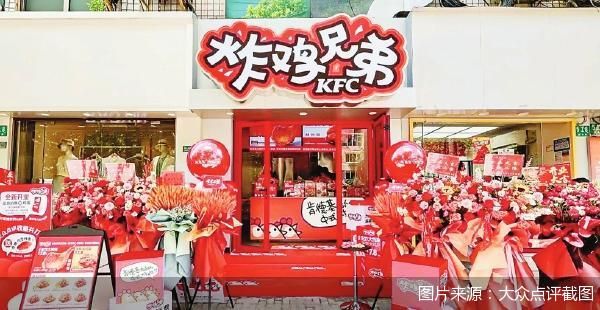
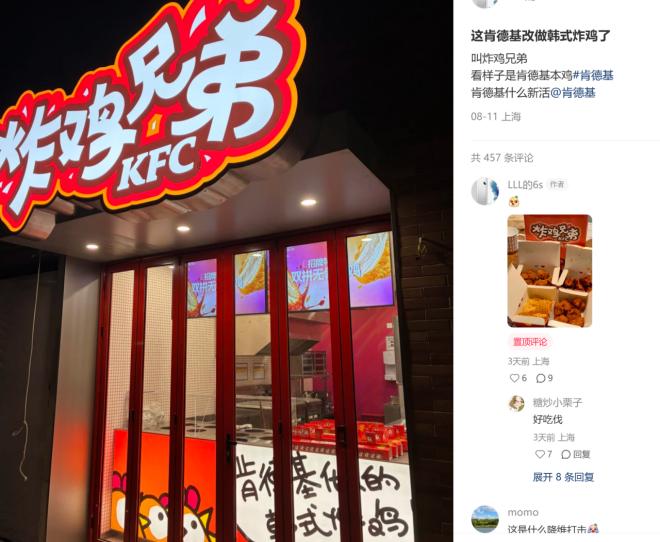
Core Viewpoint - KFC has entered the fried chicken market with the launch of two new stores named "Fried Chicken Brothers" in Shanghai, focusing on Chinese and Korean fried chicken offerings [1][2] Group 1: Store Details - The two new stores are located in Shanghai's Pudong New Area, each approximately 20 square meters, with no dine-in area, emphasizing takeout and delivery services [1] - The Chinese store features items like fried chicken legs and chicken frames, with an average spend of about 22 yuan per person, while the Korean store offers eight types of sauces and dishes like spicy chicken and Korean rice cakes, with an average spend of around 28 yuan [1] Group 2: Brand Strategy - "Fried Chicken Brothers" retains strong ties to the KFC brand, prominently featuring "KFC" in its signage and marketing materials, indicating a strategic move to leverage brand recognition [2][3] - The brand aims to attract younger consumers who prioritize cost-effectiveness, particularly during late-night hours, filling a gap in KFC's market offerings [3] Group 3: Competitive Landscape - The fried chicken segment is highly competitive, with over 16,000 Chinese fried chicken outlets reported as of last September, and nearly 1,000 new stores opened in the last six months [3] - KFC's established supply chain and logistics network provide a competitive edge in maintaining stable supply and cost control, which is crucial for price competitiveness [3][4] Group 4: Operational Challenges - For "Fried Chicken Brothers" to achieve scalable growth, it must address two main challenges: maintaining profit margins while offering high value and differentiating itself from other brands [4] - Continuous product innovation and local adaptation are essential to compete effectively against established local brands in the fried chicken market [4]

凉皮摊干翻麦当劳,酸奶店逼疯喜茶,3个“野路子”横扫餐饮圈
3 6 Ke· 2025-08-21 00:34
Group 1 - The article discusses the contrasting performance of various restaurant brands in a competitive market, highlighting how some succeed through innovative strategies while others struggle [1][40] - KFC has adapted by launching smaller, specialized fried chicken stores focusing on Chinese and Korean styles, aiming to capture new customer segments and increase operational efficiency [5][7][8] - The Chinese fried chicken market is projected to grow from 300 billion yuan in 2019 to 479.6 billion yuan by 2024, despite a slowdown in the Western fried chicken segment due to intense competition and rising costs [1][2] Group 2 - Wei's Liangpi, a local fast-food leader, faces saturation in its home market, leading to a decline in single-store revenue growth from 18% in 2019 to 5% in 2023 [11][13] - The brand has launched a sub-brand, Wei Si Li, to explore new growth avenues by leveraging its supply chain capabilities and expanding into the hamburger market [14][18] - Wei Si Li has successfully opened 40 stores nationwide, with a strong focus on high-density coverage in its home region and a cautious expansion strategy in new markets [18][21] Group 3 - Ziguangyuan, a traditional brand, has revitalized its image by transforming its signature product, milk skin yogurt, into a retail sensation, achieving sales of 30 million cups in a year [30][32] - The brand has adopted a multi-channel strategy, including standalone yogurt shops and partnerships with retail platforms, to enhance its market presence [35][38] - Ziguangyuan's approach illustrates how traditional brands can modernize by leveraging their heritage while appealing to contemporary consumer preferences [39][40]
覆盖夜宵时段 肯德基下场抢炸鸡生意
Bei Jing Shang Bao· 2025-08-20 16:11
Core Insights - KFC has entered the fried chicken market with the launch of two stores named "Fried Chicken Brothers" in Shanghai, focusing on Chinese and Korean fried chicken [1][3] - The stores are designed for takeout and delivery, with a small footprint of approximately 20 square meters and operating hours from 11 AM to 2 AM [1][3] - The Chinese store features traditional items like fried chicken legs and wings, while the Korean store offers unique sauces and dishes like spicy rice cakes, with average spending around 22 yuan and 28 yuan respectively [3][4] Company Strategy - KFC aims to leverage its brand recognition to support "Fried Chicken Brothers," emphasizing its connection to the KFC brand in marketing and store design [3][4] - The company has previously explored niche markets with brands like KPRO and KCOFFEE, indicating a strategy of diversifying its offerings to capture different consumer segments [4] - The introduction of "Fried Chicken Brothers" is seen as a strategic move to fill gaps in the market and attract younger consumers looking for value, especially during late-night hours [4][6] Market Competition - The fried chicken segment is competitive, with over 16,000 Chinese fried chicken outlets reported as of last September, and nearly 1,000 new stores opened in the last six months [5][6] - Established brands in the Chinese fried chicken market pose a challenge for "Fried Chicken Brothers," which must differentiate itself to gain market share [5][6] - The success of "Fried Chicken Brothers" will depend on maintaining cost-effectiveness while ensuring quality and flavor, as well as innovating to meet local tastes [6]