
绿城中国

Search documents
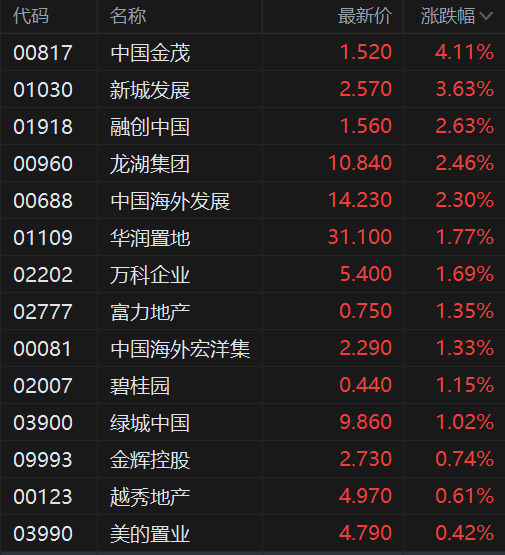
港股异动丨内房股普涨 中国金茂涨超4% 业内专家:或将持续放宽限购
Ge Long Hui· 2025-09-01 02:34
Group 1 - The core viewpoint of the article highlights a general increase in Hong Kong real estate stocks, driven by the relaxation of housing purchase restrictions in Beijing and Shanghai, which are the strictest cities in terms of these policies [1][1][1] - Major real estate companies such as China Jinmao, New World Development, and Sunac China saw significant stock price increases, with China Jinmao rising over 4% [1][1][1] - Analysts suggest that if the real estate market continues to show weakness, cities like Beijing and Shanghai are likely to further ease purchase restrictions, indicating a potential shift in national housing policy [1][1][1] Group 2 - The China Index Academy anticipates that September will be a period of intensive real estate policy announcements, with new supportive measures expected to accelerate under the goal of stabilizing the market [1][1][1] - As the market anticipates a potential interest rate cut by the Federal Reserve in September, there is an expectation for increased domestic monetary policy flexibility, which could further benefit the real estate sector [1][1][1] - The real estate market is entering the "Golden September and Silver October" sales season, with expectations that property companies will accelerate their sales efforts in core cities, leading to a potential short-term increase in market activity [1][1][1]



百强房企8月业绩超三成环比增长
3 6 Ke· 2025-09-01 02:18
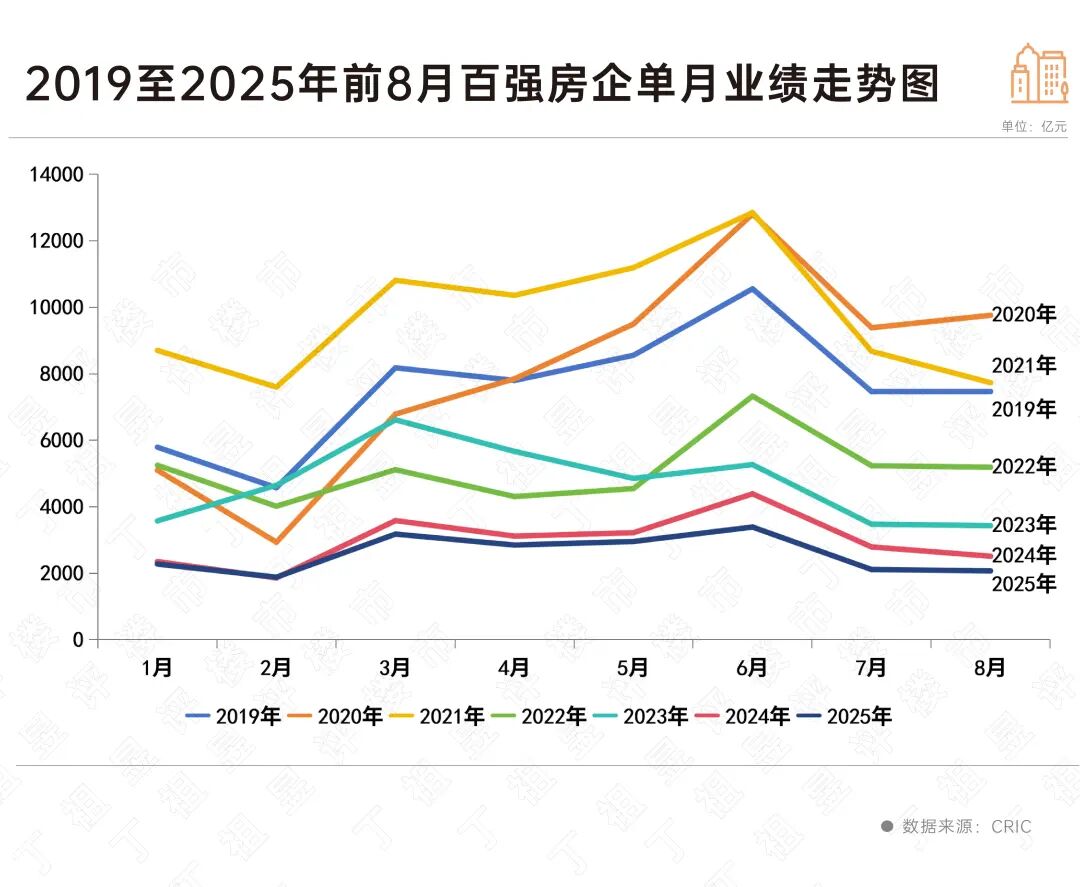
Core Insights - In August 2025, over 30% of the top 100 real estate companies achieved a month-on-month sales increase despite an overall decline in the housing market [1][5] - The sales turnover of the top 100 real estate companies in August saw a year-on-year decline of 17.6%, but this was a narrowing of 6.7 percentage points compared to the previous month [2][5] - The upcoming "Golden September" is expected to see a low rebound in new home transactions, with ongoing differentiation between cities and projects [1][16] Sales Performance - The sales turnover for the top 100 real estate companies in August 2025 was 207.04 billion yuan, reflecting a month-on-month decrease of 1.9% and a year-on-year decrease of 17.6% [2][5] - Cumulatively, from January to August 2025, the sales turnover reached 2,070.88 billion yuan, down 13.1% year-on-year, with a slight increase in the number of companies exceeding 100 billion yuan in sales [5][11] Market Trends - The sales threshold for the top 100 real estate companies has decreased significantly, with the top 10 companies' sales threshold dropping by 4.3% year-on-year to 56.06 billion yuan, the lowest in recent years [8][11] - The market is experiencing a significant differentiation, with first-tier cities seeing a more pronounced decline in sales compared to second and third-tier cities [15][16] Future Outlook - The "Golden September" is anticipated to bring a low rebound in new home sales, driven by increased supply and favorable policies [14][16] - Core cities like Beijing and Shanghai have implemented policies to relax purchase restrictions, which may gradually restore market confidence [15][17]



百强房企销售情况电话会议
2025-11-04 01:56
Summary of Real Estate Market Conference Call Industry Overview - The real estate market remains at a low level, with a year-on-year decline exceeding 30% [1][3] - Significant differentiation among companies, with only one-third of real estate firms achieving month-on-month growth [2][5] - The top ten firms, including China Overseas, Greentown, China Merchants, and Huafa, showed notable growth rates of 20% to 30% [2][1] Key Market Trends - Supply in first-tier cities has significantly decreased, with Beijing, Shanghai, and Shenzhen experiencing substantial declines [1][3] - Beijing's new supply was only 130,000 square meters, down over 30% month-on-month and nearly 70% year-on-year [3] - Shanghai's new supply was 310,000 square meters, with overall land market activity remaining sluggish [3] - Guangzhou's new home market remained relatively stable, benefiting from new regulations that accounted for 62% of new supply [12][1] - Shenzhen's transaction volume dropped significantly, with a month-on-month decline of 32% and a year-on-year decline of 50% [11][1] Sales Performance - In August, real estate sales continued to decline, with a month-on-month drop of 1.9% and a year-on-year drop of 17.6% [2] - Cumulatively, from January to August, the sales of the top 100 real estate firms fell by 13.1% [2] - The transaction volume in 30 key cities decreased by 12% month-on-month and 17% year-on-year in August [5][1] Policy Impact - The cancellation of purchase restrictions in Beijing on August 8 had limited effects, with transaction volumes remaining stable despite a 16% increase in visitor numbers [9][1] - New policies in Shanghai introduced on August 25 did not significantly stimulate the market, with only slight improvements in certain segments [10][1] - The overall market is still waiting for a significant policy breakthrough as current data shows no signs of recovery [21][1] Future Expectations - There is an expectation of a 30% to 50% increase in new supply in September, driven by development cycles [19][1] - The stability of core cities and new product regulations may provide some assurance for the market, but overall caution is advised [6][1] Inventory and Market Dynamics - The inventory situation varies, with some cities like Changsha and Wuhan showing high turnover rates due to unique project designs [25][1] - The overall inventory in Wuhan is approximately 15 million square meters with a 21-month turnover cycle, while Changsha has about 5 million square meters with an 18-month cycle [30][1] Conclusion - The real estate market is characterized by significant challenges, including declining sales, reduced supply, and limited policy effectiveness. However, certain firms and cities are showing resilience, indicating potential areas for investment and recovery in the future.

克而瑞|8月楼市表现如何?
2025-09-01 02:01
Summary of the Real Estate Market Conference Call Industry Overview - The conference call focuses on the real estate industry in China, particularly the performance of major real estate companies and market trends in August 2025. Key Points and Arguments Sales Performance - In August, the sales amount of the top 100 real estate companies was 207.4 billion yuan, a month-on-month decrease of 1.9% and a year-on-year decrease of 17.6% [2] - The top 10 real estate companies performed better, with a sales amount of 112.7 billion yuan, a year-on-year decline of only 7.5% [3] - China Overseas and Greentown saw significant month-on-month growth of 54.4% and 85.2%, respectively, while Vanke and Longfor experienced declines of 33% and 23% [5] Market Supply and Demand - In August, the new supply in 30 key cities dropped significantly, with a year-on-year decrease of 28% and a month-on-month decrease of 36%, totaling 5.22 million square meters [7] - First-tier cities like Beijing and Shanghai saw new supply of only 960,000 square meters, with declines of 39% year-on-year and 33% month-on-month [8][9] - The overall transaction scale in the real estate market remained at the second-lowest level of the year, with new home transaction area in key cities down 3% year-on-year for the first eight months [11] Market Trends - The market is expected to face pressure in September, despite the traditional peak season of "Golden September and Silver October" potentially bringing slight recovery [13] - High-priced projects in core areas of first-tier cities showed strong sales performance, but overall market heat is declining, with new project absorption rates remaining low [16] - The second-hand housing market mirrored the new housing market's downward trend, with a 9% month-on-month decline in August [18] Policy Impact - Recent policy adjustments in Beijing and Shanghai have had noticeable effects, with Beijing experiencing the smallest decline in new home sales [20][26] - The cancellation of sales restrictions in Chengdu and Suzhou led to a rapid increase in listings, indicating a price-driven market [21] - Future policies are expected to focus on high-quality urban development and may include significant measures by the end of September [25][29] Future Outlook - The market is anticipated to see a slight recovery in the coming months, but a significant reversal is unlikely due to low new supply and declining visitor numbers to projects [24] - The focus will shift towards urban renewal and improving housing quality standards, with an emphasis on meeting residents' demands for better living conditions [30][33] Additional Important Insights - The land market in August showed high concentration, with six cities accounting for about 34% of the total land transaction amount across 300 cities [23] - The overall market sentiment remains cautious, with developers exhibiting a wait-and-see attitude due to insufficient confidence in future market conditions [9][22]
8月百强销售和基本面解读
2025-09-01 02:01
Summary of Key Points from the Conference Call Industry Overview - The real estate market in August is overall sluggish, with transaction area in 30 key cities decreasing by 12% month-on-month and 17% year-on-year, only slightly above the levels seen during the Spring Festival [1] - The supply volume is at a near seven-year low, with a month-on-month decrease of 28% and a year-on-year decrease of 36% [1][5] - The top 100 real estate companies experienced a general decline in sales, but leading firms like Greentown, China Overseas, and Huafa saw month-on-month sales growth exceeding 30%, supported by core cities and high-end projects [1][2] Sales Performance - In August, the sales amount of the top 100 real estate companies decreased by 1.9% month-on-month and 18% year-on-year, with a cumulative year-on-year decrease of 13.1% [2] - There are significant disparities among the top 100 companies, with leading firms relying on high-end projects in core cities, while many companies outside the top 20 are seeing continuous sales declines [3] Market Dynamics - The first-tier cities' new housing market is undergoing a comprehensive adjustment, with transaction volumes experiencing greater declines than second and third-tier cities [1][13] - The average opening sales rate in the 30 key cities in August was approximately 41%, an increase of nearly 11 percentage points month-on-month and nearly 15 percentage points year-on-year [18] - The supply in first-tier cities has been decreasing for four consecutive months, with significant declines in Beijing, Shanghai, and Shenzhen [5][6] Regional Insights - Guangzhou is the only first-tier city with a month-on-month increase in supply, with over 400,000 square meters supplied in August [7] - Second and third-tier cities are in an adjustment phase, with an overall month-on-month transaction decrease of 11% and a year-on-year decrease of 16% [15] - Some cities like Chengdu, Qingdao, Tianjin, Xi'an, and Wuhan still recorded monthly transaction volumes exceeding 400,000 square meters [16] Policy Impact - New policies in Beijing have stimulated an increase in visitor numbers, with a 16% rise in visits, while the effects of Shanghai's policies have yet to be seen [13][14] - The supply-demand ratio has decreased to 0.69, indicating a significant drop in market activity, with many cities experiencing increased inventory pressure [22][23] Future Outlook - A low recovery in transaction volumes is expected in September, driven by the traditional peak season and policy relaxations in first-tier cities [29] - The market is anticipated to see a gradual recovery, but significant reversals are unlikely due to ongoing economic pressures and consumer confidence issues [34] Additional Insights - The land market has cooled down, with fewer core and quality plots being offered, leading to a seasonal low in overall transaction volume [26][28] - The performance of new regulatory products is declining, with significant disparities in sales rates among different projects [21] This summary encapsulates the critical insights from the conference call, highlighting the current state of the real estate market, sales performance, regional dynamics, policy impacts, and future outlook.
百强房企前八月卖了2.3万亿,千亿阵营房企有这五家
第一财经· 2025-09-01 01:08
Core Viewpoint - The sales performance of the top 100 real estate companies in China for the first eight months of 2025 shows a significant decline, with total sales amounting to 23,270.5 billion yuan, a year-on-year decrease of 13.3% [3][5]. Group 1: Sales Performance - The total sales of the top 100 real estate companies from January to August 2025 reached 23,270.5 billion yuan, with a year-on-year decline of 13.3% [3]. - The equity sales amount for the top 100 companies was 16,275.2 billion yuan, with an equity sales area of 83.828 million square meters [3]. - The top five companies by sales in the first eight months were Poly Development (181.2 billion yuan), Greentown China (156.3 billion yuan), China Overseas Property (150.3 billion yuan), China Resources Land (142.5 billion yuan), and China Merchants Shekou (124.05 billion yuan) [3][4]. Group 2: Market Dynamics - August is typically a slow sales month for the real estate market, with a reported 30% decrease in supply and a 12% month-on-month decline in transaction volume across 30 monitored cities [4][5]. - In August, the top 100 real estate companies achieved sales of 207.04 billion yuan, reflecting a month-on-month decrease of 1.9% and a year-on-year decrease of 17.6% [5]. - Despite the overall decline, 33% of the top 100 companies reported month-on-month sales growth in August, with 21 companies experiencing growth exceeding 30% [5]. Group 3: Future Outlook - The industry anticipates a potential recovery in September, driven by policy adjustments such as "recognizing houses but not loans" and lowering down payment ratios in major cities [6]. - The traditional peak sales season in September is expected to boost new home transaction volumes, with a gradual recovery in market confidence [6].


王石再一次预言未来房价走势,如果不出意外,这回大概率又又又是对的
Sou Hu Cai Jing· 2025-09-01 01:06
Core Viewpoint - The real estate market is undergoing significant changes, with predictions indicating a prolonged adjustment period for housing prices, which have already seen substantial declines in some areas [8][11]. Group 1: Expert Predictions - Vanke founder Wang Shi emphasizes that the adjustment in the real estate market will take several years, and current price declines are not indicative of a quick recovery [8]. - He suggests that ordinary individuals should refrain from rushing to buy properties and should instead adopt a wait-and-see approach [8]. - Wang Shi predicts a severe polarization among real estate companies, where those with high debt and poor product quality may face bankruptcy or mergers, while financially stable companies focusing on quality will thrive [11]. Group 2: Market Trends - The explosive demand for housing has largely been exhausted, with urbanization rates stabilizing at over 65% as of 2023, indicating a shift in market dynamics [16]. - Housing prices in major cities have escalated significantly over the past two decades, making them less accessible even after recent declines [16]. - The demographic shift, including a decrease in newborns and an aging population, is expected to further alter housing demand [16]. Group 3: Investment Strategies - Wang Shi advises monitoring price differentiation trends, noting that major cities and new first-tier cities like Wuhan and Chengdu will likely maintain stronger price support compared to third- and fourth-tier cities facing population outflows [18]. - There may be opportunities in the market for improved housing, as older properties become less desirable due to maintenance issues, leading to a preference for low-density, well-managed communities [18]. - The overall sentiment aligns with previous views that purchasing in core urban areas is advisable for self-use, while speculative investments should be approached with caution [20].

持续巩固资本市场回稳向好势头!三分钟看完周末发生了什么
Sou Hu Cai Jing· 2025-09-01 01:02
Market Overview - The global market showed a mixed performance with the A-share market leading the gains, particularly the ChiNext Index which rose by 7.74% [2][3] - The U.S. stock indices experienced slight declines amid ongoing expectations of interest rate cuts by the Federal Reserve, with bond yields continuing to decrease [2][3] - Commodity prices saw a rebound, with crude oil prices increasing and COMEX gold rising by 2.86% [2][3] Industry Performance - The communication sector led the weekly gains with a rise of 12.4%, followed by non-ferrous metals at 7.2% and electronics at 6.3% [4][5] - The overall performance of 31 major industries showed that half experienced gains, with textiles and coal being the laggards [4][5] Strategic Insights - The current market dynamics suggest a continuation of the "one-nine market" phenomenon, which may hinder the bullish market atmosphere [6] - The technology sector is positioned at a bottoming phase, with potential for new growth signals to emerge, particularly in AI and advanced manufacturing [6][7] Macro Economic News - The State Council is exploring comprehensive reforms for market-oriented allocation of factors in certain regions, which is seen as a significant step towards a high-level socialist market economy [8] - The manufacturing PMI for August was reported at 49.4%, indicating a slight increase, suggesting a continued expansion in economic activity [8] Capital Market Developments - Foreign investments have increased significantly in Chinese assets, particularly in AI-related sectors, with several companies reporting substantial profit growth [9][10] - The Central Huijin Investment has significantly increased its holdings in stock ETFs, reflecting confidence in the market's recovery [10]

中原期货晨会纪要-20250901
Zhong Yuan Qi Huo· 2025-09-01 00:50
1. Report Industry Investment Rating No relevant content provided. 2. Core Viewpoints of the Report - China's economic prosperity generally continues to expand, with the official manufacturing PMI, non - manufacturing PMI, and composite PMI in August showing improvements [9]. - The real estate market remains under pressure, with the sales of TOP100 real - estate enterprises declining year - on - year [9]. - The RMB exchange rate against the US dollar has been strengthening recently, and the market is optimistic about its continued strength until the end of this year [11]. - In the futures market, different varieties have different trends and investment suggestions, such as some being recommended for short - term observation and others for cautious trading [13][19]. - The A - share market has a mid - term bullish structure, but there may be short - term fluctuations and adjustments [23][25]. 3. Summary According to Relevant Catalogs 3.1 Chemical Industry Futures - On September 1, 2025, among chemical futures, coke, 20 - number rubber, plastic, polypropylene PP, and methanol showed price increases, while natural rubber, PTA, PVC, asphalt, etc. showed price decreases [6]. 3.2 Macro - economic News - China's economic indicators in August showed positive trends, and some small and medium - sized banks have cut deposit rates [9]. - The sales of real - estate enterprises continued to decline, and the automobile inventory warning index was above the boom - bust line [9][10]. - The RMB exchange rate against the US dollar has been strengthening recently, mainly due to the weakening of the US dollar index and the narrowing of the Sino - US interest rate spread [11]. - There are international events such as the US Supreme Court's decision on Trump's policies and the negotiation between Japan and the US on trade and investment [10]. 3.3 Morning Meeting Views on Major Futures Varieties 3.3.1 Agricultural Products - Peanut futures are in a short - term bottom - shock situation, and it is recommended to wait and see, focusing on the progress of new peanut acquisitions [13]. - Sugar futures are at the lower end of the range, and it is recommended to wait and see, paying attention to support and resistance levels [13]. - Corn futures are in a state of intense multi - empty game, and it is recommended to wait and see, focusing on the listing rhythm of new grain and the breakthrough of the pressure level [13]. - Hog futures are in an interval - shock situation, with a near - weak and far - strong monthly spread, and it is recommended to conduct reverse arbitrage [13]. - Egg futures are expected to have limited further declines in the spot market, and it is recommended to continue short - selling on rebounds in the futures market [15]. - Cotton futures may be oscillating strongly in the medium - long term and are expected to decline slightly in the short term, and the range of 14000 - 14500 should be focused on [15]. - Log futures are recommended to operate in the range of 800 - 850, focusing on the improvement of real - estate funds and the expected reduction in New Zealand's supply [16]. - Pulp futures are recommended for cautious long - biased operations, paying attention to the upper pressure and lower support levels [16]. 3.3.2 Energy and Chemicals - Urea futures' UR2601 contract may continue to operate in the range of 1700 - 1820 yuan/ton, and the opening of the Indian tender should be focused on [19]. - Caustic soda futures' 2601 contract is recommended to be treated with a long - biased idea on dips [19]. - Coking coal and coke futures are expected to fluctuate repeatedly and operate in an oscillating manner [19]. 3.3.3 Industrial Metals - Copper futures are recommended to take a long - biased approach once the price breaks through the oscillating range upwards [19]. - Aluminum futures are expected to continue to operate at a high level [19]. - Alumina futures' 2601 contract is operating weakly, and factors such as bauxite should be focused on [21]. - Rebar and hot - rolled coil futures' prices are expected to continue to oscillate and find the bottom in the short term [21]. - Ferroalloy futures are expected to continue wide - range oscillations in the short term, and attention should be paid to capital control for hedging and caution for speculation [21]. - Lithium carbonate futures are recommended to wait and see, focusing on the policies of mines in Jiangxi, and if the support level is broken, it may test the 70000 - yuan mark [21]. 3.3.4 Options and Finance - In stock index options, trend investors should pay attention to the strength - weakness arbitrage opportunities between varieties, and volatility investors should go long on volatility when the underlying index rises and short on volatility when it falls [23]. - The A - share market has a mid - term bullish structure. Although there may be short - term fluctuations, the underlying logic of the market has not been falsified, and investors can reduce positions on rallies and use the 10 - day moving average as a mid - term trend watershed [24][25].
前8月百强房企销售总额同比下降13.3%;禹洲集团完成约67亿美元境外债重组|房产早参
Mei Ri Jing Ji Xin Wen· 2025-09-01 00:34
Group 1: Real Estate Market Trends - In the first eight months of 2025, the total land acquisition amount by the top 100 real estate companies reached 605.6 billion yuan, representing a year-on-year increase of 28.0%, although the growth rate has slowed by 6.3 percentage points compared to the previous period [1] - The sales total for the top 100 real estate companies in the same period was 2,327.05 billion yuan, showing a year-on-year decline of 13.3%, with the decline rate remaining consistent with the previous period [2] - The real estate market continues to be in an adjustment phase, with weak buyer sentiment attributed to concerns over economic conditions and housing price trends [2] Group 2: Corporate Developments - Yuzhou Group has completed a restructuring of its offshore debt, involving a total debt amount of approximately 6.68 billion USD, with over 99% support from offshore creditors [3] - The restructuring is expected to alleviate approximately 3.5 billion USD of debt repayment pressure, marking a transition from a "debt crisis" to a "survival battle" for the company [3] - Red Star Macalline announced the resignation of its deputy general manager, Che Guoxing, due to personal reasons, which reflects the company's ongoing efforts to build a market-oriented and professional management team [5] Group 3: Land Development Initiatives - Shanghai plans to auction a historical preservation project in Yangpu District with a starting price of 2.847 billion yuan, covering an area of 28,600 square meters [4] - The project requires a minimum of 5% of the housing to be designated for affordable rental housing and mandates 100% full decoration [4] - The development is expected to reshape the residential value in Yangpu and provide a replicable integrated solution for urban renewal in Shanghai, although it poses challenges due to high historical preservation costs and complex approval processes [4]