京东

Search documents
ESG观察|从“火车上的童年”到校园补贴:上市公司“二代”福利政策引发三个问号
Mei Ri Jing Ji Xin Wen· 2025-08-01 11:37
Group 1 - JD.com announced rewards for children of frontline employees who were admitted to universities, including congratulatory cash, free campus delivery, and priority employment opportunities [1] - Companies like Haidilao and Yum China have implemented family-oriented benefits such as education subsidies and summer camps for employees' children, reflecting a growing trend in employee welfare [2][3] - The evolution of employee welfare systems is linked to ESG (Environmental, Social, and Governance) considerations, emphasizing the importance of social responsibility in corporate strategies [5][6] Group 2 - Companies are increasingly focusing on multi-layered and diversified welfare systems, with Haidilao and Ctrip leading the way in providing comprehensive support for employees and their families [7] - Ctrip has invested significantly in employee welfare, including a projected total expenditure of 1 billion yuan on childbirth subsidies, indicating a strategic investment in talent retention [7] - The sustainability and effectiveness of these welfare policies are under scrutiny, with concerns about their long-term viability and potential impact on employee motivation and performance [9][10] Group 3 - There are concerns regarding the fairness of welfare policies, particularly if benefits are concentrated on employees with children, which may lead to feelings of inequity among other employees [11] - Ctrip emphasizes inclusivity in its welfare policies, ensuring that all employees have equal opportunities for career development regardless of their parental status [11]


180亿,刘强东买走了
36氪· 2025-08-01 10:15
Core Viewpoint - JD.com is expanding its international presence by acquiring CECONOMY, Germany's largest consumer electronics group, for approximately €2.2 billion (over ¥18 billion), marking a significant step in its European strategy [5][6][11]. Group 1: Acquisition Details - The acquisition of CECONOMY is aimed at enhancing JD.com's growth in Europe, allowing it to leverage CECONOMY's extensive offline retail network of over 1,000 stores [11][16]. - CECONOMY, formed in 2017, operates under the brands MediaMarkt and Saturn, holding over 30% market share in Germany [10][11]. - The deal is expected to facilitate JD.com's transition into a leading omnichannel consumer electronics platform in Europe while maintaining CECONOMY's independent operations [11][16]. Group 2: Market Context - JD.com has been actively pursuing various investments and acquisitions in 2023, indicating a competitive landscape in the Chinese retail sector [7][18]. - The rise of e-commerce giants like Amazon has posed challenges for CECONOMY, leading to a decline in its sales, although online sales have seen a 7.4% increase [11]. - JD.com aims to differentiate itself in the global e-commerce market by focusing on a strategy of "self-built + acquisition + cooperation" to establish a robust presence [17][20]. Group 3: Broader Industry Trends - The consumer merger and acquisition landscape is vibrant, with notable deals such as the interest in Starbucks China and KKR's acquisition of a beverage company [23][24]. - There is a growing trend of private equity firms targeting the Chinese operations of multinational companies, reflecting a shift in investment strategies [26][27]. - The consumer sector is viewed as resilient and attractive for capital investment, especially during economic fluctuations, leading to increased M&A activity [27][28].


稳定币泡沫化,监管喊话“降温”
和讯· 2025-08-01 09:18
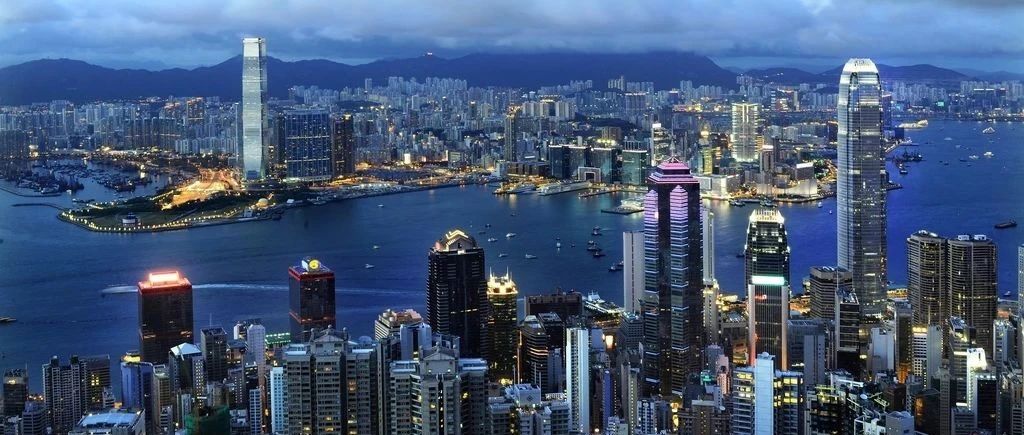
Core Viewpoint - The implementation of Hong Kong's "Stablecoin Regulation" marks a significant milestone for the sustainable development of the stablecoin and digital asset ecosystem in Hong Kong, with a comprehensive regulatory framework now in place for fiat-backed stablecoins [2][3]. Group 1: Regulatory Framework - The "Stablecoin Regulation" officially came into effect on August 1, establishing clear rules for the issuance and regulation of stablecoins, transitioning them from an unregulated state to mainstream financial markets [6]. - The regulation requires any institution issuing or promoting fiat-backed stablecoins in Hong Kong to operate under a license, with severe penalties for non-compliance [6]. - The Hong Kong Monetary Authority (HKMA) has set high entry barriers for license applicants, including a minimum paid-up capital of HKD 25 million and sufficient liquid assets, ensuring a robust foundation for the stablecoin industry [6][7]. Group 2: Market Performance and Investment Sentiment - Following the announcement of the regulation, there has been a surge in investment interest, with stablecoin-related stocks in both A-shares and Hong Kong stocks experiencing significant price increases, some doubling in value [3][11]. - The stablecoin index has risen by 60% year-to-date, reflecting strong market enthusiasm despite the fact that many companies are still in the early stages of developing stablecoin-related businesses [3][11]. - However, on the day the regulation was enacted, many stablecoin concept stocks saw a decline, indicating potential volatility and market correction [3][17]. Group 3: Future Prospects and Challenges - The stablecoin market has grown significantly, with a total market capitalization exceeding USD 260 billion, and projections suggest it could reach USD 3.7 trillion by 2030 [5]. - Despite the optimistic outlook, there are concerns about the over-conceptualization and bubble-like tendencies in the stablecoin market, as many companies lack practical applications and risk management capabilities [14][15]. - The HKMA has indicated that only a limited number of licenses will be issued initially, which may lead to disappointment among many applicants [9][15]. Group 4: Industry Developments and Innovations - The HKMA plans to launch a "Stablecoin Issuer Sandbox" in March 2024, allowing participants to demonstrate viable stablecoin issuance processes and robust internal controls [7]. - Major companies like Ant Group and JD.com are expected to apply for stablecoin licenses, leveraging their technological expertise and existing applications to enhance cross-border payment efficiency [8][9]. - The market has seen a trend where companies announcing intentions to explore stablecoin business have experienced significant stock price increases, indicating a speculative environment [14].
美团、淘宝、京东齐发声,补贴大战“急刹车”
Di Yi Cai Jing· 2025-08-01 06:51
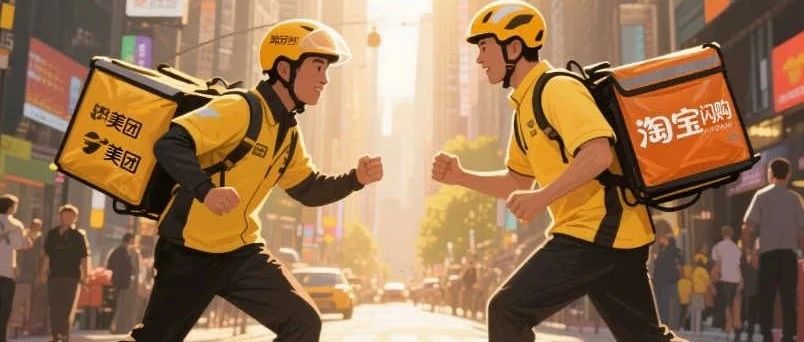
Core Viewpoint - The recent "crazy Saturday" delivery subsidy war is expected to be curtailed as major platforms like Meituan, Alibaba's Taobao, Ele.me, and JD.com announce plans to regulate subsidy behaviors and resist unfair competition [2][4]. Group 1: Company Responses - On August 1, Meituan, Taobao, Ele.me, and JD.com issued statements addressing the heightened social concern over delivery subsidies, labeling the recent competition as "disorderly" or "malicious" [4]. - Meituan criticized the "0 yuan purchase" subsidy strategy, while Taobao and Ele.me committed to avoiding large-scale irrational promotional activities [4]. - All platforms emphasized the importance of respecting merchants' rights to participate in subsidy activities voluntarily and maintaining their pricing autonomy [4][5]. Group 2: Regulatory Context - On July 18, the State Administration for Market Regulation held discussions with Meituan, Ele.me, and JD.com, urging them to comply with various laws and to engage in rational competition to foster a healthy ecosystem for consumers, merchants, and delivery personnel [5]. - Following the discussions, marketing strategies across platforms showed varying degrees of contraction, although variants of large subsidies continued, with merchants still bearing approximately 70% of the subsidy costs [5][6]. Group 3: Merchant Perspectives - Merchants have expressed concerns that the subsidy war has created a "false prosperity," with significant costs being passed onto them while they are pressured to participate in promotional activities [6][8]. - A representative from a chain restaurant noted that the extreme discounts have altered consumer behavior, leading to fears that once subsidies are removed, order volumes will decline sharply [6][8]. - Analysts suggest that while subsidies have effectively driven traffic, the challenge lies in retaining customers post-subsidy, indicating a shift from a "capital war" to an "efficiency war" in the competitive landscape [8].


美团、淘宝、京东齐发声,补贴大战“急刹车”
第一财经· 2025-08-01 06:28
Core Viewpoint - The article discusses the recent shift in the competitive landscape of food delivery platforms in China, particularly the cessation of aggressive subsidy wars, referred to as "Crazy Saturday," as major players like Meituan, Alibaba's Taobao, Ele.me, and JD.com announce a move towards more regulated promotional practices to combat unfair competition [3][6]. Group 1: Industry Response to Subsidy Wars - On August 1, Meituan, Taobao, Ele.me, and JD.com issued statements to address the rampant subsidies that have drawn public concern, pledging to resist unfair competition [6][8]. - Meituan characterized the recent subsidy competition as "disorderly," while Taobao, Ele.me, and JD.com labeled it as "malicious competition" [6][7]. - The platforms emphasized the importance of respecting merchants' autonomy in pricing and participation in promotional activities, with Meituan stating it would not exaggerate subsidy totals or force merchants into participation [7][8]. Group 2: Impact on Merchants - Merchants have expressed concerns that the subsidy wars have created a "false prosperity," with many feeling pressured to participate in promotions that ultimately harm their profitability [10][13]. - A representative from a major tea brand noted that the drastic reductions in prices due to subsidies have altered consumer behavior, making it difficult to return to normal pricing once subsidies are removed [11][13]. - Merchants fear that the end of subsidies will lead to a significant drop in orders, as customers may not return to previous spending levels [11][13]. Group 3: Regulatory Environment - Following a meeting with the State Administration for Market Regulation, the platforms were urged to comply with various laws and to engage in rational competition to foster a healthy ecosystem for consumers, merchants, and delivery personnel [8][10]. - The platforms have begun to scale back their marketing efforts in response to regulatory pressure, although variations of aggressive subsidies still persist [8][10]. Group 4: Future Outlook - Analysts suggest that while the subsidies have effectively driven traffic, the challenge lies in retaining these customers once the promotions cease [13]. - The competitive landscape is shifting from a "capital war" to an "efficiency war," where long-term success will depend on balancing user demand for low prices, rider rights, and sustainable merchant profitability [13].
每日投资策略-20250801
Zhao Yin Guo Ji· 2025-08-01 06:21
Macro Economic Overview - The Federal Reserve maintained a hawkish stance, with the economic description shifting from "steady expansion" to "slowing" [2] - The market's expectation for interest rate cuts in 2023 has decreased from 46 basis points to 36 basis points [5] - The U.S. PCE inflation rebounded in June, with core PCE prices rising 2.8% year-on-year, marking a four-month high [4] Industry Insights - The technology sector is seeing mixed performance, with high-end models showing strong demand while overall industry demand remains weak [6] - Companies focusing on high-end flagship models and component upgrades are expected to benefit from anticipated strong demand in the second half of 2025 [6] Company Analysis - China National Pharmaceutical Group (1177 HK) is undergoing a significant transformation with a focus on innovative drug development, particularly in oncology and metabolic diseases, with a target price of HKD 9.40 [7][10] - Meta Platforms (META US) reported a 22% year-on-year revenue increase to USD 47.5 billion, driven by AI-enhanced advertising, with a target price raised to USD 860 [10] - Microsoft (MSFT US) exceeded expectations with a revenue of USD 76.4 billion for FY25, growing 18.1% year-on-year, and raised its target price to USD 601.5 [11] - Luckin Coffee (LKNCY US) showed strong sales growth of 47% year-on-year, with a target price of USD 44.95, despite rising costs [12][14]
补贴急刹车,外卖平台接连表态!股价直线拉升
2 1 Shi Ji Jing Ji Bao Dao· 2025-08-01 05:29
Core Viewpoint - Multiple food delivery platforms have expressed their commitment to combatting disorderly competition, leading to a rise in stock prices for Meituan and Alibaba, which saw an increase of over 3% during trading [1] Group 1: Company Statements - Meituan published a statement titled "Prospering Industry Ecology, Resisting Disorderly Competition," emphasizing the need to avoid selling goods and services at prices significantly below cost, which distorts price signals and disrupts market order [1] - Alibaba's Taobao Shangu and Ele.me issued a joint statement focusing on enhancing services to promote healthy competition and stimulate consumer activity [1] - JD.com also released a statement highlighting its commitment to fulfilling both corporate and social responsibilities to build a healthy ecosystem within the food delivery industry [1] Group 2: Industry Implications - The collective statements from these companies indicate a unified stance against predatory pricing practices that lead to market waste and unhealthy competition [1] - The emphasis on responsible pricing and competition is expected to foster a more sustainable market environment for the food delivery sector [1]
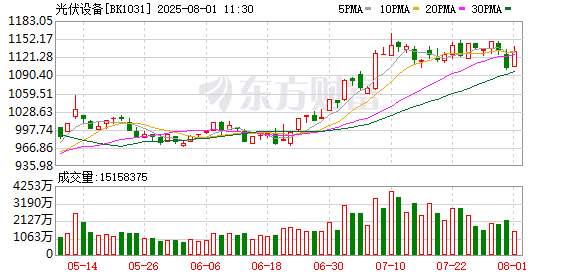
光伏设备板块大涨 三大利好突袭
Zhong Guo Zheng Quan Bao· 2025-08-01 05:28
Group 1: Pharmaceutical Sector - The pharmaceutical sector showed strong performance on the first trading day of August, with traditional Chinese medicine stocks experiencing significant gains, including companies like Weikang Pharmaceutical and Xintian Pharmaceutical reaching their daily price limits [2] - Various sub-sectors within pharmaceuticals, such as animal vaccines, pharmaceutical e-commerce, innovative drugs, chemical preparations, raw materials, and CRO, also saw increases [2] Group 2: Solar Energy Sector - Solar energy stocks rebounded, with significant gains in the solar equipment sector, including companies like Jiejia Weichuang and Haiyou New Materials [5] - Jiejia Weichuang announced a mid-year profit forecast, expecting a net profit of 1.7 billion to 1.96 billion yuan for the first half of 2025, representing a year-on-year growth of 38.65% to 59.85% [5] - The increase in silicon wafer prices continued, with average prices rising approximately 0.1 yuan per piece, driven by increased raw material costs and higher downstream orders [6] Group 3: Logistics Sector - The logistics sector experienced an uptick, with companies like Huapengfei, Shentong Express, and Yunda Holdings showing significant stock price increases [9] - Shentong Express has seen a cumulative increase of over 52% since its rebound on July 10 [9] - The logistics industry is undergoing consolidation, with Shentong Express announcing a cash acquisition of Zhejiang Dan Niao Logistics for 362 million yuan [9] - The introduction of unmanned logistics vehicles is entering a phase of large-scale commercial use, with major players like SF Express and Zhongtong expected to introduce thousands of unmanned vehicles this year [10]
美团淘宝京东盘中宣布抵制“恶性竞争”,股价直线拉升
Zheng Quan Shi Bao· 2025-08-01 04:50
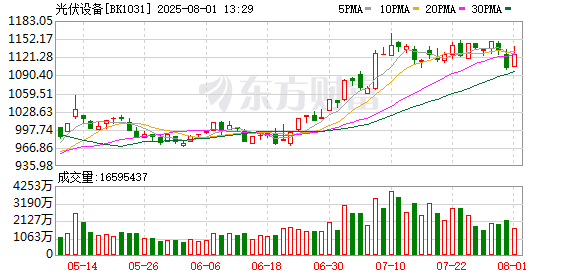
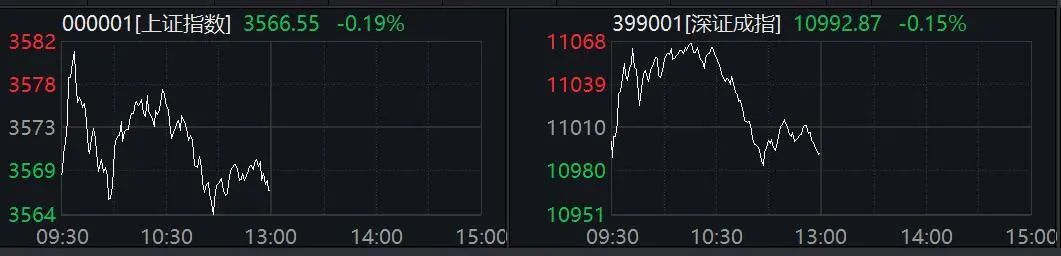
光伏板块走强 盘中,光伏概念走强。捷佳伟创20cm涨停,文科股份二连板,海优新材、杉杉股份、帝尔激光、迈为股份等均大涨。 美团港股盘中拉升,美团、京东突然发文 。临近午间, 港股英诺赛科突然直线拉升,涨幅迅速扩大至逾30%。 8月1日早盘,A股三大指数维持震荡格局。截至午间收盘,沪指跌0.19%,深证成指跌0.15%,创业板指跌0.16%。 盘面上,光伏概念走强,捷佳伟创20cm涨停;辅助生殖概念再度走强,利德曼20cm涨停;创新药概念持续活跃,昂利康二连板;仓储物流板块走强,申 通快递、韵达股份等涨停。有机硅概念、造纸板块、环保板块等涨幅居前;互联网、旅游、船舶、CPO概念等跌幅居前。 港股英诺赛科盘中快速拉升,涨幅扩大至30%。消息面上,8月1日,英伟达(NVIDIA)官网更新800V直流电源架构合作商名录,英诺赛科是本次入选英 伟达合作伙伴中唯一的中国芯片企业。这意味着双方正式达成深度合作,双方将携手推动800V直流(800 VDC)电源架构在AI数据中心的规模化应用。 消息面上,据IDC最新预测,到2029年全球机器人市场规模将超过4000亿美元。其中,中国市场占据近半份额,并以近15%的复合增长率位 ...
6分钟拉升“20CM”涨停!光伏设备板块大涨 三大利好突袭
Zhong Guo Zheng Quan Bao· 2025-08-01 04:48
Market Performance - On the first trading day of August, the pharmaceutical sector showed strong performance, with traditional Chinese medicine stocks surging, including companies like Weikang Pharmaceutical and Xintian Pharmaceutical reaching their daily limit [2] - The Shanghai Composite Index fell by 0.19%, the Shenzhen Component Index by 0.15%, and the ChiNext Index by 0.16%, while sectors like photovoltaic, logistics, paper, and automotive saw gains [2] Photovoltaic Sector - Photovoltaic concept stocks rebounded, with significant increases in the photovoltaic equipment sector, including companies like Jiejia Weichuang and Haiyou New Materials [5] - Jiejia Weichuang announced a mid-year earnings forecast, expecting a net profit of 1.7 billion to 1.96 billion yuan for the first half of 2025, representing a year-on-year growth of 38.65% to 59.85% [6] - The increase in silicon wafer prices continued, with average prices rising approximately 0.1 yuan per piece, driven by rising raw material costs and increased downstream orders [7] Logistics Sector - The logistics sector experienced an uptick, with companies like Huapengfei, Shentong Express, and Yunda Holdings seeing significant stock price increases [9] - Shentong Express has seen a cumulative increase of over 52% since its rebound on July 10 [9] - The State Post Bureau held a meeting to address "involution" competition in the express delivery industry, promoting high-quality development [9] - The integration of the domestic express delivery industry is accelerating, with Shentong Express planning to acquire Zhejiang Dan Niao Logistics for 362 million yuan [9] - The introduction of unmanned logistics vehicles is entering a phase of large-scale commercial use, with major players like SF Express and Zhongtong expected to introduce thousands of vehicles this year [10]