中国金茂

Search documents
地产股重估拉开帷幕-后续怎么看
2026-02-02 02:22
地产股重估拉开帷幕,后续怎么看?20260130 摘要 2026 年地产板块大概率向上,但当前政策尚未有实质性改变,财政态 度是关键,去库存和化解风险工作仍在研判阶段,需观察基本面是否展 现积极迹象。 一线城市房价走势需谨慎,虽有积极迹象但尚不能确认企稳,需等待三 四月份传统成交旺季验证,无强力政策或经济预期变化,过程可能不会 一帆风顺。 四季度主动基金全面减配 A 股开发商,深度减持保利、招商蛇口等,增 持港股开发商如华润置地、万象及贝壳,反映资金对博弈地产基本面及 政策风险意愿趋冷。 推荐关注存货充足、质量好的大票如华润、中海、招商蛇口,以及出租 质量高、周转快的标的如建发国际和滨江,新中控股及其母公司新城发 展,以及先发股份也值得关注。 新中控股转型为以商业为主导的轻资产运营模式,先发股份因稳定增长 前景受推荐,未来 2-3 年有望实现商业模式升级,带来戴维斯双击效应。 Q&A 2026 年地产股的整体趋势如何? 四季度以来基金持仓情况如何变化? 四季度主动基金持仓显示,A 股开发商全面减配,如保利、招商蛇口等主流公 司均被深度减持。而港股开发商则表现较好,如华润置地、万象及贝壳等持仓 提升明显。这反映 ...
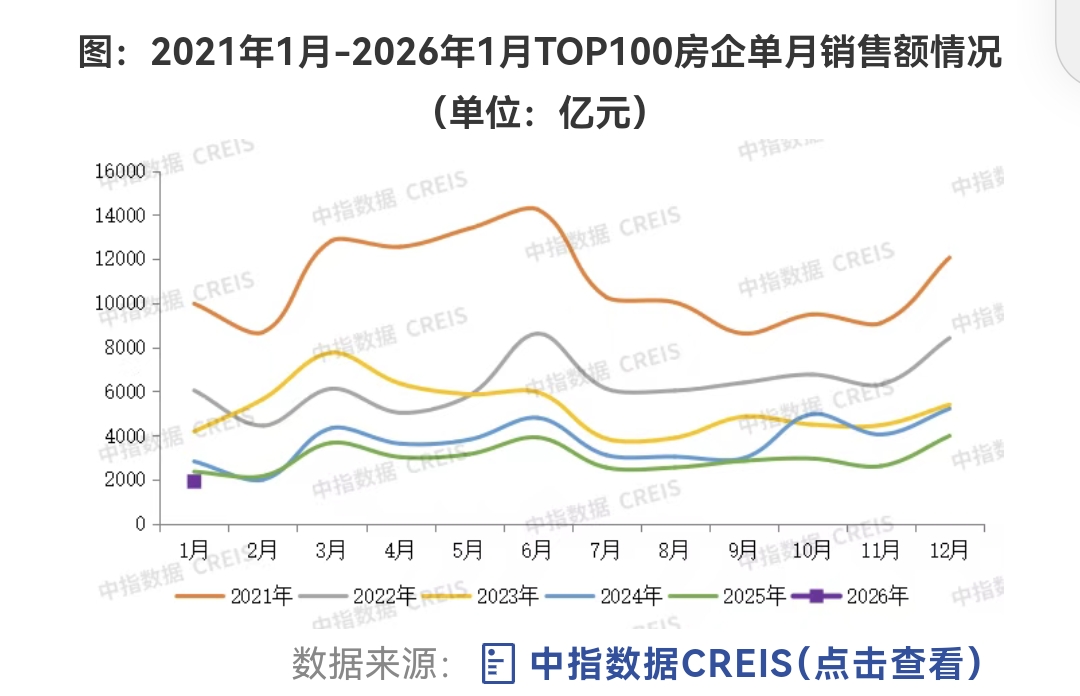
1月百强房企销售数据解读
2026-02-02 02:22
1 月百强房企销售数据解读 20260131 摘要 房地产市场整体下行,头部房企销售额显著下降,前 50 强同比下降 15%,前 10 强门槛降幅达 30%,但部分企业如中海、金茂等在核心城 市新项目表现突出,实现单月业绩正增长。 预计 2026 年市场格局与 2025 年相似,千亿级房企数量维持在 10-12 家左右,深耕型中小房企将迎来第三轮崛起,尤其是在区域市场有产品 优势的民营房企,如四川邦泰、浙江星耀等。 民营房企崛起受益于市场体量、机制灵活和政策支持,以及对产品打磨 和现金流管理的重视,在区域深耕方面具有优势,财务策略审慎,自有 资金比例高。 甲乙一体化模式在房地产企业中广泛应用,通过省料总包降低成本、提 高效率和品质,成长型民营房企多有自有工程公司或固定合作方,便于 沟通和税务筹划。 房地产市场正从增量发展转向增量、存量并重,二手房市场占比提升, 核心城市达 60%-70%,全国 45%,库存和房价问题是关键,需政府调 控,新开工项目减少,库存压力仍存。 Q&A 2026 年 1 月百强房企的销售数据有哪些显著变化? 2026 年 1 月百强房企的销售数据显示出一些显著变化。首先,前十强房企的 ...
房地产开发2026W4:本周新房成交同比-32.3%,关注春节假期对齐后的同比表现
国盛证券有限责任公司· 2026-02-02 01:24
Investment Rating - The report maintains an "Overweight" rating for the real estate industry [4][6] Core Insights - The report emphasizes the importance of monitoring the year-on-year performance of new and second-hand housing transactions aligned with the Spring Festival holiday, suggesting that the data may show significant changes in the coming weeks [11] - The real estate sector is viewed as an early economic indicator, making it a crucial area for investment as it reflects broader economic trends [4] - The competitive landscape in the industry is improving, with leading state-owned enterprises and select mixed-ownership and private companies expected to benefit more in the future [4] - The report suggests focusing on first-tier and select second- and third-tier cities for investment opportunities, as this combination has historically performed better during market rebounds [4] Summary by Sections New Housing Transactions - In the latest week, new housing transaction area in 30 cities was 136.9 million square meters, a month-on-month increase of 16.3% but a year-on-year decrease of 32.3% [23] - First-tier cities accounted for 40.3 million square meters, with a month-on-month increase of 6.7% and a year-on-year decrease of 20.0% [23] - Second-tier cities saw 64.9 million square meters, with a month-on-month increase of 24.4% and a year-on-year decrease of 29.8% [23] - Third-tier cities recorded 31.7 million square meters, with a month-on-month increase of 14.1% and a year-on-year decrease of 46.6% [23] Second-Hand Housing Transactions - The total area of second-hand housing transactions in 15 sample cities was 211.9 million square meters, a month-on-month decrease of 0.9% but a year-on-year increase of 15.0% [33] - First-tier cities contributed 93.8 million square meters, with a month-on-month decrease of 0.6% [33] - Second-tier cities had 82.6 million square meters, with a month-on-month decrease of 1.8% [33] - Third-tier cities recorded 35.5 million square meters, with a month-on-month increase of 0.2% [33] Credit Bonds - In the week from January 26 to February 1, eight credit bonds from real estate companies were issued, totaling 4.96 billion yuan, a decrease of 4.73 billion yuan from the previous week [3] - The total repayment amount was 8.93 billion yuan, a decrease of 7.49 billion yuan, resulting in a net financing amount of -3.97 billion yuan, which is an increase of 2.76 billion yuan from the previous week [3]



最困难时期或将逐渐过去,机构:房地产板块已具备吸引力
2 1 Shi Ji Jing Ji Bao Dao· 2026-02-02 00:14
综合来看,A股地产板块2025年归母净亏损预计在1984.2亿元—1455.0亿元之间,2024年为归母净亏损 1614.0亿元。 连日来,2025年业绩预告进入集中披露期。万科A、招商蛇口等多家地产公司也预告了2025年的整体经 营表现。 记者注意到,多家券商机构在点评房地产业绩预告时指出,尽管2025年房企利润表现仍承压,但市场已 出现积极信号,预计2026年房地产市场有望逐步止跌回稳。 根据中信证券房地产开发和运营板块统计(剔除B股),A股地产板块共有78家企业发布业绩预告或快 报,其中58家公司公告预亏(首亏或续亏),6家公司公告业绩预增,其余18家公司没有发布业绩预 告。 此外,多层次REITs市场建设对房地产板块也形成整体利好。 总结来看,中信证券指出,我国居民部门的现金流量表保持良好,净流入健康向上,这也是未来企业经 营性现金流净流入可能持续修复的底气。政策力推住宅价格止跌,加上商业地产资产增值,相信房地产 板块的主体信用风险已经开始退潮。当行业的主要融资性现金流入,从以信用债(主体负债)为主转向 以项目融资(REITs和物业经营贷等)为主之际,企业资产和负债错配的矛盾就正在得到解决。 投资策略 ...
机构:房地产板块已具备吸引力
21世纪经济报道· 2026-02-01 14:00
Core Viewpoint - The real estate sector in A-shares and Hong Kong has shown strong performance, with A-share real estate index rising over 5% during the week of January 26 to January 30, 2025. Despite profit pressures for 2025, there are positive signals indicating a potential stabilization in the market by 2026 [1][2]. Group 1: Performance and Forecast - A total of 78 A-share real estate companies released performance forecasts, with 58 companies expecting losses, 6 companies projecting profit increases, and 18 companies not providing forecasts. The estimated net loss for the A-share real estate sector in 2025 is projected to be between 198.42 billion and 145.5 billion yuan, compared to a net loss of 161.4 billion yuan in 2024 [1]. - According to CITIC Securities, the decline in performance reflects the market adjustments over the past few years, but there are emerging positive signals, such as a slight decrease in second-hand housing listings in major cities and increased buyer confidence due to supportive media coverage [2][3]. Group 2: Market Conditions and Recovery Signals - The report from Shenwan Hongyuan Securities suggests that the most challenging period for real estate companies may be coming to an end, as the fundamentals of the real estate market are nearing a bottom after over four years of adjustment. New construction starts have decreased by 75% since the peak in 2021, and second-hand housing prices have dropped by 40% since the same peak [2]. - The construction of a multi-level REITs market is seen as a positive factor for the real estate sector, potentially alleviating some of the financial pressures faced by companies [2]. Group 3: Investment Strategy - CITIC Securities recommends focusing on "operating assets" and emphasizes the advantages of developers with core resources and operational capabilities. The report indicates that the industry is likely to see a recovery in profitability for quality real estate companies sooner and with greater elasticity due to improved market conditions and historical low valuations [5]. - The central government's recent emphasis on stabilizing the real estate market and the positive media coverage are expected to contribute to a more favorable policy environment, further supporting the recovery of the sector [5].


中信、申万报告:2026年房地产市场有望止跌回稳
2 1 Shi Ji Jing Ji Bao Dao· 2026-02-01 10:42
21世纪经济报道记者 杨坪 据中信证券统计,2026年1月29日- 30日,8单总计估值321亿元商业不动产REITs发行挂网,预计涉及募集规模总计315亿元,涉及资本化率在 4.3%-7.2%区间内,涉及运营净收益(NOI)总计16.5亿元(2025年数据,部分项目为年化值)。 连日来,2025年业绩预告进入集中披露期。万科A、招商蛇口等多家地产公司也预告了2025年的整体经营表现。 中信证券认为,在商业不动产REITs推出之后,REITs市场发行审批效率明显提升,优质资产证券化速度明显加快。房地产企业资产负债表得 到夯实,债务负担有所减轻,广大投资者也得以配置优质低波权益资产,分享中国经济增长红利。 本报记者注意到,多家券商机构在点评房地产业绩预告时指出,尽管2025年房企利润表现仍承压,但市场已出现积极信号,预计2026年房地产 市场有望逐步止跌回稳。 总结来看,中信证券指出,我国居民部门的现金流量表保持良好,净流入健康向上,这也是未来企业经营性现金流净流入可能持续修复的底 气。政策力推住宅价格止跌,加上商业地产资产增值,相信房地产板块的主体信用风险已经开始退潮。当行业的主要融资性现金流入,从以信 用债 ...


房地产行业周报:1月二手房成交强于新房-20260201
Xiangcai Securities· 2026-02-01 10:42
Investment Rating - The industry investment rating is maintained as "Buy" [3] Core Views - The real estate market is entering a traditional off-season, with expectations for stronger policy support [3] - In January, the transaction volume of second-hand homes outperformed new homes, indicating a preference for second-hand properties due to better value [8] - The performance of the real estate sector has improved recently, driven by marginal improvements in transaction data and expectations for policy changes [8] Summary by Sections Recent Industry Performance - Over the past 12 months, the relative return compared to the CSI 300 index has been -9%, while the absolute return has been +15% [4] - In January, the transaction volume of second-hand homes in core cities showed significant year-on-year growth, while new home transactions remained weak [5][6] Key City Insights - Beijing: Second-hand home transactions increased by 397% year-on-year, while new home transactions rose by 565% [5] - Shanghai: Second-hand home transactions increased by 806% year-on-year, while new home transactions rose by 525% [6] - Shenzhen: Second-hand home transactions increased by 15% year-on-year, but new home transactions decreased by 64% [6] National Trends - In 30 major cities, the transaction area for new homes increased by 109% year-on-year, but decreased by 26.66% when adjusted for the Spring Festival [7] - The transaction area for second-hand homes increased by 309% year-on-year, with a 12% increase in cumulative transactions for January [7] Investment Recommendations - The report suggests focusing on leading real estate companies with land reserves in core cities and high-end improvement products, such as Poly Developments [8] - It also recommends head intermediary firms like I Love My Home, which are expected to benefit from the increasing share of second-hand home transactions [8]
房企座次再洗牌,万科下滑中旅投资成“黑马”
第一财经· 2026-02-01 05:21
Core Insights - In January 2026, the total sales of the top 100 real estate companies amounted to 190.52 billion yuan, a year-on-year decrease of 18.9% [3] - The equity sales for the same group reached 132.14 billion yuan [3] - The top ten companies by sales include Poly Development, China Overseas, China Resources, Greentown China, China Travel Investment, China Merchants Shekou, China Jinmao, Jianfa Real Estate, Vanke, and Binjiang Group, with only Poly, China Overseas, and China Resources exceeding 10 billion yuan in sales for the month [3] Sales Performance - The average sales for the top 10 companies was 9.33 billion yuan, down 11.6% year-on-year, while the average for companies ranked 11-30 was 2.6 billion yuan, also showing a decline [4] - The ranking of companies has shifted significantly compared to the previous year, with Vanke dropping from 5th to 9th place, while China Travel Investment emerged as a "dark horse" in 5th place [3][4] Market Trends - The decline in sales is attributed to the high base from January of the previous year when the market was more active following the September 2024 policy changes [6] - The industry is undergoing an adjustment phase, with a decrease in the number of companies achieving over 10 billion yuan in sales, while those achieving over 5 billion yuan have increased, indicating a shift from "scale competition" to "quality competition" [6] - In January 2026, 32 companies among the top 100 saw year-on-year sales growth, with 10 companies experiencing growth exceeding 100% [6] Real Estate Market Dynamics - The new housing market showed weak performance in January, with approximately 8.1 million square meters of new residential sales in 50 key cities, while the second-hand housing market saw a notable increase, with transaction volumes rising by 33% year-on-year [7][8] - The second-hand market's recovery is contributing to stabilizing market expectations, with some cities experiencing a reduction in listing volumes [8] Policy and Future Outlook - The central government has been signaling a focus on stabilizing market expectations, with recent policy measures including interest rate cuts and adjustments to down payment ratios for commercial properties [9] - The upcoming Spring Festival may lead to increased marketing efforts from real estate companies, and the introduction of quality projects could maintain a certain level of market activity in core cities [9] - As of the end of 2025, 21 distressed real estate companies have made progress in debt restructuring, but the challenge remains in converting financial relief into sustainable operational capacity [9]




港股1月行情收官,南向资金净流入近690亿港元
Huan Qiu Wang· 2026-02-01 03:00
Core Viewpoint - The Hong Kong stock market demonstrated strong resilience in January 2026, with significant net inflows from southbound funds driving the Hang Seng Index up by 6.85% to 27,387.11 points, marking a nearly 7% monthly increase [1][2]. Fund Flow Analysis - In January, southbound fund flows exhibited clear phase characteristics, with net inflows exceeding 50 billion HKD on multiple days in early January due to favorable domestic policies, RMB appreciation, and AI industry valuation recovery expectations [2]. - Mid-January saw a temporary decline in fund accumulation due to rising geopolitical risks and valuation corrections in certain sectors, leading to net sell-offs in cyclical stocks like China Mobile and Zijin Mining [2]. - By late January, the Hang Seng Index successfully broke through the 27,000-point mark, supported by surging AI computing demand and better-than-expected earnings from leading consumer companies, with daily net inflows from southbound funds exceeding 30 billion HKD [2]. Industry Performance - The Hong Kong stock market in January reflected a "high prosperity track and policy dividend sector resonance" pattern, with the technology sector leading the gains [3]. - Notable performers in the technology sector included Longi Green Energy, which surged by 61.90% due to increased global AI data center demand, and Zhiyuan AI, which saw a 94.66% increase post-listing [3]. - In the consumer sector, new consumption leader Mingming Hen Mang rose by 73.71%, supported by store expansion and improved profitability, while Pop Mart benefited from a surge in demand for IP derivatives, increasing by 19.13% [3]. - In the financial and real estate sectors, China Life surged by 27.39% due to governance optimization and improved capital expectations, while China Jinmao and New World Development rose by 42.98% and 56.53%, respectively, benefiting from policy optimizations [3]. Fund Outflow Insights - The materials and telecommunications sectors faced significant pressure, with Zijin Mining experiencing a net sell-off of 4.565 billion HKD and China Mobile declining by 2.33% due to intensified industry competition, leading to a total southbound fund reduction of over 16.9 billion HKD [5]. Institutional Perspectives - Multiple institutions noted that the performance of the Hong Kong stock market in January validated the logic of "fundamental recovery + liquidity resonance," with expectations for continued structural rebounds in February [6]. - Everbright Securities highlighted that the current market is in an "earnings vacuum period," with high growth expectations in new economy sectors supported by policy catalysts [6]. - CITIC Securities advised monitoring the potential impact of a peak in lock-up expirations on liquidity in February, while emphasizing the allocation value of quality leaders like Tencent and Alibaba [6]. - Huatai Securities pointed out that Hong Kong stock valuations remain low globally, with a risk premium rate of 3.99% for the Hang Seng Index, significantly higher than the S&P 500, suggesting a dual drive of "profit growth + valuation enhancement" as southbound and foreign fund inflows become more balanced [6]. IPO Market Activity - The IPO market in Hong Kong remained active in January, with 12 companies listed by January 26, raising a total of 34.747 billion HKD, a year-on-year increase of 480.87% [7]. - Notable listings included domestic GPU company Birun Technology and AI model company Zhiyuan, attracting long-term investments from international funds [7]. - The market anticipates that the IPO fundraising scale in 2026 could exceed 300 billion HKD, with hard technology enterprises continuing to dominate the listing trend [7].


房企座次再洗牌,万科下滑、中旅投资成“黑马”
Di Yi Cai Jing· 2026-01-31 15:00
Core Insights - In January 2026, the top 100 real estate companies in China reported a total sales revenue of 190.52 billion yuan, a year-on-year decrease of 18.9% [1] - The equity sales amount for the same group was 132.14 billion yuan [1] - The top ten companies by sales included Poly Developments, China Overseas Land, and China Resources Land, with only Poly, China Overseas, and China Resources exceeding 10 billion yuan in sales for the month [1] Sales Performance - The average sales revenue for the top 10 companies was 9.33 billion yuan, down 11.6% year-on-year [2] - Companies ranked 11-30 had an average sales revenue of 2.6 billion yuan, a decline of 25.6% [2] - Companies ranked 31-50 reported an average sales revenue of 1.03 billion yuan, down 21.0% [2] Market Dynamics - The decline in sales is attributed to the high base from January of the previous year when the market was more active due to policy changes [5] - The real estate industry is undergoing an adjustment, with a shift from "scale competition" to "quality competition," leading to resource concentration among stronger companies [5] - In January 2026, 32 companies among the top 100 reported year-on-year sales growth, with 10 companies experiencing growth exceeding 100% [5] Market Trends - The new housing market showed weak performance in January, while the second-hand housing market demonstrated notable growth, with transaction volumes increasing by 33% year-on-year [6] - The central government has been signaling stability in market expectations, emphasizing the importance of managing expectations to stabilize the real estate market [6] - Recent policy measures include lowering the down payment ratio for commercial property loans and adjusting monetary policy tools [6] Future Outlook - As the Chinese New Year approaches, real estate companies are expected to increase marketing efforts, which may sustain some activity in core city markets [7] - There are ongoing challenges for companies to convert financial restructuring into sustainable operational capabilities [7]