
光威复材

Search documents
“制造强国”实干系列周报-20260120
Shenwan Hongyuan Securities· 2026-01-20 03:27
Group 1: Commercial Aerospace Industry - The commercial aerospace industry is on an upward trend, with a positive outlook for future market performance[5] - Key focus areas include stable or potentially increasing value in manufacturing and launch sectors, as well as communication terminal components like baseband and RF chips[22] - Significant growth expected in satellite constellations, with G60 planning to launch 1,296 satellites by the end of 2027 and 15,000 by 2030, while GW plans to launch an average of 1,800 satellites annually post-2030[18] Group 2: Space Photovoltaic Equipment - New technologies such as heterojunction and perovskite are accelerating advancements in space photovoltaic applications, providing new demand scenarios[37] - The global supply landscape may change due to emerging applications, creating new incremental demand for equipment companies[37] - P-type HJT batteries are identified as the optimal choice for space photovoltaic technology due to their lightweight, high power density, and resistance to extreme environments[30] Group 3: Wind Power Sector - Goldwind Technology is a leading global wind power manufacturer, with a projected revenue of CNY 566.99 billion in 2024, reflecting a 12.37% year-on-year growth[49] - Taisheng Wind Power is expanding into commercial aerospace, with plans to start rocket storage tank production by mid-2026[54] Group 4: AI and AR Glasses - Meta's AI glasses are expected to double production capacity, driving market growth and enhancing consumer demand for high-end optical products[5]
机构看好十五五开局阶段化工“破晓时分”,石化ETF(159731)连续9天净流入
Sou Hu Cai Jing· 2026-01-20 03:01
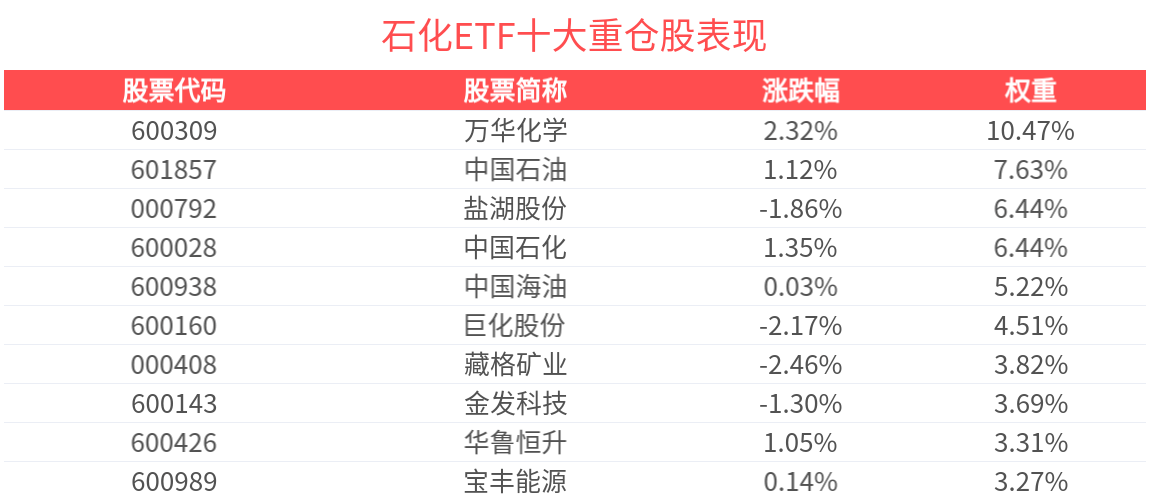
截至2026年1月20日10:33,中证石化产业指数下跌0.26%。成分股方面涨跌互现,三棵树领涨5.59%,卫星化学上涨3.80%,华峰化学上涨2.37%;中复神鹰 领跌5.35%,光威复材下跌4.34%,杭氧股份下跌3.52%。石化ETF(159731)下跌0.31%,从资金净流入方面来看,石化ETF近9天获得连续资金净流入,合 计"吸金"2.8亿元,最新份额达5.61亿份,最新规模达5.49亿元,创新高。 广发证券指出,化工作为典型周期性行业,通常5年一轮周期,经历"盈利上行-产能扩张-盈利触底-产能出清/需求预期改善"四个阶段。伴随资本开支增速转 负、反内卷、海外降息、扩内需,看好十五五开局阶段化工"破晓时分"。此外,全球技术革命持续提速,材料变革迎新机遇。 | 股票代码 | 股票简称 | 涨跌幅 | 权重 | | --- | --- | --- | --- | | 600309 | 万华化学 | 2.32% | 10.47% | | 601857 | 中国石油 | 1.12% | 7.63% | | 000792 | 盐湖股份 | -1.86% | 6.44% | | 600028 | 中国石化 | ...

光威复材跌2.01%,成交额2.94亿元,主力资金净流出3094.75万元
Xin Lang Cai Jing· 2026-01-20 02:43
Core Viewpoint - The stock of Guangwei Composite Materials Co., Ltd. has experienced fluctuations, with a recent decline of 2.01% and a total market capitalization of 33.196 billion yuan, indicating a mixed performance in the market [1]. Financial Performance - For the period from January to September 2025, Guangwei Composite achieved a revenue of 1.986 billion yuan, reflecting a year-on-year growth of 4.40%. However, the net profit attributable to shareholders decreased by 32.55% to 415 million yuan [2]. - Cumulatively, the company has distributed a total of 2.261 billion yuan in dividends since its A-share listing, with 1.188 billion yuan distributed over the past three years [3]. Shareholder Structure - As of January 9, 2025, the number of shareholders increased by 12.87% to 86,500, while the average number of circulating shares per person decreased by 11.40% to 9,494 shares [2]. - The top ten circulating shareholders include notable ETFs, with E Fund's ChiNext ETF holding 11.316 million shares, a decrease of 1.9031 million shares from the previous period, while Penghua's CSI Sub-Industry Chemical ETF is a new entrant with 8.7606 million shares [3].

商业航天为哪些化工材料带来新机遇?(附128种商业航天新材料)
材料汇· 2026-01-19 15:57
Group 1: Commercial Aerospace Industry Overview - The commercial aerospace industry is entering a period of explosive growth, driven by significant advancements in low Earth orbit satellite constellations and launch capabilities [1][2] - China plans to launch 12,992 commercial satellites to create a global internet satellite constellation, with ongoing development of high-capacity rockets and completion of launch facilities in Hainan [2][4] - By 2027, the commercial aerospace industry is expected to achieve high-quality development, with enhanced innovation and resource utilization, as outlined in the National Space Administration's action plan [4] Group 2: Demand for Commercial Satellites and Rocket Technology - The demand for commercial satellites is increasing, leading to rapid development in the liquid rocket engine sector, which is the mainstream technology for reusable rockets [6][7] - The global electronic specialty gas market is projected to reach $6.023 billion by 2025, with a CAGR of 6.39% from 2022 to 2025, while China's electronic specialty gas market is expected to reach 23 billion yuan by 2024, with a CAGR of 10.31% [8][10] Group 3: Advanced Materials in Aerospace - The carbon fiber industry is experiencing structural differentiation, with high-performance carbon fibers in demand for aerospace applications, although domestic supply capabilities for high-end products remain insufficient [13][14] - Advanced structural ceramics and composites are critical materials in aerospace, with ongoing improvements in technology and innovation needed to close the gap with developed countries [15][16] - The market for quartz glass fibers and composites is expanding, driven by their essential role in aerospace and semiconductor industries [19] Group 4: Key Functional Materials for Commercial Aerospace - PI films are crucial for aerospace applications due to their excellent thermal stability and radiation resistance, with products already supplied to China's rocket technology research institute [21][22] - LCP materials are gaining traction in high-frequency communication and signal transmission industries, with significant production capabilities established by companies like Prilite [23][24] - Specialty plastics and thermal protection materials are essential for ensuring the reliability and performance of aerospace components [25][26]






再论2026年化工行业投资机会
2026-01-19 02:29
Summary of Key Points from the Conference Call Industry Overview - The chemical industry is expected to recover to standard or even overweight allocation levels due to improved industry sentiment and performance indicators such as revenue, profit, and gross margin starting from Q2 2025 [1][3][4]. Core Insights and Arguments - **Current State of Chemical Sector**: The basic chemical and petrochemical sectors are currently under-allocated, although there has been a recent uptick. Historical data suggests that these sectors typically outperform the market in the first two quarters following the initiation of a five-year plan [3][4]. - **Impact of European Capacity Closures**: Europe has closed approximately 11 million tons of chemical production capacity since 2023, alleviating supply-demand pressures in both domestic and international markets [1][6]. - **Investment in Infrastructure**: The State Grid's planned investment of 4 trillion RMB over the next five years is expected to drive demand in related chemical sectors [1][6]. Subsector Highlights - **Refrigerants**: The refrigerant sector is anticipated to maintain high levels of profitability due to the ongoing implementation of quota schemes. Prices are expected to stabilize at high levels, with shorter procurement cycles for downstream air conditioning manufacturers [1][5]. - **Phosphate Chemicals**: Phosphate rock prices remain stable, supported by unexpected demand in energy storage. Recent price increases in glyphosate and other pesticide varieties indicate a positive outlook for this sector [1][7]. Oil Price Projections - Oil prices are projected to stabilize between $55 and $60 per barrel in 2026, with potential geopolitical factors causing temporary spikes. The overall sentiment regarding oil prices remains optimistic, which is crucial for the petrochemical sector [2][11]. Potential Investment Opportunities - **High-Performing Sectors**: The refrigerant and phosphate chemical sectors are highlighted as areas of sustained high sentiment and favorable market expectations for investment in 2026 [1][5][17]. - **Recovery Potential**: Sectors currently experiencing low sentiment, such as refining and polyester, organic silicon, and PVC, may see a rebound due to limited new capacity and price elasticity [17][12]. - **Traditional Chemical Stocks**: Companies with reasonable or undervalued valuations, such as Wanhua Chemical and Huayu Chemical, may present opportunities for valuation recovery if industry sentiment improves [13][17]. Emerging Trends - **New Materials**: The new materials sector is expected to see continuous demand growth driven by applications in robotics, aerospace, and biofuels. Key areas include electronic chemicals and lightweight materials [14][18]. - **AI and Semiconductor Growth**: The development of AI applications and semiconductor chips is anticipated to drive sustained demand growth in the coming years [15]. Conclusion - The chemical industry is poised for recovery, with specific subsectors like refrigerants and phosphates showing strong potential. Investment strategies should focus on both high-performing sectors and those with recovery potential, while keeping an eye on emerging trends in new materials and technology applications [1][17].
光威复材20260116
2026-01-19 02:29
Summary of Guangwei Composites Conference Call Industry Overview - Guangwei Composites holds a leading position in the commercial aerospace carbon fiber materials sector, particularly with its M series carbon fibers, which are highly rigid and have near-zero thermal expansion coefficients, making them ideal for space environments [2][4][5] - Carbon fiber materials outperform traditional metals in specific strength, modulus, and temperature resistance, allowing for significant weight reduction in critical applications such as satellite frames, solar wing support structures, and phased array antenna components [2][6][7] Key Insights and Arguments - Despite the high unit price of carbon fiber, its lightweight characteristics significantly reduce launch costs for space missions. For instance, the launch cost of SpaceX's Falcon 9 rocket is approximately 7,000 RMB per kilogram, making weight reduction economically advantageous [2][8][9] - The demand for carbon fiber in low Earth orbit satellite communications is driven by the material's fatigue resistance and stability, which are crucial for high-precision applications like laser communications [2][12] - The Starlink project has seen a notable increase in carbon fiber usage, with the value of carbon fiber per satellite expected to double from 1.5 million RMB for the V2 version to 3 million RMB for the new Starship version [2][13] Financial Performance - Guangwei Composites' carbon fiber business boasts a gross margin of around 60%, contributing approximately 80% to the company's net profit. Although the civil market is competitive and has led to losses, the high-end aerospace demand remains stable with significant growth potential [4][19] - Short-term performance may decline, but long-term projections indicate that net profits could reach around 3 billion RMB by 2030, driven by new aircraft projects and accelerated satellite networking in the aerospace sector [4][23] Challenges and Market Dynamics - The commercial aerospace sector has experienced recent fluctuations, but long-term investment opportunities remain strong, particularly for leading companies with clear competitive advantages [3] - Guangwei Composites faces challenges in achieving stable mass production of carbon fibers, with only a few companies capable of consistent supply, highlighting the technical barriers in the industry [15][19] Future Outlook - The company anticipates a recovery in performance starting from 2026-2027, with significant contributions expected from high-end aerospace and satellite projects. The potential for monopolistic supply in the space sector is also noted, as M series products are deemed irreplaceable [21][23] - The aerospace sector's growth is expected to be bolstered by advancements in recoverable technology and the acceleration of satellite networking, which could lead to substantial revenue contributions [22][23]
光威复材1月16日获融资买入2.90亿元,融资余额11.81亿元
Xin Lang Cai Jing· 2026-01-19 01:46
Group 1 - The stock of Guangwei Composite Materials increased by 4.17% on January 16, with a trading volume of 2.534 billion yuan [1] - On the same day, the company had a financing buy-in amount of 290 million yuan and a net financing buy of 46.65 million yuan, with a total financing and securities balance of 1.195 billion yuan [1] - The financing balance of Guangwei Composite Materials is 1.181 billion yuan, accounting for 3.47% of its market capitalization, which is above the 90th percentile level over the past year [1] Group 2 - As of January 9, the number of shareholders of Guangwei Composite Materials reached 86,500, an increase of 12.87%, while the average circulating shares per person decreased by 11.40% to 9,494 shares [2] - For the period from January to September 2025, the company achieved an operating income of 1.986 billion yuan, a year-on-year increase of 4.40%, while the net profit attributable to the parent company was 415 million yuan, a year-on-year decrease of 32.55% [2] Group 3 - Guangwei Composite Materials has distributed a total of 2.261 billion yuan in dividends since its A-share listing, with 1.188 billion yuan distributed in the last three years [3] - As of September 30, 2025, the top ten circulating shareholders included E Fund's ChiNext ETF as the third-largest shareholder, holding 11.316 million shares, a decrease of 1.9031 million shares from the previous period [3] - New shareholders include Penghua's CSI Sub-Segmented Chemical Industry Theme ETF, holding 8.7606 million shares, and Guotai Junan's National Security Mixed A, holding 3.694 million shares [3]
新材料产业周报:三星显示正式启动第8.6代OLED面板量产,力鸿一号圆满完成亚轨道飞行试验-20260118
Guohai Securities· 2026-01-18 12:21
Investment Rating - The report maintains a "Recommended" rating for the new materials industry [1] Core Insights - The new materials sector is positioned as a crucial direction for the chemical industry, currently experiencing rapid growth in downstream demand. With policy support and technological breakthroughs, domestic new materials are expected to accelerate into a long-term growth phase. The report emphasizes that "one generation of materials leads to one generation of industry," highlighting the foundational nature of the new materials industry as the material basis for other sectors [3][4]. Summary by Sections 1. Electronic Information Sector - Focus areas include semiconductor materials, display materials, and 5G materials. Samsung Display has officially launched mass production of the 8.6 generation OLED panels, which will be used in new laptops this year [5][20]. 2. Aerospace Sector - Key materials of interest are PI films, precision ceramics, and carbon fibers. The successful suborbital flight test of the Lihong No. 1 vehicle demonstrates advancements in low-cost and flexible launch capabilities [7]. 3. New Energy Sector - Focus on photovoltaic materials, lithium-ion batteries, proton exchange membranes, and hydrogen storage materials. India is projected to become the second-largest solar market globally by 2026, driven by steady installation growth [9]. 4. Biotechnology Sector - Key areas include synthetic biology and scientific services. A team from Tsinghua University in Shenzhen has developed a 3D-printed "mini heart" that mimics the rhythmic beating of a real heart, with future applications in organ printing anticipated [11]. 5. Energy Conservation and Environmental Protection Sector - Focus on adsorbent resins, membrane materials, and biodegradable plastics. The Ministry of Industry and Information Technology has launched an action plan to promote high-quality development of industrial internet platforms, aiming for over 450 influential platforms by 2028 [13]. 6. Key Companies and Earnings Forecast - The report highlights several companies with their respective stock prices and earnings per share (EPS) forecasts for 2024A, 2025E, and 2026E, along with their price-to-earnings (PE) ratios and investment ratings. Notable companies include: - Ruihua Tai (688323.SH): EPS forecast of 0.26 for 2026E, rated as "Increase" [14] - Guangwei Composite (300699.SZ): EPS forecast of 0.97 for 2026E, rated as "Buy" [14] - Zhongfu Shenying (688295.SH): EPS forecast of 0.23 for 2026E, rated as "Buy" [14] - Wanrun Co., Ltd. (002643.SZ): EPS forecast of 0.53 for 2026E, rated as "Buy" [14] - Dinglong Co., Ltd. (300054.SZ): EPS forecast of 0.96 for 2026E, rated as "Buy" [14]





国防军工行业投资策略周报:商业航天高景气可期,大飞机和军贸关注度提升-20260118
GF SECURITIES· 2026-01-18 08:26
Core Insights - The report highlights the promising outlook for the commercial aerospace sector and increased attention on large aircraft and military trade [2][3] - The construction of a space power is accelerating, with a focus on breakthroughs in reusable rocket technology and the development of new industries such as commercial aerospace and low-altitude economy [5][13] - Airbus has set a record for civil aircraft orders, with a total of 8,754 aircraft in backlog by the end of 2025, indicating strong market demand [5][13] - Military trade is expected to improve, with significant defense export growth reported in the UK, reaching over £20 billion in 2025 [5][14] Investment Strategy - The report recommends focusing on companies that align with the "S-curve" evolution, emphasizing supply chain reform and automation trends, with specific recommendations for companies like Aero Engine Corporation and AVIC [5][15] - It also suggests targeting companies involved in military trade, large aircraft, and low-altitude economy, highlighting firms such as Guorui Technology and China Power [5][15] - New emerging industries such as commercial aerospace, AI, and quantum computing are also identified as key areas for investment, with recommendations for companies like Ruichuang Micro-Nano and Ziguang Guowei [5][15] Company Valuation and Financial Analysis - The report provides detailed financial metrics for key companies in the defense and aerospace sector, including expected earnings per share (EPS) and price-to-earnings (PE) ratios for 2025 and 2026 [6] - For instance, Aero Engine Corporation is projected to have an EPS of 0.22 CNY in 2025, with a PE ratio of 184.41x, indicating strong growth potential [6] - Other companies like AVIC Heavy Machinery and Guorui Technology are also highlighted for their expected profitability and market positioning [6][25][27]


研判2025!中国大丝束碳纤维行业产业链、市场规模、需求量、竞争格局、发展趋势:风电需求驱动下,中国大丝束碳纤维行业迎来爆发式增长[图]
Chan Ye Xin Xi Wang· 2026-01-17 01:09
Core Insights - The large tow carbon fiber industry is experiencing significant growth due to its high strength, modulus, low density, and excellent corrosion and fatigue resistance, particularly in the wind power sector, which enhances the efficiency and stability of wind energy equipment [1][6] - The demand for large tow carbon fiber in China is projected to reach 20,700 tons by 2024, driven by advancements in technology and the increasing need for clean energy [1][6] Industry Overview - Carbon fiber, known as the "king of new materials," consists of over 90% carbon content, with large tow carbon fiber defined as having more than 48,000 filaments per bundle [2] - Large tow carbon fiber offers significant advantages over small tow carbon fiber, including increased production capacity and lower costs, which helps overcome the high price barriers that limit its application [2][4] Market Demand - The Chinese wind power blade market is expected to reach 47.6 billion yuan in 2024, reflecting a year-on-year increase of 7.7%, which will drive the demand for carbon fiber reinforced composites [4] - The global market for large tow carbon fiber is projected to reach $810 million by 2024, indicating a continued growth trend fueled by downstream demand [5] Industry Development - The large tow carbon fiber industry in China has progressed from a focus on small tow carbon fiber to significant advancements in large tow production, with key milestones achieved in industrialization and scale production since 2016 [3][4] - The first domestic standard for large tow carbon fiber was established in 2023, marking a significant step in the industry’s development [3] Competitive Landscape - Major global players in the large tow carbon fiber market include Toray (Japan), Hexcel (USA), and SGL (Germany), while Chinese companies like Shanghai Petrochemical, Jilin Chemical Fiber, and Zhongfu Shenying are emerging as key competitors [6][4] Industry Trends - The domestic production of large tow carbon fiber is accelerating, reducing reliance on imports and enhancing self-sufficiency in the industry [10] - The application of large tow carbon fiber is expanding beyond wind power to sectors such as rail transportation, energy, and infrastructure, driven by its cost-effectiveness and performance advantages [10] - Government policies are increasingly supporting the development of the carbon fiber industry, promoting innovation and the adoption of advanced materials [10]


