
南京银行

Search documents
25Q4业绩回升向好,息差边际企稳
HTSC· 2026-02-13 08:38
Investment Rating - The industry rating is "Overweight" [8] Core Insights - The banking sector's profit growth is showing marginal improvement, with net interest margins stabilizing and asset quality remaining robust [5][3] - Major banks are leading the industry in asset expansion, with total assets growing by 9.0% year-on-year as of the end of Q4 2025 [2] - The net profit of commercial banks increased by 2.33% year-on-year in Q4 2025, driven by stable net interest margins and declining credit costs [3] - The non-performing loan ratio for commercial banks improved to 1.50%, indicating a healthy asset quality [4] Summary by Sections Asset Expansion - As of Q4 2025, major banks and joint-stock banks saw a marginal increase in total asset growth rates, while city and rural commercial banks experienced a slowdown [2] - The balance of inclusive small and micro loans increased by 11.0% year-on-year, although the growth rate has slowed [2] Profit Growth - The net profit growth of commercial banks improved by 2.3 percentage points compared to Q3 2025, with significant rebounds in city and rural commercial banks [3] - The annualized ROE and ROA for commercial banks were 7.78% and 0.60%, respectively, reflecting a slight decline year-on-year [2] Asset Quality - The non-performing loan ratio decreased by 2 basis points from the end of September 2025, with major banks showing a decline in non-performing loan ratios [4] - The provision coverage ratio for commercial banks was 205%, indicating a reasonable risk compensation ability [4] Investment Opportunities - The report recommends focusing on structural opportunities within the banking sector, highlighting specific banks such as Ningbo, Nanjing, and Chongqing Rural Commercial Bank for their strong performance and dividend yield [5][9]





绿色金融赋能智造升级,南京银行江北新区分行“贷”动产业向绿而行
Jiang Nan Shi Bao· 2026-02-13 06:01
Group 1 - Nanjing Bank Jiangbei New District Branch aims to support the real economy by aligning financial resources with regional industrial development needs, enhancing support for实体企业, and injecting financial vitality into industrial transformation and upgrading [1] - The bank successfully provided 7 million yuan in credit support to a technology company specializing in power automation, alleviating operational funding pressure and aiding in production scale expansion and market competitiveness [1] - The technology company has leading R&D capabilities and its products are widely used in critical public facilities, maintaining stable order growth despite facing significant funding pressures for production expansion and equipment upgrades [1] Group 2 - The credit issuance reflects Nanjing Bank Jiangbei New District Branch's commitment to green finance and empowering manufacturing upgrades, responding to the requirements of the green finance innovation reform pilot zone [2] - The bank is focused on directing financial resources towards green, low-carbon, and high-end manufacturing sectors, facilitating enterprises in achieving green development and intelligent manufacturing upgrades [2] - Moving forward, the bank will continue to leverage regional advantages, concentrate on advantageous industries and strategic emerging sectors, and enhance its product system and service models to provide precise, efficient, and high-quality financial support for regional economic development [2]
丈量地方性银行(3):川渝132家区域性银行全梳理-20260212
GF SECURITIES· 2026-02-12 14:21
Investment Rating - The industry investment rating is "Buy" [2] Core Insights - The report analyzes 132 regional banks in the Sichuan-Chongqing area, highlighting the growth and structural changes in the banking sector [6][27] - The asset growth rates of major city commercial banks in the region are higher than those of listed city commercial banks, indicating a robust expansion [38] - Profitability metrics show that city commercial banks in the region have lower ROE compared to listed banks, while rural commercial banks outperform them [6][27] - Asset quality is slightly weaker in regional banks compared to listed banks, with higher non-performing loan ratios [6][27] Summary by Sections Economic Structure Analysis - Sichuan province is positioned as a key driver for western development, with a focus on enhancing the Chengdu-Chongqing economic circle [13][14] - In 2025, Chengdu's GDP is projected to account for 38.7% of the province's total, with significant growth in various sectors [15] Banking Sector Overview - The Sichuan-Chongqing region has 132 commercial banks, including 14 city commercial banks, 65 rural banks, and 51 rural commercial banks [27] - The asset growth rates for major city commercial banks in the region are 15.6% and 18.2%, surpassing the 14.2% growth of listed city commercial banks [38] Asset and Liability Structure - The proportion of loans to total assets has been increasing since 2016, with city commercial banks in Sichuan projected to have a loan ratio of 56.1% by 2024 [38][40] - The financial investment ratio for city commercial banks is on a downward trend, with a slight recovery noted in the first half of 2025 [40][46] Profitability and Asset Quality - The average ROE for city commercial banks in the region is 10.97%, lower than the 11.99% average for listed city commercial banks [6][27] - Non-performing loan ratios for city commercial banks in the region are higher than those of listed banks, indicating potential asset quality concerns [6][27] Capital Adequacy - Capital adequacy ratios for regional banks are comparable to those of listed banks, providing a safety margin for operations [6][27]




华源晨会精粹20260212-20260212
Hua Yuan Zheng Quan· 2026-02-12 13:55
Group 1: Fixed Income Market Insights - The scale of public fixed income + funds reached a historical high of approximately 2.83 trillion yuan by the end of Q4 2025, with a slight increase of 0.09 trillion yuan from Q3 2025, reflecting a quarter-on-quarter growth of 3.2% [6][7][12] - The top five fund companies in terms of fixed income + fund scale as of December 2025 were: Invesco Great Wall (230.9 billion yuan), E Fund (221.9 billion yuan), Huatai-PB (157.1 billion yuan), and others [7][8] - The equity allocation of fixed income + funds reached its highest level since Q4 2023, with stock, bond, and deposit market values accounting for 9.7%, 86.4%, and 1.5% respectively in Q4 2025 [8][9] Group 2: Fund Performance and Holdings - The average annual return for fixed income + funds in 2025 was 5.35%, with specific returns for different fund types: mixed debt funds (6.7%), first-level debt funds (2.4%), second-level debt funds (4.9%), and convertible bond funds (22.9%) [12] - The manufacturing sector dominated the investment focus of fixed income + funds, with an investment scale of 172.2 billion yuan, accounting for approximately 63% of total stock investments [9][10] - The top ten heavy positions in fixed income + funds showed strong stability, with major stocks like Zijin Mining, CATL, and Tencent remaining in the top three [10][11] Group 3: Banking Sector Analysis - The proportion of active equity funds heavily invested in the banking sector increased from 3.6% in Q3 2025 to 4.4% in Q4 2025, with a significant recovery in the banking index's quarterly return from -10.5% to 4.6% [17][18] - Notable banks such as Ningbo Bank and Jiangsu Bank are recommended for their strong asset quality and risk management capabilities, with Ningbo Bank showing a collaborative model in wealth management and technology finance [20][19] - The overall performance of listed banks is relatively weak, but some banks exhibit strong growth potential due to differentiated operational strategies [20] Group 4: Company-Specific Insights on Haibo Shichuang - Haibo Shichuang, established in 2011, has become a leading player in the domestic energy storage system integration market, ranking first in installed capacity in China by the end of 2024 [21][22] - The company is expected to benefit from the rapid growth of energy storage installations driven by the domestic electricity market reforms, with significant projects already secured [22][23] - Internationally, Haibo Shichuang has established partnerships and local teams in key markets, enhancing its ability to deliver projects and improve profitability, particularly in overseas markets [23][24]


2025年NPL市场回顾与展望:市场持续扩容,未来回收表现有待持续关注
Lian He Zi Xin· 2026-02-12 11:16
Market Overview - The NPL product market continued to expand in 2025, with a total issuance scale of 820.57 billion yuan, representing a year-on-year growth of 61.32%[4] - The cumulative issuance scale of NPL products from 2016 to 2025 reached 3285.88 billion yuan, indicating a sustained growth trend over six consecutive years[4] Asset Securitization - In 2025, commercial banks disposed of a total of 519.11 billion yuan of non-performing loans (NPLs) through asset securitization, with principal accounting for 90.53% of this amount, marking a 62.80% increase from 2024[5] - As of September 2025, the balance of non-performing loans in commercial banks was 3522.48 billion yuan, with 349.45 billion yuan disposed of through securitization, accounting for 10.28% of the median balance of non-performing loans[7] Issuance Characteristics - Large state-owned commercial banks remained the main issuers in the NPL market, with the top three institutions (Industrial and Commercial Bank of China, China Construction Bank, and Bank of China) accounting for 39.92% of the total issuance in 2025[9] - The types of NPL products issued have diversified, including personal housing mortgage NPLs and small micro-enterprise NPLs, reflecting a trend towards greater variety in product offerings[9] Recovery Rates and Valuation - The expected recovery rate for credit card NPL products ranged from 4.09% to 16.15%, with a weighted average recovery rate of 9.68%[22] - Personal housing mortgage NPL products had a higher expected recovery rate of 31.44% to 50.02%, with a weighted average recovery rate of 42.30%, although this represents a decline from 50.08% in 2024[31] Small Micro-Enterprise Loans - In 2025, 44 small micro-enterprise NPL products were issued, with a total issuance scale of 224.01 billion yuan, accounting for 27.03% of the total issuance[36] - The expected recovery rate for small micro-enterprise NPLs varied significantly, ranging from 11.58% to 57.20%, depending on the type of collateral involved[37]

25Q4 基金持仓分析:主动偏股基金重仓银行比例处于低位
Hua Yuan Zheng Quan· 2026-02-12 11:15
Investment Rating - The industry investment rating is "Positive" (first time) [4] Core Viewpoints - The proportion of bank stocks held by actively managed equity funds remains low, with a slight increase in the fourth quarter of 2025. The market capitalization of bank stocks in actively managed funds rose from 1.8% in Q3 2025 to 1.9% in Q4 2025, indicating a gradual recovery [4][12] - The bank index's quarterly return rebounded significantly from -10.5% in Q3 2025 to 4.6% in Q4 2025, reflecting a 15.07 percentage point increase [23] - The report suggests focusing on high-quality banks with stable asset quality and strong risk management capabilities, particularly in favorable economic regions [44][48] Summary by Sections 1. Changes in Fund Holdings in Q4 2025 - The market capitalization of bank stocks held by public funds increased from 3.6% in Q3 2025 to 4.4% in Q4 2025, with a total value of approximately 1,473 billion [6][8] - The increase in bank stock holdings was primarily driven by passive equity funds, which saw their bank stock market capitalization rise from 841.1 billion in Q3 2025 to 1,104.2 billion in Q4 2025, increasing their proportion from 5.4% to 7.0% [19][22] - Active equity funds showed a slight increase in bank stock holdings, with the market capitalization rising from 300.4 billion in Q3 2025 to 305.5 billion in Q4 2025 [21][22] 2. Performance of Bank Stocks - The bank sector's performance was highlighted by a significant recovery in the bank index, which turned positive in Q4 2025 after a negative performance in the previous quarter [23] - The report indicates that the overall performance of listed banks has been relatively weak, but certain banks are showing strong growth potential due to differentiated business strategies [44][48] 3. Recommendations for Investment - The report recommends focusing on banks with robust asset quality and risk management, particularly those in economically strong regions such as Ningbo Bank, Jiangsu Bank, and Nanjing Bank [44][48]

11家上市银行2025年业绩报告:变革中的机遇与2026年展望
Sou Hu Cai Jing· 2026-02-12 10:30
Core Viewpoint - The banking industry is undergoing an unprecedented transformation cycle in 2025, driven by macroeconomic stability, interest rate declines, regulatory upgrades, digital iteration, and a consensus on "anti-involution," pushing listed banks to accelerate their shift from "scale expansion" to "value prioritization" [2][10]. Performance Overview - As of February 10, 2026, 11 out of 42 listed banks in A-shares have reported their 2025 performance, all achieving year-on-year growth in net profit attributable to shareholders, reflecting "stable volume, quality improvement, and structural enhancement" [2][13]. - Among these banks, 10 achieved both revenue and net profit growth, with only CITIC Bank experiencing a slight revenue decline of 0.55%, breaking the market's pessimistic expectations regarding industry profitability [14]. Institutional Performance - City commercial banks showed remarkable performance, with Qingdao Bank's net profit increasing by 21.66%, leading the group; Qilu Bank and Hangzhou Bank also exceeded 10% growth, at 14.58% and 12.05% respectively [3][14]. - In the joint-stock bank category, Shanghai Pudong Development Bank achieved a net profit growth rate of 10.52%, the only institution in this category to reach double-digit growth; other banks like China Merchants Bank, CITIC Bank, and Industrial Bank had relatively modest growth rates of 1.21%, 2.98%, and 0.34% respectively [3][14]. Asset Quality and Risk Management - The 11 banks have increased their risk management efforts, with core asset quality indicators showing improvement; 6 banks reported a decrease in non-performing loan (NPL) ratios compared to the previous year [3][15]. - Qingdao Bank saw the most significant decline in NPL ratio, down 17 basis points to 0.97%; Qilu Bank and Shanghai Pudong Development Bank also saw declines of 14 and 10 basis points, respectively [4][15]. - Despite 8 banks experiencing a decline in provision coverage ratios, the overall level remains high, indicating solid risk resistance capabilities; Qingdao Bank and Qilu Bank saw increases in their coverage ratios [4][15]. Industry Transformation - The banking industry is accelerating its transformation, moving beyond scale expansion to seek balance among efficiency, safety, and value, driven by various policies and practices [6][17]. - Regulatory bodies have encouraged financial institutions to support key sectors of the real economy, with structural monetary policy tools effectively implemented [6][17]. - The introduction of consumer loan interest subsidies aims to stimulate domestic demand, with banks lowering consumer loan rates significantly [7][18]. Future Trends - The banking industry is expected to maintain a stable asset quality in 2026, with NPL ratios remaining steady and risk resistance capabilities strong [10][21]. - The differentiation among institutions will become more pronounced, with large state-owned banks and quality joint-stock banks maintaining low NPL ratios, while some smaller banks may face pressure [11][21]. - Investment logic will focus on "high dividend, defensive" and "high quality, growth" dual lines, with high-dividend banks likely to attract continued investment [12][22].

每日报告精选(2026-02-11 09:00——2026-02-12 15:00)
GUOTAI HAITONG SECURITIES· 2026-02-12 07:45
Macroeconomic Insights - January non-farm employment data exceeded expectations with an increase of 130,000 jobs, significantly higher than the anticipated 65,000[2] - The unemployment rate unexpectedly dropped to 4.3%, despite a rise in labor participation rate[2] - The Federal Reserve may pause interest rate cuts until June, with market expectations for a rate cut probability of less than 6% in March[3] Inflation and Economic Trends - The U.S. economy is transitioning from a "K-shaped" recovery to a "re-inflation" phase, with high-net-worth individuals stabilizing the economy through refinancing[6] - Inflation expectations are self-reinforcing, with actual mortgage rates at a three-year low, contributing to a recovery in the housing sector[8] - The housing affordability index remains above 100, indicating that median-income households can still afford homes despite high prices[21] Industry-Specific Developments - The traditional electronic fabric market is experiencing accelerated price increases due to supply shortages, with prices rising by 0.5-0.6 RMB/m[43] - The AI electronic fabric sector is expected to see significant growth in 2026, driven by demand from AI chips and consumer electronics[46] - The coal industry is projected to benefit from a resurgence in coal power in the U.S., with companies like Peabody Energy and China Shenhua expected to gain[51]



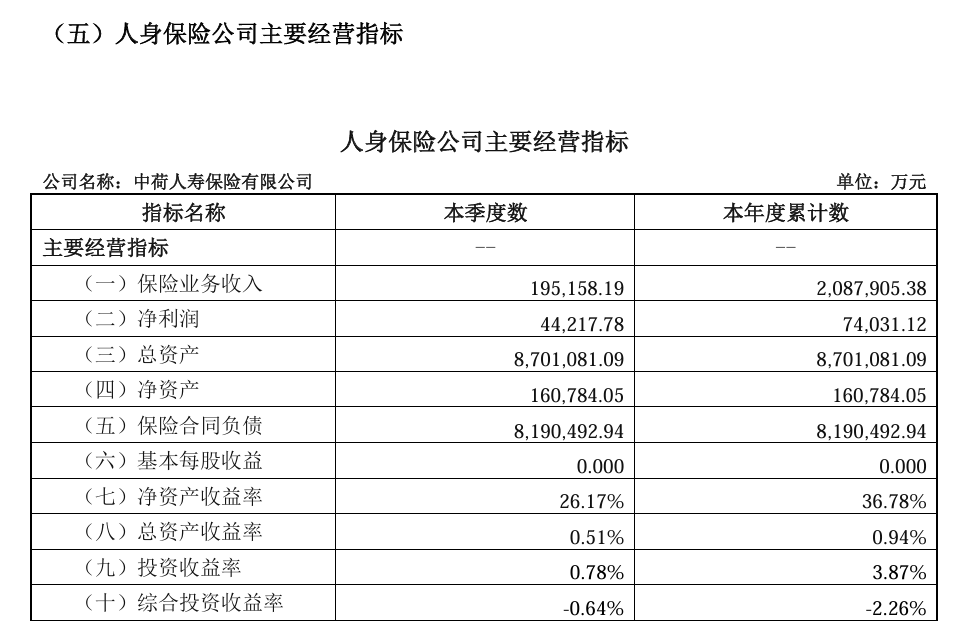
中荷人寿去年保费规模稳步增长 最近三年综合投资收益率排名却从业内上游滑落至垫底
Sou Hu Cai Jing· 2026-02-12 05:56
深圳商报·读创客户端记者 詹钰叶 在2024年以14.42%的综合投资收益率跻身业内前十后,中荷人寿在2025年未能延续"高光"——在已公布报告的57家非上市人身险公司中,公司反而 以-2.26%的年度综合投资收益率排名垫底。 根据中荷人寿2025年第四季度偿付能力报告,第四季度公司单季实现保费达19.5亿元,延续了上半年36.48%的高增速态势;全年累计实现保费收入208.8亿 元,同比增长超36%,显著优于同业。 | 指标名称 | 本季度数 | 本年度累计数 | | --- | --- | --- | | 主要经营指标 | | | | (一)保险业务收入 | 195.158.19 | 2.087.905.38 | | (二) 浄利润 | 44.217.78 | 74.031.12 | | (三)总资产 | 8.701.081.09 | 8.701.081.09 | | (四) 净资产 | 160.784.05 | 160.784.05 | | (五) 保险合同负债 | 8.190.492.94 | 8.190.492.94 | | (六) 基本每股收益 | 0.000 | 0.000 | | (七) 净资 ...
申万宏源证券晨会报告-20260212
Shenwan Hongyuan Securities· 2026-02-12 02:58
Core Insights - The report highlights the emergence of "high prosperity spillover" in the AI sector, suggesting that while the fundamental elasticity may not match the high prosperity itself, there is still potential for elasticity in spillover markets [2][11] - It emphasizes the importance of basic bottom-line requirements for spillover markets, indicating that the prosperity cycle needs to confirm a clear bottom [11] - The report suggests that the valuation structure of high prosperity can break through historical averages, but the spillover structure may face challenges [11] Industry Summaries AI Sector - The report identifies specific industries benefiting from AI price spillover, recommending attention to fiberglass and optical fiber due to their favorable valuations and visible price increases [2][11] - Fiberglass is noted for its strong bargaining power in the global supply chain, with a valuation slightly above historical averages, indicating a favorable risk-reward profile [11] - The optical fiber sector is experiencing a recovery in traditional segments alongside expectations for AI business advancements, presenting a high short-term success rate [11] Real Estate - The report indicates that the most challenging period for the real estate sector may be over, with signs of marginal improvement in supply and demand dynamics [11] - Data shows a narrowing decline in key indicators, with a significant reduction in the year-on-year decline of second-hand housing transactions [11] - Policy measures are being implemented to stabilize the real estate market, focusing on risk management and ensuring the protection of livelihoods [11] Consumer Electronics - The report discusses the impact of the "old-for-new" policy on the home appliance market, noting significant sales volumes and revenue generated from this initiative [15][18] - It highlights the performance of various appliance categories, with a focus on the kitchen appliance sector, which is experiencing varied performance amid high base pressures [18] - The report anticipates that the 2026 "old-for-new" policy will continue to benefit leading brands with superior product efficiency and performance [18] Tourism and Hospitality - The report outlines the expected surge in domestic tourism during the extended Spring Festival holiday, predicting a significant increase in passenger transport volumes [21] - It notes a shift in consumer preferences towards high-quality accommodations and diverse travel experiences, driven by family and senior travelers [21] - The report suggests that the tourism market is experiencing a multi-faceted explosion, with emerging destinations gaining popularity [21]