嘉士伯

Search documents
《二〇二四啤酒线下市场研究报告》发布 啤酒企业压力与机遇并存
Zhong Guo Chan Ye Jing Ji Xin Xi Wang· 2025-05-27 00:34
Core Insights - The beer industry in China is experiencing both pressure and opportunities amid a complex market environment, transitioning from a growth phase to a "stock game" phase since 2013, focusing on brand, product, channel, and efficiency rather than volume [1] - In 2022, the national beer sales scale was approximately 170 billion yuan, a year-on-year decline of 4%, while the national beer production was 35.21 million kiloliters, down 0.6% year-on-year, indicating a prolonged adjustment period for the industry [1] - Despite the overall stabilization in volume, there remains untapped "price potential" in the Chinese beer market, with an average retail price of around 4.5 yuan per liter, significantly lower than in mature markets like Europe and the US [1] - The high-end segment is viewed as a long-term growth direction for the beer industry, with brands increasing investments in premium product lines [1] Market Trends - In certain regional markets, high-end products are outperforming mid-to-low-end categories, with the transaction volume in the boutique market's convenience store channel growing by 25.6% year-on-year [2] - Some distributors have seen transaction volumes in convenience store channels increase by over 85%, achieving timely order fulfillment through a "multi-product + efficient service" strategy [2] - The discount store channel is projected to see a 180% year-on-year increase in beer transaction volume in 2024, with a 114% growth in average transaction volume per store and a 30% increase in the number of stores [2] - The penetration rate of beer in discount stores has exceeded 15% in the boutique market, highlighting the channel's advantages in cost-effectiveness and high replenishment frequency [2]
特朗普关税大棒挥向欧盟时 哪些行业风雨飘摇?
智通财经网· 2025-05-26 13:35
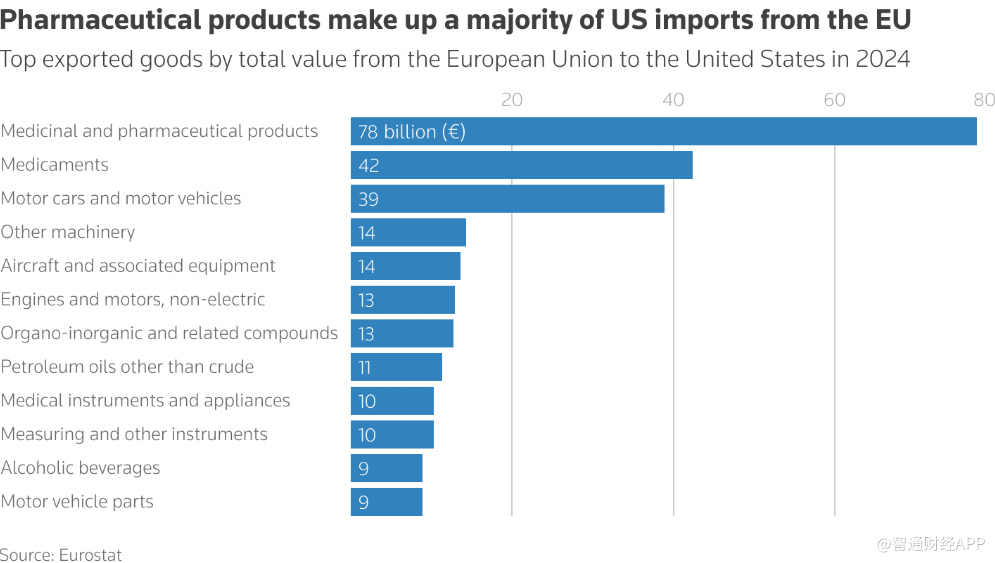
Core Viewpoint - President Donald Trump has abandoned the threat of imposing a 50% tariff on EU imports, allowing more time for negotiations between Washington and the 27 EU countries [1] Group 1: EU Exports to the US - In 2024, the US is the largest export partner for the EU, accounting for 20.6% of EU exports [1] - The top three countries exporting from the EU to the US are Germany (€161 billion, approximately $182.6 billion), Ireland (€72 billion), and Italy (€65 billion) [3] - The main products exported from the EU to the US include pharmaceuticals (€120 billion), automobiles (€40 billion), and aircraft and related equipment [3][4] Group 2: Pharmaceuticals - In 2024, the EU exported approximately €120 billion worth of pharmaceutical products to the US [3] - Major pharmaceutical companies in the EU include Novo Nordisk, Bayer, Roche, and Novartis [3] Group 3: Automobiles - The EU exports about 750,000 cars to the US annually, valued at approximately €40 billion, representing 14% of the EU's total automotive production [4] - Major car manufacturers affected by US trade policies include Mercedes-Benz, Stellantis, and Volvo [4] - Volkswagen is significantly impacted by tariffs due to its high-end Audi brand not being produced in the US, but plans to announce production of some best-selling models in the US [4] Group 4: Aircraft and Equipment - Airbus is the second-largest exporter in France, with about 12% of its aircraft sold to the US, some of which are assembled locally [5] - CFM International, a major supplier for Airbus and Boeing, is co-owned by Safran and GE Aviation [5] Group 5: Alcohol and Beverages - In 2024, the EU exported approximately €9 billion worth of alcoholic beverages to the US, with European spirits valued at €2.9 billion [9] - Major European beverage producers include Heineken, Diageo, and Carlsberg [9] Group 6: Cosmetics - The EU exported cosmetics, perfumes, and personal care products worth approximately $10.47 billion to the US in 2024 [10] - French company L'Oréal exports about €2.5 billion worth of cosmetics to the US annually [11] Group 7: Luxury Goods - About one-quarter of products from major luxury goods groups are aimed at US consumers, with smaller brands having varying market shares [12] - The French luxury goods industry is the largest globally, employing over 600,000 people [13] - The luxury goods sector is significantly affected by US tariffs, as companies have limited ability to shift production to the US [14]

PepsiCo Strengthens Wellness Brands Portfolio With Poppi Acquisition
ZACKS· 2025-05-20 17:46
Core Viewpoint - PepsiCo has completed the acquisition of Poppi for $1.95 billion, with a net purchase price of $1.65 billion after accounting for tax benefits, marking a significant move in its portfolio transformation towards health-oriented products [1][3]. Group 1: Acquisition Details - The acquisition includes a performance-based earnout, linking Poppi's valuation to its future success [1]. - Poppi is recognized for its prebiotic sodas that appeal to health-conscious consumers, particularly Gen Z and millennials, with a maximum of 5 grams of sugar per serving [2][4]. Group 2: Strategic Implications - This deal is part of PepsiCo's strategy to evolve with consumer demand for functional products that promote overall well-being, aligning with its goal to build a future-ready beverage and snack portfolio [3][4]. - By acquiring Poppi, PepsiCo aims to strengthen its position in the functional wellness segment, which is increasingly important as consumer preferences shift [4][5]. Group 3: Market Position and Trends - Poppi's growth has been driven by a strong digital strategy and partnerships, particularly on platforms like TikTok, which PepsiCo plans to leverage globally [5]. - The prebiotic soda market is still emerging, providing PepsiCo with an opportunity to shape consumer behavior and capture a larger share of the health beverage market [5][6]. Group 4: Current Challenges - Despite the acquisition, PepsiCo's stock has faced pressure due to soft top-line trends and operational challenges, particularly in North America [7][10]. - The company has revised its full-year guidance, expecting core constant-currency EPS to remain flat year-over-year, down from previous growth expectations [10].

恒指收跌12点,连挫三日共307点
Guodu Securities Hongkong· 2025-05-20 02:07
Core Insights - The report highlights the performance of the Hong Kong stock market, with the Hang Seng Index closing at 23,332.72, down 0.05% after a three-day decline totaling 1.3% [2][3] - The report notes that the industrial value-added data from mainland China exceeded expectations, which helped to mitigate the market's decline [3] - The report emphasizes the strong performance of certain stocks, such as Meituan and Tencent, which rose by 2.3% and 1.2% respectively, while Geely saw a decline of 2.5% [3] Macro & Industry Dynamics - Hong Kong's Chief Executive, John Lee, stated that Hong Kong serves as a financial hub amidst rising unilateralism and protectionism, aiming to strengthen its role as a mediator for international trade [6] - The Financial Secretary, Paul Chan, reported that Hong Kong's stock market has seen significant inflows, with new stock fundraising activities leading the world, accumulating over 60 billion this year, a sixfold increase year-on-year [7] - The Chinese Ministry of Industry and Information Technology has issued guidelines to promote the development of the technology service industry, focusing on creating a unified technology trading service platform [9] Company News - Xiaomi is set to unveil its first SUV model, YU7, and a self-developed chip, "玄戒 O1," at a strategic product launch event [11] - Jianbei Miao Miao expects a profit increase of at least 50% for the fiscal year ending March, driven by effective brand management and strong sales performance in its core product segments [12] - CLP Holdings reported a 2.6% year-on-year decrease in electricity sales in Hong Kong for the first quarter, attributed to warmer weather and a reduction in overall electricity demand [13]

王文涛部长会见丹麦外交大臣拉斯穆森
news flash· 2025-05-19 13:44
智通财经5月19日电,商务部部长王文涛会见丹麦外交大臣拉斯穆森,双方就中丹、中欧经贸关系、维 护多边贸易体制等问题深入交换意见。丹麦工业联合会、诺和诺德、嘉士伯等丹麦经济界代表参加会 见。王文涛表示,近日,习近平主席复信中国丹麦商会,为深化中丹经贸合作指明了方向。中丹建交75 年来,两国关系历久弥新,稳步向前发展,双边贸易持续增长,绿色、医药、农食、机械等领域投资合 作成果丰硕。中国坚定不移扩大对外开放,积极扩大国内需求,致力于打造稳定、透明、可预期的营商 环境。当前,国际形势变乱交织,面对单边主义、保护主义和逆全球化的严峻挑战,中方愿同丹方和欧 方一道,秉持建交初心,加强政策沟通,深化务实合作,共同维护以世贸组织为核心的多边贸易体制, 为世界注入更多稳定性和正能量。 王文涛部长会见丹麦外交大臣拉斯穆森 ...
拒绝“拼酒文化”的年轻人,看上了“0酒精”啤酒
Xin Lang Cai Jing· 2025-05-12 05:45
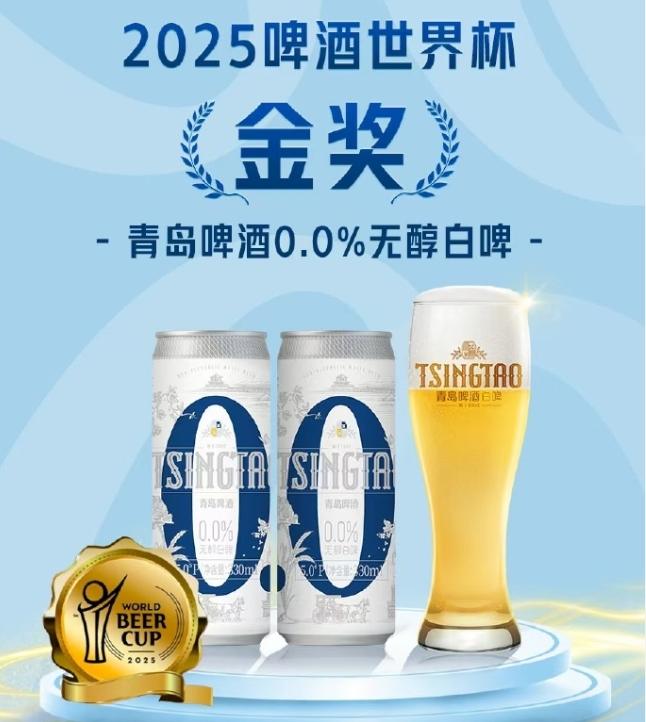
Core Insights - The World Beer Cup recently awarded Tsingtao Brewery's 0.0% non-alcoholic white beer the gold medal in the classic non-alcoholic ale/lager category, highlighting the growing focus on the non-alcoholic beer segment within the industry [1][12][21] Industry Trends - The non-alcoholic beer category is rapidly gaining popularity, driven by consumer demand for healthier options, similar to the trend seen with "0 sugar, 0 fat, 0 calories" beverages [3][12] - Major beer companies, including Tsingtao, Budweiser, and Heineken, are increasingly investing in non-alcoholic beer products, indicating a significant shift in market strategy [11][12] - The global market for non-alcoholic and low-alcohol beer has surpassed $13 billion in 2023, with projections suggesting that the share of non-alcoholic beer in the overall alcohol market could reach nearly 4% by 2027 [7][12] Consumer Behavior - Over 60% of consumers are pursuing moderate beer consumption, which is driving the expansion of the non-alcoholic beer market [14] - Non-alcoholic beer is becoming a lifestyle choice among younger consumers, who seek the taste and social experience of beer without the effects of alcohol [16][18] - The sales of non-alcoholic beer are growing significantly, with online platforms reporting over a fourfold increase in sales in the first half of 2024 compared to the previous year [19] Product Development - Tsingtao Brewery has been at the forefront of non-alcoholic beer innovation, having launched the first non-alcoholic beer flavor beverage in China in 2012 and developing a range of products to meet diverse consumer tastes [12][20] - The company has achieved breakthroughs in various technologies related to non-alcoholic beer production, enhancing flavor while maintaining low alcohol content [20][21] Market Outlook - The non-alcoholic beer segment is expected to continue its growth trajectory, supported by technological advancements and changing consumer preferences towards healthier options [20][21] - The increasing recognition of non-alcoholic beer as a viable alternative in social settings is likely to expand its consumer base and market presence [18][21]
AB InBev Q1 Earnings Beat on Brand Momentum, Revenues Fall Short
ZACKS· 2025-05-09 17:35
Core Viewpoint - AB InBev reported first-quarter 2025 results with earnings per share (EPS) exceeding estimates, while revenue declined and missed expectations, indicating mixed performance driven by strong consumer demand for megabrands and a diversified market presence [1][2]. Financial Performance - Underlying EPS was 81 cents, reflecting a 7.1% year-over-year increase, driven by 10.3% EBIT growth and optimized net finance costs, surpassing the Zacks Consensus Estimate of 77 cents [2]. - Revenues totaled $13.63 billion, falling short of the Zacks Consensus Estimate of $13.85 billion and declining 6.3% year over year, although organic revenue grew by 1.5% in half of its markets [3][4]. - Revenue per hectoliter improved by 3.7% year over year, supported by revenue-management initiatives, despite a total organic volume decline of 2.2% [4]. Brand Performance - Premium and super premium beer brands showed strong performance, with the above-core beer portfolio growing by 1.8% year over year, led by Corona's 11.2% revenue increase outside Mexico [5]. - Megabrands revenues increased by 4.4%, primarily driven by the strong performance of the Corona brand [5]. Digital Transformation - AB InBev has focused on digital investments, with B2B digital platforms contributing approximately 72% to revenues in Q1 2025, and the omnichannel ecosystem generating $275 million in revenues [6][8]. Cost and Margin Analysis - Cost of sales decreased by 9.2% to $6.04 billion, while SG&A expenses rose by 5.6% year over year to $4.2 billion [9]. - Normalized EBITDA was $4.9 billion, down 2.6% year over year, but improved 7.9% on an organic basis, with the EBITDA margin expanding to 35.6% [10]. Future Outlook - For 2025, AB InBev anticipates EBITDA growth of 4-8%, with net capital expenditure projected at $3.5-$4 billion [12].


专访中诚信国际执行副总裁薛东阳:ESG打响“升维战”,企业正重构竞争力高地
2 1 Shi Ji Jing Ji Bao Dao· 2025-05-08 10:09
Core Insights - The ESG disclosure rate for A-shares in China is projected to reach 43.82% in 2024, showing a steady increase from 41.58% in the previous year, although issues of homogenization and templated reporting remain prevalent [5][6][7] - Regulatory measures are shifting ESG disclosures from voluntary to mandatory, with new guidelines focusing on climate-related disclosures and sustainable development reports [5][6][12] Group 1: ESG Disclosure Trends - As of April 29, 2025, 2,299 A-share companies have disclosed their ESG reports, with the banking and non-banking financial sectors leading in disclosure rates, both exceeding 60% [5][6] - The overall structure and logic of ESG reports have improved, with companies adopting a "double materiality" analysis method, indicating a trend towards aligning with international standards [6][7] Group 2: Quality of ESG Reports - The quality of ESG reports has improved compared to the previous year, with leading companies transitioning from formal to substantive disclosures, integrating ESG governance with corporate strategy [7][8] - However, issues of homogenization persist, with some companies still relying on template-based disclosures lacking in-depth analysis of significant issues [7][8] Group 3: Future ESG Needs - Companies are expected to focus on building ESG systems and integrating ESG principles into daily operations, moving beyond mere compliance [8][9] - There is a growing demand for ESG data governance and digital transformation to enhance data quality and traceability [8][9] Group 4: Regulatory Landscape - Current regulations do not impose strict requirements on third-party involvement in ESG report preparation, but there is an expectation for increased scrutiny and standards in the future [10][12] - The regulatory environment is evolving, with various countries implementing frameworks to oversee ESG ratings and disclosures, indicating a trend towards greater accountability [20] Group 5: Industry-Specific ESG Considerations - Different industries must tailor their ESG disclosures to reflect their unique characteristics, with high-carbon industries focusing on emissions and compliance, while tech sectors may prioritize data privacy and inclusivity [14][15] - The disparity in ESG ratings between domestic and international firms, such as in the liquor industry, highlights the need for improved data disclosure and understanding of international standards [17]

为何在中国“看到了未来”(评论员观察)
Ren Min Ri Bao· 2025-05-07 22:23
Group 1 - The article emphasizes the importance of innovation and research in driving China's transition from a "world factory" to a "global innovation center" [2][3] - Huawei's R&D center in the Yangtze River Delta is highlighted as a significant investment, with over 10 billion yuan in total investment, aimed at attracting top global tech talent [1][2] - The overall R&D expenditure in China is projected to exceed 3.6 trillion yuan by the end of 2024, maintaining the second position globally in total investment [2] Group 2 - Foreign companies are increasingly confident in expanding their operations in China, as evidenced by the rapid construction of Carlsberg's production base in Foshan, which took only a year and a half from start to completion [3] - The article notes that businesses in Yiwu are focusing on collaboration and resource sharing to navigate challenges, demonstrating resilience and adaptability in the face of market pressures [3][4] - China is portrayed as a "connector" in the global supply chain and a "stabilizer" for global business confidence, with a strong emphasis on collective strength and unity among its people [4]
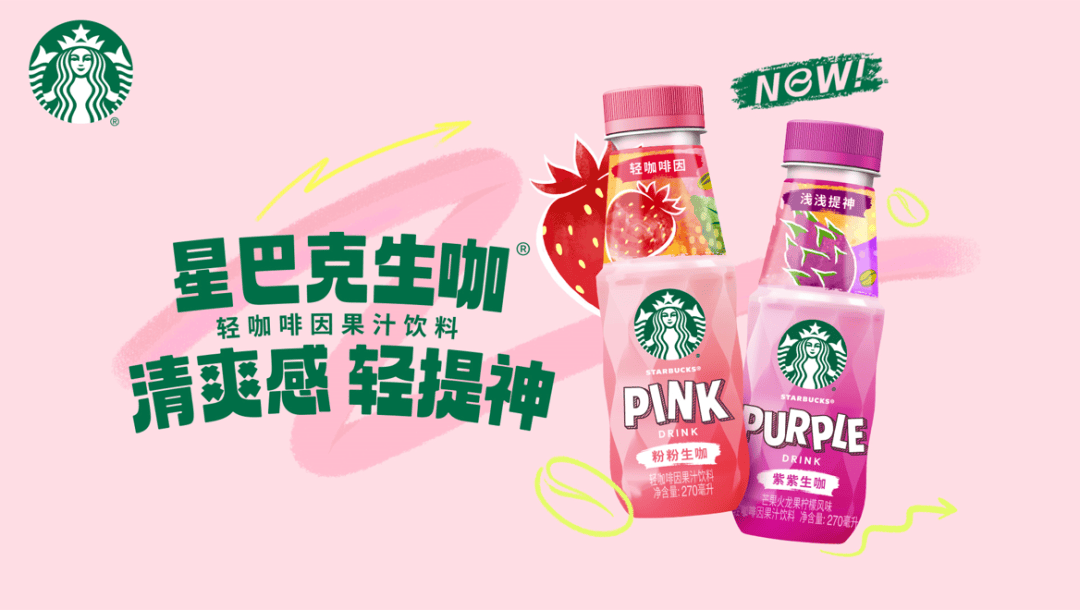
动态 | 伊利称最难时刻已经过去;蒙牛与牧怡食品签署战略合作协议;星巴克即饮生咖焕新上市
Sou Hu Cai Jing· 2025-05-06 12:53
我们每天为你摘取最重要的 食品饮料企业动态与行业新闻 食品饮料公司动态 伊利称最难时刻已经过去 在日前召开的2024财年业绩交流会上,伊利管理层与投资者分享了公司今年的经营规划,并释放了一些行业性的积极信号。伊利董事长潘刚认为,乳制品 行业挑战与机遇并存,而结构化升级的机会已经开始。 伊利认为,2025年将是轻装上阵、迈入新增长轨道的一年,其定下了营业总收入1190亿元,利润总额126亿元的经营目标。管理层还表示,将提高费用使 用效率,努力实现9%的净利润率目标。(国际金融报) 蒙牛与牧怡食品签署战略合作协议 近日,蒙牛集团与新西兰牧怡食品集团在奥克兰正式签署战略合作协议,此次合作将引入南半球优质绵羊乳资源,助力中国乳业供给侧结构性改革,同时 为新西兰特色农产品拓展市场。(新西兰天维网) 贝因美一季度净利润增长93.87% 贝因美公告的2025年一季度报告显示,实现营收约为7.28亿元,同比增长1.01%;实现归母净利润4279.61万元,同比增长93.87%。 (公司新闻) 甜啦啦五一销量创新高,桶装茶引领假日消费热潮 五一假期期间,新茶饮品牌甜啦啦全国门店销量突破2000万杯,其中桶装系列以360万杯稳居 ...