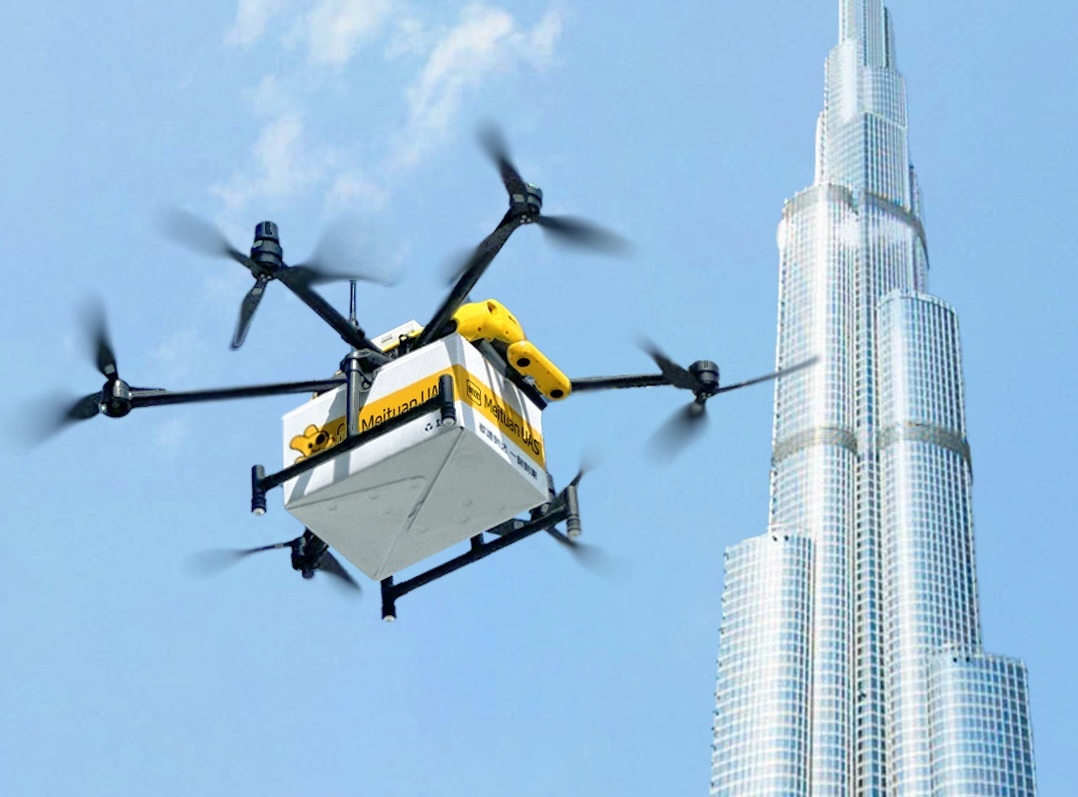
极飞科技

Search documents
广州开发区、黄埔区发布“低空与航天11条” “天空之城”全链条加码低空产业
Jing Ji Ri Bao· 2025-07-30 22:19
Core Insights - The Guangzhou Development Zone and Huangpu District are promoting the "Low Altitude Economy and Aerospace Industry" through a series of supportive measures aimed at high-quality development [1][2][3] Group 1: Policy Measures - The "Low Altitude and Aerospace 11 Measures" includes financial incentives, with individual clauses offering up to 30 million yuan for companies obtaining key aviation certifications [3] - Specific subsidies include up to 10 million yuan for project establishment, 600,000 yuan annually for infrastructure participation, and 300,000 yuan for operational support of demonstration projects [3][4] - The policies aim to enhance the entire low-altitude industry chain, focusing on project attraction, infrastructure, talent training, and technical breakthroughs [2][3] Group 2: Industry Development - The low-altitude economy has attracted over 50 key enterprises, generating an output value of approximately 15 billion yuan, covering the entire industry chain from R&D to operation [2][4] - The establishment of a dedicated office for low-altitude economy and aerospace development indicates a strategic focus on these emerging industries [2] - The region aims to gather over 100 low-altitude enterprises by the end of the year, leveraging a combination of new infrastructure and financial support [4] Group 3: Financial Innovations - A significant financial innovation is the listing of a low-altitude economic asset-backed securities (ABS) plan with a total issuance scale of 584 million yuan, aimed at supporting the development of the low-altitude economy [5] - This financial initiative is expected to enhance the region's ability to attract investment and support the growth of emerging companies in the low-altitude sector [5] Group 4: Application Scenarios - New application scenarios are being realized, such as the launch of bonded logistics air routes that reduce transportation time by 50% and save at least 10% in costs [4] - Companies like Guangzhou New Aviation Technology Co. and Jilei Electric Science and Technology are leading in their respective niches within the low-altitude economy, contributing to the sector's growth [4]
3000万重奖撬动万亿蓝海 广州黄埔冲刺“天空之城”
2 1 Shi Ji Jing Ji Bao Dao· 2025-07-30 11:53
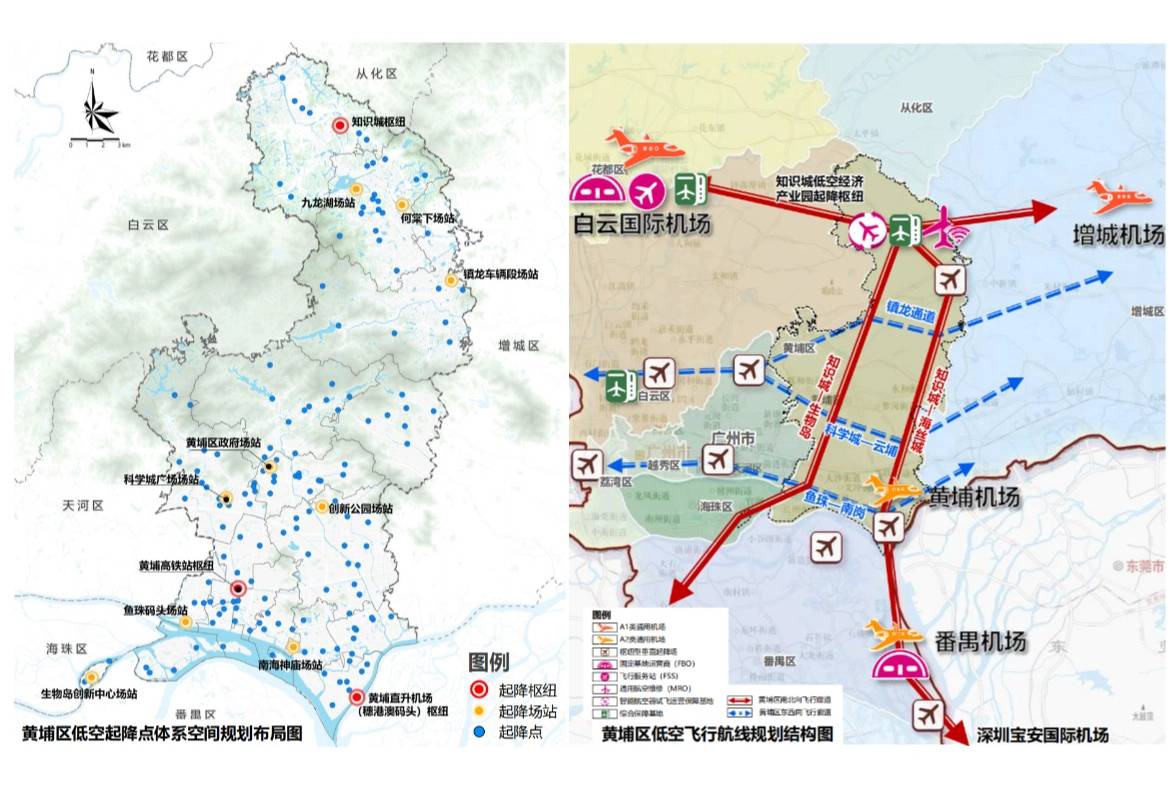
Core Points - The Guangzhou Development Zone and Huangpu District are promoting the low-altitude economy and aerospace industry through a series of policies and initiatives aimed at creating a comprehensive industrial ecosystem [1][2] - The "Low Altitude and Aerospace 11 Measures" policy offers substantial financial incentives, including a maximum reward of 30 million yuan for companies achieving key aviation certifications [2][3] - A new low-altitude takeoff and landing point and route planning system has been introduced, featuring a "3+9+N" layout to enhance infrastructure for low-altitude operations [3][4] Policy and Financial Support - The policy is set to inject approximately 200 million yuan into the low-altitude economy, with specific incentives for various stages of business development [2][3] - Key financial support includes up to 1 million yuan for project establishment, 600,000 yuan for infrastructure development, and 300,000 yuan for demonstration projects [2][3] - The initiative aims to enhance local core component supply rates and support training for drone operators and new aircraft pilots [2][3] Infrastructure Development - The district has unveiled a comprehensive low-altitude takeoff and landing point plan, which includes three hubs, nine stations, and numerous takeoff points [3][4] - A low-altitude equipment manufacturing park is under construction, designed to support advanced technology and testing facilities [4][5] - The establishment of a low-altitude management service platform and deployment of 31 5G-A base stations are part of the infrastructure enhancements [4][5] Application Scenarios and Market Opportunities - The district has launched 16 typical application scenarios and 55 specific opportunity lists across production, public services, and aviation consumption [6][7] - Successful implementations include drone-assisted agriculture, automated inspection services, and intelligent customs clearance for low-altitude logistics [7][8] - The area has conducted 1,923 flight activities with a total flight time of 243 hours, showcasing the active engagement in low-altitude operations [6][7] Industry Collaboration and Ecosystem - The establishment of the Low Altitude Economy Industry Association marks a new phase in collaborative development within the sector [8][9] - The association aims to integrate resources from enterprises, research institutions, and industry associations to foster innovation and cooperation [8][9] - The district has attracted over 50 companies, generating a total output value of 14.8 billion yuan, demonstrating the successful formation of a low-altitude economic cluster [9][10]
培育低空经济产业,广州开发区加速软硬件配套供给
Di Yi Cai Jing· 2025-07-30 06:09
Core Points - The Guangzhou Development Zone is investing approximately 200 million yuan to support the low-altitude economy and aerospace industry, with a maximum single award of 30 million yuan for companies obtaining key aviation certifications [1] - The new policy aims to create a comprehensive ecosystem for the low-altitude economy, including a layout of low-altitude takeoff and landing points and flight routes [1][4] - The area has already attracted over 50 upstream and downstream enterprises, generating a total output value of 14.8 billion yuan, with 26 low-altitude projects signed in the past year totaling 18.3 billion yuan in investment [4] Investment and Infrastructure - The policy includes a "3+9+N" layout system for low-altitude takeoff and landing points, consisting of 3 hubs, 9 landing sites, and multiple takeoff points [1] - A low-altitude equipment manufacturing park covering 5 square kilometers is being planned, which will include advanced technology laboratories and multifunctional testing runways [4] - The area has conducted 1,923 flight activities with a total flight time of 243 hours and a flight distance of 3,760.57 kilometers, utilizing an airspace of 408.4 square kilometers [4] Application and Development - The local government is promoting 16 typical application scenarios and a list of 55 specific opportunities in the low-altitude economy [4] - Successful applications in the area include the use of drones for precision farming, which has increased operational efficiency by over 30% and reduced costs by 20% [4] - Plans are in place to deploy 100 government drones within three years, opening up 10 commercial application scenarios including smart logistics and emergency rescue [4]

【新华财经调查】低空翼动|“打飞的”未来已来 仍需足够的技术储备和耐心
Xin Hua Cai Jing· 2025-07-24 00:27
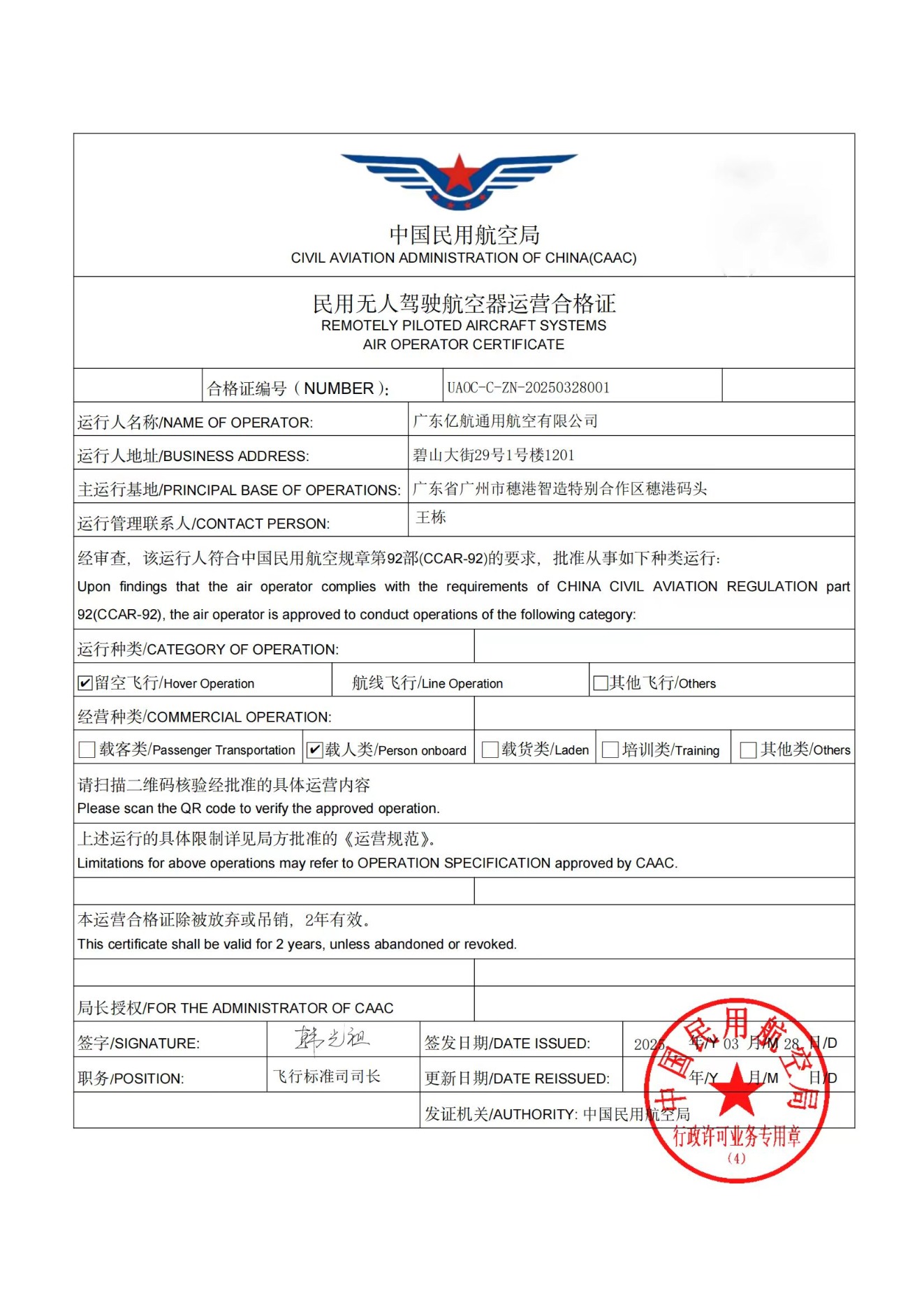
Core Insights - The development of the low-altitude economy faces challenges such as technology still in the research phase, insufficient digital airspace management capabilities, a shortage of composite talents, undeveloped business models for flight services, and incomplete inter-departmental coordination mechanisms [1][5] Industry Development - The first batch of manned civil unmanned aerial vehicle (UAV) operation certificates has been issued, allowing for "stay-in-air" operations, with restrictions on conditions such as rain and strong winds [2] - The initial focus on single-space trials aligns with a gradual development approach in the aviation industry, with plans to expand to point-to-point passenger transport in the future [2][4] - The low-altitude economy is projected to exceed 500 billion yuan in 2023 and is expected to reach 2 trillion yuan by 2030 [6] Infrastructure and Safety - The construction of physical infrastructure, including takeoff and landing sites, charging stations, and passenger terminals, is crucial for the establishment of a safe low-altitude transportation ecosystem [4][5] - There is a need for unified standards and policies to support local projects and enhance safety regulation capabilities [5] Market Opportunities - Leading companies are focusing on integrating low-altitude operations with tourism as a breakthrough point, with plans to transition to urban air mobility (UAM) in the long term [6][7] - The development of low-altitude applications is expected to start in controlled environments, such as scenic areas and flight camps, before expanding to urban settings [7] Local Initiatives - Cities like Hefei and Guangzhou are actively promoting low-altitude economic development, with initiatives to establish operational platforms and infrastructure for various applications, including air logistics and emergency services [8][9] - Guangzhou currently has over 4,000 enterprises in the low-altitude economy sector, including notable companies like EHang and XPeng [9]
经济长跑“下半程” 广州如何“拼”胜局
Guang Zhou Ri Bao· 2025-07-22 09:31
Economic Performance - Guangzhou's daily subway ridership has repeatedly exceeded 10 million, indicating strong urban mobility and consumer activity [1] - The city has achieved a social retail sales total of 469.99 billion yuan in the first five months of the year, reflecting a year-on-year growth of 5.1% [8] Industrial Development - Guangzhou is focusing on building a modern industrial system characterized by technological innovation, advanced manufacturing, and modern service industries, referred to as the "12218" system [4][5] - The city has 24 unicorn companies listed in the 2025 Global Unicorn List, ranking fourth in China and eleventh globally, showcasing its competitive and innovative industrial landscape [5] Investment and Foreign Trade - In the first five months of the year, Guangzhou signed 1,281 new industrial investment projects with a total expected investment of 334.73 billion yuan, indicating robust investment activity [6][17] - The city attracted 13.249 billion yuan in actual foreign investment, a 1.5% increase, with 3,516 new foreign-invested enterprises established, reflecting a favorable investment environment [13][14] Consumer Market - Guangzhou is actively promoting the construction of international consumer centers, enhancing domestic demand through high-end commercial projects and new business formats [10] - The city is implementing policies to stimulate consumption, including the "25 measures for modern commerce" and "23 measures for service consumption," aimed at maximizing consumer potential [10] Open Economy - Guangzhou is enhancing its open economy by integrating international trade rules and expanding its role as a global trade hub, as evidenced by the success of the 137th Canton Fair [14][15] - The city is also focusing on institutional innovation, with initiatives like the "Nansha Financial 30 Measures" to boost its open economic framework [14][15] Sports and Events - The upcoming 15th National Games and the Special Olympics represent significant opportunities for Guangzhou to showcase its urban strength and development potential [11][12]
以农业创新链延长产业链
Jing Ji Ri Bao· 2025-07-20 21:59
Group 1 - The core viewpoint emphasizes the need for comprehensive reform in the agricultural science and technology innovation system to enhance innovation efficiency, focus on industrial application, and improve the innovation ecosystem [1] - The recent implementation of the "Implementation Opinions on Accelerating the Improvement of the Overall Effectiveness of the Agricultural Science and Technology Innovation System" by seven ministries aims to establish a clear, collaborative, and moderately competitive agricultural science and technology innovation system [1] - Despite advancements, there remains a significant gap in the contribution rate of agricultural science and technology innovation compared to global leaders, necessitating further reforms to address issues like low-level repetition and low conversion rates [1] Group 2 - A number of leading agricultural technology companies have emerged in China, such as Longping High-Tech in hybrid rice breeding, Dabeinong Group in biological feed, and XAG Technology in applying drones and AI in agriculture, demonstrating the importance of stimulating corporate innovation [2] - The disconnect between the innovation chain and the industrial chain is identified as a major obstacle to the transformation of agricultural technology achievements, highlighting the need for a collaborative system from basic research to industrial conversion [2] - The Ministry of Agriculture and Rural Affairs has recognized over 50 national agricultural science and technology innovation alliances, involving thousands of research institutions and companies, to address significant industry and regional issues [2] Group 3 - To promote the systematic integration and application of technological achievements, it is suggested to involve third-party institutions in the early stages of agricultural technology projects and to strengthen mid-stage verification and upgrades [3] - The establishment of a favorable innovation ecosystem is crucial, with a focus on financial support for agricultural technology, encouraging social capital to invest in agricultural technology venture funds, and enhancing knowledge property rights protection [3] - The integration of artificial intelligence and biotechnology into agriculture is expected to reshape global agricultural development, necessitating deeper integration of China's agricultural technology innovation into the global innovation network [3]
广东首个由区国企投资机构作为管理人的AIC基金落地
Di Yi Cai Jing· 2025-07-18 12:36
Group 1 - The AIC Fund, with a total scale of 3 billion yuan, is the first AIC fund in Guangdong Province managed by a district state-owned enterprise investment institution [1] - The fund is established by Guangzhou Development Zone Investment Group and ICBC Investment, focusing on sectors such as intelligent manufacturing, new energy, new materials, and artificial intelligence [1] - The initial investment projects include Daoyuan Technology, a leader in high-precision positioning, and XAG Technology, which specializes in agricultural drones [1] Group 2 - The introduction of a 1 billion yuan debt-to-equity conversion by ICBC Investment marks a new path for state-owned enterprises in the Guangzhou Development Zone to enhance capital and empower industries [2] - The initiative aims to deepen cooperation between banks and enterprises, guiding financial resources to support the real economy in the Huangpu District [2] - The strategy aligns with the broader goals of the "Three Cities and One Island" blueprint and the "12218" modern industrial system in Guangzhou [2]
广东70家独角兽,多于印度,高过德法之和!过半主攻硬科技
Nan Fang Du Shi Bao· 2025-07-11 11:25
Group 1 - The core viewpoint of the article highlights the significant growth of unicorn companies globally, with a total of 1,523 unicorns, an increase of 70 from the previous year, and the leading positions of the US and China in this sector [2] - Guangdong province has 70 unicorns, accounting for 1 in 5 of the total unicorns in China, surpassing India's 64 unicorns and exceeding the combined total of Germany, France, and Vietnam [2][3] - Shenzhen and Guangzhou are key cities in Guangdong, with 37 and 24 unicorns respectively, showcasing rapid growth and high valuations, such as Xiyin's valuation of 365 billion RMB [2][3] Group 2 - Unicorn companies are seen as a vital resource for economic development and innovation capability, with Guangdong being a leading region due to its strong industrial base, innovation ecosystem, and continuous policy support [3] - In 2024, Guangdong's R&D expenditure is projected to be approximately 510 billion RMB, with a R&D intensity of around 3.6%, and the region has maintained the top position in national innovation capability for eight consecutive years [3] - Over 50% of the unicorns in Guangdong are focused on "hard technology," which includes high-tech fields requiring significant R&D investment and having high technical barriers [4][5] Group 3 - The semiconductor industry leads with 10 unicorns in Guangdong, followed by artificial intelligence and robotics with 7 unicorns, indicating a strong presence in these critical sectors [5] - Other significant sectors for Guangdong's unicorns include renewable energy, biotechnology, and aerospace, demonstrating their competitive market position and development potential [5] - The continuous emergence of unicorns in Guangdong reflects the province's vibrant innovation landscape and its capacity to nurture globally competitive companies [5]

保险护航低空经济“飞起来”“飞得稳”
Jin Rong Shi Bao· 2025-07-10 03:21
Core Insights - The development of low-altitude economy is becoming a significant part of China's new productive forces, integrating general aviation and drone services, and is seen as a key area for fostering new productive forces in the country [1][2][3] - Ping An Property & Casualty is actively exploring the "insurance + service + technology" model to provide customized insurance products and services for the low-altitude economy, covering various scenarios from large aviation fleets to drones [2][3] Group 1: Low-altitude Economy Applications - In Henan Province, a drone successfully delivered packages to villagers in just 7 minutes, addressing the "last mile" delivery challenge in remote mountainous areas [1] - In Hunan Province, a drone equipped with a smart temperature-controlled box transported blood products from a blood center to hospitals, establishing a medical supply air route [1] - The establishment of regular drone delivery stations and medical supply transport routes is expanding the low-altitude economy landscape and improving people's lives [3] Group 2: Insurance Services for Low-altitude Economy - Ping An Property & Casualty has insured over 150,000 drones, providing risk coverage exceeding 90 billion yuan, and is developing a multi-layered, differentiated insurance and service system for the low-altitude economy [1][2] - The company has tailored insurance solutions for various scenarios, including a dedicated insurance plan for a drone logistics station in Henan, with risk coverage exceeding 6 million yuan [3] - Ping An Property & Casualty is also addressing emerging risks in the low-altitude economy, such as professional negligence and cybersecurity, to meet the evolving needs of the industry [2][3] Group 3: Collaboration and Innovation - The company is collaborating with technology firms to create a seamless insurance experience, including a "one-click insurance and rapid claims" model for agricultural drones [4][5] - Ping An Property & Casualty is participating in the construction of a low-altitude economy risk protection ecosystem, working with reinsurance partners, industry associations, and research institutions to develop innovative insurance solutions [6][7] - The establishment of a new risk research institute for low-altitude economy by Ping An Property & Casualty and Zhongcai Reinsurance aims to create a comprehensive risk protection system with international perspectives and Chinese characteristics [6][7]

北上广深,竞逐低空经济第一城
3 6 Ke· 2025-07-07 10:58
Core Insights - The low-altitude economy is emerging as a significant sector in China, with various cities competing to establish themselves as leaders in this field [2][3][5] - The market for low-altitude economy is projected to grow substantially, with estimates suggesting a market size of approximately 5,060 billion yuan in 2023, potentially reaching 1 trillion yuan by 2026 and 3.5 trillion yuan by 2035 [5][6] - Major cities like Beijing, Shanghai, Shenzhen, and Guangzhou are at the forefront of this competition, leveraging their unique strengths to develop low-altitude economic activities [8][10][11] Market Overview - The low-altitude economy encompasses a wide range of activities, including manned and unmanned aerial operations, aerial tourism, and logistics, operating within the airspace below 1,000 meters [3][5] - The sector is still in its infancy compared to more established industries like smartphones and personal computers, indicating significant growth potential [2][3] Policy and Government Support - The Chinese government has recognized the low-altitude economy as a strategic emerging industry, with various policies introduced to support its development [6][7] - Over 100 cities have issued policies related to the low-altitude economy, with specific targets set for industry growth and innovation [6][7] City Competitiveness - Shenzhen has been identified as a leading city in the low-altitude economy, scoring 90.0 in a comprehensive assessment of 58 cities [8] - Beijing is leveraging its political and technological resources to foster low-altitude economic development, despite facing challenges related to airspace management [10][14] - The Guangdong-Hong Kong-Macau Greater Bay Area, particularly Shenzhen and Guangzhou, is recognized for its robust manufacturing base, which supports the low-altitude economy [11][15] Challenges and Solutions - The low-altitude economy faces challenges such as airspace management, safety assurance, and the need for unified technical standards [14][15] - Cities are exploring various solutions, including technological innovations and policy reforms, to address these challenges and enhance the industry's growth [14][15][18] Future Outlook - The competition among cities to become the "first city" in the low-altitude economy is expected to intensify, with success dependent on effective policy support, industry foundations, and technological advancements [14][18] - The ultimate winner in this sector may not be a single city but rather those that can effectively leverage their strengths and address the industry's challenges [18]