欧莱雅集团

Search documents
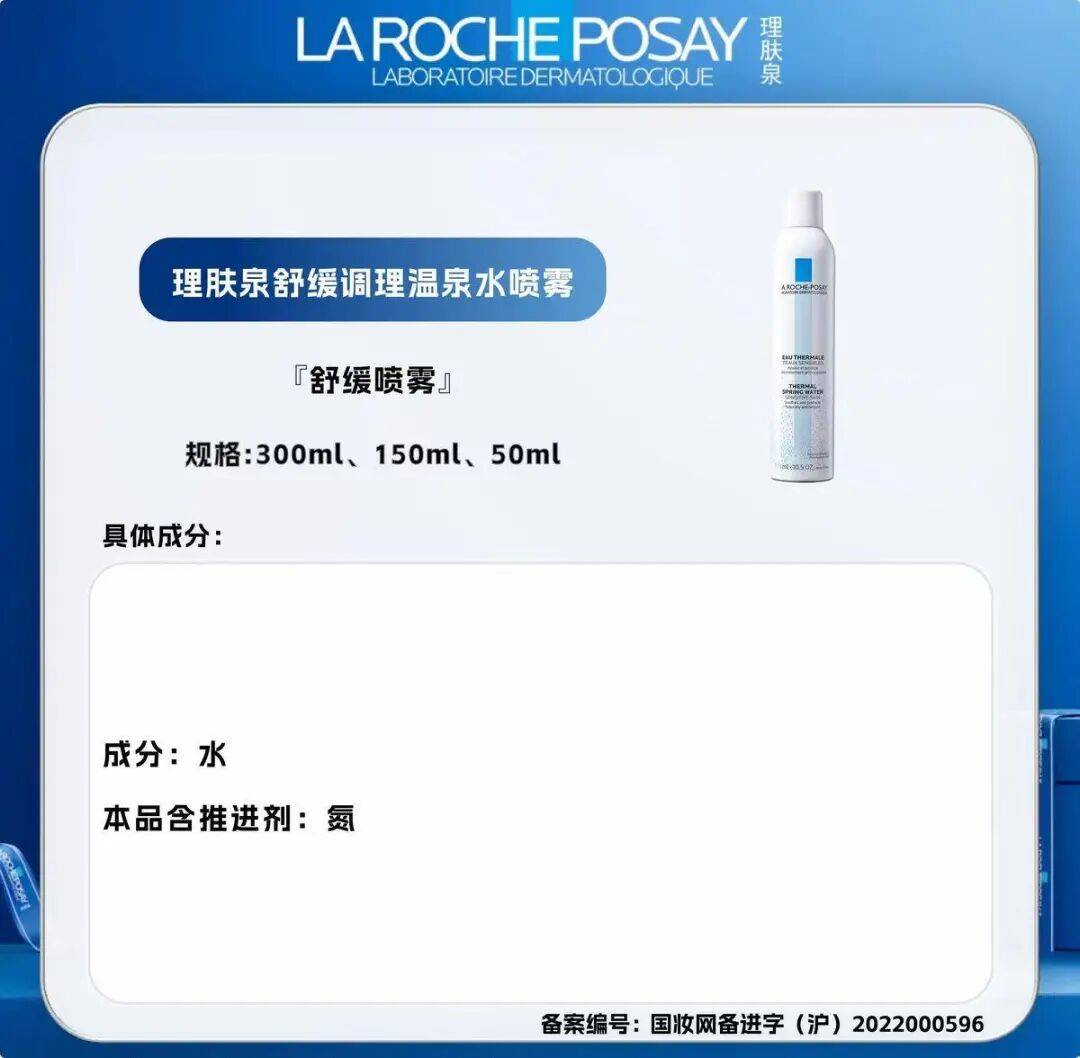
百元喷雾只有水,是智商税?有回应了
Sou Hu Cai Jing· 2025-09-02 14:46
Core Insights - The recent controversy surrounding La Roche-Posay's "Soothing Thermal Water Spray" has sparked discussions on social media, with critics labeling it as a "smart tax" due to its ingredient list primarily consisting of water, questioning its high price point [1] - L'Oréal Group reported a sales revenue of €22.473 billion (approximately ¥186.19 billion) for the first half of the year, reflecting a year-on-year growth of 3%, while operating profit reached approximately €4.74 billion (around ¥39.28 billion), also up by 3.1% [1] - Compared to the double-digit growth seen in the past three years, L'Oréal's growth rate for the first half of 2024 has noticeably slowed, with sales and operating profit both reverting to single-digit growth [1] Financial Performance - In the first half of 2024, L'Oréal's sales amounted to €22.12 billion, marking a year-on-year increase of 7.5%, while operating profit grew by 8% to €4.599 billion, accounting for 20.8% of sales, which is a 10 basis points increase year-on-year [1] - Net profit for the same period reached €3.65 billion, reflecting an 8.8% year-on-year growth [1] Segment Performance - L'Oréal's four major divisions experienced growth in the first half of the year, but with significant differences in growth rates. The Professional Products Division led with a 6.5% year-on-year growth, achieving sales of €2.55 billion (approximately ¥21.16 billion), driven by brands like Kérastase and Color Wow, which saw a second-quarter growth of 11.5% [2] - The Consumer Products Division reported sales of €8.41 billion (around ¥69.78 billion), with a year-on-year growth of 2.8% [2] - The Active Cosmetics Division generated sales of €3.86 billion (approximately ¥32.03 billion), with a year-on-year growth of 3.1%, supported by double-digit growth from brands like La Roche-Posay, SkinCeuticals, and CeraVe [2]

社恐升级,年轻人开始「断网」、「戒爱」了
36氪· 2025-08-31 02:08
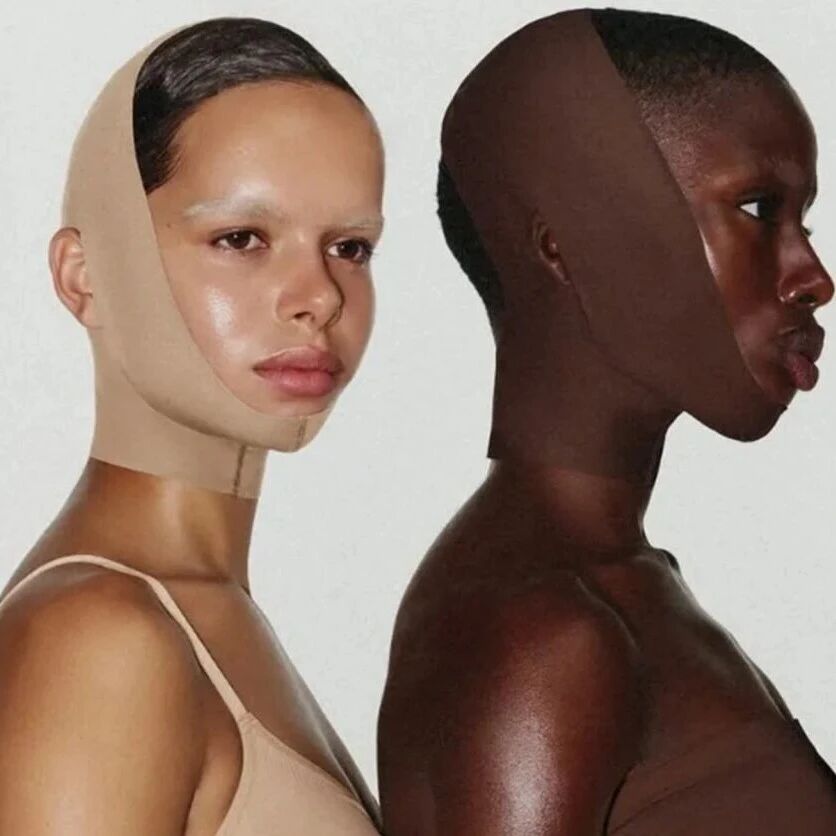
Group 1 - The article discusses the trend of "digital retreat" among Generation Z in the United States, where young people choose to disconnect from social media and external noise for mental health reasons [5][8] - A report from the dating app Hinge reveals that over half of Generation Z struggles to pursue romantic interests due to fear of awkwardness, leading to a state of inaction [9] - McDonald's launched a summer experience called "McDonaldland" in 13 cities, creating a nostalgic theme park atmosphere that attracted significant attention and long queues for limited-time products [10][12] Group 2 - Louis Vuitton opened its first beauty boutique in Nanjing, signaling strong interest in the Chinese market, with lipstick priced at 1200 yuan, significantly higher than most luxury brands [16][18] - IKEA has partnered with JD.com to launch an online flagship store, catering to young consumers' demand for high-quality and cost-effective shopping experiences [19] - A design studio in New York created a 44-liter backpack resembling an oversized AirPods case, showcasing a trend of absurdity in consumer products [20][22] Group 3 - Miu Miu and L'Oréal launched their first collaborative perfume "Miutine," marking Miu Miu's entry into the beauty market and L'Oréal's expansion into high-end fragrances [25][27] - The Y3K aesthetic, representing a futuristic style, is gaining traction, with Nike releasing the Air Max Muse series, which quickly sold out [32][34] - Tsutaya Bookstore announced the closure of its Chengdu location, highlighting challenges faced by Japanese-style bookstores in China due to high pricing and low consumer willingness to pay [36][38] Group 4 - The Row's $690 flip-flops became a viral sensation, despite criticism regarding their quality and comfort, illustrating the phenomenon of luxury items serving as status symbols [42][44] - SKIMS introduced a "facial shaping garment," reflecting the lengths consumers will go to for beauty, with the product quickly selling out [45][47]



一支口红1200元,LV入场美妆能分到蛋糕吗
Di Yi Cai Jing· 2025-08-25 10:17
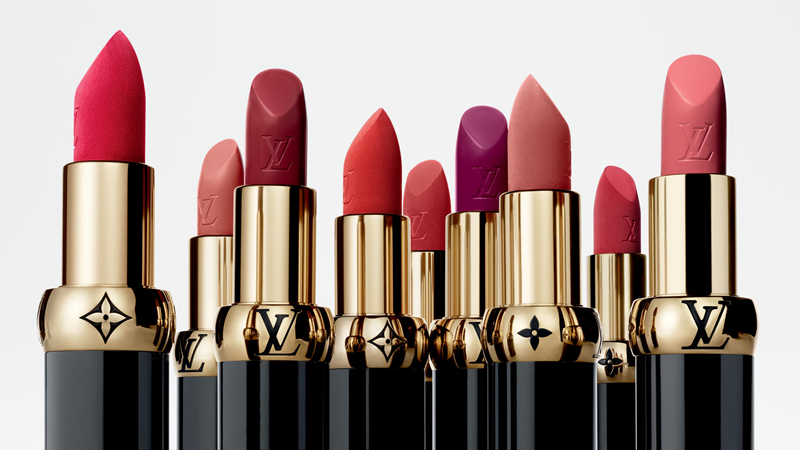
Core Viewpoint - The luxury goods industry is facing challenges, prompting brands to explore new business avenues such as cosmetics, with Louis Vuitton (LV) entering the beauty market later than its competitors [1][6]. Group 1: LV's Entry into the Beauty Market - LV announced its entry into the beauty sector on August 20, launching a new makeup line in China, which includes a variety of products except eyeshadow [1][3]. - The new makeup line took four years to prepare and features products like 8 palettes of four-color eyeshadows, 10 transparent lip balms, and 55 shades of LV Rouge lipsticks [3][4]. - The first global perfume and beauty boutique was opened in Nanjing, with the Shanghai Hang Lung Plaza being the only offline store for LV beauty products in Shanghai [3][4]. Group 2: Competitive Landscape - LV is the last among top luxury brands to enter the beauty market, with Chanel and Dior having established their beauty lines decades ago [6]. - Chanel's beauty segment accounted for about one-third of its total sales, while Dior has been in the beauty business for nearly 80 years [6]. - Other luxury brands like Gucci and Burberry are also launching beauty products, recognizing the rapid growth and immediate revenue potential of the cosmetics market [8]. Group 3: Market Performance and Trends - The beauty segment has shown resilience amid overall stagnation in luxury goods sales, becoming a bright spot for brands like LVMH, which reported stable revenue in its perfume and cosmetics division [8]. - LVMH's perfume and cosmetics revenue reached €4.082 billion in the first half of the year, a slight decline of 1% year-over-year, indicating a need for independent operational systems to enhance growth [8]. - Despite the potential, the beauty segment's contribution remains limited, with Hermes reporting a 4.1% decline in its beauty and fragrance revenue to €248 million, representing only 3.1% of its total revenue [8].
2025年中国日化用品(日化)政策、产业链、经营现状、竞争格局、代表企业及行业发展趋势研判:日化用品需求逐年递增,行业有巨大发展前景和空间[图]
Chan Ye Xin Xi Wang· 2025-08-25 01:34
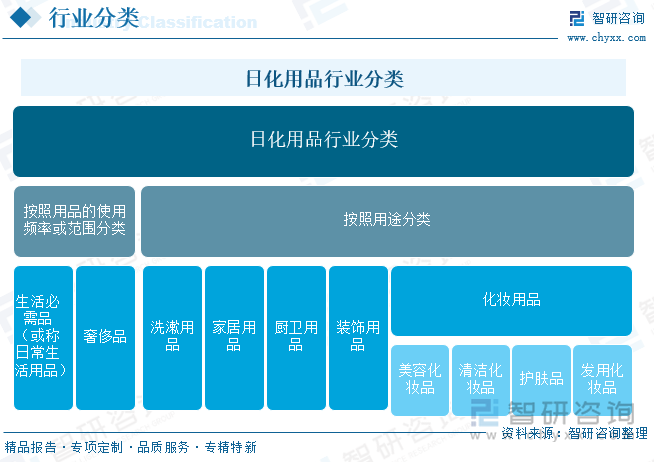
Core Viewpoint - The daily chemical industry in China is experiencing significant growth, driven by rising consumer demand and an increase in living standards, with projections indicating substantial revenue and profit growth in the coming years [1][4][6]. Group 1: Industry Overview - The daily chemical industry is a vital part of the national economy and a significant segment of the fast-moving consumer goods sector, providing essential products for daily use [1][4]. - The industry is expected to see sales revenue from large-scale enterprises increase from CNY 404.14 billion in 2018 to CNY 413.84 billion in 2024, with profits projected to rise from CNY 43.04 billion to CNY 38.63 billion in the same period [1][4][6]. - By 2025, sales revenue is anticipated to reach CNY 435 billion, with total profits expected to hit CNY 40 billion [1][6]. Group 2: Industry Chain - The upstream of the daily chemical industry includes raw materials such as surfactants, matrix materials, natural/plant materials, and packaging materials, with surfactants being crucial for product efficacy [8]. - The midstream involves the production and manufacturing of daily chemical products, while the downstream encompasses sales channels and end consumers, including supermarkets, convenience stores, specialty shops, and e-commerce platforms [8]. Group 3: Development Environment and Policies - The government has implemented various policies to support the development of the daily chemical industry, enhancing the regulatory framework and promoting sustainable growth [10]. - Key policies include the "Cosmetics Sampling Inspection Management Measures" and announcements aimed at optimizing the registration and inspection processes for ordinary cosmetics, which contribute to a more robust industry structure [10][12]. Group 4: Competitive Landscape - The Chinese daily chemical market is characterized by intense competition, with both international brands like L'Oréal and Unilever and domestic brands like Shanghai Jahwa and Proya coexisting [13][15]. - Domestic brands are gaining traction by leveraging their understanding of local markets and flexible strategies, while international brands maintain consumer trust through established reputations [13][15]. Group 5: Industry Trends - The daily chemical industry is witnessing a surge in brand proliferation, with local companies increasingly capturing market share and developing competitive advantages [19]. - There is a growing trend towards personalization in consumer demands, necessitating companies to adapt to diverse regional preferences and consumer behaviors [20]. - The male grooming market is emerging as a new competitive frontier, with increasing demand for male-targeted daily chemical products [20]. - Safety and health concerns are driving consumer preference towards natural and organic products, prompting companies to focus on reducing harmful additives in their offerings [20].



Guess私有化;李宁股价创新高;科蒂亏损27亿|二姨看时尚
2 1 Shi Ji Jing Ji Bao Dao· 2025-08-25 00:11
Group 1: Industry Dynamics - Valentino appointed Riccardo Bellini as the new CEO, effective September, to replace Jacopo Venturini [3] - Guess announced a privatization deal valued at approximately $1.4 billion with Authentic Brands Group, marking a strategic shift for the company [4] - L'Oréal decided to shut down its recently acquired makeup brand Healus, retaining only the skincare brand Dr.G, indicating a strategic business adjustment [5] Group 2: Company Performance - Coty reported a 4% decline in net revenue for the fiscal year 2025, with a net loss of $381 million, attributed to goodwill impairment [8][9] - Estée Lauder's net sales for fiscal year 2025 fell by 8% to $14.326 billion, with significant operating losses due to various factors including goodwill impairment [10][11] - Li Ning's revenue grew by 3.3% to 14.817 billion RMB, with a net profit of 1.737 billion RMB, reflecting a stable financial performance [2] Group 3: Notable Growth - Pop Mart's revenue surged by 204.4% to 13.88 billion RMB, with net profit increasing by 396.5%, driven by the success of the Labubu product line [6] - Perfect Moment's revenue increased by 51% to $1.5 million in Q1 2025, although the company still reported a net loss [12] - Pandora's Q2 revenue grew by 8%, reaching 7.075 billion DKK, despite plans to close up to 100 stores in China [12] Group 4: Market Challenges - Estée Lauder's stock fell by 9% in pre-market trading after reporting lower-than-expected profits, highlighting ongoing market pressures [10] - Coty anticipates a revenue decline of 6% to 8% in Q1 2026, indicating continued challenges in stabilizing growth [9] - The frequent personnel changes among major brands reflect common strategies to navigate a challenging market environment [4]



“嗅觉经济”崛起:中国香氛产业迎百亿增长机遇 线下门店解决新锐品牌三大痛点
Zheng Quan Shi Bao Wang· 2025-08-24 10:16
Core Insights - The trend of consumers paying for "emotional value" is driving the growth of the fragrance market, with scent becoming a new medium for self-consumption and cultural consumption [1] - The opening of the first Tmall fragrance space in Hangzhou marks a significant development for the fragrance industry, providing a physical space for over 40 domestic and international brands to showcase their products [1][3] - The Chinese fragrance market is experiencing explosive growth, with a projected market size of 27.85 billion yuan in 2024 and a compound annual growth rate of 18.9% over the past five years, significantly outpacing the global average of 7% [1][2] Market Potential - The current penetration rate of the fragrance market in China is only 5%, indicating substantial growth potential compared to mature overseas markets [2] - International brands are developing exclusive fragrances for Chinese consumers, while domestic beauty brands are increasingly entering the fragrance sector [2] Industry Trends - The fragrance market is witnessing three notable trends: the optimization of consumer demographics with a rise in young and male consumers, the strong emergence of domestic brands, and significant product innovation across various categories [4] - The rise of domestic brands is supported by cultural confidence and the ability to leverage unique design elements, with some categories experiencing growth rates as high as 100% [4][5] Supply Chain Advantages - The flexibility of the Chinese supply chain is facilitating the growth of new domestic brands, allowing for rapid adjustments to meet consumer preferences [5][6] - The overall improvement in the fragrance supply chain has led to better product quality and faster response times, enhancing the competitiveness of new brands [6] Competitive Landscape - New brands are focusing on innovation, supply chain efficiency, cultural relevance, and market positioning to differentiate themselves from international competitors [6][7] - The increasing importance of emotional value and personalized experiences is driving the demand for diverse fragrance products, with brands encouraged to innovate continuously [7][8] Market Growth - The number of fragrance-related companies in China has seen significant growth, with registrations increasing by 60.2% in 2022 and 53.5% in 2023, indicating a vibrant and expanding market [8] - Projections suggest that by 2025, the fragrance industry in China will reach a production volume of approximately 70.94 million pieces and a market size of 30.03 billion yuan [8]
中泰资管天团 | 郑日:情绪强烈且易逝,如何理解新消费和情绪消费
中泰证券资管· 2025-08-14 11:33
Core Viewpoint - The article discusses the rise of "emotional consumption" as a significant trend in the capital market, particularly among younger consumers who prioritize emotional value alongside practicality and cost-effectiveness [1][4]. Group 1: Emotional Consumption Overview - Emotional consumption, also known as emotional spending, emphasizes the importance of emotional satisfaction in purchasing behavior, particularly among young people and singles [6]. - The trend of emotional consumption is linked to societal changes, such as Japan's aging population and declining marriage and birth rates, leading to a more individualized approach to consumption [6]. Group 2: Economic Context and Trends - Economic slowdowns often lead to a shift in consumer demand from functional to emotional value, as seen in historical contexts in both Japan and the U.S. [9]. - In Japan, post-bubble economic adjustments led to the growth of various sectors, including discount stores, pet economy, and virtual idol markets, highlighting the resilience of emotional consumption [9][10]. Group 3: Long-term Emotional Needs - Core emotional needs persist over time, but the forms of products and services evolve, requiring businesses to transform fleeting emotional sparks into lasting customer loyalty [13]. - Factors influencing the lifecycle of emotional consumption products include addictive design, social currency attributes, and cultural symbolism [14]. Group 4: Avoiding Homogenization - Emotional consumption products risk homogenization due to the ease of replicating emotional experiences through existing cultural symbols and marketing strategies [16]. - To maintain competitive advantage, companies must build an unreplicable emotional value chain and develop barriers through emotional technology, cultural integration, and dynamic social ecosystems [16].

中国消费关联_在线品牌追踪_淡季分化;白色家电_受RVC 驱动;美妆_运动品类因基数降低加速增长-China Consumer Connection_ Online Brand Tracker_ divergence into low season; White goods_RVC led; Beauty_Sports accelerated on easier
2025-08-14 01:36
Summary of Key Points from the Conference Call Industry Overview - The report focuses on the **China Consumer Market**, particularly in the **cosmetics**, **sportswear**, and **infant milk formula (IMF)** sectors, analyzing performance across major e-commerce platforms like Tmall, Taobao, and JD. Key Highlights 1. Category Performance - **White Goods**: Grew by **15% year-over-year (yoy)** in July, outperforming other categories. - **RVC/Small Kitchen Appliances**: Recorded growth of **14%** and **10% yoy**, respectively. - **Sports Shoes/Sportswear**: Achieved **11%** and **7% yoy** growth. - **Declines**: Categories such as **IMF, Beer, Pet Products, and Beauty** saw declines, with **Women's Clothing, Condiments, and Dairy** lagging at **15%**, **17%**, and **24% yoy** declines, respectively [1][13][12]. 2. Domestic vs. MNC Brands in Cosmetics - **Local Brands**: Mass/local brands regained market share from premium/MNC brands, reversing trends from the previous period. - **Shanghai Jahwa, Marubi, and KANs** led with growth rates of **58%**, **51%**, and **48% yoy**. - **Giant, Perfect Diary, and Botanee** grew by **24%**, **7%**, and **2%** respectively. - **MNC Brands**: - **LGHH** was the only MNC to show positive growth at **9% yoy**. - **L'Oreal** declined by **2%**, while **Estee Lauder** and **Shiseido** faced declines of **MSD to HSD% yoy**. - **Kose** and **Amore** underperformed with declines of **19%** and **49% yoy** [2][23]. 3. Sportswear Market Insights - Both MNCs and local brands experienced positive online growth in July, attributed to a favorable base. - **Anta** reported improved performance in mid-July, expecting recovery in Q3. - **Xtep** noted retail sales acceleration, while **Li Ning** faced pressure with deeper discounts yoy. - The divergence in brand performance is attributed to product and fashion cycles, with brands executing omni-channel strategies [3]. 4. Infant Milk Formula (IMF) Performance - **Sales Growth**: On Tmall/Taobao, IMF sales grew by **11%** in July, an improvement from **-4%** in June. - **Top Brands**: Local brand **Yili** (including Pro-Kido) showed strong momentum with **33%** growth in July, while **Feihe** slowed to **6%** growth. - Among MNCs, **Biostime, Mead Johnson, and Wyeth** outperformed with growth rates of **48%**, **42%**, and **32%** respectively [17][18]. 5. Brand Performance Summary - **Outperforming Brands**: Included **Herborist, Collgene, Marubi, KANs, HR, Uniqlo, Gree, Ecovacs, Roborock, Fila, Lululemon, and Pop Mart**. - **Underperforming Brands**: Included **Timage, QuadHA, Yili, and Cha cha** [4]. Additional Insights - The report indicates a shift in consumer preferences towards local brands, particularly in the cosmetics sector, as they regain market share from MNCs. - The performance of various categories suggests a mixed recovery in consumer spending, with some sectors experiencing robust growth while others face significant declines. - The analysis highlights the importance of omni-channel strategies in capturing market share and responding to changing consumer behaviors [2][3][23].
新华全媒+|扬“链”上之帆,奏共赢乐章——第三届中国国际供应链促进博览会如约启幕
Xin Hua Wang· 2025-08-12 06:38
Core Insights - The third China International Supply Chain Promotion Expo has commenced in Beijing, themed "Linking the World, Creating the Future," showcasing the importance of global cooperation in supply chains amid rising unilateralism and protectionism [1][2] Group 1: Event Overview - The expo is the world's first national-level exhibition focused on supply chains, featuring 651 enterprises and institutions from 75 countries and regions, with foreign exhibitors increasing from 32% to 35% compared to the previous year [2] - Notable participants include McDonald's China, which brought 11 suppliers, and Apple, which is showcasing its latest technologies in smart and green manufacturing for the third consecutive year [2][3] Group 2: Innovation and Technology - The expo emphasizes innovation, with new products and technologies being showcased, including AI-driven solutions from NVIDIA and various advanced manufacturing products like drones and autonomous aircraft [3][4] - The 2025 Global Supply Chain Promotion Report highlights the acceleration of global supply chain transformation through technological innovation, including generative AI and green technologies [3] Group 3: Collaboration and Future Prospects - The "Beijing Initiative" released at the opening calls for enhanced collaboration among global businesses to build a resilient and efficient supply chain ecosystem [5][6] - Panasonic and Schneider Electric are among the companies emphasizing the importance of the expo as a platform for global cooperation and resource optimization [5]
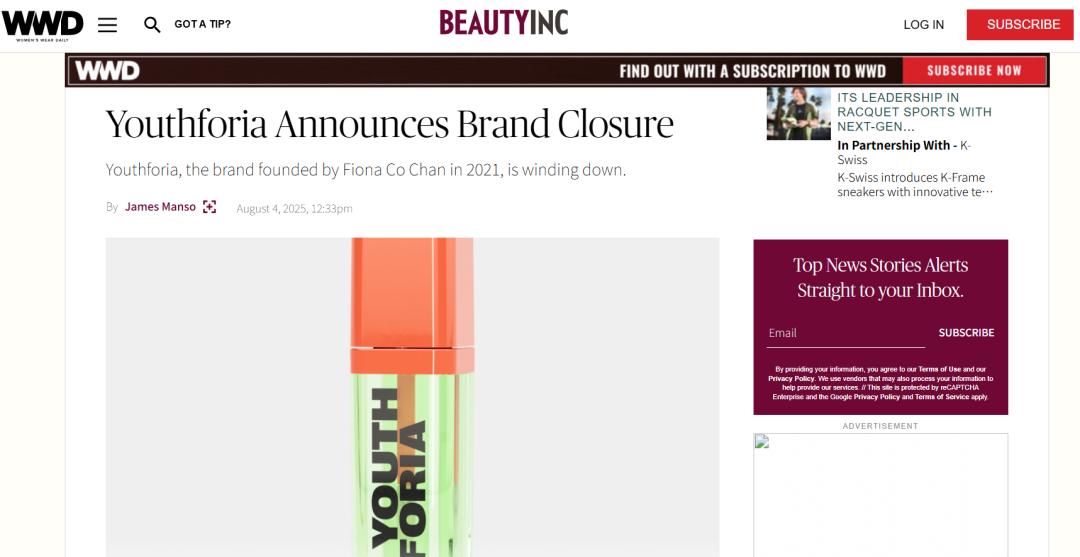
从社媒爆红到闭店,为什么这类美妆死得快?
3 6 Ke· 2025-08-05 23:50
Core Viewpoint - The beauty consumption market is undergoing a brutal selection and reshuffling, with many small and startup brands facing significant challenges and closures amid economic downturns [1][3]. Company Summary - Youthforia, a DTC beauty brand focused on clean beauty, is set to close after achieving over $15 million in sales since its founding in 2021, despite previously maintaining triple-digit growth [3][5]. - The brand's closure follows a controversy regarding its product offerings, particularly a foundation shade criticized for being inappropriate, which led to a significant drop in website traffic and social media followers [11][12]. - Youthforia's sales were heavily driven by viral marketing on TikTok, accounting for 84% of its revenue, but the brand ultimately could not sustain its operations [7][19]. Industry Summary - The clean beauty segment is experiencing rapid growth, with a projected annual increase of 18.6%, yet the average lifespan of brands in this category has decreased to 3.2 years [12]. - Other clean beauty brands, such as Ami Colé, have also announced closures, indicating a broader trend of challenges faced by new entrants in the beauty market [12][22]. - The DTC beauty model, once thriving, is now under pressure due to rising customer acquisition costs and increased competition from established brands that have adapted to digital marketing strategies [24][25].