格力电器

Search documents
你的下一台空调,可能由机器人制造、装箱
第一财经· 2025-12-10 10:38
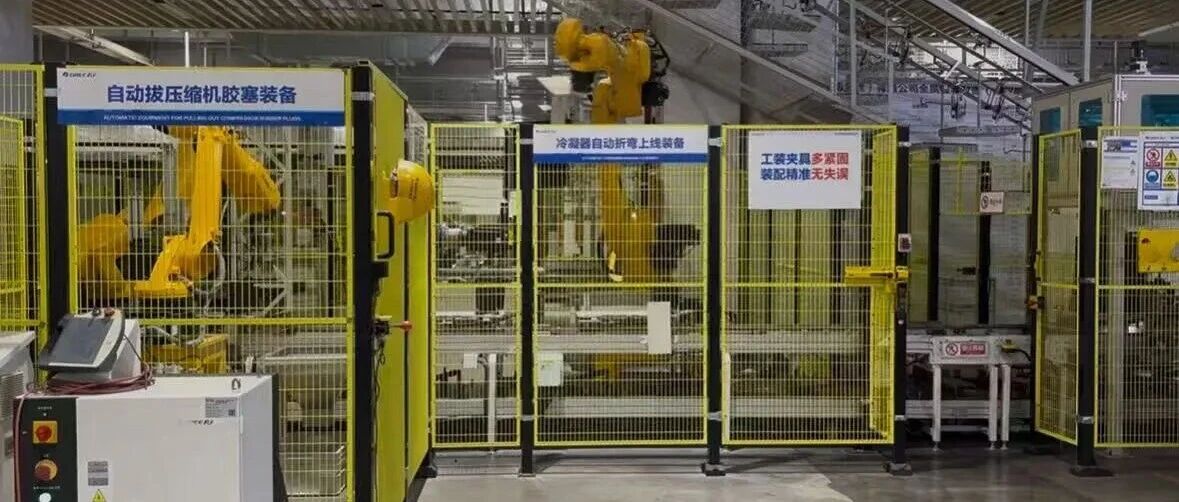
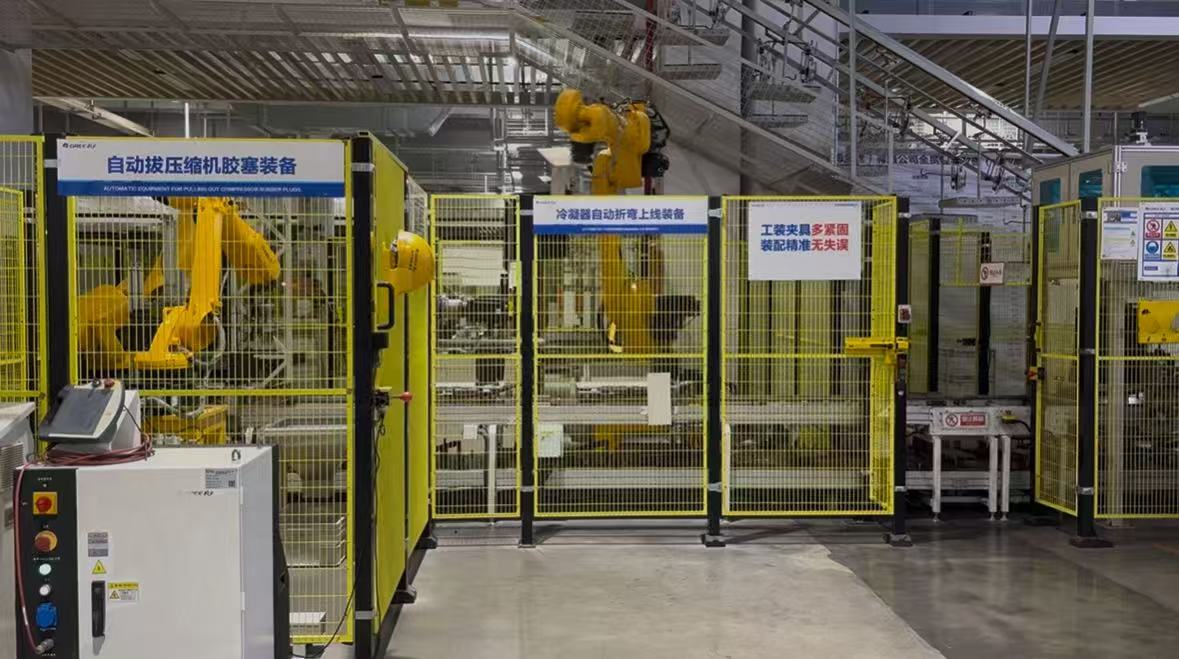
2025.12. 10 机器人具备视觉、听觉 与传统空调工厂流水线上基本由工人操作不同,金湾智能工厂的生产线上,机器人和智能装备成为主 角。在总装集成智造工厂,原来一条生产线要70多个人,现在只需20多个人,生产效率也大幅提 升,每15秒可下线一台空调。 本文字数:2608,阅读时长大约4分钟 作者 | 第一财经 王珍 封图 | 第一财经 王珍 摄 未来进入千家万户的空调不一定由工人生产,也可能是机器人。 近日第一财经记者走进格力电器在珠海金湾的智能空调工厂,这里每15秒下线一台空调,已投产的 两条生产线使用了2000多台工业机器人,自动化率80%,装备自研率80%。 格力电器(珠海金湾)有限公司总经理陈华东透露,他们第三条全自动化生产线今年底、明年初投 产,金湾工厂模式将复制到格力其它空调生产基地。 记者在现场看到,工业机器人已用于多个环节,包括氦检冷凝器自动上线、底盘自动上线、搬运压缩 机、自动拔压缩机胶塞、自动高频焊接、自动装阀芯螺母、自动贴标签、自动装箱等。例如,工业机 器人给空调装箱时,仿生手还会把纸箱先摇晃两下,使其装得更贴合。 该生产线负责人尤奕成说,传统生产线人工操作柔性高,机器人的柔性要求也 ...


格力金湾陈华东:智能工厂的竞争是工业软件和智能装备的竞争
2 1 Shi Ji Jing Ji Bao Dao· 2025-12-10 09:45
Group 1 - The Ministry of Industry and Information Technology and five other departments have officially announced the first batch of leading intelligent factories, which includes 15 companies across key industries such as equipment manufacturing, raw materials, electronic information, and consumer goods [2] - Gree Electric Appliances (Zhuhai Jinwan) Co., Ltd. has been selected for the highest level "leading" intelligent factory cultivation list with its "Gree Collaborative House Air Conditioning Intelligent Factory" project, being the only enterprise from Guangdong Province to be included [2] - Gree Jinwan has introduced an innovative "Gree Collaborative House" intelligent manufacturing collaborative model to address challenges in global manufacturing, which enhances operational efficiency across the entire value chain [2] Group 2 - China has established over 7,000 advanced intelligent factories, with hundreds of factories reporting an average reduction of 29% in product development cycles, a nearly 22% increase in production efficiency, and a 20% decrease in carbon emissions after upgrades [2] - Gree Jinwan's General Manager Chen Huadong emphasized that competition in intelligent factories ultimately reflects the competition of underlying technology, particularly in industrial software and intelligent equipment [3] - The future direction for Gree Jinwan is to create intelligent production lines and factories that achieve synergy between components and assembly, covering the entire logistics process [3]
“百万英才汇南粤”秋季招聘走进湘赣 超1.5万优质岗位诚揽英才
Nan Fang Ri Bao Wang Luo Ban· 2025-12-10 09:23
Core Viewpoint - The "Million Talents Gathering in N City" autumn recruitment event will take place from December 13 to 17, 2023, in six prestigious universities in Hunan and Jiangxi provinces, offering over 15,000 quality job positions, including 4,000 internship opportunities [1][2]. Group 1: Event Overview - The recruitment event will be held in collaboration with Zhuhai, Yangjiang City, and the Hengqin Guangdong-Macao Deep Cooperation Zone, targeting six universities: Central South University, Hunan University, Hunan Normal University, Xiangtan University, Nanchang University, and Jiangxi University of Finance and Economics [1]. - The event will feature a diverse range of employers, including state-owned enterprises, leading technology companies, and various sectors such as education, healthcare, and research institutions [1]. Group 2: Job Opportunities - A total of 310 high-quality employers will participate, with over 1,000 positions offered by 67 state-owned enterprises and more than 5,000 positions from 112 leading industry companies [2]. - Specific job offerings include 3335 positions with annual salaries ranging from 200,000 to 500,000 yuan, and 437 positions with salaries between 500,000 and 1,000,000 yuan, including 100 high-paying positions from Beijing Institute of Technology (Zhuhai) [2]. Group 3: Targeted Recruitment Strategy - The recruitment strategy involves close collaboration with university employment departments to ensure a high match rate of 80% for job positions tailored to the strengths of specific academic disciplines [2]. - Focus areas for job matching include integrated circuits, high-end equipment manufacturing, advanced materials, biomedicine, and artificial intelligence, addressing urgent talent needs in these sectors [2]. Group 4: Talent Incentives - Zhuhai has introduced a significant youth housing security policy, offering free accommodation in the first year, a 30% rent reduction in the second year, and a 50% reduction in the third year [3]. - Yangjiang provides relocation subsidies ranging from 100,000 to 5 million yuan for high-level talents in various categories [3].
董明珠们的最大靠山,倒在了2025
3 6 Ke· 2025-12-10 08:38
Core Viewpoint - The traditional distribution model in various industries, particularly in alcohol, beverages, and confectionery, is facing unprecedented challenges, leading to significant financial losses for distributors and a potential industry shakeout by 2025 [1][11][25] Group 1: Industry Challenges - By 2025, the once-stable consumption patterns of traditional products like liquor and tobacco are deteriorating, with younger consumers moving away from these products [1] - Distributors, once seen as profitable entities, are now facing severe financial difficulties, with some predicting losses in the millions due to a complete lack of profitability across the board [3][11] - The inventory levels for listed liquor companies are alarmingly high, with 20 companies accumulating nearly 4 million tons of stock, leading to distributors becoming mere storage facilities for excess inventory [6][8] Group 2: Financial Strain on Distributors - Distributors are experiencing a dual pressure of slow sales returns while needing to prepay for goods, creating a "double squeeze" on their finances [8] - The beverage market is also struggling, with some distributors reporting a sales decline of up to 80% compared to the previous year, indicating a significant shift in market dynamics [8][9] - Confectionery distributors are facing even harsher realities, with some unable to sustain operations due to prolonged payment delays from manufacturers, leading to bankruptcies [9][11] Group 3: Evolution of Distribution Models - The traditional distribution model is collapsing as brands begin to bypass distributors by establishing direct supply chains, diminishing the role of distributors in the market [14][17] - Major retailers are expanding their operations to include logistics and consumer engagement, further reducing the relevance of traditional distributors [14] - The historical reliance on brand partnerships and extensive product offerings is becoming a liability, as market conditions shift towards a more fragmented and competitive landscape [15][19] Group 4: Future Outlook and Transformation - The current market conditions are prompting a necessary transformation for distributors, who must shift from a passive role to one that actively creates user value [21][23] - Distributors are encouraged to focus on localized business strategies and adapt to changing consumer preferences, moving away from traditional methods of operation [21][23] - The industry is expected to undergo a significant shakeout, with estimates suggesting that 20%-30% of distributors may be eliminated in the coming years if they do not adapt [23][25]
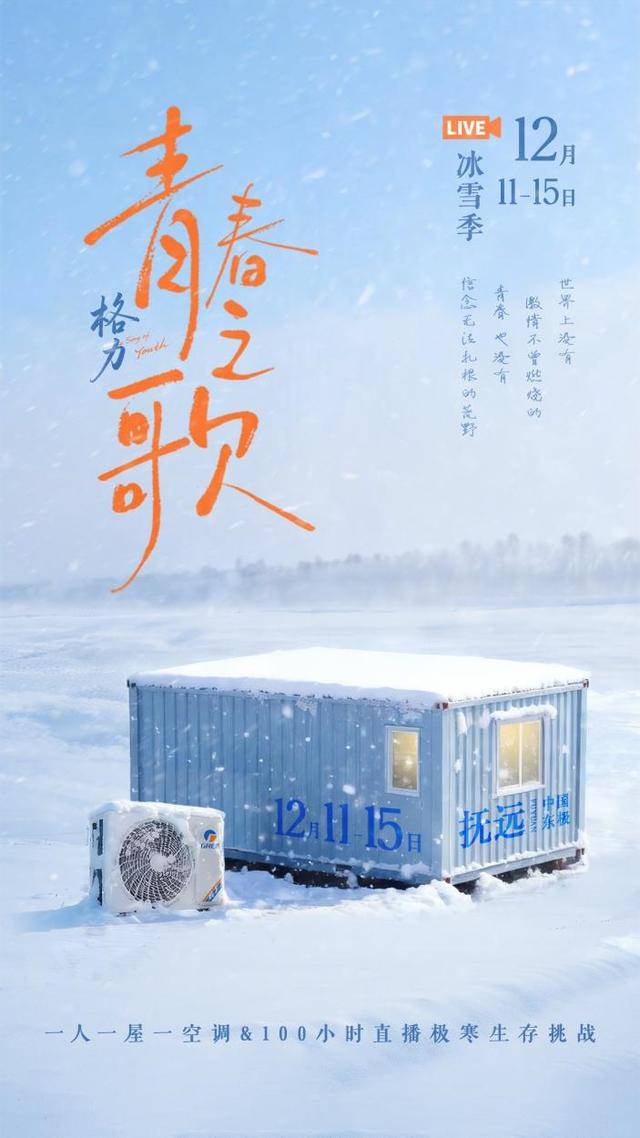
格力极寒直播即将启幕 董明珠亲赴东极检验科技温暖
Sou Hu Cai Jing· 2025-12-10 08:17
Core Viewpoint - Gree Electric Appliances will launch the "Youth Song Ice and Snow Season" on December 11, 2025, in Fuyuan, Heilongjiang, showcasing its technological capabilities and warmth through a 100-hour live broadcast featuring various core products [1][15]. Group 1: Product Performance - Gree's All-in-One Air Conditioner features distributed air supply technology, ensuring comfortable indoor temperatures even in extreme cold, with a heating capability at -35°C and cooling at 67°C [8]. - The Gree Fire Phoenix Supreme Heating and Cooling Unit can provide high-temperature heating water in environments as low as -35°C, addressing winter maintenance challenges with energy-saving technology and smart controls [10]. Group 2: Cultural Resonance - The event will immerse viewers in Fuyuan's unique ice and snow culture, including interactions with the Hezhe ethnic group's heritage and traditional winter fishing activities, connecting different generations' memories of youth [13]. Group 3: Brand Spirit - The "Youth Song Ice and Snow Season" serves as a verification of Gree's product performance and a vivid expression of its brand spirit, emphasizing innovation and resilience in the face of challenges [14].
【财经分析】中国家电品牌在南美最大市场的竞逐与挑战
Xin Hua Cai Jing· 2025-12-10 08:07
Core Insights - Chinese home appliance companies are transitioning from traditional manufacturers to participants in the green energy transformation, particularly in Brazil, which is the largest appliance market in South America [1][2] - The COP30 conference highlighted the focus on green technologies, with Gree Electric Appliances launching a global initiative to accelerate green alternatives across various sectors [1][2] - The Brazilian market presents significant growth potential for Chinese brands, driven by rising middle-class consumption and ongoing upgrades in air conditioning and television markets [2][10] Group 1: Market Dynamics - Brazil is the largest white goods market in Latin America and a key emerging consumer market globally, with high temperatures and rising energy costs driving demand for air conditioning and televisions [2][10] - The air conditioning penetration rate in Brazil is below 25%, indicating substantial market potential compared to the global average [1] - The competitive landscape is shifting from price-based advantages to value competition focused on technological innovation, localized manufacturing, and brand building [1][2] Group 2: Company Strategies - Gree Electric Appliances has established a strong local presence since 2001, with a production base in Manaus, and reported a 38% revenue growth in 2024, maintaining its leading position in the air conditioning sector [4][10] - TCL has rapidly expanded its air conditioning business, leveraging its television channel advantages, with a projected growth rate exceeding 40% in 2025 [5][6] - Hisense, despite entering the Brazilian market later, achieved approximately 1 billion Brazilian Reais in sales in its first year and plans to expand its product offerings significantly by 2025 [6][7] - Midea operates multiple production bases in Brazil and is investing heavily in local manufacturing, with a goal to become a leading brand in the refrigerator sector within four years [8][10] Group 3: Challenges and Opportunities - The Brazilian market is considered one of the most challenging for home appliance companies due to complex tax systems, high labor costs, and fluctuating currency rates [10][11] - Companies must navigate a fragmented retail structure and establish robust after-sales service networks to build consumer trust [10][11] - The next two to three years are critical for reshaping the competitive landscape in Brazil, with companies needing to excel in energy-saving technologies and localized service networks to gain market share [11][12]
你的下一台空调,可能由机器人制造、装箱
Di Yi Cai Jing· 2025-12-10 07:23
Core Viewpoint - The future of air conditioning production may rely more on robots than human workers, as demonstrated by Gree Electric's intelligent air conditioning factory in Zhuhai, which has achieved an 80% automation rate and produces one air conditioner every 15 seconds [2][3]. Group 1: Automation and Production Efficiency - Gree's Zhuhai factory utilizes over 2,000 industrial robots, significantly reducing the workforce needed on production lines from over 70 to just 20 [3]. - The factory's production efficiency has improved, with air conditioners being produced every 15 seconds, showcasing the effectiveness of automation [3]. - The introduction of AI technology allows robots to dynamically adjust their operations, enhancing flexibility and precision in manufacturing processes [3][4]. Group 2: AI and Data Integration - AI detection has replaced manual inspection, with smart devices testing 16 performance indicators for each air conditioner before it leaves the production line [4]. - The integration of various smart devices and robots on the production line presents challenges, particularly in coordinating numerous processes and ensuring real-time data connectivity [4][6]. - Gree has established an industrial internet platform to unify data across different departments, facilitating seamless communication and collaboration [6]. Group 3: Intelligent Manufacturing and Business Model Transformation - Gree's operational model is shifting from traditional manual processes to an AI-driven approach that emphasizes real-time data analysis and autonomous decision-making [9]. - The investment in the Zhuhai intelligent factory is substantial, with a total planned investment of 15 billion yuan and an expected annual output of 12.3 million units, generating an annual revenue of 18 billion yuan [9][10]. - The factory has been recognized as one of the first 15 pilot intelligent factories in the country, indicating its advanced manufacturing capabilities [10]. Group 4: Future Expansion and Development - Gree plans to replicate the Zhuhai factory model across 13 other air conditioning production bases in various cities, enhancing its manufacturing footprint [10]. - The company aims to further develop its intelligent equipment and robotics business, with a projected revenue growth of 20.9% in the first half of 2025 [12]. - Gree has developed industrial robots with load capacities ranging from 1 kg to 600 kg, applicable in various manufacturing processes [12].

对标“灯塔工厂”,跟着记者探厂中国智造名片
2 1 Shi Ji Jing Ji Bao Dao· 2025-12-10 06:43
南方财经记者彭敏静珠海报道 近日,工业和信息化部等六部门正式公布了首批领航级智能工厂名单,全国仅15家企业入选。格力电器 (珠海金湾)有限公司(简称:格力金湾)凭借"全价值链格力协同屋空调智能工厂"项目,成功入选最高层 级的"领航级"智能工厂培育名单,也是广东省唯一入选该名单的企业。 作为中国智能制造领域的最高层级认证,领航级智能工厂代表着中国制造业的最高水平。在相当长的时 间里,中国智能工厂评价标准采用的是国外的"灯塔工厂"。为了建立属于中国自己的智能工厂评价标 准,2024年,工信部、国家发展改革委等六部门联合启动智能工厂梯度培育行动,构建起"基础级—先 进级—卓越级—领航级"四级递进体系,这是我国迄今为止最全面、最严格的智能制造成熟度评价标 准。 据了解,作为四级体系的顶端,领航级智能工厂并非简单的"自动化升级",而是要求企业在技术创新、 模式突破、行业引领等方面达到全球领先水平:需实现智能制造能力成熟度四级以上,核心产品具有全 球竞争力,能输出新技术、新工艺、新模式,探索未来制造形态。截至2025年,全国已建成3万余家基 础级、1200余家先进级和230余家卓越级智能工厂。作为"金字塔尖"的领航级工厂 ...
机构看好A股打破周期轮动进入新阶段,现金流ETF嘉实(159221)有望持续受益
Xin Lang Cai Jing· 2025-12-10 05:39
Core Viewpoint - The National Index of Free Cash Flow has decreased by 0.16% as of December 10, 2025, with specific stocks showing varied performance, indicating a mixed sentiment in the A-share market [1] Market Performance - Since mid-November, the A-share market has shown a fluctuating trend, with total market turnover oscillating between 1.5 trillion to 1.9 trillion yuan, and recently surpassing 2 trillion yuan after 16 trading days [1] Long-term Market Outlook - According to a report by China International Capital Corporation (CICC), the A-share market is expected to transition into a long-term stable growth paradigm, driven by increased retail investment, long-term capital inflows, and improved market profitability [1] Key Stocks in Free Cash Flow Index - As of November 28, 2025, the top ten weighted stocks in the National Index of Free Cash Flow include China National Offshore Oil Corporation, SAIC Motor, Wuliangye Yibin, Gree Electric Appliances, China Aluminum, Luoyang Molybdenum, Shaanxi Coal and Chemical Industry, Xiamen International Trade, Shanghai Electric, and Chint Group, collectively accounting for 54.4% of the index [1] Investment Opportunities - The cash flow ETF managed by Harvest (159221) closely tracks the National Index of Free Cash Flow, aiming to create a portfolio that combines profitability quality with dividend potential [1] - Investors can also access opportunities through the Harvest cash flow ETF's off-market connection (024574) [1]
年终特别报道|这一年,经济运行总体平稳、稳中有进
Ren Min Ri Bao· 2025-12-10 03:57
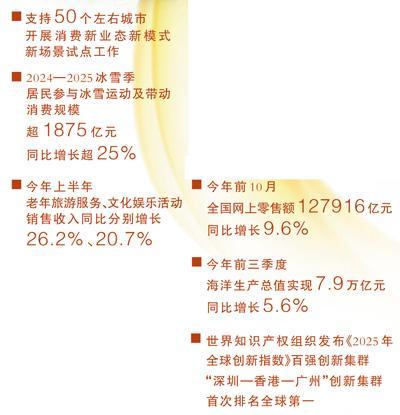
Group 1: Economic Development Trends - The year 2025 is significant for China's modernization process, with a focus on high-quality development and achieving major economic and social goals [2] - The Central Economic Work Conference highlighted the importance of developing new economic sectors such as the "first release economy," "ice and snow economy," "silver economy," and promoting healthy platform economy and county economy [3][4] Group 2: First Release Economy - The first release economy is gaining traction, with cities like Beijing, Shanghai, and Chengdu enhancing policy support to attract new brands and stores, becoming a key driver for domestic demand [3][6] - Chengdu has seen the establishment of 631 first stores in the first three quarters of the year, indicating a growing trend of "first release" becoming a lifestyle [8] Group 3: Ice and Snow Economy - The ice and snow economy is evolving from a seasonal focus to a year-round industry, with the market expected to exceed 1 trillion yuan by 2025 [3][9] - Harbin's Ice and Snow World is integrating technology and culture, offering diverse shopping and dining experiences to enhance consumer engagement [11] Group 4: Silver Economy - The silver economy is expanding with new service models for the elderly, including specialized travel services that cater to their needs, reflecting a shift in consumption patterns towards quality and personalization [12][13] - The elderly demographic is becoming a significant force in the tourism market, with over 80% of travelers on specialized trains being aged 60 and above [13] Group 5: Platform Economy - The platform economy is transitioning from a "what to sell" model to a "what is needed" approach, enhancing consumer experience through direct subsidies and one-stop services [14][15] - E-commerce platforms are driving growth in both domestic demand and foreign trade, with significant increases in sales and participation in global promotional events [16] Group 6: County Economy - The county economy is experiencing robust growth, with initiatives like "Hundred Villages, Thousand Stays" promoting eco-tourism and local industries, leading to increased income for local residents [17][18] - The integration of tourism and local agriculture is driving economic development, with significant increases in visitor numbers and revenue [18] Group 7: Marine Economy - The marine economy is focusing on green and low-carbon initiatives, with advancements in shipbuilding technology and sustainable practices [19][21] - The marine engineering sector is seeing growth, with a reported output value of 32.85 billion yuan in the first ten months of the year, reflecting a 16.9% increase [21] Group 8: Bay Area Economy - The Guangdong-Hong Kong-Macao Greater Bay Area is fostering innovation and collaboration, with companies leveraging regional strengths for technological advancements [22][24] - The synergy between Hong Kong's research capabilities and the manufacturing strengths of the Pearl River Delta is facilitating the commercialization of scientific innovations [24]