
DeepSeek

Search documents
不是玄学!港科大清华等联手:撕开推理黑箱,RL让AI像人思考
具身智能之心· 2025-10-10 00:02
Core Insights - The article discusses the recent research by teams from Hong Kong University of Science and Technology, University of Waterloo, and Tsinghua University, which reveals that large language models (LLMs) learn reasoning in a human-like manner by separating high-level strategy planning from low-level execution [3][10][12]. Group 1: Reinforcement Learning and LLMs - Reinforcement Learning (RL) enhances the reasoning capabilities of LLMs, although the underlying mechanisms have not been clearly understood until now [2][5]. - The research highlights the importance of RL in enabling models to exhibit reflective behaviors during interactions with the RL environment [7][10]. - Two significant experimental clues are identified: "length scaling effect" and "aha moment," indicating that LLMs can learn to use more thinking time to solve reasoning tasks [8][9][10]. Group 2: Learning Dynamics - The study outlines a two-phase learning dynamic in LLMs during RL training: the first phase focuses on consolidating basic execution skills, while the second phase shifts towards exploring high-level planning strategies [14][22]. - In the first phase, the model's focus is on mastering low-level operations, which is marked by a decrease in the uncertainty of execution tokens [23][24]. - The second phase involves the model actively expanding its strategy planning library, which correlates with improved reasoning accuracy and longer solution chains [28][30]. Group 3: HICRA Algorithm - The research introduces a new algorithm called HICRA (Hierarchy-Aware Credit Assignment), which emphasizes the learning of planning tokens over execution tokens to enhance reasoning capabilities [18][42]. - HICRA consistently outperforms mainstream methods like GRPO, particularly when the model has a solid foundation in execution skills [20][45]. - Experimental results show that HICRA leads to significant improvements in various reasoning benchmarks compared to GRPO, indicating its effectiveness in optimizing planning tokens [46][47]. Group 4: Insights on Token Dynamics - The study reveals that the observed phenomena, such as "aha moments" and "length scaling," are not random but are indicative of a structured learning process [33][35]. - The overall token-level entropy decreases as the model becomes more predictable in executing low-level tasks, while the semantic entropy of planning tokens increases, reflecting the model's exploration of new strategies [39][40]. - The findings suggest that the key to enhancing reasoning capabilities lies in improving planning abilities rather than merely optimizing execution details [20][41].


X @TechCrunch
TechCrunch· 2025-10-09 22:37
Reflection, once focused on autonomous coding agents, has raised $2B at an $8B valuation to expand into both an open-source alternative to closed frontier labs like OpenAI and Anthropic, and a Western equivalent to Chinese AI firms like DeepSeek. https://t.co/BwsSCQkYJ0 ...
Manning & Napier (NYSE:MN) Update / Briefing Transcript
2025-10-09 17:00
Summary of the Conference Call Industry Overview - The discussion primarily revolves around the **AI industry** and its implications for the **U.S. economy** and **technology sector**. The focus is on the investment landscape, particularly in relation to AI and its value chain. Key Points and Arguments U.S. Economy and Federal Reserve - The U.S. economy is described as **resilient**, supported by high-end consumer spending and strong nonresidential fixed investment [6][12][13] - There is a **bifurcation** in consumer-focused tech companies, with management teams reporting decent consumer health, while enterprise tech shows **tepid growth** in IT budgets due to rapid changes in technology [7][9] - The Federal Reserve is facing trade-offs regarding interest rate cuts amidst rising inflationary pressures and resilient growth [11][14] AI Investment Landscape - There is significant **enthusiasm** for AI-related investments, leading to a **dichotomy** between perceived AI winners and losers across sectors [17][21] - The **tech momentum factor** has reached levels not seen since 2002, indicating a potential risk in the market [18] - The **AI value chain** is broken down into four categories: application providers, AI models, data center operators, and semiconductor capital equipment suppliers [22][21] Data Center Infrastructure - The largest spenders in data centers are **hyperscale cloud service providers** (Amazon, Google, Microsoft), expected to spend around **$350 billion** in CapEx this year [39] - The **Neo Clouds** are emerging as a new category, reselling access to GPUs, but are heavily reliant on debt financing [40][44] - The **data center spending** is transitioning from cash flow funded to more debt-fueled investments, raising concerns about sustainability [41][42] AI Model Providers - The main players in AI model development include **OpenAI, Google, Meta, Anthropic**, and **XAI** [48] - These companies are projected to spend around **$150 billion** on training AI models next year, primarily funded through existing profitable businesses or ongoing debt issuance [50][51] Application Layer - The application layer is dominated by AI chatbots like **ChatGPT**, which has scaled to **800 million users** and a revenue run rate exceeding **$10 billion** [60][61] - Revenue generation is currently driven by paid subscriptions, with expectations for future monetization through advertising [61][62] - There is a significant mismatch between the scale of investment in infrastructure and the current revenue generated from AI applications, estimated at **$15-20 billion** [63][64] Investment Opportunities and Risks - The investment strategy focuses on **semiconductors** and **hyperscalers**, with caution advised regarding **Neo Cloud providers** due to high customer concentration and cash burn [46][47] - Concerns about overinvestment and potential market corrections are highlighted, with a warning that many companies may not achieve sustainable profits [71][72] - The discussion suggests that AI may be more of a **sustaining innovation** rather than a disruptive one, indicating potential opportunities in traditional sectors like **enterprise software** and **IT services** [69][70] Global Perspective - China's AI ecosystem is rapidly developing, with companies like **Tencent, Baidu, and Alibaba** benefiting from AI advancements, despite challenges in accessing cutting-edge technology [77][78] Other Important Insights - The call emphasizes the need for a cautious approach to investing in AI, recognizing the potential for both significant opportunities and risks in the current market environment [74][75]


“强烈反对”美国AI公司反华言论,姚顺宇宣布跳槽!
Xin Lang Cai Jing· 2025-10-09 10:25
Core Viewpoint - A Chinese scholar in the AI field has left the American AI startup Anthropic to join Google's DeepMind, citing the company's "anti-China rhetoric" as a significant reason for his departure [1][3]. Group 1: Departure from Anthropic - Shunyu Yao, who worked at Anthropic for less than a year, expressed strong opposition to the company's anti-China statements, particularly after Anthropic announced it would stop providing AI services to companies controlled by Chinese entities and labeled China as a "hostile nation" [3]. - Yao believes that most employees at Anthropic do not agree with this characterization of China, but felt he could no longer remain at the company [3]. Group 2: Background of Shunyu Yao - Yao graduated from Tsinghua University and obtained a PhD in theoretical and mathematical physics from Stanford University, later conducting postdoctoral research at UC Berkeley [3]. - He joined Anthropic in October 2024 and was involved in the development of the Claude 3.7 Sonnet language model, which was released in February of this year [3]. Group 3: Industry Context - There has been an increase in negative rhetoric towards China from several American AI companies, including OpenAI, which has directly named Chinese competitors like DeepSeek [3]. - A former employee from OpenAI revealed that some technical staff from countries like China felt uneasy about the company's statements [3]. Group 4: Response from Google DeepMind - In contrast, Demis Hassabis, CEO of Google DeepMind, has called for enhanced cooperation between the US and China in areas of mutual concern, such as AI safety [4]. - Yao has now joined the Gemini team at Google DeepMind, where he will participate in the development of the company's foundational models [4]. Group 5: Chinese Government's Stance - The Chinese Foreign Ministry has expressed opposition to the politicization and weaponization of technology and trade issues, stating that such actions are detrimental to all parties involved [4].

“2024-2025年度股权投资竞争力系列调研”案例征集启动
2 1 Shi Ji Jing Ji Bao Dao· 2025-10-09 09:39
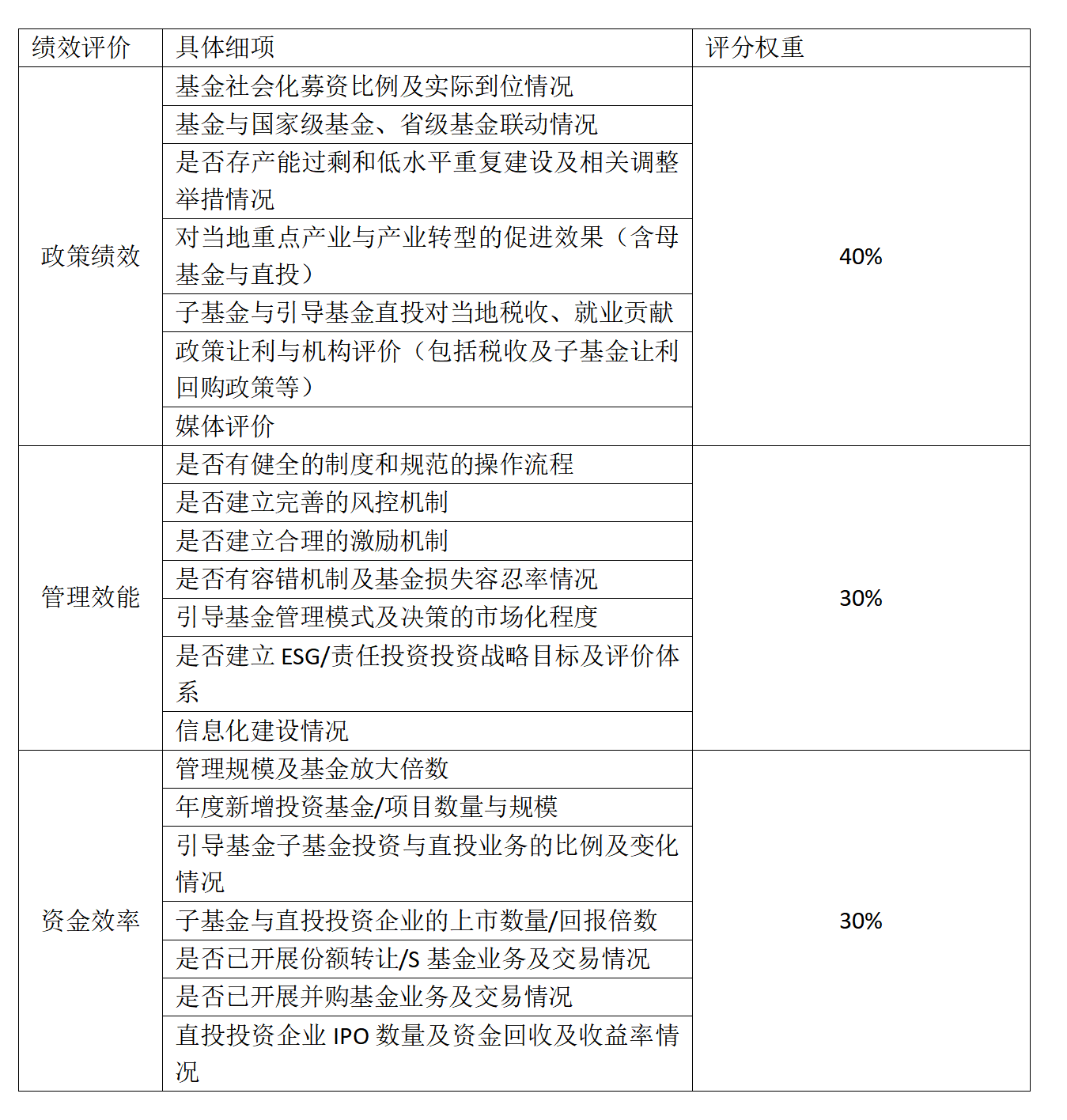
Core Insights - 2024 is a year of restructuring for China's private equity investment industry, with a continued tightening trend in fundraising and a significant slowdown in investment pace [1][2] - Positive signs are emerging, with several large funds established in the second half of 2024 and a narrowing decline in investment case numbers and amounts compared to previous periods [1] - By 2025, signs of recovery in the primary market are becoming more evident, driven by breakthroughs in Chinese tech companies, leading to a reassessment of their value by foreign investors [1][2] Fundraising and Investment Trends - The number of government-guided funds reached 1,627 with a total scale of 3.35 trillion yuan by the end of 2024, showing a compound annual growth rate (CAGR) of 19.85% in quantity and 35.33% in scale from 2014 to 2024 [5] - The tightening fundraising environment is expected to ease, with a decrease in the scale of new fundraising continuing to shrink [1] Policy and Regulatory Environment - The State Council issued guidelines to promote the high-quality development of government investment funds, enhancing the top-level design for fund establishment, investment, management, and exit [5] - Recent policies have expanded the investment scope of financial asset investment companies and increased the maximum investment ratio for insurance companies in single venture capital funds [1] Research and Evaluation Initiatives - The "2024-2025 Annual Government Investment Fund Competitiveness Evaluation Research Case" will assess government investment funds based on policy performance, management efficiency, and capital efficiency [5][6] - The evaluation process includes on-site visits, questionnaire surveys, data analysis, and comprehensive evaluations, culminating in results to be published by October 30, 2025 [6][10] ESG and Innovation Focus - The industry is increasingly focusing on ESG (Environmental, Social, and Governance) considerations, with institutions establishing systematic ESG evaluation frameworks [12] - The upcoming research will also include evaluations of the most investment-worthy enterprises, emphasizing innovation, growth, and financing capabilities [13][14]
蚂蚁、OpenAI、DeepSeek卷疯了!国产最强万亿参数旗舰模型Ling-1T开源
Tai Mei Ti A P P· 2025-10-09 04:14
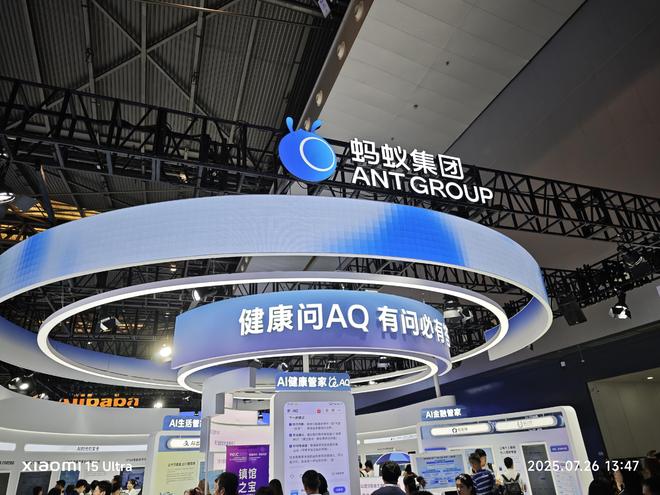
Core Insights - Ant Group has released and open-sourced its trillion-parameter general language model, Ling-1T, marking a significant advancement in AI technology [2][3] Model Performance - Ling-1T is the flagship model of the Ant Group's Ling 2.0 series, achieving state-of-the-art (SOTA) performance in various complex reasoning benchmarks, including code generation and mathematical reasoning [3][10] - In the AIME 25 competition math benchmark, Ling-1T achieved a 70.42% accuracy rate with an average consumption of over 4000 tokens, outperforming Google's Gemini-2.5-Pro, which had a 70.10% accuracy rate with over 5000 tokens [3][10] Competitive Landscape - The AI model competition is intensifying, with major players like OpenAI, Alibaba, and DeepSeek launching new models around the same time [4][9] - The AI industry is experiencing a "arms race" for foundational models, as noted by industry leaders [5] Investment Trends - In 2023, global AI startups attracted a record $192.7 billion in venture capital, with the U.S. investing 62.7% of its funds into AI companies [15][16] - OpenAI has become the most valuable startup globally, with a valuation of $500 billion and projected annual revenue of $12 billion [16] Technological Innovations - Ant Group's Ling-1T utilizes a hybrid precision training method (FP8), which significantly reduces memory usage and enhances training efficiency by over 15% [11][12] - The model incorporates a novel policy optimization method (LingPO) for stable training and a new reward mechanism to improve its understanding of visual aesthetics [12][14] Future Developments - Ant Group is also training a deep-thinking model, Ring-1T, which is expected to be released soon [14]

信创ETF(159537)涨近6%,DeepSeek-V3.2-Ex发布,国产云厂商day0适配
Mei Ri Jing Ji Xin Wen· 2025-10-09 03:28
Group 1 - DeepSeek officially released the DeepSeek-V3.2-Exp model on September 29, which is an experimental version aimed at optimizing training and inference efficiency for long texts [1] - The new model introduces DeepSeek Sparse Attention, a sparse attention mechanism, building on the previous V3.1-Terminus version [1] - The development of the new model utilized TileLang, an open-source AI operator programming language developed by a team led by Associate Professor Yang Zhi from Peking University [1] Group 2 - The 信创 ETF (159537) tracks the 国证信创指数 (CN5075), which selects listed companies in the semiconductor, software development, and computer equipment sectors from the Shanghai and Shenzhen markets [2] - The index focuses on reflecting the overall performance of the information technology innovation theme, with a significant emphasis on semiconductor and software development industries [2] - The average market capitalization of the index constituents is large, showcasing a diversified development pattern within the 信创 industry [2]

听说,大家都在梭后训练?最佳指南来了
机器之心· 2025-10-09 02:24
Core Insights - The article emphasizes the shift in focus from pre-training to post-training in large language models (LLMs), highlighting the diminishing returns of scaling laws as model sizes reach hundreds of billions of parameters [2][3][11]. Group 1: Importance of Post-Training - Post-training is recognized as a crucial phase for enhancing the reasoning capabilities of models like OpenAI's series, DeepSeek R1, and Google Gemini, marking it as a necessary step towards advanced intelligence [3][11]. - The article introduces various innovative post-training methods such as Reinforcement Learning from Human Feedback (RLHF), Reinforcement Learning from AI Feedback (RLAIF), and Reinforcement Learning with Verifiable Rewards (RLVR) [2][3][12]. Group 2: Transition from Pre-Training to Post-Training - The evolution from pre-training to instruction fine-tuning is discussed, where foundational models are trained on large datasets to predict the next token, but often lack practical utility in real-world applications [7][8]. - Post-training aims to align model behavior with user expectations, focusing on quality over quantity in the datasets used, which are typically smaller but more refined compared to pre-training datasets [11][24]. Group 3: Supervised Fine-Tuning (SFT) - Supervised Fine-Tuning (SFT) is described as a process that transforms a pre-trained model into one that can follow user instructions effectively, relying on high-quality instruction-answer pairs [21][24]. - The quality of the SFT dataset is critical, as even a small number of low-quality samples can negatively impact the model's performance [25][26]. Group 4: Reinforcement Learning Techniques - Reinforcement Learning (RL) is highlighted as a complex yet effective method for model fine-tuning, with various reward mechanisms such as RLHF, RLAIF, and RLVR being employed to enhance model performance [39][41]. - The article outlines the importance of reward models in RLHF, which are trained using human preference data to guide model outputs [44][46]. Group 5: Evaluation of Post-Training Models - The evaluation of post-training models is multifaceted, requiring a combination of automated and human assessments to capture various quality aspects [57][58]. - Automated evaluations are cost-effective and quick, while human evaluations provide a more subjective quality measure, especially for nuanced tasks [59][60].


她,河北女首富
3 6 Ke· 2025-10-08 23:42
Core Insights - The article highlights the success story of Runze Technology, founded by Zhou Chaonan, which has become a key player in the AI computing power industry, significantly benefiting from the AI boom since 2018 [1][2][3]. Company Overview - Runze Technology was established in 2009, focusing on computing power infrastructure, and struggled for a decade before finding its footing in the AI sector [1][5]. - The company has built seven AIDC intelligent computing centers across six major economic regions in China, emphasizing its role in the competitive AI landscape [2][3]. Financial Performance - Runze Technology's market capitalization reached 87 billion yuan, reflecting a more than 500% increase from its 2022 valuation [1][4]. - The company reported a revenue increase of 60.27% year-on-year to 4.351 billion yuan in 2023, with a net profit of 1.762 billion yuan [4][6]. - The stock price surged over 90% within four months during the ChatGPT boom, and the company’s market value briefly exceeded 100 billion yuan [4][6]. Client Dependency - Runze Technology's significant client, ByteDance, accounted for over 64% of its business in 2021, highlighting the company's reliance on a few major customers [3][6]. - The company’s revenue structure poses potential risks due to this high dependency, as over 90% of sales come from its top five clients [6]. Founder Background - Zhou Chaonan, the founder, has a background in telecommunications and was one of the first entrepreneurs in China's big data industry, establishing Runze Technology in a region with untapped potential for data centers [5][6]. - Zhou's wealth has surged, placing her among the top global billionaires, with her family ranked 600th on the Hurun Global Rich List [1][6]. Market Trends - The article notes the explosive growth in demand for AI computing power, driven by advancements in AI models and the increasing need for data processing capabilities [4][6]. - Runze Technology's strategic shift from traditional IDC to AIDC has positioned it well to capitalize on the ongoing AI revolution [3][4].
国投证券-计算机行业周报:海内外科技共振,看好AI产业趋势-251008
Xin Lang Cai Jing· 2025-10-08 15:58
Group 1: Chip Collaboration - OpenAI and AMD have signed a multi-billion dollar chip deal to co-develop AI data centers based on AMD processors [1] - OpenAI commits to purchasing AI chips worth 6 gigawatts based on multiple generations of AMD Instinct GPUs [1] - The partnership aims to deepen collaboration on hardware and software since the MI300X and MI350X series, starting with the MI450 series [1] Group 2: Model Development - DeepSeek has released the experimental model DeepSeek-V3.2-Exp, which introduces Sparse Attention for improved training and inference efficiency on long texts [2] - The model development utilized TileLang, an open-source AI operator programming language developed by a team from Peking University [2] - Huawei Cloud and Cambricon announced Day0 adaptation for DeepSeek-V3.2-Exp, supporting a maximum context length of 160K [2] Group 3: Application Advancements - OpenAI launched the next-generation video generation model Sora2, enhancing realistic video effects and adding audio generation capabilities [3] - The Dev Day event introduced several platform-level tools, including Apps SDK, Agent Kit, and Codex, aimed at creating a closed loop for development, distribution, and monetization [3] - Apps SDK allows developers to build interactive applications within ChatGPT, while Agent Kit focuses on backend development efficiency [3] Group 4: Investment Opportunities - Investment opportunities are suggested in areas such as AI computing power, applications, physical AI, AIGC, and anti-generative AI [4]
