软银集团

Search documents
G42 获得美国尖端人工智能芯片出口许可,为大规模部署可信赖的人工智能基础设施铺平道路
Globenewswire· 2025-11-28 07:00
Core Insights - The approval of advanced AI semiconductor exports to G42 by the White House marks a significant transition from planning to deployment in the UAE-US AI corridor, highlighting mutual trust and commitment to building secure and scalable AI infrastructure [1][2] - The G42-led UAE AI Gateway project includes a 1 GW AI computing cluster for OpenAI, part of a larger 5 GW AI infrastructure hub aimed at providing computing power and low-latency inference services across the Middle East [1][2] - G42 has established a world-class technology and compliance framework for the deployment of these advanced chips, adhering to the regulated technology environment (RTE) guidelines set by the US Department of Commerce and the Bureau of Industry and Security (BIS) [2] Group 1 - The collaboration between the UAE and the US is designed to ensure the secure global diffusion of American technology, with the deployment of advanced chips following strict regulatory standards [2] - G42's CEO emphasized that this announcement signifies a critical moment for G42 and its partners, establishing a new benchmark for secure and high-performance computing technology [2][3] - The UAE is currently the only country in the Middle East undertaking such large-scale infrastructure development that complies with US regulatory frameworks and export controls [2] Group 2 - Khaldoon Khalifa Al Mubarak, Secretary-General of the Artificial Intelligence and Advanced Technology Council, stated that this decision reflects the deep mutual trust in UAE-US relations and the strategic view that technology is a platform for stability and long-term cooperation [3] - G42 operates three of the world's top 500 supercomputers, with two ranking as the second and third in the Middle East, and its Maximus-01 supercomputer in New York ranking 20th globally [3] - G42's expanding AI infrastructure now spans Abu Dhabi, France, and several US states, including California, Minnesota, Texas, and New York [3] Group 3 - G42 is a technology holding group focused on pioneering AI technologies and driving global innovation, with a commitment to harnessing AI for the benefit of humanity across various sectors [4]

内地供需回落导致行业利润增速分化:环球市场动态2025年11月28日
citic securities· 2025-11-28 03:03
Market Overview - China's industrial enterprises' profits fell by 5.5% year-on-year in October, a decline of 27.1 percentage points from the previous month, with revenue down by 4%[4] - The profit margin for industrial enterprises decreased due to insufficient demand, with notable divergence in profit growth across industries[4] Global Market Trends - Major European indices showed slight increases, with the Stoxx 600 up by 0.14% and the DAX rising by 0.18%, driven by optimism regarding potential interest rate cuts by the Federal Reserve[7] - The U.S. stock market was closed for Thanksgiving, leading to subdued trading activity in the bond market[3] Stock Performance - In Hong Kong, the Hang Seng Index rose marginally by 0.07%, while the Hang Seng Tech Index fell by 0.36%, reflecting mixed performance among major tech stocks[9] - A-share market saw the Shanghai Composite Index increase by 0.29%, with a total market turnover of 1.72 trillion yuan[13] Commodity and Forex Insights - The dollar index decreased by 0.1%, while the euro appreciated by 12% year-to-date against the dollar[23] - Brent crude oil prices rose by 0.33% to $63.34 per barrel, amid expectations that OPEC+ will maintain production targets[24] Fixed Income Market - The Chinese investment-grade bond market lagged, with spreads widening by 1-3 basis points, reflecting concerns over the performance of real estate companies[26] - U.S. Treasury yields remained stable, with the 10-year yield at 3.99%[25]


暴跌40%!软银成为“OpenAI链”风向标
美股研究社· 2025-11-27 14:24
Core Viewpoint - The stock price of SoftBank Group has become a key indicator of market confidence in the non-public company OpenAI, amid rising concerns over overvaluation in the AI sector and changes in industry competition dynamics [2][4]. Group 1: SoftBank's Stock Performance - Since the end of October, SoftBank's stock has plummeted approximately 40%, resulting in a market value loss of over 16 trillion yen (about 102 billion USD) [4]. - The recent sell-off is primarily driven by market anxiety regarding competitive pressures faced by OpenAI, especially following the release of Alphabet's highly praised Gemini 3.0 model [4][11]. - The deep exposure to the AI sector previously brought significant gains to SoftBank, with unrealized gains of 14.6 billion USD from its investment in OpenAI contributing to a surprising net profit of 2.5 trillion yen in the second fiscal quarter [6]. Group 2: Investment Strategy and Risks - SoftBank's founder Masayoshi Son is preparing to double down on investments in OpenAI and its supporting infrastructure, aiming to position SoftBank as a core player in an OpenAI-led AI ecosystem [7][8]. - The market's sharp reaction indicates that investors are reassessing the risks and returns of this high-stakes gamble [8]. - Analysts highlight that SoftBank's stock price decline reflects its sensitivity to OpenAI's valuation rather than a general downturn in the AI market [11]. Group 3: AI Chip and Infrastructure Investments - Masayoshi Son's ambitions extend beyond being a financial investor in OpenAI; he is actively building a comprehensive AI ecosystem through acquisitions and investments [13]. - SoftBank has sold shares in Nvidia and Oracle to raise funds for acquiring AI chip design companies, holding nearly 90% of Arm and recently acquiring Ampere Computing LLC for 6.5 billion USD [13]. - Challenges exist in this chip strategy, particularly with the growing penetration of open-source architecture RISC-V in AI chip design [13]. Group 4: Market Dynamics and Investment Logic - The volatility in SoftBank's stock reflects a shift in AI investment logic, moving away from indiscriminate buying of AI-related stocks to a more selective approach [15]. - Reports indicate a market differentiation, with companies like Meta Platforms Inc. planning to use Google's Gemini AI chips, raising concerns for Nvidia's business and affecting its Japanese suppliers [15]. - Conversely, some companies are benefiting from this shift, such as Toppan Holdings Inc., which saw an 11% stock increase due to its partnership with Broadcom in AI chip design [15].


前瞻全球产业早报:中国开源AI模型市场首超美国
Qian Zhan Wang· 2025-11-27 12:07
Group 1 - The Ministry of Industry and Information Technology and five other departments aim to optimize the supply structure of consumer goods by 2027, creating three trillion-level consumption fields and ten hundred-billion-level consumption hotspots [2] - By 2030, a high-quality development pattern characterized by positive interaction between supply and consumption is expected to be established, with a steady increase in the contribution of consumption to economic growth [2] Group 2 - Guangdong Province plans to incorporate mergers and acquisitions and asset revitalization into the performance evaluation system of state-owned enterprises, aiming to enhance asset securitization levels [3] - The province encourages listed state-owned enterprises to utilize various financing tools for industry chain integration and mergers, thereby strengthening and optimizing their operations [3] Group 3 - China's open-source AI model market has surpassed that of the United States, with Chinese-developed models accounting for 17% of total downloads, compared to 15.8% for American companies [3] Group 4 - The medical device market in China is projected to reach 1.22 trillion yuan by 2025, with the number of production enterprises exceeding 33,000 by the end of 2024, marking a 27.8% increase from the end of the 13th Five-Year Plan [4] - A new regulation on mobile power supplies is expected to lead to the exit of nearly 70% of existing production capacity due to stringent technical requirements [4] Group 5 - Ideal Auto reported a net loss of 624 million yuan in Q3 2025, with total revenue of 27.4 billion yuan, a decrease of 36.2% year-on-year [5] - The total vehicle delivery volume in Q3 2025 was 93,211 units, reflecting a 39% year-on-year decline [5] Group 6 - South Korea plans to establish a "Korea-US Strategic Investment Company" to manage a special fund for $350 billion in investments in the U.S. [6] - SoftBank Group has completed the acquisition of Ampere Computing, making it a wholly-owned subsidiary [6] Group 7 - OpenAI anticipates that by 2030, there will be at least 220 million paid subscribers for ChatGPT, representing 8.5% of its approximately 2.6 billion weekly active users [7] Group 8 - Apple is expected to surpass Samsung as the world's largest smartphone manufacturer this year, with projected iPhone shipments reaching a record 255 million units, a 10% year-on-year increase [8] Group 9 - SK Telecom and Samsung have signed a memorandum of understanding to jointly develop AI-driven wireless access network technology for the next generation of 6G networks [9] Group 10 - NVIDIA has responded to concerns about its AI chip dominance, asserting that its GPUs remain a generation ahead of competitors and are the only ones capable of supporting all AI models across various computing scenarios [10]

股票市场概览:资讯日报:美联储“褐皮书”显示美国消费支出进一步下滑-20251127
Guoxin Securities Hongkong· 2025-11-27 11:37
Market Overview - The U.S. stock market showed a significant upward trend, with major indices rising for the fourth consecutive trading day, indicating a recovery in market sentiment[9] - The CBOE Volatility Index (VIX) dropped approximately 35% over four days, marking its largest decline since mid-April[9] - The Hang Seng Index closed at 25,928, up 0.13% for the day and 29.25% year-to-date[3] Sector Performance - Large tech stocks exhibited mixed results, with Meituan surging 5.65% while Kuaishou fell nearly 3%[9] - Paper stocks led gains, with Nine Dragons Paper up 5% and Lee & Man Paper up 4.88%, driven by price hikes in packaging and cultural paper products[9] - Airline stocks performed strongly, with China Eastern Airlines rising nearly 7%[9] Economic Indicators - The Federal Reserve's Beige Book indicated a further decline in U.S. consumer spending, reflecting a stagnant economic activity[13] - Initial jobless claims in the U.S. fell to 216,000, the lowest level since mid-April, suggesting a tightening labor market[13] - Morgan Stanley economists adjusted their rate predictions, now expecting a rate cut from the Fed in December rather than January[13] International Markets - The Nikkei 225 index in Japan rose by 1.9%, driven by strong tech sector performance and expectations of a potential rate hike by the Bank of Japan[13] - The Singapore Straits Times Index showed a year-to-date performance of 0.00%, indicating a stagnant market[3]






118亿身价女股神?乙女游戏之母?她才是游戏行业真正的大女主
3 6 Ke· 2025-11-27 11:33
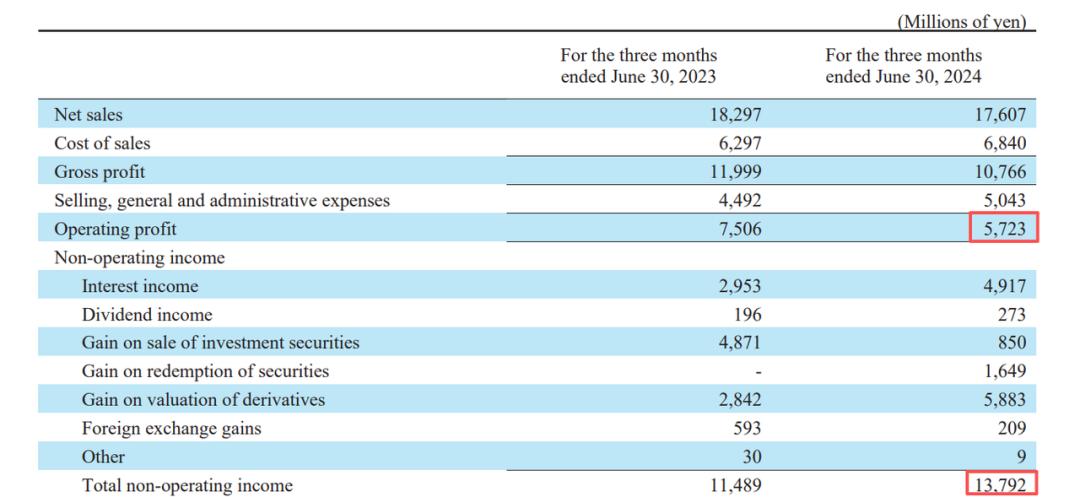
Core Insights - Koei Tecmo, co-founded by Keiko Erikawa, has revised its profit forecast for Q2 of FY2026, expecting profits to double compared to initial estimates, driven by better-than-expected game performance and a significant increase in operating profit from 8 billion yen to 17.5 billion yen [1][2]. Group 1: Financial Performance - Koei Tecmo's non-operating income reached 13.792 billion yen in Q1 FY2024, significantly higher than the operating profit of 5.723 billion yen during the same period [2][3]. - In FY2021, Koei Tecmo achieved a total profit of 39.3 billion yen, with 14.9 billion yen coming from stock sales, indicating that investment income accounted for nearly 40% of total profits [2][4]. Group 2: Investment Strategy - The company has maintained a "no debt, no loss, no layoffs" record since its establishment, attributed to Erikawa's adept stock investment skills [4][20]. - Koei Tecmo manages an investment fund of approximately 120 billion yen, allowing it to sustain operations even during periods of low game sales by using stock market gains as a buffer [4][20]. Group 3: Historical Context and Development - Koei Tecmo transitioned from dye wholesale to computer games in 1980, with its first game, "Kawanakajima no Kassen," selling around 10,000 copies, a notable achievement at the time [14][17]. - The company launched its first "otome game," "Angelique," in 1994, establishing a significant presence in the female-oriented gaming market [24][26]. Group 4: Leadership and Recognition - Keiko Erikawa has been recognized by Masayoshi Son, founder of SoftBank, as a highly respected entrepreneur and was appointed as the first external director of SoftBank Group [20][38]. - Erikawa's investment acumen has positioned her among the top female stockholders in Japan, with a personal wealth estimated at approximately 16.5 billion USD [36][38].
Nvidia's bumpy November
Business Insider· 2025-11-27 09:30
Core Insights - Nvidia has faced significant challenges this month, experiencing an 11% decline in stock value after previously reaching an all-time high, primarily due to concerns about an AI bubble and increased competition from Google [2][3][15] - CEO Jensen Huang has expressed that Nvidia is in a difficult position, where strong performance could be interpreted as contributing to an AI bubble, while poor performance would validate such concerns [8][9] Company Performance - Nvidia's third-quarter earnings surpassed analysts' expectations, yet the stock market reacted negatively the following day due to ongoing worries about inflated tech valuations [7][15] - The company is projected to secure "half a trillion" in AI chip orders during the 2025-2026 period, indicating strong future demand despite current market pressures [15] Competitive Landscape - Google is reportedly in discussions with Meta to provide advanced chips, posing a potential threat to Nvidia's market share, which has historically been dominant in the AI chip sector [10][11] - Nvidia's response to Google's advancements emphasized that its chips are "a generation ahead of the industry," showcasing confidence in its technology [12] Investor Sentiment - High-profile investors like SoftBank have exited their positions in Nvidia, selling $5.8 billion in shares, which has fueled discussions about an AI bubble [4] - Investor Michael Burry has publicly criticized Nvidia, likening it to Cisco during the dot-com bubble, and has raised concerns about the sustainability of its business model [13][14]
软银CDS走阔、乐天趋稳:债务压力与AI押注分化市场情绪
Zhi Tong Cai Jing· 2025-11-27 08:53
Group 1 - The core viewpoint of the articles highlights that SoftBank Group's credit default swap (CDS) spreads have risen to their highest level since April, reflecting investor caution towards the company's debt-driven growth model amid increasing global competition [1] - SoftBank has been funding various AI projects, including collaborations with OpenAI and Oracle, and its five-year CDS rose to approximately 302 basis points, up from about 280 basis points the previous day [1] - The company is intensifying its fundraising activities, having set terms for issuing 500 billion yen (approximately 3.3 billion USD) in retail bonds with a coupon rate of 3.98%, with part of the proceeds aimed at repaying bridge loans related to its investment in OpenAI [1] Group 2 - In contrast, Rakuten Group has been reducing its debt burden to improve its credit profile, resulting in a moderate narrowing of its CDS spreads, which decreased from around 250 basis points in August to approximately 200 basis points recently [1] - The CEO of Fujiwara Capital noted that the rise in SoftBank's CDS may reflect market pricing factors, including declines in AI-related stocks, ongoing bond issuances by the company, and concerns over its concentrated investment in OpenAI [1]

美国“沉睡巨人”彻底醒来
Sou Hu Cai Jing· 2025-11-27 08:08
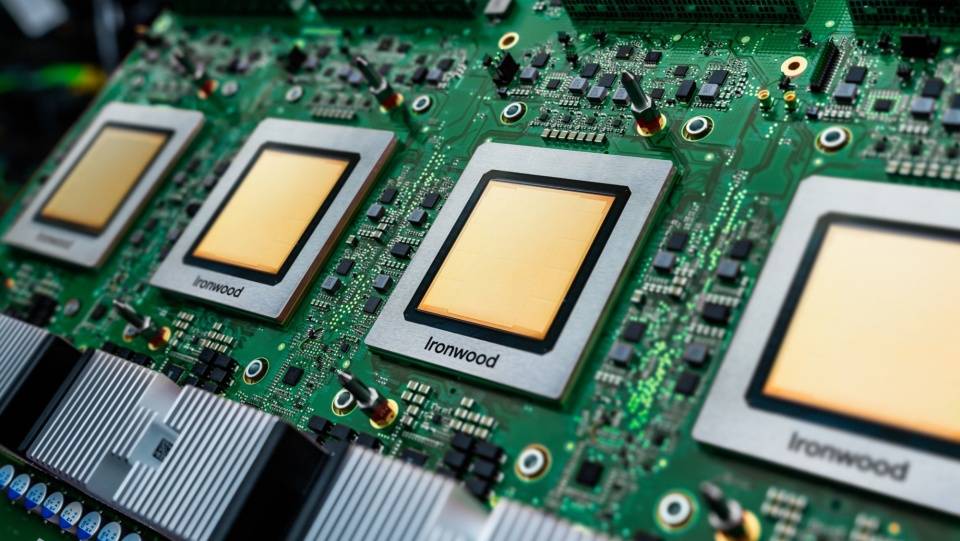
Core Insights - Google has made significant strides in the AI competition, launching new AI software and signing multiple partnerships, which has reassured investors about its position against competitors like OpenAI [1][3] - The release of Google's Gemini 3 AI model has received widespread acclaim for its performance in reasoning and programming tasks, indicating a strong comeback in the AI sector [1][7] - Google's cloud business is experiencing steady growth due to the increasing demand for AI services and its proprietary AI chips, which are among the few alternatives to Nvidia's chips [1][6] Company Developments - Alphabet's stock rose by 1.5% to $323.44, nearing a market capitalization of $4 trillion, driven by investor enthusiasm for Google's AI initiatives [2] - The company has avoided severe regulatory repercussions, such as forced divestiture, which has alleviated concerns about its market position [5] - Google's CEO Sundar Pichai emphasized a comprehensive AI strategy that is beginning to yield results, showcasing the company's commitment to AI development [5] Competitive Landscape - Analysts view Google as a dark horse in the AI race, with its extensive resources and data advantages over competitors like OpenAI [3][5] - The collaboration with AI startup Anthropic to utilize Google's TPU chips in a multi-billion dollar deal signifies a growing demand for Google's technology [6] - Competitors like Microsoft and OpenAI are also exploring in-house semiconductor development to reduce reliance on Nvidia, indicating a shift in the industry [6] Market Performance - Google's Gemini applications have reached 650 million users, while OpenAI's ChatGPT has 800 million weekly active users, highlighting the competitive landscape in user engagement [8] - Google's cloud revenue for Q3 was $15.2 billion, a 34% year-over-year increase, although it still lags behind Microsoft and Amazon's cloud sales [8] - The AI chip market is not a zero-sum game, suggesting that multiple companies can succeed simultaneously in this space [8] Product and Technology - Gemini 3 Pro has been recognized as a top-tier large language model, capable of solving complex scientific and mathematical problems [7] - Google's TPU chips are primarily attracting companies with high computational needs, such as Meta and Anthropic, indicating a strategic focus on enterprise-level applications [8][9] - Access to Google's TPU is limited to its cloud services, which may bind developers to its ecosystem, contrasting with the more flexible use of Nvidia's GPUs [9]
暴跌40%!软银成为“OpenAI链”风向标
华尔街见闻· 2025-11-27 07:54
Core Viewpoint - The stock price of SoftBank Group has become a key indicator of market confidence in the non-public company OpenAI, amid rising concerns over overvaluation in the AI sector and changes in industry competition dynamics [1][3]. Group 1: SoftBank's Stock Performance - Since the end of October, SoftBank's stock has plummeted approximately 40%, resulting in a market value loss of over 16 trillion yen (about 102 billion USD) [3]. - The recent sell-off is primarily driven by market anxiety regarding competitive pressures faced by OpenAI, especially following the release of Alphabet's highly praised Gemini 3.0 model [3][9]. - The stock's decline reflects SoftBank's sensitivity to OpenAI's valuation and market position rather than a general downturn in the AI sector [9]. Group 2: Financial Implications and Investments - SoftBank previously benefited from its deep exposure to the AI sector, recording an unrealized gain of 14.6 billion USD from its investment in OpenAI, leading to a surprising net profit of 2.5 trillion yen in the second fiscal quarter [5]. - However, this same exposure has made SoftBank vulnerable to fluctuations in the AI industry [6]. - SoftBank is committed to paying 22.5 billion USD to OpenAI in December, part of a total investment commitment of 32 billion USD, which could represent over 20% of its net asset value if OpenAI's valuation reaches 500 billion USD [9]. Group 3: Strategic Moves by Masayoshi Son - Masayoshi Son aims to build a comprehensive AI ecosystem, going beyond being a financial investor in OpenAI, by engaging in various mergers and investments [10]. - SoftBank has sold shares in Nvidia and Oracle to raise funds for its AI chip and infrastructure strategy, believing that future devices will require high-efficiency AI chips [11]. - The company has acquired nearly 90% of Arm and completed a 6.5 billion USD acquisition of Ampere Computing, a server processor manufacturer [11]. Group 4: Market Dynamics and Investment Logic - The market is witnessing a shift in AI investment logic, moving away from indiscriminate buying of AI-related stocks to a more selective approach [13]. - Reports indicate that companies like Meta Platforms Inc. are planning to use Google's Gemini AI chips, raising concerns for Nvidia's business and affecting its Japanese suppliers [13][14]. - Conversely, companies like Toppan Holdings Inc. have seen stock price increases due to their partnerships in AI chip design, indicating a more nuanced evaluation of winners and losers within the AI supply chain [14].