一汽

Search documents
沪光股份20250822
2025-08-24 14:47
Summary of Hu Guang Co., Ltd. Conference Call Company Overview - **Company**: Hu Guang Co., Ltd. - **Industry**: Manufacturing, specifically in wiring harnesses and connectors for automotive and robotics sectors Key Points and Arguments Business Performance - In the first half of 2025, Hu Guang achieved revenue of **36.29 billion yuan**, a year-on-year increase of approximately **8%** [3] - Gross margin was reported at **15.67%**, with a net margin of **7.62%**, resulting in a net profit of **2.76 billion yuan** [3] - The company aims for a total revenue target of **95 billion yuan** for 2025, with a projected net profit of **8 billion yuan** [9][10] Client and Revenue Structure - Major clients include: - **Sailis**: 45% of revenue, up from 35% in Q1 - **SAIC Volkswagen**: 12% - **Tesla**: 6% - **Li Auto**: 5.5% - **NIO**: 5% [3][18] - New partnerships with state-owned enterprises such as **FAW** and **Dongfeng** have been established, securing high-pressure wiring harness orders [2][4] Innovations and New Ventures - Hu Guang is collaborating with **Windfly** in the low-altitude economy sector, providing wiring harnesses for manned and unmanned aerial vehicles [2][6] - In the humanoid robotics sector, partnerships with **Zhiyuan** and **Fourier** have been initiated, focusing on wiring harnesses for various projects [2][7] - A new wholly-owned subsidiary, **All-round Giant Rise Intelligent Technology Suzhou Co., Ltd.**, is being established to create an innovation center with an expected investment of **20 billion yuan** [2][11][14] Market Expansion and Strategy - The company is expanding its overseas market presence, with a factory in **Romania** designated as a high-pressure wiring harness production base and plans to relocate low-pressure harness production to **North Africa** [5][20] - Hu Guang is also exploring the international market for robotics and related applications [20][21] Future Outlook - The second half of 2025 is expected to see the launch of several new models, which will positively impact revenue and profitability [8] - The company anticipates further improvements in net margins, potentially exceeding **8%** for the full year [9][18] Challenges and Responses - The current market trend shows clients prioritizing price over technology, which poses challenges for Hu Guang [18] - To address this, the company has diversified into the connector business, aiming for revenue between **90 million to 100 million yuan** in 2025, and **200 million to 300 million yuan** in 2026 [19] Robotics Development - Hu Guang is focusing on developing key components for robotics, with a strategy to enhance its competitive edge through innovation and partnerships with educational institutions [17][19] - The company plans to establish an innovation center and assembly plant for robotics, with ongoing discussions about product development [28] Financial Performance - The second quarter of 2025 saw a net margin of **8.8%**, attributed to increased production capacity and improved operational efficiency [5][27] Additional Important Information - The company is actively working on high-speed connector technology, with expectations of generating **200 million to 300 million yuan** in revenue from this segment in 2026 [26] - The transition of production from Romania to North Africa is anticipated to significantly reduce costs and improve profitability [25]

央企背景动力电池企业被收购!
起点锂电· 2025-08-24 04:53
Core Viewpoint - The article discusses the recent changes in the ownership and operational status of Huai'an Junsheng New Energy Technology Co., Ltd., highlighting the shift from a state-owned enterprise to a private entity and the implications for the lithium battery industry [4][5][6]. Group 1: Company Overview - Huai'an Junsheng New Energy was established on June 13, 2017, as a developer of power batteries, initially funded by Baogun Automotive [4]. - The company was fully acquired by Sinochem International in November 2018, which aimed to develop high-performance ternary lithium battery products [4][5]. - As of August 2025, Baogun Automotive has ceased operations, with its subsidiaries undergoing liquidation, indicating a significant decline in its business activities [4][5]. Group 2: Industry Context - The lithium battery industry has become increasingly competitive, with many small to medium-sized enterprises exiting the market due to the cancellation of subsidies and the rise of lithium iron phosphate batteries [5]. - The recent court ruling for Junsheng New Energy's bankruptcy and the transfer of its 100% equity to Xindong Lithium Battery reflects a trend of deep consolidation within the lithium battery sector [5][6]. Group 3: Xindong Lithium Battery - Xindong Lithium Battery, based in Xingtai, Hebei, specializes in the research, production, and sales of lithium iron phosphate and energy storage batteries [7]. - The company possesses advanced technology platforms and manufacturing processes, enabling it to cater to diverse market needs, particularly in low-temperature applications [7]. - Xindong Lithium Battery plans to achieve a production capacity of 5 GWh by the end of 2025 and 10 GWh by the end of 2026 through a combination of self-built and outsourced production strategies [8].


航空电动化风起,正力新能抢做“空中生意”
Jing Ji Guan Cha Wang· 2025-08-22 04:54
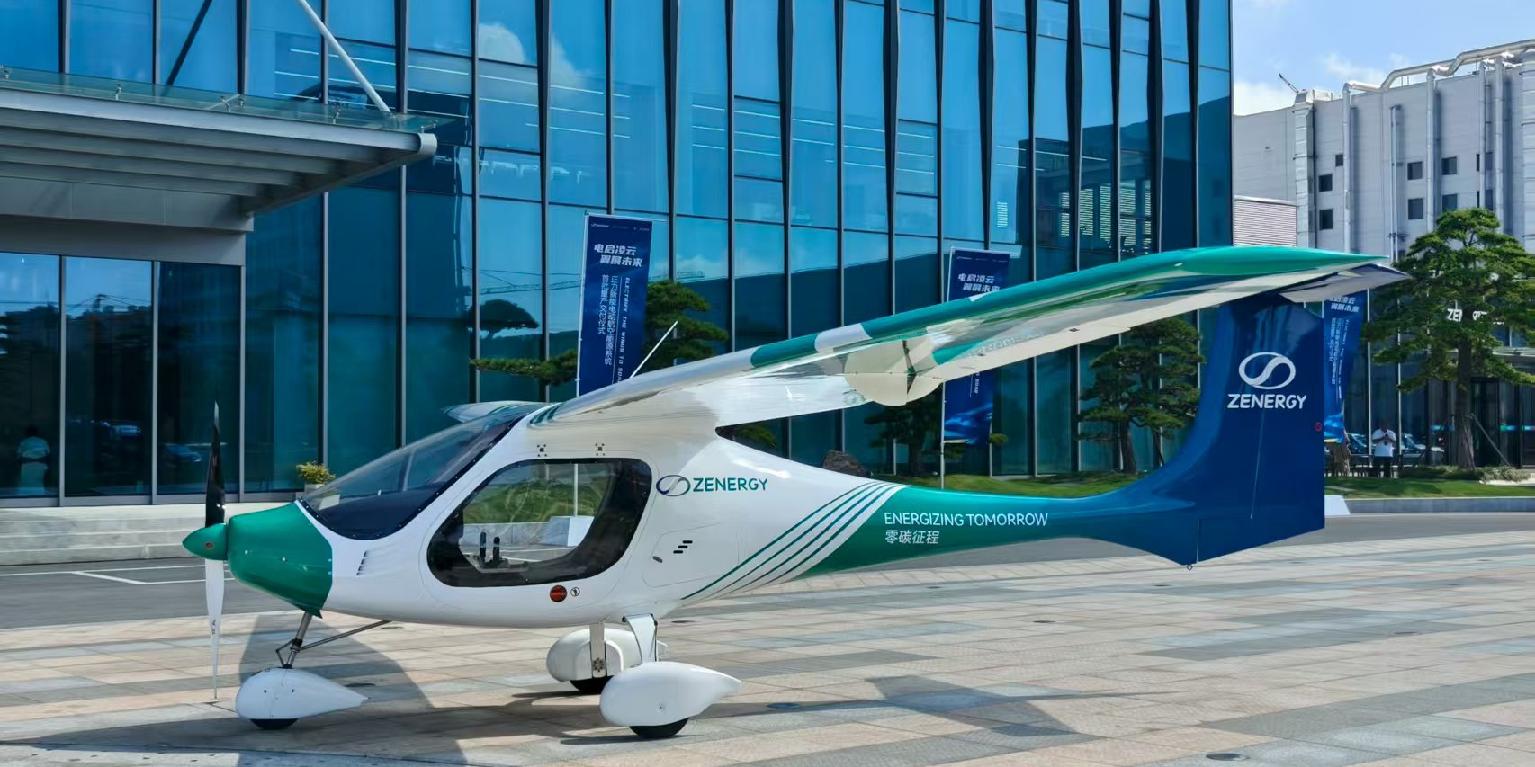
Core Viewpoint - 正力新能 has achieved a significant milestone by becoming the first company in the power battery industry to mass-produce and deliver certified power battery systems for electric aircraft, specifically the RX1E electric fixed-wing aircraft, in response to the growing demand for electric aviation and the low-altitude economy [2][4][5]. Group 1: Company Overview - 正力新能 was established in 2019 and has quickly positioned itself in the power battery industry, focusing on a "land, sea, and air" strategy to explore battery applications across various transportation modes [4][15]. - The company has a strong background in battery technology, having previously supplied batteries for hybrid vehicles, which has contributed to its rapid growth and market presence [11][13]. Group 2: Technological Advancements - The RX1E electric aircraft's power battery system is characterized by "three highs and one fast," indicating high safety, high energy density, high power, and fast charging capabilities, with an energy density exceeding 320Wh/kg [9][10]. - The aviation battery technology is more advanced than that of automotive batteries, with a required energy density of over 300Wh/kg and a peak power output greater than 12C [10]. Group 3: Market Opportunities - The low-altitude economy is projected to create a market scale in the trillions, providing new growth opportunities for power battery manufacturers as they seek to diversify beyond the increasingly competitive electric vehicle sector [4][5][15]. - The collaboration with zero-gravity aircraft industry and Liaoning General Aviation Research Institute highlights the growing interest and investment in electric aviation, with both companies developing fully domestically produced electric aircraft [5][6]. Group 4: Strategic Partnerships - 正力新能 has formed strategic partnerships with companies like zero-gravity aircraft industry and Liaoning General Aviation Research Institute to supply power battery systems for various types of electric aircraft, including fixed-wing and eVTOL [6][9]. - The partnerships are based on the reliability and safety of 正力新能's battery technology, which meets the stringent requirements for aviation applications [6][7]. Group 5: Regulatory and Certification Challenges - Achieving airworthiness certification for aviation batteries is a complex process that involves rigorous testing and compliance with national aviation regulations, which 正力新能 has successfully navigated [7][9]. - The company has established itself as a leader in the industry by being the first to obtain both product certification and the AS9100D aerospace quality management system certification [9]. Group 6: Future Outlook - 正力新能 aims to leverage its advancements in aviation battery technology to establish a competitive edge in the low-altitude economy, aligning with national policies promoting the development of this sector [15][16]. - The company is focused on achieving its vision of a "zero-carbon society" by contributing to the decarbonization of the aviation industry through its innovative battery solutions [16][17].
青岛港新能源汽车出口增长16倍!新枢纽撬动山东万亿工业品出海
Qi Lu Wan Bao· 2025-08-21 10:39
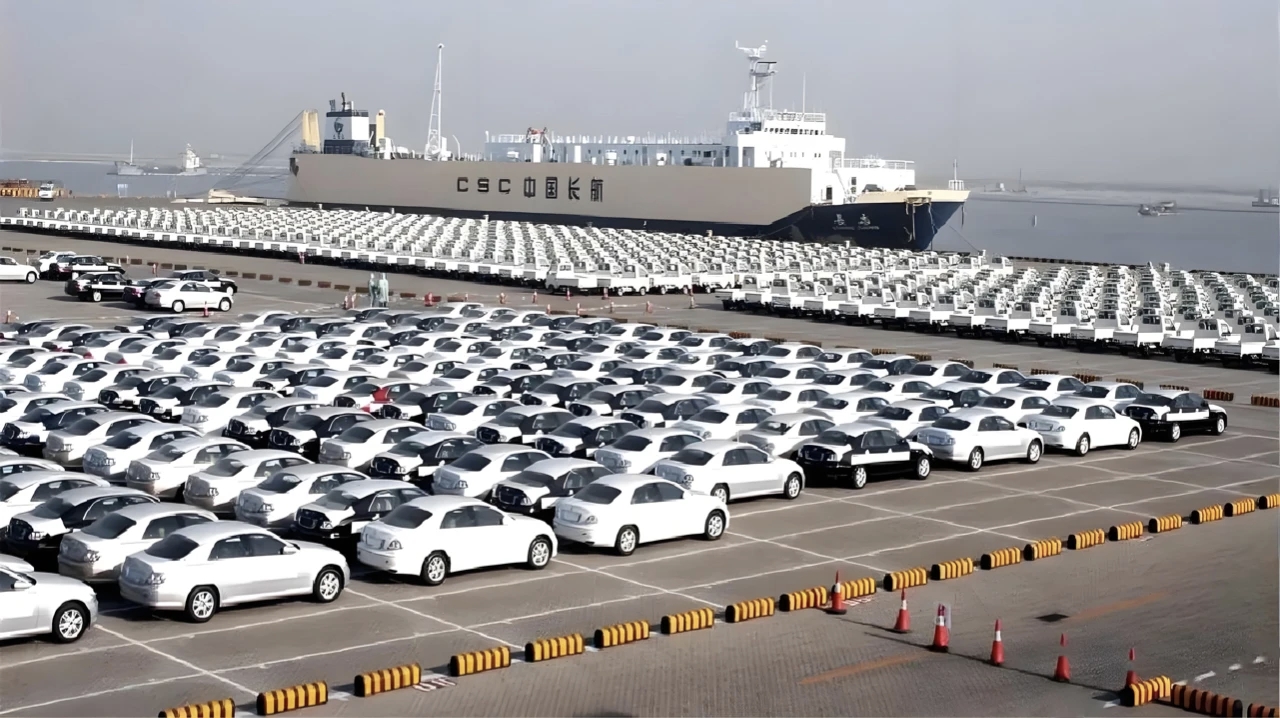
Core Insights - Qingdao has emerged as a key node in China's automotive globalization strategy, particularly in the context of the booming electric vehicle (EV) market, with a significant increase in exports of new energy vehicles (NEVs) [1][6] - The acceleration of automotive exports from China is evident, with NEV exports showing a remarkable growth of 1617% year-on-year in the first seven months of 2023 [6][7] - The integration of logistics and manufacturing in Qingdao is enhancing the efficiency of vehicle exports, with a focus on multi-modal transport solutions [4][5] Automotive Export Acceleration - The China Association of Automobile Manufacturers reported that NEV exports reached 1.06 million units in the first half of 2025, marking an 84.6% increase year-on-year, while traditional fuel vehicle exports declined [2] - Major companies like Chery and BYD have significantly contributed to this growth, with Chery exporting 548,000 units and BYD exporting 472,000 units [2] Logistics and Infrastructure Development - Qingdao is developing an international automotive roll-on/roll-off (RoRo) transit center, utilizing a combination of rail, road, and sea transport to reduce logistics costs [4][5] - The Huangdao Station has become one of the busiest freight stations in China, facilitating the rapid transport of vehicles to Qingdao Port, with an average of a train arriving or departing every 10 minutes [5] Regional Economic Impact - The rise of Qingdao as a global automotive hub is expected to significantly boost the regional economy, with projections indicating that Shandong's industrial exports could reach a trillion yuan [1] - The port's capabilities are expanding, with new shipping routes to emerging markets in Africa, North America, and Southeast Asia being established [8][9] Supply Chain Integration - The trend of KD (knock-down) exports is gaining traction, allowing companies to export vehicle parts for local assembly, which reduces transportation costs and benefits from tariff exemptions [5][6] - Qingdao's logistics network is facilitating the export of automotive parts to countries like Egypt and Tunisia, further embedding Chinese automotive supply chains in global markets [6][9] Future Growth Projections - The global demand for NEVs is expected to continue growing, with predictions suggesting that China's automotive exports could reach 7 million units by the end of 2025, potentially approaching 10 million by 2030 [12] - Qingdao's special economic zones are playing a crucial role in this growth, with significant increases in export licenses and trade values reported [12][13]

“60天账期”满期 车企兑现如何?
Guang Zhou Ri Bao· 2025-08-20 05:24
Group 1 - The automotive industry has implemented a "60-day payment term" for suppliers, marking a significant change in payment practices [1][3] - GAC has established a comprehensive management system covering the entire process from order issuance to payment, with 95% of payments made in cash [2] - FAW has shifted to 100% cash payments for recognized small and medium-sized suppliers, moving away from a mixed payment model [2] Group 2 - The "60-day payment term" is boosting confidence in the supply chain, encouraging investments from both upstream and downstream players [3] - Major automakers, including Toyota, Volkswagen, and BYD, have adopted the 60-day payment term, leading to increased production and sales [3] - In July, automotive production and sales reached 2.591 million and 2.593 million units, respectively, reflecting year-on-year growth of 13.3% and 14.7% [3]
盛赞巴中合作,卢拉:热切期待中国车企助力巴西汽车工业复兴
Huan Qiu Shi Bao· 2025-08-17 22:25
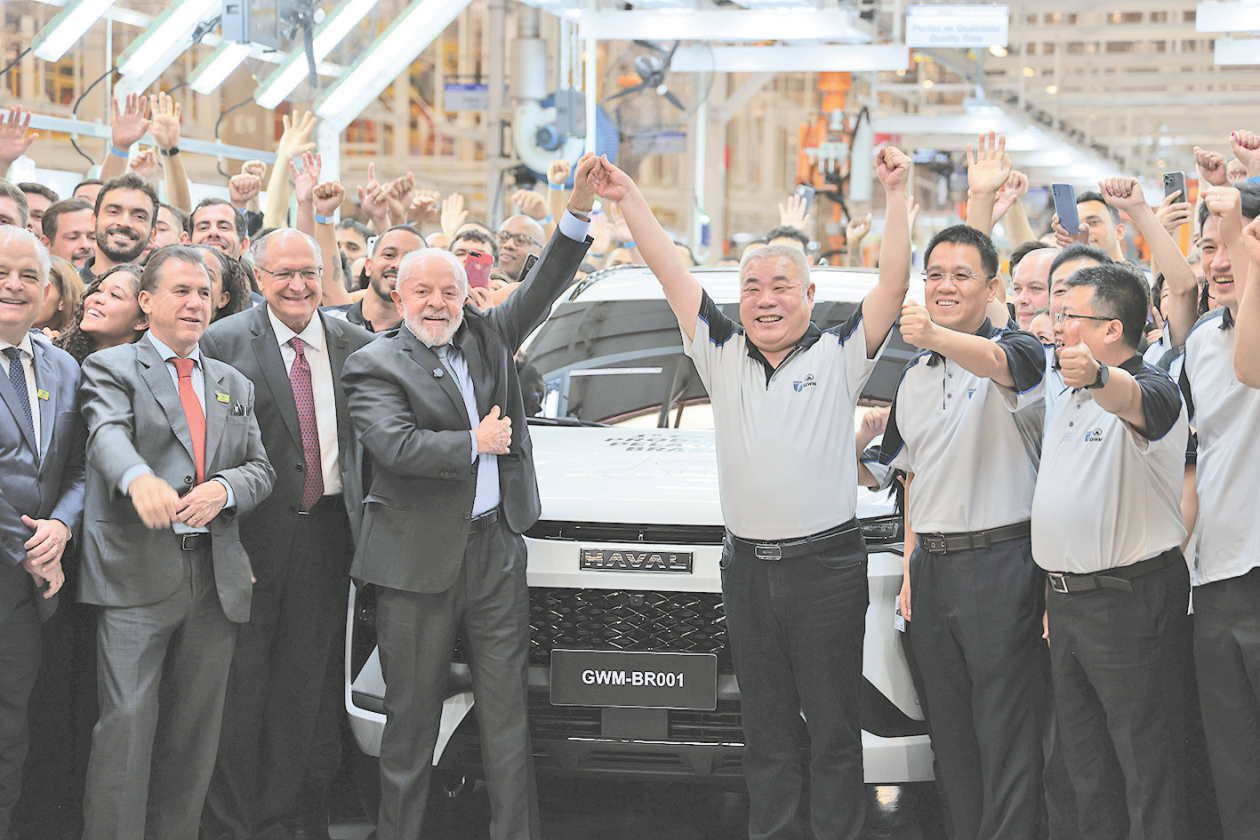
Group 1 - The inauguration of Great Wall Motors' factory in Brazil marks a significant step in China-Brazil cooperation, with Brazilian President Lula emphasizing the importance of this partnership for investment and job creation [1][3][4] - Great Wall Motors is the first company to receive certification under Brazil's "Green Mobility and Innovation Program," with plans to produce at least 30,000 vehicles annually [3][4] - The factory has already created 700 jobs, with expectations to increase this number to 2,000 by early next year, indirectly generating an additional 10,000 jobs [4] Group 2 - The relationship between Brazil and China is strengthening, with China becoming Brazil's largest trading partner, as evidenced by a trade volume of over $180 billion last year compared to $80 billion with the U.S. [7][8] - Brazilian exports to China, particularly soybeans, have surged, with $22.9 billion worth of soybeans exported in the first seven months of this year, accounting for 75.2% of Brazil's total soybean exports [7][8] - The ongoing trade tensions with the U.S. have prompted Brazil to seek closer ties with China and other global southern countries, enhancing investment opportunities in sectors like semiconductors and logistics [8]

和而泰(002402):控制器基本盘稳健前行 T/R芯片业务贡献亮眼
Xin Lang Cai Jing· 2025-08-16 10:29
Group 1: Financial Performance - The company reported a revenue of 5.446 billion yuan for the first half of 2025, representing a year-on-year growth of 19.21% [1] - The net profit attributable to shareholders reached 354 million yuan, up 78.65% year-on-year, while the net profit excluding non-recurring items was 347 million yuan, reflecting a 97.24% increase [1] Group 2: Business Segments - The controller segment achieved a revenue of 5.245 billion yuan, with a year-on-year growth of 16.64% and a gross margin increase of 0.38 percentage points to 17.25% [1] - The home appliance business generated 3.563 billion yuan in revenue, growing 22.14% year-on-year, with a gross margin of 16.43%, up 0.94 percentage points [2] - The automotive electronics segment saw a revenue of 415 million yuan, marking a 5.20% year-on-year increase, driven by deepening partnerships with major Tier 1 manufacturers [3] Group 3: Growth Drivers - The strong performance in the controller segment was attributed to new customer acquisition and effective cost control measures [1] - The home appliance segment benefited from a comprehensive product range and systematic service advantages, capturing market share [2] - The automotive electronics business is a key growth driver, with ongoing collaborations with leading automotive manufacturers and a focus on core technologies [3] Group 4: Investment Outlook - The company is positioned as a leader in smart controllers, with increasing market share in home appliances and tools, and a robust order reserve in automotive electronics [3] - Projected net profits for 2025-2027 are 692 million yuan, 904 million yuan, and 1.103 billion yuan, with corresponding growth rates of 90%, 31%, and 22% [3]

激光雷达+“冰箱彩电” 全新坦克500能否让坦克重返增长通道?
Jing Ji Guan Cha Wang· 2025-08-14 00:02
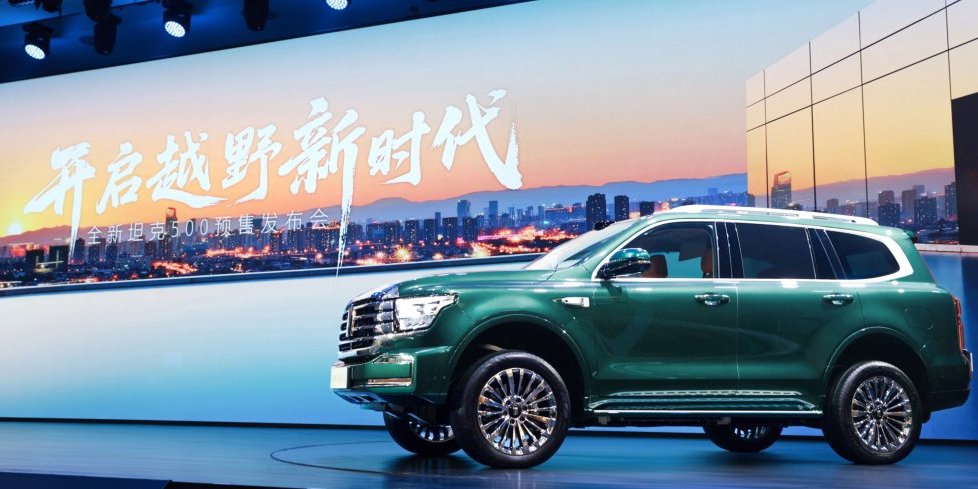
Core Viewpoint - The new Tank 500 Smart Edition has been launched for pre-sale, featuring advanced intelligent driving capabilities and luxurious configurations, aiming to enhance market competitiveness and meet consumer demand for smart features [2][3][4]. Group 1: Product Features - The new Tank 500 comes in two versions: Hi4-T priced at 360,000 yuan and Hi4-Z priced at 388,800 yuan, reflecting an increase from the current models [2]. - It is equipped with laser radar and the third-generation intelligent driving system, Coffee Pilot Ultra, enabling full-link intelligent driving from parking space to parking space [2]. - The vehicle includes a 5.4L onboard refrigerator, six screens, and NAPPA leather seats with multiple comfort features, emphasizing luxury and convenience [3]. Group 2: Market Positioning - The Tank 500 aims to redefine the standards of mid-to-large luxury SUVs and expand its market share in the competitive off-road vehicle segment [4]. - The off-road market is becoming increasingly competitive, with various automakers like BYD, Chery, and Dongfeng entering the segment, posing challenges for the Tank brand [4]. - The Tank brand has set a sales target of at least 320,000 units by 2025, with a focus on recovering from a decline in sales observed in the first half of the year [5].
华密新材20250809
2025-08-11 01:21
Summary of Huami New Materials Conference Call Company Overview - **Company**: Huami New Materials - **Industry**: Rubber and Plastic Materials Key Points Financial Performance - **Revenue**: In the first half of 2025, revenue was 203 million yuan, a year-on-year increase of 6% [3] - **Net Profit**: Net profit was 17 million yuan, a decline of approximately 19% year-on-year [3] - **Operating Costs**: Increased due to hiring more R&D and sales personnel, establishing new branches, and rising short-term bank loans [3] Product Segmentation - **Revenue Composition**: Rubber materials account for about 70% of revenue, while rubber-plastic products account for about 30% [2] - **Growth in Rubber-Plastic Products**: Rubber-plastic products grew by 23% year-on-year, primarily driven by the automotive sector [2][13] Gross Margin Analysis - **Gross Margin**: Rubber-plastic products maintain a gross margin of 45%-50%, while rubber materials have a stable margin around 25% [4] - **Margin Fluctuations**: The decline in gross margin is attributed to changes in revenue composition from different downstream sectors [12] Production Capacity and Development - **Special Engineering Plastics**: 12 production lines established with an expected annual capacity of 35,000 tons, currently underutilized [8][26] - **Military and Aerospace Materials**: Achievements in high-end special rubber and plastic materials, breaking foreign technology monopolies [9] R&D and Innovation - **Patents and Standards**: The company holds 65 patents and has participated in the revision of 10 national standards [6] - **Material Development**: Over 2,400 formulations developed, with a strong R&D team supporting innovation [11] Market and Customer Base - **Key Clients**: Major clients include Great Wall Motors, FAW, China CRRC, and SANY Heavy Industry, with applications in automotive, high-speed rail, and engineering machinery [2][7] - **New Client Development**: Ongoing product development with BYD and Chery, with expectations for mass production in the near future [14] Future Outlook - **Performance Expectations**: Anticipated improvement in performance in the second half of the year, with cost pressures from raw material prices [18] - **New Product Launches**: Focus on self-lubricating bearings and high-end silicone projects, with expectations for gradual volume increase [20][22] - **Special Rubber New Materials Project**: Delayed until mid-2027, but construction is now on track [25] Strategic Focus - **Current Priorities**: Emphasis on R&D for new projects and the construction of special rubber new materials [27] - **Expected Turning Point**: Significant performance changes expected in the second half of next year or early the following year [27]
英伟达在华还有希望吗?“后门”约谈风波后,中企集体加速,国产芯片快速崛起
Xin Lang Cai Jing· 2025-08-10 06:29
Core Viewpoint - Nvidia, once holding a 95% market share in China's AI chip market, is now facing significant challenges due to technological blockades, domestic alternatives, and a trust crisis, which may lead to a complete overhaul of its market position in China within two years [1]. Group 1: Impact of U.S. Export Controls - The U.S. government's export control policies initiated Nvidia's troubles, with the U.S. Department of Commerce blacklisting Nvidia's high-performance H20 chip in 2023, prohibiting exports to China [3]. - This policy resulted in Nvidia losing major clients like Tencent and Alibaba, accumulating $4.5 billion in inventory, and ultimately writing down $5.5 billion in losses [3]. - Although the U.S. government relaxed restrictions on H20 chip exports in July 2025, the Chinese market has not welcomed Nvidia's products back [3]. Group 2: Rise of Domestic Alternatives - Over the past two years, Chinese companies have accelerated the development of domestic alternative chips to reduce reliance on Nvidia, with Huawei's Ascend chip surpassing Nvidia's H20 in computing power and addressing chip security issues through "密态计算" technology [6]. - This technology has eliminated backdoor risks, making it the preferred solution in government and financial sectors, resulting in over one million orders [6]. - Chinese automotive companies have also made significant strides in chip development, with firms like Xpeng and NIO integrating self-developed chips into their latest models, while BYD, GAC, and FAW are rapidly advancing in chip R&D and production [6]. Group 3: Security Concerns and Public Trust - In July, Chinese engineers discovered hidden interfaces and modules in the H20 chip capable of remote power control, positioning, and forced shutdown, raising widespread public concerns about chip security [8]. - This discovery led to the National Internet Information Office of China summoning Nvidia for clarification regarding the security risks associated with the H20 chip [8]. - Nvidia's response, claiming these features were merely "user-managed diagnostic functions," failed to alleviate market concerns, as the domestic AI chip localization rate reached 40%, indicating a near parity with imported chips [9]. Group 4: Future Outlook - The future landscape suggests that China will transition from being a "follower" to a "rule-maker," fully eliminating its dependence on Nvidia [11]. - Nvidia's challenges in the Chinese market reflect not only technological competition but also the direct impact of geopolitical pressures, as U.S. export controls aimed at stifling China's technological advancement have inadvertently spurred domestic innovation [13]. - The rise of domestic chips poses a significant threat to Nvidia and may alter the competitive dynamics of the global chip industry, as China's chip sector enters a golden development period with maturing technology and improved market ecosystems [13].