永辉超市

Search documents
双融日报-20260211
Huaxin Securities· 2026-02-11 01:34
Core Insights - The report indicates a neutral market sentiment with a score of 48, suggesting a balanced outlook for investors [2][10] - Key investment themes identified include power grid equipment, banking, and consumer sectors, each with specific growth drivers and investment opportunities [6] Group 1: Power Grid Equipment - The global demand for high-power and high-stability transformers is driven by the significant energy consumption of AI data centers, leading to a supply-demand imbalance, particularly in the U.S. where delivery times have reached 127 weeks [6] - China's State Grid is set to invest 4 trillion yuan during the 14th Five-Year Plan, focusing on ultra-high voltage and smart distribution networks, providing long-term order support for the industry [6] - Relevant stocks in this sector include China Western Power (601179) and TBEA Co., Ltd. (600089) [6] Group 2: Banking Sector - Bank stocks are characterized by high dividend yields, with the China Securities Bank Index yielding 6.02%, significantly above the 10-year government bond yield [6] - In a slowing economy with increased market volatility, bank stocks are becoming important investment targets for long-term funds such as insurance and social security [6] - Key banking stocks mentioned are Agricultural Bank of China (601288) and Ningbo Bank (002142) [6] Group 3: Consumer Sector - The macro policy for 2026 emphasizes expanding domestic demand and promoting consumption, which is expected to positively influence market sentiment [6] - The consumer market is undergoing significant changes, characterized by three new trends: "emotional value" in self-consumption (e.g., gold and jewelry), "extreme value-for-money" in discount retail, and "efficiency innovation" in AI e-commerce and brand expansion [6] - Notable consumer stocks include Yonghui Superstores (601933) and Wangfujing (600859) [6]
年夜饭预订市场早已升温 呈现堂食与居家场景并行
Zhong Guo Jin Rong Xin Xi Wang· 2026-02-10 21:25
Group 1 - The New Year's Eve dinner reservation market is experiencing significant growth, with orders increasing over three times year-on-year as of February 9, and search volume on platforms doubling [1] - Major cities for reservations include Shanghai, Beijing, Hangzhou, Guangzhou, and Nanjing, indicating a concentrated demand in urban areas [1] - Traditional and innovative dining experiences are merging, with restaurants offering themed dinners and cultural activities to enhance the festive atmosphere [1] Group 2 - Chain restaurants like Haidilao are actively expanding their offerings, with over 50,000 reservations for New Year's Eve and more than 1,000 locations operating on that day [2] - Green Tea Restaurant has adapted its menu to regional preferences, achieving over 1,000 reservations on the Meituan platform, which accounts for about 30% of its total New Year's Eve bookings [2] - The trend of "light cooking" for New Year's Eve dinners is rising, with a 92% year-on-year increase in sales of related products, highlighting a shift towards convenience [2] Group 3 - Many restaurants and supermarkets are launching convenient and high-quality New Year's Eve meal solutions, with prices ranging from 88 yuan to 1,000 yuan [3] - Supermarkets are focusing on "portable" festive meals, with products like the "Fengshen" series from Hema and customized meal boxes from Yonghui Supermarket gaining popularity [3] - Research indicates that younger consumers prioritize convenience, quality, and the ceremonial aspect of New Year's Eve dinners, redefining the value of these meals [3]
多家知名品牌宣布:春节期间,涨价!
Sou Hu Cai Jing· 2026-02-10 16:55
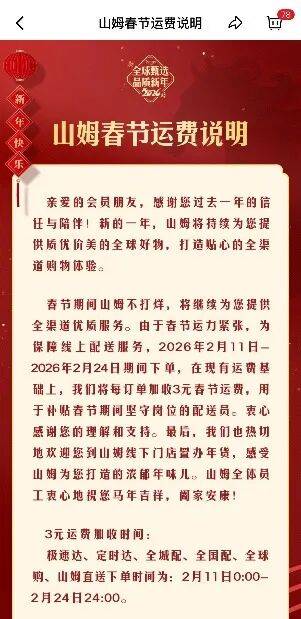
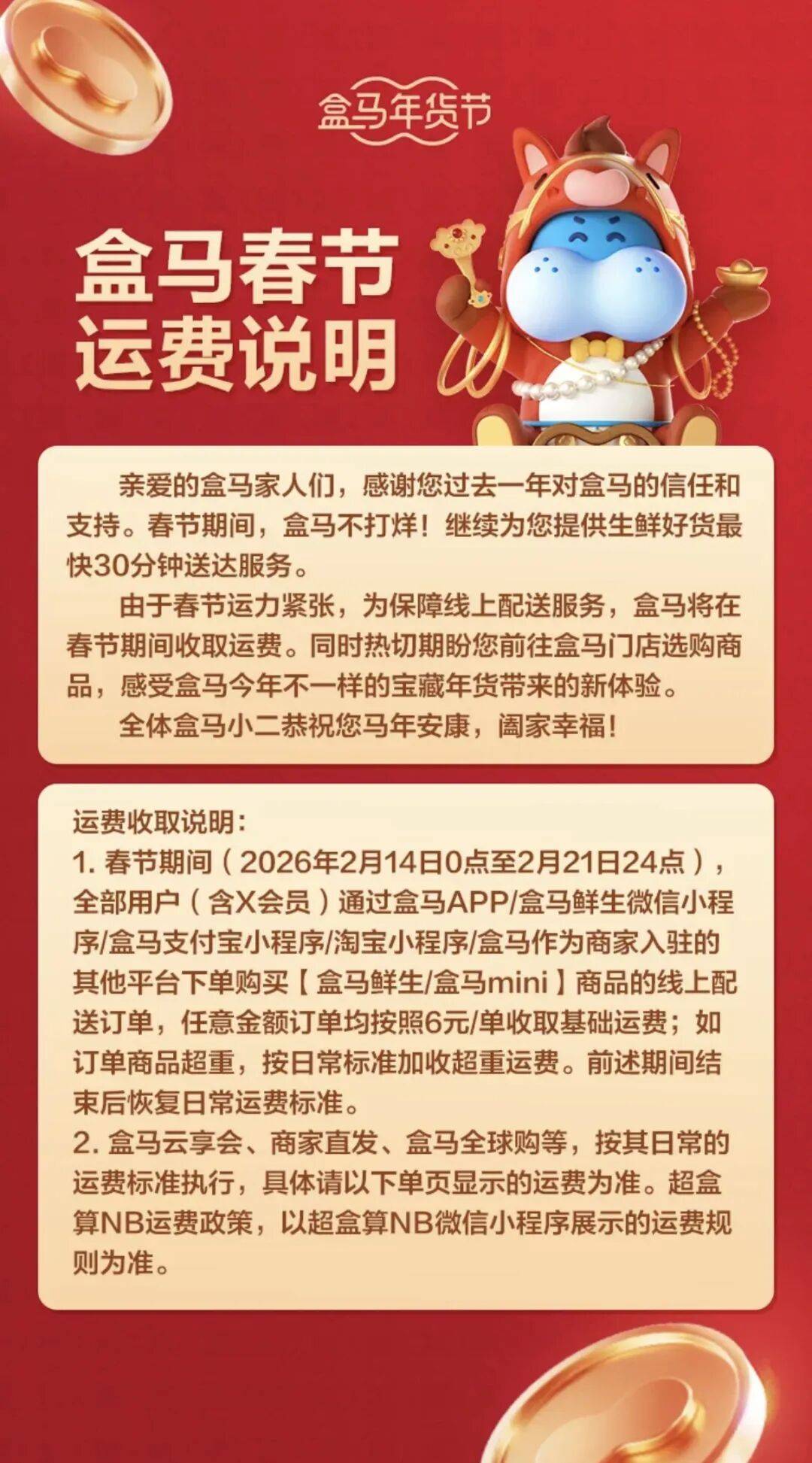
Core Viewpoint - The upcoming Spring Festival is expected to create a peak in online consumption and a tight logistics capacity, leading major delivery companies to commit to continuous service during the holiday while also raising delivery fees. Group 1: Delivery Companies' Commitments - Major delivery companies including SF Express, JD Logistics, YTO, Shentong, Zhongtong, and Yunda have announced they will operate during the Spring Festival, promising uninterrupted delivery services [1] - SF Express will charge an additional 3 yuan per order as a "Spring Festival fee" for online orders placed between February 11 and February 24, 2026 [1] - YTO, Shentong, and other major express companies have also committed to "not closing" during the holiday but will implement a "resource adjustment fee" [12] Group 2: Retail Platforms' Fee Adjustments - Fresh retail platforms such as Sam's Club, Hema, Dingdong Maicai, and Yonghui Supermarket have announced service fees ranging from 3 to 6 yuan per order during the Spring Festival [1] - Hema will adjust its delivery fee to a base of 6 yuan per order from February 14 to 21, 2026, while maintaining the same fee structure as previous years for members [1] - Dingdong Maicai will charge an additional 3 yuan service fee for orders placed from February 15 to February 21, 2026 [4] Group 3: Consumer Reactions and Other Platforms - Most consumers have expressed understanding of the additional service fees, with comments in support of the adjustments being prevalent [11] - Platforms like Meituan Waimai, Taobao Shanguo, and JD have announced they will not raise delivery fees for consumers during the Spring Festival, instead investing billions to subsidize riders and frontline employees [12] - Meituan Waimai plans to incentivize riders through cash rewards and benefits, while Taobao Shanguo will invest nearly 2 billion yuan in rider subsidies from February 4 to March 3 [12]





山姆、盒马等集体官宣:春节期间价格调整!
Sou Hu Cai Jing· 2026-02-10 15:14
Core Viewpoint - The upcoming Spring Festival period is expected to see a surge in online consumption, leading to increased service fees from various fresh food retail platforms due to tight delivery capacity during this peak time [1]. Group 1: Fresh Food Retail Platforms - Sam's Club will charge an additional 3 yuan per order for online deliveries from February 11 to February 24, 2026, to support delivery personnel during the Spring Festival [2]. - Hema will implement a flat delivery fee of 6 yuan per order for all online purchases from February 14 to February 21, 2026, regardless of order amount, with additional charges for overweight items [2]. - Dingdong Maicai will also charge an extra 3 yuan service fee per order from February 15 to February 21, 2026, due to delivery capacity constraints [5]. - Yonghui Supermarket will apply a 3 yuan service fee for all online orders from February 15 to February 21, 2026, across its platforms [7]. Group 2: Courier Companies - Several courier companies, including SF Express, JD Logistics, and Deppon Express, have announced measures to ensure delivery services during the Spring Festival, with some implementing a "resource adjustment fee" due to increased operational costs [10]. - SF Express will charge a resource adjustment fee ranging from 0.1 to 1.5 yuan per kilogram for certain shipments from January 19 to February 15, 2026, and will adjust service fees during the Spring Festival period [10]. - Deppon Express will also impose a dynamic adjustment service fee from January 19 to February 14, 2026, and additional fees during the Spring Festival, with varying rates for long-term cooperative clients [13]. - JD Logistics will introduce a peak period resource adjustment fee during the Spring Festival from February 16 to February 23, 2026 [14].



发补贴、开展览、做活动……春节将至,广州促消马力全开
Nan Fang Du Shi Bao· 2026-02-10 11:15
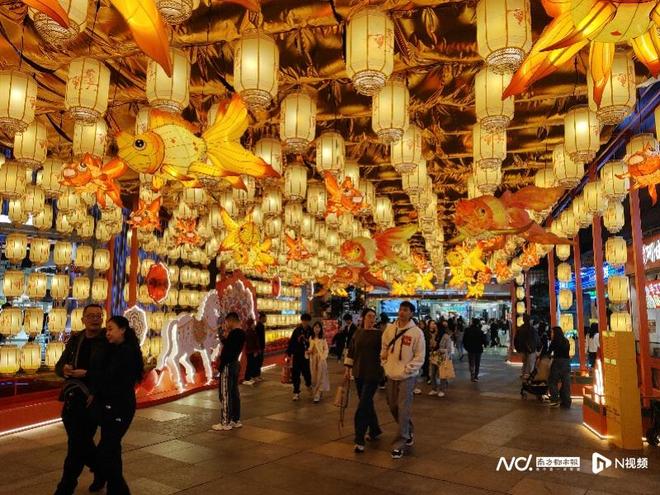
Core Insights - Guangzhou is experiencing a vibrant consumer atmosphere as the Spring Festival approaches, with various promotions and traditional products being highlighted in supermarkets and shopping districts [1][3] Group 1: Consumer Promotions and Activities - Guangzhou's government is issuing 50 million yuan in dining consumption vouchers and offering subsidies up to 15% for various consumer goods [3][4] - The "Year of the Horse" theme is being integrated into shopping experiences, with immersive activities and traditional elements being showcased in major shopping areas [5][10] - Various shopping centers are hosting special events, such as the "God Steed Welcomes Spring" exhibition at Taikoo Hui, which combines contemporary art with traditional cultural elements [9][10] Group 2: Supply and Demand Management - Over 1,000 supermarkets and 500 wholesale markets in Guangzhou are increasing their stock of essential goods to ensure supply during the Spring Festival, with significant quantities of vegetables, meat, and other necessities being prepared [11] - The city has a robust supply chain in place, with daily vegetable and fruit supplies expected to meet the needs of residents during the holiday [11] Group 3: Online and Offline Integration - Supermarkets are leveraging both online and offline channels to enhance consumer engagement, with promotions and discounts being offered across platforms [17][18] - Major retailers like Huarun and Yonghui are implementing strategies that include live streaming and group buying to attract consumers during the festive season [17][18]

年货礼盒成爆款 年味消费在超市中释放
Bei Jing Shang Bao· 2026-02-10 10:33
Group 1 - The festive atmosphere in Beijing is rising as supermarkets prepare for the Spring Festival, with significant consumer activity observed in various store formats, including hypermarkets and membership stores [1] - Yonghui Supermarket has launched a dynamic supply system featuring "30 high-quality explosive products," which has led to a structural upgrade in New Year goods consumption, with sales of these products reaching nearly 500 million yuan and same-store sales increasing over 120% year-on-year [1] - The top-selling products at Yonghui include cherries, blueberries, and Hongyan strawberries, with prices for cherries and blueberries decreasing due to increased supply and expanded domestic cultivation [2] Group 2 - Wumart Supermarket has introduced time-limited purchasing activities to meet the rising demand for gift boxes as the Spring Festival approaches, leveraging AI retail services for fresh food processing and convenient dining [2] - Sam's Club has announced an additional delivery fee during the Spring Festival period to support delivery personnel, reflecting the operational adjustments made by online businesses in response to increased demand [2][3] - The Ministry of Commerce has initiated the "2026 National Online New Year Goods Festival," with a notable increase in search volume for "New Year goods" on platforms like Taobao, indicating heightened consumer enthusiasm for festive shopping [3]
京潮年货地图 | 年货礼盒成爆款 年味消费在超市中释放
Bei Jing Shang Bao· 2026-02-10 10:32
春节临近,部分超市线上业务也有了调整。山姆发布春节运费说明称,由于春节运力紧张,为保障线上 配送服务,2026年2月11日至24日期间,山姆线上配送在现有运费基础上将每单加收3元春节运费,用于 补贴春节期间坚守岗位的配送员。 从摊位试吃到成箱采购,北京的节日气息在超市消费中不断升温。春节临近,北京的超市门店进入一年 中忙碌的阶段。从大卖场到会员店,春节消费热度正在集中释放。年货礼盒扎堆上新,曾经的贵价水果 礼盒,价格在今年出现下降,成为消费者采购的爆款单品。 北京商报记者了解到,永辉超市旗下调改店推出"30支千万级品质爆品"并搭配数百支单品形成了动态供 给体系,对消费者从节前筹备、节日欢聚到节后过渡需求进行精细供应。永辉超市数据显示,今年1 月,永辉年货消费呈现显著的结构性升级。全国门店3R商品持续热销,生鲜与3R板块表现突出。在30 支品质爆品中,每5位顾客中至少有1人购买了重点爆品,反映出消费者对高品质、便捷化年货的关注与 喜好。截至目前,永辉超市主推的30支爆款单品全国门店累计销售额已近5亿元,同店销售额同比增长 超120%。 在永辉超市单品销售排名中,车厘子、蓝莓、红颜草莓相关商品礼盒销量位列前三。值 ...
18位消费创始人和投资人这样观测潮水的方向丨2026前瞻
36氪· 2026-02-10 09:40
Core Viewpoint - The consumption sector is expected to rebound in 2025 after a period of stagnation, with significant activity in the consumer IP, offline retail, and AI integration sectors [5][9]. Group 1: Consumer IP - The consumer IP sector is highlighted as a focal point, with companies like Pop Mart achieving a market value of 400 billion, igniting interest in the industry [5][11]. - The shift towards self-owned IP is emphasized, with companies like Miniso planning to split its TOP TOY brand for independent listing, indicating a trend towards brand ownership and innovation [5][11]. - The market is moving towards original design as a core driver, with a paradigm shift from reliance on licensing and channels to creating unique IP that resonates emotionally with consumers [13][14]. Group 2: Offline Retail - The offline retail landscape is undergoing significant transformation, with traditional supermarkets like Yonghui implementing "fat reform" to adapt to changing consumer needs [6][18]. - The competition is evolving from product-centric to full-chain operational capabilities, with a focus on building trust and efficiency in supply chains [21][22]. - Community-based retail models are emerging as key players, with companies like Mingming Hen Mang achieving a market value nearing 100 billion, indicating a shift towards localized and efficient retail solutions [6][19]. Group 3: Consumption + AI - 2025 is identified as the "year of AI in consumption," with a convergence of technology maturity, user acceptance, and commercial imagination pointing towards a potential explosion in AI-driven consumer products [28][29]. - The focus is on creating emotionally engaging experiences through AI, with various product forms expected to emerge, including AI companions and immersive gaming experiences [28][30]. - The integration of AI into consumer products is anticipated to redefine user interactions, emphasizing the importance of understanding specific scenarios to enhance the value of technology [28][31]. Group 4: Consumer Brands - The competition among consumer brands is shifting towards depth in consumer engagement rather than breadth, with a focus on hard innovation and visible quality improvements [33]. - Brands are expected to adapt to channel-specific demands, moving away from a one-size-fits-all approach to tailored offerings that resonate with distinct consumer segments [34]. - The trend of Chinese dining brands expanding overseas is gaining momentum, with an emphasis on local integration and community responsibility as critical factors for success in foreign markets [35].

18位消费创始人和投资人这样观测潮水的方向|2026前瞻
36氪未来消费· 2026-02-10 05:49
Group 1: Consumer IP - In 2025, the consumer IP sector saw significant growth, with Pop Mart achieving a market value of 400 billion, igniting interest in the industry [2][9] - The focus on "self-owned IP" is becoming a key strategy for companies, with TOP TOY planning to split and list its brand [9][10] - The market is shifting from material consumption to cultural consumption, emphasizing the importance of emotional value in consumer products [10][12] Group 2: Offline Channels - The offline retail landscape is undergoing a transformation, with traditional supermarkets like Yonghui implementing "fat reform" to adapt to market changes [3][16] - New retail formats, such as community discount stores and near-field retail, are emerging as key growth areas, challenging traditional models [16][20] - The competition in offline retail is expected to evolve from product-centric to a focus on comprehensive operational capabilities [19][21] Group 3: Consumer + AI - 2025 is recognized as the "year of AI in consumption," with a convergence of technology maturity, user acceptance, and commercial imagination [25] - The product forms of "AI + consumption" are expected to diversify, focusing on creating emotionally engaging experiences [26][27] - AI is anticipated to play a crucial role in the development of new consumer products, particularly in the children's market [28][29] Group 4: Consumer Brands - The competition among consumer brands is shifting towards depth in consumer engagement rather than breadth of market coverage [31] - Brands are increasingly required to innovate in product development and adapt to the fragmented channel landscape [31][32] - The trend of Chinese dining brands expanding overseas is gaining momentum, with a focus on integrating into local markets [33]



连锁餐饮,扎推开进社区超市
3 6 Ke· 2026-02-10 03:01
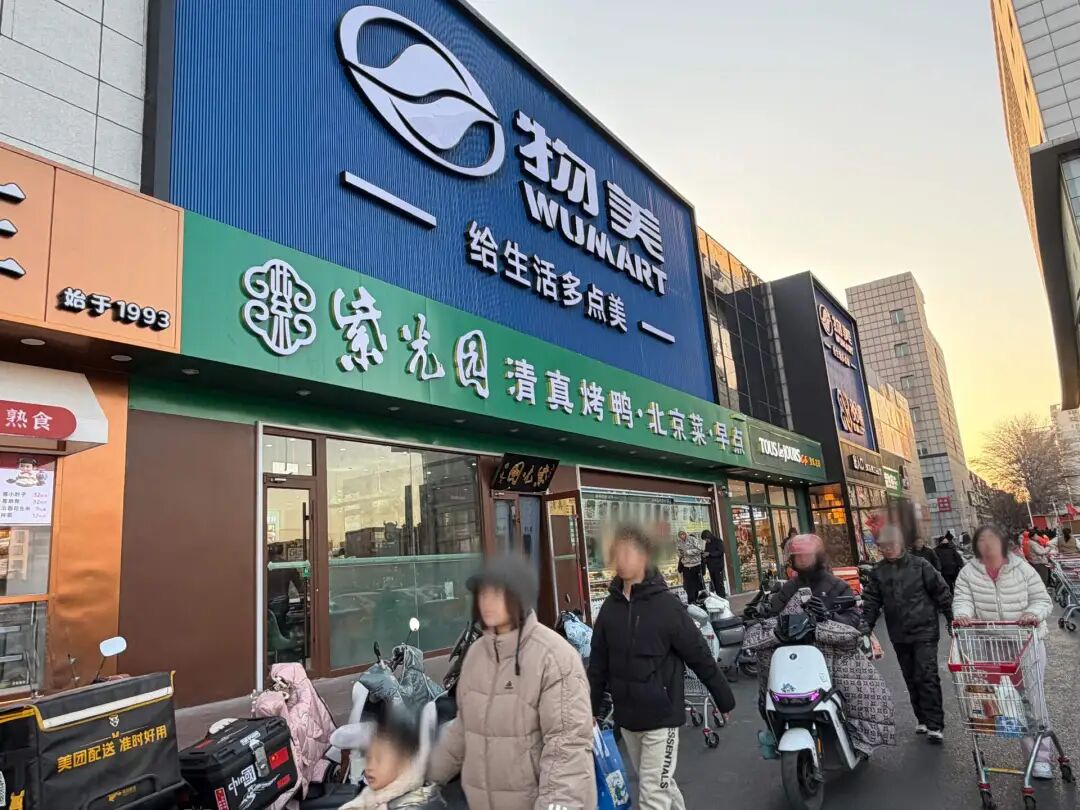
Core Insights - The article discusses the transformation of supermarkets like Wumart and Yonghui into lifestyle centers by integrating various chain restaurants, enhancing customer experience and attracting a younger demographic [6][10][17] Group 1: Supermarket Transformation - More than 20 chain restaurants have entered Wumart and Yonghui supermarkets after their transformation, creating a vibrant dining environment [1][6] - The new restaurant offerings include a diverse range of cuisines such as Chinese fast food, Western fast food, hot pot, and baked goods, with a high proportion of chain brands [3][5] - The transformation is not merely cosmetic; it aims to reposition traditional supermarkets as community lifestyle hubs where dining plays a crucial role [6][10] Group 2: Community Engagement - The integration of supermarkets and restaurants represents a strategic competition for community consumer bases, allowing both sectors to leverage each other's strengths [8][9] - Community consumers now seek a one-stop shopping experience that combines purchasing, dining, and leisure activities [8][10] - Restaurants benefit from the supermarkets' established customer flow, allowing for efficient expansion with lower operational costs [10][11] Group 3: Impact on Consumer Behavior - The introduction of dining options has attracted a younger customer base, shifting the traditional perception of supermarkets as primarily catering to older demographics [14][17] - The redesign of supermarket spaces has led to a reduction in retail area, with the freed-up space being repurposed for dining, enhancing customer engagement and sales [14][17] - Data from McKinsey indicates that integrating dining services can increase supermarket foot traffic by 15% to 20% and extend customer dwell time by 30% [14] Group 4: Evolution of Retail and Dining - The relationship between supermarkets and restaurants has evolved over decades, transitioning from a supportive role to a core component of consumer attraction [17] - The current trend reflects a response to challenges faced by both sectors, including competition from e-commerce and rising customer acquisition costs in the restaurant industry [17][18] - The collaboration between supermarkets and restaurants aims to create a more comprehensive consumer experience, transforming shopping spaces into lifestyle destinations [17][18]