
泸州老窖

Search documents
16只白酒股下跌 贵州茅台1418.22元/股收盘
Bei Jing Shang Bao· 2025-12-08 09:43
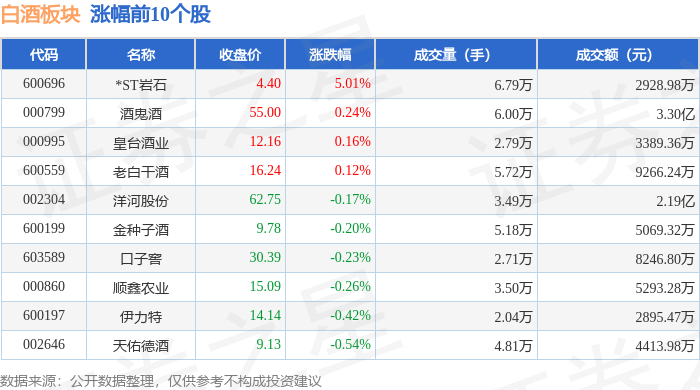
从个股来看,贵州茅台收盘价达1418.22元/股,下跌0.82%;五粮液收盘价达113.27元/股,下跌1.47%; 山西汾酒收盘价达180.15元/股,下跌1.04%;泸州老窖收盘价达125.38元/股,下跌2.31%;洋河股份收 盘价达62.75元/股,下跌0.18%。 北京商报讯(记者 刘一博 冯若男)12月8日尾盘,沪指3924.08点上涨0.54%。白酒板块2226.32点收盘 下跌0.33%,其中16只白酒股下跌,泸州老窖2.31%领跌白酒股。 中信证券预测,2026年一季度或者三季度有望出现白酒板块动销、价格、预期的企稳回升,2026年二季 度有望出现上市公司报表业绩的企稳回升。目前白酒板块市盈率(TTM)约为20倍,处于中长期的底 部区间,已反映较多中长期的悲观预期。此外,2024年以来白酒头部企业股东回报稳步提升,龙头公司 分红率普遍在65%以上,不断增厚投资安全边际。 ...





白酒板块12月8日跌1%,泸州老窖领跌,主力资金净流出17.88亿元
Zheng Xing Xing Ye Ri Bao· 2025-12-08 09:04
Core Insights - The liquor sector experienced a decline of 1.0% on December 8, with Luzhou Laojiao leading the drop [1][2] - The Shanghai Composite Index closed at 3924.08, up 0.54%, while the Shenzhen Component Index closed at 13329.99, up 1.39% [1] Liquor Sector Performance - Luzhou Laojiao's stock price fell by 2.31% to 125.38, with a trading volume of 117,400 shares and a transaction value of 1.482 billion yuan [2] - Wuliangye and Gujing Gongjiu also saw declines of 1.47% and 1.35%, respectively, with transaction values of 3.157 billion yuan and 279 million yuan [2] - The overall net outflow of main funds from the liquor sector was 1.788 billion yuan, while retail investors saw a net inflow of 926 million yuan [2][3] Fund Flow Analysis - Main funds showed a negative net inflow for several companies, including ST Yanshi and Jinhui Liquor, with net outflows of 1.29 million yuan and 3.21 million yuan, respectively [3] - Retail investors contributed positively to the net inflow for companies like Yilite and Tianyoude Liquor, with net inflows of 3.97 million yuan and 3.42 million yuan, respectively [3] - The overall trend indicates a shift in investor sentiment, with retail investors more active in the market compared to institutional investors [2][3]


谏策观酒|从量的退坡到质的重构·2026中国白酒行业价值回归的逻辑
Sou Hu Cai Jing· 2025-12-08 06:24
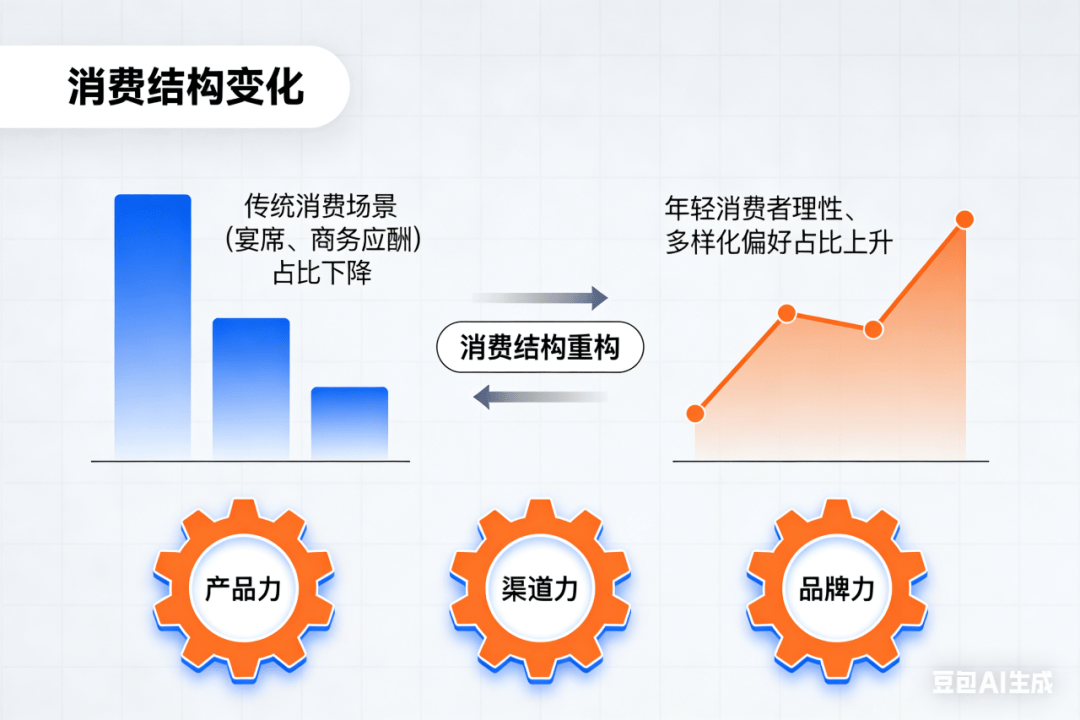
Core Insights - The Chinese liquor industry is entering a significant structural adjustment phase by 2025, with production and overall sales under pressure, while leading companies show relative resilience in revenue and profit [1][2][4] Group 1: Current Industry Status - In 2024, large-scale liquor enterprises are expected to produce approximately 4.145 million kiloliters, a slight decrease of about 1.8% year-on-year, while industry sales revenue is projected to reach approximately 796.38 billion yuan, a year-on-year increase of about 5.3% [1] - The first quarter of 2025 shows a further decline in production, with an estimated output of 1.032 million kiloliters, down about 7.2% year-on-year, indicating a potential eighth consecutive year of production decline [5] - The industry faces challenges such as high inventory levels and price inversion issues, with average inventory turnover days nearing 900 days, leading to declining operating profits for over half of the surveyed companies [8] Group 2: Changes in Consumer Behavior - Traditional consumption scenarios like banquets and business gatherings are shrinking, with consumers becoming more rational and favoring younger and diverse preferences, making volume expansion increasingly difficult [2][6] - The demand for traditional mid-to-high-end products is decreasing, while mid-to-low-end products and new categories (e.g., low-alcohol, flavored, easy-to-drink) are becoming the main sales drivers [6][7] Group 3: Industry Trends - The concentration of the industry is increasing, with the top six companies (CR6) accounting for 86% of total industry profits, up from about 55% in 2014, indicating a significant shift towards a more concentrated market [9] - High-end liquor continues to attract premium pricing due to demand from affluent consumers, while mid-to-low-end products focus on cost-effectiveness and adaptability to consumption scenarios [10] - Consumption scenarios are shifting from traditional settings to more personalized and fragmented experiences, emphasizing social media and community engagement [11] Group 4: Strategic Recommendations for Companies - Leading companies should consolidate their high-end product lines, optimize product and channel structures, and manage inventory effectively to prevent brand devaluation [14][15] - Regional and smaller enterprises should focus on local market penetration, product innovation tailored to local tastes, and diversify their marketing channels to connect directly with consumers [17][19] - Distributors need to transition from traditional wholesale models to service-oriented roles, emphasizing collaboration with manufacturers to share inventory pressures and enhance consumer engagement [20][21] Group 5: Future Outlook - By 2026, the industry is expected to continue its trend towards increased concentration, with high-end and super high-end products maintaining their market positions while mid-to-low-end products adapt to new consumer scenarios [32][33] - The industry is likely to see accelerated capital consolidation and resource integration, with mergers and acquisitions becoming a common strategy to enhance competitiveness and optimize supply chains [32][33]
食品饮料ETF现大单买入!市场聚焦扩内需政策进一步支持的空间
Mei Ri Jing Ji Xin Wen· 2025-12-08 06:01
12月8日,A股在3900点上方延续反弹,科技成长风格涨幅领先,仅食品饮料、石油石化、煤炭、公用 事业等少数顺周期板块飘绿,贵州茅台在1400元附近获得支撑。 但资金面上看,食品饮料ETF(515170.SH)持续3日净流入,近20日更是累计净流入超2亿元。12月8日 盘中调整之际,再现大单买入。 近两年以来,内需疲软持续制约大消费板块表现,尤其是食品饮料处于"低预期、低持仓、低估值"状 态,悲观预期得到较充分反映,市场聚焦扩内需政策进一步支持的空间。 12月8日午后最新消息,中共中央政治局召开会议指出,要坚持内需主导,建设强大国内市场。 此前, 11月28日,国家发改委郑栅洁主任在人民日报发表署名文章《坚持扩大内需这个战略基点》, 阐述"十五五"时期扩内需思路,包括"立足当前,重点是优化环境、创新场景、减少限制......扩大优质消 费品和服务供给。取消消费领域不合理或'一刀切'限制措施......针对带薪休假'有假难休'的问题,完善落 实机制";"着眼长远,重点是切实增强居民消费能力,着力提高居民消费率。稳就业促增收是消费的前 提和基础,要采取有力措施,提高居民收入在国民收入分配中的比重、提高劳动报酬在初 ...
600元价格带,会不会成为攻防据点?
Sou Hu Cai Jing· 2025-12-08 05:55
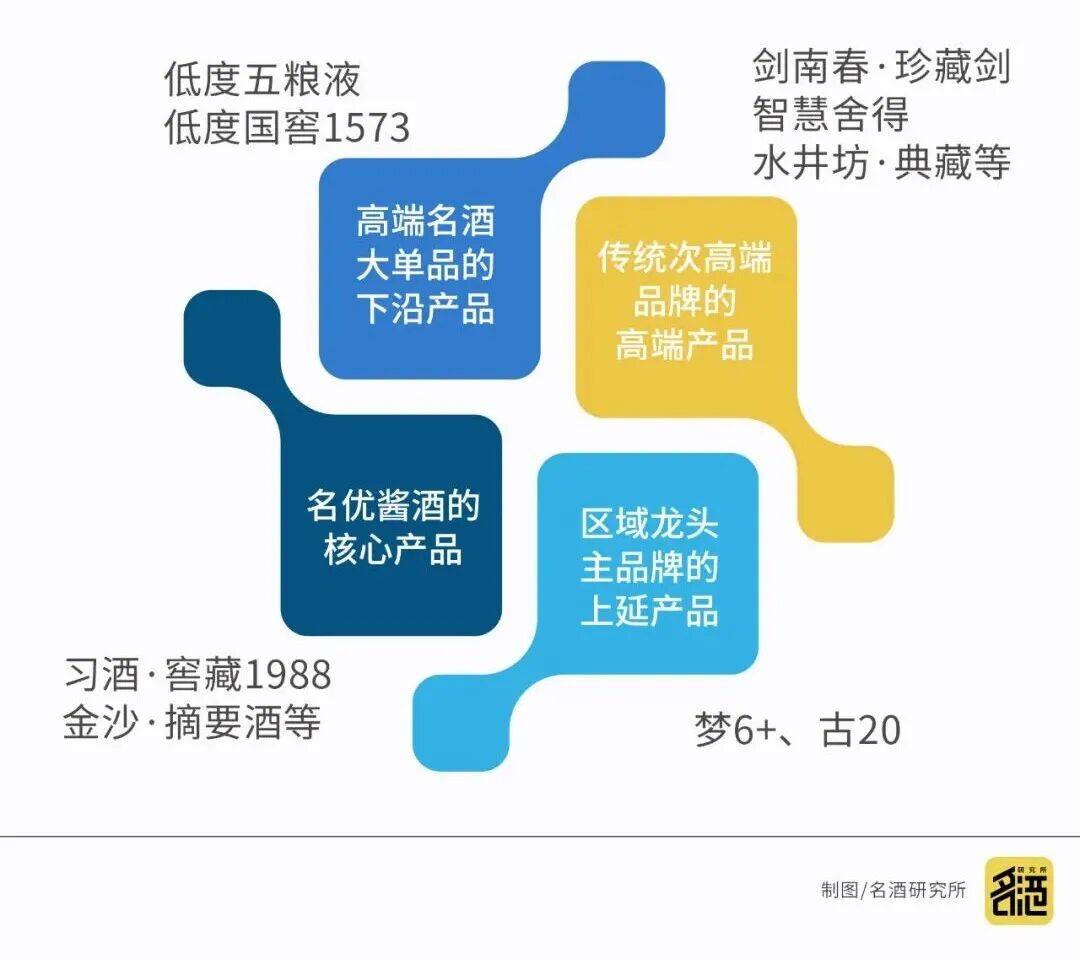
Core Viewpoint - The 600 yuan price segment in the high-end liquor market is experiencing complex dynamics due to both proactive expansion and passive competition, leading to increased uncertainty and variability in market conditions [1]. Group 1: Market Dynamics - The high-end market is under pressure, but the next high-end price range has not contracted as expected, instead forming a solid support at the 600 yuan level [1]. - Moutai 1935 has seen significant sales growth in September and October after increasing distribution, while lower-alcohol products like Guojiao 1573 and Wuliangye have capitalized on the trend towards lower alcohol consumption [1]. - The competition is intensifying among high-end liquor brands, with new entrants like Dazhen Zhenjiu leveraging innovative strategies to capture market share [1]. Group 2: Historical Context - The 600 yuan price segment began to take shape around 2019, when high-end liquor prices surged, breaking previous price ceilings and leading to significant market growth [2][3]. - The traditional next high-end price range of 300-400 yuan has been pushed upwards due to pricing strategies, reflecting a broader trend of market expansion [3]. Group 3: Competitive Landscape - Major liquor companies have targeted the 600 yuan segment, with brands like Shede and Gujing Gongjiu launching products aimed at this price point, achieving significant sales [4][5]. - By 2020, the 600 yuan price segment had attracted various strong brands, including low-alcohol versions of established products and new offerings from regional leaders, creating a market with over 100 billion yuan in scale [5]. Group 4: Current Market Position - The 600 yuan price segment is now seen as a critical battleground, with brands like Moutai 1935 and Guojiao 1573 demonstrating resilience against market pressures [11][14]. - The segment has shown remarkable stability and potential for growth, with a market size estimated at 500 billion yuan, making it a focal point for both offensive and defensive strategies in the industry [11][14]. Group 5: Future Outlook - The 600 yuan price segment is expected to remain a key area of focus for brands looking to navigate the current market challenges, with opportunities for both expansion and defense against high-end market pressures [15].
绿发信评发布白酒上市公司ESG主动评级结果:五粮液领跑,山西汾酒被拉开差距
Sou Hu Cai Jing· 2025-12-08 05:55
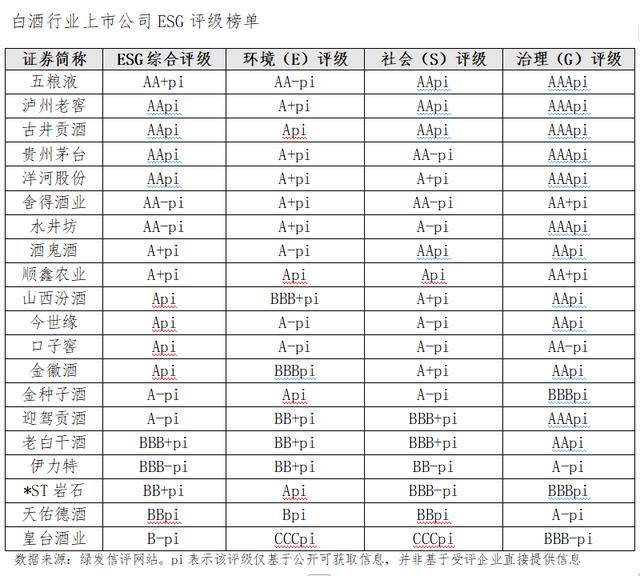
Core Viewpoint - The ESG ratings of leading Chinese liquor companies indicate a significant gap between top-tier firms and their mid-tier counterparts, highlighting the need for improved sustainability practices across the industry [1][6]. Environmental (E) Summary - The average ESG score for the top five liquor companies is 77.78, significantly higher than the industry average of 68.84, with Wuliangye receiving the highest rating of AA+pi [1]. - Environmental ratings for the top five companies range from AA-pi to BBB+pi, with Wuliangye leading in environmental disclosures and performance [1][2]. - Companies like Moutai and Luzhou Laojiao have established unique water resource management practices, while Shanxi Fenjiu lags behind in environmental performance metrics [2]. Social (S) Summary - The social ratings for the top five liquor companies are generally strong, ranging from AApi to A+pi, with notable performances in charity, product quality, and supply chain management [3]. - Wuliangye has implemented a comprehensive quality traceability system across its supply chain, while Luzhou Laojiao excels in employee development and training [3]. Governance (G) Summary - Four of the five leading companies received AAApi governance ratings, indicating robust ESG management frameworks and strong financial performance [4]. - Shanxi Fenjiu's governance rating is lower, necessitating improvements in its ESG management system and ethical standards [4]. - The overall performance of other liquor companies varies significantly, with some achieving ratings comparable to top firms, while others face challenges in governance and financial stability [4][5]. Industry Insights - The liquor industry is witnessing a widening gap in ESG performance between leading and mid-tier companies, necessitating a shift towards better sustainability practices [6]. - Key areas for improvement include enhancing environmental disclosures, setting clear sustainability goals, and strengthening governance frameworks to mitigate risks [6].
大消费行业周报:关注具有边际改善的细分赛道-20251208
Ping An Securities· 2025-12-08 05:34
Investment Rating - The industry investment rating is "stronger than the market," indicating that the industry index is expected to outperform the market by more than 5% over the next six months [29]. Core Insights - The report highlights the importance of focusing on segments with marginal improvements and stable growth within the consumer sector, particularly in the home appliance and beauty industries [3][4]. - The tourism sector is showing potential for recovery, with leading companies like Ctrip and Huazhu Hotels responding quickly to changing consumer demands [3]. - The beauty industry is experiencing steady growth, with a recommendation to monitor leading brands that adapt swiftly to market dynamics [3]. - The liquor industry is facing challenges, with a notable decline in net profits for many companies in Q3 2025 compared to Q2 2025, but leading firms are expected to gain market share [4][20]. - The snack segment is showing a divergence in performance, with certain products like konjac continuing to thrive, while dairy companies are entering a recovery phase [4][25]. Summary by Sections Home Appliances - The home appliance sector is experiencing a downturn, with air conditioning production down 27.9% year-on-year in October 2025, and sales down 20.1% [27]. - Central air conditioning sales reached 11.2 billion yuan in October 2025, facing downward pressure [27]. - Refrigerator production decreased by 9.8% year-on-year, while washing machine production saw a slight decline of 0.2% [27]. Social Services - The report emphasizes the need to focus on leading companies that can adapt to changing consumer demands in the social services sector, particularly in tourism and beauty [3][4]. Food and Beverage - Alcohol - The report notes a significant decline in net profits for many liquor companies in Q3 2025, with a focus on high-end and mid-range liquor brands expected to perform better [4][20]. - The average price of pork in the wholesale market increased by 0.2% to 17.68 yuan per kilogram as of December 5, 2025 [25]. Food and Beverage - General - The snack segment is experiencing a mixed performance, with konjac products showing strong growth potential [4][25]. - Dairy companies are expected to enter a recovery phase as supply and demand dynamics improve [4][25]. Cultural Communication - The report suggests that media companies should focus on segments related to spiritual needs and consumer sentiment to capture opportunities [4][17].
跌破1499元,茅台都卖不动了
首席商业评论· 2025-12-08 05:01
Core Viewpoint - The article discusses the significant decline of the Moutai brand and the broader challenges facing the Chinese liquor industry, highlighting a structural transformation driven by changing consumer preferences and economic pressures [5][14]. Group 1: Moutai's Price Decline - Moutai's price has plummeted from over 2000 yuan to below 1700 yuan, with a record low of 1640 yuan per bottle reported in November [5][6]. - The decline in Moutai's price has triggered a ripple effect across the industry, leading to negative growth for major brands like Wuliangye and Luzhou Laojiao, with 18 A-share liquor companies reporting collective performance declines [5][8]. Group 2: Dealer Challenges - Dealers are facing severe financial pressure, with many halting purchases due to price volatility and losses on inventory [6][8]. - The bundling purchase requirement for Moutai forces dealers to buy less popular products, exacerbating their financial strain as these products often sell at a loss [6][7]. Group 3: Inventory and Cash Flow Issues - The liquor industry is experiencing a significant increase in inventory, with stock levels rising by 63% since 2021, leading to a cash flow crisis for many dealers [10][12]. - The average inventory turnover period has extended to 1424 days, indicating a severe slowdown in sales and a growing backlog of unsold products [12]. Group 4: Changing Consumer Preferences - The younger generation is moving away from traditional liquor consumption, favoring low-alcohol beverages and cocktails, which is reshaping market dynamics [14][15]. - The shift in consumer behavior is compounded by a decline in demand for high-end liquor during traditional festive seasons, with a reported 20% to 30% drop in overall demand [10][14]. Group 5: Industry Response and Future Outlook - Liquor companies are attempting to innovate by introducing lower-alcohol products and diversifying into cocktails to attract younger consumers [15][16]. - However, the effectiveness of these strategies remains uncertain, as the industry grapples with overcapacity and a potential long-term downturn [15][17].
中国消费品 - 酒类及饮料专家电话会:白酒批发价压力加大,茅台、汾酒寻求增长-China consumer staples_ Spirits & Beverage expert call_ more wholesale price pressure for spirits with MoutaiFen Wine pursuing growth
2025-12-08 02:30
Summary of the Investor Call on China Consumer Staples: Spirits & Beverage Industry Overview - The call focused on the Spirits & Beverage industry, particularly in the Hunan region, discussing growth targets and pricing pressures for major brands including Moutai, Wuliangye, Laojiao, and Fen Wine [1][2]. Key Points 1. Wholesale Price Pressure - The wholesale price for premium spirits is under pressure, with Feitian's price expected to approach Rmb1,499 or lower during the non-peak season. This may decline further during the Chinese New Year (CNY) period, potentially stimulating demand and reducing channel inventory pressure [1]. - Non-standard Moutai faces significant inventory and profitability challenges, with inventory levels exceeding two months, contributing approximately 30% of volume and 50% of value share for Moutai Spirits in 2025 year-to-date [1]. 2. Prepayment Policies and Growth Targets - Moutai and Fen Wine are targeting a 5% growth for 2026, while Wuliangye and Fen Wine have set prepayment requirements of 50% and 40% respectively for the first quarter of 2026 [2]. - Effective prepayment prices are expected to decrease, particularly for Wuliangye, with prices projected to be Rmb940, Rmb870-880, and Rmb800 in sequential quarters of 2025 [2]. 3. Retail Sales Expectations - Retail sales expectations for spirits are weak heading into the 2026 CNY, with an anticipated overall decline of approximately 15% in spirits retail demand. Specific declines of 5-10% are expected for Feitian Moutai and Common Wuliangye [3]. - Local brands such as King's Luck and Gujing may perform relatively better compared to pan-national upper mid-end brands [3]. 4. Beverage Growth Targets - Nongfu Spring is targeting a 13% growth in 2026, expecting water volume to return to 2023 levels. Eastroc aims for over 25% growth in both Hunan and nationwide [8]. - Wahaha has not set specific contract targets for 2026, while Tingyi is still aiming for positive sales growth despite low single-digit growth or decline in noodle and beverage segments for the third quarter to November [8]. Additional Insights - The expert highlighted that channel inventory pressure is accumulating for Fen Wine due to prepayment requirements, with inventory levels at approximately three months and wholesale prices decreasing from Rmb360-380 to Rmb350 [2]. - The overall sentiment indicates a cautious outlook for the spirits market, with significant challenges in maintaining pricing power and managing inventory levels across major brands [1][3].
酒价内参12月8日价格发布 市场回调习酒君品逆势领涨
Xin Lang Cai Jing· 2025-12-08 01:34
Core Viewpoint - The Chinese liquor market, particularly for the top ten baijiu products, has experienced a price correction, with a total retail price of 9,160 yuan for a bundled sale of these products, reflecting a decrease of 14 yuan from the previous day, indicating a resumption of downward trends after a period of high-level consolidation [1]. Price Movements - The market has shown structural differentiation, with five products increasing in price and five decreasing. Notably, Xijiu Junpin saw a price increase of 6 yuan per bottle, while Wuliangye Pu Wubai and Shuijing Jianshan Chun both rose by 5 yuan per bottle [1][3]. - Among the declining products, Qinghua Lang experienced a significant drop of 13 yuan per bottle, leading the decline, suggesting potential profit-taking pressure. Additionally, Yanghe Dream Blue M6+ fell by 9 yuan per bottle, while both Jingpin Moutai and Feitian Moutai decreased by 8 yuan and 4 yuan per bottle, respectively [1][4]. Detailed Price Summary - The following table summarizes the current prices and changes for notable baijiu products: - Feitian Moutai 53°/500ml: 1,811 yuan, down 4 yuan [3] - Jingpin Moutai 53°/500ml: 2,312 yuan, down 8 yuan [3] - Wuliangye Pu Wubai 52°/500ml: 855 yuan, up 5 yuan [3] - Qinghua Fen 20 53°/500ml: 383 yuan, up 2 yuan [3] - Guojiao 1573: 879 yuan, down 1 yuan [3] - Yanghe Dream Blue M6+ 52°/550ml: 565 yuan, down 9 yuan [4] - Gujing Gong 20 52°/500ml: 514 yuan, up 3 yuan [4] - Xijiu Junpin 53°/500ml: 666 yuan, up 6 yuan [4] - Qinghua Lang 53°/500ml: 766 yuan, down 13 yuan [4] - Shuijing Jianshan Chun 52°/500ml: 409 yuan, up 5 yuan [4]
