奇瑞汽车

Search documents
广汽IPD元年:一场从昊铂开始的革命与救赎
2 1 Shi Ji Jing Ji Bao Dao· 2025-10-14 14:28
Core Viewpoint - GAC Group is facing significant challenges, with a notable decline in sales and a historic net loss, prompting a shift to a "wartime state" and a focus on three major battles for the future [2][4]. Sales Performance - GAC's cumulative sales from January to September 2025 reached 1.1837 million units, representing a year-on-year decline of 11.34% [2]. - The mid-year report for 2025 indicated a net loss of 2.538 billion yuan, marking the first half-year loss for GAC in nearly a decade [2]. Brand Development - GAC's high-end new energy brand, Aohai, has struggled with sales, selling only 2,095 units in September, compared to 19,600 units for a competing model from Xiaomi [2]. - Aohai was established as a standalone brand in January 2025, aiming to compete in the high-end market alongside GAC's other brands, Aion and Trumpchi [6][15]. Product Strategy - Aohai HL, the first model under the new strategy, features the "Xingyuan Range Extender Platform" and a new design language called "Shanhai Architecture" [4]. - The company is undergoing a significant transformation, with the establishment of a reform committee and the introduction of the Integrated Product Development (IPD) process [4][28]. Technological Innovation - GAC is focusing on developing range extender technology, with the Xingyuan Range Extender Technology being a key innovation [16][20]. - The new technology aims to improve energy efficiency, achieving an oil-electric conversion rate of 3.73 kWh/L, surpassing the industry average [25]. Market Positioning - Aohai is attempting to redefine its brand image and market positioning, moving away from its previous association with Aion to establish a distinct identity focused on "technology, luxury, and high quality" [14][33]. - The company is adopting a user-centric approach to product development, utilizing insights from Huawei's IPD methodology to better understand consumer needs [28][29]. Competitive Landscape - The high-end electric vehicle market is becoming increasingly competitive, with GAC's Aohai facing challenges from new entrants that have established strong brand identities [10][14]. - Aohai's initial models have not performed well in the market, highlighting the difficulties traditional automakers face in transitioning to high-end segments [9][11]. Future Outlook - GAC's leadership has set ambitious goals for the company's transformation, aiming for a significant increase in the share of self-owned brands in total sales by 2027 [43]. - The success of Aohai in proving its brand value through sales will be critical for GAC's overall reform efforts and future viability [44].


乘联分会:9月份国内狭义乘用车市场零售销量达224.4万辆 同比增长6.4%
智通财经网· 2025-10-14 09:12
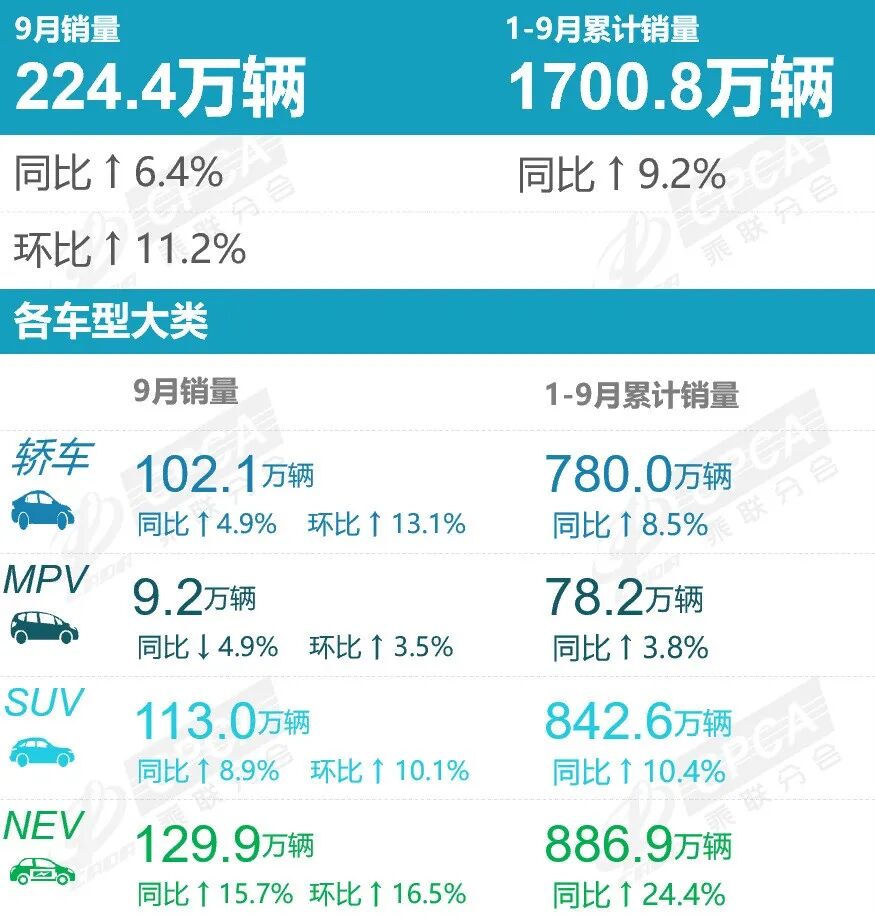
Core Insights - In September 2025, the retail sales of narrow passenger vehicles in China reached 2.244 million units, marking a year-on-year increase of 6.4% and a month-on-month increase of 11.2% [1] - Cumulatively, from January to September 2025, the total sales reached 17.008 million units, reflecting a year-on-year growth of 9.2% [1] - The automotive market is experiencing strong growth ahead of year-end policy adjustments, with a shift towards stable pricing and reduced promotions [2] Wholesale Sales Rankings (September 2025) - BYD Auto led the wholesale sales with 393,060 units, a month-on-month increase of 5.8% but a year-on-year decrease of 5.9%, capturing a market share of 14.1% [3] - Geely Auto and Chery Auto followed with 273,125 and 269,070 units respectively, showing significant year-on-year growth of 35.2% and 13.5% [3] - The top ten manufacturers collectively reflect a diverse performance, with some experiencing declines while others show robust growth [3] Retail Sales Rankings (September 2025) - BYD Auto also topped the retail sales with 347,353 units, a month-on-month increase of 12.0% but a year-on-year decrease of 10.2%, holding a market share of 15.5% [5] - Geely Auto and Volkswagen ranked second and third with 232,460 and 138,655 units respectively, with Geely showing a year-on-year increase of 42.8% [5] - The retail landscape indicates a competitive environment with varying performance among the top players [5] Wholesale Sales Rankings (January to September 2025) - For the first nine months of 2025, BYD Auto led with 3.218 million units sold, a year-on-year increase of 17.6% and a market share of 15.4% [4] - Geely Auto and Chery Auto followed with significant growth rates of 45.7% and 14.3% respectively [4] - The overall market dynamics suggest a strong recovery and growth trajectory for several manufacturers [4] Retail Sales Rankings (January to September 2025) - In the cumulative sales from January to September 2025, BYD Auto again led with 2.542 million units, reflecting a modest year-on-year growth of 3.1% [6] - Geely Auto showed remarkable growth of 59.4%, reaching 1.875 million units [6] - The retail performance indicates a competitive market with varying growth rates among manufacturers [6] New Energy Vehicle (NEV) Wholesale Sales Rankings (September 2025) - BYD Auto dominated the NEV wholesale market with 393,060 units, holding a market share of 26.3% despite a year-on-year decline of 5.9% [7] - Geely Auto and Tesla China followed with significant increases in sales, particularly Geely with an 81.3% year-on-year growth [7] - The NEV segment is showing strong growth potential, with several manufacturers capitalizing on the trend [7] New Energy Vehicle (NEV) Retail Sales Rankings (September 2025) - In retail sales for NEVs, BYD Auto again led with 347,353 units, capturing a market share of 26.7% [9] - Geely Auto and Changan Auto followed with 150,570 and 84,237 units respectively, indicating strong year-on-year growth [9] - The NEV retail market is becoming increasingly competitive, with several players showing significant growth [9] New Energy Vehicle (NEV) Wholesale Sales Rankings (January to September 2025) - From January to September 2025, BYD Auto led the NEV wholesale market with 3.218 million units, reflecting a year-on-year growth of 17.6% [8] - Geely Auto showed impressive growth of 113.9%, reaching 1.167 million units [8] - The NEV market is expanding rapidly, with several manufacturers gaining market share [8] New Energy Vehicle (NEV) Retail Sales Rankings (January to September 2025) - In the NEV retail segment, BYD Auto led with 2.542 million units sold, a year-on-year growth of 3.1% [10] - Geely Auto and Changan Auto also showed strong performance with year-on-year growth rates of 107.2% and 40.2% respectively [10] - The NEV retail market is characterized by significant growth opportunities for various manufacturers [10]



【月度排名】2025年9月厂商销量排名快报
乘联分会· 2025-10-14 08:43
Core Viewpoint - The domestic narrow passenger car market in China shows strong growth in September 2025, with retail sales reaching 2.244 million units, a year-on-year increase of 6.4% and a month-on-month increase of 11.2% [2][3]. Sales Data Summary - In September 2025, the cumulative sales for the first nine months reached 17.008 million units, reflecting a year-on-year growth of 9.2% [2][3]. - The breakdown of September sales by vehicle type includes: - SUVs: 474,000 units, year-on-year increase of 4.9%, month-on-month increase of 13.1% [3]. - MPVs: 92,000 units, year-on-year decrease of 4.9%, month-on-month increase of 3.5% [3]. - Sedans: 1.13 million units, year-on-year increase of 8.9%, month-on-month increase of 10.1% [3]. - New Energy Vehicles (NEVs): 1.299 million units, year-on-year increase of 15.7%, month-on-month increase of 16.5% [3]. Manufacturer Performance - The top manufacturers by retail sales in September 2025 are: - BYD: 393,060 units, month-on-month increase of 5.8%, year-on-year decrease of 5.9%, market share of 14.1% [6]. - Geely: 273,125 units, month-on-month increase of 9.2%, year-on-year increase of 35.2%, market share of 9.8% [6]. - Chery: 269,070 units, month-on-month increase of 16.3%, year-on-year increase of 13.5%, market share of 9.6% [6]. - Cumulative sales from January to September 2025 show: - BYD: 3.218 million units, year-on-year increase of 17.6%, market share of 15.4% [7]. - Geely: 2.170 million units, year-on-year increase of 45.7%, market share of 10.4% [7]. New Energy Vehicle (NEV) Insights - In September 2025, the NEV wholesale sales rankings are led by: - BYD: 393,060 units, month-on-month increase of 5.8%, year-on-year decrease of 5.9%, market share of 26.3% [10]. - Geely: 165,201 units, month-on-month increase of 12.1%, year-on-year increase of 81.3%, market share of 11.1% [10]. - Cumulative NEV sales from January to September 2025 show: - BYD: 3.218 million units, year-on-year increase of 17.6%, market share of 30.8% [11].




每25秒出口一辆车,每40秒卖出一辆新能源:奇瑞的“加速度”密码
2 1 Shi Ji Jing Ji Bao Dao· 2025-10-14 04:12
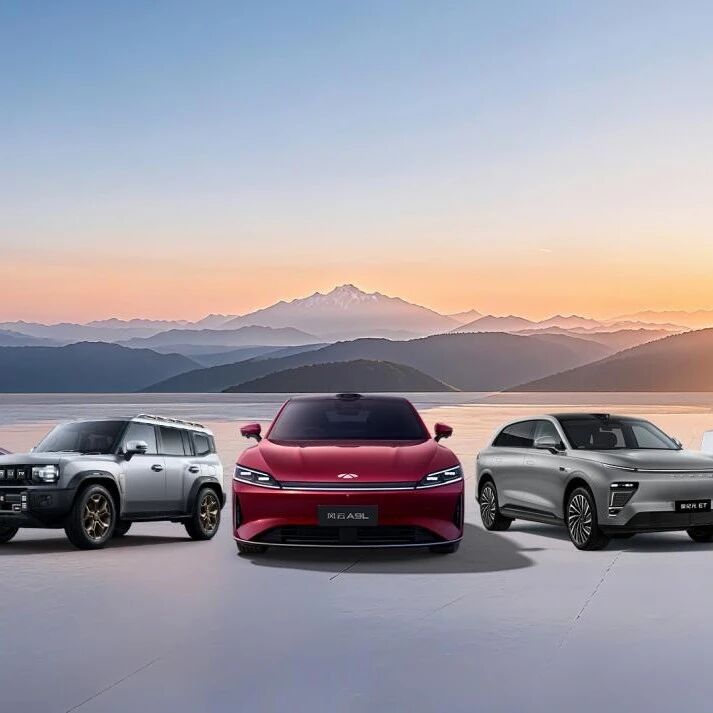
Core Insights - Chery Automobile successfully listed on the Hong Kong Stock Exchange, marking the largest IPO of a car company in the Hong Kong market in 2025, symbolizing a significant milestone in the development of China's automotive industry [1][2] Sales Performance - In the first three quarters, Chery Group sold over 2 million vehicles, achieving a record sales pace, with 587,500 units of new energy vehicles sold, representing a year-on-year growth of 77.1% [1][3] - In September alone, Chery's new energy vehicle sales reached 91,590 units, maintaining a strong year-on-year growth of 55.4% [3] Product Development - Chery plans to launch over 60 new models by 2025, including various versions of sedans and SUVs, with 35% of the IPO proceeds allocated for developing different vehicle versions [4][7] - The successful launch of popular models like the Fengyun A9L and Jietu Shanhai L7 PLUS has significantly contributed to sales growth [3][4] Technological Advancements - Chery has made significant strides in technology, with a focus on hybrid and electric vehicle innovations, including the Kunpeng Tianqing hybrid engine achieving over 48% thermal efficiency [5][6] - The company has initiated a global open-source hybrid technology plan, promoting collaborative innovation in the industry [6] Financial Performance - Chery's mid-year report for 2025 indicated a revenue of 141.6 billion yuan, a year-on-year increase of 26.3%, with the new energy sector's revenue soaring by 141.9% [7] - The net profit for the first quarter of 2025 was reported at 4.726 billion yuan [7] Global Expansion - Chery exported 936,000 vehicles from January to September 2025, marking a year-on-year growth of 12.9%, with significant sales in high-regulation markets like Europe [8] - The company has successfully entered new markets, including Hungary and Germany, and plans to expand further into Denmark, Croatia, and France [8] Brand Recognition - Chery ranked 233rd in the 2025 Fortune Global 500, showcasing rapid growth among automotive companies [9] - The company has over 17.72 million global users, with more than 5.43 million overseas users, indicating a deepening global network [9]
中国车企征战欧洲,奇瑞前三季度已经卖了15万台
华尔街见闻· 2025-10-14 03:39
Core Viewpoint - Chery Automobile, a leader in China's automotive export for 22 consecutive years, is embarking on a new journey in the international capital market with its recent IPO on the Hong Kong Stock Exchange, aiming to allocate 20% of the raised funds for overseas market expansion [1][21]. Group 1: Globalization Strategy - Chery has achieved a significant milestone with 5.22 million vehicles exported in 2024, maintaining its position as the world's largest automotive exporter [3]. - The OMODA and JAECOO brands have rapidly expanded to cover 44 global markets within two years, demonstrating Chery's effective market penetration strategy [3]. - In the European market, Chery has sold 145,000 vehicles from January to September this year, marking over a twofold increase, indicating both quantitative and qualitative growth [3][13]. Group 2: Historical Development Phases - Chery's export journey can be divided into three distinct phases: initial exploration focused on trade exports, a localization phase with the establishment of overseas production bases, and the current phase emphasizing high-end and new energy vehicles [5][7][25]. - The initial phase involved exporting economical models like the QQ to developing markets, while the later phase saw Chery establishing its first overseas production base in Brazil in 2014 [5][6][7]. Group 3: Brand Positioning and Market Entry - Chery's strategy has evolved from product export to brand output, reflecting a broader shift in the Chinese automotive industry from scale-oriented to value-oriented development [4][11]. - The European market is viewed as a critical testing ground for Chery's brand elevation strategy, with a focus on high-end and new energy vehicles [9][12][21]. Group 4: Financial Performance and Future Outlook - Chery's overseas revenue is projected to reach 100.9 billion yuan in 2024, accounting for 37.4% of total revenue, highlighting the importance of international markets for the company's financial stability [22]. - The company has established eight global R&D centers to enhance its technological capabilities and adapt to local market demands, supporting its global strategy [23][24]. - Chery aims to position itself among the top ten global automotive brands, leveraging its advanced R&D and localized production strategies [24][26].
瞭望|加速固态电池产业化
Xin Hua She· 2025-10-14 02:23
Core Viewpoint - The competition between semi-solid and all-solid-state batteries represents a choice of industrial priorities, with semi-solid batteries being more pragmatic for the current Chinese market, while all-solid-state batteries focus on future performance and align with the technological breakthrough strategies of Japanese and Korean battery manufacturers [1][5]. Industry Overview - Solid-state batteries are considered the core technology direction for the next generation of lithium batteries, offering greater energy density, significantly improved range, enhanced safety, and better adaptability in extreme environments, making them suitable for applications in electric vehicles, low-altitude economy, and consumer electronics [2]. Challenges in Commercialization - The large-scale application of solid-state batteries faces several challenges, including material technology bottlenecks, engineering mass production issues, and high costs. The industrialization of solid-state batteries requires multi-dimensional collaboration, including policy support, innovation in materials and processes, and expansion of application scenarios to drive down costs and achieve commercialization [3][11]. Technical Routes - The mainstream solid-state electrolyte materials include sulfides, halides, oxides, and polymer electrolytes, each with its advantages and disadvantages. The current trend shows that all-solid-state batteries primarily use sulfide and halide composite electrolytes, while semi-solid batteries often utilize oxide and polymer composite electrolytes, which are more cost-effective and easier to industrialize [4][5]. Manufacturing Difficulties - The manufacturing of all-solid-state batteries is complex, requiring advanced processes such as dry electrode technology and precise stacking techniques. The production process is sensitive to environmental conditions, necessitating high automation and stringent control measures to ensure quality and efficiency [10][11]. Policy and Financial Support - The Chinese government is actively promoting the development of solid-state batteries, with significant funding allocated for research projects aimed at achieving commercial viability by 2027. This includes support for both semi-solid and all-solid-state battery technologies, with a focus on achieving price parity and expanding market penetration [13][14]. Industry Collaboration - There is a need for enhanced communication and cooperation among upstream raw material suppliers, midstream battery manufacturers, and downstream customers to jointly develop suitable battery products for various application scenarios, thereby fostering the growth of the solid-state battery industry [16].
瞭望 | 加速固态电池产业化
Xin Hua She· 2025-10-14 02:21
Core Viewpoint - The competition between semi-solid and all-solid batteries represents a choice of industrial priorities, with semi-solid batteries being more pragmatic for the current Chinese market, while all-solid batteries focus on future performance and align with the technological breakthrough strategies of Japanese and Korean battery manufacturers [1][4]. Group 1: Current Challenges in Solid-State Battery Commercialization - Large-scale commercialization of solid-state batteries faces several challenges, including high interface resistance, expensive costs, and technical bottlenecks in materials and engineering [1][5]. - The solid-state battery industry requires a dual approach of "technical breakthroughs + industrial ecosystem strength" to convert laboratory advantages into market influence [1][12]. Group 2: Technological Routes and Material Challenges - Mainstream solid electrolyte materials include sulfides, halides, oxides, and polymer electrolytes, each with distinct advantages and disadvantages, and the industry is still exploring the most suitable production technology [3]. - Sulfide electrolytes are the mainstream technology for all-solid batteries due to their high room temperature ionic conductivity, but they face challenges such as poor chemical stability and high costs [6][9]. Group 3: Manufacturing and Production Issues - The manufacturing complexity of all-solid batteries is significantly higher, requiring advanced processes such as dry electrode manufacturing and precise stacking techniques [8][9]. - The solid-state battery supply chain is still developing, facing limitations in production scale and procurement channels for key raw materials like lithium sulfide [9][11]. Group 4: Policy and Market Support - The Chinese government is actively promoting solid-state battery development, with a planned investment of 6 billion yuan to support six battery manufacturers and automakers in R&D projects [11]. - The acceleration of semi-solid battery commercialization is evident, with significant projects like the 2.8 GWh independent energy storage project by Nandu Power [11][12]. Group 5: Future Directions and Strategic Focus - The industry must balance short-term commercialization of semi-solid batteries with long-term goals for all-solid batteries, ensuring resource allocation aligns with both immediate and future objectives [4][12]. - Expanding application scenarios, such as in low-altitude economies and humanoid robots, is crucial for driving down costs and achieving large-scale implementation of solid-state batteries [13].
汽车股集体反弹 小鹏、比亚迪涨约4% 乘联分会将向上修正2025年车市增长预测
Ge Long Hui· 2025-10-14 02:12
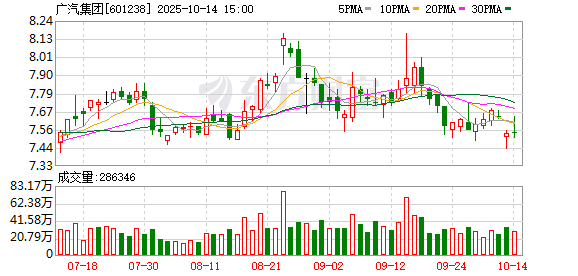
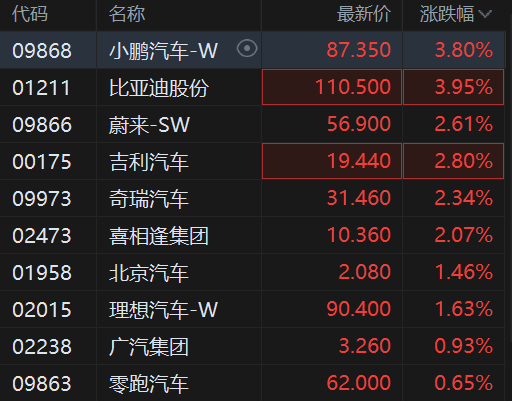
Core Viewpoint - The Hong Kong automotive stocks experienced a collective rebound, with significant gains observed in companies such as Xpeng Motors and BYD, driven by positive market expectations for the fourth quarter of the year [1] Group 1: Market Performance - Xpeng Motors and BYD saw price increases of approximately 4%, while NIO and Geely Motors rose nearly 3% [1] - Other companies like Chery Automobile, Beijing Automotive, GAC Group, Leap Motor, and Li Auto also experienced gains, albeit at lower percentages [1] Group 2: Industry Outlook - According to Cui Dongshu, Secretary-General of the China Passenger Car Association, the automotive market is expected to maintain stable growth in Q4 due to policy guidance and a strong growth foundation [1] - The adjustment of the new energy vehicle purchase tax exemption policy in 2026 is anticipated to stimulate consumer purchases before the end of the year, alongside the peak sales seasons of "Silver September and Golden October" [1] - The combination of high export growth and ongoing policy measures, such as trade-in programs and rural subsidies, is likely to lead to an upward revision of the annual market forecast [1]

港股异动丨汽车股集体反弹 小鹏、比亚迪涨约4% 乘联分会将向上修正2025年车市增长预测
Ge Long Hui· 2025-10-14 02:08
Core Viewpoint - The Hong Kong automotive stocks experienced a collective rebound, with significant gains in companies like Xpeng Motors and BYD, driven by positive market expectations for the fourth quarter of the year [1] Group 1: Market Performance - Xpeng Motors (09868) and BYD (01211) both saw an increase of approximately 4%, while NIO (09866) and Geely (00175) rose nearly 3% [1] - Other companies such as Chery, Beijing Automotive, GAC Group, Leap Motor, and Li Auto also reported gains, indicating a broad recovery in the sector [1] Group 2: Industry Outlook - Cui Dongshu, Secretary-General of the Passenger Car Association, indicated that the car market is expected to maintain stable growth in Q4, supported by policy guidance and a high growth foundation [1] - The adjustment of the new energy vehicle purchase tax exemption policy in 2026 is anticipated to stimulate consumer purchases before the end of the year, alongside the traditional peak sales seasons [1] - The association has already raised its annual market expectations in August and plans to further adjust forecasts after discussions in late October, with an upward revision expected for the 2025 growth forecast [1] Group 3: Company Developments - Xpeng Motors delivered a record 41,581 smart electric vehicles in September, marking a 95% year-on-year increase [2] - NIO reported a delivery of 34,749 vehicles in September, reflecting a 64.1% year-on-year growth [2] - Geely received approval to register a debt financing tool with a total limit not exceeding 10 billion yuan, and launched the Zeekr 9X, redefining the domestic luxury SUV segment [2]
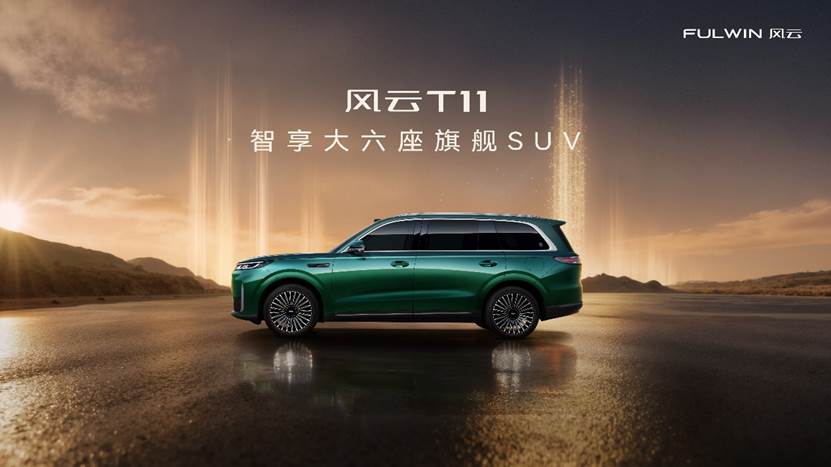
19.99万元起,风云T11正式预售!
Qi Lu Wan Bao· 2025-10-13 14:13
Core Viewpoint - The Fengyun T11, a flagship SUV from the Fengyun brand, has been launched with a focus on redefining luxury family travel experiences, emphasizing safety, spaciousness, and advanced technology [1][22]. Pricing and Pre-sale Offers - The Fengyun T11 is available for pre-sale with four variants priced from 199,900 yuan to 264,900 yuan [3][20]. - Customers can enjoy a total value of 66,800 yuan in pre-sale benefits, including high-end audio systems, zero-gravity seats, and financial incentives [3][4][5]. Safety Features - The Fengyun T11 is equipped with 11 airbags and a robust body structure, ensuring comprehensive safety for all passengers [7][9]. - The vehicle features advanced safety technologies such as AEB emergency braking and a complete safety system that includes over 20 active driving assistance functions [9]. Space and Comfort - The SUV boasts dimensions of 5205mm in length, 1998mm in width, and 1800mm in height, with a wheelbase of 3120mm, providing ample space for passengers and cargo [10][12]. - The interior includes zero-gravity seats and a spacious layout designed for family comfort during travel [10][12]. Luxury and Technology - The Fengyun T11 integrates high-end features such as a 30-inch panoramic display and a 23-speaker audio system, creating a premium in-car experience [15][20]. - It offers advanced driving assistance with 27 sensing units and AI capabilities for enhanced navigation and parking [17][19]. Comprehensive Standard Features - The vehicle comes with 11 high-end features as standard, including a high-strength body, luxury audio systems, and advanced driving assistance technologies, establishing a new benchmark for entry-level luxury [20]. Market Positioning - The Fengyun T11 aims to cater to high-end family users in China, positioning itself as an ideal choice for those seeking a luxurious and safe family vehicle [22].