OPPO

Search documents
身家猛涨50亿,“中国巴菲特”豪捐1500万元股票
Sou Hu Cai Jing· 2025-11-04 14:10
Core Insights - Duan Yongping, known as "China's Buffett," donated 10,000 shares of Kweichow Moutai stock valued at 15 million yuan to Jiangxi Water Conservancy and Electric Power University [2][3] - The donation is part of Duan's long-standing commitment to educational philanthropy, having donated over 1 billion yuan to various universities over the past 20 years [2][5] - Kweichow Moutai has a history of consistent dividends, with an estimated dividend of 515,600 yuan from the donated shares based on last year's payout [2][5] Company and Industry Overview - Kweichow Moutai has distributed a total of 336.11 billion yuan in dividends to date, with a cash dividend of 64.67 billion yuan planned for 2024 and a payout ratio of 75% [4][5] - Despite a slight revenue growth of 6.32% to 130.90 billion yuan and a net profit increase of 6.25% to 64.63 billion yuan in the first three quarters, the company faces challenges in maintaining growth amid a declining market for high-end liquor [10] - The price of Moutai's flagship product has dropped significantly, from 2,220 yuan per bottle at the beginning of the year to 1,640 yuan, reflecting market pressures [10] - Moutai's management is actively seeking diversification strategies to alleviate performance pressures, including exploring new product lines in wine and health beverages [10][11]



民营经济助推中国西部产业结构向“新”而行
Xin Hua She· 2025-11-04 13:42
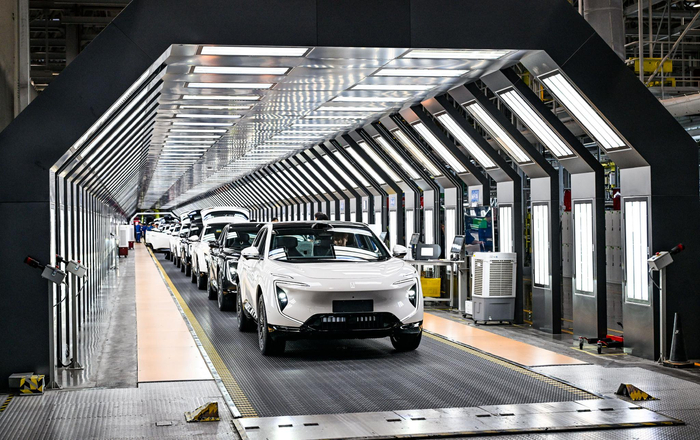
Group 1 - The core viewpoint of the articles highlights the significant role of the private economy in driving the industrial transformation towards innovation in Western China, particularly in Chongqing [2][4][5] - The rapid development of companies like Seres Group, which reported over 110 billion yuan in revenue and sold over 300,000 new energy vehicles in the first three quarters of the year, exemplifies this trend [2] - The private sector's contribution to the economy in Chongqing is notable, with the added value of the private economy increasing from 1.48 trillion yuan to 1.98 trillion yuan during the 14th Five-Year Plan period, and the number of private market entities rising from 2.901 million to 3.673 million [2] Group 2 - Companies in various sectors, such as Huafeng Group in chemical new materials, have achieved significant production milestones, including becoming the world's largest production base for certain chemicals [4] - The introduction of advanced information management systems in companies like OPPO has led to real-time data monitoring and increased production efficiency, exemplified by the ability to produce a folding phone every minute [4] - The private sector has contributed over 70% of China's technological innovation outcomes in 2024, with a significant portion of R&D expenditures coming from private enterprises in regions like Chongqing and Sichuan [5] Group 3 - The global Yushang Conference in Chongqing facilitated investment projects worth 56.7 billion yuan, focusing on high-tech fields such as smart connected vehicles and artificial intelligence [6] - Companies are committed to increasing investments in Chongqing, aiming to establish advanced production lines and create benchmark factories that emphasize smart and green manufacturing [6]

OPPO与网易终止合作,多款游戏停服
Cai Jing Wang· 2025-11-04 13:37
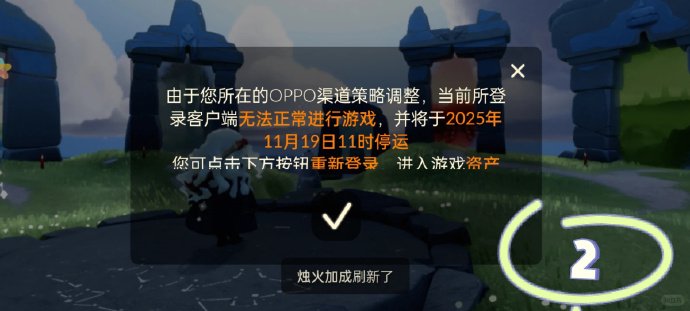
Core Viewpoint - OPPO has ceased cooperation with NetEase for multiple games on its channel, leading to the suspension of several popular titles, affecting many users [1] Group 1: Game Suspension Details - Multiple NetEase games have been suspended on OPPO's channel due to the end of cooperation, with varying suspension dates for each game [1] - OPPO customer service confirmed that there are currently no plans to restore the suspended games [1] Group 2: Historical Context - The trend of game suspensions began in November of the previous year, with titles like "Onmyoji: Yokai House" announcing the end of OPPO channel operations [1] - In 2025, several more games have followed suit, including major titles like "Dream of the Red Chamber" and "Rate the Land" which announced their exit from the OPPO platform in August and September respectively [1] - By October, additional popular games such as "Nirvana in Fire" and "Pro Evolution Soccer" also ceased operations on OPPO's channel [1]


多款网易游戏停运OPPO渠道服,OPPO客服:相关合作到期
Xin Lang Cai Jing· 2025-11-04 09:05
Core Viewpoint - OPPO has ceased cooperation with NetEase for several games, leading to multiple game shutdowns on the OPPO platform, with no current plans for restoration [1][2][4]. Group 1: Game Shutdowns - Numerous NetEase games have stopped operating on OPPO's platform, including popular titles like "Dream of Jianghu" and "Onmyoji: Yokai House" [2][4]. - The shutdowns began in November 2022 and continued into 2025, with several major games announcing their exit from the OPPO platform [4]. Group 2: Company Responses - OPPO customer service confirmed the cessation of certain games due to the end of cooperation with NetEase, but did not provide details on potential partnerships with other game developers [1]. - As of the latest updates, neither OPPO nor NetEase has issued a unified statement regarding the operational strategy changes [6]. Group 3: Industry Analysis - The high revenue-sharing model of traditional Android channels, which can reach up to 50%, has been a limiting factor for game developers' profit margins [6]. - As NetEase and other game developers grow, they are increasingly negotiating better terms with distribution channels to reduce reliance on traditional platforms [6]. Group 4: Financial Performance - NetEase reported a net income of 27.9 billion yuan for Q2 2025, a 9.4% year-on-year increase, but below market expectations [7]. - The net income from games and related services was 22.8 billion yuan, reflecting a 13.7% year-on-year growth [7]. - The net profit attributable to shareholders decreased to 8.6 billion yuan compared to 10.3 billion yuan in the previous quarter and 6.8 billion yuan in the same quarter last year [7].
十年深耕显示技术的突破与思考
Zhong Guo Neng Yuan Wang· 2025-11-04 08:00
Core Insights - The article highlights the importance of display technology in the competitive smartphone market, emphasizing the need for expertise in both foundational materials and the ability to scale cutting-edge technology into mass production [1] Group 1: Display Technology Challenges - The development of 8K/4K displays faced significant challenges, particularly in maintaining image quality across viewing angles, which was addressed through the implementation of multi-domain display technology [2] - Key issues in high-generation panel production included circuit breakage risks and manufacturing test damage, which were mitigated by introducing a metal protection layer and a special shorting bar structure, respectively [2] Group 2: Innovations in Smartphone Displays - A new display quality evaluation system was established, focusing on visual comfort rather than just color accuracy and brightness, which led to the development of a comprehensive eye protection solution that adjusts blue light and brightness dynamically [3] - This eye protection solution has been successfully applied in multiple flagship models, setting a new industry standard for eye comfort [3] Group 3: Future Trends in Display Technology - Future developments in display technology are expected to shift from hardware upgrades to intelligent collaboration, with AI playing a crucial role in optimizing image quality, display driving, and manufacturing processes [4] - Innovations such as foldable displays and MicroLED technology are anticipated to revolutionize form factors and energy efficiency, particularly for AR/VR and automotive displays [4] Group 4: Guidance for Young Engineers - Emphasis on maintaining a foundational understanding of the physics and materials involved in display technology is crucial for young engineers [5] - A systematic perspective is necessary, where engineers should understand how technology integrates into production, cost, and supply chains, highlighting the importance of cross-departmental communication and system design [5]

小米、OPPO入股,芯德半导体成立5年冲击港股IPO
Sou Hu Cai Jing· 2025-11-04 01:23
Core Viewpoint - Jiangsu Xinde Semiconductor Technology Co., Ltd. has submitted an IPO application to the Hong Kong Stock Exchange, aiming to leverage its advanced packaging technology in the semiconductor industry to support the development of AI and other innovations [2]. Company Overview - Xinde Semiconductor was established in September 2020 and specializes in semiconductor packaging and testing solutions, including custom packaging products and testing services [2]. - The company is recognized as one of the first in China to possess advanced packaging technology capabilities, which are crucial for innovation in the post-Moore's Law era [2]. Financial Performance - For the fiscal years ending June 30, 2022, 2023, 2024, and 2025, Xinde Semiconductor reported revenues of approximately RMB 269.4 million, RMB 509.1 million, RMB 827.4 million, and RMB 475.0 million, respectively [4]. - The company incurred losses of about RMB 360.3 million, RMB 358.9 million, RMB 376.6 million, and RMB 218.6 million for the same periods [4]. Funding and Shareholding - Over the past five years, Xinde Semiconductor has completed over RMB 2 billion in financing, attracting investments from notable institutions such as Xiaomi, OPPO, and Nanchuang Investment [5]. - Major shareholders include Zhang Guodong, Pan Mingdong, and Liu Yi, who collectively hold approximately 24.95% of the shares, making them the largest single shareholder [8]. - Xiaomi Changjiang holds 2.61% and OPPO's affiliated company Xunxing Investment holds 1.14% of the shares [9].
手机厂商鏖战非洲:传音前三季净利下降,小米等加速抢食市场
Nan Fang Du Shi Bao· 2025-11-03 14:59
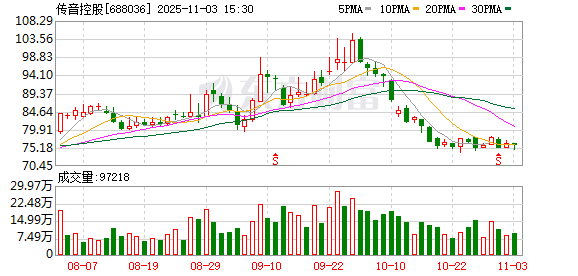
Core Insights - The report highlights a significant revenue growth for the company in Q3 2025, reaching 20.466 billion RMB, a year-on-year increase of 22.60%, but this growth did not translate into profit, with net profit declining by 11.06% to 0.935 billion RMB, indicating a "revenue growth without profit" situation [2][4] - Over the first three quarters of 2025, the company faced intensified profit pressure, with total revenue of 49.543 billion RMB, a slight decrease of 3.33%, and net profit down by 44.97% to 2.148 billion RMB, nearly halving [2][4] Revenue and Profit Analysis - The company's Q3 report reveals a stark contrast between revenue growth and profit decline, with net profit for the first three quarters significantly impacted by market competition and supply chain costs [4][5] - The decline in net profit is attributed to reduced operating income and gross profit, as competition in the African market intensifies with other Chinese smartphone manufacturers expanding their presence [4][5] Market Competition - The African market, previously a stronghold for the company, is now facing fierce competition from global smartphone giants, with Xiaomi making significant inroads, increasing its market share to 13.8% in the first half of 2025 [5][6] - Other brands like Honor, Samsung, OPPO, and vivo are also intensifying their efforts in the African market, further squeezing the company's market space [5][6] Cash Flow and R&D Investment - Despite the profit decline, the company reported a remarkable increase in operating cash flow, reaching 3.285 billion RMB, a year-on-year surge of 164.66%, attributed to reduced procurement payments [8][9] - The company has also increased its R&D investment to 2.139 billion RMB in the first three quarters, a growth of 17.26%, indicating a strategic focus on innovation and product upgrades during a challenging market environment [9][10]

手机厂商鏖战非洲:传音前三季净利下降 小米等加速抢食市场
Nan Fang Du Shi Bao· 2025-11-03 14:56
Core Insights - The core viewpoint of the article highlights the significant revenue growth of Transsion Holdings in Q3 2025, but this growth has not translated into profit, indicating a challenging market environment and increased competition in Africa [2][3]. Financial Performance - In Q3 2025, Transsion achieved a revenue of 20.466 billion RMB, marking a year-on-year increase of 22.60%. However, the net profit attributable to shareholders was 0.935 billion RMB, a decline of 11.06% [2]. - For the first three quarters of 2025, the total revenue was 49.543 billion RMB, a slight decrease of 3.33% year-on-year, while the net profit dropped significantly by 44.97% to 2.148 billion RMB [3][4]. - The net profit excluding non-recurring items was 1.731 billion RMB, reflecting a more severe decline of 46.71% [3]. Market Competition - The competitive landscape in Africa is intensifying, with other Chinese smartphone manufacturers aggressively entering the market, challenging Transsion's previously dominant position [4][6]. - Xiaomi has shown notable growth, ranking third in the African market with a market share increase of 2.6 percentage points to 13.8% in the first half of 2025 [4][5]. - Other brands like Honor, Samsung, OPPO, and Vivo are also expanding their presence, further squeezing Transsion's market share, particularly in the low-end and mid-range segments [4][5]. Cash Flow and R&D Investment - Despite the profit decline, Transsion reported a significant increase in operating cash flow, reaching 3.285 billion RMB, a year-on-year surge of 164.66% [7]. - The company attributed this cash flow improvement to a substantial reduction in payments for raw material purchases [7]. - R&D investment for the first three quarters of 2025 totaled 2.139 billion RMB, up 17.26% year-on-year, indicating a strategic focus on innovation despite profit pressures [8][9]. - In Q3 alone, R&D spending reached 0.777 billion RMB, reflecting a growth rate of 21.22% [9].
中国成唯一下滑市场!苹果再失守,谁蚕食了份额?
Xin Lang Ke Ji· 2025-11-03 11:17
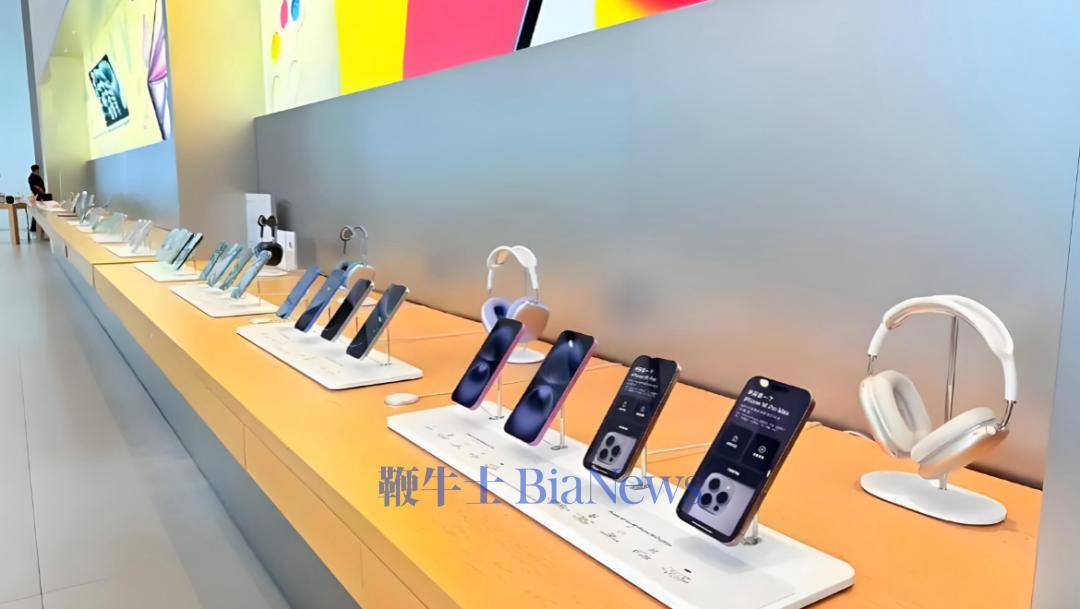
Core Insights - Apple's revenue in Greater China declined by 3.6% year-on-year in Q4 FY2025, making it the only market with a revenue drop globally [1][2][4] - CEO Tim Cook attributed the decline primarily to supply constraints affecting iPhone sales, which he noted were below actual demand [4][11] - Experts suggest that the revenue drop is due to both internal factors, such as limited product innovation and delayed product launches, and external pressures from local competitors like Huawei [5][6][11] Financial Performance - For Q4 FY2025, Apple's total net revenue was $102.47 billion, up 8% from $94.93 billion year-on-year, with net profit increasing by 86% to $27.47 billion [1][2] - Earnings per share rose to $1.85, exceeding Wall Street expectations and contributing to a post-earnings stock price increase of over 3% [1][2] Market Dynamics - The decline in Greater China revenue has been ongoing since Q3 FY2023, with the highest quarterly drop reaching 13% [2] - The competitive landscape in China's smartphone market has intensified, with local brands rapidly innovating in areas like foldable screens and fast charging, impacting Apple's market share [6][11] Product Challenges - The delayed launch of the iPhone Air, which only supports eSIM and faced regulatory hurdles, negatively impacted sales in Q4 FY2025 [7][10] - User feedback on the iPhone Air has been mixed, with concerns about its build quality and performance, leading to lower-than-expected demand [10] Competitive Landscape - Huawei's resurgence in the high-end market poses a significant threat to Apple's position, as it rebuilds brand loyalty and technological capabilities [11][12] - Other local brands like Xiaomi, OPPO, and vivo are also aggressively targeting Apple's high-end user base, emphasizing compatibility with Apple's ecosystem [12][14] Future Outlook - Despite current challenges, Apple maintains a strong brand influence and loyal customer base, with potential for recovery if it accelerates innovation and adapts pricing strategies [11][12] - The competitive dynamics in the high-end smartphone market are shifting, requiring Apple to respond proactively to maintain its market position [12][14]

“什么值得买”“11.11”开门红:品质消费持续领跑,兴趣赛道快速增长
Zhong Guo Zhi Liang Xin Wen Wang· 2025-11-03 05:23
Core Insights - The 2025 "11.11" shopping festival by "What Worth Buying" emphasizes a consumer trend driven by interests and AI technology, aiming to enhance user experience and satisfaction during the shopping event [1][12] Consumer Trends - The top five categories by GMV during the opening period were major appliances, mobile communications, kitchen appliances, home furniture, and household electricals, indicating a strong preference for larger items [3] - Fastest-growing categories with GMV over one million included pet daily necessities, gaming hardware, outdoor apparel, kitchen tools, and automotive maintenance, with year-on-year growth rates of 90.35%, 55.28%, 43.33%, 36.26%, and 36.24% respectively [3] Interest-Driven Consumption - Interest-driven consumption is becoming a new norm, with significant performance in categories like sports equipment, travel, and home renovation, reflecting a shift from traditional consumption patterns [3][5] - The platform's upgraded "Interest Square" features over a hundred dedicated interest scenarios, enhancing the consumer experience from interest content to interest-based purchases [5] High-Value Products - High-value products such as large-capacity appliances and premium electronics are leading the market, with brands like Midea and Xiaomi dominating sales in their respective categories [4][5] - The smartphone category is witnessing a trend towards high-end and smart devices, with the new iPhone 17 series capturing the top three GMV spots [5] Health and Wellness - Health-related products are experiencing significant growth, with functional health products and smart devices becoming essential for consumers, particularly among working professionals [10] - The trend of "active health management" is driving demand for health products that focus on precise interventions rather than basic protection [10] Travel and Outdoor Activities - Travel-related consumption is on the rise, with international travel gaining popularity, particularly to destinations like Europe and Japan [8] - Outdoor sports categories, including footwear and apparel, are also seeing substantial sales, driven by both professional and amateur consumers [7] Future Outlook - The company aims to deepen its understanding of consumer interests and enhance operational strategies using AI technology, focusing on creating a more interconnected shopping experience [12]