
OPPO

Search documents
2025年的“电子茅台”:累计涨价超300%,厂商们都赚疯了
Sou Hu Cai Jing· 2025-10-30 08:51
Core Insights - The storage chip market is expected to see a price increase of over 300% by 2025, surpassing the price increases of gold and AI graphics cards [1][3] - Major manufacturers like Samsung, SK Hynix, and Micron are experiencing significant revenue and profit growth due to rising storage chip prices, with projections indicating a further 50% increase in prices by 2026 [3][5] Market Dynamics - The surge in storage chip prices is primarily driven by increased demand from AI applications, leading to a supply-demand imbalance as manufacturers stockpile chips in anticipation of further price hikes [5][7] - The transition of manufacturers from DDR to HBM chips, along with the increased demand for SSDs in servers, has contributed to the price escalation in NAND and DRAM chips [5][7] Impact on Consumer Electronics - The rising costs of storage chips are putting pressure on consumer electronics manufacturers, leading to price increases for products such as smartphones and PCs, with companies like Xiaomi and Apple indicating that they will have to raise prices due to higher memory costs [7][9] - The increased costs associated with storage chips are expected to be passed on to consumers, impacting the overall pricing of electronic products [7] Opportunities for Chinese Manufacturers - Chinese companies like Yangtze Memory Technologies and ChangXin Memory Technologies are gaining market share in the NAND and DRAM sectors, with their global market share exceeding 10%, allowing them to benefit from the current price increases [9]


内存价格,失控狂飙
猿大侠· 2025-10-30 04:40
Core Viewpoint - The article discusses the impact of the "super cycle" in memory prices, particularly DRAM and NAND Flash, on the Chinese smartphone supply chain, highlighting significant cost pressures and potential delays in product delivery [1]. Group 1: Memory Price Trends - DRAM and NAND Flash prices are continuously rising, affecting the supply chain of Chinese smartphones [1]. - The delivery period for key memory types like LPDDR5X has extended to 26-39 weeks, with potential delays in order fulfillment until mid-2026 [1]. - Major memory suppliers, including Samsung, SK Hynix, and Micron, plan to increase prices further in Q4, with potential hikes of up to 30% [5]. Group 2: Impact on Smartphone Manufacturers - Media reports indicate that companies like Xiaomi are directly adjusting product pricing due to soaring memory costs, with the Redmi K90 series seeing price increases of 300 to 600 yuan compared to previous models [2][5]. - Xiaomi's founder, Lei Jun, acknowledged the "outrageous" rise in memory prices, which has forced the company to raise prices beyond its control [3]. - Other domestic brands, such as vivo and OPPO, have also raised prices for their models in response to increased memory costs [5]. Group 3: Financial Performance of MediaTek - MediaTek's financial performance shows a slight decline in gross margin and operating profit margin in Q4 2024, with expectations of profit pressure from rising memory and wafer foundry costs starting in Q4 2025 [2]. - The gross margin for MediaTek is projected to be 48.54% in Q4 2024, down from 48.82% in Q3 2024 [2].

一年赚6万,小天才批量制造未成年“大佬”
创业邦· 2025-10-30 03:34
Core Viewpoint - The article discusses the rise of the "Xiaotianzi" smartwatch among children, highlighting its role in creating a social hierarchy and commercial ecosystem among young users, leading to both opportunities and risks in the digital landscape [6][9][21]. Group 1: Market Dynamics - Xiaotianzi holds a 35.3% market share in the children's smartwatch sector, with a year-on-year growth of 47.6%, significantly outpacing the industry average [21]. - The brand has established itself as a status symbol among middle-class families, with many parents opting for it to ensure their children's safety and communication needs [8][17]. - The average age of prominent users, referred to as "big shots," ranges from 11 to 17 years, indicating a young demographic heavily engaged in social media dynamics [6][7]. Group 2: Social and Commercial Ecosystem - The Xiaotianzi smartwatch has fostered a culture where children engage in "like" trading, creating a marketplace for services such as "like bots" and account management, which are often operated by minors [10][12][13]. - Users can earn money through various means, including selling "likes" and managing accounts, with some young entrepreneurs reportedly earning over 60,000 yuan in a year [10][12]. - The competitive nature of gaining likes has led to a significant increase in the threshold for being recognized as a "big shot," now requiring at least 800,000 likes [18][21]. Group 3: Risks and Challenges - The article highlights the darker side of this ecosystem, including issues of online bullying, scams, and inappropriate content, which have emerged as children navigate this digital space [8][18][28]. - Parents often face challenges in monitoring their children's activities, leading to conflicts and even legal issues when transactions occur without parental consent [15][31]. - The increasing complexity of the social dynamics and the potential for exploitation have prompted calls for stricter regulations and oversight in the children's smartwatch market [31][32].

银行抢抓“双11”购物节营销
Jing Ji Wang· 2025-10-30 02:12
Core Insights - The upcoming "Double 11" shopping festival has prompted multiple banks to launch credit and debit card binding promotions, including interest-free installments and cashback offers [2][3] - Financial institutions are collaborating with e-commerce platforms to enhance customer acquisition and empower the consumer market, laying the groundwork for future service upgrades [2][4] Group 1: Bank Promotions - Major banks such as Bank of China, China Merchants Bank, and Ping An Bank are offering various binding promotions for credit and debit cards, including interest-free installments and cashback [3] - Bank of China has introduced a "惠聚中行日" promotion, providing random discounts for transactions over 1,000 yuan on platforms like Taobao and Tmall, along with up to 24 months of interest-free installments [3] - China Merchants Bank is focusing on cashback offers, allowing users to receive up to 1,111 yuan in cashback for qualifying transactions during the promotional period [3] Group 2: Consumer Loan Products - Consumer loan products are gaining popularity, with some banks offering annual interest rates as low as 3% for new users [5][6] - Jiangsu Bank is promoting a consumer loan with a maximum limit of 1 million yuan and an annual interest rate ranging from 3% to 18% [6] - Consumer finance companies are also targeting the shopping festival, with promotional offers such as interest-free loans for specific purchases [6] Group 3: Market Trends and Future Outlook - Analysts suggest that binding cards allows banks to directly reach consumers in high-frequency spending scenarios, enhancing data accumulation for targeted marketing [4][7] - The competition in retail banking is expected to shift from merely offering lower rates to understanding consumer scenarios and integrating financial services seamlessly into daily life [9] - Future strategies may include deepening scenario integration and creating differentiated financial products tailored to specific consumer groups [9]

OPPO Find X9全球发布 中国联通董事长陈忠岳调任中国移动董事长
Sou Hu Cai Jing· 2025-10-30 00:09
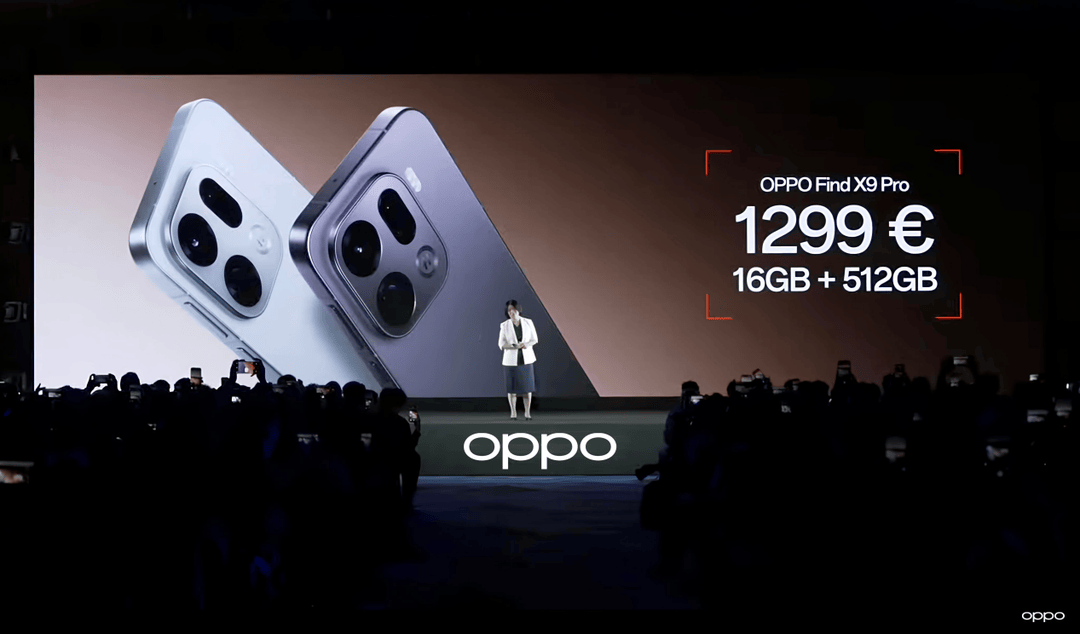
Group 1: OPPO Find X9 Series Launch - OPPO officially launched the Find X9 series, marking its 30th anniversary, positioning it as a "travel photography tool" with a powerful Hasselblad ultra-clear imaging system [1][3] - The Find X9 series features a unique "velvet sand process" design, full-level waterproofing, and is certified for drop resistance [3] - The series includes Hasselblad ultra-clear quad cameras, supports 8K ultra-clear photos, and the Find X9 Pro is equipped with the first Hasselblad-certified 200MP telephoto lens [3] Group 2: Pricing and Specifications - The local price for Find X9 is set at €999 (approximately ¥8200), while Find X9 Pro is priced at €1299 (approximately ¥10700) [4] - The devices are powered by the Dimensity 9500 chip, feature a 7500 mAh battery, and support 80W super flash charging and 50W wireless flash charging [3] Group 3: Fast Charging Standard - A new universal fast-charging standard, L.1004, was co-authored by Chinese companies including vivo and OPPO, and has been officially released by the International Telecommunication Union [5][7] - This standard aims to provide cross-brand and cross-device fast charging compatibility, reducing electronic waste and promoting sustainability [7] Group 4: DJI Pocket 4 Production - DJI's next-generation Pocket 4 gimbal camera has entered mass production, with a weight reduction of 35% compared to its predecessor [8][10] - The Pocket 4 will support 8K video recording, marking a significant performance upgrade for the series [10] Group 5: Leadership Change at China Mobile - Chen Zhongyue, former chairman of China Unicom, has been appointed as the chairman of China Mobile, succeeding Yang Jie [11][13] - Chen has a notable background in the telecommunications industry, having held key positions across all three major mobile operators in China [13] Group 6: Consumer Electronics Recycling - Over 1.26 billion units of old products have been exchanged for new ones under China's recycling policy, with significant growth in retail sales of home appliances and communication equipment [14] Group 7: SSD Supply Shortage - The global demand for large-capacity solid-state drives (SSDs) has surged due to the AI boom, leading to severe supply shortages [15][17] - Major NAND flash manufacturers are operating at full capacity, with delivery times for some SSD models delayed by over a year [17]


影响市场重大事件:北京证监局等六部门发布政策吸引中长期资金入市;商务部等5部门:加强人工智能、云计算等技术在城市商业体系中集成应用
Mei Ri Jing Ji Xin Wen· 2025-10-29 23:36
Group 1 - The Beijing Securities Regulatory Bureau and five other departments have issued policies to attract long-term funds into the market, focusing on optimizing the market ecosystem and encouraging companies to repurchase shares [1] - The policies aim to develop equity public funds and support the stable growth of private equity funds, encouraging diverse investment strategies to meet varying wealth management needs [1] - There is an emphasis on improving the investment environment for commercial insurance funds and pension funds, promoting flexible investment strategies for enterprise annuities and personal pensions [1] Group 2 - Shanghai aims to establish a comprehensive and efficient millisecond-level computing network by 2027, enhancing the city's computing resource capabilities [2] - The National Foreign Exchange Administration has announced measures to broaden the types of net settlement businesses for cross-border trade, facilitating smoother foreign exchange operations for qualified enterprises [3] - The Ministry of Commerce and other departments have released an action plan to integrate emerging technologies like AI and cloud computing into urban commercial systems, enhancing data analysis and consumer experience [4] Group 3 - Changxin Storage has announced the mass production of LPDDR5X products, with various capacities and speeds, including 8533Mbps and 9600Mbps, which began mass production in May [5] - The former Secretary of the Board of Directors of Hangke Technology has joined Yushu Technology to oversee IPO-related matters, indicating potential growth and restructuring within the company [6][7] Group 4 - China's marine economy continues to expand, with the national marine production value reaching 10.5 trillion yuan in 2024, showing significant growth in the northern, eastern, and southern marine economic zones [8] - The number of active IPv6 users in China has reached 865 million, marking a 294-fold increase since 2017, with IPv6 traffic surpassing IPv4 for the first time [9] - A Chinese-led fast charging standard has been officially released by the International Telecommunication Union, marking a significant achievement in global telecommunications standards [10] Group 5 - The first humanoid robot powered by the HarmonyOS has been unveiled in Wuhan, showcasing advancements in autonomous technology and breaking foreign technology monopolies [11]
手机市场进入整活时代
远川研究所· 2025-10-29 13:12
Core Viewpoint - The article discusses the competitive landscape in the smartphone industry, highlighting how companies are innovating in product design and technology integration to maintain market share and profitability amidst stagnating growth [5][10][17]. Group 1: Product Innovations - Xiaomi's 17 series and its unique back screen design sparked mixed reactions on social media, indicating a trend of creative product features among smartphone manufacturers [5][10]. - Realme's GT8 series introduced modular camera designs, showcasing the industry's push for aesthetic and functional differentiation [6][11]. - Honor's concept of the robot phone, which integrates a mechanical arm gimbal, represents a bold innovation, although it remains in the conceptual stage with plans for mass production next year [7][9]. Group 2: Market Dynamics - The smartphone market is experiencing intense competition, leading manufacturers to explore innovative product designs as a means to create new premium pricing opportunities [10][17]. - Companies are increasingly focusing on vertical integration and self-research capabilities to gain control over core components, aiming to differentiate their products in a saturated market [18][19]. Group 3: Supply Chain and Technology Integration - The article emphasizes the shift from horizontal division of labor to vertical integration in the smartphone industry, driven by the need for manufacturers to reclaim "definition rights" over their products [26][32]. - Apple has been a leader in this trend, developing its own components like the C1 5G baseband chip and Wi-Fi chip N1, which significantly increases the proportion of self-developed parts in its products [16][33]. - The competitive landscape has forced companies to enhance their technological capabilities and redefine their relationships with suppliers, as seen in Apple's strategic moves to reduce reliance on external suppliers like Qualcomm and Sony [28][33].


被割韭菜了!苹果刚将生产线搬过去,印度就翻出1961年旧法,要征收数十亿美元的税!
Sou Hu Cai Jing· 2025-10-29 10:27
Core Viewpoint - Apple has relocated eight iPhone production lines from China to India, expecting to benefit from subsidies and lower costs, but has encountered unexpected tax demands from the Indian government based on a 1961 tax law that requires taxation on global revenue, leading to significant financial implications for the company [1][6][17]. Group 1: Apple's Investment in India - Apple has invested significantly in India, collaborating with Foxconn and Tata Group to establish five iPhone factories with equipment investments amounting to several billion dollars and employing thousands of workers [3][17]. - The Indian government initially offered substantial subsidies, totaling 230 billion rupees, to attract foreign investment [3]. Group 2: Taxation Issues - The Indian tax authorities have invoked a 1961 law that allows them to tax foreign companies based on their global profits if they have a "business connection" in India, which Apple is now facing due to its control over the production equipment in the factories [5][6]. - Apple is being asked to pay taxes based on its global revenue of $383 billion, resulting in a potential tax liability of $4.1 billion [6][17]. Group 3: Government Response and Industry Impact - The Indian government is aware that aggressive tax measures could deter foreign investment, leading to a temporary cooling of the situation after media scrutiny [11][17]. - Other foreign companies, including Xiaomi, Vivo, and Volkswagen, have also faced similar tax issues in India, indicating a pattern of aggressive tax enforcement against foreign firms [14][15]. Group 4: Long-term Implications - The situation highlights India's strategy of attracting foreign investment with initial incentives followed by increased taxation, which may ultimately discourage foreign companies from investing in the country [17][18]. - The ongoing tax disputes may lead Apple to reassess the viability of its manufacturing operations in India, despite its previous investments [17][18].

全新一代旅拍神器 Find X9 系列全球发布,欧洲售价高达 1299 欧元
第一财经· 2025-10-29 09:55
Core Viewpoint - OPPO has launched the Find X9 series globally, marking a significant milestone in its 30th anniversary, with a focus on high-end imaging flagship experiences for users [1] Group 1: Product Launch - The Find X9 series was officially unveiled at a global launch event in Barcelona, Spain, with a local price of 1299 euros (approximately 10,700 RMB) [1] Group 2: Market Trends - IDC predicts a 5% increase in the average selling price of smartphones by 2025, with a rising share of mid-to-high-end models in overall sales [1] - OPPO is aligning with this trend, expecting a year-on-year surge of 46.6% in shipments of mid-to-high-end models priced over 400 USD by the second quarter of 2025 [1] - Counterpoint data indicates that OPPO's average selling price for smartphones increased by 14% year-on-year during the same period, ranking among the top five smartphone brands globally in terms of growth rate [1] Group 3: Strategic Goals - The launch of the Find X9 series is expected to further assist OPPO in enhancing its high-value overseas market presence and increasing its share in the high-end market segment [1]
从跟随到主导,中国快充方案成全球标准
Guan Cha Zhe Wang· 2025-10-29 09:40
Core Points - The International Telecommunication Union (ITU) has officially released the global universal fast-charging standard L.1004, led by the China Academy of Information and Communications Technology (CAICT) in collaboration with Huawei, OPPO, and vivo [1][3] - This marks a significant leap for China in the consumer electronics charging technology sector, transitioning from a follower to a leader in the field [1][3] Group 1 - The standard addresses the long-standing issue of "incompatible fast charging protocols" that has troubled consumers and the industry [3] - Major domestic manufacturers have collaborated to create an efficient, safe, and stable integrated fast charging solution, enabling cross-brand and cross-device fast charging compatibility [3] - Consumers will be able to use a single charger for multiple brands of mobile devices, enhancing convenience and efficiency [3] Group 2 - The standard is expected to significantly promote the standardization and normalization of the global charging market, reducing costs across the industry chain [3] - It will benefit global consumers and support the optimization and upgrading of related industries, laying a solid foundation for innovative developments in digital life [3] - The initiative aims to establish a new ecosystem for fast charging of mobile terminal products globally [3]
