三星电子

Search documents
韩媒称“三星、SK海力士预计今年继续减产NAND闪存”,以追求利润最大化
硬AI· 2026-01-20 09:09
Core Viewpoint - Despite the surge in demand driven by artificial intelligence, South Korea's major memory chip manufacturers, Samsung Electronics and SK Hynix, will continue to cut NAND flash production this year, which is expected to lead to rising NAND prices across various sectors, enhancing profit margins comparable to DRAM for both companies [1][4]. Group 1: NAND Production and Market Dynamics - Samsung's NAND wafer production is projected to decrease from 4.9 million units last year to 4.68 million units this year, even lower than the reduction planned for 2024 due to declining profitability [1]. - SK Hynix's NAND production is expected to drop from approximately 1.9 million units last year to 1.7 million units this year [1]. - Together, Samsung and SK Hynix hold over 60% of the global NAND flash market share, and their production cuts are occurring amid intensified competition in AI-driven applications [1][4]. Group 2: Price Expectations - Major market research firms anticipate a comprehensive increase in NAND prices starting from the first quarter of this year, with TrendForce predicting a contract price rise of 33% to 38% compared to the previous quarter [6]. - IDC forecasts a 17% growth rate in NAND supply this year, which is below the average levels seen in recent years [6]. Group 3: Record Bonuses and Profitability - The global storage chip supercycle driven by AI has resulted in historic profits, prompting Samsung and SK Hynix to issue their largest performance bonuses in years [2][9]. - Samsung's semiconductor division has confirmed that eligible employees will receive bonuses equivalent to 47% of their base annual salary, a stark contrast to the zero bonus rate in 2023 due to market downturns [9]. - SK Hynix has adopted a more aggressive profit-sharing plan, allocating 10% of its operating profit for bonuses, with average bonuses expected to exceed 140 million KRW, marking a historical high [9].


闪德资讯存储市场洞察报告 2025年7月
闪德资讯· 2026-01-20 08:45
Investment Rating - The report does not explicitly state an investment rating for the industry Core Insights - The overall manufacturing sector is under pressure, with a global manufacturing PMI mostly in contraction territory, particularly affected by US-China tariff policies [6] - Major manufacturers are competing for high-end processes and AI memory market share, with companies like Samsung, Micron, and SK Hynix leading the charge in high-performance memory technologies [6] - Supply chain dynamics are tightening due to capacity concentration and rising material costs, particularly in the DDR4 and Flash memory markets [6] - The market is experiencing a shift towards high-end demand driven by AI applications, while low-end markets face pressure [6] Summary by Sections Macroeconomic Overview - The global manufacturing PMI indicates a contraction, with China's PMI at 49.3% in July, reflecting a slight decline [7][17] - Export structures are improving, with a notable increase in the export of high-value electronic products [6][22] Original Manufacturer Dynamics - Leading manufacturers are focusing on high-performance memory technologies, with South Asia becoming a key supplier for DDR4 [6][29] - Domestic manufacturers are accelerating the construction of independent production lines in response to sanctions [6][29] Supply Chain Movements - The concentration of DDR4 production is shifting to a few manufacturers, while Flash memory faces shortages in mid-to-low capacity chips [6][29] - The market is currently in a phase of inventory reduction, with DRAM prices experiencing fluctuations [6][29] Market Trends - The DRAM market has shifted from a surge in June to a period of adjustment, with DDR4 prices declining and DDR5 demand increasing [6][29] - The NAND market is seeing price increases for low-capacity chips, driven by supply constraints and rising demand [6][29] Application Changes - AI is driving demand for high-performance memory and SSDs, while low-end smartphone markets are under pressure due to supply chain issues [6][34] Upstream Market - The memory market is experiencing supply tightness due to the end-of-life plans for DDR4, with South Asia emerging as a dominant supplier [6][29] - The transition to DDR5 is accelerating, with expectations of increased market penetration in the coming quarters [6][32] Foundry Market - The demand for mature process nodes is declining, impacting the utilization rates of foundries [6][51] - Companies are focusing on niche markets to mitigate the impact of reduced demand in traditional sectors [6][52] Storage Controller Market - New products like the MonTitan SM8466 PCIe Gen6 SSD controller are being introduced, enhancing performance and capacity for enterprise storage [6][54] - The demand for high-end storage solutions is increasing, driven by the rise of AI applications [6][55]
闪德资讯存储市场洞察报告 2025年11月
闪德资讯· 2026-01-20 08:45
Investment Rating - The report indicates a bullish outlook for the storage industry, projecting a high prosperity cycle from 2025 to 2026, driven by strong demand from AI data centers and significant price increases in DRAM and NAND products [7][27][31]. Core Insights - The global manufacturing sector is under pressure, with PMI indices in major economies indicating contraction, while China's PMI shows slight improvement but remains below the threshold [7][8][9]. - The storage industry is entering a strong cycle characterized by technological upgrades and rising prices, with major players like Samsung and SK Hynix expanding production of advanced DRAM and NAND technologies [7][27][31]. - Supply chain dynamics are tightening, with rising costs for raw materials and significant demand for NAND and DRAM leading to extended delivery times and price increases across the board [7][27][31]. - The current market is experiencing a shortage of storage products, with prices for DRAM, NAND, and SSDs seeing substantial increases, driven by AI demand and supply constraints [7][27][31]. Summary by Sections Macroeconomic Overview - Global manufacturing is facing challenges, with most PMI indices in contraction territory, indicating weak demand and slowing orders [7][8][9]. - China's manufacturing PMI shows a slight increase but remains below the critical level, reflecting a weak economic environment [7][18][22]. Storage Supply Chain - Major manufacturers like Samsung and SK Hynix are ramping up production of advanced memory technologies, with significant price increases expected for HBM and DDR5 products [7][27][31]. - The supply chain is experiencing upward pressure on costs due to rising prices of copper and glass fiber, impacting the cost of electronic materials [7][42][43]. Market Dynamics - The report highlights a significant shortage in the storage market, with prices for various memory products experiencing dramatic increases, driven by AI-related demand [7][27][31]. - The current market conditions are leading to a shift in purchasing strategies, with long-term contracts becoming more common as companies seek to secure supply [7][37][39]. Company-Specific Developments - Samsung is actively expanding its production capabilities and has recently increased prices for DDR5 memory modules significantly [27][29][31]. - SK Hynix is also enhancing its product offerings and has confirmed price increases for HBM4, reflecting strong demand from AI applications [31][35][36]. - Western Digital reported strong performance driven by AI demand, with expectations for continued growth in revenue and market share [36][37].
闪德资讯存储市场洞察报告 2025年4月
闪德资讯· 2026-01-20 08:45
Investment Rating - The report indicates a cautious outlook for the storage industry due to tariff impacts and market uncertainties, suggesting a "Hold" rating for investments in this sector [7][20][36]. Core Insights - Tariffs have become a dominant variable affecting the entire storage industry chain, with the U.S. imposing tariffs as high as 125%, impacting prices of DRAM modules and SSDs [7]. - Major manufacturers like Micron and SK Hynix are adjusting strategies by raising prices and shifting focus towards high-end products such as HBM and DDR5, anticipating a significant increase in HBM demand [7][36]. - The market is experiencing short-term price volatility due to tariffs and supply-demand tensions, with SSD and DRAM prices fluctuating as demand remains uncertain [7][36]. - The rise of AI applications is driving demand for high-performance memory, despite an overall weak smartphone market [7][36]. - Various semiconductor policies are being implemented across the U.S., South Korea, and China, affecting the industry's operational landscape [7]. Summary by Sections Macroeconomic Overview - In April, China's manufacturing PMI index was at 49%, indicating a decline in manufacturing activity, while the U.S. PMI was at 48.7%, reflecting ongoing contraction in the manufacturing sector [8][9][11]. Upstream Market Dynamics - Morgan Stanley predicts a three-phase impact from tariffs on the storage industry, with the first phase leading to price increases due to stockpiling [20][22]. - The current phase is characterized by short-term price increases that are not sustainable, with economic recession risks looming [20][22]. - Major manufacturers are reducing production of older process technologies, focusing on advanced products to enhance profitability [26][30]. Passive Components - Major passive component manufacturers are raising prices due to strong demand and rising costs, with expectations of double-digit percentage increases [38]. Module Manufacturer Dynamics - Companies like Nanya and Adata are seeing revenue growth driven by AI applications, with expectations of improving DRAM contract prices in the upcoming quarters [39][40]. - The overall market is experiencing a price increase trend as supply-demand dynamics stabilize [43]. Domestic Spot Market - The storage market in April was characterized by tariffs, price increases, stockpiling, and a cautious market outlook, with significant fluctuations in SSD and DRAM prices [49][51]. - The market is expected to stabilize once tariff policies are fully established, allowing for a return to normal supply-demand dynamics [66].


闪德资讯存储市场洞察报告 2025年10月
闪德资讯· 2026-01-20 08:45
Investment Rating - The report indicates a positive outlook for the storage industry, driven by strong demand from AI and cloud computing sectors, leading to an overall bullish investment rating for the sector [6][7]. Core Insights - The global storage giants, including Samsung and SK Hynix, reported record earnings in Q3 2025, with significant growth in sales and profits attributed to increased demand for high-bandwidth memory (HBM) and server memory [7][29]. - The report highlights a structural shortage in the supply of DRAM and NAND flash memory, with prices expected to continue rising due to strong demand from AI servers and high-end mobile devices [7][30]. - The domestic storage industry in China is accelerating, with companies like Yangtze Memory Technologies and ChangXin Memory Technologies preparing for IPOs and ramping up production of HBM and LPDDR5X [7][42]. Summary by Sections Macroeconomic Overview - In October 2025, the global manufacturing PMI showed mixed signals, with the Eurozone returning to expansion while the US and Japan continued to contract, indicating a fragile recovery in manufacturing [7][8][20]. - China's manufacturing PMI fell to 49.0, reflecting a slowdown in production and demand, although the electronic information industry showed signs of recovery with strong export growth [7][20][26]. Supply Chain Dynamics - The storage and testing industry is experiencing a significant uptick, with companies like Powertech and Nanya increasing production capacity in response to rising orders for HBM and DDR5 products driven by AI server demand [7][29][46]. - The report notes that the supply of T-Glass, a critical material for advanced packaging, is expected to remain tight until 2027, impacting the PCB market [7][49]. Market Trends - The report indicates that the storage market is heating up, with DRAM and NAND prices rising across the board due to strong demand from AI servers and high-end mobile devices, leading to supply constraints [7][30][58]. - Companies are adopting aggressive pricing strategies, with Samsung and SK Hynix increasing prices by up to 30% for DRAM and NAND products in response to supply shortages [7][36][38]. Company Performance - Samsung Electronics reported a record Q3 2025 revenue of 86.1 trillion KRW, with a 15% quarter-over-quarter increase, driven by strong sales in HBM and server SSDs [7][29][30]. - SK Hynix also achieved record sales of 24.4489 trillion KRW in Q3 2025, with a significant increase in DRAM and NAND prices due to high demand [7][32][33]. Domestic Industry Developments - Yangtze Memory Technologies is planning an IPO with an estimated valuation of 200-300 billion RMB, aiming to enhance its production capabilities in HBM technology [7][42]. - ChangXin Memory Technologies is also preparing for an IPO, focusing on increasing its production of high-bandwidth memory chips [7][42].





闪德资讯存储市场洞察报告 2025年2月
闪德资讯· 2026-01-20 08:45
Investment Rating - The report does not explicitly state an investment rating for the industry Core Insights - The storage market is experiencing a gradual recovery, with manufacturing PMI in China rising to 50.2%, indicating expansion in the manufacturing sector [8][10] - The semiconductor industry is facing challenges due to geopolitical tensions and trade restrictions, impacting investor confidence [23] - AI and generative AI are driving significant demand for advanced semiconductor solutions, with expectations for growth in AI-related chip demand [23][25] - The report highlights a shift in production focus among major manufacturers towards high-end products like DDR5 and HBM due to declining prices in traditional DRAM products [36] Summary by Sections Macroeconomic Overview - China's manufacturing PMI increased by 1.1% to 50.2%, indicating a recovery in manufacturing activities [8][10] - The U.S. manufacturing PMI was reported at 50.9% in January, showing a positive trend since October [8][11] - Global economic expansion is expected to be supported by lower interest rates and growth-promoting policies, particularly in the U.S. [8] Upstream Market - Omdia forecasts a 6% increase in DRAM wafer production capacity for Samsung Electronics, with a target of 789 million wafers in 2025 [19] - SK Hynix plans to increase DRAM wafer input by 15%, with a focus on maximizing production at its facilities [19] - SEMI predicts a 6.6% annual increase in semiconductor capacity, reaching 33.6 million 8-inch wafers by 2025 [20] Company Dynamics - Samsung Electronics reported a sales figure of 30.1 trillion KRW for its semiconductor division in Q4 [29] - SK Hynix is set to begin mass production of HBM3E products in the first quarter of 2025 [34] - Micron plans to increase its HBM market share to 20% by 2025, with significant expansions in production capacity [34] Application Market - Intel's upcoming Panther Lake processors will support AI operations, expected to launch in 2025 [85] - AMD's Ryzen AI Max series processors, featuring advanced AI capabilities, are set to be released in the first quarter of 2025 [86] - Qualcomm's Snapdragon X series PC processors will support AI applications and are expected to launch in the first quarter [87] Domestic Spot Market - The domestic storage spot market remains stable, with prices showing a slight decline [44] - NAND inventory levels are nearing completion, with some manufacturers transitioning from sellers to buyers, providing price support [45] - DDR5 memory prices have seen a significant increase, with costs rising from $4.70 to $4.90-$5.00 [47]


闪德资讯存储市场洞察报告 2025年3月
闪德资讯· 2026-01-20 08:45
Investment Rating - The report indicates a positive outlook for the storage industry, with expectations of price increases and demand recovery in the second quarter of 2025, suggesting a favorable investment environment [8][23][39]. Core Insights - The manufacturing PMI in China rose to 50.5% in March, indicating a continuous recovery in the manufacturing sector, while the U.S. PMI remained below the expansion threshold at 49% [7][11]. - The storage chip market is experiencing price increases, with DDR5 chip prices rising for the first time in seven months, and NAND manufacturers like Micron and Sandisk issuing price increase notices due to anticipated supply shortages in the second quarter [8][22][25]. - The domestic storage market is currently active, with prices for flash memory, SSDs, and memory modules increasing across the board, driven by demand from AI applications [8][46][47]. Summary by Sections Macroeconomic Trends - China's manufacturing PMI increased by 0.3% to 50.5%, indicating ongoing recovery in manufacturing activities [7][11]. - The electronic information manufacturing sector saw production growth of 10.6% and export growth of 5.9% in January-February, despite a slight decline in profit margins [14][16]. Upstream Market - Research indicates that DDR5 chip prices have stopped falling and are beginning to rise, with expectations of increased demand from cloud service providers and server manufacturers [22][23]. - Major NAND manufacturers are also raising prices due to inventory depletion and anticipated demand recovery [25][39]. Original Equipment Manufacturers (OEM) Dynamics - Micron reported strong demand for HBM and data center products, with full capacity sold out for 2025 [28][29]. - The company maintains a capital expenditure of $14 billion, reflecting confidence in long-term growth in DRAM and NAND demand [29]. Domestic Spot Market - The storage spot market is experiencing a surge in prices, with NAND and SSD prices rising due to low inventory levels and increased demand from AI applications [46][47]. - The market is expected to remain active, with SSD prices increasing significantly due to supply constraints and rising costs from manufacturers [52][53]. Application Market - Intel and AMD are launching new products that are expected to drive demand in the PC and AI sectors, with significant growth anticipated in AI PC shipments [71][82]. - The competition in the AI PC market is intensifying, with major brands like Lenovo and HP shifting production to Southeast Asia to adapt to changing market conditions [79][82].
小摩:HBM进入第四年上升周期,结构性短缺或延续至2028年
智通财经网· 2026-01-20 08:27
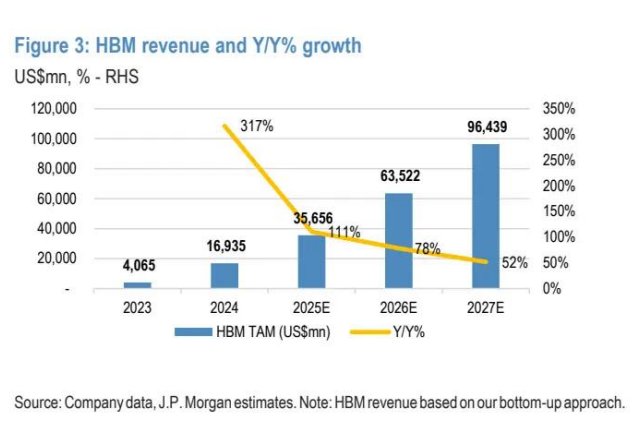
Core Insights - The report by JPMorgan highlights the growth trajectory of the High Bandwidth Memory (HBM) market, which has entered its fourth year of an upward cycle starting in 2023 and is expected to continue until 2027, driven by the surge in demand from AI and high-performance computing (HPC) [1][4] Market Trends - The total addressable market (TAM) for HBM is projected to grow at a compound annual growth rate (CAGR) of 79%, increasing from its baseline in 2024 to a peak in 2027, primarily due to rising demand for H200 GPUs and ASIC chips [4] - A structural shortage in HBM is anticipated to persist at least until 2027, potentially extending to 2028, as demand growth significantly outpaces supply growth [8] Pricing and Profitability - The average selling price (ASP) of HBM is expected to maintain an upward trend until 2027, particularly in the high-performance computing sector, with manufacturers holding significant pricing power for high-end products like HBM4 and HBM4E [10] - The report suggests that the pricing structure will help sustain the profitability of leading suppliers, with operating profit margins expected to remain above 60% [18] Competitive Landscape - Samsung Electronics is positioned to gain a higher market share in HBM4 products due to its technological advancements and market strategies, while SK Hynix is seen as a more attractive investment in the mid to long term due to its leading position and profitability potential in HBM4E products [10][14] - The competition in the HBM market is expected to become more complex with the introduction of HBM4 products and the extended lifecycle of HBM3E products [18] Investment Opportunities - Investors are advised to focus on all HBM manufacturers, particularly Samsung and SK Hynix, as the demand for HBM technology continues to rise with the increasing importance of AI models [10][21] - The upcoming certification results and demand conditions for HBM4 products will be critical factors influencing stock prices in the storage industry in the coming months [21]
AI半导体供应如走钢丝,台积电加速增产
日经中文网· 2026-01-20 08:00
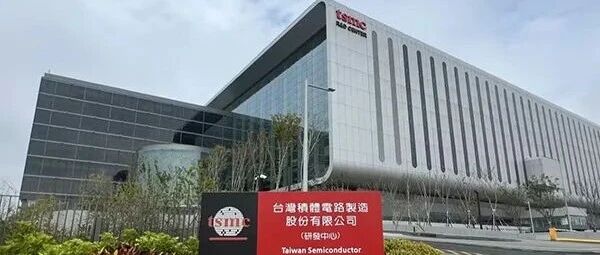
Core Viewpoint - The demand for AI semiconductors is expected to triple capacity, leading TSMC to announce a record equipment investment of up to $56 billion for 2026, indicating a tight supply situation that could allow competitors to gain ground if production does not keep pace [2][4]. Group 1: Financial Performance - TSMC's revenue for the fiscal year 2025 reached NT$3.809 trillion, a year-on-year increase of 31.6%, while net profit rose by 46.4% to NT$1.718 trillion, both setting historical records [4]. - The revenue from advanced semiconductors, particularly those used in generative AI servers with a process node of 3-5 nanometers, accounted for 60% of total revenue [4]. Group 2: Capacity and Investment - TSMC holds a 70% market share in the semiconductor foundry sector, but the current advanced semiconductor capacity is only about one-third of the demand [5]. - The company plans to invest between $52 billion and $56 billion in equipment for 2026, which represents a potential increase of up to 37% compared to 2025 [5]. - Investment will focus on facilities in Arizona, USA, and Taiwan, with plans to build six advanced semiconductor factories in Arizona and potential further expansions [5]. Group 3: Competitive Landscape - Competitors like Samsung and Intel are ramping up their production capabilities, with Samsung expected to start production of 2-nanometer semiconductors in Texas by 2026, and Intel already producing 2-nanometer chips in the U.S. [5]. - TSMC faces challenges in balancing production between AI-focused advanced products and other semiconductor products, as demand for automotive semiconductors has declined [5]. Group 4: Future Outlook - To maintain its leading position, TSMC must implement aggressive investments and optimize the allocation of funds and talent across its production bases [6].

人均64万!存储巨头发放巨额年终奖
财联社· 2026-01-20 05:47
以下文章来源于科创板日报 ,作者史正丞 科创板日报 . 专注科创板和科技创新,上海报业集团主管主办,界面财联社出品。 韩国存储牛股SK海力士近日再度成为网友们关注的焦点,这次是因为即将落地的丰厚年终奖金。 作为背景,SK海力士在去年9月的劳资谈判中,同意取消"利益分享金"(PS)最高不超过基本工资10倍的限制,改为 将营业利润的10%作 为奖金发放 。其中80%会在本月29日公布业绩后发放,剩余20%将在两年内每年发放10%。 按照市场预期,在存储浪潮起势的2025年, SK海力士有望录得近45万亿韩元的营业利润 。 按照近3.3万员工分享4.5万亿韩元计算,相当 于 人均1.35亿韩元 。即便在韩元持续贬值的当下, 这笔钱仍 相当于人民币63.86万元 。 SK海力士也将在本月底发放"生产鼓励金"(PI),大概率将按照基本工资150%的上限发放。该公司每年上、下半年各发放一次PI,当营业 利润率达到30%以上会设定为150%。 据悉,SK海力士已经通知员工,可以将PS奖金的一部分以公司自家股票的形式领取,选择比例在10%至50%之间,以10%为单位。持有这 些股票满一年的员工,可以获得相当于购买金额15%的 ...