微软

Search documents
“18个月火速弃用Office”,7年前立的Flag翻车,这家巨头至今未能完全摆脱微软,现任高管:当初预估得太乐观
3 6 Ke· 2025-11-28 11:34
Core Viewpoint - Airbus's ambitious plan to migrate 130,000 employees from Microsoft Office to Google Workspace has faced significant challenges, leading to a prolonged and complex transition process that remains incomplete after several years [1][6]. Migration Plan - The migration aimed to eliminate local deployment of Office and transition to cloud-based digital tools, marking a new phase in the company's digital transformation [3]. - Former CEO Tom Enders emphasized the need for modern digital tools to support new collaborative work methods and promised employee support and training for the transition [3][5]. Challenges in Migration - The initial estimate of completing the migration within 18 months was overly optimistic, as acknowledged by Airbus's digital transformation executive [6]. - As of now, Airbus has grown from 130,000 to 150,000 employees, with over two-thirds having switched to Google tools, yet many teams still rely on Microsoft software [7]. Reasons for Incomplete Migration - **Excel's Unmatched Capability**: Excel remains essential for handling large datasets, with some financial spreadsheets containing up to 20 million cells, far exceeding Google Sheets' capabilities [8][9]. - **Advanced Document Management Needs**: Teams such as legal and procurement require robust document management features that Google Workspace currently lacks [10]. - **Regulatory and Data Security Constraints**: Certain confidential documents cannot be stored in the cloud, necessitating continued use of local solutions [11]. Current State and Issues - Airbus is currently in a hybrid state, using both Google and Microsoft tools, which has led to increased costs and compatibility issues [11]. - Employees have reported frustrations with document format inconsistencies and collaboration conflicts due to the dual-tool environment [11]. Broader Implications - The migration challenges highlight that transitioning to new software is not merely a technical issue but a complex system-wide endeavor involving process reengineering and cultural shifts [12]. - The experience raises questions about the feasibility of replacing established software ecosystems, especially when existing solutions meet specific operational needs [12][13].





AI时代的微软和服务商生态:交易链条延长,从卖产品到卖服务
Tai Mei Ti A P P· 2025-11-28 09:41
Core Insights - The adoption speed of AI is unprecedented, but the success rate of AI projects is lower than expected [1] - Microsoft is increasingly relying on its partner ecosystem to drive AI sales and services [1] - In China, Microsoft is expanding its ecosystem by onboarding new service providers to enhance its market share and revenue [1] Group 1: Microsoft's Ecosystem Changes - Microsoft's partner ecosystem has shifted from a high entry barrier to a more inclusive model, driven by the need for specialized skills in AI and cloud services [2] - The rapid iteration of Microsoft products in the AI era requires service providers to have a deep understanding of AI to effectively communicate with clients [3] - Companies that commit fully to AI and invest resources will stand out in the market [3] Group 2: Market Demand and Service Transformation - There is a growing demand for productive service industries in China, creating significant market opportunities for AI solutions [4] - Longzhong Jiahua has developed a comprehensive AI solution service capability by leveraging Microsoft's technology ecosystem [4] - The business model is shifting from product sales to service-oriented processes, emphasizing ongoing support and customer success [5] Group 3: International Expansion and AI Integration - Longzhong Jiahua's overseas digital marketing business is increasingly integrating with cloud and AI trends, particularly in the short video and animation sectors [6] - The need for seamless payment systems in impulsive consumption scenarios highlights the importance of cloud services [6] - Companies embracing AI are seeing a rapid return on investment, with predictions of AI contributing significantly to global economic growth by 2030 [6]
微软强推Copilot模式遇冷,用户抱怨“被代表”
Huan Qiu Wang· 2025-11-28 09:40
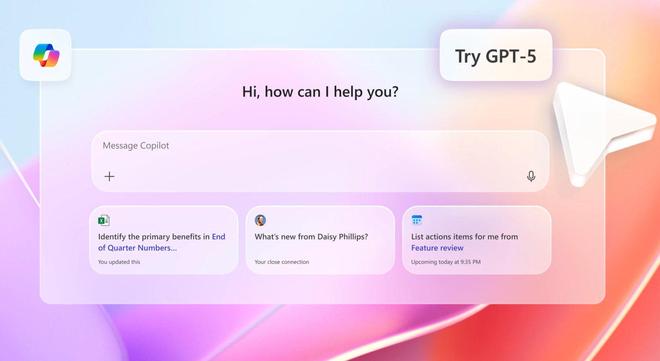
Core Points - Microsoft is attempting to promote its Copilot mode on social media, but consumer feedback has been largely negative [1][2] - The company claims to be developing "Copilot for Work" to integrate it into the Edge browser on Windows 11, responding to user demand [2] - Users have expressed dissatisfaction, stating they do not want to be forced to use a chatbot and are more interested in removing AI features [2] - Microsoft's social media team has only acknowledged a few positive comments about the Edge browser's Copilot mode while ignoring widespread criticism [2] - There is skepticism regarding Microsoft's assertion that businesses urgently need this feature, as social media reactions suggest otherwise [2]

美联储突发!黄金,跳水!
Sou Hu Cai Jing· 2025-11-28 05:06
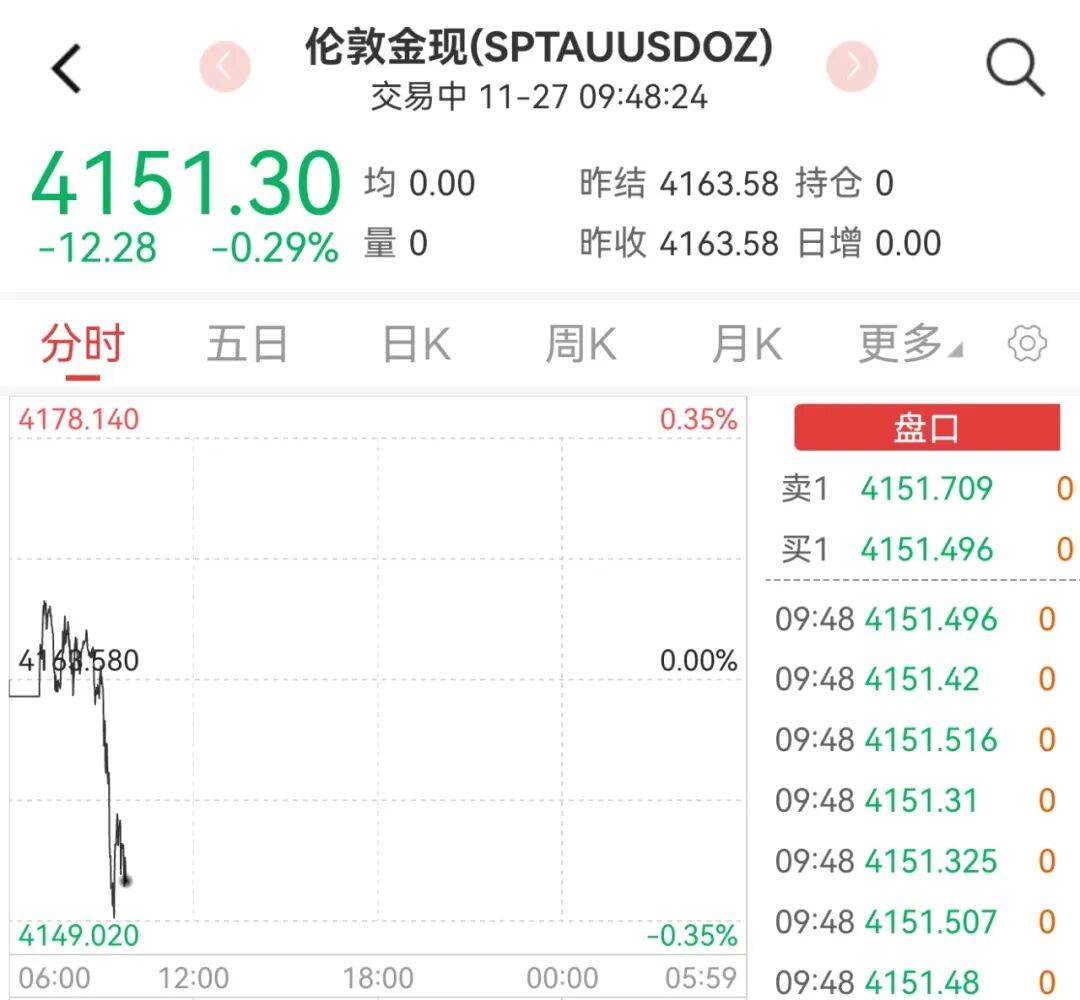
11月27日,现货黄金短线下挫,回落至4150美元/盎司下方。截至发稿报4151.3美元/盎司,跌0.29%。 | 道琼斯 | 纳斯达克 | 标普500 | | --- | --- | --- | | 47427.12 | 23214.69 | 6812.61 | | +314.67 +0.67% | +189.10 +0.82% | +46.73 +0.69% | | 中国金龙指数 | 纳指100期货 | 标普500期货 | | 7750.79 | 25314.00 | 6830.25 | | -2.46 -0.03% | +228.50 +0.91% | +48.75 +0.72% | 科技股多数上涨,甲骨文涨超4%,AMD涨近4%,博通涨超3%,创历史新高。英伟达、特斯拉、奈飞、微软涨超1%。苹果涨0.21%,续创历史新高。谷 歌跌超1%。芯片股走强,费城半导体指数上涨2.76%。迈威尔科技、超威半导体、阿斯麦分别上涨5.14%、3.93%、3.76%。 | 微软 | 485.50 | 1.78% | 8.51 | | --- | --- | --- | --- | | MSFT.O | | | | | ...
微软承认Teams存在高内存占用问题,计划2026年发布更新修复
Huan Qiu Wang· 2025-11-28 03:13
Core Insights - Microsoft Teams is experiencing significant performance issues, consuming up to 1 GB of memory even when idle, with memory usage spiking during meetings [2][3] - Microsoft has acknowledged these performance problems and plans to release an update in January 2026 to address them [2][3] - The upcoming update will introduce a new process, ms-teams_modulehost.exe, aimed at improving performance and reducing startup time [2][3]

TPU挑战GPU,但美银建议:英伟达、博通、AMD都买
硬AI· 2025-11-27 14:20
Core Viewpoint - Bank of America predicts that the AI data center market will grow fivefold to over $1.2 trillion by 2030, maintaining a buy rating on Nvidia, Broadcom, and AMD despite potential market share declines for Nvidia [2][4][11]. Market Growth and Dynamics - The total addressable market (TAM) for AI data centers is expected to increase from $242 billion in 2025 to over $1.2 trillion by 2030, indicating a significant market expansion [11]. - Even if Nvidia's market share normalizes from 85% to 75%, its absolute revenue is projected to experience explosive growth [4][11][12]. Competitive Landscape - Custom chips, such as Google's TPU, are seen as a challenge to GPUs, particularly for companies with large internal workloads like Google and Meta [3][4]. - However, GPUs remain irreplaceable in public cloud and enterprise markets due to their flexibility and broader ecosystem [13]. Investment Recommendations - Bank of America maintains a buy rating for Nvidia, Broadcom, and AMD, suggesting that current valuations do not fully reflect their long-term profitability [5][15]. - Nvidia is expected to achieve over 40% sales and earnings growth, with a target price of $275, while its earnings per share could exceed $10 by 2027 and $20 by 2030 [16][17]. - Broadcom is viewed as a major beneficiary of the custom chip trend, with a target price of $400, anticipating over 100% year-over-year growth in AI business revenue by 2026 [18][19]. - AMD is also recommended for holding, with a target price of $300, reflecting its growth potential across various sectors despite facing cyclical slowdowns in embedded markets [21][23].

豪鹏科技(001283):AI硬件催动电池技术革新,增长引擎强劲启动
Huajin Securities· 2025-11-27 14:01
Investment Rating - The investment rating for the company is "Buy (First Coverage)" [3] Core Views - The company is positioned to benefit from the AI hardware-driven innovation in battery technology, with strong growth engines initiated [1] - The integration of battery cells and packs, along with competitive advantages in wearable technology and strategic customer resources, shapes the core competitiveness of the company [2] - The company is focusing on the mainstream consumer sector, leveraging its one-stop service advantages in lithium-ion and nickel-hydride products to meet the evolving demands of global brand clients [2][4] - The company has established a differentiated competitive advantage in the AI sector, with its AI-related business expected to continue growing as AI penetration increases in various consumer electronics [4][6] Summary by Sections Financial Data and Valuation - Projected revenues for 2025 to 2027 are expected to be 60.41 billion, 70.77 billion, and 81.25 billion yuan, with growth rates of 18.2%, 17.2%, and 14.8% respectively [6][7] - The net profit attributable to shareholders is forecasted to be 2.41 billion, 3.62 billion, and 4.57 billion yuan for the same period, with growth rates of 164.3%, 49.9%, and 26.4% respectively [6][7] - The company’s P/E ratios are projected to be 27.4, 18.3, and 14.4 for 2025, 2026, and 2027 respectively [6][7] Market Dynamics - The global lithium-ion battery market is expected to see significant growth, with a projected total shipment volume of 1,899.3 GWh by 2025 and 5,127.3 GWh by 2030 [14][16] - The demand for consumer electronics, particularly AI PCs and smartphones, is anticipated to drive battery demand, with AI PC shipments expected to reach 1.54 million units in Q4 2024 [17][22] - The wearable product market, including TWS earbuds and smart glasses, is also expected to grow, with AI glasses projected to see a 135% increase in sales from 2024 to 2025 [30][34] Technological Innovations - The company is focusing on technological upgrades and product innovations, particularly in solid-state batteries and high-silicon anodes, which are expected to enhance battery safety and energy density [5][6] - The integration of AI technology into battery products is reshaping the company's profitability model, with a higher willingness from clients to pay for breakthrough solutions [2][5] - The company has successfully developed semi-solid batteries with a volumetric energy density of 950 Wh/L and is advancing solid-state battery technology [5][6]
TPU挑战GPU,但美银建议:英伟达、博通、AMD都买
美股IPO· 2025-11-27 10:28
Core Viewpoint - Bank of America predicts that the AI data center market will grow fivefold to over $1.2 trillion by 2030, maintaining a buy rating on Nvidia, Broadcom, and AMD despite potential market share declines for Nvidia [1][3]. Market Growth and Dynamics - The total addressable market (TAM) for AI data centers is expected to increase from $242 billion in 2025 to over $1.2 trillion by 2030, indicating significant growth potential [6]. - Even if Nvidia's market share normalizes from 85% to 75%, its absolute revenue is projected to experience explosive growth [3][6]. Competitive Landscape - Despite the emergence of Google's TPU and other custom chips, which pose challenges to GPUs, Bank of America maintains a bullish outlook on Nvidia, Broadcom, and AMD [3][5]. - Custom chips are primarily advantageous for companies like Google and Meta with large internal workloads, while GPUs retain irreplaceable advantages in public cloud and enterprise markets [3][7]. Investment Recommendations - Bank of America recommends a buy rating for Nvidia, Broadcom, and AMD, asserting that current valuations do not fully reflect their long-term profitability [3][9]. - Nvidia is expected to achieve over 40% sales and earnings per share growth, with a target price of $275, while Broadcom is seen as a major beneficiary of the custom chip trend, with a target price of $400 [9][10]. - AMD is also recommended for holding, with a target price of $300, reflecting its competitive position against Nvidia [12]. Future Projections - Nvidia's earnings per share are projected to exceed $10 by 2027 and surpass $20 by 2030 [10]. - Bank of America anticipates that the company's AI business revenue will grow over 100% year-on-year in 2026 due to additional TPU and Anthropic projects [11].

微软:Xbox云游戏总时长增加45%
Huan Qiu Wang· 2025-11-27 08:44
Core Insights - Microsoft's Xbox cloud gaming service has shown significant growth globally [1][3] User Engagement - Game Pass users' total cloud gaming hours increased by 45% compared to the same period last year [3] - Console gaming hours also rose by 45%, while hours on other devices (such as PCs and handhelds) increased by 24% [3] Service Expansion - Xbox cloud gaming is now available in 29 countries/regions [3] - The service utilizes Microsoft's Azure global data center network for dynamic server resource allocation, enabling users to access games closer to their location [3] Accessibility - Players can experience Xbox cloud gaming without the need for expensive consoles or high-performance PCs, requiring only a device with internet connectivity [3]

美国“沉睡巨人”彻底醒来
Sou Hu Cai Jing· 2025-11-27 08:08
Core Insights - Google has made significant strides in the AI competition, launching new AI software and signing multiple partnerships, which has reassured investors about its position against competitors like OpenAI [1][3] - The release of Google's Gemini 3 AI model has received widespread acclaim for its performance in reasoning and programming tasks, indicating a strong comeback in the AI sector [1][7] - Google's cloud business is experiencing steady growth due to the increasing demand for AI services and its proprietary AI chips, which are among the few alternatives to Nvidia's chips [1][6] Company Developments - Alphabet's stock rose by 1.5% to $323.44, nearing a market capitalization of $4 trillion, driven by investor enthusiasm for Google's AI initiatives [2] - The company has avoided severe regulatory repercussions, such as forced divestiture, which has alleviated concerns about its market position [5] - Google's CEO Sundar Pichai emphasized a comprehensive AI strategy that is beginning to yield results, showcasing the company's commitment to AI development [5] Competitive Landscape - Analysts view Google as a dark horse in the AI race, with its extensive resources and data advantages over competitors like OpenAI [3][5] - The collaboration with AI startup Anthropic to utilize Google's TPU chips in a multi-billion dollar deal signifies a growing demand for Google's technology [6] - Competitors like Microsoft and OpenAI are also exploring in-house semiconductor development to reduce reliance on Nvidia, indicating a shift in the industry [6] Market Performance - Google's Gemini applications have reached 650 million users, while OpenAI's ChatGPT has 800 million weekly active users, highlighting the competitive landscape in user engagement [8] - Google's cloud revenue for Q3 was $15.2 billion, a 34% year-over-year increase, although it still lags behind Microsoft and Amazon's cloud sales [8] - The AI chip market is not a zero-sum game, suggesting that multiple companies can succeed simultaneously in this space [8] Product and Technology - Gemini 3 Pro has been recognized as a top-tier large language model, capable of solving complex scientific and mathematical problems [7] - Google's TPU chips are primarily attracting companies with high computational needs, such as Meta and Anthropic, indicating a strategic focus on enterprise-level applications [8][9] - Access to Google's TPU is limited to its cloud services, which may bind developers to its ecosystem, contrasting with the more flexible use of Nvidia's GPUs [9]