
华为

Search documents
加强科技创新和产业创新深度融合 全力推进重大项目建设 长三角示范区绘就 “十五五”开局路线图
Shang Hai Zheng Quan Bao· 2026-01-29 18:46
◎记者 严曦梦 操子怡 作为长三角一体化发展的先手棋和突破口,长三角生态绿色一体化发展示范区(简称"示范区")已经从 夯基垒台、立柱架梁进入全面推进、厚积成势的新阶段。 上海证券报记者从1月29日举行的上海市政府新闻发布会获悉,经过六年多建设,特别是"十四五"期间 聚力推进,示范区一体化高质量发展势头强劲:GDP年均名义增速7.3%,2025年GDP达到5716亿元, 两区一县各自增速均位居所在省市前列,示范区规模以上工业总产值、工业投资增速等都高于长三角平 均水平。 提升"含金量"与"含绿量" 顾军表示,"十五五"期间,示范区将持续聚焦"一厅三片"重点区域和水利生态环保、设施互联互通、产 业创新转型、公共民生服务等四大重点领域,全力推进重大项目建设。 其中,"一厅三片"重点区域功能将加快呈现。水乡客厅是两省一市共建的绿色发展样板区,其核心地标 方厅水院将导入更多高能级的会议、展览、活动,成为长三角标志性公共建筑和展示长三角一体化高质 量发展的重要窗口。核心区域创智引擎、科创学园将全面建成,水乡客厅内部交通路网体系基本成型。 此外,青浦西岑科创中心将加速打造集企业办公、技术孵化、科技服务和配套居住等为一体的开 ...
山东人大代表凝共识:以科技创新赋能产业向新向优
Sou Hu Cai Jing· 2026-01-29 18:33
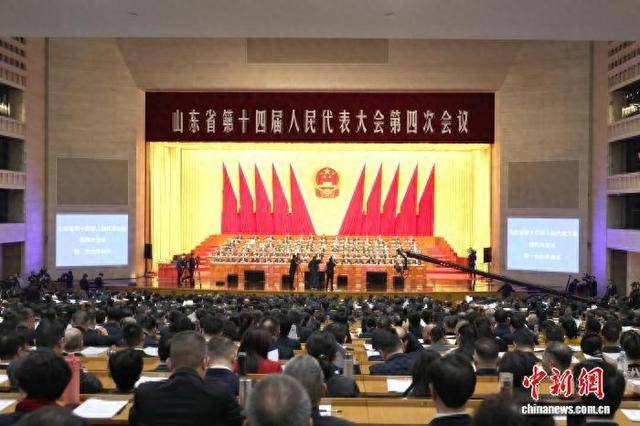
"石化产业连接着能源安全与经济发展,关系着民生福祉与未来转型,小到食品包装、电子配件,大到 汽车零部件、航空材料,都离不开高端化工产品的支撑。"山东省人大代表,山东东明石化集团党委委 员、副总裁丁书兵称,数字化转型和智能化发展是石化产业高质量发展的重要一环。 东明石化集团大力推进智改数转,实施"数智未来"研发战略,携手IBM、霍尼韦尔、杜邦等国际一流公 司及飞书平台,在经营管理、项目建设等领域全面推进数智化转型,打造具有国际竞争力的智慧工厂。 丁书兵建议,围绕做强化工新材料产业链,要充分发挥企业科技创新主体优势,紧盯世界前沿技术,加 快推动科技创新和产业创新融合发展。 2026年山东省政府工作报告指出,该省将坚持科技创新和产业创新深度融合,加紧培育壮大新动能。山 东将做强科技创新核心驱动,加快建设更高水平创新型省份,提升创新体系整体效能,不断催生新质生 产力。(完) 山东省十四届人大四次会议现场。王采怡 摄 "人工智能正在重新定义钢铁产业。"山东省人大代表,山东钢铁集团有限公司党委常委、副总经理王向 东表示,2025年山钢集团在人工智能方面投资2.23亿元人民币,形成了场景应用项目138项,覆盖研 发、制造、 ...

诺贝尔经济学奖得主警告,欧洲别让中国赢科技竞赛,技术已被甩在身后
Sou Hu Cai Jing· 2026-01-29 17:57
Core Viewpoint - Europe is perceived to be lagging behind in the technology race against the US and China, with experts warning that without urgent action, Europe risks losing its competitive edge in innovation [1][3]. Group 1: Current Situation - The European semiconductor industry is heavily reliant on US technology, with companies like ASML facing potential operational halts if US cooperation ceases [3]. - In contrast, China has accelerated its innovation in semiconductors and AI despite US restrictions, while Europe struggles with fragmented technology and lacks major internet giants [3][5]. - The belief in Europe's institutional advantages has not translated into technological success, leading to a lack of significant innovation and market presence [3][5]. Group 2: Innovation Challenges - The concept of "inclusive growth" proposed by economist Philippe Aghion emphasizes that innovation should benefit the majority, but internal divisions among EU member states hinder collaborative efforts [9][11]. - The EU's research funding is often inefficiently allocated, resulting in a lack of support for emerging companies and stifling innovation [11][13]. - The slow progress in 5G deployment exemplifies Europe's struggle with technological independence and timely decision-making [11][13]. Group 3: Global Context - The US has enacted the CHIPS and Science Act to bolster its semiconductor industry while restricting exports to China, which may backfire by limiting its own market opportunities [13][15]. - China's rapid advancement in technology is attributed to a strong talent pipeline and collaboration between academia and industry, contrasting with Europe's talent drain to the US and Canada [15][17]. - Data from 2023 indicates that out of the top 20 global tech companies, only two are from Europe, highlighting the continent's diminished presence in key sectors like semiconductors and digital payments [15][17]. Group 4: Institutional Issues - Europe's reliance on a decentralized approach to innovation has led to inefficiencies, with significant government investments failing to yield competitive results [17][19]. - Aghion suggests that Europe should learn from China's centralized strategies to enhance efficiency and innovation outcomes [17][19]. - The historical analogy of the Ming Dynasty serves as a cautionary tale for Europe, emphasizing the need for timely action to avoid being left behind in the global technology race [19].

深化融合赋能 做强产业集群
Xin Lang Cai Jing· 2026-01-29 17:44
Core Viewpoint - Guizhou Province is focusing on technology innovation to drive high-quality economic development, with a significant emphasis on the digital economy, which is projected to increase its GDP share from 38.2% in 2020 to 53.3% by 2024, marking a transition from rapid growth to quality enhancement [2] Group 1: Digital Economy Development - The digital economy is seen as a crucial engine for high-quality economic growth, with Guizhou implementing the "Digital Active City" strategy to enhance digital industrialization and governance [2] - The share of the digital economy in GDP is expected to rise significantly, indicating a robust transition towards quality and efficiency [2] Group 2: Computing Power Infrastructure - Guizhou has established 26 large-scale data centers, achieving a total computing power of over 126 EFlops, with over 98% being intelligent computing power, positioning it as a leading region for domestic intelligent computing capabilities [3] - The region has transformed from "machine room economy" to "storage-computing integration," successfully creating a cluster of Huawei Cloud intelligent computing centers [3] Group 3: Regulatory Framework - The implementation of the "Guizhou City Computing Power Industry Promotion Regulations" in 2025 marks a significant step towards the legal and standardized development of the computing power industry [4] - Guizhou is recognized for its exemplary practices in building a national computing power guarantee base, receiving commendation from the State Council [4] Group 4: Digital Transformation Applications - Over the past five years, Guizhou has launched 504 digital application scenarios across government, civilian, and commercial sectors, significantly transforming governance and industry practices [5][6] - The "Shuang Guiyang" one-stop service platform has integrated over 2,500 public services, showcasing a new model of grassroots governance [6] Group 5: Industrial Growth - Guizhou is focusing on the electronic information manufacturing and software service industries, with the electronic information manufacturing sector projected to reach a total output value of 44 billion yuan by the end of the 14th Five-Year Plan, growing at an annual rate of 13% [7] - The software and information technology service industry is expected to exceed 100 billion yuan in revenue, marking a 6.7-fold increase from 2020 [7] Group 6: Innovation and Talent Development - The successful hosting of the Big Data Expo for 11 consecutive years has established Guizhou as a global leader in the big data field, with a total talent pool of 246,700 in the digital economy [8] - Guizhou has set up an industrial development fund exceeding 18 billion yuan and introduced various policies to support the software and big model industries [8] Group 7: Future Goals - Guizhou aims to achieve a scale of 300 billion yuan in the digital industry by the end of the 15th Five-Year Plan, continuing to implement the "Digital Active City" strategy [8] - The focus will be on enhancing the synergy between computing power, data, artificial intelligence, and electronic information industries, while also improving social governance and service efficiency [8]
冲上万亿!南山一路攀登永似少年 解码如何从“土地有限”迈向“发展无限”
Shen Zhen Shang Bao· 2026-01-29 17:37
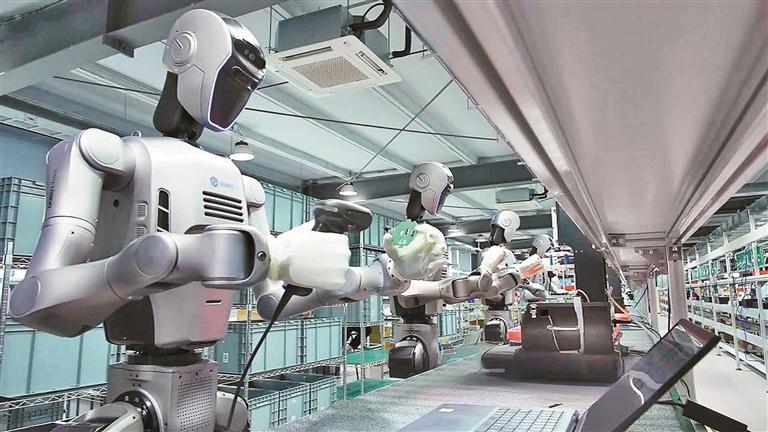
Core Insights - Nanshan District is set to become the first district in China to surpass a GDP of 1 trillion yuan by 2025, contributing over 25% of Shenzhen's economic output with less than 10% of its land area [5][6] - The district's economic growth is characterized by a balanced approach involving investment, consumption, and exports, which collectively form a "stability triangle" against economic fluctuations [5][6] Economic Performance - Nanshan's GDP growth during the 14th Five-Year Plan period is projected to exceed 5.8% annually, with the district achieving 12 economic indicators ranked first in Shenzhen [5][6] - The total investment in projects signed in Nanshan for 2025 is expected to exceed 150 billion yuan, accounting for nearly 20% of Shenzhen's global investment conference total [6] Industrial Structure - Strategic emerging industries now account for 60% of Nanshan's GDP, showcasing a robust industrial structure [7][9] - The district hosts over 200 robotics companies, forming a collaborative ecosystem that enhances innovation and productivity [7][9] Innovation Ecosystem - Nanshan's innovation is driven by a unique ecosystem where large enterprises, SMEs, and innovative startups coexist, fostering a strong internal growth dynamic [8][10] - The district's R&D intensity has reached 7.87%, nearly three times the national average, with a high local conversion rate of R&D results exceeding 60% [9][10] Future Growth Areas - Nanshan is focusing on three future growth areas: low-altitude economy, embodied intelligence, and synthetic biology, aiming to cultivate new economic engines for the next decade [14] - The establishment of the Guangdong Provincial Laboratory for embodied intelligence and the development of low-altitude economic zones are part of Nanshan's strategic initiatives [14] Land Utilization and Development - Nanshan is leveraging limited land resources through innovative projects like the "industrial building up" model, which integrates manufacturing and R&D vertically [12] - The district's GDP per square kilometer is projected to reach 54 billion yuan by 2025, significantly higher than global benchmarks such as Silicon Valley and Singapore [12]
21评论|黄仁勋的新年第一站,从中国开始
2 1 Shi Ji Jing Ji Bao Dao· 2026-01-29 16:15
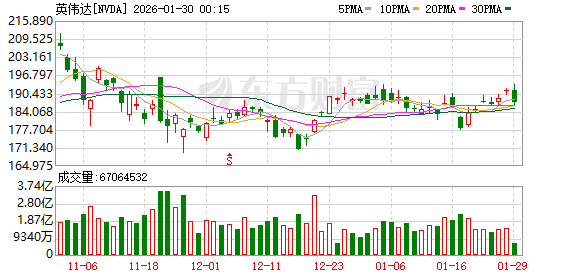
Core Insights - Huang Renxun, CEO of Nvidia, emphasizes the importance of the Chinese market during his recent visits, highlighting the company's strategic focus on China [1][2] - Nvidia has not yet received orders for its H200 AI chips from Chinese customers due to pending import decisions from the Chinese government [1] - The H200 chip is positioned as a transitional power support for large model inference and training, with significant specifications [5][6] Company Strategy - Huang's travel itinerary indicates a strong emphasis on the Asia-Pacific region, particularly China, Japan, and India, reflecting Nvidia's strategic priorities [1] - The company employs approximately 36,000 people globally, with significant representation in China (11%) and India (14%) [1] - Huang's approach in China includes a mix of business and cultural engagement, showcasing a more public relations-focused strategy compared to other regions [4][5] Market Dynamics - The Chinese AI chip market is becoming increasingly competitive, with local companies like Huawei, Alibaba, and Baidu developing their own AI chips [6] - TrendForce predicts that the proportion of AI servers in China using imported chips will decrease from 63% in 2024 to 42% in 2025, indicating a rise in domestic chip suppliers [6] - The competition between the US and China in the computing power sector highlights each country's strengths, with the US excelling in chip computing and AI models, while China benefits from low-cost energy and manufacturing capabilities [6][7] Ecosystem Development - The AI ecosystem is complex, involving data, energy, chip manufacturing, and AI models, necessitating global collaboration for advancement [7] - Huang's background and Nvidia's role position the company as a key player in building this ecosystem, with China capable of being a significant contributor [7]

未来的机会在这里!任泽平带你看前沿科技
泽平宏观· 2026-01-29 16:05
以下文章来源于泽平宏观商学 ,作者泽平宏观商学 泽平宏观商学 . 前沿科技企业实战研学 读万卷书行万里路 2025 年 12 月 用心打造最有品质的实战研学。读万卷书,行万里路。把教室搬到世界上最优秀的企业, 请最优秀的企业家和科学家讲课。顺势而为,把握机遇。正心正念,坚持做长期正确的 事! 我们期待与更多的企业家朋友们携手同行,共赴 2026 实战研学之旅! 泽 ZEP 平 INGM 宏 ACR 观 O RE 商 SEAR 学 CH 1-6月日程安排 · 2月27日 北京 国内头部智驾科技企业 人形机器人 年研学安 型成 11月4日-11日 洛杉矶、拉斯维加斯、旧金山 CES、英伟达、特斯拉 谷歌、罗宾汉、playground 斯坦福大学、伯克利大学 3月27日-28日 苏州 追觅科技、魔法原子、灵猴机器人 闭门投研会-2026 Al 的中国力量(一) 3月29日 上海 长三角校友会 4月20日-21日 香港 2026 香港 Web3 嘉年华 复星财富、HashKey、港交所 5月22日-23日 1151 11:47:50 深圳 华为、新凯来、江波龙、莫界科技 闭门投研会—2026 Al 的中国力量(二) ...




折叠屏在东北变“碎碎冰”
第一财经· 2026-01-29 15:49
2026.01. 29 本文字数:2811,阅读时长大约4分钟 作者 | 第一财经 王珍 近日,折叠屏在东北变成"碎碎冰"的话题登上热搜榜。第一财经记者发现,其中一张热图是来自一位小 红书博主一年前的分享。 尽管折叠屏不抗冻的话题隔了一年"又火了",调研机构预测,受苹果将入市等因素影响,折叠屏手机今 年出货量仍将增长,全球、中国出货量有望分别达2500万部和1300万部左右。而折叠屏手机在极低温 下的耐久问题仍有待超薄玻璃等材料的进步。 极低温下的耐用问题待解 2025年1月6日,上述博主在小红书上配图提醒说,去哈尔滨的朋友慎带折叠屏手机。她透露,其折叠 屏手机冻坏了;维修店说是因为温差,导致内屏漏液,买了碎屏险,还要服务费499元。当时这条内容 分享引发了上万网友关注、7000多条评论。 "(这个话题)又火了",这位博主在1月28日告诉第一财经记者,她的折叠屏手机已修好,正常用没问 题。她是浙江人,去年到东北是参加别人的婚礼。她建议,折叠屏手机不要在那么低温的环境下拿出 来,回屋以后,暖和一下,再"掰开"用。 已关注 ) ( 品折叠手机 去哈尔滨的朋友,慎带 5折叠手机,去了一趟哈尔滨,冻坏了。维修 店说是 ...

黄仁勋的新年第一站,从中国开始
2 1 Shi Ji Jing Ji Bao Dao· 2026-01-29 15:22
Core Insights - Huang Renxun, CEO of Nvidia, emphasizes the importance of the Chinese market during his annual visit, highlighting the urgency to revitalize business in China [1][2] - Nvidia has not yet received orders for the H200 AI chips from Chinese customers due to pending import decisions by the Chinese government, although the chip is deemed suitable for the market [1][3] - The global AI chip landscape is competitive, with Chinese companies like Huawei, Alibaba, and Baidu emerging as significant players, potentially reducing reliance on foreign chips [4][5] Group 1: Nvidia's Strategic Focus - Huang Renxun's travel itinerary reflects a strategic focus on the Chinese market, with significant visits to China, Japan, and India, indicating a prioritization of the Asia-Pacific region [2] - Nvidia employs approximately 36,000 people globally, with 11% in China, suggesting a substantial commitment to the Chinese market despite geopolitical tensions [2] - The H200 chip, which is currently under U.S. export license approval, is positioned as a transitional power support for large model inference and training, featuring 141GB HBM3e and 4.8TB/s bandwidth [3] Group 2: Competitive Landscape and Market Dynamics - The Chinese AI server market is projected to see a decrease in reliance on foreign chips, with local suppliers expected to increase their market share from 2024 to 2025 [4] - The competitive advantages in the AI field are split between the U.S. and China, with the U.S. excelling in chip computing power and AI models, while China benefits from lower energy costs and extensive application scenarios [5] - The AI ecosystem is complex, involving data, energy, chip manufacturing, and AI models, indicating that collaboration across global players is essential for advancement [5]
安博通预计2025年续亏超1亿元,战略转型及项目交付延期拖累业绩
Mei Ri Jing Ji Xin Wen· 2026-01-29 15:13
根据安博通1月29日发布的业绩预告,公司2025年归属于母公司所有者的净利润预计为-11400万元 至-16500万元,归属于母公司所有者的扣除非经常性损益后的净利润预计为-11700万元至-16900万元, 延续了2024年的亏损态势。 公告指出,业绩变动主因是"公司从可视化网络安全的创新者转型AI时代安全算力生态构建者,由于公 司战略转型导致收入占比的变化,智算中心等大项目由于供货原因导致无法交付,从而影响利润变 化"。 在业务推进方面,公司虽持续与国产芯片厂商合作推出国产化算力解决方案,并落地多个智算业务代表 性项目,但核心大项目的交付延迟直接冲击了当期利润。 每经记者|黄博文 每经编辑|董兴生 1月29日,安博通(SH688168,股价73.7元,市值56.89亿元)发布2025年年度业绩预告,预计全年归属 于母公司所有者的净利润亏损1.14亿元至1.65亿元,将继续陷入亏损;预计全年营业收入为5.36亿元至 5.92亿元,同比减少19.65%至27.25%。 安博通表示,业绩承压主要源于战略转型期收入结构变化以及智算中心等大项目因供货问题未能如期交 付。 作为网络安全行业向AI(人工智能)算力生态转 ...
